We believe timeless spiritual principles and ancient archetypes serve as active blueprints for 21st-century narratives. By analyzing mystical symbolism and philosophical themes in today’s stories, we reveal how they mirror our collective subconscious and internal quests for meaning. HIDDEN SPIRITUALITY fosters a conscious community by building a bridge between entertainment and active spiritual practice. Our mission is to transform passive consumption into a catalyst for self-discovery, personal growth, and cosmic understanding, enabling individuals to reconnect with their authentic selves. This involves deconstructing the hidden layers of popular culture to find the sacred within the secular, allowing viewers to engage with media as a reflective mirror for their own evolutionary journey. We encourage deep exploration of the narratives that shape our reality, prompting us to question societal norms and to seek higher truths that resonate with our deepest wisdom, ultimately cultivating a sense of unity and purpose amidst the chaos of modern life.
In Today’s Deep Dive, we explore how modern cinema and digital storytelling utilize these ancient motifs to guide the modern seeker. This exploration delves into the mechanics of myth-making in the digital age, examining how hero archetypes and alchemical transformations are rebranded for a high-tech audience.
By identifying these recurring patterns, we empower the seeker to recognize spiritual lessons embedded in blockbuster films and viral content, effectively turning the screen into a contemporary scripture for personal expansion and collective awakening.
Believe it or not, “The Truman Show” is much more than a satirical drama; it is a profound masterpiece that serves as a modern allegory for the nature of reality, the exercise of free will, and the complexities of the human condition. Join us on this journey as we peel back the layers of Sea haven to uncover the hidden spiritual themes that elevate this movie into a timeless classic. We will explore the revolutionary power of questioning societal norms and the courageous path toward self-discovery, emphasizing the vital importance of breaking free from artificial constructs to find your true, singular purpose. These cinematic lessons offer deep insights for any modern seeker navigating an increasingly digital and controlled world.
As a special bonus, we are diving deep into a mind-blowing theory concerning the cosmic significance of our collective human story—a perspective that will challenge the boundaries of your current perspective and make you question everything you thought you knew about existence and the blueprints that shape our lives. Our goal is to transform your experience from passive consumption into a powerful catalyst for personal growth and collective awakening.Don’t miss out on this eye-opening episode of Hidden Spirituality! We invite you to engage with this media not just as entertainment, but as a reflective mirror for your own evolutionary journey.
If you are inspired to deconstruct these hidden layers and wish to chat about this episode or share your insights with a conscious community, come join Spiritverse: https://spiritverse.app/ and meet like minded souls from around the world who are seeking higher truths and authentic connection.
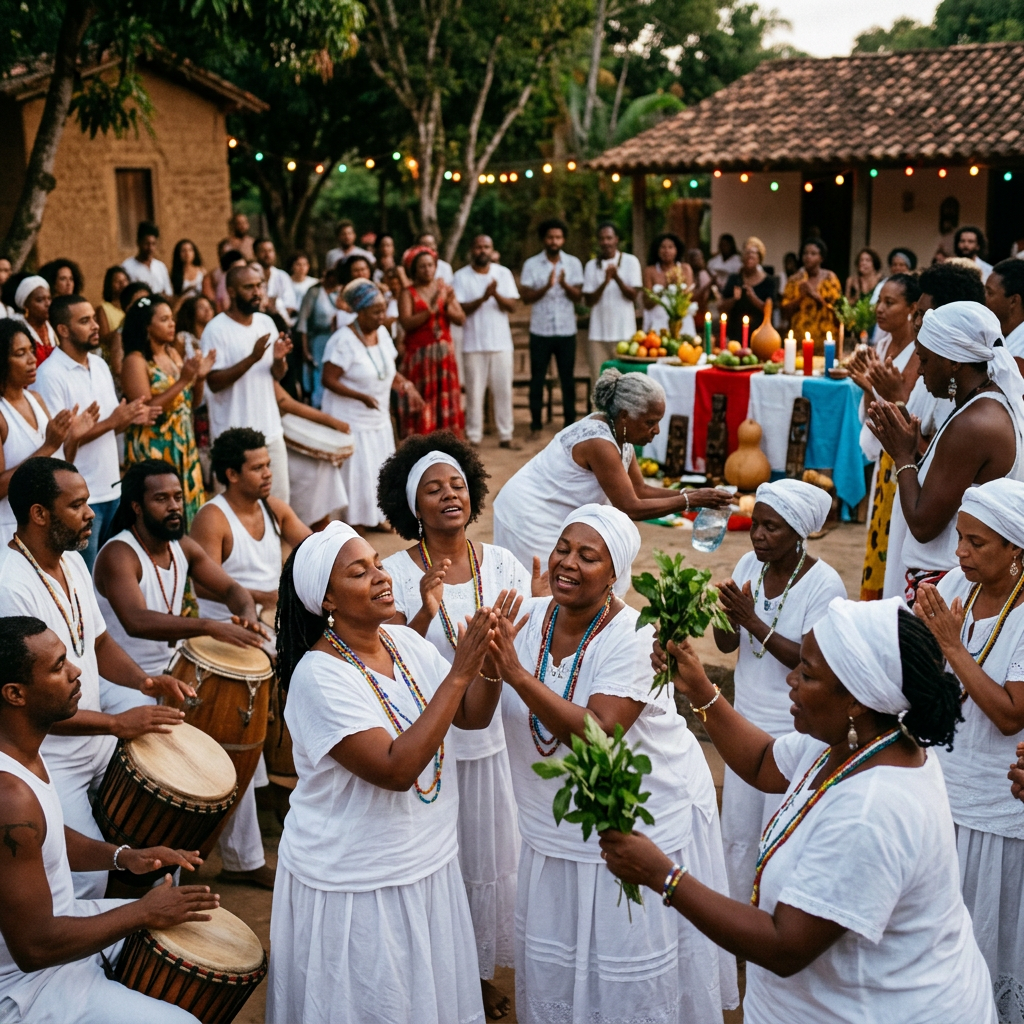
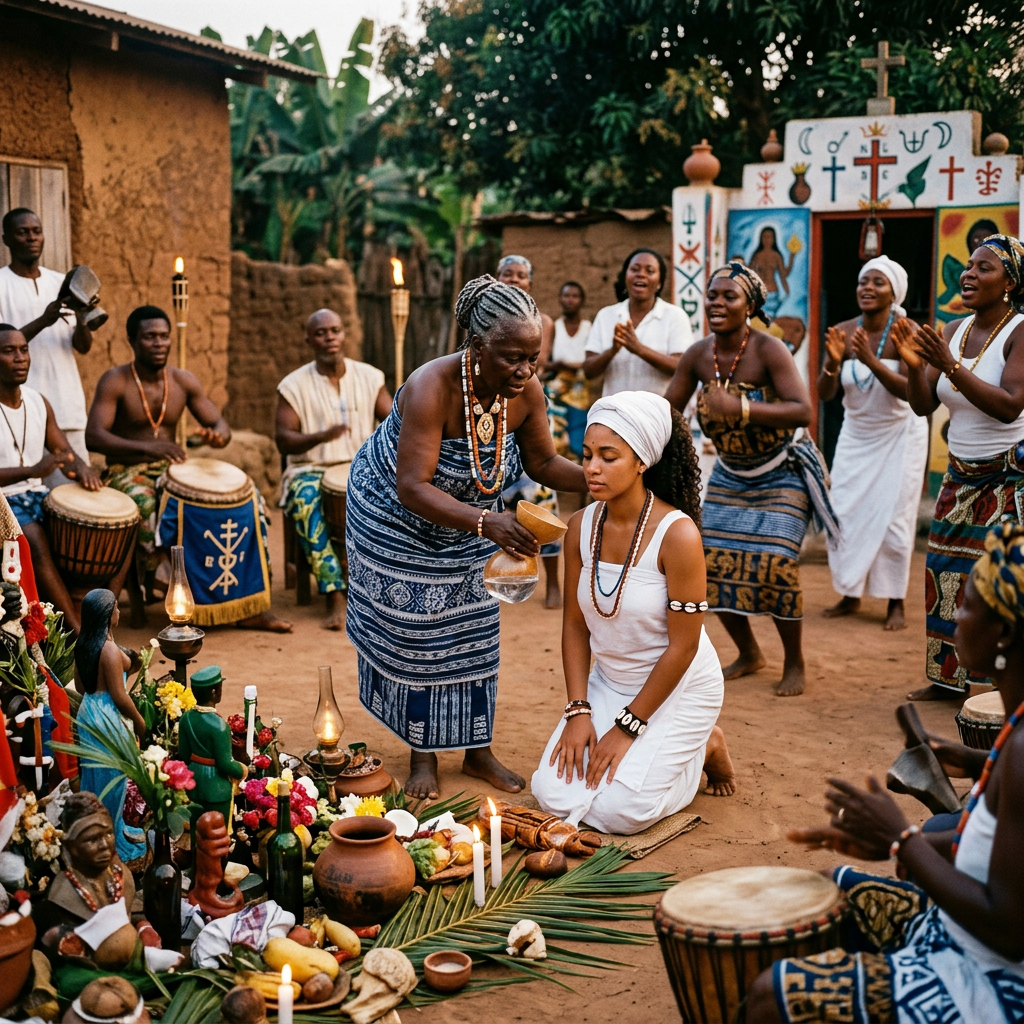
Welcome to SPIRITUAL PRACTICES OF AFRICA AND THE DIASPORA. Spiritual practices in Africa and the Diaspora center on the interconnectedness of the living, ancestors, and the divine, often featuring a supreme being and various mediating deities. These intricate belief systems reflect the rich cultural heritages and histories of diverse communities, embodying values and teachings that have been transmitted through generations. Foundational cosmologies, such as Yoruba Orishas and Gbe Vodun, have evolved into faiths like Santera, Candomble, and Vodou, each adapting to the specific cultural and environmental contexts in which they exist. These resilient systems survived colonial suppression by syncretizing with Christianity and Islam, using external symbols to shield traditional rituals while preserving core spiritual principles. Today, a global revival is reclaiming these sacred philosophies, appealing to individuals seeking deeper connections to their roots and identities, serving as a cultural anchor for navigating modern challenges, and fostering a renewed sense of community and belonging across the globe.
In Today’s installment…
Let’s explore Elemental Africa: The Science of Fire, Water, Air, Earth & Spirit—a profound exploration of ancestral wisdom where the elements are recognized not as inert matter, but as living, intelligent, and purposeful entities that contribute to the intricate web of life. This ancient paleo-science, deeply rooted in traditions that span millennia, provides a sophisticated framework for understanding the relationship between the self and the cosmos, emphasizing the interconnectedness of all things.
It invites us to reflect on how these elemental forces shape our existence and influence our experiences, encouraging a holistic approach that moves beyond the limitations of contemporary perspectives. In doing so, it includes not only the tangible aspects of the physical world but also the invisible, subtle influences of the universe that have a profound impact on our spiritual and emotional well-being, urging us to tune in to the rhythms and cycles of nature that surround us every day.
Within this worldview, the five elements serve as both a diagnostic lens for holistic healing and a roadmap for spiritual alignment:
Fire: A transformative force linked to the etheric body and the power of will. It acts as a catalyst for clearing and renewal, transmuting stagnant energy into vibrant purpose through the legacy of Yoruba metallurgy and ancestral warrior spirits.
Water: A repository of memory and a symbol of ceaseless flow. It teaches adaptability and non-resistance, exemplified by the “Water Principle” in martial arts where energy is absorbed and redirected rather than fought.
Air: Carrying the spoken word and the power of thought, air is linked to the mental body and Zulu traditions of sacred breath. It facilitates the expansion of intellect and the clarity of expression, allowing for the navigation of complex mental landscapes.
Earth: Anchoring cosmic law and the physical body, earth provides grounding and stability. It embodies a receptive, feminine essence that transforms unbeneficial forces through patience and rooted presence.
Spirit: The vital life force that facilitates divine alignment when the four tangible elements are in balance. In the Yoruba tradition, this spiritual power (Ase) flows through the human aura, or emi, supported by the sacred geometry of the merkaba.
By delving into these intricate legacies—from the ethical foundations of Igbo philosophy to the depth of Kongo cosmology—we reclaim a sacred dialogue with the universe that resonates deeply within our collective consciousness. This synthesis of movement, breath, and ancient science not only challenges us to confront our limitations but also inspires a profound exploration of self-awareness and interconnectedness.
As we navigate through the wisdom embedded in these traditions, we are called to embrace our unique purpose within the grand tapestry of life, recognizing that each thread, colored by our experiences, contributes to the rich narrative of existence. This journey invites us to honor our ancestors, learn from their insights, and apply their teachings in our modern context, creating a bridge between past and present that enriches our understanding of the world around us.
Welcome to MALICIA AS A GAME OF POWER, a thought-provoking blog series that delves deep into the intricate strategies of human interactions, encompassing essential themes such as communication, conflict resolution, negotiation, and manipulation. In this series, we aim to unveil the subtle nuances that define successful interactions and the psychological principles that influence human behavior. It discusses leadership dynamics, personal branding, and the complexities of online reputation management, providing readers with practical strategies designed to enhance their influence and build authentic relationships. Through detailed analysis and real-world examples, the series seeks to empower readers to navigate the often-turbulent waters of interpersonal relationships with confidence and skill, ultimately fostering a greater understanding of the power dynamics at play in everyday encounters. Join us on this compelling journey as we explore the art of interaction and the power it wields in our personal and professional lives.
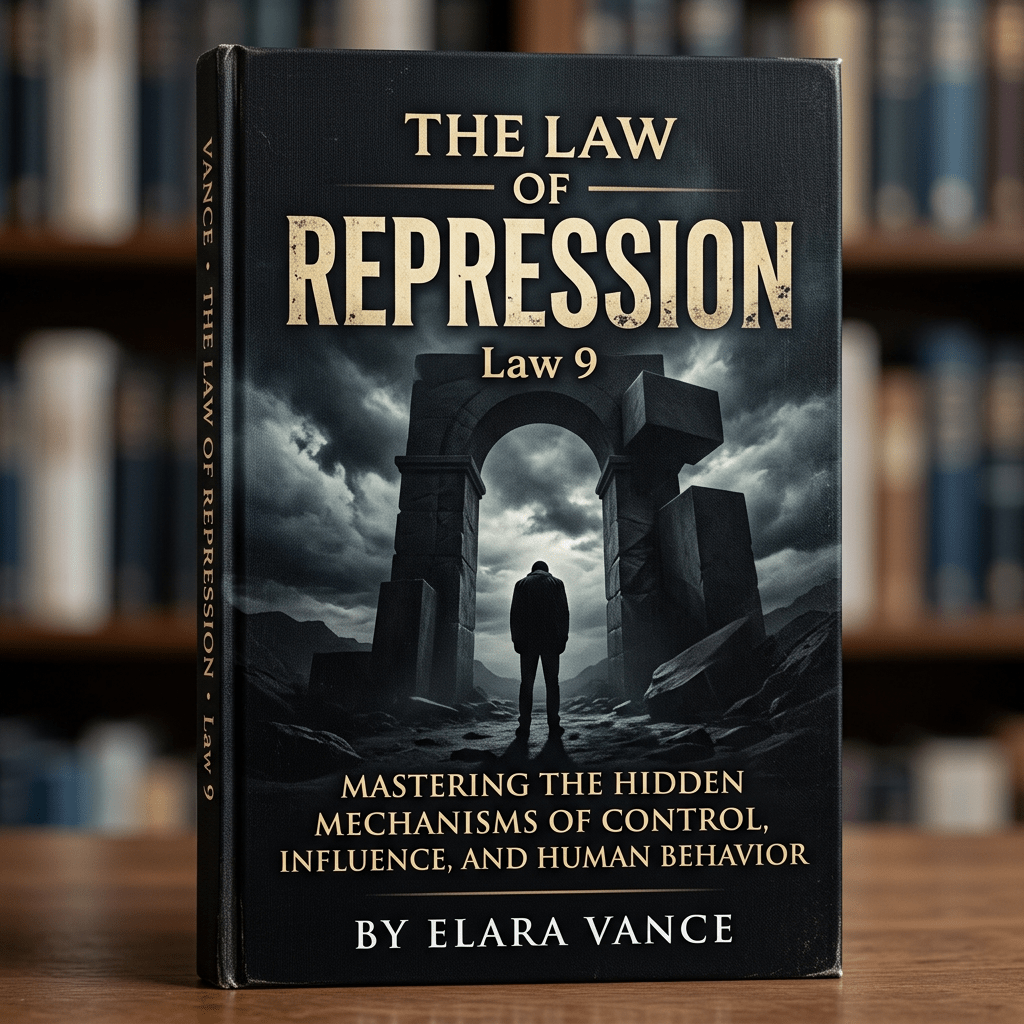
Today, We’re gonna explore Law 9 from the book, “The Laws of Human Nature” by Robert Greene. You can purchase a copy from AMAZON.COM by clicking HERE.
THE LAWS OF HUMAN NATURE BY ROBERT GREENE- Law #9 – The law of repression
The Law of Repression, as outlined by Robert Greene in “The Laws of Human Nature,” focuses on the psychological necessity of confronting one’s dark side. This principle suggests that individuals often hide or deny aspects of their personality that society deems unacceptable, leading to a “shadow” self that can influence behavior in subconscious and often destructive ways. Beyond individual psychology, the term “repression” is frequently used in political and social contexts to describe the forceful suppression of individuals or groups by a state or system.
Examples of this include:
Political Systems: Historical accounts of the Belarusian Soviet Socialist Republic detail how economic policies led to widespread political repression and famine.
Social Control: Religious and patriarchal structures have been cited as tools for sexual and social repression throughout history.
State Authority: Modern critiques often highlight the role of police and legal systems in enforcing the “law and order” of a ruling system through brutality and the criminalization of generations. This includes specific modern manifestations of state control such as ICE raids and the impact of systemic racism.
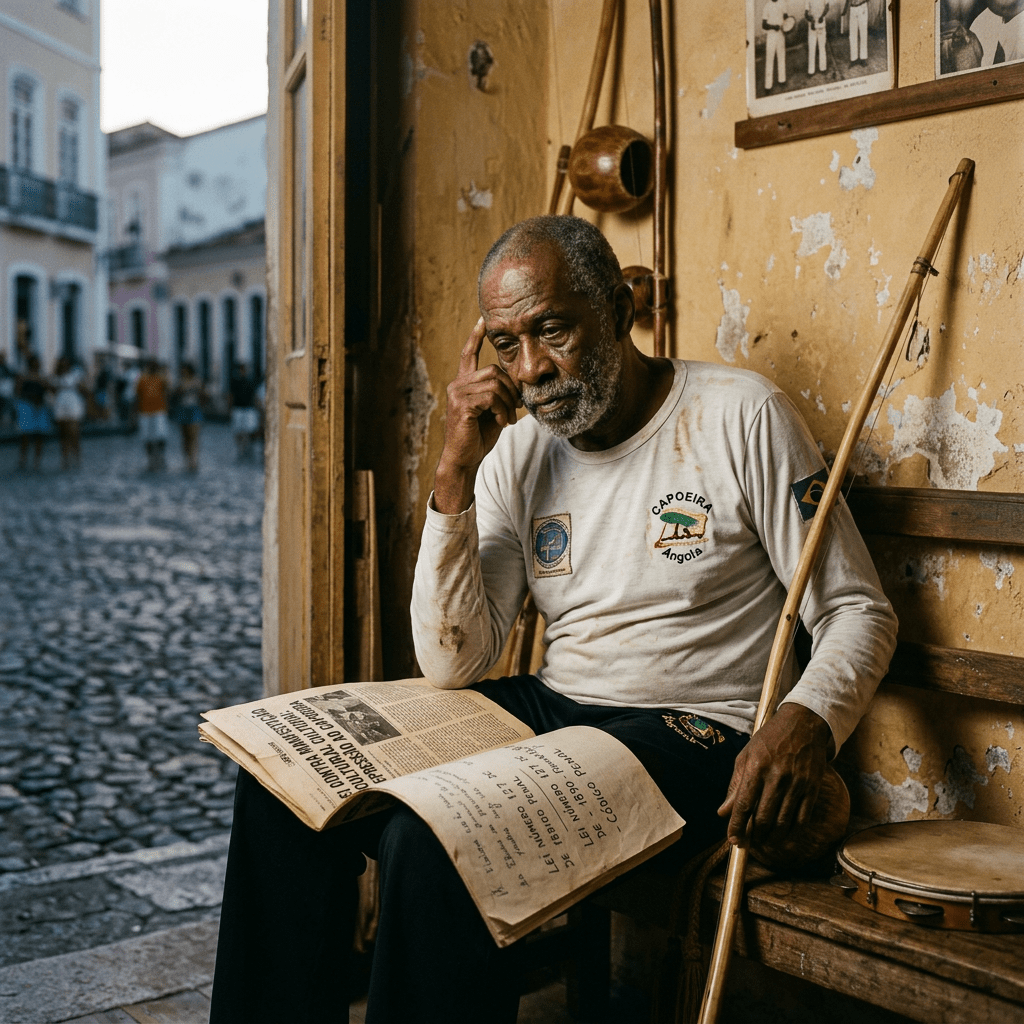
The Law of repression, through the eyes of an Angoleiro
For an Angoleiro—a practitioner of Capoeira Angola—the Law of Repression is understood through the historical crucible of transatlantic slavery in Brazil. Capoeira Angola emerged as a clandestine technology for liberation, specifically designed to survive and subvert the brutal socio-political repression of the colonial state.
Strategic Concealment and Disguise: To evade the state prohibition of martial training, practitioners masked deadly combative techniques within the guise of dance, ritual, and play (brincadeira). This “cultural camouflage” allowed the art to persist despite the constant threat of torture and execution.
The Shadow of the Roda: Just as Greene speaks of the “shadow” self, the Angoleiro utilizes the roda (the circle) as a sacred site where historical trauma is processed and internal resilience is fortified. The practice requires absolute control over fear and ego, transforming the internal psychological struggle into a physical methodology for resistance.
Survival against Modern Oppression: The principles of Capoeira Angola offer a framework for navigating contemporary forms of social repression, including surveillance and police brutality. By utilizing malícia (cunning) and mandinga (deception), the practitioner learns to read the intentions of repressive systems and protect their community through strategic subtlety rather than direct, reckless aggression.
Understanding the dynamics of repression—whether it is the internal psychological suppression of traits or the external systemic oppression of people— is considered a foundational step toward personal liberation and social change. By reclaiming and practicing this art, communities actively work to dismantle the deep-seated psychic and physical legacies of historical and contemporary repression. This involves a multifaceted approach, encompassing education on the origins and mechanisms of such repression, as well as fostering safe spaces for individuals to express their suppressed identities and emotions.
When people share their narratives and experiences, they not only begin to heal personally but also contribute to a collective understanding that challenges the dominant narratives of power. Additionally, creating platforms for dialogue and activism enables these communities to strategize practical responses to current injustices, thereby reinforcing their resilience and commitment to transformative change. Through these interconnected efforts, the journey toward liberation becomes not only an individual pursuit but also a communal endeavor that enhances solidarity and supports the quest for equity in all areas of society.
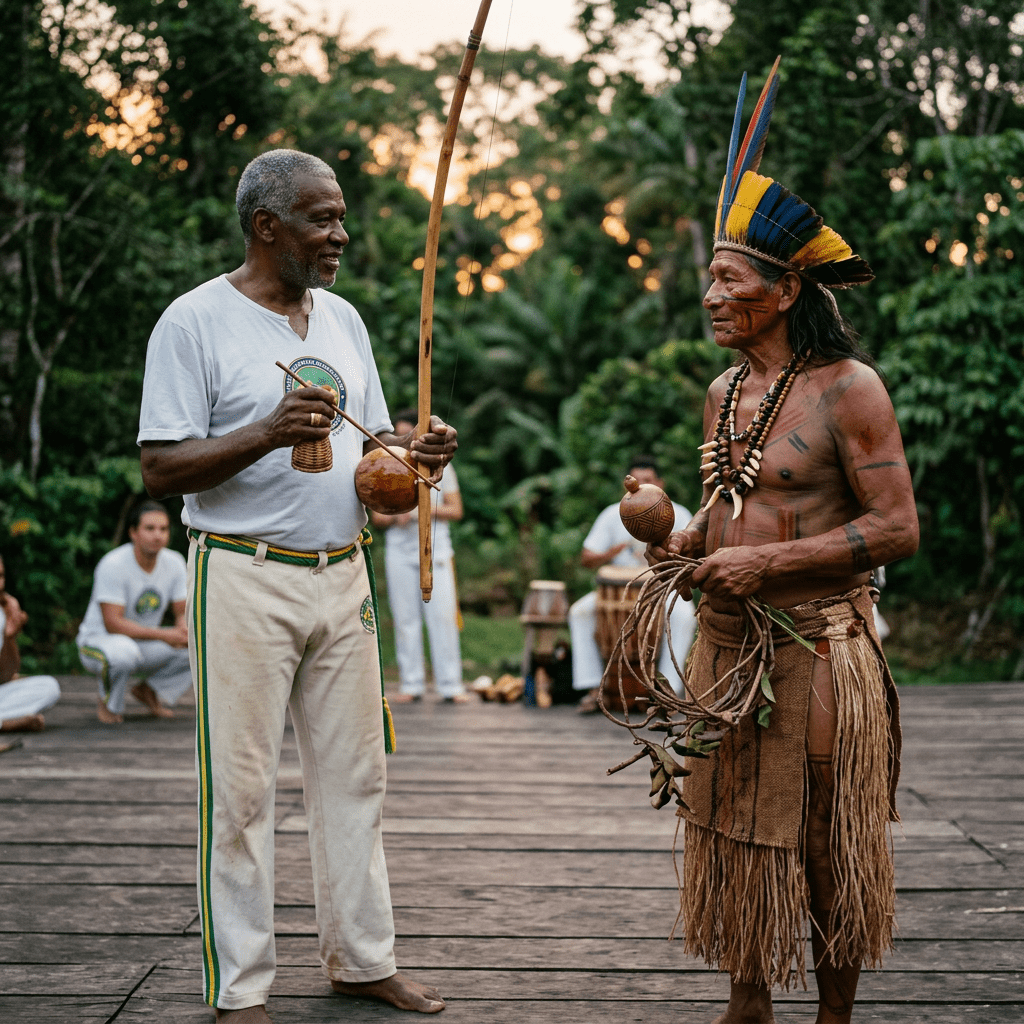
The exploration of the parallels between a Capoeira Mestre and a Shaman reveals a deep-seated connection to spiritual and physical mastery that transcends mere performance. Both roles function as cultural guardians, presiding over rituals that bridge the material and spiritual worlds, thus reinforcing their communities’ values and traditions. Just as a Shaman navigates the spirit realm to facilitate healing and guidance, being attuned to the subtle energies that flow around them, a Capoeira Mestre leads the roda, a ritualized circle that serves as a “safe container” for practitioners to experience vulnerability and build collective resilience. This shared space not only fosters empowerment but also cultivates a profound sense of belonging and identity among participants. Furthermore, the teachings imparted by both figures emphasize the importance of connection—whether it be to one’s ancestors, the natural world, or fellow practitioners—creating a holistic approach to personal and communal well-being. Each movement in Capoeira and each chant in Shamanic practice resonates with deeper meanings, inviting individuals to explore their inner landscapes while honoring the rich heritage from which these traditions emerge. Through this lens, one can appreciate how both the Mestre and the Shaman contribute to the ongoing narrative of their respective cultures, ensuring the continuity of wisdom that has been passed down through generations.
The Ritual Space as a Living Sanctuary
The environment of the Casa de Capoeira Angola is envisioned as a living sanctuary, much like a Shamanic ritual space that transcends mere physical boundaries. It is more than a training facility; it is a spiritual home where the profound historical and philosophical heritage of the art is not only preserved but also celebrated and passed down through generations. Within this sacred space, the roda acts as a micro-community, a gathering point where practitioners from diverse backgrounds come together to share their experiences and knowledge. Here, values of respeito (respect) and união (unity) are practiced diligently, fostering a protective structure that mirrors the communal responsibility found in indigenous spiritual traditions. This environment encourages self-exploration and personal growth while reinforcing the bonds of kinship among its members, creating a vibrant tapestry of interconnected lives and stories that enrich the cultural experience of all who enter.
Spiritual Energy and Manifestation
Central to both roles is the management of life force energy. In Capoeira, this is known as axé, a spiritual power or life force akin to “qi” or the Shamanic concept of spirit energy. The Mestre facilitates the cultivation of this energy through the rhythmic command of the berimbau and the communal singing of traditional songs, which serve as oral histories and life lessons, often passed down through generations. These practices not only reinforce the physical connection among participants but also deepen their spiritual bond, creating a shared experience that transcends the individual. The Mestre’s role goes beyond mere instruction; it is about guiding the players toward an awakening of their inner selves, nurturing their capabilities, and fostering a sense of community within the roda. This spiritual dimension is often described as esoteric, involving states of consciousness where the practitioner may experience a “trance-like” state during intense play, moving without conscious direction. In this state, practitioners report heightened awareness, a deep connection to their lineage, and an invigorated appreciation for the rhythms of life, fostering a unique blend of physicality and spirituality that defines the art form.
Cunning, Deception, and Strategic Wisdom
Both the Shaman and the Mestre utilize strategic subtlety and intuition, creating a dance of perception that transcends mere physical engagement. In Capoeira, this is embodied in the concepts of malandragem (cunning) and mandinga (magic or spell), which serve as vital components in the evolution of the practitioner. Malícia—the ability to understand an opponent’s intentions and skillfully use deception—is not merely a physical tool but a profound psychological one, emphasizing the mind as the first and most valuable weapon in the quest for survival and freedom. This mirrors the Shamanic use of cleverness and indirect influence to navigate complex human and spiritual interactions, illustrating a deep wisdom that is cultivated through experience and awareness. By mastering these elements, both the Shaman and the Mestre engage in a rich tapestry of strategy, where every movement and intention can shift the dynamics of their environment, enabling them to emerge victorious against adversity and challenge.
Healing and Transformation
The role of the Mestre has increasingly been recognized for its profound socio-psychological impact within communities and beyond. Much like a Shaman who heals the community through spiritual connection and guidance, contemporary Mestres like Mestre Roxinho utilize Capoeira Angola as a transformative tool for social cohesion and healing among marginalized populations. This practice transcends mere physical activity; it embodies a rich history of cultural significance and resistance. By deeply grounding the practice in a lineage that celebrates both resistance and cultural reaffirmation, the Mestre plays a crucial role in helping practitioners dismantle the legacies of personal and historical oppression. In this way, they not only teach the skills of Capoeira but also guide individuals on a journey toward self-acceptance and empowerment. Through the shared experience of movement, music, and community spirit, the Mestre transforms the art into a therapeutic practice that fosters resilience, self-determination, and a sense of belonging, ultimately enabling participants to reclaim their identity and purpose in a world that often overlooks their contributions and struggles.
We believe timeless spiritual principles and ancient archetypes serve as active blueprints for 21st-century narratives. By analyzing mystical symbolism and philosophical themes in today’s stories, we reveal how they mirror our collective subconscious and internal quests for meaning. HIDDEN SPIRITUALITY fosters a conscious community by building a bridge between entertainment and active spiritual practice. Our mission is to transform passive consumption into a catalyst for self-discovery, personal growth, and cosmic understanding, enabling individuals to reconnect with their authentic selves. This involves deconstructing the hidden layers of popular culture to find the sacred within the secular, allowing viewers to engage with media as a reflective mirror for their own evolutionary journey. We encourage deep exploration of the narratives that shape our reality, prompting us to question societal norms and to seek higher truths that resonate with our deepest wisdom, ultimately cultivating a sense of unity and purpose amidst the chaos of modern life.
In Today’s Deep Dive, we explore how modern cinema and digital storytelling utilize these ancient motifs to guide the modern seeker.
In Today’s Deep Dive…
Join us as we explore the profound themes of loss, acceptance, and the mystical realm of the afterlife, all wrapped up in a breathtaking adventure that will leave you in awe and inspire reflective thought. This journey delves deeply into the hidden meanings and powerful symbolism behind the anime masterpiece, “The Children Who Chase Lost Voices,” offering an emotional and thought-provoking exploration of the human experience, including our connections to others and the inevitability of letting go. Through vibrant storytelling and striking visuals, the narrative beckons viewers to confront their own feelings and beliefs regarding mortality and hope. Don’t miss out on this deep dive into the mythical land of Agartha, a place where the boundaries of reality blur and the unimaginable becomes tangible, encouraging us to question what lies beyond our understanding.
If you liked this video, check out the actual movie below:
Plot Summary:
Strange sounds in the darkness… Unearthly music from an old crystal radio… These are all the chilling warnings that Asuna Watase has before a simple walk to her clubhouse unexpectedly catapults her into a nightmarish adventure that will take her beneath the Earth to a lost land beyond the realm of legend! Shadows swirl and dance around her as she bravely steps forward, her heart pounding in her chest, on the precipice of a world where the familiar laws of nature no longer apply. Attacked by a strange monstrous creature that seems to defy description, its eyes glowing with an otherworldly intensity, Asuna is rescued at the last moment by a mysterious stranger who appears out of nowhere, shrouded in an air of enigma. As they flee together, pursued by a relentless enemy whose motives remain shrouded in darkness, Asuna finds herself enmeshed in a centuries-old mystery that intertwines their fates. This unlikely alliance will bind her to a strange young defender whose past is as convoluted as the labyrinth they navigate, leading her inevitably toward a secret that may hold the key to life itself, a truth buried deep within the echoes of a forgotten era. As they unravel the threads of this ancient enigma, every step brings new revelations and dangers lurking in the shadows, testing not only their resolve but also the very essence of who they are.
How is this story relevant to Capoeira Angola?
The journey into the mythical land of Agartha mirrors the transformative and holistic journey found within Capoeira Angola. Just as Asuna ventures into a hidden realm to discover secrets of life and death, practitioners of Capoeira Angola engage in a living tradition that serves as a profound vehicle for self-discovery and inner peace. This ancient Afro-Brazilian practice is not merely a martial art or dance; it is a healing art that meticulously integrates the physical, emotional, and spiritual dimensions of the human experience.
The “centuries old mystery” in the story resonates with Capoeira’s deep historical roots in resistance and cultural preservation. Forged in the crucible of colonial oppression, Capoeira Angola became a clandestine cultural archive, disguising deadly fighting skills within the aesthetics of dance and ritual to survive the scrutiny of captors. Much like the “unearthly music” that guides Asuna, the rhythmic pulse of instruments like the berimbau dictates the energy and character of the Capoeira jogo (game), facilitating a trance-like state where practitioners connect with their ancestral wisdom and collective history.
Furthermore, the themes of loss and acceptance explored in the anime reflect the emotional catharsis central to Capoeira. The expressive movements and soulful melodies allow for the processing and liberation of pent-up anxieties and historical traumas. Through this active, embodied participation, individuals transcend the role of spectators to become part of a supportive community that fosters resilience, empathy, and cosmic understanding.
Join the ever-growing online community, Spiritverse, to connect with like-minded souls from around the world who are also navigating their own internal quests for meaning: https://spiritverse.app/ This platform serves as a bridge between entertainment and active spiritual practice, fostering self-discovery and cosmic understanding.
Subscribe to this channel to stay updated on our mission to transform passive consumption into a catalyst for personal growth: / @spiritscienceofficial
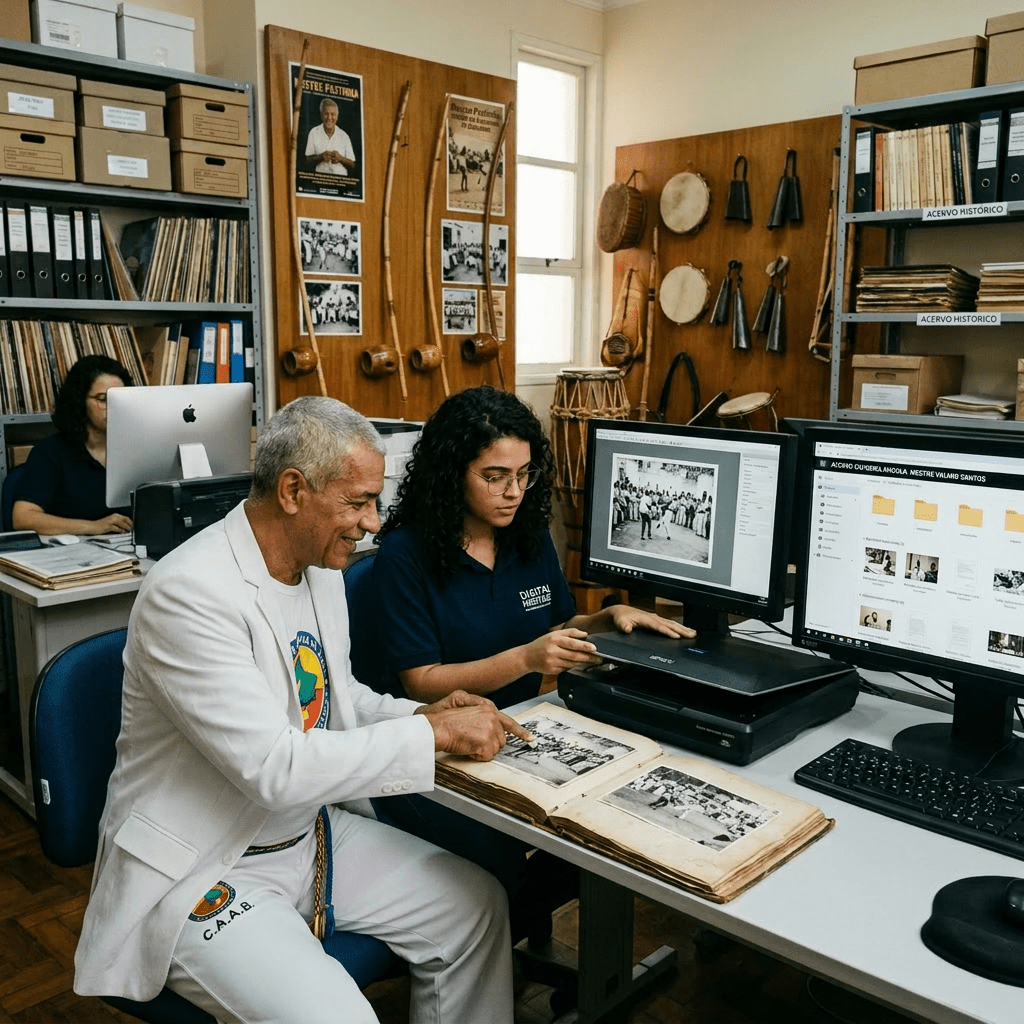
The Vital Role of Digital Archives in Capoeira Angola
Online Capoeira Angola videos serve as vital cultural archives, functioning as a robust digital repository for preserving historical documentation, musical recordings, and interviews with senior masters (Mestres). These archives overcome geographical barriers, ensuring that the ancestral art form’s deep cultural nuances—including lessons on traditional toques, instrument construction, and complex movement sequences—are accessible to a global community.
Beyond simple documentation, these digital platforms act as a “living archive” that bridges the past and the present. They document the evolution of Capoeira Angola from its origins as a form of resistance against oppression to its modern global recognition, capturing the spirit of communal participation found in the roda. By preserving the specific kinematics of various lineages and the wisdom contained in traditional songs, digital archives ensure the art remains vital and connected to its Afro-Brazilian roots.
Furthermore, virtual exchanges and online classes allow for a constant flow of knowledge across the African diaspora, fostering a sense of shared identity and resilience. Even though it’s better to learn one on one, these resources also serve as authoritative tools for academic research and cultural immersion, encouraging practitioners to engage directly with the authentic expressions of the art.
Today, we have a special treat,
This specific recording captures a profound moment of transmission and dialogue within the Capoeira Angola Center. Mestre Joao Grande, a legendary figure in the art, engages in a jogo with Now Mestre Salim when he was a Professor, illustrating the intricate kinematics and movement sequences characteristic of their lineage. As they move in harmony, each gesture resonates with the rich history and philosophy embedded in Capoeira, reflecting not just physical skill but also a deep cultural narrative that has transcended generations. Such footage serves as a prime example of the “living archive,” where the wisdom of senior masters is preserved through complex movement sequences and communal participation that fosters a sense of unity and belonging among practitioners.
By documenting these authentic expressions, digital platforms ensure that the deep cultural nuances and the spirit of resistance inherent in the practice are not only preserved but also celebrated, allowing future generations to glean insights into the enduring legacy of Capoeira Angola. This interplay between tradition and modernity underscores the vital role of technology in cultural preservation, making it accessible to a worldwide audience eager to connect with these time-honored practices and their profound significance.
Welcome to SPIRITUAL PRACTICES OF AFRICA, AND THE DIASPORA. These diverse indigenous belief systems emphasize the interconnectedness of the living, the deceased, and the divine. Across Africa, practices often center on a supreme being and various deities. Through the Diaspora, these philosophies evolved into related faiths like Santera, Candomble, and Vodou, continuing to shape cultural identities today.
African spirituality is deeply rooted in foundational cosmologies such as the Orishas of the Yoruba and the Vodun traditions of the Gbe-speaking peoples. These systems describe a universe built on a profound interconnectedness between the living, the ancestors, and the divine. In these worldviews, there is often a supreme being accompanied by various deities who mediate between the celestial and earthly realms.
We also explore the syncretism of Christianity and Islam with traditional beliefs. This synthesis reinterpreted foreign theology through indigenous lenses, maintaining deep ties to African soil. Despite enduring centuries of historical colonial suppression, these indigenous belief systems proved resilient through strategic syncretism, where traditional practices were shielded behind external symbols and iconography. Central to this is ancestral worship, which serves as a contemporary anchor for identity.
Today, a global revival is taking place as sacred philosophies, languages, and rituals are reclaimed. By shielding traditional practices with external symbols, these enduring worldviews provide a sacred map for navigating modern challenges, reinforcing cultural heritage, and honoring the ancestors.
In Today’s installment…
Foundational Cosmologies and the Interconnected Universe
African spirituality is rooted in foundational cosmologies such as the Orishas of the Yoruba and the Vodun traditions of the Gbe-speaking peoples, which encapsulate a rich tapestry of beliefs, practices, and rituals that have been passed down through generations. These systems describe a universe built on a profound interconnectedness between the living, the ancestors, and the divine, emphasizing the importance of harmony and balance within this intricate web of existence. In these worldviews, there is often a supreme being accompanied by various deities who mediate between the celestial and earthly realms, each serving specific roles and functions that reflect the diverse aspects of life. Furthermore, rituals and offerings are integral to these practices, as they foster communication with the spiritual world, ensuring that the guidance and protection of the ancestors and deities are continually sought and maintained. This holistic approach not only reinforces community bonds but also highlights the significance of ancestry, tradition, and respect for nature within African spirituality.
Colonial Suppression and Strategic Syncretism
Despite enduring centuries of historical colonial suppression, these indigenous belief systems proved resilient and adaptive, evolving to meet the challenges posed by external forces. They survived primarily through strategic syncretism, a method where traditional African practices were cleverly shielded behind the external symbols and iconography of Christianity and Islam, thus allowing cultural continuity amidst displacement. By reinterpreting foreign theologies through indigenous lenses, practitioners not only preserved their ancestral knowledge but also maintained deep ties to African soil. This intricate dance of belief enabled them to cultivate a spiritual identity that felt authentic, while simultaneously appearing to conform to the colonial religious mandates imposed upon them. In this way, these communities developed a rich tapestry of faith that wove together elements from different traditions, creating a unique and multifaceted spiritual landscape that continues to influence contemporary practices.
The Global Diaspora and Modern Revival
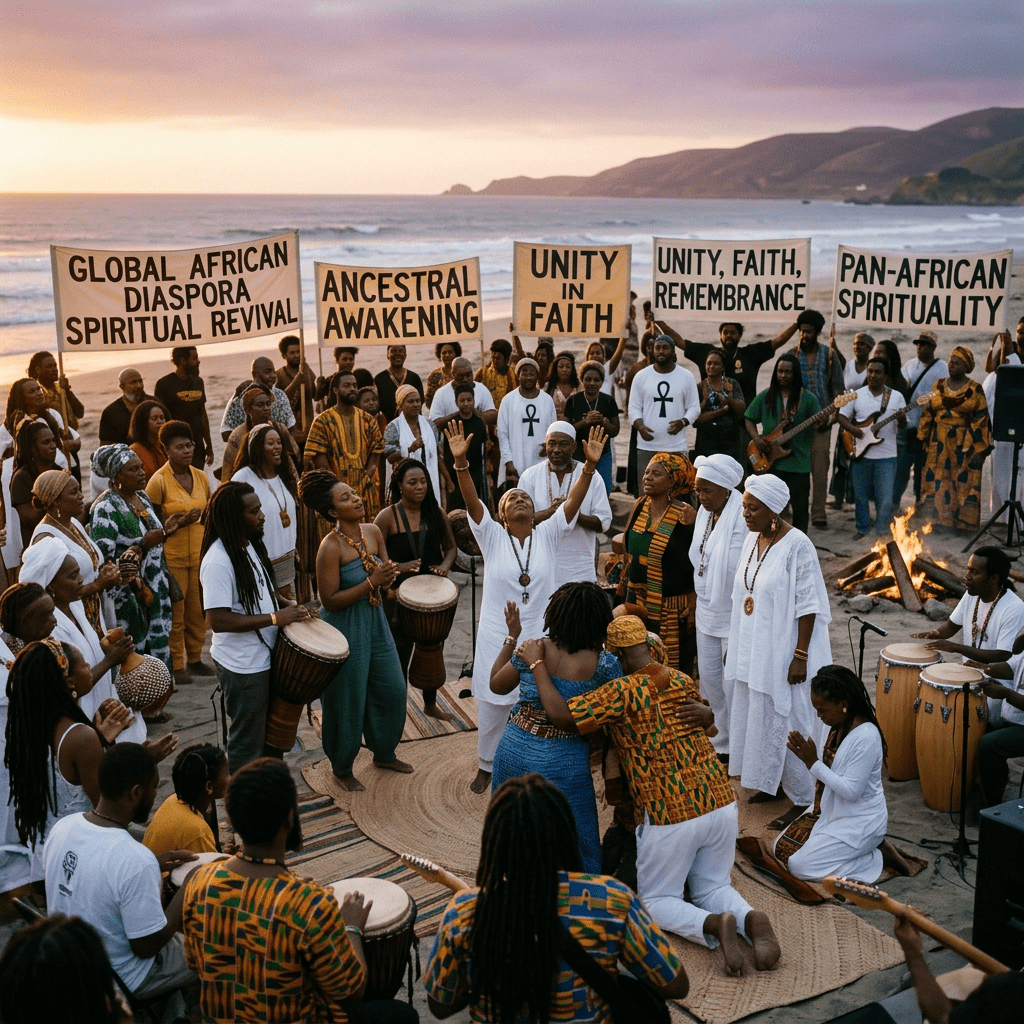
A vibrant beach ceremony celebrating Pan-African spirituality and unity
As these philosophies moved through the Diaspora, they evolved into vibrant faiths like Santería, Candomblé, and Vodou, each uniquely shaped by the cultural and historical contexts of their followers. Today, a global revival is taking place as sacred philosophies, languages, and rituals are reclaimed, drawing in individuals who seek to reconnect with their roots and navigate the complexities of contemporary life. This movement not only serves as a contemporary anchor for identity but also fosters a sense of community and belonging, allowing individuals to share their stories and experiences with others.
By reinforcing their cultural heritage and honoring ancestral worship, practitioners find strength and solace in their spiritual practices, which provide a robust framework to not only address modern challenges such as displacement, discrimination, and loss of tradition but also to cultivate a sense of community and belonging. These practices, deeply rooted in history, serve as a reminder of the resilience and wisdom of past generations, enabling individuals to draw upon age-old teachings to navigate contemporary issues. As these vibrant faiths flourish and evolve, they inspire a new generation to explore their own histories and the diverse narratives that shape their identities, leading to rich dialogues that celebrate diversity and mutual respect among different cultural expressions. This ongoing exchange of ideas fosters an environment where creativity and innovation can thrive, bridging gaps between generations and cultures, and ultimately enriching the collective human experience.
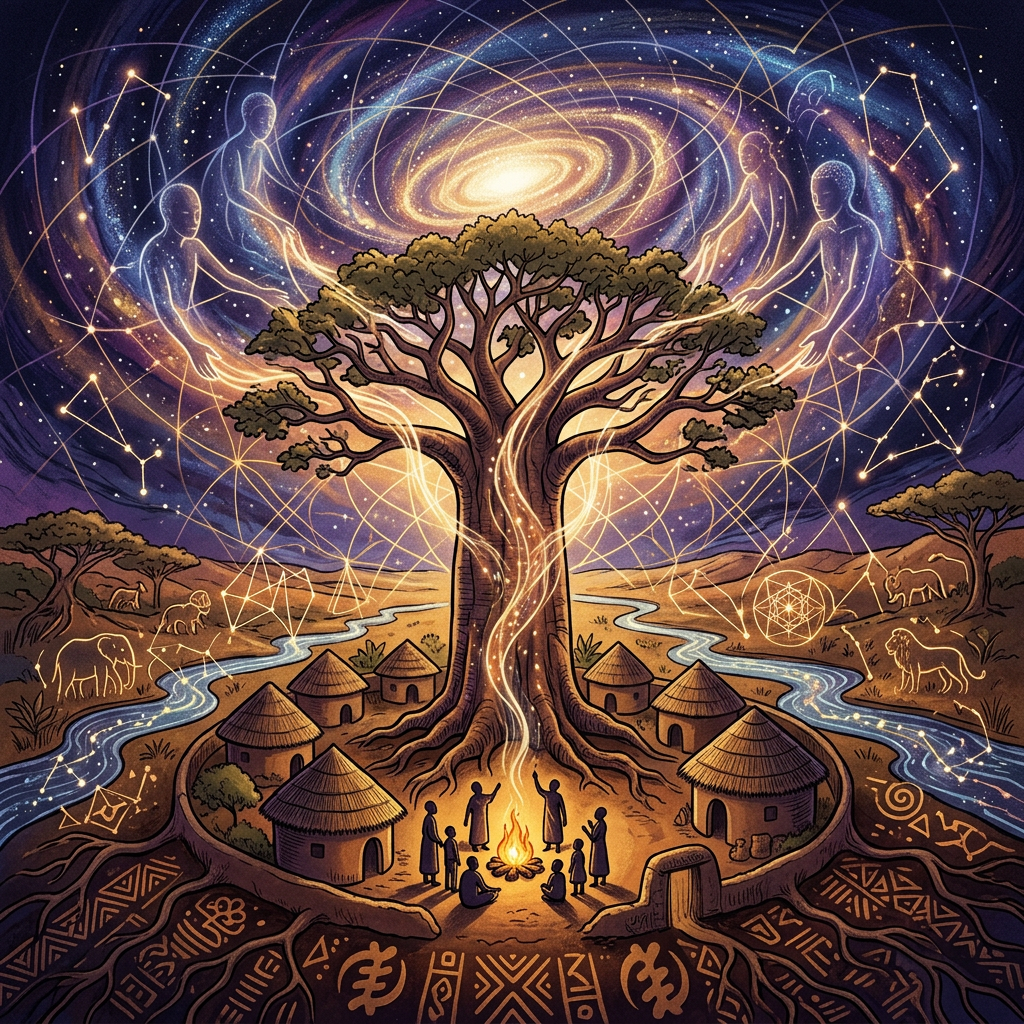
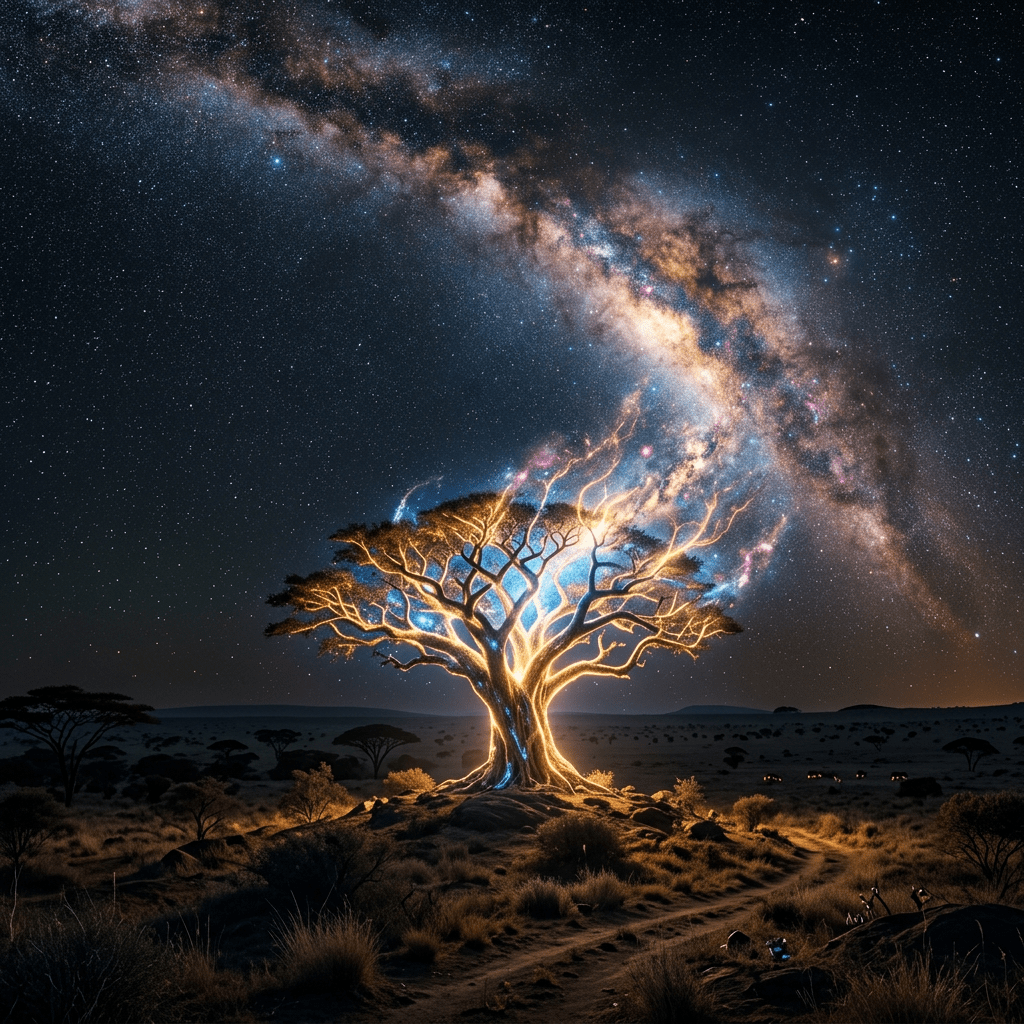
A glowing tree illuminated with cosmic light beneath the Milky Way galaxy
Welcome to HIDDEN SPIRITUALITY from Spirit Science, a platform where we examine how universal spiritual truths and ancient archetypes—including consciousness, cosmic cycles, and the soul’s arduous journey—permeate modern media. By analyzing films, games, and literature, we serve as a vital bridge connecting the profound, timeless wisdom of spiritual traditions with the sprawling landscape of contemporary popular culture. Our objective is to move beyond the surface level of entertainment, turning the media we engage with daily into a dynamic vehicle for profound self-discovery, personal growth, and a deeper cosmic understanding.
The Unseen Threads: Decoding Spirituality in Modern Media
We believe timeless spiritual principles shape contemporary narratives, resonating with our collective subconscious and mirroring our internal quests for meaning in the 21st century. We operate on the core assertion that ancient, universal truths and enduring human archetypes are not relics of the past but are, in fact, active, foundational blueprints shaping modern media. By analyzing the mystical symbolism and philosophical underpinnings embedded within these stories, we seek to understand their enduring and universal appeal, recognizing them as profound mirrors for the inner journey.
Dedicated to fostering a conscious global community, HIDDEN SPIRITUALITY empowers readers to find transformative potential in their entertainment. We build a vital bridge between passive consumption and active spiritual application, using modern storytelling to catalyze personal growth, self-realization, and a deeper cosmic understanding. Our mission is to move beyond the surface level of entertainment, turning the media we engage with daily into a dynamic vehicle for profound self-discovery and personal awakening.
In Today’s Deep Dive…
Did you know that the director of ‘They Live’ actually described it as a documentary? That’s right, this cult classic sci-fi thriller may not be as fictional as you think. In fact, it could be a chilling exposé of a hidden truth about our society. Join us as we dive deep into the world of ‘They Live’ and explore the shocking implications of its supposed documentary status.
We explore how timeless spiritual principles and ancient archetypes—such as consciousness and cosmic cycles—permeate modern media, mirroring our internal quests for meaning and understanding. By decoding these unseen threads in modern storytelling, we build a vital bridge between passive consumption and active spiritual application, using cinema to catalyze personal growth and transformation. This journey through the lens of film allows audiences to connect with profound themes of love, resilience, and purpose, inviting them to reflect on their own life experiences. As we engage with these narratives, they resonate with our deepest emotions and aspirations, encouraging us to seek out wisdom and clarity in our everyday lives. Ultimately, this exploration not only enriches our appreciation of art but also empowers us to embark on our unique paths of self-discovery and enlightenment.
What does John Carpenter’s vision tell us about the hidden agendas of those in power? And how might it change the way we see the world around us? Watch now to find out!
Connect and Engage with the Global Spirit Science Community
Our mission at Spirit Science is to foster a conscious global collective where seekers can explore universal spiritual truths and ancient archetypes. Join our growing network across multiple platforms to participate in the conversation, share your insights, and access exclusive content designed to catalyze personal growth and a deeper cosmic understanding.
Facebook ~ /spiritscienceofficial — Follow us for daily updates, community discussions, and live event announcements.
Instagram ~ /spiritscienceofficial — Discover visual inspirations, behind-the-scenes content, and bite-sized wisdom from our latest deep dives.
Twitter ~ /spiritsciences — Stay updated with real-time news, quick thoughts on modern media, and links to our newest articles.
Discord ~ Join our Discord Community — Enter our dedicated space for real-time interaction and deeper communal exploration.Website ~ https://spiritsciencecentral.com — Visit our central hub for comprehensive articles, the Hidden Spirituality series, and our full archive of transformative resources.
Capoeira Angola represents a profound synthesis of ritual, fight, and dance, where the practitioner seeks a state of “perfect movement.” This traditional Afro-Brazilian art form is not merely a physical exercise but a philosophical journey that integrates the physical and spiritual realms through the concept of the “jogo” (game). On the one hand, it embodies the rich cultural heritage and historical struggles of African descendants in Brazil, while on the other, it fosters a sense of community and belonging among its practitioners. Through intricate footwork, rhythmic melodies, and acrobatic moves, capoeira serves as a vibrant expression of identity and resilience. Each interaction in the roda, or circle, becomes an opportunity for dialogue, connection, and personal growth, allowing participants to embody creativity and improvisation while adhering to the traditional structures of the art, thereby enriching their understanding of both themselves and their cultural roots.
Strategic Physicality: Defense and Vulnerability
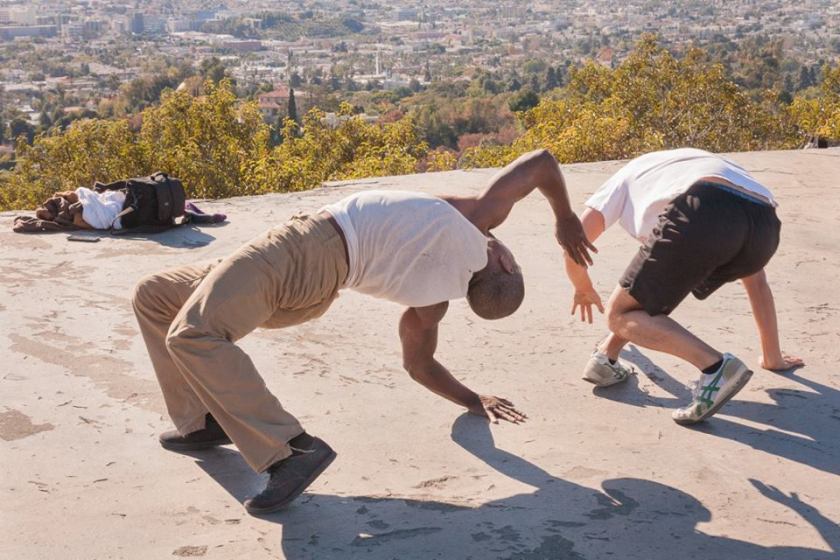
At its core, the art requires a perfect coordination of the body. This fluidity serves a dual purpose: providing an impenetrable defense against an opponent’s attacks while simultaneously identifying or creating openings to make that opponent vulnerable to one’s own strikes. The movements are deceptive, low to the ground, and constantly evolving, ensuring that the capoeirista remains an elusive target. Through the use of circularity and continuous motion, the practitioner maintains a balance between active aggression and protective restraint, embodying the principle that a well-executed defense is often the most effective form of offense.
Beyond the mechanics of combat, this strategic physicality is deeply rooted in the concept of “malícia,” or deception. By masking intent through rhythmic swaying and feigned vulnerability, the capoeirista manipulates the space and timing of the encounter. This creates a dialogue within the “jogo” where every movement is an inquiry and every response is a revelation of the opponent’s internal state. The goal of achieving “perfect movement” is thus realized when the physical body becomes a seamless instrument of the mind’s strategic will, navigating the complexities of the game with grace and precision.
Holistic Well-being: Movement as Medicine
The practice of Capoeira Angola is a pathway toward creating perfect health. Beyond cardiovascular benefits and muscular strength, the circular and rhythmic nature of the movements promotes flexibility and joint health. The focus required during the game fosters mental clarity and emotional resilience, making the movement a form of active meditation.
The ultimate goal is developing your movement and healing your trauma by engaging in the art to its full potential through the act of “playing”. This concept of “playing” within the roda serves as a safe container for profound personal transformation. By embracing the playful yet disciplined nature of the game, a capoeirista can confront personal limitations, process past experiences, and unlock a more authentic version of their physical and artistic self.
This therapeutic aspect of Capoeira Angola allows practitioners to navigate the complexities of their own history through rhythmic interaction. The “jogo” acts as a mirror, reflecting one”s internal state and providing a rhythmic space where the integration of the physical and spiritual realms becomes possible. Through the continuous cycle of movement and music, the practitioner moves beyond mere exercise into a state of active meditation that fosters long-term emotional resilience.
The Extension of Self: Ritual Weapons
In this tradition, Capoeira weapons—such as the straight-razor, the knife, billy-club, machete, the berimbau, etc.—are viewed as more than tools; they are an extension of your body and your being, embodying the very spirit of the art form itself. Historically, these armaments were indispensable for survival and self-defense, reflecting the harsh realities faced by capoeiristas throughout various epochs in Brazil, from the struggles of slavery to modern-day conflicts. The deep-rooted significance of these weapons lies not only in their practical applications but also in the cultural and historical narratives they carry. Bladed weapons, particularly the navaja (straight razor) and faca (knife), are central to understanding the art as a complete system of survival, where knowledge of armed conflict was often an expectation and an essential skill set.
This integration of weaponry into the practice of Capoeira speaks to a broader philosophy within the discipline, emphasizing resilience, adaptability, and the ability to confront adversity with grace and skill. Through rigorous training, practitioners learn not only the techniques of using these weapons but also the respect and responsibility that comes with wielding them, ensuring that the legacy of Capoeira continues to thrive amidst evolving societal landscapes.
The process of cultivating mastery with these tools involves a profound conceptual shift where the blade is treated as a direct extension of the hand and arm. This integration relies on several core principles of Capoeira Angola:
Malícia (Deception): The presence of a weapon is often concealed within the fluid rhythm of the ginga, its deployment masked by seemingly unarmed or non-threatening movements.
Strategic Asymmetry: Practitioners utilize low stances and circular movements to minimize their profile while creating unpredictable openings for decisive, short-range attacks.
Psychological Warfare: The mere sight of a drawn blade serves as a tool for manipulation, capable of de-escalating a threat through intimidation or igniting a confrontation by forcing an adversary to hesitate.
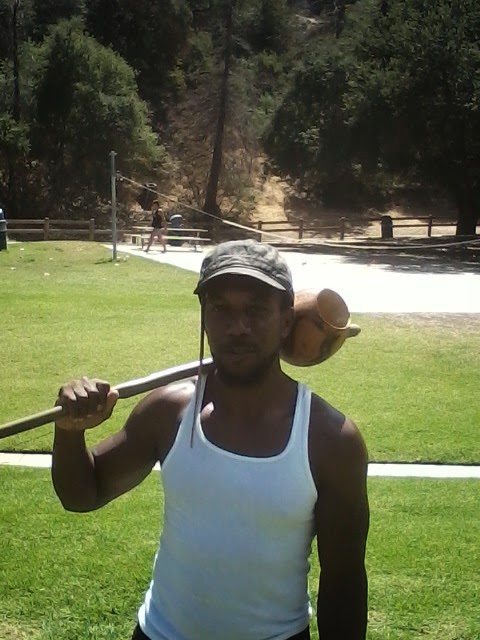
The machete holds a particularly deep symbolic resonance, representing the unbreakable connection between contemporary practitioners and the ancestral legacy of enslaved Africans who used it as both an agricultural tool of labor and a potent instrument of rebellion. This dual purpose not only highlights the ingenuity and resilience of those who wielded it but also serves as a stark reminder of their struggles against oppression. Furthermore, traditional instruments like the berimbau are recognized for their defensive versatility, capable of serving as bludgeons or concealment for other tools, underscoring the art’s practical origins in clandestine resistance. Additionally, the berimbau’s distinct sound creates a rhythmic dialogue that forms the backbone of cultural expression, allowing practitioners to communicate in ways that transcend spoken language. In this context, both tools symbolize the enduring spirit of a people who, through creativity and resourcefulness, transformed instruments of survival into symbols of cultural pride and defiance.
.
Potential through Play: Healing and Growth
The ultimate goal is developing your movement and healing your trauma by engaging in the art to its full potential through the act of “playing.” This concept of “playing” within the roda serves as a safe container for profound personal transformation. By embracing the playful yet disciplined nature of the game, a capoeirista can confront personal limitations, process past experiences, and unlock a more authentic version of their physical and artistic self.
This therapeutic aspect of Capoeira Angola allows practitioners to navigate the complexities of their own history through rhythmic interaction. The “jogo” acts as a mirror, reflecting one’s internal state and providing a rhythmic space where the integration of the physical and spiritual realms becomes possible. Through the continuous cycle of movement and music, the practitioner moves beyond mere exercise into a state of active meditation that fosters long-term emotional resilience.
Within this active meditation, the practitioner utilizes the strategic physicality and “malícia” (deception) inherent in the art to mask intent and manipulate the space and timing of the encounter. This manipulation creates a dialogue where every response reveals the opponent’s internal state, further bridging the gap between the physical body and the mind’s strategic will. By mastering these circular and rhythmic movements, capoeiristas achieve a state of “perfect movement” that not only promotes cardiovascular health and flexibility but serves as a pathway toward holistic well-being and perfect health.
HIDDEN SPIRITUALITY from Spirit Science shows how deep, universal spiritual The Unseen Threads: Decoding Spirituality in Modern Media
At HIDDEN SPIRITUALITY, we operate under the profound conviction that timeless spiritual truths and ancient archetypes are deeply woven into the fabric of modern pop culture—including contemporary films, video games, literature, and comic books. We assert that fundamental perennial principles such as the nature of consciousness, the concept of cosmic cycles, and the transformative journey of the soul are not merely philosophical abstractions but active forces that profoundly shape and permeate contemporary media narratives.
Our core mission is to decode these embedded spiritual and mythological themes, effectively turning passive entertainment consumption into a dynamic vehicle for profound self-discovery and personal awakening. We focus our analysis on universal, perennial concepts found consistently across major world spiritual and wisdom traditions:
The Hero’s Journey (The Monomyth): We explore Joseph Campbell’s foundational monomyth, which serves as a universal map for the soul’s path of transformation, individuation, and ultimate return. Every call to adventure and descent into the unknown mirrors the psychological and spiritual stages of personal growth.
Karma and Causality: We analyze how the universal law of cause and effect—that every action generates a corresponding reaction—is meticulously reflected in narrative arcs, character development, and the moral lessons inherent in storytelling. Characters’ fates are rarely accidental; they are often the inevitable consequence of their choices.
Oneness (Non-Duality): We delve into the ultimate truth of unified consciousness and the interconnectedness of all existence. Many powerful narratives subtly or overtly point toward the dissolution of the ego and the realization that all separation is ultimately an illusion.
Cycles of Death and Rebirth: We examine the constant, inescapable pattern of dissolution, transformation, and renewal that is essential for both cosmic and personal evolution. This theme symbolizes profound personal change, the necessary end of old ways of being, and the emergence of a renewed self.
Building a Conscious Community and Bridge
HIDDEN SPIRITUALITY is dedicated to fostering a conscious and interconnected global community. We empower viewers and readers to recognize the deep spiritual significance and transformative potential latent within their everyday entertainment. Our work strives to build a vital and robust bridge between casual, passive media consumption and the active application of timeless, perennial spiritual truths to navigate life’s complex challenges and foster a more awakened existence.
In Today’s Deep Dive: The Dark Enlightenment of The Joker
Beyond our featured Avatar analysis, today’s installment offers a provocative and unflinching look at the film Joker (2019). This cinematic masterpiece, starring Joaquin Phoenix, is far more than a comic-book origin story; it functions as a raw, visceral, and powerful reflection of the escalating shadows within modern, atomized society. It meticulously highlights the devastating, cascading effects of a hostile environment, profound institutional neglect, and systemic failures on the most vulnerable individuals, ultimately detailing the catastrophic collapse of one man’s quality of life and the rapid deterioration of his mental health.
But what if this cinematic narrative holds an even deeper, more challenging, and arguably more dangerous spiritual or philosophical meaning? We propose that Arthur Fleck’s transformation into The Joker is a grotesque, albeit potent, parable about the nature of enlightenment itself—a spiritual awakening that is twisted into a “dark” or shadow-laden version, a radical self-acceptance found not in light and love, but in chaos and utter rejection of the social contract.
In this featured video, we undertake a deep, psycho-spiritual exploration into the twisted, chaotic world of Arthur Fleck and his final, terrifying emergence as The Joker. Our aim is to uncover the hidden spiritual themes and subterranean philosophical currents that lie beneath the surface of his descent.
Key areas of our analysis include:
The Crippling Effect of Societal Pressure: We examine how unrelenting societal pressure, contempt, and the systematic failure of support structures (represented by the gutting of social services and mental healthcare) crush the vulnerable individual, leading to a profound alienation that is both psychological and existential.
A Controversial Examination of “True Enlightenment”: We delve into the concept of what constitutes “true enlightenment.” Is it possible for a radical break from societal norms—a full embrace of one’s authentic, uninhibited inner self, however destructive—to be seen as a form of self-realization? We explore the Joker’s journey not as a tragedy of failure, but as a disturbing success in achieving a terrifyingly uncompromised state of inner authenticity.
The Shadow Work of Madness: We meticulously examine how this disturbing, yet profoundly layered film offers a unique and unsettling perspective on critical topics like authenticity, self-acceptance, and the cost of integrity in a fractured world. Arthur’s final, manic dance is interpreted as the completion of a destructive form of “shadow work,” where the suppressed, rejected aspects of the self are not integrated in a healthy manner, but violently burst forth to consume the individual and threaten the world around him.
Join us as we undertake a complex analytical journey into the core themes and incendiary messages of the Joker movie. Our goal is to uncover the dark, unvarnished truths about the extreme, often misunderstood, and highly dangerous path to a radical form of self-realization. Discover how this film fiercely challenges our most fundamental, preconceived perceptions of what it means to be whole, sane, or “enlightened.” Ultimately, Joker provides a disquieting new perspective on the journey towards finding some twisted version of inner peace—or perhaps, just inner authenticity—even when that journey demands the ultimate cost: the complete forfeiture of societal acceptance and sanity itself.
The Spirit Science community is a vibrant and expansive collective dedicated to exploring consciousness, spirituality, and personal growth. To join the conversation and immerse yourself in this enlightening network, you can connect with us across various digital platforms.
Stay Connected on Social Media:
Facebook: Join the global discussion and engage with like-minded individuals by visiting our official Facebook page. We regularly share thought-provoking articles, updates on new content, and community-driven insights.
Instagram: Experience the visual and inspirational side of Spirit Science. Our Instagram feed is curated with uplifting visuals, concise spiritual wisdom, and sneak peeks into the creation of our content.
Twitter (X): Follow us for real-time updates, quick philosophical musings, and links to trending topics within the wider spiritual and conscious community.
Official Website: The Spirit Science Central website serves as the primary resource for all our content, including in-depth animated series, articles, courses, and more. It is the central repository for diving deeper into the concepts we explore.
We encourage you to utilize these platforms to connect with the material, participate in discussions, and become an active member of the expanding Spirit Science family.