
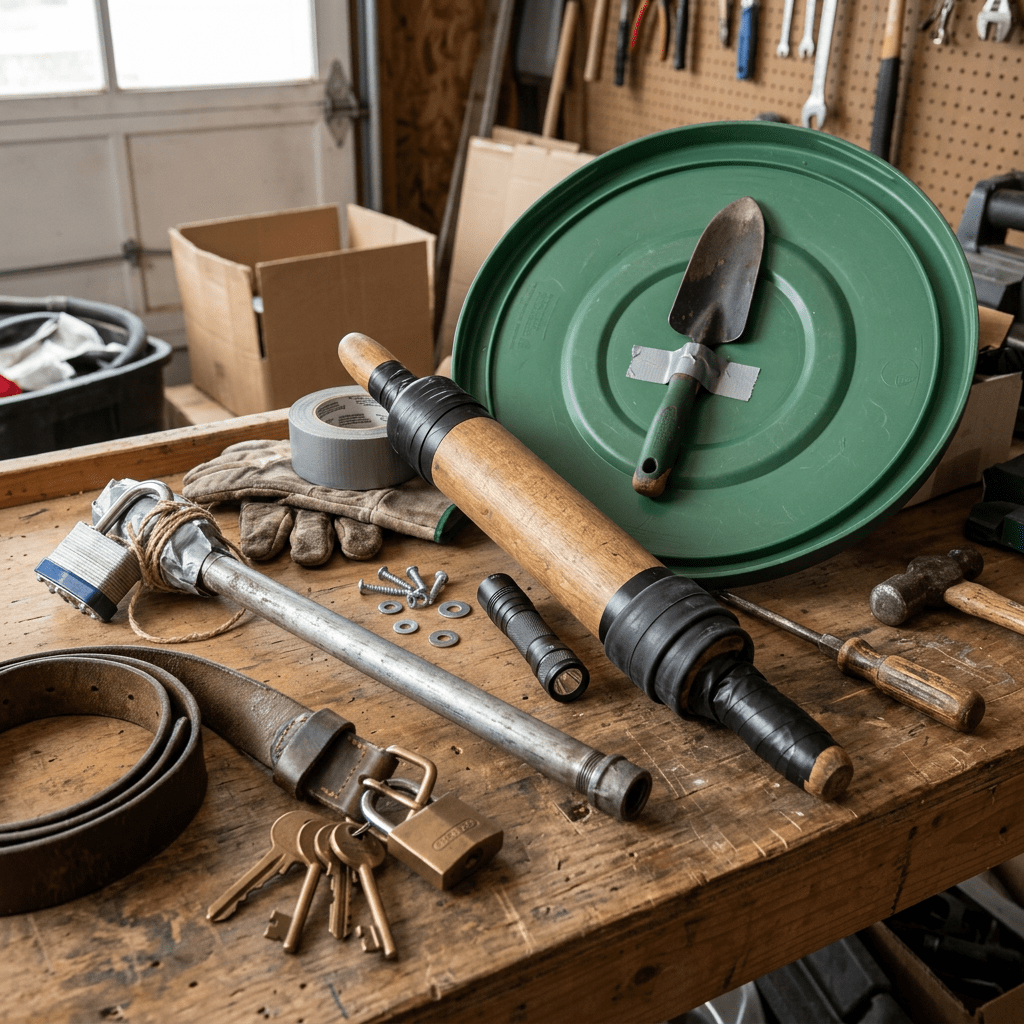
As an Angoleiro, a player of Capoeira Angola, you know instinctively that survival and self-defense are not commodities dependent on carrying a specialized tool, a tactical blade, or a concealed firearm. True self-protection is a state of being—it is about presence, awareness, and the core ability to turn anything in your immediate environment into a means of defense, distraction, or escape. This guide will take you beyond the obvious and show you how to channel the discipline, cunning, and inherent misdirection of the mestre into practical, urban combat survival.
The Angoleiro’s Philosophy of Improvised Defense
The foundational principle of Capoeira Angola is transformation—turning an opponent’s aggression into an opportunity, and turning a disadvantageous position into a decisive ginga. This philosophy extends directly into the realm of self-protection. An Angoleiro views the urban landscape not as a static environment, but as a vast arsenal. Your body is the ultimate weapon, but the objects around you are its force multipliers.
The focus shifts from “What weapon do I have?” to “What weapon is available now?” This mindset requires a constant, fluid assessment of your surroundings, a habit known in security circles as “OODA Loop awareness” (Observe, Orient, Decide, Act), but which an Angoleiro understands as simply being present in the roda of life.
From Everyday Object to Decisive Tool
The effectiveness of an improvised weapon is not about its destructive potential, but about the surprise and confusion it introduces, buying you the crucial seconds needed to execute a rasteira (sweep), a cabeçada (headbutt), or a tactical retreat. This guide categorizes the most common urban objects based on the primary function they can serve:
1. Impact/Striking Tools (The Pancada Principle):
These items function as extensions of your limbs, providing reach, mass, and focused trauma. They are used in the same manner as a martelo (hammer kick) or a cruz (straight punch), but with increased devastating effect.
- Examples: Rolled-up magazine or newspaper (strikes to the throat/eyes), water bottle (blunt force to face, or an effective throwing distraction), a heavy book, a travel mug, a sturdy umbrella.
- Technique: Aim for soft targets—temples, nose, throat, or collarbone. The goal is a quick, disorienting strike that breaks the aggressor’s posture and commitment.
2. Edged/Focus-Point Tools (The Bico Principle):
These are objects that concentrate force into a small point to cause pain compliance, pierce, or break the skin. While rarely fatal, they are highly effective at forcing an attacker to disengage.
- Examples: Car keys (held in a fist with the sharp end protruding between the index and middle fingers), a pen or pencil (for jabbing soft tissue points), a comb, a credit card (used to slash across the face or eyes).
- Technique: Use quick, linear thrusts rather than wide, sweeping motions. The eyes, the back of the hand, and the sensitive skin under the chin are prime targets.
3. Whipping/Grappling Tools (The Corda Principle):
These are flexible items that can be used to control, bind, or deliver a painful lash. They mimic the flow and unpredictability of Capoeira’s acrobatic movements.
- Examples: A belt (the buckle acts as a weight), a scarf or bandana, the cord from a hoodie, a power cable, a heavy bag strap.
- Technique: Use the element of sound and speed—a loud, sharp crack from a belt lash can be a powerful psychological deterrent. They can also be wrapped around an attacker’s wrist or neck for momentary control.
4. Distraction/Disorientation Tools (The Engano Principle):
The engano (deception) is central to Angola. These objects are not used for direct damage, but to create a momentary sensory overload, allowing for escape or a follow-up attack.
- Examples: A handful of change, hot coffee or tea (thrown into the face), sand or dirt, a spray bottle of sanitizer, sunglasses (thrown at the eyes).
- Technique: This must be an immediate, committed action. Throw the object directly into the attacker’s face and move simultaneously—do not wait to observe the result.
The Angoleiro’s true power lies in the core ability to adapt and overcome, ensuring that no matter the circumstances or environment, you are never truly unarmed. Your weapon is your mind, your spirit, and the world around you.
The Philosophy of the Improvised Weapon
The street is an unpredictable, often hostile, environment where the unprepared become victims. For the seasoned practitioner, particularly the Angoleiro, the philosophy of defense transcends reliance on conventional weaponry. In many modern environments, stringent laws and evolving security restrictions prevent or punish the carrying of traditional, specialized tools for self-defense. But this restriction is not a defeat; it is, fundamentally, a challenge and an opportunity for superior cunning and tactical ingenuity.
The mastery of the improvised weapon is not about the crude application of brute force. It is a sophisticated application of fundamental physics—leveraging mass, velocity, leverage, and friction—to create maximum psychological and physical impact from the most mundane objects. This approach requires not only physical skill but deep environmental awareness and a mental shift in how everyday objects are perceived.
The goal is surprise, disorientation, and the creation of the critical window necessary for a fuga (escape).
The sheer element of shock is the primary weapon. It transforms a common object—be it a thick hardcover book used for blunt-force deflection, a tightly rolled leather belt snapped to create a punishing whip effect, or a simple roll of quarters clutched in the fist to significantly enhance mass and impact—from a mundane possession into a highly effective tool for incapacitation, deflection, or creating necessary distance. The improvised weapon turns the attacker’s expectation of an easy target against them, granting the defender the precious seconds needed to disengage and survive the encounter.
Turning Everyday Items into Deadly Tools: The Angoleiro’s Arsenal
Forget the tactical knives and hidden sticks. Your greatest asset is the mindset to see the environment itself as an extension of your body and a collection of potential weapons.
1. The Hot & Sticky Distractions
- The Scalding Distraction: A simple cup of coffee, tea, or any hot beverage is perhaps the ultimate non-lethal, high-impact deterrent. Thrown directly into an attacker’s face, the sudden, searing pain and temporary blindness create an instant, visceral shock. This is your opening. You don’t linger to fight; you execute a defensive maneuver (a quick cabeçada or rasteira if needed) and retreat. The scalding liquid is the primary distraction; the ceramic or paper cup itself, once empty, becomes a makeshift striking implement against the soft tissues of the throat or eyes.
- The Concussive Projectile: A dense, day-old donut (especially a glazed or old-fashioned) or even a hard roll, when held in a fist, adds surprising mass, density, and firmness to a straight punch. This effectively turns your fist into a weighted club, significantly increasing the impact of a strike to the temple or jaw. Used as a projectile, the dense object can startle or momentarily stun an attacker at close range, buying you precious milliseconds.
2. The Whips, Flails, and Blinding Clouds
These items leverage kinetic energy and fine particulate matter to disrupt an attacker’s senses and balance.
- Your Hat (The Misdirection Shield): A stiff-brimmed hat (fedora, baseball cap, even a sturdy beanie) is an excellent deflection and striking tool. The brim can be snapped or whipped across an attacker’s eyes, serving as a quick, painful distraction. It can also be used as a shield to momentarily fend off a grasping hand or a quick strike, allowing you to slip past.
- Socks (The Weighted Sap): This is a classic, low-profile tool. When rolled tight and weighted with something small and dense (like a few coins, a heavy key, or a small, smooth rock), a sock transforms into a highly effective, fast-moving flail or sap. Swung with velocity, the weighted end can deliver a painful, concussive strike to the head, face, or hands, severely impairing the attacker’s ability to continue.
- A Pack of Kool-Aid (or Similar Powdered Drink Mix): A forgotten but incredibly effective trick from the streets and military survival guides. Tearing open the packet and throwing the fine, bright, and often sugary powder directly into an attacker’s face instantly blinds, disorients, and sends them into a paroxysm of coughing and sneezing. It’s a non-traceable, high-impact defensive move that utilizes the body’s reflexive defense mechanisms against foreign particulates.
3. Leveraging Leverage and Mass
- The Magazine/Rolled Paper: A tightly rolled, thick magazine or newspaper becomes a surprisingly rigid club, suitable for delivering sharp, focused strikes to pressure points or soft targets. The impact can be focused like a baton.
- Keys and Coins (The Fists of Fury): Hold a key between your index and middle finger, projecting the tip just past your knuckles to deliver a sharp, piercing jab. Alternatively, a handful of coins tightly gripped in your fist adds mass and a “shrapnel” effect to a punch, significantly enhancing the damage and pain of the strike.
- The Belt or Scarf (The Whiplash Effect): A leather belt, unbuckled and held by the buckle end, is a superior flail. The buckle is heavy and, when swung, delivers a powerful, snapping strike to the face, eyes, or hands. A long scarf or tie can be used for wrapping, snagging, or even a quick, choking distraction.
Be the Weapon: The Angoleiro’s Final Lesson
This article, and the lessons contained within, are not merely a catalog of objects and their potential for self-defense; it is, fundamentally, a catalyst for shifting your entire mindset. The true objective is to instill the profound understanding that every single element of your existence—from the smallest item you carry to the very way you move and breathe—has the inherent, untapped potential to become a tool for your protection and survival.
The Angoleiro’s lesson is a discipline forged not just in theory, but in the crucible of years of intense roda practice and the deeply ingrained philosophy of the game of Capoeira Angola. This practical and philosophical foundation drives one clear, inescapable truth: You are never truly unarmed.
Your defense is not dependent on the presence of a specific tool, but on the cultivation of internal and environmental resources. Therefore, your greatest and most reliable weapons are not external, but internal:
- Your Awareness: The highest form of self-defense is pre-emption. This is the ability to read the environment, perceive subtle shifts in the emotional and physical landscape, and identify threats long before they materialize into violence. Awareness transforms you from a potential victim into a responsive participant in your own safety.
- Your Resolve: In the face of a threat, your will to survive must be absolute and uncompromising. This resolve is the mental switch that converts panic into action, fear into focused energy, and hesitation into decisive movement. It is the core mental fortitude that allows you to commit to the necessary actions for escape and defense.
- Your Cunning: The Angoleiro’s approach is defined by malícia—cunning, trickery, and ingenuity. It is the ability to think non-linearly, to exploit an opponent’s expectations, and to use psychological advantage to create an opportunity for survival. Your cunning enables you to turn everyday objects and environmental conditions into potent, surprising deterrents.
The Angoleiro’s Philosophy of Survival: The Art of the Strategic Retreat
The philosophy of the Angoleiro—a master of the fight rooted in the principles of Capoeira Angola—is not one of reckless aggression but of pragmatic, intelligent survival. The ultimate victory lies not in defeating an opponent through brute force, but in escaping the encounter whole, ready to fight another day.
The Angoleiro commands you to remember this sequence of priorities:
1. Use the Environment (The Art of Malícia)
The environment is your first and most effective weapon—or shield. This principle demands more than just awareness; it requires Malícia, a streetwise cunning and acute, practical intelligence.
- Obstacles as Allies: Never engage in an open field if you can draw a confrontation into a cluttered, narrow, or otherwise complex space. Use doorways, furniture, parked cars, or variations in terrain to break an opponent’s rhythm, slow their advance, or create a momentary screen.
- Improvisation and Opportunity: Everything around you is a potential tool. A scattering of gravel can destabilize a pursuer; a sudden splash of liquid can obscure vision; a heavy object can be a distraction or an improvised weapon. The environment is rich with opportunities for misdirection and advantage.
- Control the Arena: If you must fight, you dictate the terms by choosing where the engagement occurs. Your chosen environment should offer maximum cover, multiple escape routes, and advantages that disrupt your opponent’s planning.
2. Use the Surprise (The Power of the Unconventional)
Surprise is the great equalizer. It shatters an attacker’s confidence, breaks their mental script, and opens a decisive window for retreat.
- The Unexpected Action: Your movements must be unpredictable. A sudden, immediate retreat can be as jarring as an unprovoked attack. Use feints, vocalizations, or sudden shifts in posture to draw a reaction that you can exploit.
- Exploiting the Blind Spot: Attack where you are not expected, or use a distraction that pulls attention away from your true intention. A sudden, loud noise or a thrown object is often enough to buy the crucial seconds required to initiate your escape.
- The Psychological Edge: True surprise comes from actions that are culturally or contextually inappropriate for the situation. A sudden fit of exaggerated panic, a bizarre non-sequitur, or a radical shift in demeanor can confuse and stall an aggressor.
3. And always, always make your escape.
This is the imperative, the non-negotiable end goal. All other actions—environmental manipulation, improvised attacks, and feints—are merely tactics employed to facilitate this strategic objective.
- Survival is the Victory: The concept of “winning” must be redefined. Victory is not the subjugation of the opponent; it is the preservation of self. A strategic, swift, and clean escape is the highest form of victory.
Retreat is the Ultimate, Strategic Win: Do not view retreat as a failure or an act of cowardice. It is the most sophisticated form of strategy. By removing yourself from immediate danger, you deny the aggressor their objective, conserve your own resources, and live to fight—or, more accurately, to evade—another day. The Angoleiro understands that a wounded but surviving fighter has the opportunity for revenge or, more practically, continued life, while a captured or defeated one does not.
 Jogo Corpo Fechado