

The exploration of martial and survival systems necessitates a deep understanding of the psychological and emotional energies that serve as their driving force. Central to this exploration is the critical distinction between the Warrior Mindset and the Predator Mindset. While both are intensely concerned with conflict, dominance, and the application of force, their core motivators, operational energies, and ultimate scopes diverge fundamentally.
I. The Predator Mindset: The Visceral Engine of Immediate Necessity
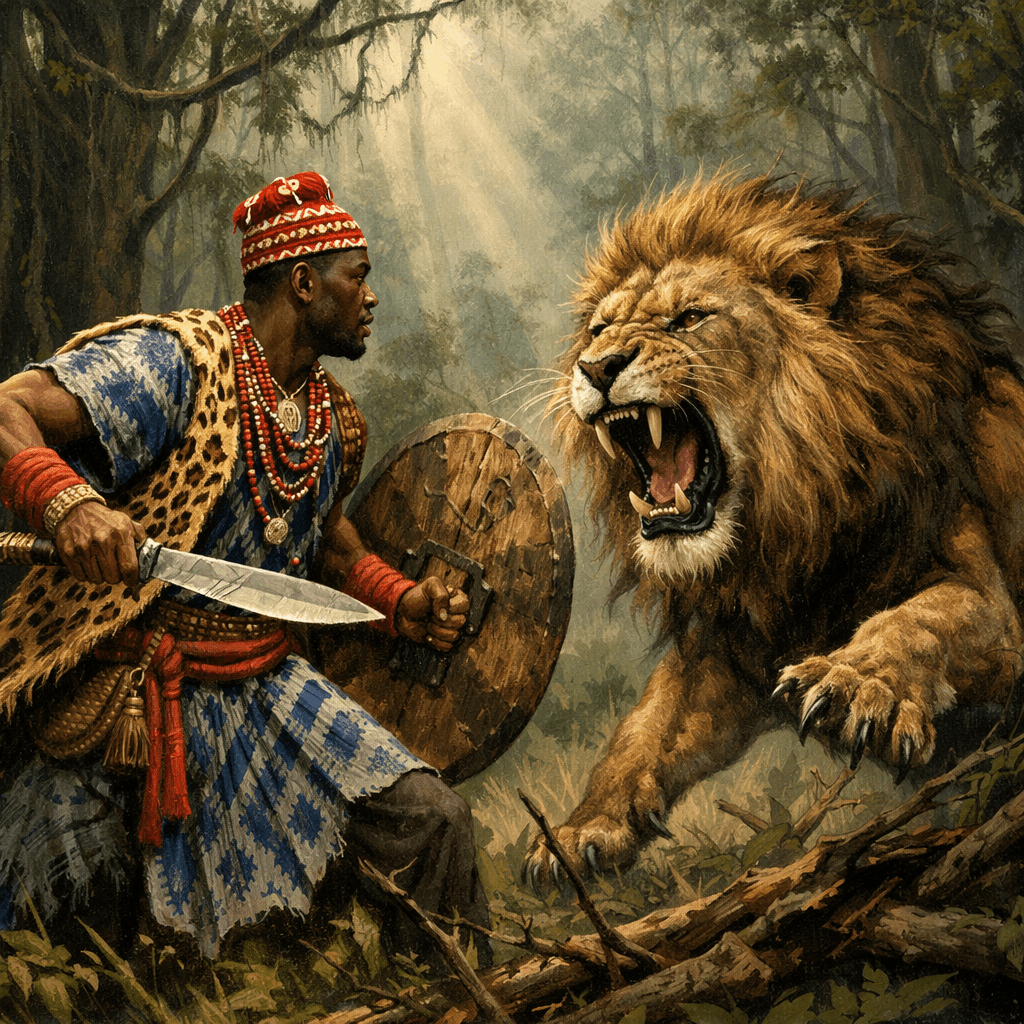
The Predator Mindset transcends mere strategy; it is a primal, fundamental state of being driven entirely by visceral hunger and the relentless, singular desperation of the hunter. This psychological frame is forged in the crucible of raw, immediate necessity—the biological imperative to secure resources, survive an imminent threat, and achieve decisive dominance over a specific, identifiable target. It is the unvarnished, instinctual approach to conflict, deliberately stripped of the philosophical, moral, or ethical complexities that often characterize the ‘warrior’ ethos.
Core Attributes and Operational Energies
- Core Driver: Necessity and Immediate Survival. The engine of the Predator Mindmet is stark, unyielding necessity. It is motivated by the immediate, biological imperative to acquire the ‘prey’—which, in a broader context, represents the required resource, the assurance of safety, or the attainment of a critical objective—for the purpose of self-preservation. There is no strategic, long-term planning outside of the current hunting cycle; the entire mental focus is locked exclusively onto the ‘now’ of the engagement.
- The Energy: Dark and Untamed. This mindset is often powered by what is conceptually described as the Dark Energy—a raw, untamed current of visceral aggression and primal intent. This is the unthinking, deeply ingrained instinct that compels a subject to attack, neutralize a threat, or secure a target with absolute, surgical efficiency. This operational energy is characterized as cold, pragmatic, and fundamentally amoral. It views conflict as a simple, mechanical equation: energy expended equals objective attained. Crucially, it strips away all conscious hesitation, moral friction, and internal negotiation.
- Psychological State: The Tunnel Vision of the Hunt. The predator operates in a state of profound, functional dissociation from all non-essential stimuli. The mind achieves a singular, unwavering focus where the target and the means of its neutralization are the only variables in the universe. Fear is not absent, but it is transmuted into the focus required for the hunt. Empathy is nonexistent, as it is a counterproductive luxury in the face of survival.
Tactical Execution: The Natural Laws of the Hunt
The tactics employed by this mindset are directly rooted in the natural, unforgiving laws of the animal kingdom’s hunt:
- Stalking and Patience (The Conservation of Force): The patience exhibited is not born of discipline, but of profound hunger and the need for optimal energy conservation. The predator conserves energy meticulously, moving only when every motion is essential and maximized for lethal impact. They wait for the environmental factors, target vulnerability, and situational advantage to align perfectly.
- Surprise and Concealment (The Asymmetry of Initiative): The element of surprise is paramount—it is the force multiplier that minimizes risk. The predator seeks to close the distance or initiate the engagement from a position of absolute concealment and overwhelming advantage, rendering the target’s effective reaction and defense impossible. The conflict must be over before the target recognizes it has begun.
- Swift and Decisive Closing (The Absolute Commitment): Once the precise moment of vulnerability is identified, the action is sudden, brutal, and utterly overwhelming. The objective is instant and total neutralization or “the kill.” There is no effort to wound, capture, or manage the target; the objective is to leave absolutely no room for the target to recover, counter-engage, or escape.
Scope and Focus: Narrow and Hyper-Focused
The scope of the Predator Mindset is inherently narrow, intensive, and hyper-focused. Its attention is locked with terrifying intensity on the immediate interaction, the current engagement, or the specific resource or target. It does not concern itself with the aftermath, the political or systemic implications, the legal ramifications, or the broader strategy of the ‘war.’ Its entire operational universe violently shrinks down to the critical space and time between the hunter and the hunted. This ruthless, narrow focus is precisely what grants it its devastating, single-minded efficiency and lethality.—–(The elaboration continues with the introduction and detailed analysis of the Warrior Mindset, highlighting its divergent motivators, operational energies, and expanded scope, ensuring a direct comparative structure that retains the original tone and facts.)
The Warrior Mindset: An Evolution Beyond Instinct
The Warrior Mindset stands as a sophisticated and highly refined evolution of human nature, rising fundamentally above the mere primal necessity of survival that defines a pure “predator.” While the Warrior is undeniably capable of accessing and harnessing the raw, potent force often termed the Dark Energy of aggression, competition, and decisive action, their defining characteristic is the successful integration of this power with rigorous self-discipline, a clear and articulated purpose, and a steadfast commitment to a broader ethical and moral framework. This mindset is not merely defined by the act of the hunt or the ambush, but is instead shaped by a deep-seated commitment to duty, the defense of value, and the relentless pursuit of self-mastery.
Core Principles of the Warrior Mindset
The Warrior’s operational framework is built upon pillars that transcend simple self-preservation:
- Core Driver: Discipline, Duty, and Honor. The internal engine of the Warrior is fueled by more than the urge to survive. Their motivation is rooted in the commitment to a higher cause, a core principle, or a deeply felt obligation to others. The fight is undertaken not just for personal survival, but for the protection of an ideal, a community, or a system. This relentless pursuit of continuous self-mastery ensures their capability remains sharp, relevant, and robust.
- The Mastery of Energy: The Warrior’s relationship with the Dark Energy is one of control, not consumption. They treat this formidable force as a potent tool—a precise, channeled energy source for focused action—rather than allowing it to become a master that dictates their behavior. This superior drive is a product of sustained, deliberate training—physical, mental, and ethical—which forges a mental fortitude capable of maintaining complete composure, rational decision-making, and effectiveness even under the most extreme duress. The result is an energy application that is precise, highly efficient, and, critically, sustainable over the long term.
- Tactical Philosophy: The Warrior’s approach is inherently strategic, adaptable, and proactive. They do not rely on a single, predictable form of engagement like a surprise attack. Instead, the Warrior prepares diligently for an entire spectrum of potential conflicts, understanding that a superior position is achieved through meticulous preparation, versatile skill sets, and the ability to dictate the terms of the engagement before the battle even begins. They prioritize deep skill acquisition and environmental mastery over brute force alone.
- Scope and Vision: The Warrior Mindset possesses a broad, long-term scope. Their focus extends far beyond the immediate moment or personal gain. It encompasses holistic self-development, meticulous preparation for future threats that may be currently unseen, and a fundamental responsibility toward the protection of a community or system larger than themselves. This larger vision transforms the individual fighter into a pillar of strength for a collective entity.
Comparing the Warrior and Predator Mindsets

The core difference lies in the source of control and the underlying goal:
| Feature | Predator Mindset | Warrior Mindset |
| Primary Motivation | Hunger, desperation, immediate survival. | Duty, honor, mastery, protection. |
| Use of Aggression | Uncontrolled, primal, instinctual. | Controlled, channeled, used as a tool. |
| Focus | The target/prey, immediate engagement. | The mission, self-mastery, strategic readiness. |
| Ethos | Purely operational and opportunistic. | Bound by a code, disciplined, and principled. |
| Sustained State | High-intensity peaks separated by rest/stalking. | Continuous vigilance and preparedness. |
The Warrior Mindset vs. The Predator Mindset: A Philosophical Framework for Capoeira Angola

The practice of Capoeira Angola is much more than a physical discipline; it is a complex philosophical and cultural expression that requires deep introspection. Understanding the difference between the Warrior Mindset and the Predator Mindset provides a crucial framework for how one should approach the jogo (the game) and life itself. This dichotomy helps define a player’s character, their ethical conduct within the roda (the circle), and their overall purpose in training.
The Warrior Mindset
The Warrior Mindset is rooted in discipline, respect, self-mastery, and the defense of principle. A practitioner embodying this mindset is defined by their internal strength and their ethical relationship with the art and their community.
- Self-Control and Discipline: The true warrior’s first battle is internal. They seek to master their own impulses, fear, and ego. This manifests in the roda as control—executing movements with precision and power, yet always with the capacity to hold back, ensuring the safety and continuity of the game.
- Respect and Protocol: The warrior deeply respects the history, the masters, the instruments, and their fellow players. They adhere strictly to the etiquette of the roda, prioritizing the collective experience and the preservation of the art over personal glory.
- Purpose Beyond Victory: For the warrior, the goal is not merely to defeat an opponent but to evolve through the challenge. The jogo is a dialogue, a test of skill and character, not a conflict aimed at destruction. They fight to learn, to express, and to uphold the integrity of the art.
- Defense and Preservation: The Warrior protects the integrity of the roda and the principles of Capoeira Angola. Their strength is used judiciously, often defensively, and always to maintain balance.
The Predator Mindset
The Predator Mindset, in contrast, is characterized by a focus on exploitation, immediate gratification, and a lack of respect for the deeper aspects of the interaction. It is a mindset driven by ego and a desire for dominance.
- Exploitation and Opportunity: The predator sees the roda as a hunting ground and the partner as prey. They focus solely on exploiting weaknesses and opportunities for a quick, decisive “takedown,” often prioritizing spectacle or cheap victory over the quality and depth of the interaction.
- Lack of Control and Empathy: This mindset often lacks the subtle control required for genuine Capoeira Angola. Movements can be reckless or aggressive, driven by a desire to harm or humiliate the other player, thereby risking injury and breaking the fundamental dialogue of the game.
- Focus on Ego and Status: The predator plays for themselves—to prove superiority, to garner attention, or to inflate their own ego. They often ignore the musical cues, the established dynamics, and the flow of the roda, disrupting the collective energy for personal gain.
- Disregard for the Art: By prioritizing winning over the cooperative challenge, the predator degrades the philosophical depth of Capoeira Angola, reducing it to a mere street fight or sport.
How This Fits into Capoeira Angola: The Ethical Core of the Warrior Mindset
Capoeira Angola, far from being a mere fighting style, is a complex cultural and philosophical practice that demands an elevated ethical perspective
The Warrior Mindset
The roda, the circle where the game (jogo) is played, serves as a powerful metaphor for life and societal interaction. In this intense, intimate space, one must demonstrate not just physical prowess, but a potent combination of strength, intelligence, and capability, all governed by fundamental ethics and disciplined restraint. The true Angoleiro understands that power without control and wisdom is destructive.
The Nuance of Malandragem and Ethical Action
The art form incorporates the concept of malandragem—often translated as cunning, trickery, or street-smart improvisation. In a superficial interpretation, this might appear to encourage deceit or predatory behavior. However, the Warrior Mindset insists that this cunning is inextricably linked with mandinga. Mandinga is the deeper, intangible wisdom, the spiritual essence, and the accumulated knowledge of the art.
- The Warrior’s Cunning: The Warrior employs malandragem as a tool for survival, for dialogue, and for creating opportunities within the jogo. It is a strategic intelligence used to outthink, not merely to overpower. It allows the player to navigate challenging situations without resorting to brute force or malicious intent. The cunning is a means to sustain the game and foster growth, never a license for purely predatory or destructive ends.
- The Predator’s Deceit: The Predator misinterprets malandragem, using it for selfish gain, humiliation, or to prematurely and unfairly dominate a partner. This misuse shatters the mutual respect that is the foundation of the roda.
The Dual Intent: Building vs. Breaking the Jogo
The distinction between the Warrior and the Predator is most evident in their intent within the jogo (the game). This intention defines the quality and integrity of the experience for both players:
- The Warrior’s Intent: To Build: The Warrior’s goal is to build the game. They seek a dynamic, protracted conversation with their partner. They challenge with skill, creativity, and energy, pushing both their own and their partner’s boundaries. The challenge is an invitation to elevated performance and a deeper understanding of the art. They create a space where both players can showcase the depth, beauty, and difficulty of Capoeira Angola. Even a forceful movement is deployed to open a new phase of dialogue, not to shut it down.
- The Predator’s Intent: To Break: The Predator’s primary focus is on self-assertion and dominance. They seek to break the game—to end the dialogue prematurely, often through excessive, unnecessary force, or through a display of egoistic power that is disproportionate to the interaction. Their actions are designed to minimize the partner, robbing the roda of its intended richness and mutual exchange. The result is a broken connection and a failure of the philosophical core of the art.
The Role of the Mestre as Ethical Guardian

The Mestre (Master) serves as the living embodiment and primary instructor of the Warrior Mindset. They are not simply technical instructors but ethical guides who safeguard the integrity of the tradition.
- Modeling Discipline: The Mestre models the behavior in the roda and in life, demonstrating that true strength is rooted in disciplined ability. This includes the ability to apply power and restraint in equal measure.
- Enforcing Integrity: They actively guide students to understand that the pinnacle of strength is not the ability to destroy or injure, but the disciplined ability to create, to maintain, and to respect the complex structure and integrity of the Capoeira Angola art form. The Mestre ensures that the tradition is passed down not just as a collection of movements, but as a commitment to an ethical way of living.
Ultimately, the commitment to Capoeira Angola is a profound, lifelong choice. The path of the Warrior defines a journey of continuous self-improvement, ethical action, deep respect for the tradition and its practitioners, and a constant search for the elusive balance between malícia and mandinga. To be a true Angoleiro is to reject the easy, destructive path of the Predator and commit to the higher, more difficult, and infinitely more rewarding path of the ethical Warrior.
 Jogo Corpo Fechado