Note: This is another cotinuation of the “WHAT DOES CAPOEIRA HAVE TO WITH SELF DEFENSE?” page.

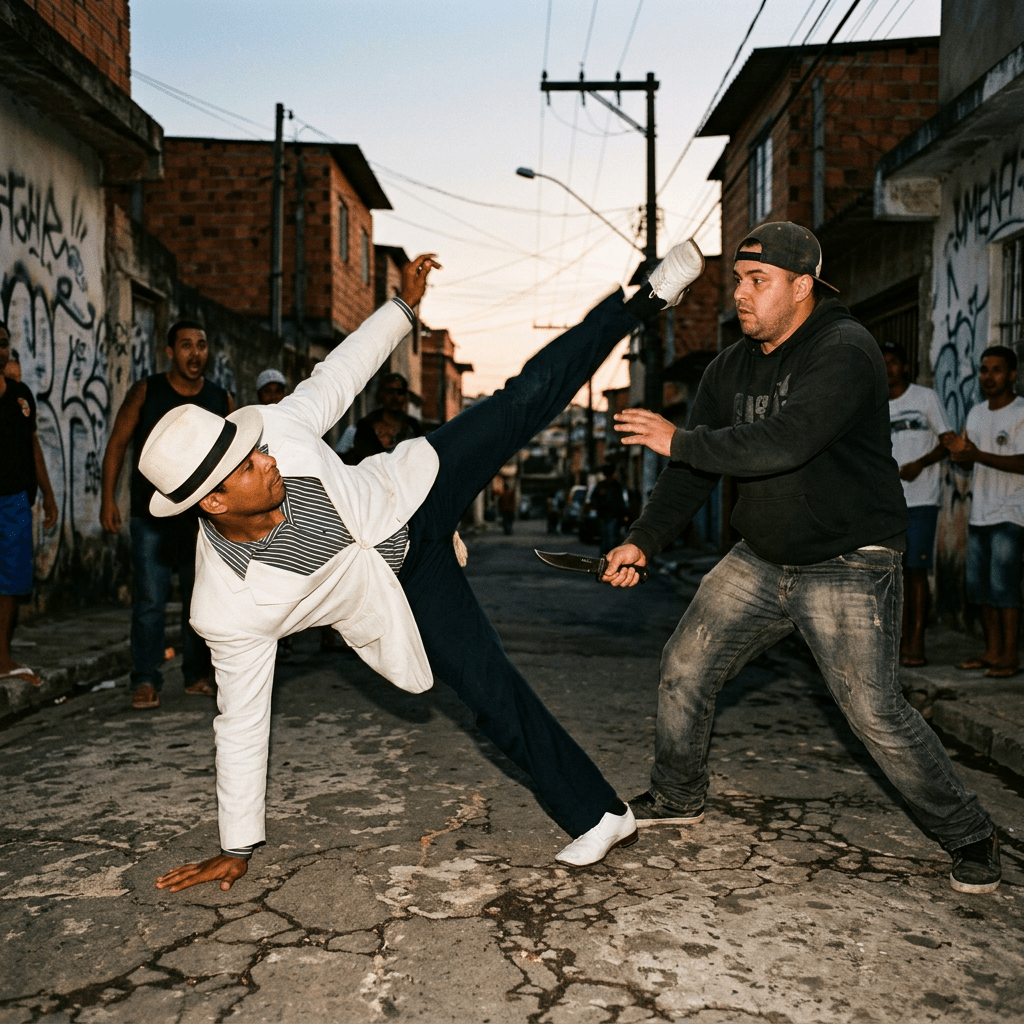
Capoeira Angola is fundamentally a defensive art form where the practitioner skillfully guides an opponent’s attack to their own advantage, using strategic body movements and malícia (cunning) to place them in an unfavorable position. This martial art emphasizes the importance of creativity and improvisation, as each encounter is unique and requires quick thinking and adaptability. Practitioners are trained to read their opponent’s intentions, enabling them to anticipate moves and respond with fluidity and grace. The rhythmic nature of Capoeira, often accompanied by traditional instruments and singing, further enriches the experience, creating a vibrant atmosphere that encourages camaraderie and cultural expression.
In this way, Capoeira Angola not only serves as a means of physical self-defense but also as a profound form of artistry that encapsulates the rich history and traditions of African Brazilian culture, fostering respect, discipline, and a deep sense of community among its practitioners.
Beyond the physical practice, it serves as a way of life and a guiding philosophy for survival and personal growth, encouraging individuals to cultivate resilience and a deep connection with their cultural heritage. Practitioners embrace the rhythm and music that accompanies the movements, creating a vibrant atmosphere that fosters community and mutual respect, reinforcing the idea that capoeira is not just about combat but also about building relationships and understanding oneself within a wider social context.

Life in the “MEAN STREETS”
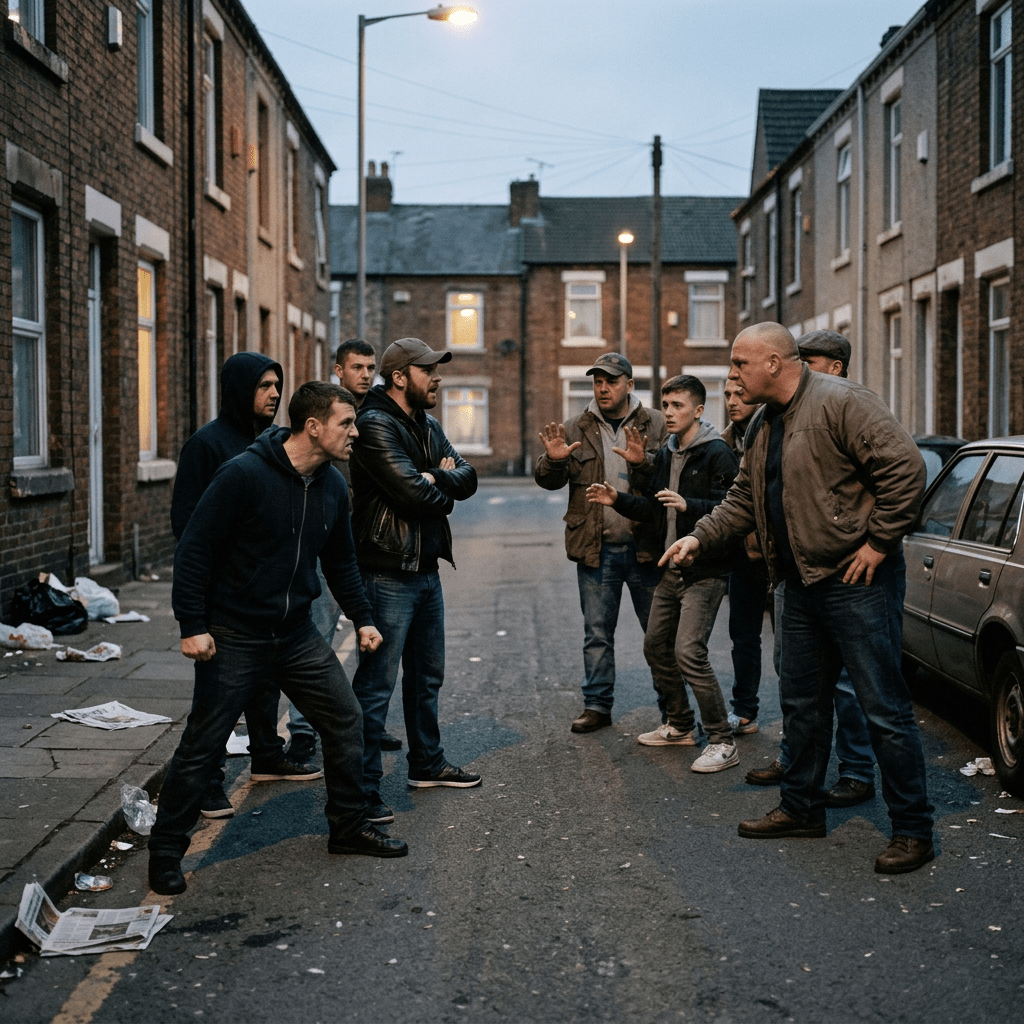
“The streets” represent a hazardous and volatile environment, often characterized by unpredictable social dynamics and physical risks that demand a high level of situational awareness. This complex landscape requires individuals to constantly assess their surroundings, recognizing that traditional safety protocols may be insufficient in the face of rapidly shifting interpersonal tensions and environmental dangers. Navigating such spaces successfully often depends on an acute understanding of unwritten social codes, the ability to detect subtle cues of potential conflict before they escalate, and the fortitude to adapt swiftly to changing circumstances. Furthermore, personal resilience and strong decision-making skills become essential as individuals encounter not only the unpredictable behaviors of others but also the inherent challenges posed by the urban setting itself, such as crime and social unrest. In light of these dangers, developing a keen sense of emotional intelligence can prove invaluable, enabling one to read the emotions and intentions of those around them. In this article, we’re gonna explore how the lessons taught in Capoeira Angola can help someone survive in this environment, equipping them with both physical techniques and mental strategies necessary for thriving amidst adversity.

Dealing with “Street Characters”
Interacting with high-conflict personalities requires the application of Malícia, or strategic cunning, to decipher hidden agendas beneath surface-level aggression. This sophisticated “street-smartness” allows a practitioner to read deep truths hidden beneath surface actions, such as an opponent’s breathing patterns or the direction of their eye contact, to anticipate intent before an attack is launched. Whether facing manipulative behaviors like gaslighting or direct hostility, a defender must maintain a mental “Ginga”—a state of perpetual emotional readiness and flexibility that avoids “planting your feet” in an unproductive argument. By constantly shifting weight and center of gravity, both physically and mentally, the practitioner manages distance effectively while creating openings for counter-moves.
- Managing the Energy: Hostile individuals often try to dictate the pace and volume of an encounter to induce chaos. Like the berimbau conducting the Roda, you must seize control of the tempo by consciously slowing down responses, speaking at a lower volume, and utilizing non-emotional pauses to disrupt an aggressive flow. This requires managing one’s own physiological state—breathing and heart rate—to respond deliberately rather than reactively.
- Strategic Non-Engagement: Recognizing common “games” through malandragem allows for strategic deflection. By refusing to provide the mirrored emotional response, such as anger or defensiveness, you invalidate the toxic person’s entire tactical script. This act serves as a “psychological sweep,” shifting the dynamic back to objective terms.
- Maintaining Distance: Awareness of the “reactionary gap” or Espaço is critical when dealing with potential predators. This involves identifying pre-assault indicators, such as target glancing or boundary violations, and maintaining sufficient space to either escape or react effectively if the encounter escalates. Effective distance control allows for a seamless transition through ranges of engagement—longe (long), meio (middle), and perto (close)—ensuring you are never trapped against a physical barrier.
- The Esquiva (Evasion): When a verbal or psychological attack is launched, use the Esquiva as a declaration of your right to remain unviolated. This active transition designed to deny the opponent a target allows the attack to pass harmlessly by, conserving your energy while refusing to engage in a futile argument.

Core Principles of Awareness and Strategy
- Situational Awareness: Training focuses on maintaining a “Yellow” state of relaxed alertness to identify baseline normal behavior and recognize pre-threat indicators instantly. This proactive mindset involves scanning the environment for anomalies in social dynamics or physical positioning. Practical strategies include walking in the middle of dark streets to maximize visibility and avoid ambushes, as well as never sitting with your back to an entrance to ensure a clear line of sight to potential arrivals.
- The Ginga as an Anchor: The foundational rhythmic motion of Capoeira Angola serves as a state of perpetual readiness. It keeps the practitioner as a fluid, unpredictable target, preventing a static stance that an aggressor could easily exploit. By constantly shifting weight and center of gravity, the practitioner manages distance effectively while creating hidden openings for counter-moves and evasions.
- Malícia and Perception: This sophisticated “street-smartness” or cunning allows for reading deep truths hidden beneath surface actions. It involves observing subtle cues, such as an opponent’s breathing patterns or the direction of their eye contact, to anticipate their intent before an attack is launched. This perception enables a practitioner to decipher hidden agendas and navigate complex social or physical threats with strategic foresight.
Tactical Application and Survival
- Evasion and Distance (Espaço): The primary goal in a confrontation is to control distance and move fluidly between long-range (kicking), short-range (trapping), and extreme close-range (grappling). This spatial management, or Espaço, requires constant vigilance to ensure a practitioner is never trapped against a physical barrier, maintaining the ability to exit or engage as the situation dictates.
- The Rasteira (sweep): exemplifies using an opponent’s rigid momentum against them. This technique illustrates the broader Capoeira principle of efficiency—using the minimum force necessary to achieve a decisive result by unbalancing an aggressor through their own committed actions. Instead of meeting force with force, the Rasteira diverts the energy of an attack, turning a high-impact strike into a moment of vulnerability for the aggressor.
- De-escalation and Boundaries: Mastery involves using assertive verbal tactics and setting strict boundaries to diffuse a situation before it turns physical. This proactive defense focuses on maintaining a human-to-human connection when possible to redirect harmful intent. Effective boundary setting acts as a “psychological sweep,” denying an aggressor the emotional reaction they seek and shifting the dynamic back to objective, reasonable terms. By remaining non-reactive and calm, the practitioner utilizes malícia to deconstruct the aggressor’s tactical script, rendering surface-level aggression ineffective.

Legal and Ethical Framework
Within the “street” environment, self-defense is governed by a strictly defined legal framework rather than serving as a blanket justification for the use of excessive force. The civil and criminal justice systems mandate that any physical response must remain reasonable and strictly proportionate to the immediate threat encountered, and this application of force must conclude instantly once the threat is neutralized. Adopting a “Warrior Mindset” serves as a vital moral compass in these high-pressure scenarios; it ensures that any necessary violence remains a controlled, isolated act of self-preservation. By adhering to this ethical integrity, practitioners can avoid the profound long-term psychological ruin that often stems from engaging in unrestrained or “predatory” aggression. Ultimately, the highest form of mastery in Capoeira Angola is not found in physical dominance over others, but in the disciplined ability to maintain one’s ethical center and conduct even under the most extreme pressure.
This ethical foundation acts as a safeguard against the corruption of the art into mere violence. By viewing conflict through the lens of legal necessity and personal integrity, the practitioner transforms a potentially traumatic encounter into a disciplined exercise of situational control. The “Warrior Mindset” promotes the idea that true strength is the restraint to use only what is required, reflecting the core principle of efficiency found throughout the art. Maintaining this balance ensures that the defender survives not only the physical altercation but also the subsequent legal and psychological scrutiny that follows any use of force in a civil society.
Surviving, “THE HOOD”
Let’s end this section on a little “Light Note”. Below, I posted a playlist named, “HOOD SURVIVAL GUIDE!” created by a YouTuber named, ODAWG. Click HERE and check out his channel; he’s got a wealth of really cool and funny videos that will not only entertain you but also give you a fresh perspective on navigating life in urban environments.
Now, while these videos are comedic in nature and are designed to make you laugh, they also contain some surprisingly solid tips on how to survive in “The Hood,” at least here in the United States. With a mix of humor and practicality, ODAWG’s content encourages viewers to be street-smart while embracing the lighter aspects of life, reminding us that laughter can be a powerful tool for resilience. So, dive into the playlist, enjoy the hilarity, and pick up some essential advice along the way!
While you can’t learn “street smarts” or malicia from a webpage, the integration of these philosophical and physical principles offers a vital blueprint for personal safety, making it essential for anyone looking to navigate urban environments. Mastery of Capoeira Angola transcends the physical Roda, serving not only as a comprehensive methodology for navigating the complexities of the street with strategic cunning and ethical clarity but also as a means of fostering community connections and resilience. By internalizing the rhythmic readiness of the Ginga and the spatial awareness of Espaço, an individual transforms from a reactive target into a proactive participant in their own defense, capable of adapting to a variety of scenarios with grace and confidence.
This transformation is more than just physical; it involves a mental shift that empowers individuals to assess situations carefully and choose non-violent resolutions whenever possible. Ultimately, the true essence of this practice lies in the ability to neutralize conflict through efficiency and restraint, ensuring survival while preserving one’s legal and moral integrity in an unpredictable world, all while promoting peace and understanding among diverse cultures.