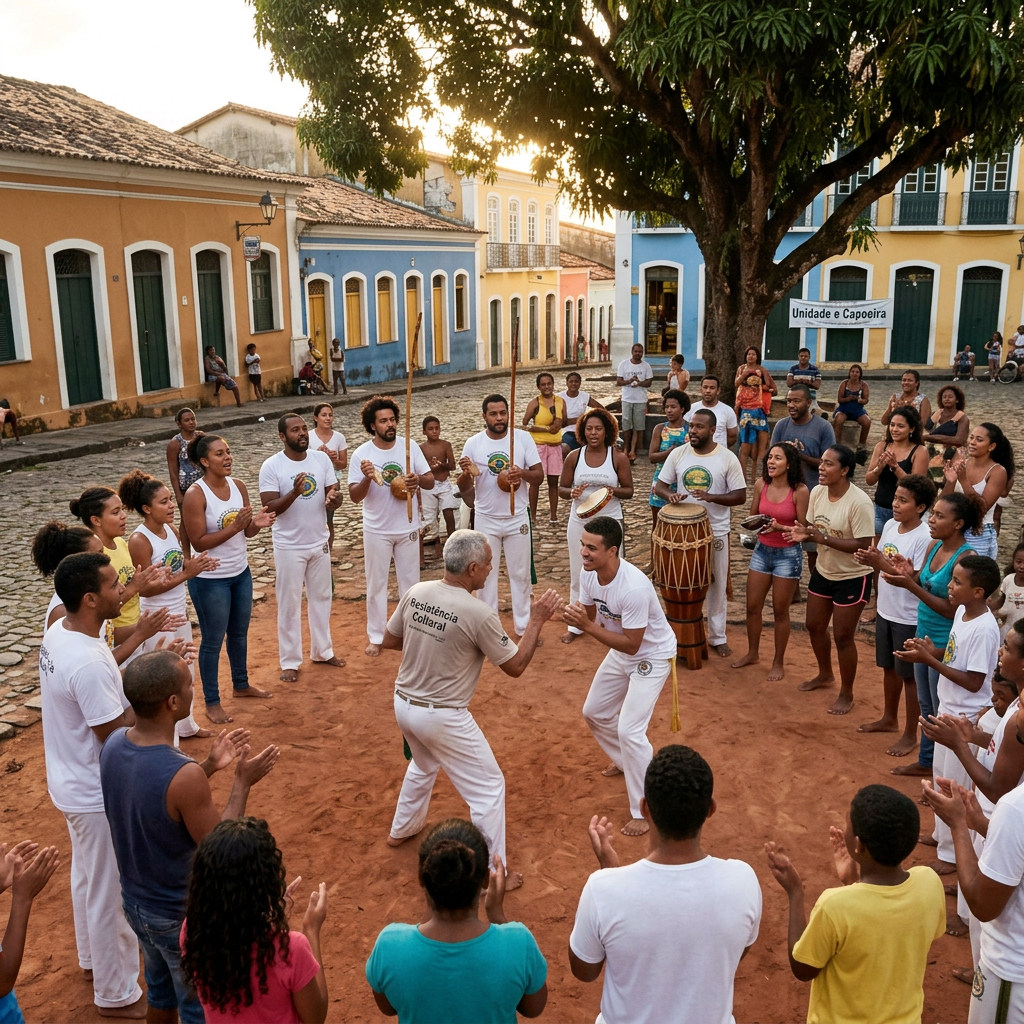
A couple of weeks ago, 4/22/26 to be exact, Da’Mon Stith of Austin Warrior Arts recently posed a series of thought-provoking questions on his Facebook page, which I answered in a PREVIOUS POST. These inquiries struck a chord with me and ignited a deep curiosity about the historical context surrounding capoeira. I ended up wondering, “Why was Capoeira made illegal in the first place?”
Well, this webpage is my humble attempt to answer that question.
This page has 2 parts. The 1st part is what I call an “official” history of capoeira’s criminalization, delving into the socio-political climate that led to such a drastic measure, looking at government oppression and societal fears of its cultural significance. The 2nd part is why I BELIEVE Capoeira was made illegal, exploring the broader implications of its prohibition on cultural heritage, identity, and the resilience of those who continue to practice it in secrecy, highlighting the spirit of resistance that has grown around this art form over time.
Okay, let’s do this.
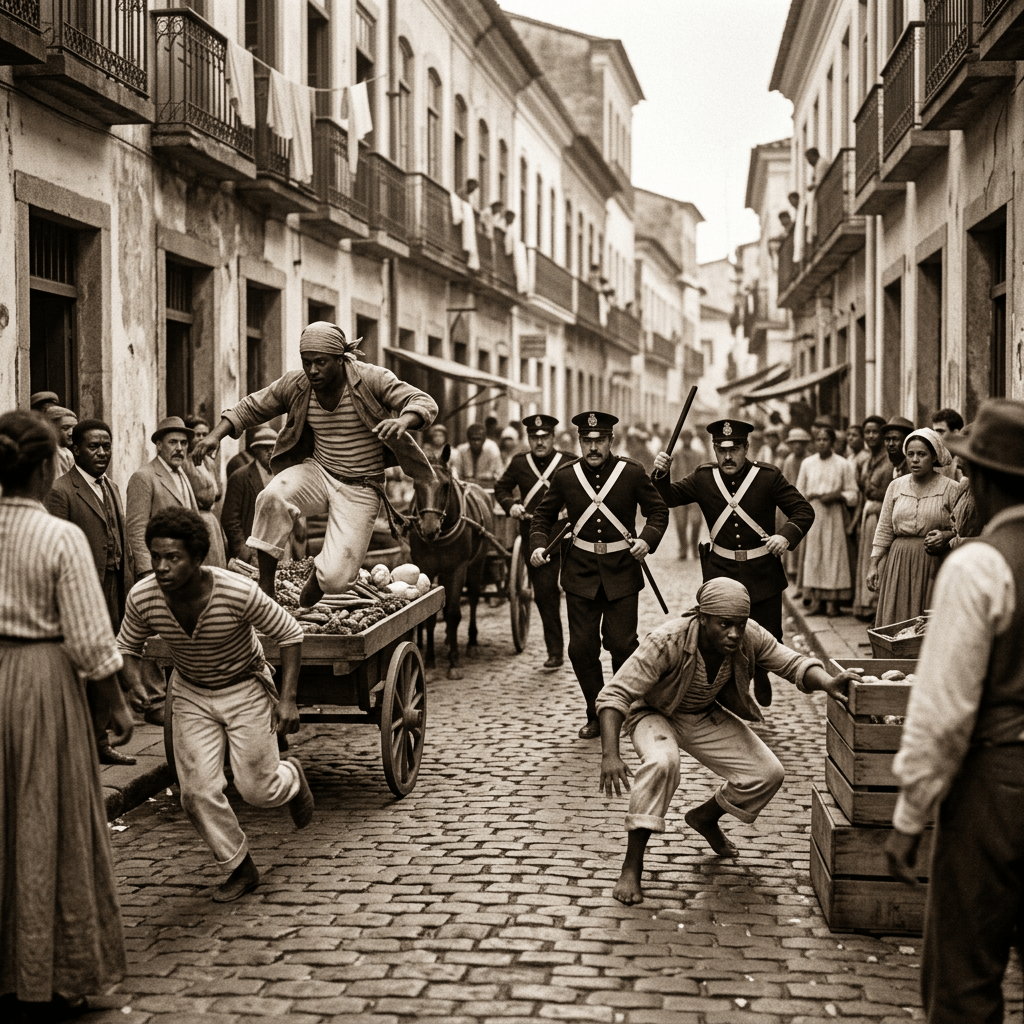
Capoeira was officially outlawed in Brazil following the abolition of slavery in 1888. The primary driver behind this prohibition was the newly established republican government’s fear of the art as a tool for social resistance and rebellion by newly freed slaves. Authorities associated Capoeira with criminal activity and potential unrest, viewing it as a direct threat to the social order.
Key Factors Leading to the Ban
- Resistance and Self-Defense: Developed by enslaved people as a method of self-defense disguised as dance, Capoeira was perceived by the ruling class as a dangerous weapon of the marginalized.
- Decree 847: In 1890, the government enacted Decree 847, titled “Of the vadios and capoeiras” (Of the vagrants and capoeiristas), which formally criminalized the practice.
- Association with Maltas: In cities like Rio de Janeiro, Capoeira was linked to rival “maltas” or gangs, further entrenching its reputation as a source of violence and public disorder.
- Unification Threat: Some perspectives suggest the ban was also motivated by Capoeira’s ability to unite people across different social classes and races, posing a threat to colonial structures built on division.
Methods of Suppression
During the era of persecution, practitioners used specific berimbau rhythms, such as Cavalaria, to alert one another when the police or the National Guard Cavalry were approaching. This clever system of communication was crucial for the survival of capoeira, enabling capoeiristas to either flee or prepare for confrontation against authorities who saw their art as a threat. The rhythms echoed through the streets, serving as both a warning and a rallying call, allowing members of the community to act swiftly and cohesively in the face of danger. Many leaders of the Capoeira maltas were incarcerated, exiled, or even executed during this period, their sacrifices underscoring the depths of their commitment to preserving their culture and way of life, while also inspiring future generations to continue the struggle for freedom and expression through their beloved martial art. Despite the harsh reality and oppression they faced, the resilience and ingenuity of the capoeiristas shone through, ensuring that capoeira would not only survive but thrive in the years to come.
The Path to Legalization
The ban remained in effect until the mid-20th century, casting a shadow over a rich cultural tradition that had flourished for centuries. Mestre Bimba played a critical role in legitimizing the art by structuring it into a comprehensive teaching method and presenting it as a national sport, thus transforming its perception among the broader populace. His innovative approach not only attracted a diverse group of practitioners but also elevated the status of capoeira within Brazilian society. This growing appreciation and recognition eventually led the government to lift the legal restrictions, allowing capoeira to thrive openly and inspiring many to embrace its unique blend of martial arts, dance, and music as a symbol of national pride and cultural identity.
Why I think Capoeira was made illegal
Of course, we know why. The authorities deemed it a threat to the social ofder.
Why was Capoeira a Threat to the Social Order?
Decades before the abolition of slavery in 1888, Capoeira transitioned from secluded quilombos to the turbulent streets of Brazilian port cities, where it eventually was perceived as a profound threat to the newly established Republican government. This perception was driven by its utility as a tool for social resistance, its association with organized crime, and its role in political destabilization.
Instrument of Resistance and Autonomous Power
For newly freed Afro-Brazilians facing systemic marginalization and racial prejudice, Capoeira remained an indispensable resource for survival and self-defense. The ruling class, influenced by ideologies such as positivism and social Darwinism, viewed the art as a remnant of “African barbarism” and a dangerous weapon of the oppressed. Its ability to unite individuals across different social classes and races posed a direct threat to colonial structures built on division.
Criminalization and Systematic Suppression
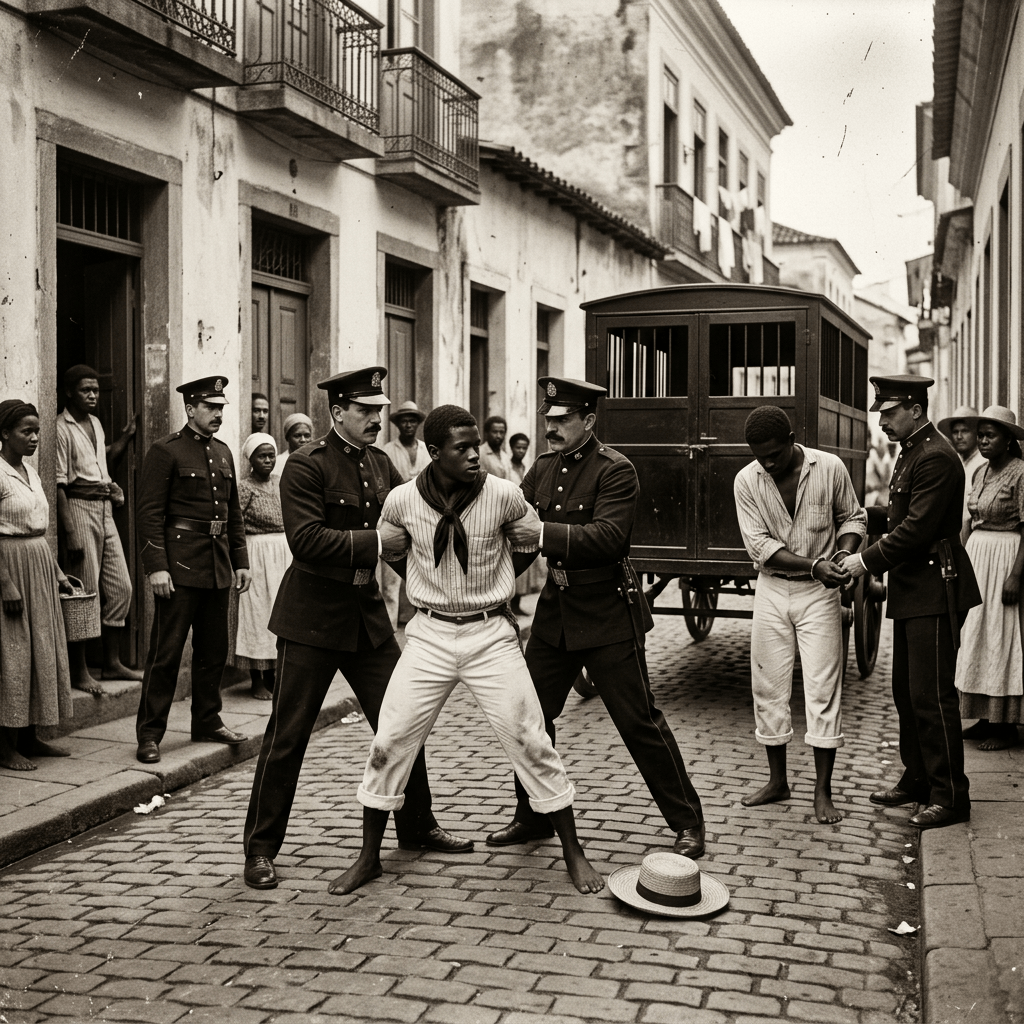
The association with public disorder and organized violence led to the formal criminalization of the practice in the Penal Code of 1890. Decree 847, specifically targeting “vagrants and capoeiras,” inaugurated a period of brutal state repression. Practitioners, often referred to as “valentões,” were subjected to mass arrests, corporal punishment, and internal exile to remote penal colonies like Fernando de Noronha. This aggressive suppression forced the art into the clandestine shadows of the Brazilian underworld, where it was preserved as a silent form of resistance against state authority.
Why was CAPOEIRA still practiced and preserved even after it’s crimilization?
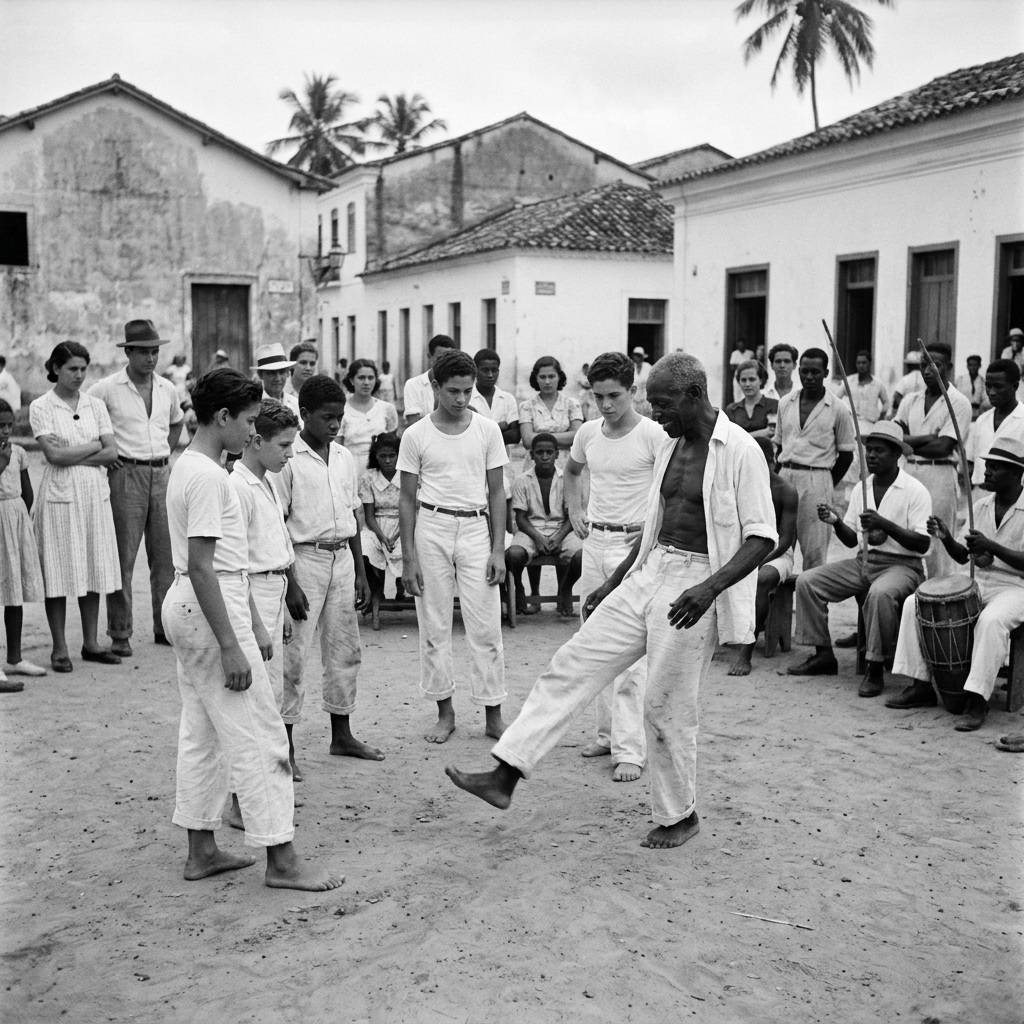
Well, I think that it’s because that beyond its immense cultural significance, the art provides vital health benefits, effective self-defense capabilities, and a profound pathway toward self-knowledge and spiritual grounding. This comprehensive discipline serves as a holistic matrix for personal growth, where the physical lexicon of movements like the Ginga, rasteiras, and advanced acrobatics fosters remarkable agility and coordination. Moreover, it functions as a spiritual journey that cultivates resilience and a deep sense of environmental awareness, transforming the practitioner’s outlook on life. The practice offers a way to channel aggressive energy into positive experiences, teaching strategies to overcome hostility from disadvantaged positions.
Capoeira has the capability to bring people together for a common cause. Historically rooted in the resistance of enslaved Africans, it evolved as a powerful tool for community building and cultural preservation in the face of systemic oppression. The roda serves as a democratic and communal sanctuary where individuals from diverse backgrounds forge deep social bonds through shared music, rhythm, and a collective identity. This inherent ability to foster unity and organized resistance likely contributed to its historical criminalization, as it posed a perceived threat to established authorities who relied on division to maintain dominance.
While a vast majority of combat disciplines trace their genesis to the theater of war, Capoeira emerged from the crucible of RESISTANCE. Since its development in the 16th century, this practice established a democratic and communal sanctuary for enslaved individuals in Brazil to gather, fostering a holistic matrix for training, discipline, and the covert dissemination of strategic principles. These rhythmic songs and traditions have served as a profound form of embodied resistance for the African diaspora throughout the centuries. Even in the contemporary era, Capoeira remains a potent social tool for empowerment, functioning not only as a physical lexicon for challenging oppression but also as a transformative pathway for cultivating community solidarity, collective resonance, and shared leadership.