The incorporation of weapons into Capoeira Angola was a pragmatic necessity born from the harsh realities of survival and resistance in Brazil. Far from being ornamental, these tools were indispensable for self-defense among marginalized communities, transforming the art into a sophisticated combat system intricately linked to social and political struggles.
Historical Context and the Maltas
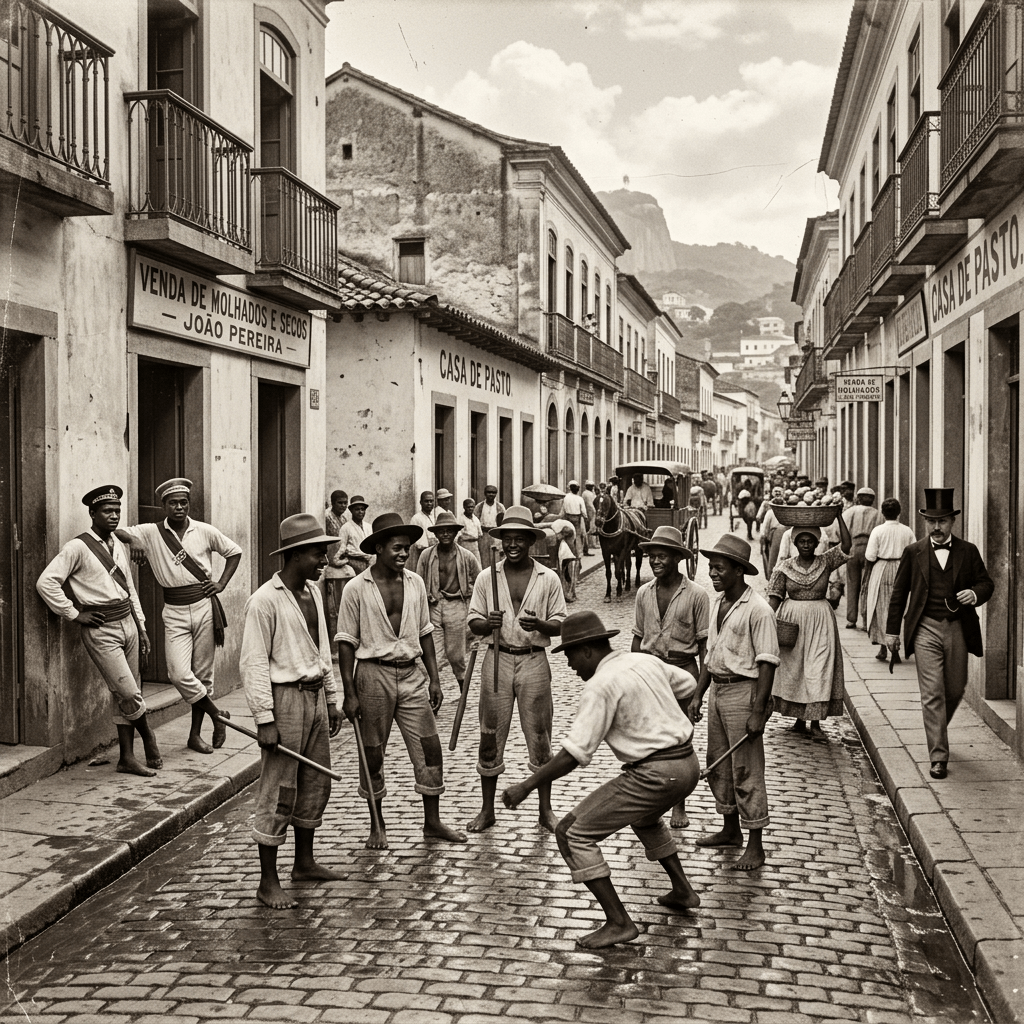
In 19th-century Rio de Janeiro, notorious gangs known as “Maltas” utilized Capoeira and an arsenal of weapons to assert territorial control. These practitioners were recognizable by their distinctive attire—often white linen suits, bell-bottomed trousers, and silk neckerchiefs meant to protect against razor slashes or serve as makeshift bindings. These groups were highly structured, meticulously controlling specific neighborhoods and parishes, and were known for engaging in ritualized duels during public feast days. The arsenal of the Maltas was diverse and pragmatic, featuring readily available items such as folding razors (navalhas) and knives concealed in clothing or hair, as well as specialized wooden staves and canes. Following the Proclamation of the Republic in 1889, Decree 847 criminalized Capoeira, leading to intense police persecution and the eventual dissolution of the structured Maltas. Despite this repression, the legacy of their struggle remains an indelible chapter in Brazilian history, illustrating how Capoeira and its associated weaponry functioned as potent symbols of resistance and social struggle..
Common armaments included:
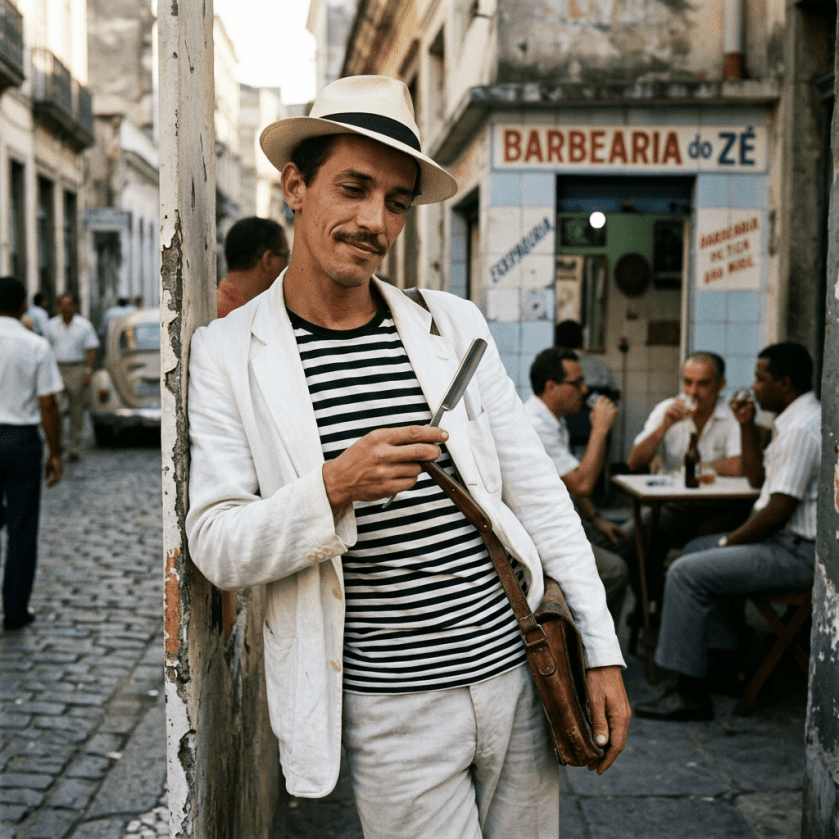
Razors and Knives (Navalhas and Facas): Often concealed in clothing or hair, these were used with surgical precision to target critical areas like the radial or femoral arteries. In 19th-century Rio de Janeiro, folding razors (navalhas) were favored by the notorious “Maltas”—structured gangs who utilized Capoeira to assert territorial control. These blades were easily hidden within the distinctive attire of the era, such as silk neckerchiefs, which served the dual purpose of protecting the wearer from razor slashes while providing a discreet location to store a weapon. The utilization of such small, sharp tools transformed the art into a sophisticated combat system where practitioners could inflict debilitating injuries in the close-quarters environment of urban parishes..
Wooden Staves and Canes (Petrópolis/Billy-clubs): Used primarily for blunt force, these specialized wooden implements were often favored for their “plausible deniability” compared to prohibited metal blades. In the 19th-century urban environment, a cane or walking stick could be carried openly as a social accessory, yet in the hands of a skilled Capoeirista, it became a formidable weapon capable of delivering powerful strikes. These tools, sometimes referred to as Petrópolis, allowed practitioners to navigate the strict legal landscapes of the era while maintaining the ability to assert territorial control and engage in ritualized duels.
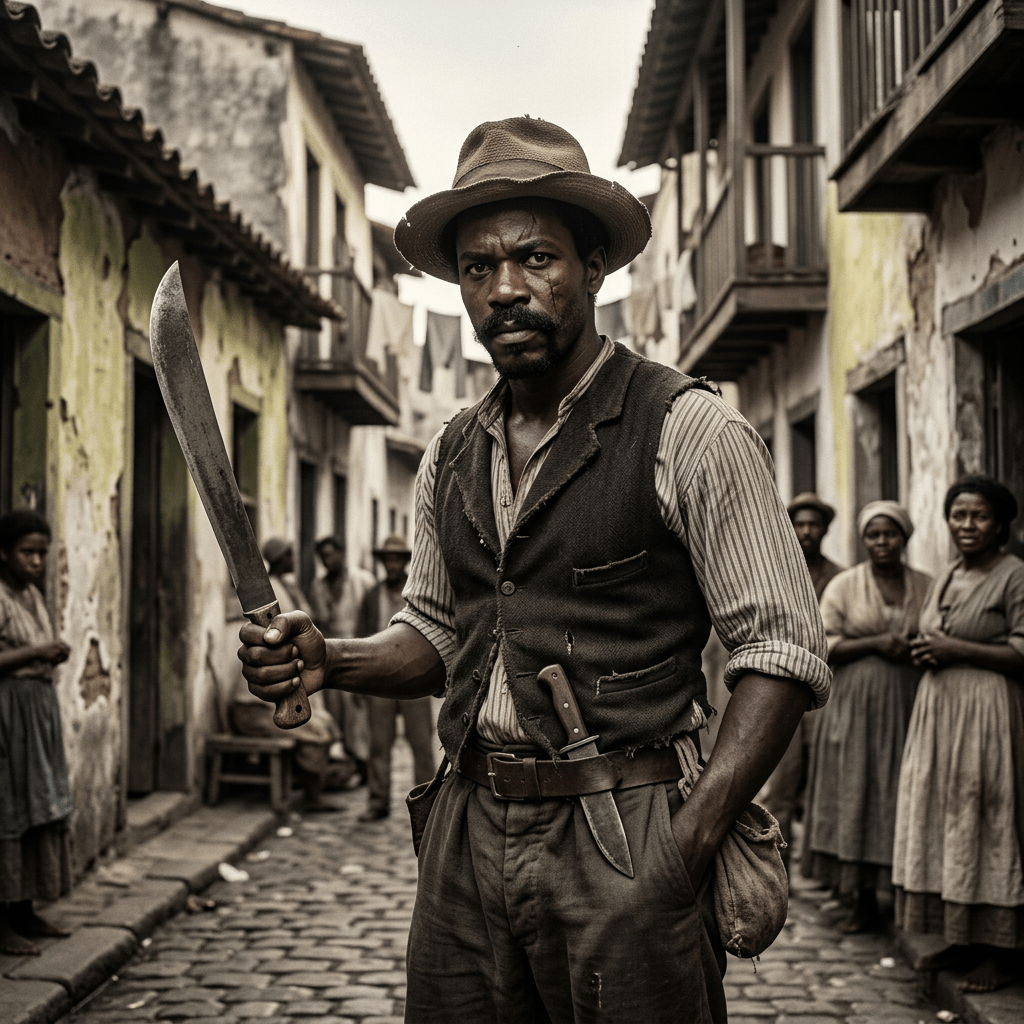
The Machete (Facão): A potent symbol of ancestral legacy, the machete bridged the gap between agricultural labor and rebellion, serving as a tool of liberation from the sugar cane fields. As a primary implement of the plantation economy, its transformation into a weapon represented the subversion of colonial labor into a mechanism for self-defense and dignity. By training with this tool, modern students honor the art’s origins, as the machete represents a legacy that utilized every available resource to ensure survival. It serves as an extension of the body, where the same footwork and defensive flows of Capoeira apply, bridging the historical gap between forced labor and the fight for freedom. This training requires movement from the deep core to generate whole-body power, mirroring internal practices that transform a simple agricultural strike into a focused expression of structural alignment and vital energy. Through this practice, the facão is reclaimed not just as a tool of the past, but as a living instrument of resistance and cultural endurance.
Following the Proclamation of the Republic in 1889, Decree 847 criminalized Capoeira, leading to intense police persecution and the eventual dissolution of the structured Maltas.
Modern Reincorporation and Philosophy
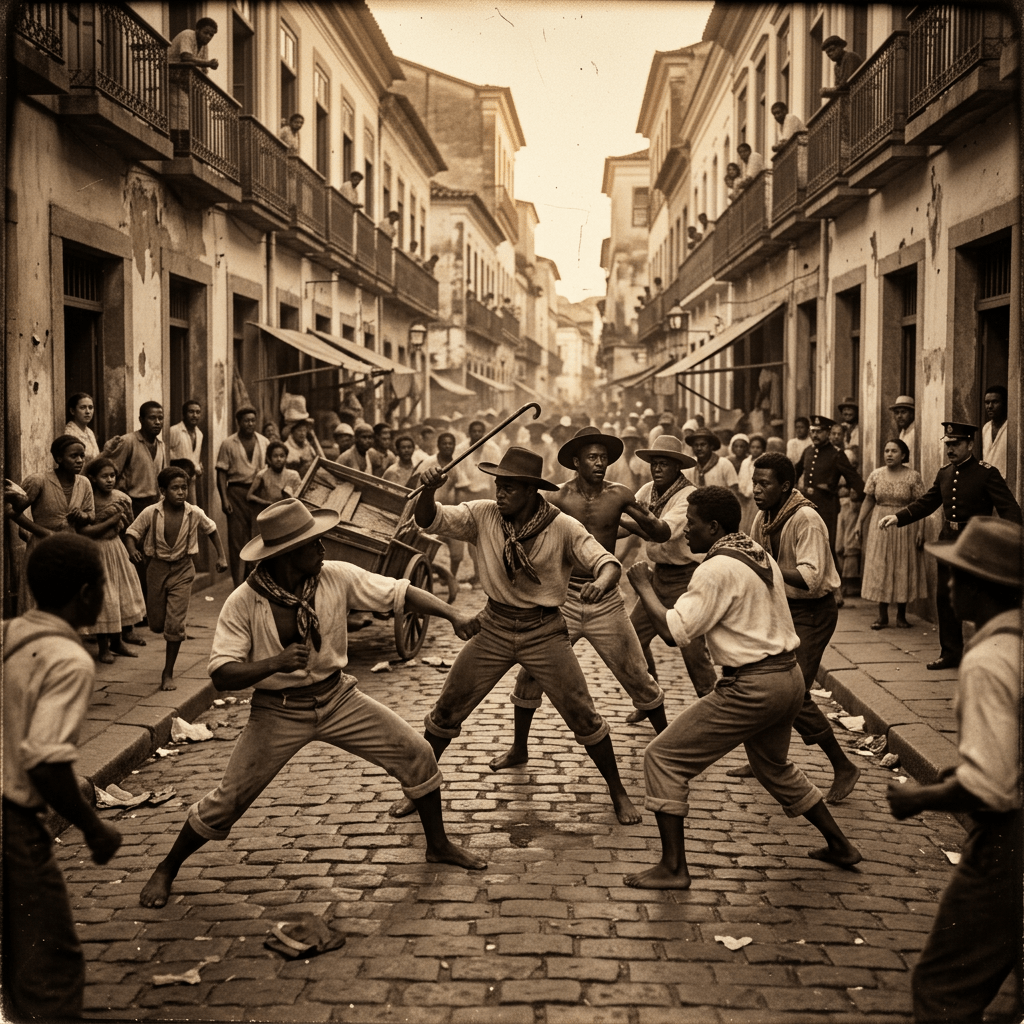
While modern studios often focus on the “game” or the acrobatic and aesthetic elements of the art, there is a compelling argument for reintroducing rigorous weapons training to enhance historical authenticity and practical self-defense.
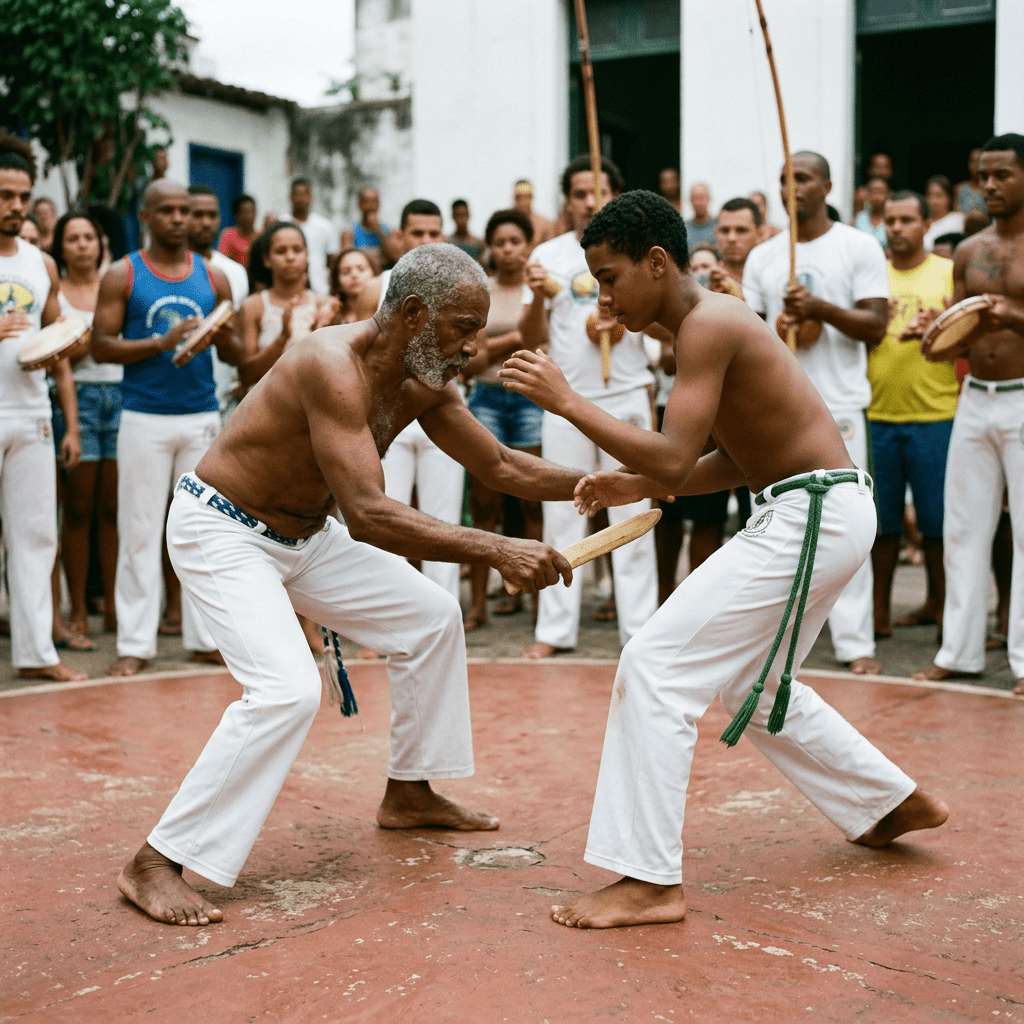
For me, this shift represents a move toward reclaiming Capoeira Angola’s heritage as a sophisticated combat system intricately linked to social and political struggles. By viewing Capoeira Angola not merely as an external physical dialogue but as a sophisticated internal practice, practitioners can utilize these tools to deepen their roots and transform external force into internal skill.
Modern practitioners view traditional instruments like the berimbau—which can effectively double as a bludgeon in an emergency—as part of a complete survival system rather than just a musical accompaniment; they recognize that these tools embody a rich cultural heritage and serve multiple purposes that go beyond mere entertainment. The berimbau, with its unique sound, not only enhances the rhythm and spirit of capoeira but also symbolizes the resilience and ingenuity of those who have used it throughout history, teaching practitioners valuable lessons in adaptability and resourcefulness. In this way, the berimbau transcends its role, becoming a vital component of community and identity, connecting individuals to their ancestry and the wisdom it imparts for navigating both artistic expression and real-world challenges.
This integrated training approach offers several philosophical and practical benefits:
Heightened Spatial Awareness: Working with weapons forces a deeper understanding of distance and timing, as the stakes of an encounter are visually and psychologically magnified. This mastery is crucial for maintaining safety and setting up counter-attacks from multiple angles.
Ancestral Connection: By training with tools like the machete (facão), students bridge the gap between agricultural labor and the history of rebellion, honoring the art’s origins as a tool for freedom. The machete serves as a potent symbol of a legacy that utilized every available resource to ensure survival and dignity.
Strategic Discipline: The inclusion of weapons mandates a stricter adherence to core principles like malandragem (cunning), where the fluid rhythm of the ginga is used to mask tactical deployment. This discipline cultivates the ability to read an opponent’s intentions and use their own momentum against them.
Internal Resilience and Power: The weight and presence of a weapon require the practitioner to move from their deep core, mirroring principles of Neigong to generate whole-body power rather than relying on superficial muscular force. This internal focus facilitates the preservation and explosive utilization of Axé during high-stakes exchanges.
Ultimately, this reincorporation cultivates a practitioner who is not just a player in a circle, but a student of a legacy that utilized every available resource to ensure survival. This holistic engagement transforms physical mastery into a pathway for self-preservation, mindful living, and the endurance of cultural identity against modern-day challenges. By treating weapons as extensions of the body, practitioners honor the ingenuity of enslaved Africans who adapted everyday tools—like the machete (facão) and the berimbau—into instruments of liberation. This training transcends physical exercise, fostering adaptability and a strategic mindset essential for both captivating performance and real-life self-defense. It bridges the gap between agricultural labor and the history of rebellion, ensuring that the ancient knowledge of survival and resistance is preserved and passed down to future generations as a complete martial and cultural system.
Like in FMA, weapons are treated as extensions of the body, meaning the same footwork, angles of attack, and defensive flows apply whether you are holding a weapon like a straight-razor or fighting with bare hands, utilizing the core principles of Capoeira Angola:
Malandragem (Cunning): Weapon deployment is often masked by the fluid, non-threatening rhythm of the ginga. This strategic deception, rooted in the “wisdom of the oppressed,” allows the practitioner to conceal tactical intentions and weapon retrieval until the moment of engagement. This mastery of deception elevates combat from a purely physical exchange to a high-stakes, cerebral game.
Strategic Asymmetry: Practitioners use low stances (negaça, queda de quatro) to minimize their profile while creating openings for short-range attacks. This mastery of distance and timing is essential for navigating high-stakes encounters and overcoming adversaries from a disadvantaged position, similar to the geometrical footwork systems used in FMA.
Simultaneous Defense and Offense: The weapon parries incoming strikes while the empty hand traps or disrupts the opponent’s balance. This integrated approach ensures that every movement serves a dual purpose in self-preservation and combat, mirroring the “flow” found in Filipino Martial Arts where the body itself is the ultimate tool.
Internal Resilience and Power: The physical presence of the weapon requires movement from the deep core (The Chinese call it dantian), utilizing whole-body power rather than superficial muscular force. This internal focus facilitates the preservation and utilization of Axé (vital energy), transforming a simple strike into a focused, devastating expression of internal energy and structural alignment.
The integration of weaponry into Capoeira Angola serves as a profound bridge between its history as a tool for liberation and its modern potential as a comprehensive survival system. By treating traditional armaments—such as the facão or the hidden navalha—as organic extensions of the body, practitioners preserve the tactical ingenuity of the 19th-century Maltas. This rigorous training methodology does not merely enhance physical combat efficacy; it cultivates an internal resilience and strategic discipline rooted in malandragem. Ultimately, reincorporating these elements ensures that Capoeira Angola remains a living legacy of resistance, transforming the “wisdom of the oppressed” into a sophisticated practice of mindful living and cultural endurance.