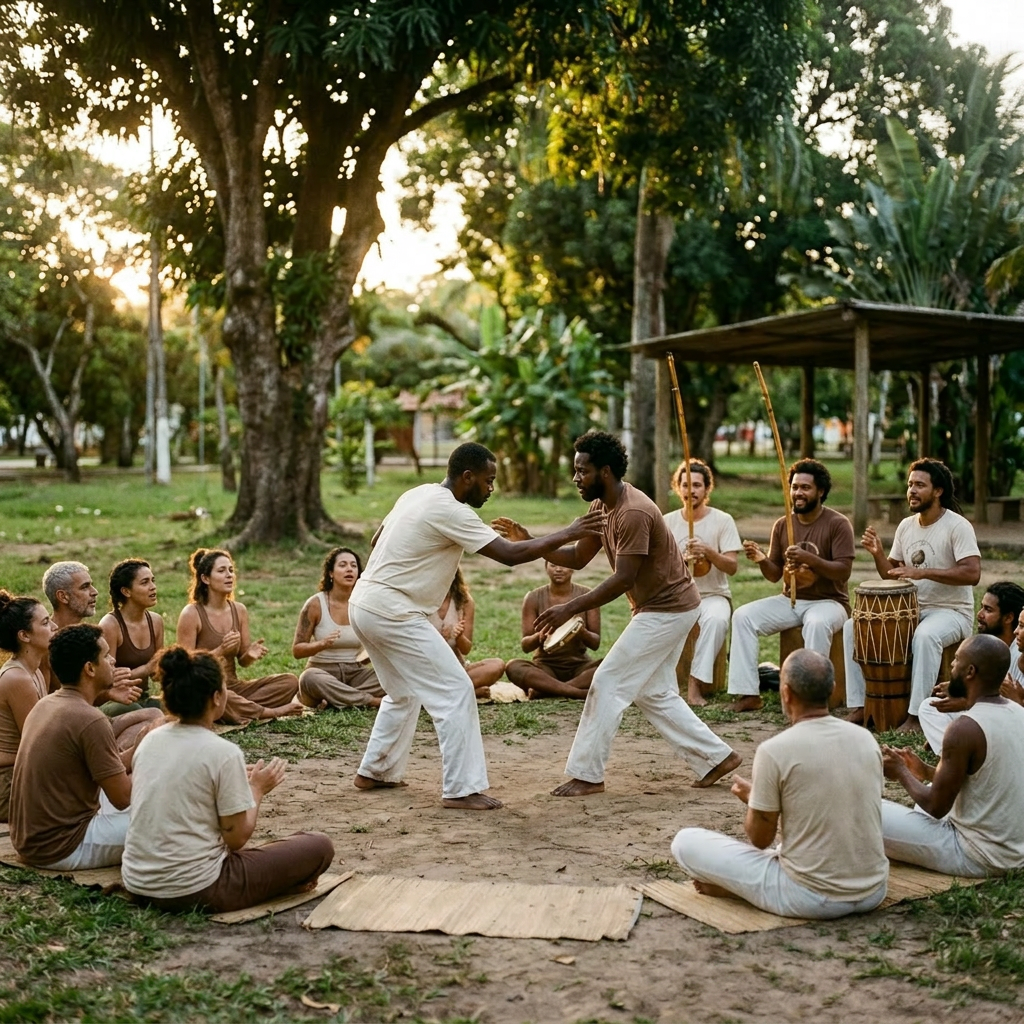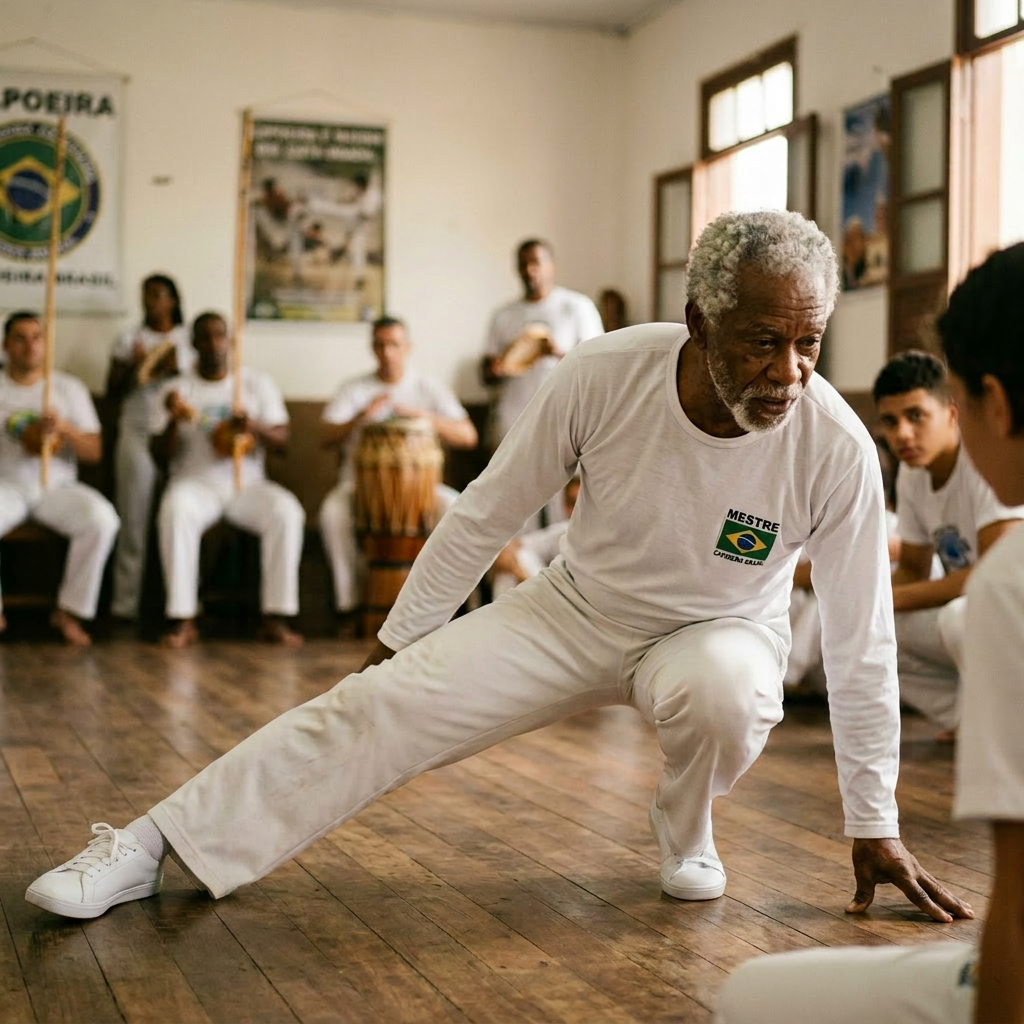
My teacher, CHARLES WILLIAMS, always refers Capoeira Angp;a as a “Healing Art”. It’s hard to imagine sometimes when you’re learning to Roll, to cartwheel on your head, and kick your opponent at the same time (Well, at least he didn’t make me KICK TREES)… but hear me out. read below, and you’ll see why Capoeira Angola is a healing art, despite all the articles I posted on this website about Capoeira Angola as a fighting art.
And the key is Capoeira Angola’s MOVEMENT.
Can movement be medicine? Within the traditional Afro-Brazilian art of Capoeira Angola, the answer is a resounding yes. Beyond its external appearance as a martial art or dance, it functions as a pathway toward creating “perfect health”. This holistic approach treats the body not merely as a machine to be pushed to its limits, but as a vessel for longevity and cultural expression. The practice serves as a form of active meditation where the circular and rhythmic nature of the movements promotes flexibility and joint health while building cardiovascular strength. By engaging in the “jogo” (game), practitioners develop a heightened sense of spatial awareness and reflexes, fostering a mind-body connection that reduces stress and improves mental clarity.
Unlike modern fitness regimes that often focus on isolated muscle groups or high-impact repetition, Capoeira Angola emphasizes the preservation of the body. It utilizes grounded, deliberate transitions that protect the spine and encourage a functional range of motion that remains vital throughout a practitioner’s life. The low-to-the-ground movements, such as the “negativa” and “role,” build core stability and distribute weight across multiple joints, minimizing the risk of chronic injury. Furthermore, the integration of traditional music and singing within the “roda” provides a rhythmic foundation that regulates breathing and fosters a sense of communal well-being, proving that the healing power of Capoeira Angola is as much social and spiritual as it is physical.
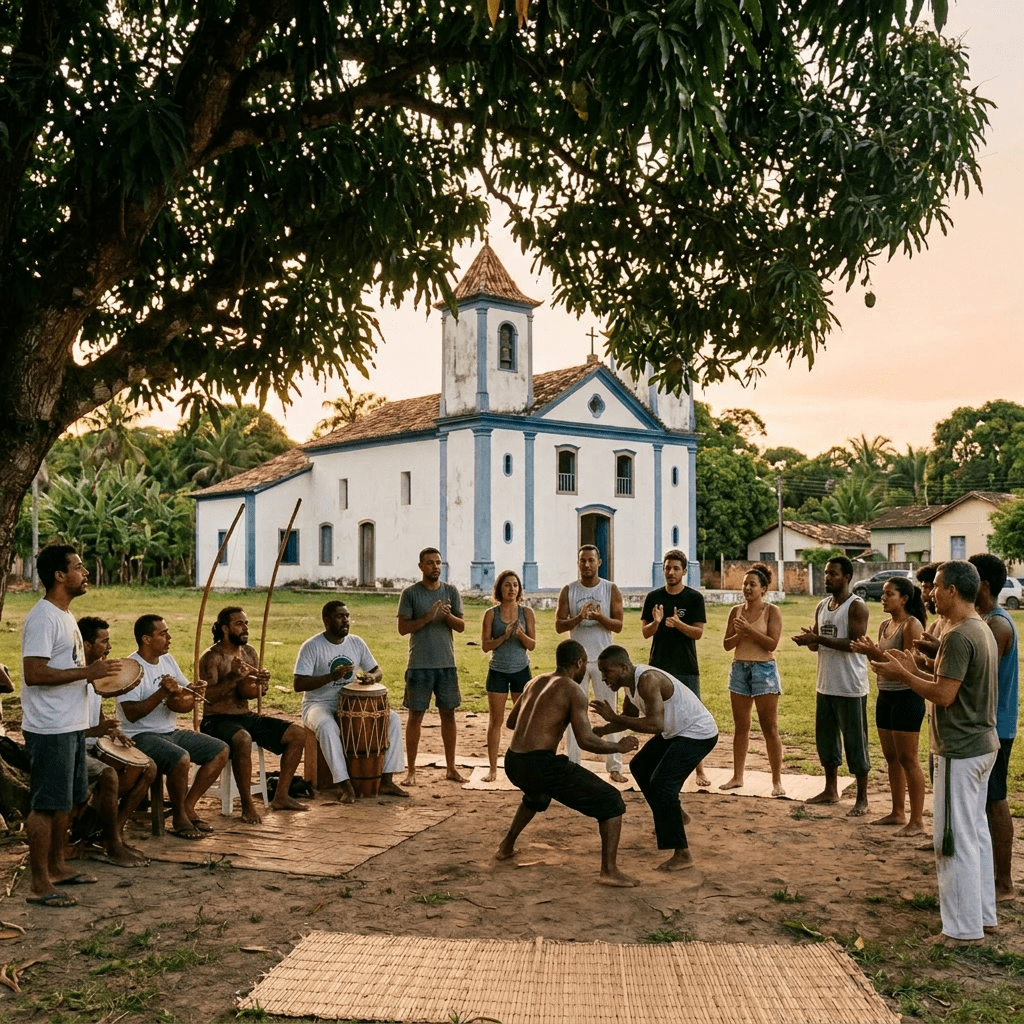
This therapeutic journey transcends mere physical exercise, positioning Capoeira Angola as a holistic system for wellness. The “jogo” (game) within the roda acts as a mirror for the practitioner’s internal state, providing a safe container for profound personal transformation and the processing of past experiences. By mirroring internal dynamics, the roda allows individuals to externalize and observe their reactions to conflict, pressure, and uncertainty in a controlled environment. In the roda, the interaction between two players becomes a non-verbal dialogue, requiring a state of total presence and awareness. This forced focus allows for a neurological reset, shifting the practitioner from a state of stress into a state of flow, where the mind and body operate in complete unison.
By engaging in this “movement as medicine,” capoeiristas can confront personal limitations and navigate the complexities of their own history through rhythmic interaction. This embodied practice encourages the release of stored physical tension and emotional blockages through the repetitive, circular motions characteristic of the Angola style. The communal aspect of the art provides an essential layer of healing; the music, the singing, and the support of the group create a shared energy that sustains the individual during moments of vulnerability. This collective participation fosters a sense of belonging and social cohesion that is vital for psychological well-being. Ultimately, Capoeira Angola is not just about the movements themselves, but about the resilience, adaptability, and self-knowledge gained through the ritual of the game. Through this ritual, practitioners learn to remain centered amidst chaos, a skill that translates directly from the roda to the challenges of daily life.
The Somatic and Energetic Connection
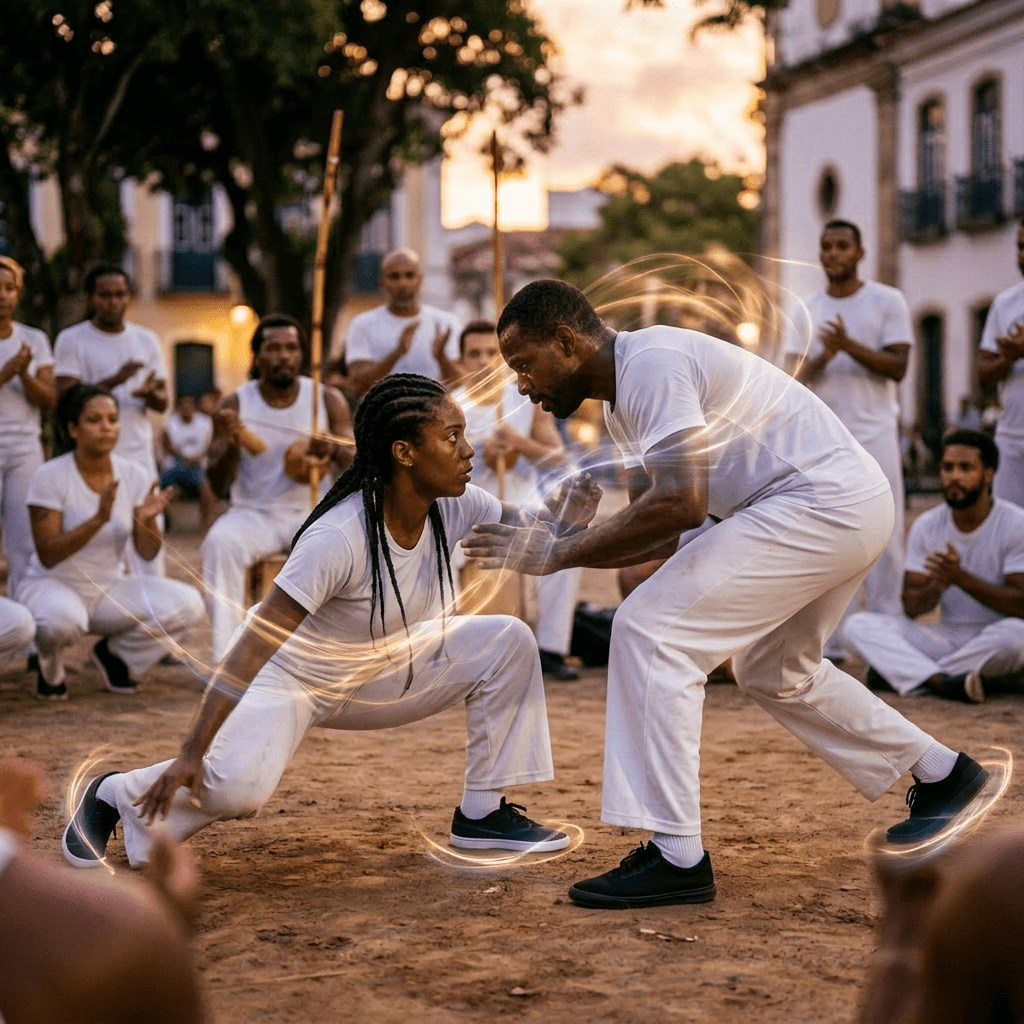
The healing potential of Capoeira Angola is deeply rooted in its internal mechanisms, often described through the concept of Axé—a palpable life force and spiritual power cultivated within the circle. This energy is generated and refined through several key elements:
Somatic Release: Dynamic movements like the ginga, dodges, and sweeps provide a physical outlet for sound energy, allowing for the release of trapped emotions and stress stored in the tissues. These movements prioritize ground connection and fluidity, encouraging the body to move through trauma-informed patterns that restore a sense of agency and physical autonomy. This fluidity eliminates internal stagnation, ensuring that movements are powered by efficient energy management rather than metabolically expensive muscular effort.
Rhythmic Entrainment: The hypnotic pulse of the bateria, led by the berimbau, creates a soundscape that can induce deep, meditative states. This deep vibration acts as a non-invasive internal cellular massage, facilitating the release of tension and promoting physical coherence. The steady repetition of the gunga, médio, and viola establishes a foundational frequency that aligns the neural pathways of the practitioners. The berimbau specifically dictates the rhythm, speed, and spiritual intention of the game, functioning as the engine of Axé that transforms a physical contest into a moving form of meditation.
Vocal Synchronization: The call-and-response singing (coro) synchronizes the group’s breath and vibration, stimulating the vagus nerve and releasing collective tension. By projecting sound through the chest and throat, participants engage in a communal form of breathwork that regulates the nervous system and fosters a shared emotional resonance. The communal singing of traditional corridos and ladainhas functions as a complex spiritual code, calling upon ancestors and orixás to condense vital force within every participant.
Spatial Awareness and Connection: The geometry of the roda serves as a container for this energetic exchange, where the physical proximity and intentional gaze between players create a feedback loop of Axé. This presence requires a high degree of mindfulness, ensuring that the energetic connection remains balanced and respectful throughout the game. This hyper-focus on the “now” is a rigorous training ground for aligning vibrational clarity, allowing practitioners to move from a place of pure, effortless intention while maintaining a safe, consecrated arena for physical and spiritual transformation.
Interdisciplinary Paths to Well-being
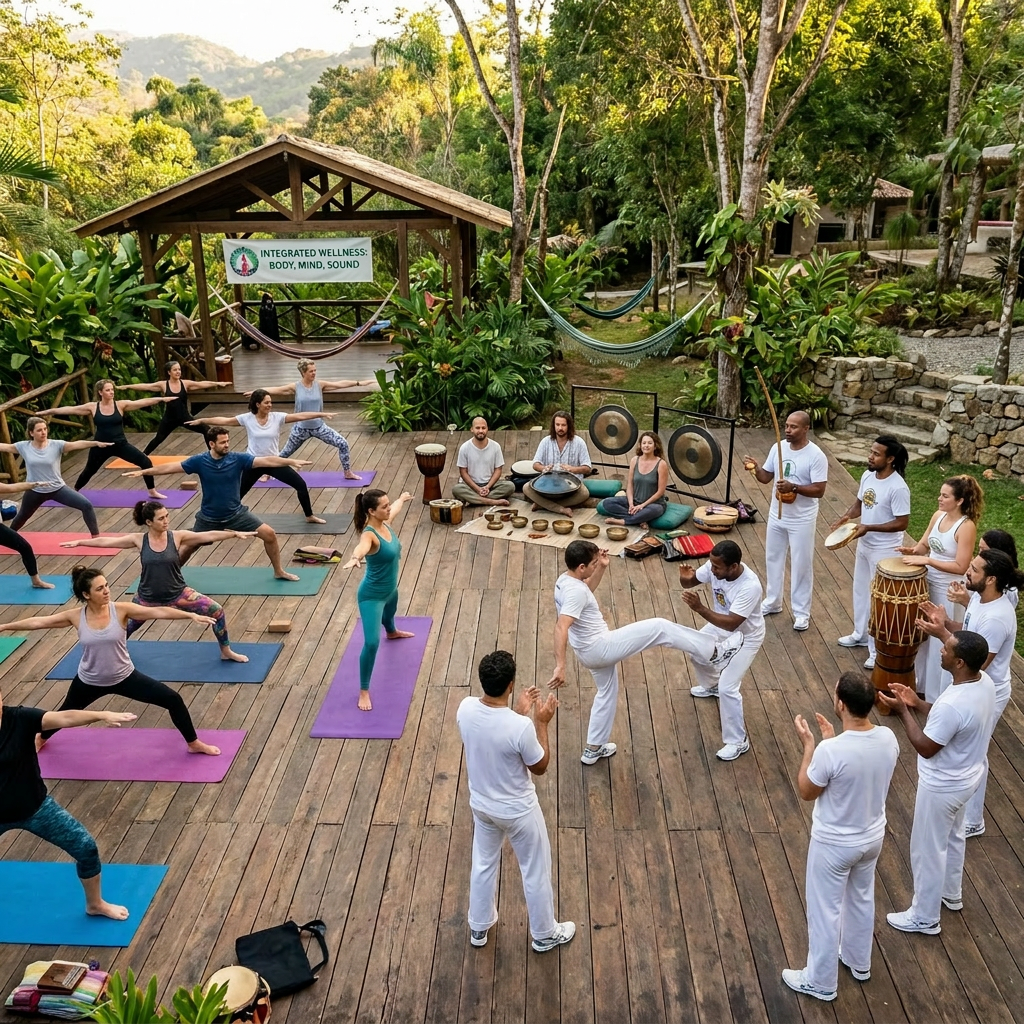
Capoeira Angola shares a striking convergence with other ancient healing traditions such as Qigong, Yoga, and Sound Healing. While their cultural origins differ, they all focus on the integration of mind, body, and spirit. For example, the low, grounded stances of Capoeira Angola mirror the energetic “rooting” sought in Qigong, and the intentional use of breath to manage explosive power is directly analogous to the internal martial arts practice of Fa Jing. When combined with sound healing, the energized state of a capoeirista becomes a clear channel for restorative vibrational frequencies, leading to profound energetic coherence.
Beyond these physical parallels, the ritualized space of the roda functions as a living laboratory for emotional resilience and community healing. Similar to the collective energy cultivated in a Yoga shala or the shared resonance of a sound bath, the roda requires participants to remain present and attuned to the group’s rhythmic pulse. This interdisciplinary approach suggests that well-being is not merely the absence of illness, but a dynamic state of harmony achieved through movement, sound, and intentional breath across diverse cultural lineages.