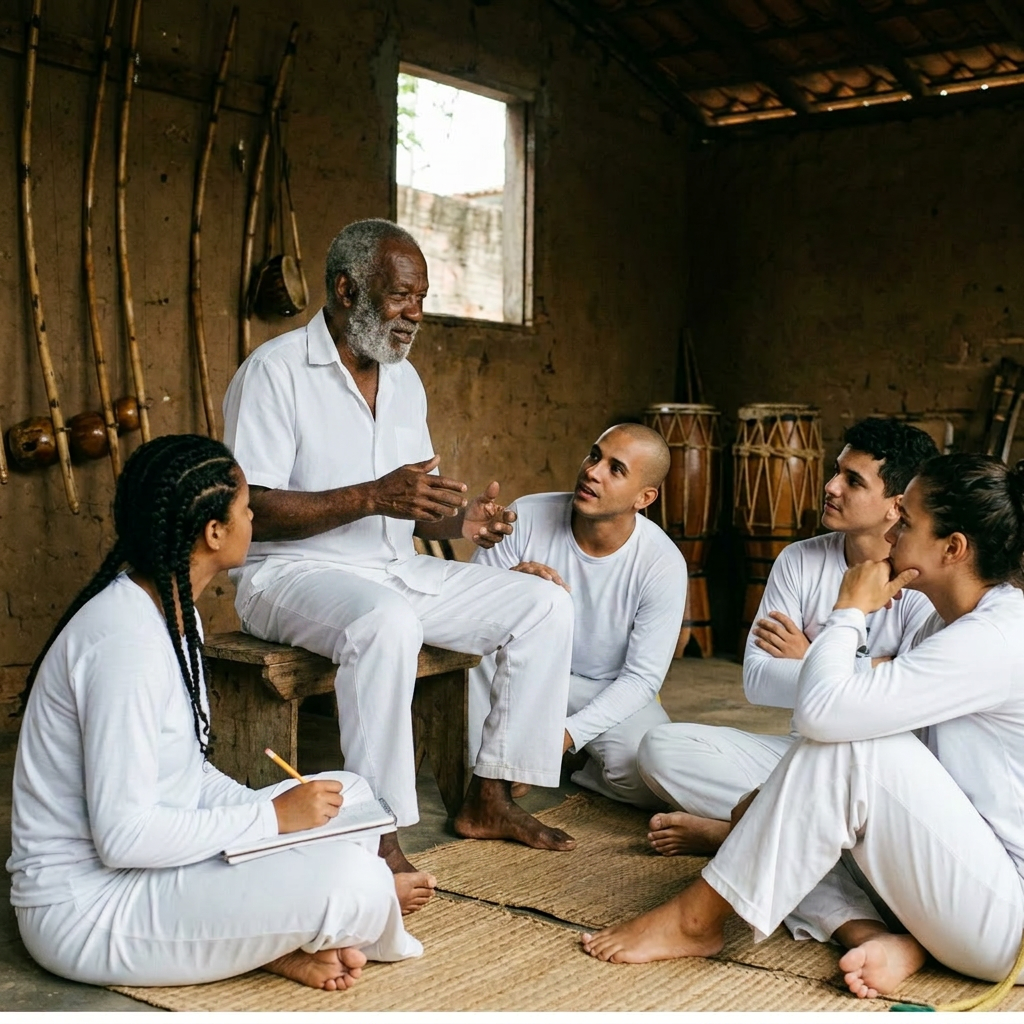
This comprehensive guide systematically investigates the ancient and profound martial art of Capoeira Angola. Renowned for its captivatingly deceptive, fluid movements and its surprisingly practical, effective applications for self-defense, this text explores the precise methodology by which the human body can be rigorously trained and transformed into a highly effective, dynamic, and intuitive self-defense weapon.
Part I: Turning the Person into a Human Weapon
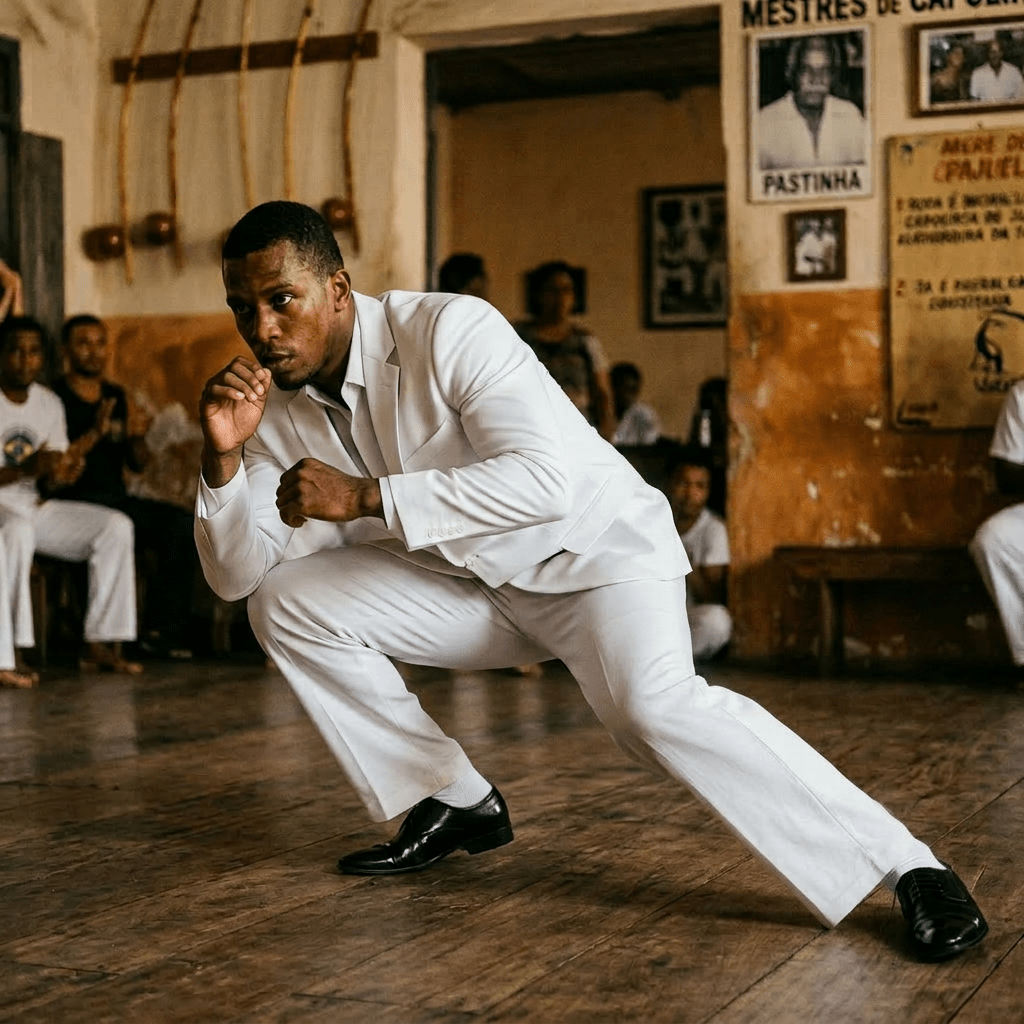
This foundational section is dedicated to the core application of Capoeira Angola’s unique principles. It focuses on mastering the foundational elements of movement, harnessing momentum, and optimizing body mechanics to fundamentally convert the entire person—mind and body integrated—into a dynamic, defensive, and offensive tool capable of reacting instantaneously to threat.Harnessing
Leverage and Kinetic Energy: The Physics of Power
The core philosophy of Capoeira Angola’s combative power is not rooted in simple brute strength, but in a sophisticated, deep-seated understanding and application of fundamental physics and biomechanics. It is a martial art that transforms the human body into a remarkably efficient, low-mass, high-impact weapon system.
The Biomechanics of Striking: The Body as a Lever and Mass Driver
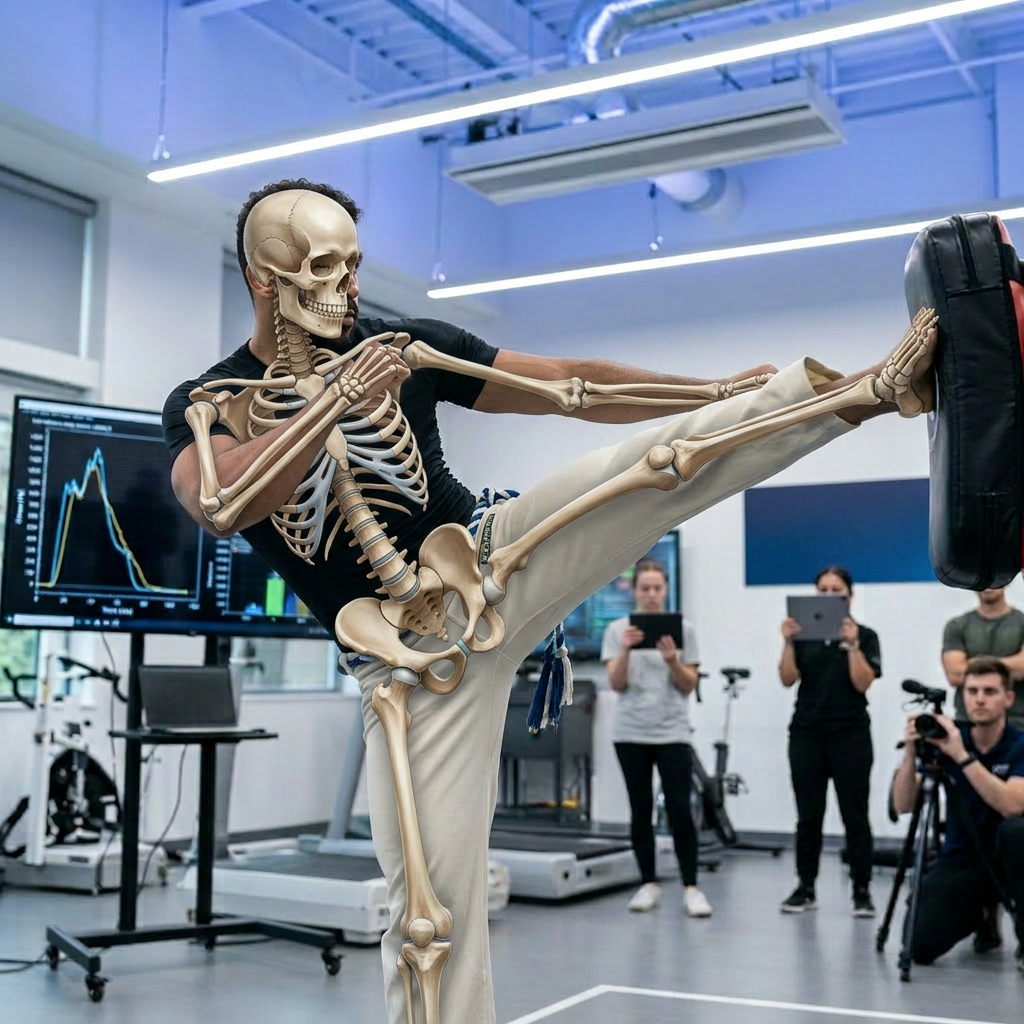
1. The Skeleton as the Primary Weapon and Defense:
Training in Capoeira Angola necessitates a cognitive shift, moving beyond the superficial reliance on muscular power. The practitioner is trained to perceive and utilize the body’s intrinsic structural integrity. The strongest, most resilient, and naturally armored structures of the human skeleton are specifically conditioned and deployed as primary, durable striking and blocking surfaces. This includes:
- The Elbows and Knees: Utilized as concentrated, percussive points of impact in close-quarters combat, often delivered from rotational or diagonal angles for maximum force application.
- The Hips (Greater Trochanter): Employed as a dense, foundational mass in powerful lateral sweeps and drives, transferring the kinetic energy of the entire lower body into a target.
- The Cranium (Forehead/Occiput): Taught as a solid, defensive block and, in extreme situations, a powerful, focused-mass weapon in head-butts, leveraging the body’s center of gravity.
2. Utilizing Leverage (Mechanical Advantage) for Force Multiplication:
The generation of true, fight-stopping power is fundamentally rooted in the principle of leverage, which is the mechanical advantage gained by the precise movement, articulation, and timing of the body’s major joint systems. This approach to power generation focuses on efficiency:
- By generating motion far from the point of impact (e.g., using the rotation of the torso to drive the shoulder), a minor initial effort can be amplified significantly as the force travels along the body’s articulated segments.
- This technique allows for the efficient concentration of immense force onto an extremely small point of impact, dramatically increasing the destructive pressure exerted upon the target, an application of the physical concept of $P = F/A$ (Pressure equals Force divided by Area).
3. Transferring Kinetic Energy (The Energy of Motion): The Fluid Chain of Power:
Force is not generated by a single muscle but is exponentially increased and made concussive by the systematic, fluid transfer of kinetic energy (the energy generated by motion) across the body’s largest and most powerful muscle groups. This energy chain flows in a sequence of rotation, extension, and impact:
- The Engine Room (Core, Glutes, and Legs): These groups act as the engine, initiating rotation and linear momentum. The legs provide the stable, grounded foundation, and the core acts as the crucial rotational coupling.
- The Kinetic Link: The power generated by the lower body is channeled through the hips, which serve as the central axis and most critical rotational joint. The synchronous rotation of the hips and stabilization by the legs ensure that the momentum generated is not lost, but instead funneled with maximal efficiency into the strike or block.
- Outcome: By mastering this kinetic connection, individuals of any frame or size—even those with a physically smaller stature—can generate disproportionately powerful, concussive force. In this system, raw size and muscular mass are rendered secondary, or even negligible, compared to the mastery of technical execution and physical physics. The force is derived not from muscle volume, but from velocity, structure, and mass alignment.
- The Capoeira Flow: Ginga and Momentum Generation: The continuous, circular, and low-to-the-ground foundational movement known as the Ginga is far more than a ceremonial dance or simple footwork. It is a highly sophisticated, perpetual motion system designed for multiple tactical advantages:
- Generating Kinetic Momentum: The pendulum-like swing of the Ginga continuously builds and stores kinetic momentum, which can be instantly channeled into a powerful kick, a sudden takedown, or a rapid evasion.
- Maintaining an Unpredictable Defensive Posture: The constant weaving motion keeps the body out of the “line of fire” and presents a constantly shifting target, making it exceptionally difficult for an opponent to predict the location or timing of the next move.
- Enabling Rapid Transition: The flow facilitates immediate and seamless transitions from a state of passive evasion (defense) to a decisive strike (offense), ensuring the practitioner maintains the initiative in a hostile encounter. This fluidity ensures the defense is the preparation for the attack.
Part II: Precision Targeting: The Body’s Weak Points
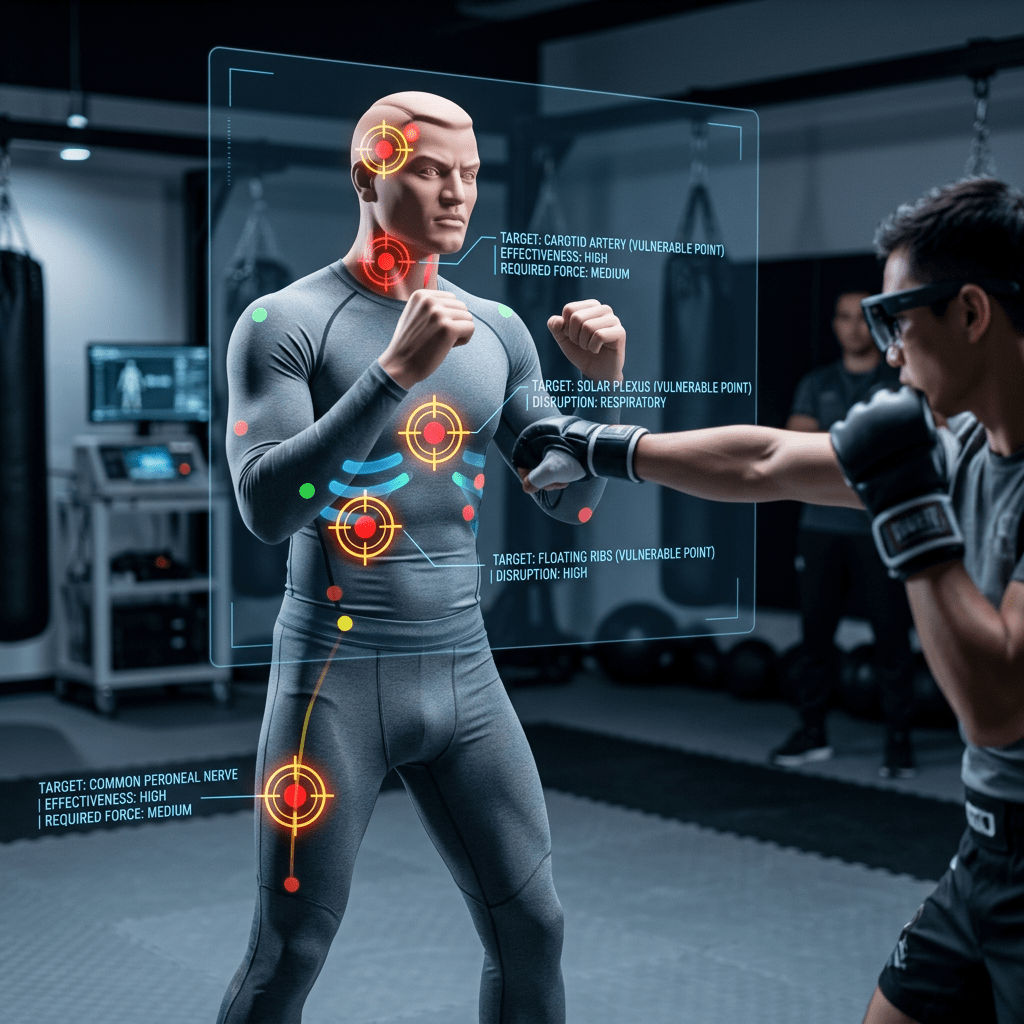
The philosophy underpinning effective self-defense, particularly as practiced within the unique and strategic framework of Capoeira Angola, centers on the principle of maximum effect with minimal expenditure of force. This requires the precise application of learned techniques directed at the human body’s most vulnerable points. For a defender to execute a response that is necessary, immediate, and decisively disabling, an in-depth and almost intuitive understanding of human anatomy is paramount. This specialized knowledge transforms movements from mere physical actions into targeted strategic strikes.
The vulnerabilities of the human body can be systematically categorized based on the biological systems that, when compromised, lead to rapid and effective incapacitation. This strategic targeting focuses on three main systemic weaknesses:
- The Delicate Nervous System: As the body’s primary control and communication network, the nervous system offers numerous high-value targets. Strikes to specific nerve clusters or the spine can induce immediate pain, muscle spasm, or loss of motor control. Targeting the head or neck, which house the central nervous system, can result in temporary or permanent unconsciousness, concussion, or severe disorientation, effectively ending a confrontation.
- The Vital Circulatory System: The circulatory system, responsible for oxygen and nutrient delivery, presents critical targets where pressure points and major arteries are close to the surface. Attacks focused on disrupting blood flow to the brain, such as compression of the carotid arteries in the neck (a temporary maneuver that can induce a syncopal episode), or forceful strikes to the torso that could compromise the heart or major blood vessels, represent a high-risk, high-impact strategy used only in extreme, life-threatening situations.
- Key Structural and Musculoskeletal Weaknesses: The body’s structural framework, while robust, contains numerous points of mechanical leverage and inherent fragility. Joints, such as the knees, elbows, ankles, and wrists, are designed to move within limited planes and are highly susceptible to hyper-extension, twisting, or focused impact. Striking these areas can cause immediate functional failure and intense, localized pain. Furthermore, targeting less-protected bone structures, such as the floating ribs, the nose, or the orbital bones, maximizes pain and disruption without requiring excessive force.
This calculated approach ensures that every movement within the Capoeira Angola defensive repertoire is not just an evasive action or a graceful flow, but a potential precise counter-measure aimed at the systemic weaknesses of the aggressor.
I. Nerve and Pressure Points for Immediate Incapacitation: Disrupting the Nervous System
Targeting specific nerve clusters and pressure points transmits a massive shock through the nervous system, often resulting in temporary motor control loss, intense pain, or unconsciousness.
- The Brachial Plexus Origin: Situated in the superclavicular fossa (the triangle where the neck meets the shoulder), this dense cluster of nerves innervates the entire arm and hand. A sharp, downward strike can cause a sudden and involuntary spasm, temporary paralysis, or the intense, radiating pain known as a “stinger,” effectively neutralizing the opponent’s upper-body offense.
- The Mandibular Angle (Jaw Hinge): This point, located just behind the hinge of the jawbone, is highly susceptible to shock transmission. A strike here can leverage the kinetic energy into the cranium, potentially disrupting the delicate balance mechanism of the inner ear (vestibular system) or causing a concussive jarring of the brain, leading to momentary disorientation or a rapid knockout.
- The Carotid Sinus: Located on the side of the neck near the carotid artery, this area is a baroreceptor—a natural regulator of blood pressure and heart rate. Rapid, sustained, or sharp pressure to this area can trigger a temporary vasovagal response, causing a sudden and significant drop in heart rate and blood pressure (bradycardia and hypotension). The resulting lack of cerebral blood flow can induce immediate dizziness, confusion, or temporary unconsciousness. Note: This technique requires precise execution and carries inherent risk.
- The Common Peroneal Nerve: This superficial nerve wraps around the head of the fibula, just below the outer side of the knee. Due to its exposed location, a sharp, focused strike (such as a kick or knee-check) can cause intense, shooting pain, resulting in the instant loss of muscle control (foot drop) and a mechanical buckling or weakening of the entire leg structure.
- The Radial Nerve: Running along the posterior aspect of the forearm (the meaty part below the elbow), this nerve is vulnerable to impact or compression. A focused strike or forceful pressure application can induce acute, crippling pain and cause the involuntary loss of grip strength, forcing the opponent to drop a weapon or release a grab.
II. Structural and Visceral Targets: Overcoming Natural Defenses

Targeting the body’s inherent structural vulnerabilities, vital organs, and unprotected airway dramatically increases the probability of immediate defensive success. These specific zones are inherently less guarded by muscle or bone, or house critical neurological and physiological components, making them ideal points for incapacitation.
- The Base of the Skull (Occipital Bone/Atlas Connection): This nexus, specifically the atlanto-occipital joint where the superior cervical vertebrae (C1, the Atlas) meets the occipital bone of the skull, is a crucial control center for balance and neurological function. A sharp, focused strike or a sudden, severe rotational movement can inflict immense damage. The resulting trauma instantly short-circuits the vestibular system, the body’s internal gyroscope, leading to immediate, debilitating disorientation, vertigo, and a complete loss of equilibrium. Furthermore, the extreme danger of this target lies in its proximity to the brainstem, the vital stalk connecting the brain to the spinal cord, which governs essential involuntary functions such as breathing and heart rate. Trauma here is an extremely high-risk, potentially lethal event.
- The Throat (Larynx/Trachea): The structures of the anterior neck—the larynx (voice box) and the trachea (windpipe)—are protected only by thin layers of skin and muscle. A focused strike can cause immediate and catastrophic results. Impact can trigger a powerful laryngeal spasm, an involuntary contraction of the vocal cords that slams the airway shut. Simultaneously, the force can crush, fracture, or displace the fragile cartilaginous rings of the trachea and larynx (such as the thyroid and cricoid cartilage). This physical damage leads to immediate, acute breathing difficulty, a panicked state as the opponent fights for air, and overwhelming, incapacitating pain, rendering them instantly non-combative.
- The Eyes (Orbital Region): As direct, highly sensitive extensions of the central nervous system, the eyes lack any substantial bony or muscular defense from the front. Direct pressure, a rapid flick, or a strike to the orbital region causes an instantaneous and overwhelming sensory overload to the trigeminal nerve. The reflexive reaction is extreme, characterized by searing pain, involuntary copious tearing (lacrimation), and immediate, complete visual impairment. This renders the opponent immediately and utterly defenseless, forcing all their mental and physical resources into a non-defensive mode focused solely on recovery of sight and mitigation of pain.
- The Solar Plexus (Diaphragm): Located centrally beneath the sternum where the lower rib cage meets, the solar plexus is not merely a muscle but a major network of nerves known as the celiac plexus. This ganglion is a critical hub for the autonomic nervous system. A sharp, direct strike to this location transmits massive concussive force to the nerve center and, critically, to the diaphragm muscle, the primary engine of respiration, which originates at this point. The force causes the diaphragm to undergo a temporary, involuntary spasm or paralysis, mechanically preventing the opponent from drawing breath—the classic experience of being “knocked the wind out of.” This results in a momentary state of absolute helplessness, psychological panic, and physical incapacitation.
- The Floating Ribs (Lower Ribs): The two lowest pairs of ribs (the eleventh and twelfth) are structurally unique, earning their name “floating” because they are not anchored anteriorly to the sternum or costal cartilage. They are only attached posteriorly to the spine. This structural anomaly creates a major vulnerability, as they lack the bracing and support of the rest of the rib cage. A sharp, side-angle strike, particularly with a heel or edge of the foot, can easily cause intense localized pain, or, more dangerously, can fracture these unanchored bones. Fracture can mechanically disrupt the process of breathing and movement and carries the extreme risk of the broken rib tips puncturing or lacerating the kidneys, spleen, or other underlying visceral organs.
III. High-Advantage Classic Targets: Leveraging Mechanical Weakness
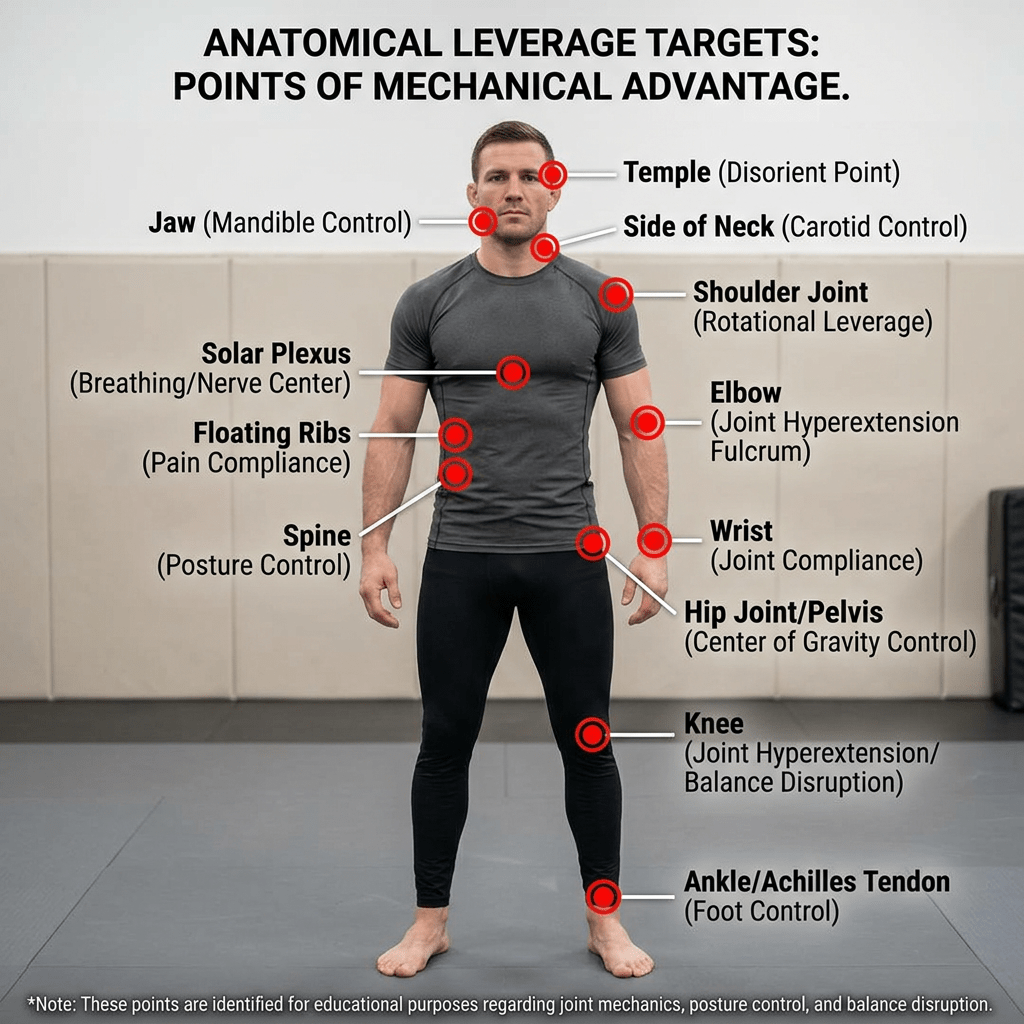
These targets represent classic, high-percentage strikes that exploit the body’s essential movement and support structures, offering maximum effect with minimal expenditure of energy, a core principle of the Capoeira Angola approach to self-defense.Critical Strike Targets
- The Knees:
- Anatomy and Vulnerability: As complex hinge joints, the knees are inherently unstable against force applied laterally (side-to-side) rather than along the axis of the leg. The structure relies heavily on four primary ligaments—the Medial Collateral Ligament (MCL), Lateral Collateral Ligament (LCL), Anterior Cruciate Ligament (ACL), and Posterior Cruciate Ligament (PCL)—for stability.
- Effect of Strike: A well-placed strike or kick to the side of the knee (specifically targeting the MCL and LCL) compromises these ligaments, tearing them and destroying the joint’s integrity. This immediately incapacitates the opponent, eliminating their ability to stand, bear weight, or maneuver. The resulting severe pain, structural collapse, and loss of mobility make the opponent an immediate non-threat in terms of movement-based offense.
- The Groin (Testicular/Pelvic Region):
- Anatomy and Vulnerability: This area, particularly in males, contains highly sensitive, exposed nerves and delicate tissue that are virtually unprotected by bone or muscle mass. The concentration of pain receptors makes this region acutely sensitive.
- Effect of Strike: A strike here triggers extreme visceral pain and an immediate, profound neurological shock. This shock is an involuntary, biological defense mechanism that reliably and instantaneously induces a defensive collapse. It causes temporary functional incapacitation, regardless of the opponent’s size, muscle mass, or level of training, making it an equalizer in self-defense scenarios.
- The Ankles:
- Anatomy and Vulnerability: The ankle joint is a critical fulcrum for balance, weight transfer, and locomotion. It is mechanically delicate and comprised of numerous small bones and ligaments (such as the talus and calcaneus) supporting the entire body’s weight. Direct, sudden force can easily sprain, fracture, or displace these bones and ligaments.
- Effect of Strike: Striking or sweeping the ankle, especially with a focused low kick or a forceful rasteira (sweep), compromises the opponent’s base. It severs the immediate connection to the ground, disrupting their balance and causing an often rapid and uncontrollable fall. Even if a fall is avoided, the immediate pain and partial destabilization drastically reduce the opponent’s mobility and ability to maintain a strong fighting posture. The resulting injury (sprain or fracture) ensures long-term non-participation in the conflict.
Part III: Optimized Striking and Deceptive Kicks
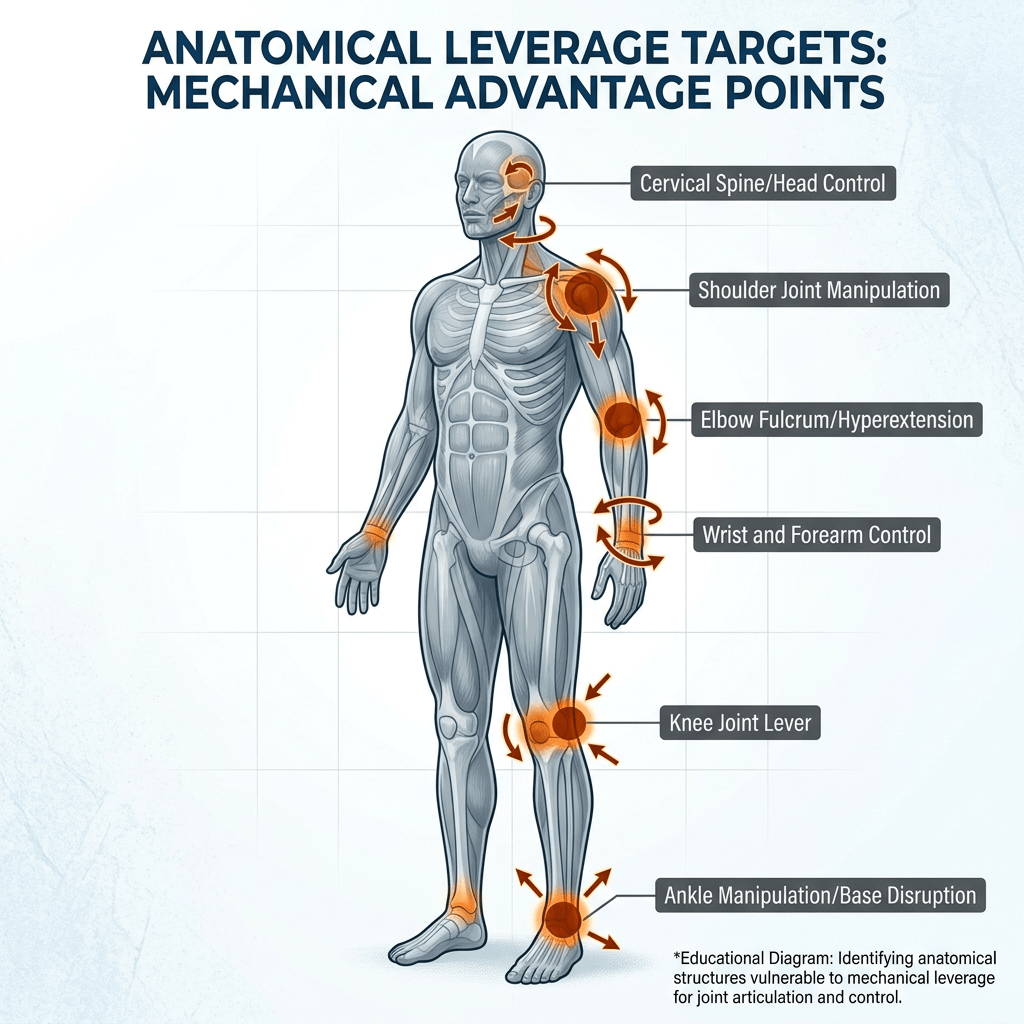
The Human Body as a Weapon, Capoeira Angola Style: Mastering Striking and Deception
Generating maximum kinetic power without incurring self-injury is paramount to effective and sustainable combat. This section delves into the foundational mechanics required for proper striking, focusing on hand protection, and illuminates the unique, deceptive art of kicking that defines Capoeira Angola as a martial art—a system that marries the subtlety of evasion with the potential for sudden, overwhelming force.
I. The Science of the Strike: Generating Power Without Breaking Your Hand
A truly devastating punch is not a brute-force fling of the arm; it is a sophisticated synergy of anatomical alignment, structural integrity, and full-body mechanics. Merely throwing an arm forward results in a weak, high-risk strike that invites both an ineffective blow and a potential self-inflicted injury. The true power of the human strike is unleashed through precise technique, particularly as honed in disciplines like Capoeira Angola.
The common misconception is that the force of a punch is generated solely by the shoulder and arm muscles. In reality, the kinetic chain for a powerful strike begins with the feet and the earth. Grounding one’s stance and rotating the hips and core—the body’s central engine—transfers immense rotational energy upward. This rotation, when timed perfectly, acts like a coiled spring unwinding, driving the shoulder, then the elbow, and finally the fist along a path of maximum efficiency and impact.
Structural integrity is paramount; the bones and joints must be aligned to act as a solid column upon impact. A wrist that is bent or a shoulder that is disconnected from the torso will fail, dissipating the energy generated by the lower body and leading to injury. The fist itself must be a weaponized unit, with the striking knuckles—typically the index and middle—forming a single point of focused pressure.
Furthermore, the “brute-force fling” lacks crucial elements:
- Momentum and Mass Transfer: A weak strike only moves the arm’s mass. A powerful strike engages the entire body’s mass, accelerating it into the target just before impact.
- Commitment and Follow-Through: The intent must be to strike through the target, not merely to it. This ensures that the energy continues to travel, maximizing penetration and shock.
- Breathing and Tension: A sharp, explosive exhalation (Kiai or similar expulsion of breath) at the moment of contact tenses the core muscles, briefly locking the structure and magnifying the impact’s power while protecting the striker from rebound shock.
Therefore, the study of the human body as a weapon, especially in systems emphasizing holistic movement like Capoeira Angola, teaches that devastating power is not about muscle size, but about the intelligent application of biomechanics. It is the mastery of this complex, full-body sequence that transforms a simple push into a high-impact, low-risk strike.
A. Anatomy of Impact: The Two-Knuckle Rule and Wrist Locking
The human hand is a complex, delicate structure, composed of 27 small bones. For the hand to be transformed into a solid, injury-resistant striking surface, two critical principles must be observed:
- Proper Fist Structure: The Two-Knuckle Rule: The physics of force dictates that the impact must be concentrated exclusively on the index and middle knuckles (the metacarpophalangeal joints). These are the strongest of the knuckles, as they are most directly aligned with the carpal bones of the wrist and, consequently, the major bones of the forearm. Concentrating force here prevents the stress from being absorbed by the smaller, weaker bones of the ring and pinky fingers, drastically reducing the risk of a Boxer’s fracture (a fracture of the fourth or fifth metacarpal).
- Wrist Locking and Alignment: Critically, the wrist must be straight, rigid, and “locked”—never bent up (hyperextended), down (flexed), or to the side. This alignment is not merely a preference; it is a structural necessity. When the wrist is locked straight, the forearm bones (the radius and ulna) act as a direct, unyielding column. This bone-to-bone alignment ensures that the mass and momentum generated by the entire body are transferred directly through the fist and into the target. Any bend in the wrist creates a weak hinge, causing the smaller carpal bones to absorb the force as a shear or bending load, leading inevitably to a severe wrist sprain or metacarpal fracture.
B. Body Mechanics and Hip Rotation: The Full-Body Engine of Power
A powerful hand strike is fundamentally not an arm movement; it is a kinetic chain reaction, a full-body rotation originating from the ground up. The arm serves merely as the conduit. The engine of this power is the transfer of weight and momentum from the lower body:
- Ground Force Transmission: Power is initiated by a forceful pivot of the rear foot. This pivot immediately rotates the knee and drives the hip aggressively forward toward the target. This movement is a direct application of Newton’s third law—the force exerted into the ground is returned, propelling the body’s mass into the strike.
- The Core and the “Snap”: This rotational force, often referred to as the “snap”, is the crucial element that ensures the maximum available mass and linear momentum are transferred into the strike within the shortest possible time. As the hip rotates and the core muscles (obliques and transverse abdominis) contract violently, the torso acts like a coiled spring suddenly released, catapulting the shoulder and arm toward the target.
- Efficiency and Penetration: This principle ensures that the punch utilizes the kinetic energy of the entire body mass, not just the mass of the arm. This dramatically increases the power and penetration (the depth to which the force is delivered) of the strike while simultaneously minimizing the localized strain and impact stress on the smaller, more vulnerable bones of the hand. The power is delivered by the entire body, protecting the fragile structure of the fist.
Hand Strikes in Capoeira Angola: The Subtle Art of Disruption
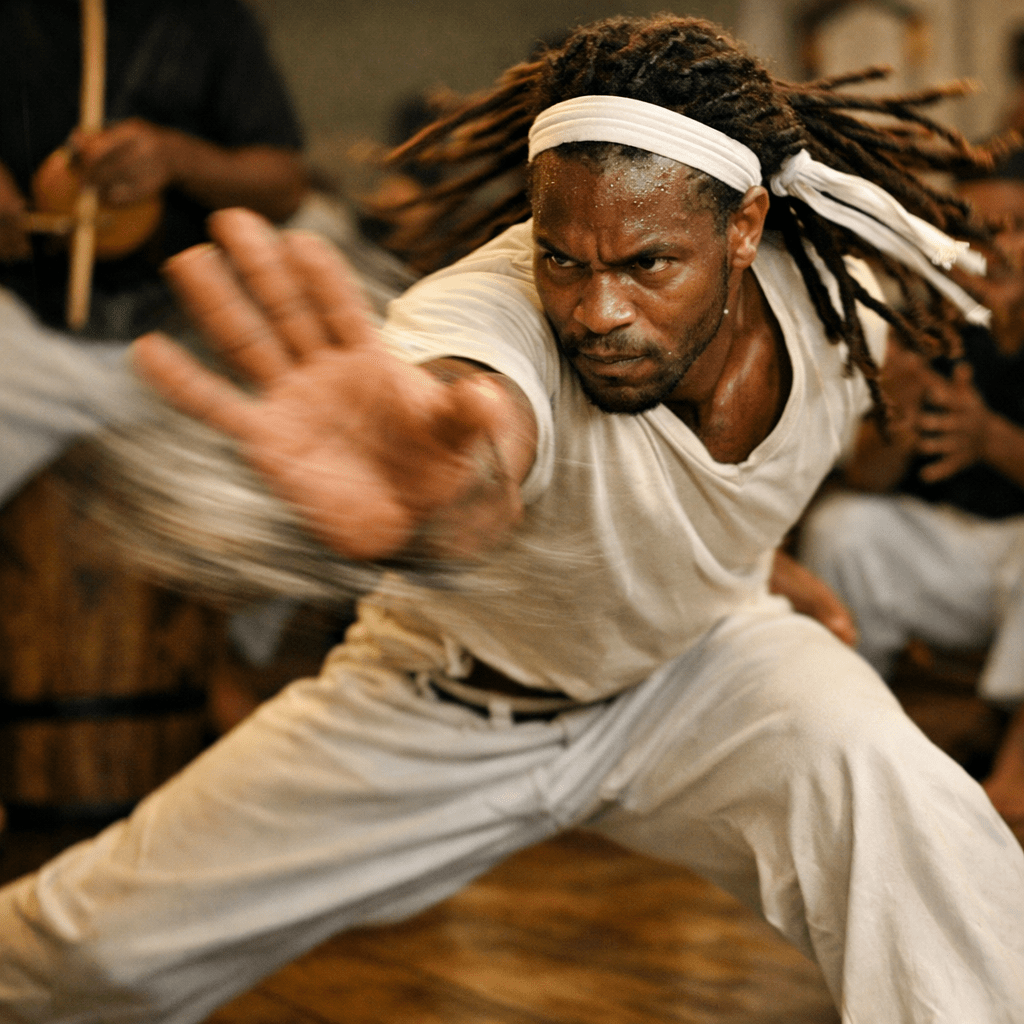
In the rich, deceptive world of Capoeira Angola, where the jogo (game) is a dialogue of movement and strategy, hand strikes occupy a critical, though often understated, role. Unlike martial arts that prioritize the knockout blow, Capoeira Angola integrates hand strikes not as a primary means of attack, but as a strategic component of its comprehensive self-defense philosophy, emphasizing surprise, deflection, and creating openings for the more definitive kicks and sweeps. They are the subtle punctuation marks in the fluid, low-to-the-ground lexicon of the art.
Philosophy and Technique: The Open Hand Advantage
The core principle driving hand strikes in this discipline is not brute force, but the strategic disruption of an opponent’s balance, concentration, and rhythm. This philosophical approach is physically manifested in the preferred striking method: the open hand.
Strikes are most commonly delivered with the heel or palm of the hand, techniques known as the calcanhar de mão (heel of the hand) or the simple tapa (slap). This preference over a closed fist is deeply rooted in Capoeira Angola’s historical and philosophical foundation, which values control, rhythm, and a non-confrontational appearance. The open hand maintains the practitioner’s dexterity and control, enabling a quicker, more seamless transition back into a defensive posture (Ginga) or a follow-up sweep or takedown.
An open hand serves multiple purposes:
- Checking and Parrying: It is used defensively to knock away or deflect an incoming kick or strike, maintaining the player’s personal space.
- Pushing: A sharp push can momentarily break an opponent’s balance, setting them up for a subsequent move.
- Surprise Attack: Delivered from a low, unexpected angle, the open-hand strike can momentarily blind or distract the opponent.
Specific Applications of Hand Strikes
The terminology for hand strikes in Capoeira Angola reflects their diverse roles, ranging from mere distraction to direct, devastating attacks (which are rare in the traditional jogo):
| Strike Name | Description | Primary Function in the Jogo |
| Galopante | A wide, open-palm slap to the face or ear, typically utilizing the palm’s base. | Disruption & Guard Check: Acts more as a disruptive force, interrupting an opponent’s vision or concentration, or signaling to them that their guard is open. |
| Tapona | A powerful, flat-hand strike or a sharp deflection. | Defense & Setup: Used to block incoming punches or kicks, or to create a momentary visual screen that sets up a more powerful kick or sweep. Often smoothly incorporated into the Ginga motion. |
| Godeme | A quick backhand strike, which may be delivered with a closed fist or an open palm. | Feint & Aggression: Can be used aggressively to the face or subtly as a feint, tricking the opponent into reacting in a way that leaves them vulnerable for a follow-up attack. |
| Cutilada de Mão | A sharp hand chop, typically aimed at sensitive areas like the neck, collarbone, or ribs. | Direct Encounter: A more direct and decisive strike, employed in closer, more confrontational exchanges. |
| Asfixiante | A powerful, closed-fist punch aimed directly at the throat. | Aggression & Self-Defense (Rare): Considered a rare and potentially devastating strike, typically reserved for aggressive, life-or-death confrontations (often referred to as Briga de Rua, or street-fighting styles). It signifies the ultimate breaking of the game’s flow. |
Purpose & Context: Strategic Integration
The true mastery of hand strikes lies in their seamless integration into the flow of the jogo. They are never isolated actions but are utilized to advance a larger strategic objective:
- Distraction and Setup: The most common application. A quick Galopante or Tapona creates a momentary lapse in the opponent’s defense, giving the Capoeirista the necessary half-second to launch a powerful kick, such as a Meia Lua de Compasso (compass kick) or execute a debilitating sweep like the Rasteira.
- Feints and Deception: Hand strikes are excellent tools for deception. A well-timed Godeme can draw a defensive reaction from the opponent, making them instinctively lower their guard or shift their weight, thus exposing a different target.
- Defense and Spacing: The Tapona in particular is crucial for deflecting attacks and simultaneously creating a pocket of space, allowing the player to safely reset their position or launch a counter-attack.
- Aggression (Briga de Rua): While the jogo emphasizes flow and non-contact, the repertoire includes powerful strikes (like Asfixiante) reserved for more aggressive, self-defense contexts outside of the ritualized game. In these scenarios, face protection and incapacitation become the priority.
Ultimately, hand strikes in Capoeira Angola are extensions of the body’s natural defense mechanisms, utilized to maintain the integrity of the player’s space and rhythm. They are tools for subtle manipulation and strategic engagement rather than the primary method of attack. Their execution must always align with the low, expressive, and deceptive aesthetic that defines the Capoeira Angola style, transforming a simple slap into a profound strategic maneuver.
II. Deceptive Kicks: The Capoeira Signature of Unexpected Attack
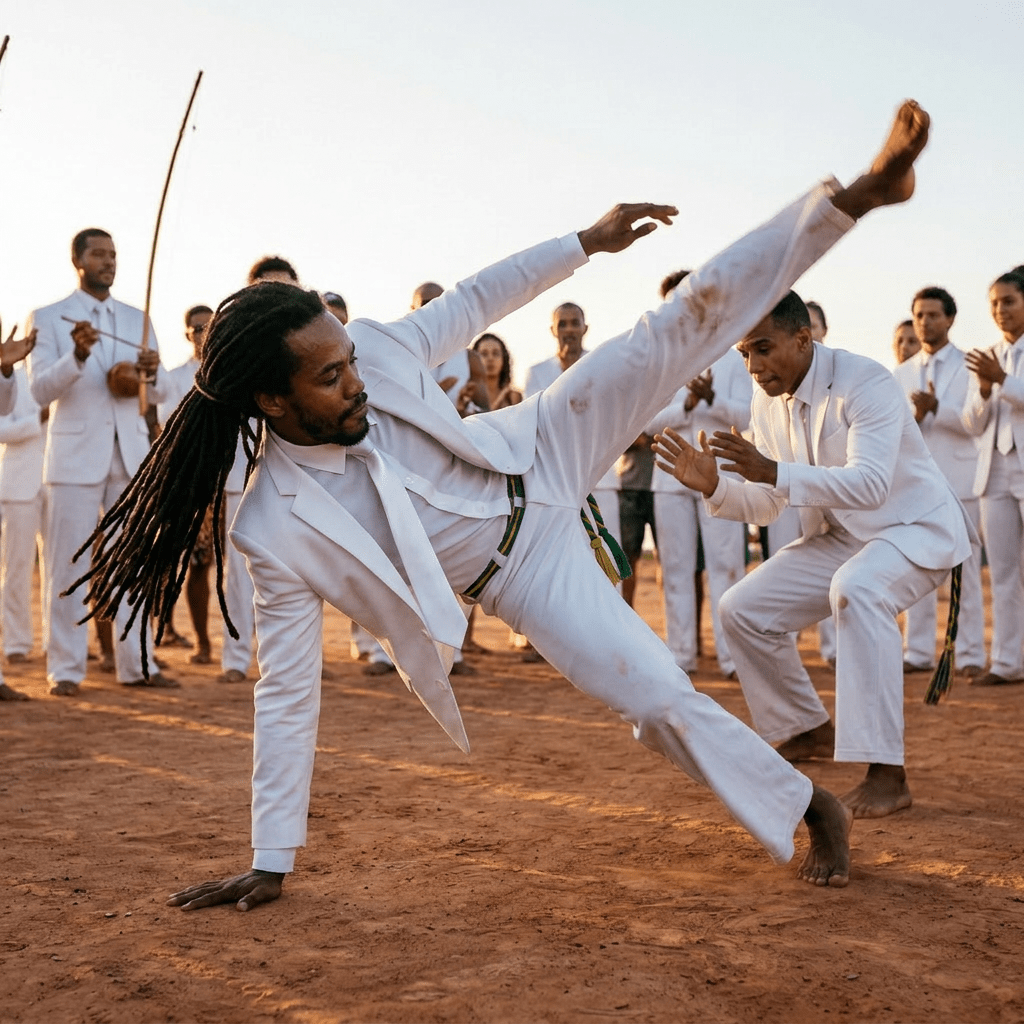
Capoeira Angola’s kicking repertoire is distinct because its attacks are fundamentally rooted in the philosophy of malícia (malice, or cunning) and deception. Unlike linear, front-facing martial arts, Capoeira attacks often originate from movement intended to appear non-threatening, evasive, or purely defensive.
- The Art of Disguised Aggression: Capoeira kicks are masterfully disguised as defensive dodges, low-level ground movements, or sweeping maneuvers. The practitioner often maintains a seemingly relaxed or evasive posture (Ginga), making the transition into a powerful strike unexpected and difficult for an opponent to predict.
- Leveraging Rotational Momentum and the Ground: The most potent Capoeira kicks harness rotational momentum and leverage the stability of the ground. Techniques like the Rasteira (a ground-level sweep) or the Rabo de Arraia (Meia Lua de Compasso) (the compass kick) are prime examples. The Rasteira uses the body’s momentum and low center of gravity to execute a sweeping action that targets the opponent’s base, demonstrating how an ostensibly defensive or evasive low movement can transition into a devastating takedown. The Rabo de Arraia is perhaps the most powerful kick in Capoeira; it requires the practitioner to place their hands on the ground and execute a massive 360-degree rotation. This movement leverages the entire mass of the body as a counterweight to create incredible rotational velocity, delivering a devastating, yet often unexpected, strike with the heel or side of the foot. These techniques demonstrate the core principle: initiation of a powerful attack from a position that appears passive or purely evasive.
Part IV: Defense and Ground Survival Tactics: The Art of Evasion and Reversal
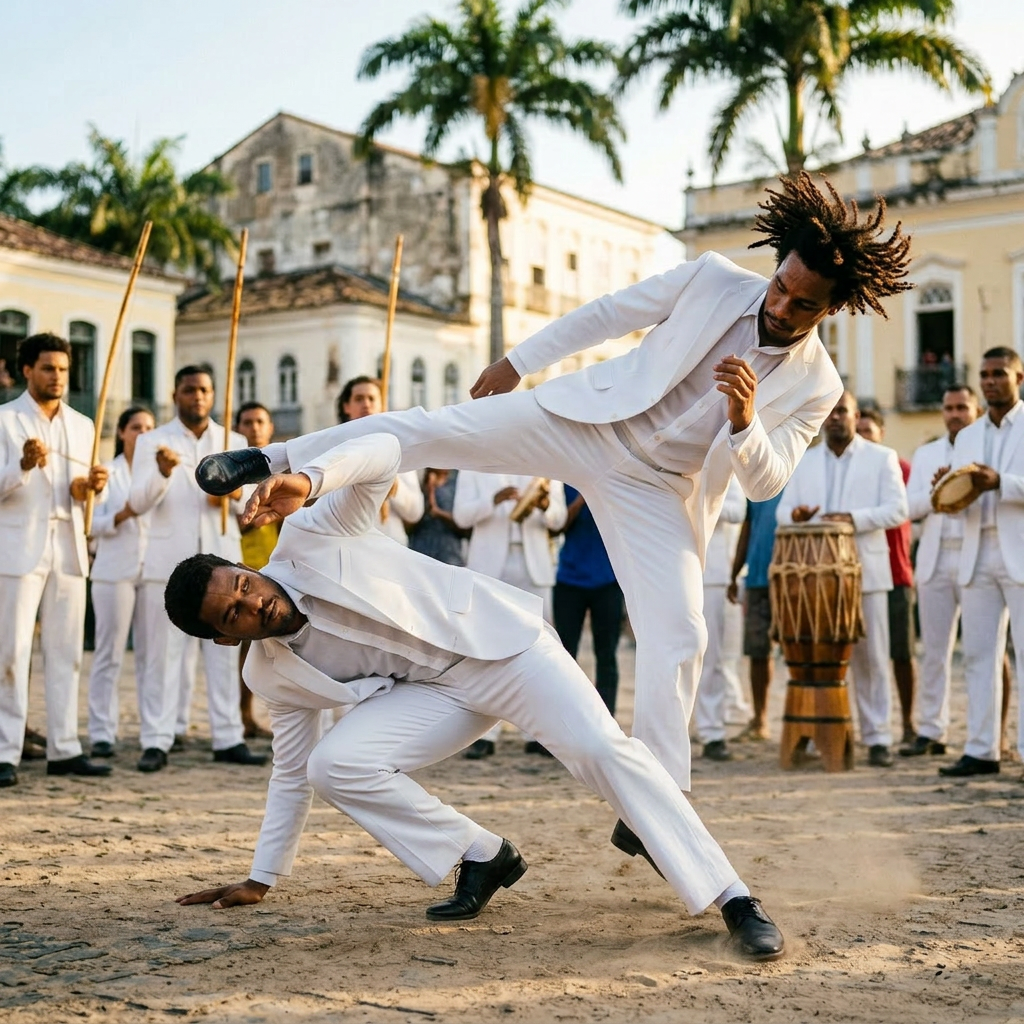
Mastering the physical attack, the explosive Golpes (strikes) and sweeping movements, is only half the battle of Capoeira Angola. The true survival artist controls the engagement, not merely by striking, but by rendering themselves untouchable and capable of surviving—and reversing—a worst-case scenario, such as being pinned or mounted on the ground. The Capoeirista must become a continuously moving, unpredictable target.
I. Defense Tactics and Distance Management: The Unbroken Flow
Defense in Capoeira is not about rigid blocking; it is about seamless redirection and fluid evasion, managed primarily by the constant, low, and rhythmic motion of the Ginga.
- Distance Management (The Ginga Range): This is the fundamental defensive tool. The Ginga allows the practitioner to constantly calibrate the “kill distance.” The ideal Ginga Range is close enough to launch an immediate counter-attack (contra-ataque) the moment the opponent commits a strike, but far enough that the opponent’s attacks must travel an extra few inches, giving the Capoeirista the fraction of a second needed for evasion. The goal is to make the opponent feel close and pressured, but never able to land a solid blow.
- Parrying and Deflection (The Principle of Redirected Force): Traditional martial arts often emphasize meeting power with power. Capoeira, conversely, employs soft, glancing blows and deflections to redirect an opponent’s momentum. Instead of absorbing the full force of a kick or punch, the Capoeirista uses subtle hand or leg movements to guide the attack past their body. This technique not only preserves the defender’s energy but also subtly unbalances the attacker, turning their committed energy against them and setting them up for a follow-up strike or takedown.
- Head Movement and Evasion (The Slippery Target): The fluid, almost dance-like quality of Capoeira head movement is key to avoiding strikes. This includes dipping, weaving, and utilizing the low, sweeping esquivas (escapes) to slip entirely under or around incoming blows. The head is the most vulnerable target, and by keeping it constantly moving and utilizing the entire body to pivot and shift, the Capoeirista ensures they are never a static target, forcing the opponent to constantly adjust their aim.
- Escaping Grabs and Holds (Exploiting Weakness): When caught in a standing grab or choke, Capoeira techniques leverage the principles of biomechanics over brute strength. Escapes focus on identifying and exploiting the opponent’s joint weaknesses (e.g., wrist, elbow, neck) and using explosive, full-body hip movement—often a sudden queda (fall) or rotational movement—to create a powerful torque that instantly breaks the opponent’s grip and allows the defender to regain the initiative.
II. Ground Survival Techniques: The Art of the Get-Up and Reversal
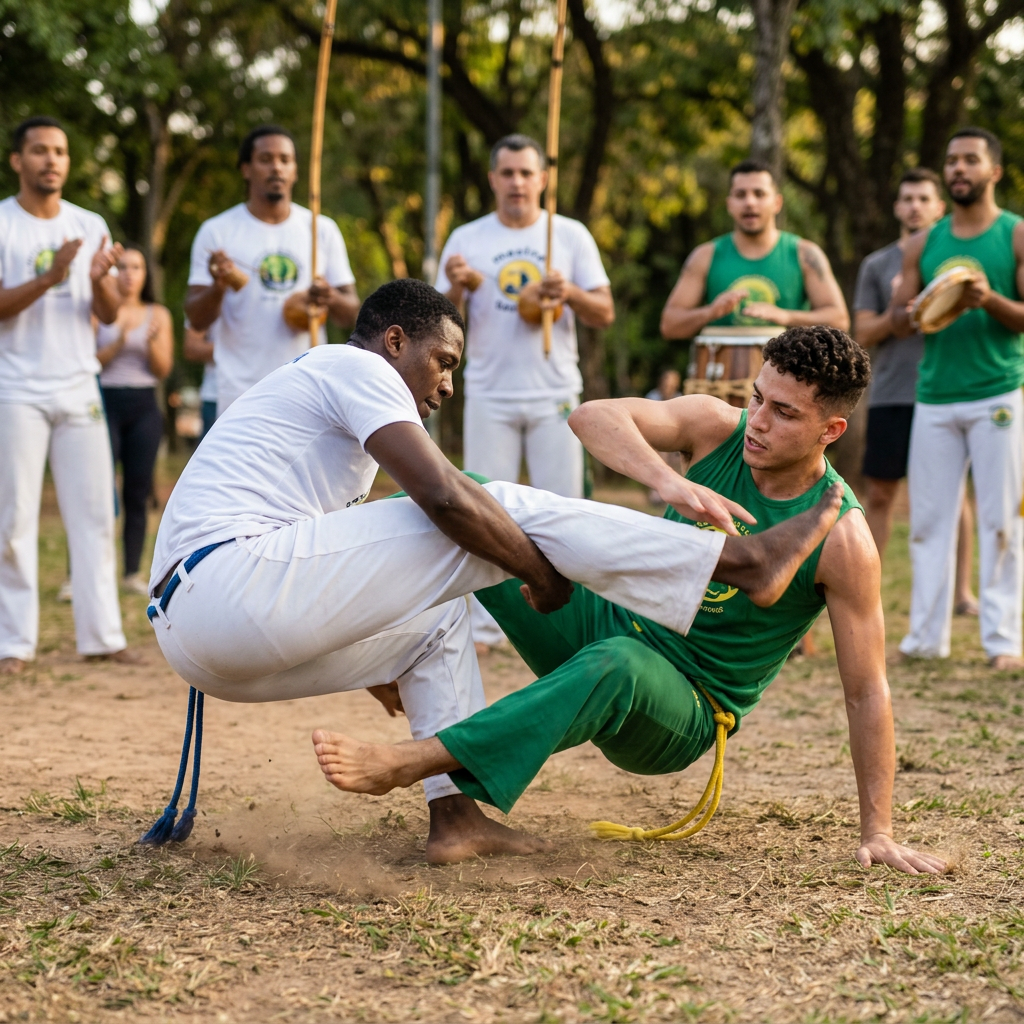
The ground is often seen as a place of disadvantage, but in Capoeira Angola, it is another arena for movement and attack. The goal is never to stay static; the primary objective when pinned or mounted is immediate reversal or escape.
- The Aú and Bridging for Space: When an opponent has achieved a dominant top position (like the mount or side control), the immediate defensive action is to create space. Capoeira utilizes bridging movements—explosive upward thrusts of the hips—to destabilize the opponent’s base. The Aú (cartwheel), even when partially executed from a compromising position, can be used to instantly shift weight, reverse the position, or rapidly transition back to the feet. These movements disrupt the opponent’s ability to settle and strike.
- Establishing Immediate Frames (Bone-on-Bone Structures): A crucial step in ground survival is preventing the opponent from solidifying their position. This is achieved by creating powerful, rigid frames using the defender’s forearms and shin bones, placing them against the opponent’s body (e.g., neck, hips, chest). These frames are bone-on-bone structures that physically block the opponent from driving their weight down and establishing a strong connection, forcing them to constantly fight the structure rather than attacking.
- Maintaining Constant Movement and Avoiding Control: The fundamental rule of ground survival in Capoeira is to never allow the opponent to be comfortable. The Capoeirista must maintain a continuous, subtle movement (hip shifts, leg swings, arm weaving) to avoid being locked down in a controlled position. This constant flux prevents the opponent from setting a strong base, making every attempt to strike or submit a struggle against a shifting foundation, greatly increasing the chances of a successful sweep or reversal.
Part V: Mental Fortitude: Controlling Fear and Adrenaline
The most effective weapon in any confrontation, or indeed any high-stress situation, is not physical strength or technique, but a controlled mind. This section focuses on the paramount importance of mental preparation, specifically how to manage the body’s involuntary, and often counterproductive, response to perceived danger: the fight-or-flight mechanism driven by fear and adrenaline. Mastery of this internal state is what separates a panicked reaction from a clear, tactical decision.
- How to Control Fear and Adrenaline Using Navy SEAL Breathing Techniques:
Note: This breathing technique has NOTHING to do with Capoeira Angola, but I include this here because Breathing is FUNDAMENTAL, and POWERFUL.
The sudden rush of adrenaline can cause tunnel vision, auditory exclusion, rapid and shallow breathing, and a dangerous spike in heart rate. These physiological responses significantly impair complex motor skills and rational thought—the very tools needed most in a crisis. The solution is not to fight the adrenaline but to regulate the body’s autonomic nervous system (ANS) through conscious, rhythmic breathing.
- Box Breathing (Tactical Breathing): Also known as Square Breathing, this technique is a foundational skill taught to elite military and law enforcement units to immediately interrupt the stress response cycle. The deliberate, measured rhythm serves as a powerful anchor to the present moment, overriding the mind’s tendency to catastrophize.
- The Technique: Practice a rhythmic, measured breathing pattern:
- Inhale (4 seconds): Slowly and deeply inhale through the nose, filling the diaphragm. This signals to the parasympathetic nervous system that the threat is manageable.
- Hold (4 seconds): Hold the breath. This allows for a momentary equalization of pressure and focus.
- Exhale (4 seconds): Slowly and completely exhale through the mouth, emptying the lungs. The slow exhale is the most critical step for triggering the relaxation response.
- Hold (4 seconds): Hold the breath again before the next inhale. This completes the ‘square’ and reinforces the control.
- The Effect: Consistent practice of Box Breathing immediately calms the central nervous system, effectively lowering the heart rate, reducing blood pressure, and flooding the prefrontal cortex with necessary oxygen. This physiological reset allows an individual to regain cognitive control, enabling clear, tactical decision-making, observation, and analysis, rather than succumbing to a panicked, instinctual response. Regular training in this technique, even outside of stressful situations, builds the neural pathway needed to access this state under pressure.
- The Technique: Practice a rhythmic, measured breathing pattern:
- Visualization and Mental Rehearsal (The Mente): The Warrior’s Inner Game
A warrior’s greatest tool is not their body, but their mind. A controlled mind is fundamentally a prepared mind, and in the Capoeira Angola philosophy, this preparation is achieved through the intense focus on the Mente (mind) via visualization and mental rehearsal. This practice is far more than simple daydreaming; it is a systematic cognitive conditioning exercise designed to build neural pathways for rapid, fluid, and effective action in dynamic, high-stress environments.
Before ever stepping foot inside the Roda (the circle where the ritualized “game” is played) or facing any situation that demands a physical or strategic response, the Capoeirista is trained to engage in deep mental walkthroughs. This involves closing one’s eyes and vividly simulating various possible actions, counter-actions, environmental factors, and the resulting outcomes. The rehearsal encompasses the entire sensory and kinetic experience: feeling the rhythm of the Berimbau, anticipating the opponent’s feints, calculating the required distance for an evasive esquiva (escape), and executing a seamless transition into a retaliatory movement.
This constant mental pre-wiring serves a crucial purpose: it significantly reduces the cognitive load during the actual event. When the body encounters a familiar sequence of stress and movement that has been rehearsed countless times in the mind, the brain can bypass the slower, analytical decision-making process. Instead, it accesses a library of pre-programmed, near-automatic motor responses. This allows the Capoeirista to move from observation to instinctive, effective action with minimal delay, preventing the common physiological responses of freezing or panicking when the real event unfolds. By first mastering and controlling the environment through the power of visualization—predicting the chaos before it arrives—the body is then free to respond with the agility, grace, and confidence that defines Capoeira Angola.