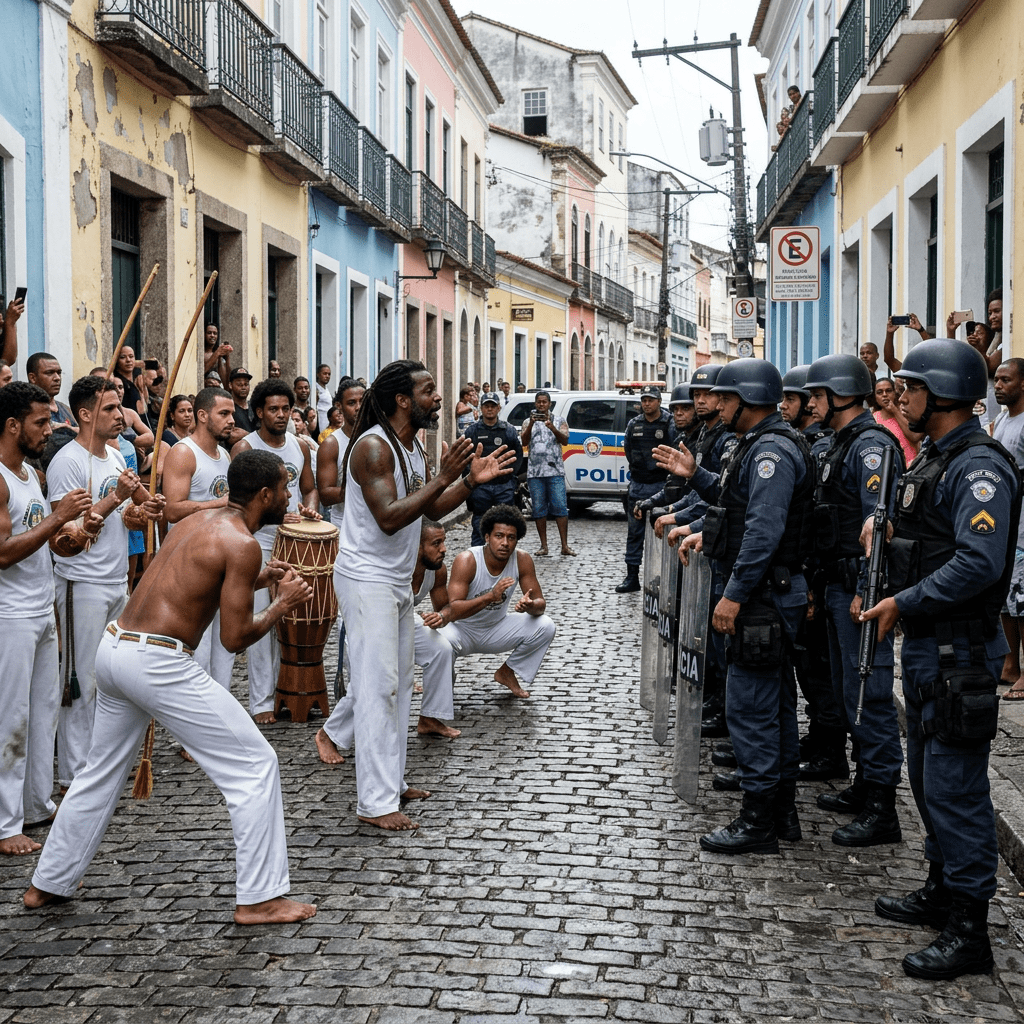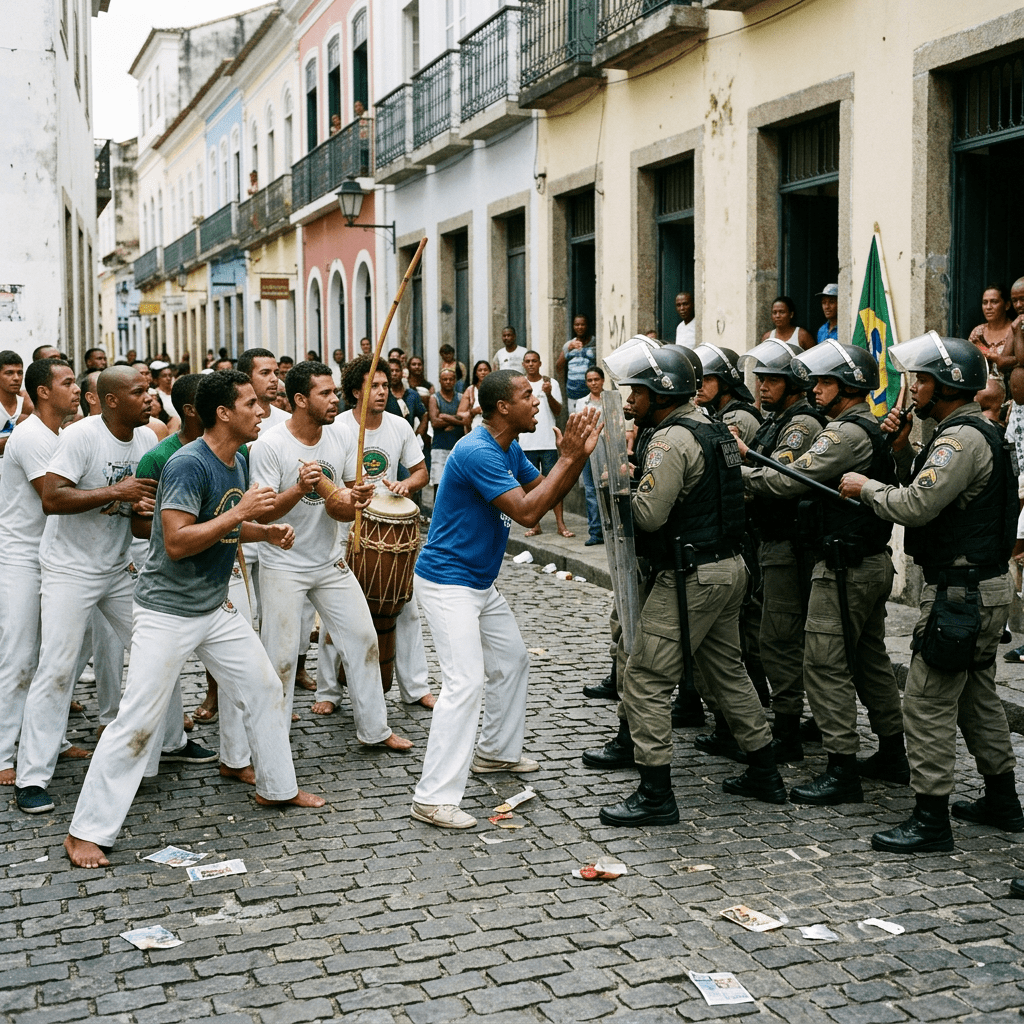
Capoeiristas, practitioners of the Afro-Brazilian art form known as capoeira, have historically occupied a precarious position at the nexus of profound cultural expression and severe state repression. Throughout centuries, they have endured violence, discrimination, and relentless attempts to suppress their unique art, which embodies a rich and intricate tapestry of Afro-Brazilian heritage. More than just a martial art or a dance, capoeira has served as a powerful and enduring form of resistance against the systemic oppression faced by enslaved Africans and their descendants in Brazil. Through its movements, music, and philosophy, capoeira allowed them to reclaim their identity, preserve their cultural memory, and foster community in the face of profound adversity.
The struggles of capoeiristas, however, are not confined to the annals of history; they resonate powerfully with contemporary issues, demonstrating an ongoing fight for recognition, justice, and fundamental human rights. A stark and deeply troubling parallel can be drawn between the historical persecution of capoeiristas and the recent ice raids that have disproportionately targeted marginalized communities in various parts of the world. In both instances, the state, through its enforcement mechanisms, has been used to control, displace, and subjugate populations deemed “other.”
The connection between these seemingly disparate struggles lies in the pervasive and deeply entrenched struggle against systemic injustice. Just as capoeira was once outlawed and its practitioners persecuted, immigrant communities today face the constant threat of family separation, detention, and deportation, often without due process or adequate legal representation. Both capoeira, with its history of covert practice and coded movements, and the experiences related to immigration enforcement, with its impact on vulnerable families, reflect a profound and ongoing battle against powerful, often invisible, forces of oppression.
The profound question that arises from this comparison is how these “cultural warriors” – whether historical capoeiristas or contemporary advocates for immigrant rights – navigate the complex dual realities of preserving their cherished traditions and cultural identities while simultaneously confronting oppressive forces. Their resilience and determination reveal the intricate complexities of identity formation, cultural survival, and resistance in today’s increasingly interconnected yet often divisive society. This struggle is not merely a historical footnote but a continuous, evolving challenge that demands constant vigilance.

Historically, capoeiristas, often marginalized and facing severe state repression in Brazil, transformed their cultural practice into a formidable tool of resistance. The seemingly innocent dance and music masked a highly effective martial art, allowing them to maintain their cultural heritage while subtly, yet powerfully, challenging the dominant order. This transformation was not merely a strategic adaptation but a profound act of cultural resilience, where the very essence of their identity became a weapon against oppression. The fluidity of capoeira, with its deceptive movements and rhythmic evasion, mirrored the nuanced ways in which the enslaved and marginalized resisted their subjugation. Their ability to adapt and innovate under duress highlights a crucial aspect of cultural survival: the capacity for transformation and reinvention. The very act of practicing capoeira became an assertion of self, a defiance against attempts to erase their identity and assimilate them into a system that sought to deny their humanity. Through the intricate interplay of movement, music, and ritual, capoeira provided a vital space for community, self-expression, and the preservation of ancestral knowledge, becoming a living testament to the enduring spirit of human resistance.
In parallel, contemporary advocates for immigrant rights find themselves in a similar crucible. They champion the preservation of diverse cultural traditions, languages, and identities, often against restrictive policies, xenophobic sentiments, and systemic discrimination. These advocates recognize that cultural preservation is not merely an aesthetic choice but a fundamental human right and a powerful form of resistance against assimilationist pressures. Their efforts to establish cultural centers, organize community events, and advocate for inclusive policies are direct echoes of the capoeiristas’ struggle to maintain their cultural integrity. These initiatives provide safe spaces for cultural expression, foster intergenerational transmission of traditions, and build solidarity among immigrant communities. The fight for the right to speak one’s native language, practice one’s religion, or celebrate one’s heritage becomes a fundamental act of resistance against policies designed to strip individuals of their cultural distinctiveness. In the face of systemic challenges, these advocates, much like the capoeiristas, demonstrate the profound power of cultural persistence as a means of asserting identity, demanding recognition, and ultimately, striving for a more just and inclusive society. They embody the ongoing struggle for the right to belong and to thrive while retaining one’s unique cultural heritage, echoing the historical resilience of those who transformed oppression into powerful acts of cultural affirmation.
The historical trajectory of capoeiristas, who transformed a survival mechanism into a rich cultural art form despite severe repression, serves as a powerful testament to the indomitable human spirit. Their ability to embed resistance within performance, to mask defiance in dance, and to communicate solidarity through rhythm and movement, offers a profound model for contemporary activists. In an increasingly interconnected yet fragmented world, where cultural identities are often threatened by homogenization or exploited for commercial gain, the capoeirista narrative emphasizes the critical importance of grassroots movements in preserving authenticity and fostering community.
Furthermore, the experience of capoeiristas highlights the insidious nature of state repression, which often targets cultural practices as a means of controlling populations and suppressing dissent. The criminalization of capoeira in its early forms was not merely about outlawing a physical activity; it was an attempt to dismantle a social fabric, to deny agency, and to erase a history of resistance. Recognizing these historical patterns allows us to better identify and challenge similar tactics in modern contexts, whether they manifest as censorship, surveillance, or the marginalization of minority cultures.
The contemporary landscape presents new and complex challenges for cultural expression. Globalization, while offering opportunities for cultural exchange, also poses the risk of cultural appropriation and the erosion of unique traditions. Migration, driven by both economic necessity and conflict, leads to the displacement of communities and the struggle to maintain cultural ties in new environments. In this intricate web, the lessons from capoeira – adaptability, resilience, communal support, and the strategic use of cultural forms for advocacy – become even more pertinent.
Ultimately, the defense of culture is a continuous, multi-faceted endeavor. It requires not only the preservation of traditional forms but also their dynamic evolution and adaptation to new circumstances. It demands the courage to challenge oppressive structures and the creativity to find new avenues for expression and resistance. By studying the historical struggles of groups like the capoeiristas, we gain a deeper understanding of the profound connection between cultural rights and human rights, and we are better equipped to champion the cause of cultural diversity and self-determination for all. The fight for cultural expression is, therefore, an ongoing affirmation of humanity’s right to define itself, to remember its past, and to shape its future.