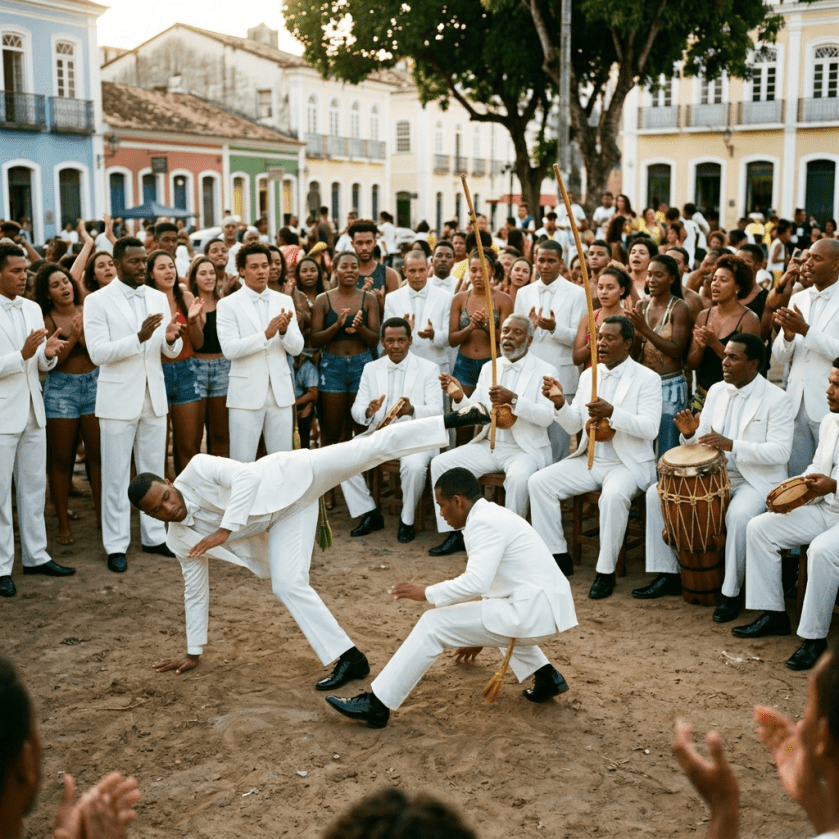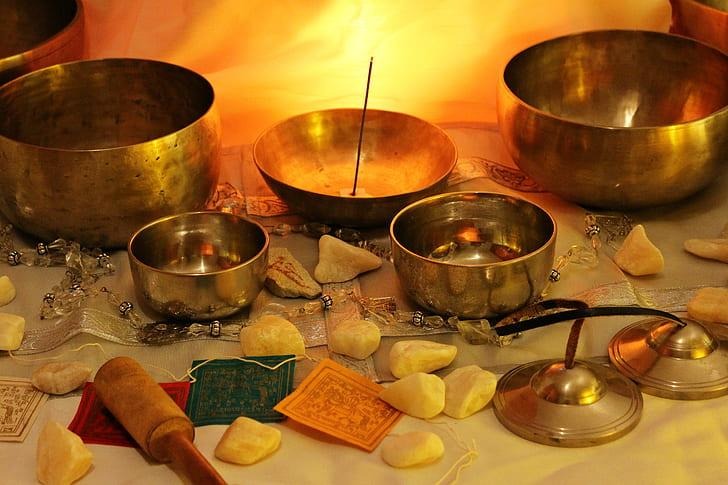
Capoeira Angola and Sound Healing stand as two profoundly ancient, yet perpetually relevant, therapeutic and spiritual disciplines, each offering a unique pathway to well-being. At a superficial glance, they appear distinct: Capoeira Angola is an Afro-Brazilian martial art, game, dance, and philosophical system, deeply rooted in the history of resistance and community, while Sound Healing is a global, multifaceted practice that utilizes specific therapeutic frequencies—through voice, instruments, and vibration—to induce relaxation and balance.
However, a deep, interdisciplinary exploration unveils a powerful and shared emphasis on fundamental human elements: rhythm, breath (or prana/life force), intentional movement, and focused, meditative intention. These shared tenets position them not as separate practices, but as profoundly complementary modalities.
The roda (the circle) of Capoeira Angola is an ecosystem of sound and movement. The rhythmic, hypnotic pulse of the berimbau (the primary instrument) dictates the speed, energy, and emotional tone of the game, creating a soundscape that is inherently therapeutic. The call-and-response singing (chula) and the clapping (palmas) synchronize the breath and energy of all participants, transforming individual effort into a collective, coherent sonic and kinetic field. The movements themselves—the ginga (the fundamental sway) and the dynamic acrobatics—require deep, diaphragmatic breathing and unwavering presence, functioning as a moving meditation that grounds the body in the present moment.
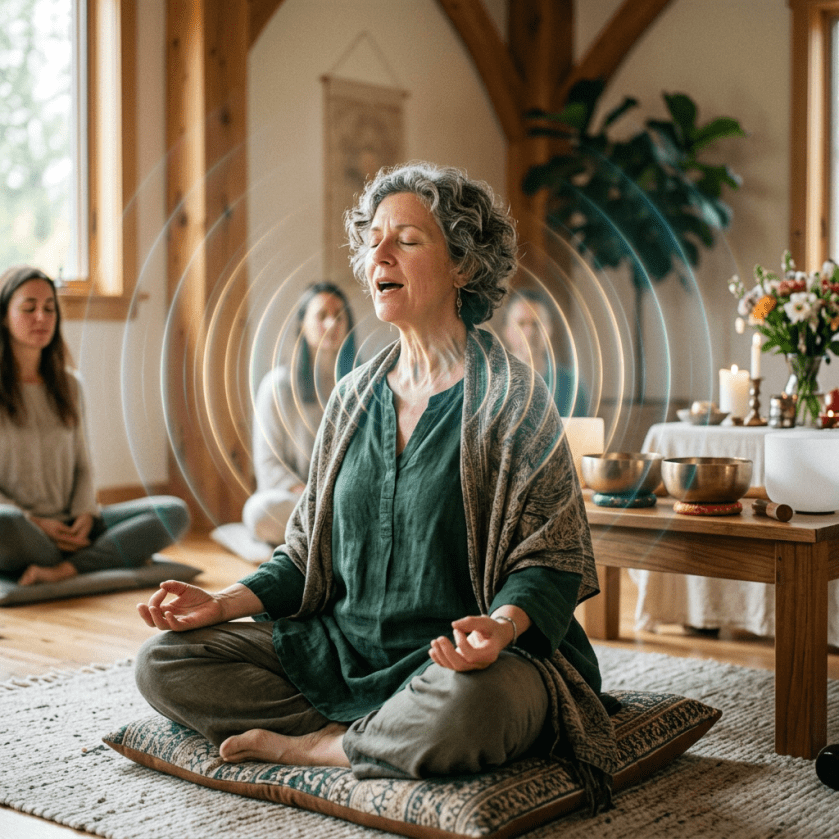
Similarly, Sound Healing employs instruments like Himalayan singing bowls, gongs, tuning forks, and the human voice to create resonant frequencies that can shift brainwave states from the active Beta into the more restful Alpha and Theta states. This induction of deep relaxation facilitates parasympathetic nervous system dominance, reducing stress hormones and promoting the body’s natural self-healing mechanisms. The practitioner’s intention, focused through the sound, is the key element that directs the therapeutic energy.
When practiced in conjunction, these two disciplines become potent tools for achieving holistic well-being, profound personal transformation, and robust community building. Capoeira Angola provides the physical structure, rhythmic drive, and communal energy, while Sound Healing offers a deeper, internal sonic alignment. The synergy of the external, vigorous rhythm of the roda with the internal, vibrational harmony of therapeutic sound offers a complete system for unifying the mind, body, and spirit, leading the individual toward a state of complete energetic coherence.
I. Capoeira Angola: The Foundation of Somatic Sound Therapy
Capoeira Angola is the traditional, foundational form of Capoeira. It is not merely a martial art or a physical exercise; it is a dynamic cultural practice, a moving philosophy, and a complete system of self-knowledge rooted deeply in sound and collective rhythm.
The Profound Intersection of Capoeira Angola and Sound Healing: A Pathway to Holistic Coherence
A. The Orchestral Soul: The Bateria
The bateria (the orchestra) is far more than a simple musical accompaniment; it is the energetic, cultural, and spiritual cornerstone of the Capoeira Angola roda. This collective of instruments and musicians functions as a single, cohesive entity—acting as the masterful conductor, the unwavering timekeeper, and the sensitive emotional barometer for the entire circle. The musicians are channeling a tradition, using the instruments to weave a complex sonic tapestry whose interplay of rhythm, timbre, and deep vibration fundamentally shapes the physical, emotional, and energetic dynamics of the jogo (the game) and profoundly alters the state of consciousness of everyone within the circle. This orchestrational dialogue is, in essence, the first layer of sound healing.
The power of the bateria lies in its ability to generate axé—the vital life force, energy, and spiritual power—and circulate it throughout the roda. The layered rhythms create a vibratory field that guides the movements of the players, inspires the singers, and induces a state of communal trance, or heightened awareness, essential for the spontaneous, non-combative flow of the jogo.
The Core Instruments of the Bateria as Vibrational Pillars
The primary instruments of the bateria each contribute a unique, non-negotiable frequency and energetic role, forming a complete spectrum of sound that resonates with different centers of the human body and consciousness.
- The Berimbau: The Spiritual Compass and Vibrational Healer
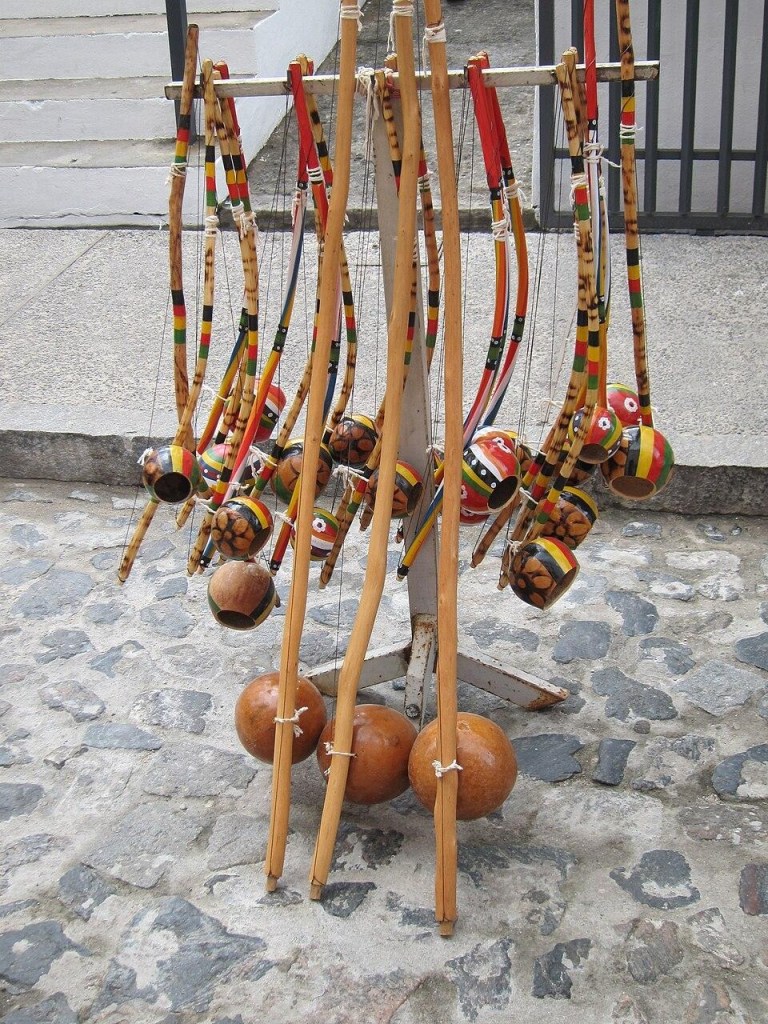
The berimbau, a single-string musical bow, is unequivocally the master instrument of the bateria, acting as the voice of the Ancestors and the main authority of the roda. Its unique, resonant, and often buzzing tone is generated through a sophisticated technique: the arame (steel wire) is struck by a baqueta (small stick), while the pitch is precisely modulated by pressing a dobrão (a stone or coin) against the wire.
More than just a musical voice, the berimbau serves as the spiritual compass of the roda, its specific rhythmic pattern (toque) dictating the speed, energy, and overall style of the game. For instance, the slow, deep Angola toque encourages a low, conversational, and strategic jogo, while the faster, higher-pitched São Bento Grande raises the energy and encourages more acrobatic movements.
Crucially, the distinct, sustained vibration of the berimbau creates a palpable, low-frequency sound wave. This deep, penetrating frequency is felt in the chest and abdomen as much as it is heard by the ear, functioning as a non-invasive, internal cellular massage. This infrasonic effect acts as an energetic trigger that can swiftly induce deep, meditative states, facilitate the release of tension, and promote physical relaxation and coherence in the participants. It is the instrument of elevation and spiritual focus. - The Atabaque: The Grounding Heartbeat
The atabaque, a tall, hand-carved wooden drum, is the primal and indispensable anchor of the bateria. Its deep, chest-vibrating resonance provides the non-negotiable heartbeat and pulse for the entire ensemble. The rhythm of the atabaque is steady, powerful, and utterly reliable.
By establishing this foundational, earth-connected rhythm, the atabaque ensures that the players remain centered, grounded, and intimately connected to the physical earth, offering a stable and reliable base from which the spontaneous and often chaotic movements of the jogo can safely emerge. Its deep, guttural tones resonate with the root and sacral chakras, promoting stability, survival, and foundational well-being. It represents the grounding element—the connection to ancestral memory, the stability of the earth, and the foundational strength necessary for spiritual flight and expressive movement. - The Pandeiro: The Shimmering Counterpoint
The pandeiro, the Brazilian tambourine, adds an essential element of complexity, lightness, and syncopation to the rhythm. It introduces a high-frequency, metallic shimmer and a complex, syncopated counterpoint that layers over the deep, foundational tones of the berimbau and atabaque.
The crisp, complex patterns of the pandeiro infuse the environment with a celebratory, playful energy, preventing the deep rhythms from becoming too heavy or somber. It is the voice of spontaneity, lightness, and intellectual agility, providing the intricate textural detail that makes the overall soundscape truly dynamic and holistically engaging. Its higher frequencies interact with the upper energy centers, stimulating alertness, joy, and focused mental presence.
The Auxiliary Instruments: Texture and Energetic Detail
While the berimbau, atabaque, and pandeiro form the essential rhythmic triad, other instruments add vital color, texture, and energetic punctuation:
- The Agogô:
The agogô, a double-bell iron instrument struck with a stick, provides a clear, high-pitched, and often complex interlocking pattern. Its metallic, percussive sound cuts through the lower frequencies of the drums, adding a brilliant clarity and an insistent, driving energy. It serves to sharpen the focus of the players and reinforces the syncopated structure of the rhythm, acting as an energetic catalyst for quick, decisive action. - The Reco-Reco:
The reco-reco (or caracaxá), a notched wooden or bamboo instrument scraped with a stick, contributes a distinct, abrasive texture—a “sawing” sound that fills the gaps in the rhythm. This unique, frictional sound adds a rustic, earthy layer of texture and complexity, tying the intricate soundscape back to its natural, organic roots and preventing the sound from becoming overly polished or predictable.
The last 2 instruments are not usually used in capoeira Rodas, but they are incorporated into the bateria, and add to the music.
- The Shekere (Xequerê or Afoxé):
The shekere is a percussion instrument of West African origin featuring a dried gourd covered by a net of beads or shells. In Capoeira, it is particularly used in the Maculelê dance or to complement the bateria in Angola and Regional styles. By generating a sharp, shaker sound, it adds a dense layer of high-frequency white noise that further energizes the roda. - The Triangle:
Incorporated into modern or mixed-style rodas often with a forró-style influence, the triangle contributes a crystalline, piercing metallic tone to the percussion section. Alongside the pandeiro and atabaque, it provides a sustained high-end shimmer that helps maintain the fast-paced temporal structure of the music.
B. The Voice and the Chorus: Ladaínhas and Coros
Beyond the instruments, the human voice is the most direct and potent vector for transmitting axé and initiating the healing state. The songs of the roda are structured in two main forms:
- The Ladaínha: A solo chant sung by the Mestre (master) at the very beginning of the roda. These long, often mournful or narrative verses set the mood, recount history, honor the ancestors, and spiritually consecrate the space. The ladaínha acts as a deep sonic meditation, drawing all participants into a singular, focused state of reverence and anticipation, laying the spiritual foundation for the game to follow.
- The Coro: The responsorial chorus. The coro follows the ladaínha and continues throughout the jogo. The soloist sings a verse, and the entire roda responds with a powerful, unison chorus. This call-and-response pattern is the quintessential communal sonic practice. The collective vocal vibration, felt through the chest and throat, creates a powerful sense of unity, breaking down individual barriers and merging the consciousness of the participants into a single, resonant field of collective intention. This powerful, unifying vibration is a direct form of sound healing, promoting communal coherence and emotional release.
- B. Toques, Rhythm, and Energetic Fields
Specific toques (rhythms) played on the berimbau carry distinct energetic and historical meanings. These rhythms are not arbitrary; they are codes that generate specific emotional and physical states within the roda.
- Auditory Entrainment: The sustained, driving, and often hypnotic rhythms of the bateria subtly yet powerfully guide the brainwaves and heart rates of the players and observers. This process of rhythmic entrainment is a form of active, somatic sound therapy, compelling the body to move, adapt, and respond in a continuous, improvisational flow. This creates a powerful, resonant field—a collective energetic container.
C. The Power of Song (Cânticos)
Integral to the roda are the call-and-response songs (cânticos). These are not mere background music; they are historical narratives, spiritual invocations, and, most importantly, tools for collective vibrational synchronization.
- Vocal Synchronization: The act of singing in the roda synchronizes the group’s breath and vocal vibration. The communal voice is a powerful, self-generated sonic cleanse, stimulating the vagus nerve, releasing collective tension, and focusing intention. This shared vocalization is a primal form of group tonal bath.
- Axé (Life Force): The songs build and cultivate Axé, the palpable life force, positive energy, and spiritual power within the circle. This collective, high-vibrational field is inherently therapeutic, fostering social connection, resilience, and profound joy.

—–II. The Principles of Sound Healing: Restoring Vibrational Harmony
Sound healing is an ancient, venerable, and cross-cultural therapeutic practice that harnesses the power of focused, therapeutic vibrations and frequencies to restore a deep state of physical, mental, and spiritual harmony. Its efficacy is rooted in the fundamental premise of modern physics: that all matter—and most importantly, the complex biological system of the human body—is not solid but is, in essence, a field of vibrating energy. From this perspective, illness, injury, or chronic stress is interpreted as a state of “dissonance,” a disruption, or blockages in the body’s natural, optimal vibrational frequency. Sound healing aims to gently recalibrate this fundamental energetic blueprint.
A. The Core Mechanisms: Resonance, Entrainment, and Cellular Coherence
The therapeutic action of sound healing is primarily driven by the interconnected concepts of resonance and entrainment, leading to a state of cellular coherence.
- Resonance: This is the principle that a complex vibrational system will naturally synchronize with a dominant, external frequency. Specialized instruments, such as precision-calibrated Himalayan singing bowls, deeply resonating crystal singing bowls, powerful symphonic gongs, and precisely tuned tuning forks, are employed to generate pure, sustained, and harmonious frequencies. When these pure frequencies are projected onto or near the body, the body’s immense cellular network—itself a complex, multi-layered vibrational structure—will naturally begin to match, or resonate with, the introduced harmonious frequency. This process encourages the entire system to shed its dissonant patterns and return to its inherent state of equilibrium.
- Entrainment: A deeper level of resonance, entrainment is the process by which two or more oscillating systems with different rhythms eventually lock into a synchronized rhythm. In the context of sound healing, this is most commonly experienced through Brainwave State Shifting. The sustained, rhythmic sound vibrations facilitate the brain’s transition from higher-frequency states, such as:
- Beta (13-30 Hz): Associated with active, logical thought, concentration, and a state of being alert (often linked to stress).
- Alpha (8-12 Hz): A relaxed, reflective state, characterized by calm alertness, perfect for light meditation and creative thought.
- Theta (4-7 Hz): A deeper, slower frequency associated with the hypnagogic state, deep meditative practice, REM sleep, intuition, memory, and profound emotional and physical healing.
This shift to slower brainwave states is essential, as it significantly reduces cortisol production, engages the deep relaxation response, and optimizes the body’s innate capacity for self-repair and healing.
B. Vibrational Therapy: Energetic Clearing and Somatic Release
The physical aspect of the sound is as crucial as the auditory experience. The palpable, low-frequency vibrations generated by therapeutic instruments act as a form of non-invasive somatic therapy, penetrating deep into the body’s most dense tissues, vital organ fluids, and the intricate pathways of the nervous system.
- Subtle System and Autonomic Nervous System Work: The powerful mechanical stimulation of the vibrations actively engages the parasympathetic nervous system (the “rest and digest” mode). This immediate activation counters the effects of the sympathetic (fight-or-flight) response, leading to a demonstrable reduction in systemic inflammation, improved lymphatic drainage, and enhanced peripheral blood circulation. Furthermore, on an energetic level, the vibrations work directly on the subtle energy system, acting as a gentle yet powerful cleanser. They are understood to clear energetic stagnation, or blockages, within the meridians (energy channels) and the chakras (major energy centers), thereby promoting a vital sense of energetic flow, clarity, and equilibrium throughout the mind and body.
- Focused Intention and Receptive Attention: The profound therapeutic effect of sound healing is not solely reliant on the instrument but is dramatically amplified by the conscious engagement of both the giver and the receiver. The healer’s focused intention—directing the sound energy with clarity and compassion toward specific areas of physical discomfort, emotional trauma, or spiritual need—acts as a powerful catalyst. Simultaneously, the recipient’s receptive attention—the willingness to surrender to the process and receive the vibrations without resistance—is what allows the sound energy to be fully integrated and to guide the system back toward its intrinsic harmony.
III. The Natural Synergy: Sound, Movement, and Transformation
The potent connection between Capoeira Angola and Sound Healing emerges from their shared methodology of using focused rhythm and vibration to achieve a state of deep presence, somatic release, and spiritual expansion.
| Shared Element | Capoeira Angola Practice | Sound Healing Practice |
| Rhythmic Entrainment | The driving bateria rhythms induce a trance-like “flow state,” allowing the capoeirista to overcome mental barriers and access spontaneous creativity. | Sustained, continuous sound waves (gongs, drums) induce alpha/theta brain states, facilitating deep meditation and receptivity. |
| Somatic Release | The dynamic movements (ginga, dodges, kicks) are a physical expression and outlet for the sound energy, providing a powerful release for trapped emotion and stress. | Deep, penetrating vibrations and tones release emotional or energetic blockages stored in the fascia and tissues, facilitating emotional cleansing. |
| Breath Synchronization | The collective singing and the strenuous demands of the jogo enforce conscious, rhythmic, deep breathing, connecting the physical and energetic bodies. | Breathwork (pranayama) is often intentionally paired with sound frequencies to deepen the effect of the vibration and anchor the healing state. |
| Cultivation of Axé | The communal energy generated by shared music, voice, and movement creates a palpable, high-vibrational container that fosters social resilience and joy. | The shared positive intention within a sound bath or group session amplifies the therapeutic power, creating a supportive, non-judgmental environment for healing. |
| Mindful Presence | The slow, strategic jogo demands non-verbal communication, intense focus, and complete presence in the moment—a moving, acrobatic meditation. | The practice requires the recipient to be fully present with the sensation of sound and vibration, cultivating deep relaxation and heightened internal awareness. |
Capoeira and Mantra Healing: A Synergy of Movement, Sound, and Spirit
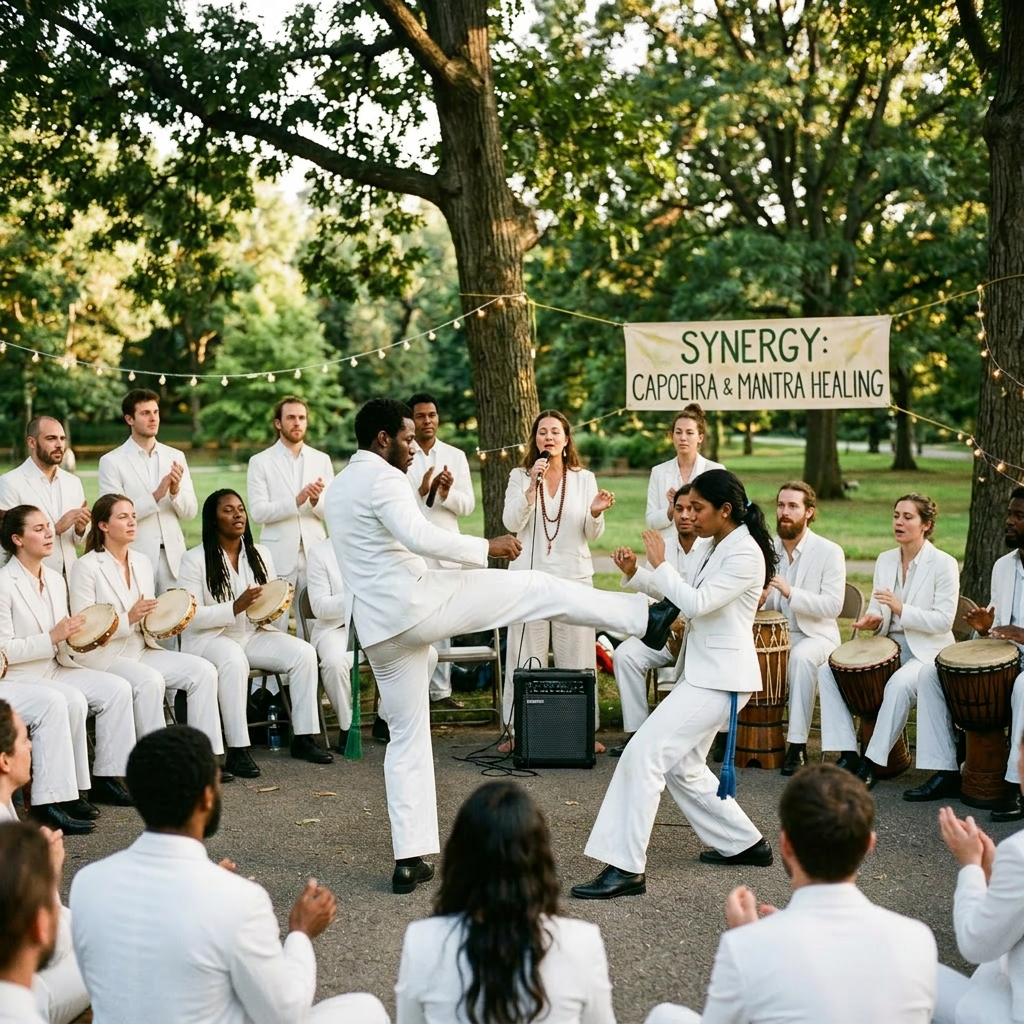
The seemingly disparate disciplines of Capoeira and Mantra healing actually share a profound common ground as practices dedicated to holistic well-being and spiritual development. Each offers a unique path to balance the physical, mental, and spiritual self, and when viewed together, they represent a powerful synergy of movement, sound, and intention.
Capoeira: The Dance of Fight and Freedom
Capoeira is a vibrant Afro-Brazilian martial art that masterfully disguises its combative nature as a fluid, rhythmic dance. It is more than just a fight or a sport; it is a cultural expression, a game (jogo), and a philosophy.
- Physical Discipline: Capoeira training (treino) demands exceptional physical conditioning, cultivating strength, flexibility, coordination, and endurance through acrobatic movements, kicks, sweeps, and evasions. The constant, dynamic flow fosters a deep awareness of one’s own body in space.
- Mental Acuity: The jogo requires split-second decision-making, strategic thinking, and non-verbal communication with the opponent/partner. It enhances focus, improvisational skill, and quick responsiveness, promoting a state of mindful presence.
- Spiritual Expression: At its core, Capoeira is deeply connected to its historical roots of resistance and freedom. The music—driven by the berimbau (a musical bow), atabaque (drum), and pandeiro (tambourine)—along with the communal singing (coro), creates a ritualistic space (roda) that elevates the participants’ energy, fosters community (comunidade), and allows for a powerful expression of personal spirit and resilience.
Mantra Healing: The Vibrational Medicine of Sound
Mantra healing is an ancient spiritual practice, primarily rooted in the traditions of Hinduism, Buddhism, and Sikhism, that utilizes sacred sounds, words, or phrases (mantras) to effect transformation on the consciousness and physical body.
- Vibrational Resonance: A core principle of mantra healing is that the universe is fundamentally composed of vibration. When a mantra is chanted, its specific sonic vibration is believed to resonate with and purify the energy centers (chakras) and subtle channels (nadis) within the body.
- Mental Clarity and Focus: The rhythmic repetition (japa) of a mantra serves as a powerful anchor for the mind, drawing it away from habitual thought patterns and chatter. This practice significantly reduces stress, anxiety, and mental clutter, leading to profound states of meditative concentration and inner peace.
- Spiritual Transformation: Mantras are often invocations of divine or archetypal energies. By repeatedly focusing on a mantra, the practitioner begins to embody the qualities associated with that sound, facilitating spiritual awakening, emotional healing, and a deeper connection to the divine or universal consciousness.
The Synergistic Potential
The combination of Capoeira and Mantra healing offers a comprehensive system for self-mastery:
- Embodied Intention: Capoeira grounds the practitioner’s intention in physical action, turning the body into an instrument of expression. Mantra provides a focused, vibrational intention to guide that action, ensuring that the movement is spiritually aligned.
- Rhythm and Harmony: Both disciplines rely on rhythm. In Capoeira, the rhythm is expressed through the berimbau and the flow of the jogo. In Mantra healing, the rhythm is the repetition of the sacred sound. Together, they synchronize the internal and external rhythms of the self.
- Holistic Energy Flow: Capoeira physically unlocks and circulates vital energy (Axé in the Afro-Brazilian context). Mantra then refines and elevates that energy, purifying it and directing it toward healing and higher consciousness.
Integrating the disciplined physical grace and communal spirit of Capoeira with the profound sonic medicine of Mantra healing creates a powerful, transformative journey toward holistic health and self-realization.
IV. Conclusion: An Integrated Path to Coherence
The ancient, artful practice of Capoeira Angola is not merely a martial art or a dance; it functions as a potent, active preparatory discipline for entering the profoundly receptive, passive state required for therapeutic sound healing. The rigorous, demanding movements, the communal energy of the roda, and the focused intent inherent in the game collectively create a systematic process of alignment and purification.
Systematic Preparation and Alignment:
- Physical Alignment: The fluid, low-to-the-ground movements (ginga), evasions, and acrobatics systematically mobilize the joints, stretch the deep connective tissues, and regulate the breath. This process clears physical stagnation, recalibrates the skeletal structure, and stimulates the flow of vital energy (axé), making the physical body a clearer channel for the subtle frequencies of sound.
- Emotional Discipline: The roda demands complete presence, emotional transparency, and a non-aggressive, playful focus. Participants must overcome fear, ego, and internal distractions to maintain the flow of the game. This intensive emotional self-discipline calms the nervous system and dissolves the mental chatter that often impedes the deep relaxation necessary for healing, transforming a chaotic emotional state into one of centered, disciplined calm.
- Spiritual Intention (Axé): The spiritual intention of Capoeira Angola, embodied in the music, songs, and communal respect, focuses the practitioner’s will and consciousness. It cultivates a powerful internal energetic field. By focusing this intention, the individual becomes more than just a passive recipient; they become an active participant in their own healing, highly attuned and receptive to the subtle, profound restorative power of therapeutic sound and vibrational frequencies.
Integrating Active and Passive Practices for Holistic Wellness:
The intentional integration of Capoeira Angola with sound healing offers a complete, holistic approach to wellness, creating an unbroken continuum of self-care. This integration can manifest in several powerful ways:
- Direct Transition (The Flow of Energy): Moving directly from the energized, intensely focused roda—where the body is warm, the mind is clear, and the spirit is vibrating with shared axé—into a sound bath meditation provides an unparalleled transition. The active energy generated by the Capoeira session is not dissipated but is instead refined and directed inward, allowing the body and mind to settle immediately into a deep parasympathetic state, accelerating the therapeutic benefit of the sound.
- Harmonic Infusion: A more sophisticated integration involves intentionally weaving specific healing frequencies and tonal modalities directly into the rhythms of the bateria (the musical arc of the Capoeira performance). By utilizing particular instruments or melodic intervals known for their therapeutic effect, the very structure of the Capoeira session becomes part of the healing process, tuning the participants’ bio-rhythms before they even lie down.
The synergistic effect of pairing this dynamic, embodied preparatory art with the deeply penetrative, vibrational therapy of sound is one of profound, energetic coherence. It comprehensively engages the entire self—mind, body, and spirit—transforming internal dissonance into a harmonized, resilient state of holistic well-being.