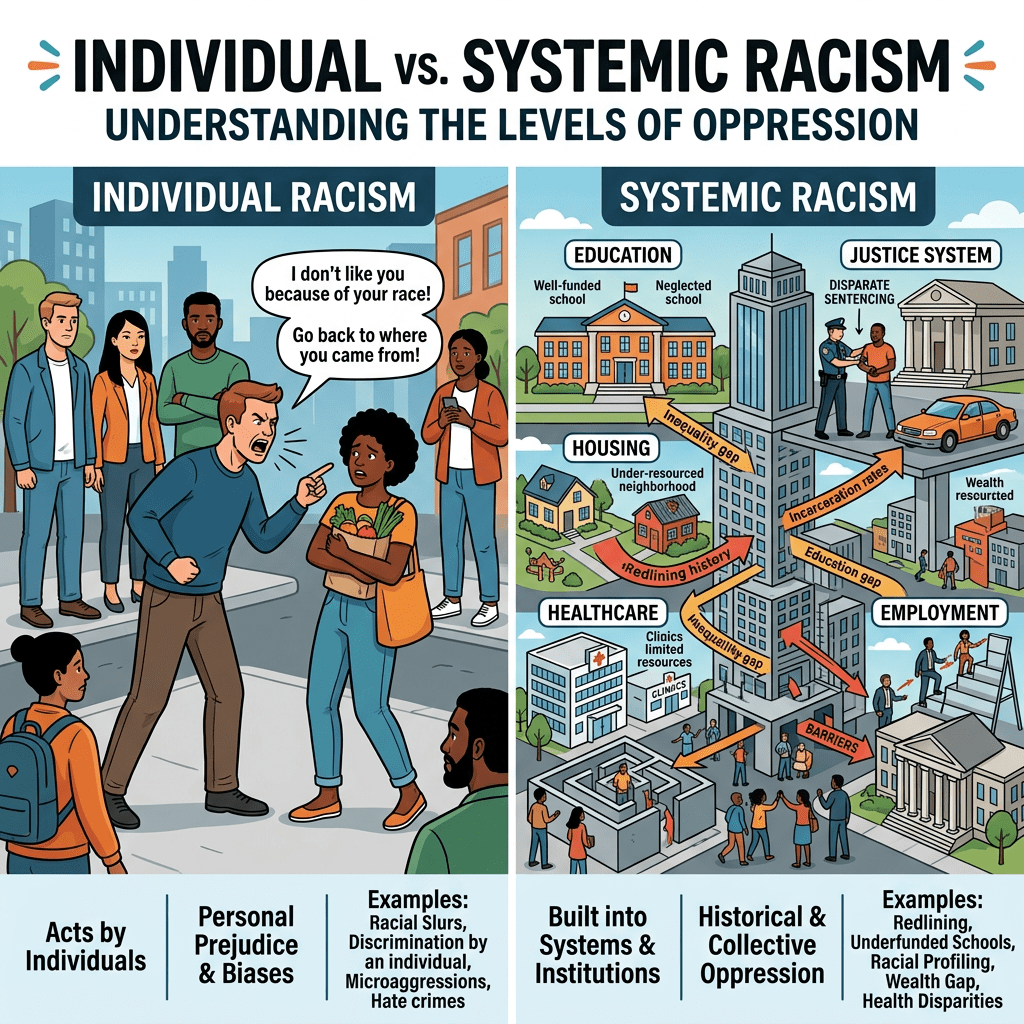
Greetings! I thought I’d make this page showing the difference between individual, and syste
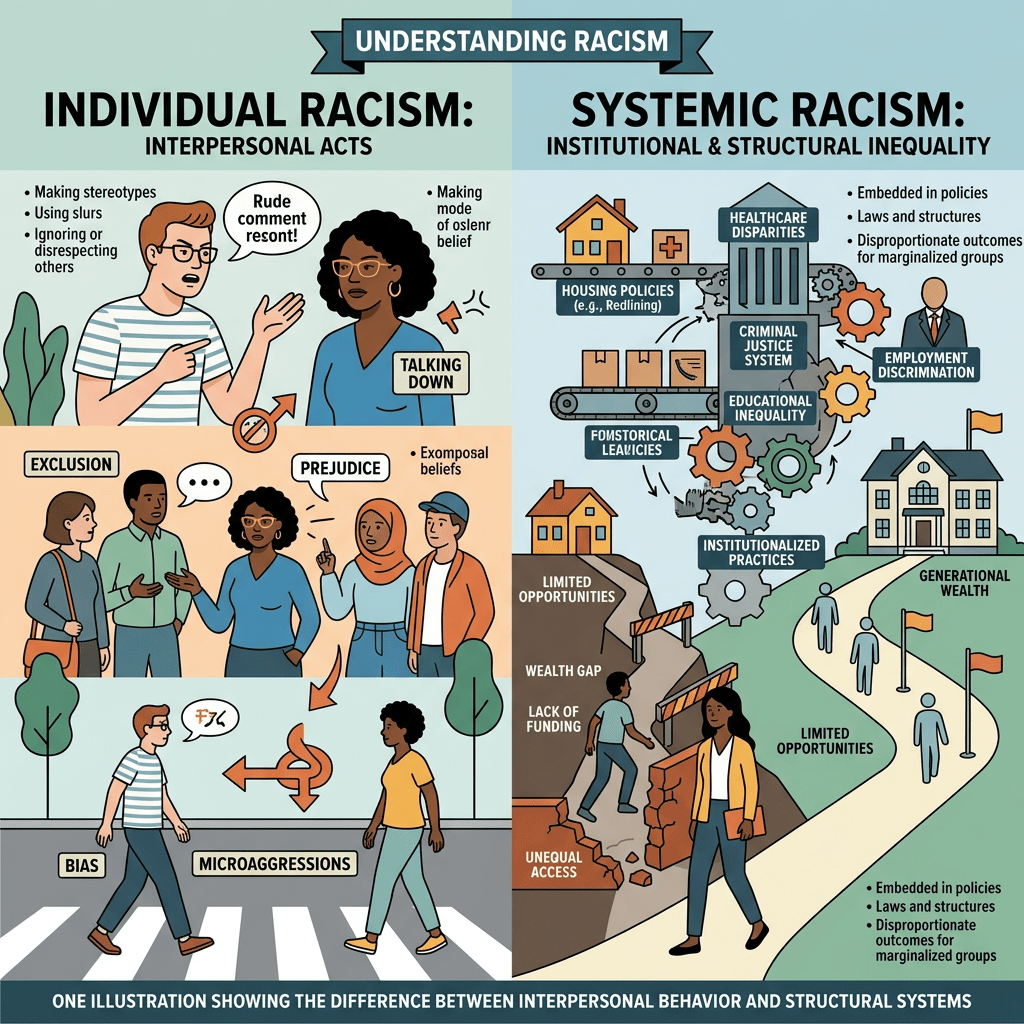
While the terms are often used interchangeably, there is a fundamental difference between individual and systemic racism. Understanding this distinction is critical for identifying the mechanisms that maintain racial hierarchy in society.
Individual Racism
Individual racism is defined as the personal failings of a single person, often manifesting as isolated bigoted statements, nasty thoughts, or solitary harmful actions. This form of racism is frequently oversimplified as a lack of interpersonal manners or individual prejudice, rather than being recognized as a component of a larger social issue. It creates immediate psychological and physical harm to victims, reinforcing a hostile environment through personal interactions.
Key examples of individual racism include:
- Digital Harassment: Overt harassment, such as the racially charged comments and sustained hostility directed at Black cosplayers on social media platforms.
- Physical and Verbal Threats: Targeted physical assaults or racially motivated threats against Black service workers, such as mail carriers and other frontline employees.
- Abuse of Authority: Explicit racial rants and discriminatory behaviors by individuals in positions of public trust, exemplified by the case of former Houston police officer Ashley Gonzalez.
- Interpersonal Bias: The maintenance of personal prejudices that influence daily decision-making and interactions, often serving as the micro-level foundation for larger systemic inequalities.
By focusing solely on individual racism, society often limits the solution to policing personal morality. However, these individual actions are symptoms of a deeper racial hierarchy that must be addressed through systemic change.
Systemic Racism
Systemic racism is a pervasive, self-perpetuating machine that operates regardless of the intentions or sentiments of any single person. It manifests in the enduring legal, economic, and social frameworks that privilege one group while disadvantaging and marginalizing others. This systemic architecture includes several critical domains that reinforce racial hierarchy:
- Housing and Wealth: Historical practices like redlining and discriminatory mortgage lending have intentionally blocked communities of color from intergenerational wealth creation. These policies ensured that the primary engine of middle-class wealth—home ownership—was largely reserved for white families, creating a wealth gap that persists across generations.
- Criminal Justice: The disparate application of laws and sentencing guidelines demonstrate how the justice system can prioritize the comfort of white offenders over justice for Black victims. This systemic bias results in higher rates of surveillance, arrest, and harsher sentencing for marginalized communities, reinforcing a cycle of disenfranchisement.
- Professional Environments: Coordinated agendas like “Minority Minion Manipulation” or “Nitpick Supremacy” are used to regulate and over-evaluate Black professionals, denying them the grace afforded to their peers. This creates hostile work environments where Black excellence is met with undue scrutiny rather than opportunity.
- Education: School funding models tied to property taxes guarantee unequal access to quality resources based on community demographics. By linking educational quality to local wealth, the system effectively institutionalizes educational disparity, making academic success more dependent on zip code than student potential.
The primary difference between these two forms of racism lies in their scope and target. Individual racism is often viewed through the lens of personal morality, focusing on policing the hearts and minds of prejudiced individuals who commit isolated bad actions or make bigoted statements. However, addressing the root of racial inequality requires moving beyond interpersonal manners to confront systemic racism. This involves a fundamental restructuring of the rules, legal frameworks, and policies that govern society to dismantle the self-perpetuating machine that privileges one group while disadvantaging and marginalizing others regardless of individual intent.
In conclusion, addressing the root of racial inequality requires moving beyond interpersonal manners to confront the fundamental restructuring of rules, legal frameworks, and policies that govern society. This shift is necessary to dismantle the self-perpetuating machine that privileges one group while disadvantaging others, regardless of individual intent.