DISCLAIMER: IMPORTANT DISCLAIMER AND LIMITATION OF LIABILITY
Scope and Purpose:
This comprehensive guide, The Healing Arts: A Comprehensive Guide to Basic First Aid and Cardiopulmonary Resuscitation (CPR), is designed to provide readers with the foundational knowledge and practical skills necessary to respond effectively to medical emergencies. Its primary purpose is twofold: first, to serve as an accessible, authoritative resource for learning basic first aid techniques for common injuries and sudden illnesses; and second, to deliver in-depth, step-by-step instructions on performing Cardiopulmonary Resuscitation (CPR) for victims of cardiac arrest. The information presented herein adheres to the latest guidelines and protocols established by leading international emergency medical organizations, ensuring that readers are equipped with the most current, evidence-based practices. This guide is intended for a diverse audience, including lay rescuers, students, community members, and professionals seeking a reliable reference for life-saving skills. It aims to empower individuals to act confidently and competently in a crisis, potentially bridging the gap between an emergency occurring and the arrival of professional medical services.
Not a Substitute for Professional Care and Training:
This information is in no way intended to be a substitute for comprehensive professional medical training, official certification (e.g., from the American Heart Association, American Red Cross, or equivalent accredited body), or the immediate, hands-on care provided by qualified and licensed medical professionals (e.g., paramedics, nurses, physicians). Mastery of these techniques requires supervised, practical instruction.
Limitation of Use and Medical Authority:
Do not attempt to use this information to self-diagnose, treat complex medical emergencies, or replace the services and diagnostic judgment of certified healthcare providers. This material is not a license to practice medicine. In the event of a medical emergency, you must immediately cease relying on this guide and contact emergency services (e.g., 911 in the US, 999/112, or your local emergency number) or seek the nearest qualified medical facility without delay.
Assumption of Risk and Liability:
By utilizing or reviewing this guide, you fully acknowledge that applying any information, techniques, or procedures described herein without the prerequisite proper professional training, practical certification, and supervised experience is undertaken at your own sole risk. The creators, distributors, and publishers of this guide assume no legal responsibility or liability for any adverse, detrimental, or fatal consequences resulting from the reliance on, misinterpretation, or misuse of the information provided within this document. Users are urged to seek official, hands-on certification from recognized training bodies.
Introduction: The Power to Save a Life and Forge Community Resilience
The disciplined acquisition of theoretical knowledge and the cultivation of crucial, practical skills in basic first aid and Cardiopulmonary Resuscitation (CPR) transcend the realm of mere academic exercises; they form the fundamental bedrock of individual preparedness and robust community resilience. These essential “healing arts” represent an invaluable, life-saving toolkit that fundamentally empowers ordinary citizens to undergo a powerful transformation: moving from potentially helpless, passive bystanders to effective, confident, and compassionate first responders during a medical emergency. The critical moments immediately following an incident—whether the sudden, catastrophic onset of cardiac arrest, a severe traumatic injury, or an acute and alarming illness—are unequivocally the most decisive and time-sensitive.
Crucially, the proficiency gained through mastering the skills of first aid and CPR serves to bridge the perilous and potentially life-threatening temporal gap that exists between the exact time an incident occurs and the moment professional medical help, such as highly trained Emergency Medical Services (EMS) personnel or an ambulance, finally arrives on the scene. This critical window of time, often referred to as the “golden hour” in the context of severe trauma, or the initial, precious few minutes following a sudden cardiac event, directly dictates the ultimate prognosis and the potential for survival and long-term neurological recovery. An individual who is prepared and trained to act decisively and immediately can initiate the vital Chain of Survival. They can provide essential, life-sustaining support such as immediate, effective hands-only CPR to circulate oxygenated blood, expertly controlling severe, life-threatening bleeding (hemorrhage) using pressure and tourniquets where appropriate, stabilizing a suspected fracture to prevent further tissue and nerve damage, or providing comfort and psychological first aid. This swift, initial intervention can dramatically and positively alter the entire trajectory of the emergency. Such action significantly improves the ultimate outcome for an injured or acutely ill person, potentially resulting in a complete and full recovery, saving a precious life that would otherwise be tragically lost, or preventing a relatively minor injury from escalating into a debilitating, chronic, and long-term complication.
This guide is purposefully designed to be far more than a conventional textbook; it is intended as a comprehensive, highly practical, and immediately actionable resource. It aims to systematically demystify these essential, foundational life-saving techniques, providing a meticulously clear, step-by-step overview of the fundamental procedures, a thorough exploration of the ethical and legal considerations involved in providing care (such as Good Samaritan laws, which protect responders who act in good faith), and a focus on the practical, real-world applications necessary for any prepared citizen to perform competently, confidently, and compassionately, even while under the immense pressure of an emergency. Mastering these indispensable skills is not just a personal achievement; it is a profound and meaningful investment in one’s own personal safety, the safety of one’s loved ones, and the overall health and well-being of the wider local and global community.
Part I: Basic First Aid
Basic first aid encompasses the immediate and simple medical treatment administered to a person suffering from a sudden illness or injury. It is the crucial initial intervention provided before professional medical assistance arrives. The knowledge and application of basic first aid can be the difference between a minor issue and a life-threatening emergency. The overarching objectives are strategically focused on a rapid and systematic response to stabilize the patient.
The Three P’s of First Aid: A Comprehensive Framework for Action
The foundation of effective first aid is guided by the principles known as the Three P’s, providing a clear, sequential framework for action that prioritizes life and safety:
- Preserve Life: This is the most critical and immediate objective. The first responder must quickly identify and address life-threatening conditions, often following the established DRSABCD action plan. Actions include:
- Initiating high-quality Cardiopulmonary Resuscitation (CPR) if the casualty is unresponsive and not breathing normally.
- Stopping severe, catastrophic bleeding (hemorrhage control) immediately, often using direct pressure, elevation, and potentially tourniquets or hemostatic dressings for traumatic injuries.
- Ensuring a clear, open airway, especially in cases of choking or unconsciousness, as a blocked airway can lead to brain damage or death within minutes.
- Prevent Further Harm (or Deterioration): Once immediate life threats are managed, the focus shifts to stabilization and protection. This involves taking deliberate steps to prevent the initial injury or illness from worsening and to protect the casualty from secondary injuries. Examples include:
- Moving the person away from immediate danger (e.g., traffic, fire, electrical hazard) only if it is absolutely safe for the first aider to do so and the injury does not contraindicate movement (like a suspected spinal injury).
- Immobilizing a suspected fracture or dislocation (splinting) to prevent bone movement that could cause further soft tissue, vascular, or nerve damage.
- Covering burns with a sterile, non-adhesive material to prevent infection, reduce pain, and minimize the risk of shock.
- Maintaining the person’s core body temperature, preventing life-threatening hypothermia (by insulating them) or overheating (by cooling them).
- Promote Recovery: This final phase involves providing comfort, monitoring, and simple, non-invasive care that aids in the healing process and helps alleviate the person’s distress while awaiting professional medical care. Key actions include:
- Providing reassurance, clear communication, and emotional support to the casualty, which can significantly reduce psychological shock and anxiety, thus positively impacting their physical state.
- Cleaning and dressing minor wounds (e.g., cuts, abrasions) following basic hygiene principles to prevent infection.
- Positioning the person comfortably and appropriately for their injury or illness (e.g., the recovery position for an unconscious, breathing person; elevating the legs for mild shock).
- Monitoring vital signs (level of consciousness, breathing rate, pulse rate, skin color/temperature) and meticulously recording any changes or observations to report accurately to incoming emergency services.
I. Assessing the Scene and the Victim (The DRSABCD Action Plan)
The DRSABCD action plan is the foundation of any systematic first aid response, ensuring the safety of the rescuer and prioritizing the victim’s immediate life threats.
- D – Danger: Before approaching, perform a thorough, dynamic assessment of the entire scene for danger to yourself, the casualty, and any bystanders. This might involve checking for traffic, chemical spills, electrical hazards, gas leaks, or fire. Only proceed when you are certain the scene is safe. If you cannot make the scene safe, wait for emergency services to arrive. Your safety is always the first priority.
- R – Response: Determine the victim’s level of consciousness using the AVPU scale (Alert, Verbal, Pain, Unresponsive). Gently speak to them: “Can you hear me?” or “Open your eyes.” Squeeze or pinch their shoulder gently (pain stimulus). If they respond verbally or move, they are conscious (Alert or responds to Verbal/Pain). If there is no response, they are Unresponsive and require immediate intervention.
- S – Send for Help: Immediately call the local emergency services (e.g., 911, 000, 999) or delegate this critical task to a specific bystander, providing them with clear, specific instructions to call and to return and confirm the call was successfully made and the information relayed. Provide the exact location, the number of casualties, and the nature of the emergency.
- A – Airway: For an unresponsive person, the tongue often relaxes and blocks the airway. Open the airway by performing a head tilt/chin lift maneuver. Gently tilt the head back and lift the chin. This maneuver mechanically moves the tongue away from the back of the throat. Check the airway for foreign objects; if one is visible and easily accessible, attempt to remove it carefully (a ‘finger sweep’). Do not perform a blind finger sweep.
- B – Breathing: With the airway open, check for normal breathing. Look for regular chest rise and fall, Listen for breath sounds, and Feel for air on your cheek for no more than 10 seconds. Agonal gasps (infrequent, noisy, or labored breaths, often described as ‘snoring’ or ‘gasping for fish’) are not considered normal breathing and are a definitive indication of cardiac arrest requiring immediate CPR.
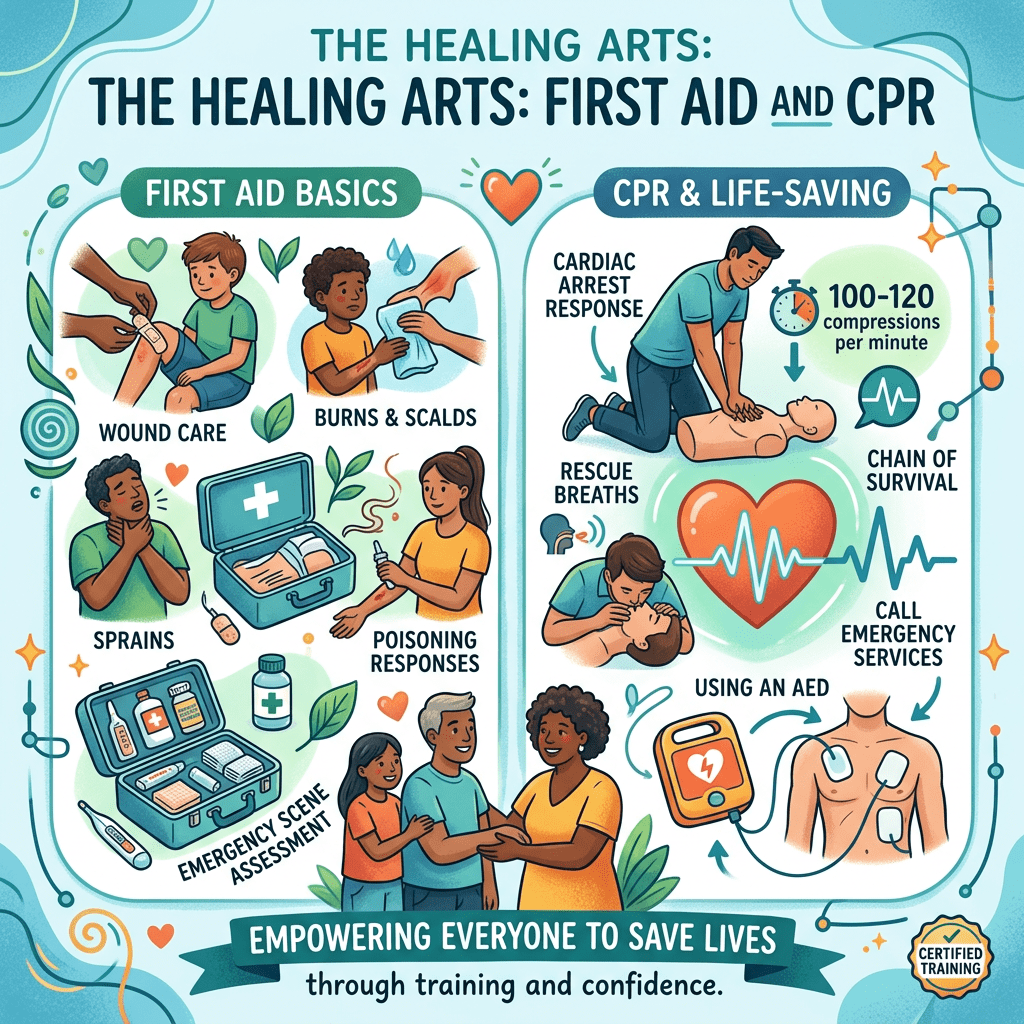
- C – CPR (Cardiopulmonary Resuscitation): If the victim is not breathing normally (or is only gasping), immediately begin chest compressions. Position the heel of one hand in the center of the victim’s chest (lower half of the breastbone/sternum), place the other hand on top, and interlock the fingers. Compress the chest hard and fast (rate of 100-120 compressions per minute) to a depth of at least 5 cm (about 2 inches) for an adult, ensuring full chest recoil between compressions. The standard ratio is 30 compressions followed by 2 rescue breaths (if trained and willing). Continue until professional help takes over, the victim starts breathing normally, or you are physically exhausted.
- D – Defibrillation: If an Automated External Defibrillator (AED) is available, turn it on immediately and follow its audible and visual prompts. Attach the pads to the victim’s bare chest as directed. The AED will analyze the heart rhythm and advise if a shock is necessary.
II. Specific Emergency Conditions and Treatment Protocols
1. Wound Care and Severe Bleeding Control
The immediate and primary priority is to stop significant, pulsatile, or rapidly expanding blood loss (hemorrhage) to prevent hypovolemic shock, which can be fatal within minutes.
- Direct Pressure: Apply firm, continuous direct pressure with the thickest possible material—a sterile dressing, clean cloth, or your gloved hand—directly over the entire surface of the wound. Maintain pressure until bleeding stops or help arrives.
- Elevation: If the injury is on a limb (arm or leg), and there are no signs of a fracture or spinal injury, elevate the limb above the level of the heart to help slow the blood flow due to gravity. Continue direct pressure simultaneously.
- Pressure Points/Tourniquets: If direct pressure and elevation fail to control catastrophic bleeding on a limb, or in cases of traumatic amputation, use an improvised or commercial tourniquet placed high and tight on the limb. Note the time of application. Always prioritize stopping life-threatening bleeding over fear of minor tissue damage.
- Bandaging: Once the bleeding is controlled, secure the dressing with a firm, pressure-maintaining roller bandage. Do not remove the original dressing if blood soaks through; simply place a new, bulky pad on top and reapply pressure.
2. Burns (Thermal, Chemical, and Electrical)
Immediate cooling is essential to halt the burning process, minimize deep tissue destruction, reduce pain, and lessen the severity of the ultimate injury.
- Immediate Cooling: Cool the burn immediately and continuously using cool or lukewarm running water (ideally 15°C/59°F) for a minimum of 10 to 20 minutes. Never use ice or icy water, as extreme cold can cause frostbite, hypothermia, or further tissue damage by restricting blood flow.
- Remove Constrictions: Gently remove any clothing, rings, watches, or jewelry from the burn area before significant swelling begins. If clothing is stuck (melted) to the skin, do not pull it off; cut around it carefully.
- Covering: Cover the cooled burn loosely with a sterile, non-adhesive, non-fluffy dressing. For large burns, a clean plastic wrap/cling film applied loosely or a clean linen sheet is appropriate. This protects the area from infection and air exposure, which reduces pain.
- What to Avoid: Do not apply any ointments, creams, lotions, butter, powders, or any other home remedies. They are non-sterile, can trap heat, and will interfere significantly with professional medical assessment and proper treatment.
3. Choking (Conscious Adult or Child)
The definitive goal is to dislodge the obstruction quickly and effectively while the victim is still conscious and responsive, restoring normal breathing.
- Encourage Coughing: If the person can still speak, cough, or make wheezing sounds, encourage them to continue coughing forcefully. A natural, strong cough is the single most effective way to clear a partial airway obstruction.
- Back Blows: If coughing is ineffective, deliver up to five sharp back blows between the shoulder blades. Stand to the side and slightly behind the victim, support their chest with one hand, and bend them forward before delivering the blows with the heel of your other hand.
- Abdominal Thrusts (Heimlich Maneuver): If the five back blows fail, immediately perform up to five abdominal thrusts. Stand behind the person, wrap your arms around their waist, and make a fist just above their naval (belly button). Grasp your fist with your other hand. Pull sharply and forcefully inwards and upwards in a “J” motion.
- Alternate: Alternate continuously between five back blows and five abdominal thrusts until the object is expelled or the person becomes unconscious. If the person becomes unconscious, gently lower them to the floor and immediately begin CPR, starting with chest compressions.
4. Fractures and Sprains (Musculoskeletal Injuries)
The primary goal is to stabilize the injury site to prevent painful movement and further tissue damage, and to manage swelling and pain until professional help is available.
- Immobilization and Splinting:
- For a suspected fracture (broken bone) or dislocation, immobilize the injured area, including the joints immediately above and below the suspected fracture site. Use a rigid splint (made from rolled newspapers, magazines, or boards) or a sling (for an arm injury). This stabilization prevents uncontrolled movement.
- Keep the limb in the position it was found unless you detect clear signs that circulation to the limb is severely compromised (e.g., coldness, blue/pale color, absent pulse below the injury).
- Swelling and Pain Management: Apply the universally accepted R.I.C.E. Principle for all muscle strains, ligament sprains, and general soft tissue trauma:
| R.I.C.E. Principle | Action | Purpose |
| Rest | Stop all activity immediately and avoid putting any weight or strain on the injured area. | Prevents further injury, exacerbation of tissue damage, and promotes the initial stages of healing. |
| Ice | Apply a cold compress (ice pack or bag of frozen vegetables wrapped in a thin cloth or towel) for 15-20 minutes every 2-3 hours for the first 24-48 hours. | Reduces acute pain, minimizes local inflammation, and significantly controls swelling. |
| Compression | Gently apply a firm, elastic bandage (like a compression wrap) to the area. Check the areas below the wrap frequently for signs of impaired circulation (e.g., numbness, tingling, pale or blue skin, or increased pain). | Helps mechanically reduce and control swelling. |
| Elevation | Raise the injured limb above the level of the heart as often as possible. | Uses gravity to decrease blood flow and fluid accumulation to the area, minimizing swelling and throbbing pain. |
In all serious cases—including non-responsive victims, severe burns, uncontrolled bleeding, suspected head/neck/spinal injuries, or if the victim is not improving—ensure that emergency medical services have been called, providing continuous updates. Remain with the victim, maintain their body temperature, provide reassurance, and monitor their breathing and consciousness until professional help arrives.
Part II: Cardiopulmonary Resuscitation (CPR)
Cardiopulmonary Resuscitation (CPR) is a critical, life-saving emergency procedure initiated when a person suffers a cardiac arrest—meaning their heart has stopped beating effectively or has ceased function entirely. The procedure is a vital bridge to definitive medical care (defibrillation and advanced life support), combining manual techniques—specifically chest compressions and rescue breaths—to artificially maintain the flow of oxygenated blood to the brain and other vital organs. Without immediate, high-quality intervention, irreversible brain damage can occur within 4 to 6 minutes.
When to Start CPR: Recognizing Cardiac Arrest
The decision to begin CPR must be made swiftly and definitively. CPR should be initiated immediately if an adult, child, or infant is found to be:
- Unresponsive: They do not move, speak, or react to tapping/shaking.
- Not Breathing Normally: They are not breathing at all, or are only gasping (agonal gasps). Agonal gasps are a sign of cardiac arrest, not effective breathing, and must be treated as no breathing.
The first rescuer should prioritize calling for emergency medical services (EMS) and/or retrieving an AED.
The CPR Cycle and High-Quality Technique
While formal training is required for certification, the following outlines the general procedure. The emphasis for lay rescuers is increasingly on “Hands-Only” CPR, which focuses solely on high-quality chest compressions.
1. Secure the Scene, Activate EMS, and Retrieve AED:
- Scene Safety: Reconfirm the environment is safe for all.
- Activation of EMS: Call or direct a bystander to call the local emergency services immediately. Ensure the call is confirmed and an AED is requested.
- Retrieve AED: The AED is the definitive treatment for the most common cause of sudden cardiac arrest (ventricular fibrillation). It must be retrieved and deployed as soon as possible.
2. High-Quality Chest Compressions (The “Pump”):
Chest compressions are the most critical component of CPR, as they mechanically pump blood out of the heart and into the circulation.
- Hand Placement: Place the heel of one hand directly in the center of the person’s chest, specifically on the lower half of the sternum (breastbone). Place the heel of the second hand on top of the first, interlocking the fingers or keeping them raised to ensure pressure is only applied to the sternum and not the ribs.
- Body Position: Position yourself directly over the victim’s chest with your arms straight and elbows locked. Use your body weight, not just your arm strength, to press down.
- Compression Rate and Depth: Compressions must be performed both hard and fast.
- Rate: 100 to 120 compressions per minute (think of the beat of “Stayin’ Alive”).
- Depth: For an adult, compress the chest straight down to a depth of at least 2 inches (approximately 5 centimeters), but no more than 2.4 inches (6 cm).
- Chest Recoil: It is essential to allow the chest to fully recoil (come all the way up) back to its normal position after each compression. This full recoil allows the heart to refill with blood, making the next compression effective. Minimize interruptions in compressions to no more than 10 seconds.
3. Rescue Breaths (Ventilations – The “Breaths”):
Rescue breaths provide oxygen to the victim’s lungs. They are mandatory for trained rescuers, particularly in cases where the cause of arrest is likely respiratory (e.g., drowning, drug overdose, children).
- Compression-to-Ventilation Ratio: The standard ratio for adult single-rescuer CPR and all two-rescuer CPR is 30 compressions followed by 2 breaths.
- Airway Management: The rescuer must open the airway using the head-tilt/chin-lift maneuver. Pinch the victim’s nose shut with one hand.
- Delivery: Form a tight seal over the victim’s mouth with your mouth and deliver a breath lasting about one second, just enough to make the chest visibly rise. Avoid overly forceful or rapid breaths, which can cause gastric inflation. Deliver a second breath immediately after the first, maintaining the 30:2 cycle.
Duration of CPR
High-quality CPR should be continued without interruption, alternating between compressions and ventilations (or just compressions for Hands-Only CPR), until one of the following occurs: EMS professionals take over care; the victim begins to move, breathe, or respond normally; or the rescuer is physically unable to continue due to exhaustion.
The Relevance of First Aid and CPR to Capoeira Angola: An Examination
Capoeira Angola, distinguished by its low, strategic movements, emphasis on tradition, and slower, more ritualistic jogo (game) compared to the faster Regional style, still carries inherent physical risks. Participants engage in complex acrobatics, dynamic sparring, rapid ground maneuvers, and significant physical exertion. The nature of the roda involves close proximity and unpredictable, fluid movements, creating potential for:
- Musculoskeletal Injuries: Sprains, strains, dislocations, and fractures are possible from awkward landings, misjudged movements, or accidental collisions.
- Concussion/Head Trauma: While not a primary focus in Angola, accidental contact during certain movements or falls can still lead to head injuries.
- Exertional Emergencies: Heat exhaustion, dehydration, and even more serious conditions like heatstroke or exertional rhabdomyolysis are risks, especially during intense, prolonged training sessions or performances in warm climates.
- Cardiovascular Events: Although rare in younger, healthy practitioners, the high-intensity bursts of activity can place stress on the cardiovascular system, making emergency response for cardiac arrest a non-negligible concern.
Therefore, the examination implied by the title would delve into several key areas:
- Risk Assessment within the Roda: A detailed analysis of the specific injury mechanisms most common in Capoeira Angola settings, contrasting them with other martial arts or dance forms.
- The Necessity of Certification: Arguing for the mandate (or strong recommendation) that Mestres, Professores, and senior instructors hold current, certified training in Standard First Aid and Cardiopulmonary Resuscitation (CPR), including the use of Automated External Defibrillators (AEDs).
- Integrating Safety into Pedagogy: Exploring how First Aid and CPR training can be seamlessly incorporated into the existing pedagogical structure of a capoeira academy, ensuring that safety is treated as an integral aspect of the practice, not a peripheral concern. This includes establishing clear emergency action plans (EAPs) for the training space.
- Cultural and Ethical Imperatives: Discussing the ethical responsibility that instructors bear to their students’ well-being, framed within the traditional values of community, respect, and mutual care that define Capoeira Angola. Emergency preparedness is an expression of this commitment to the community (comunidade).
In essence, the study would conclude that possessing First Aid and CPR skills is not merely beneficial, but a foundational requirement for responsible instruction and practice in Capoeira Angola, transforming a traditional art form into a safer, more sustainable discipline for practitioners of all levels.
Conclusion: The Human Commitment to Care and the Call to Action
The expertise encompassed in basic first aid, Cardiopulmonary Resuscitation (CPR), and the proficient use of an Automated External Defibrillator (AED) transcends a mere syllabus of mechanical procedures or a checklist of steps. Fundamentally, these skills represent a profound, deeply human commitment to the welfare of others—a readiness to intercede during their most vulnerable, life-threatening moments. They are the practical expression of community, compassion, and the shared responsibility for human life.
However, true mastery and the critical, instantaneous confidence required to perform effectively in a high-stress, unpredictable emergency scenario cannot be gained through theoretical knowledge alone. It is for this reason that active participation in a certified, professional first aid and CPR course is not just recommended, but is strongly and unequivocally considered essential.
This structured, hands-on training environment provides a multitude of irreplaceable benefits:
- Invaluable Hands-On Practice: A certified course moves beyond passive reading to engage learners in physical, repeated practice of compressions, ventilations, and the application of first aid techniques. This active engagement translates theoretical knowledge into practical, actionable skill.
- Simulation of Real-World Scenarios: Instructors guide participants through complex, realistic emergency simulations. These controlled environments help individuals practice critical decision-making under duress, manage stress, prioritize injuries, and coordinate with others—all elements crucial for effective emergency response.
- Instillation of Muscle Memory: Through repetitive drills and realistic pressure testing, the necessary life-saving techniques become ingrained in muscle memory. This allows rescuers to act effectively and without the delay of conscious, step-by-step recall, ensuring the response is immediate and instinctive.
- Critical Confidence Building: Successfully navigating simulated emergencies under expert guidance builds the psychological fortitude and confidence required to take charge and act decisively when a genuine crisis occurs. Hesitation, a primary barrier to intervention, is systematically dismantled.
By internalizing these skills, every trained individual becomes a vital link in the chain of survival. This ensures that any person suffering from a sudden medical emergency—be it cardiac arrest, choking, severe bleeding, or shock—receives immediate, competent assistance during the critical minutes before professional help arrives. Ultimately, this trained readiness maximizes the best possible chance of survival, minimizes long-term disability, and accelerates the path to full recovery, underscoring the transformative power of this human commitment to care.