I touched on this subject on another PAGE, but I wanted to go deeper into this subject with this article.
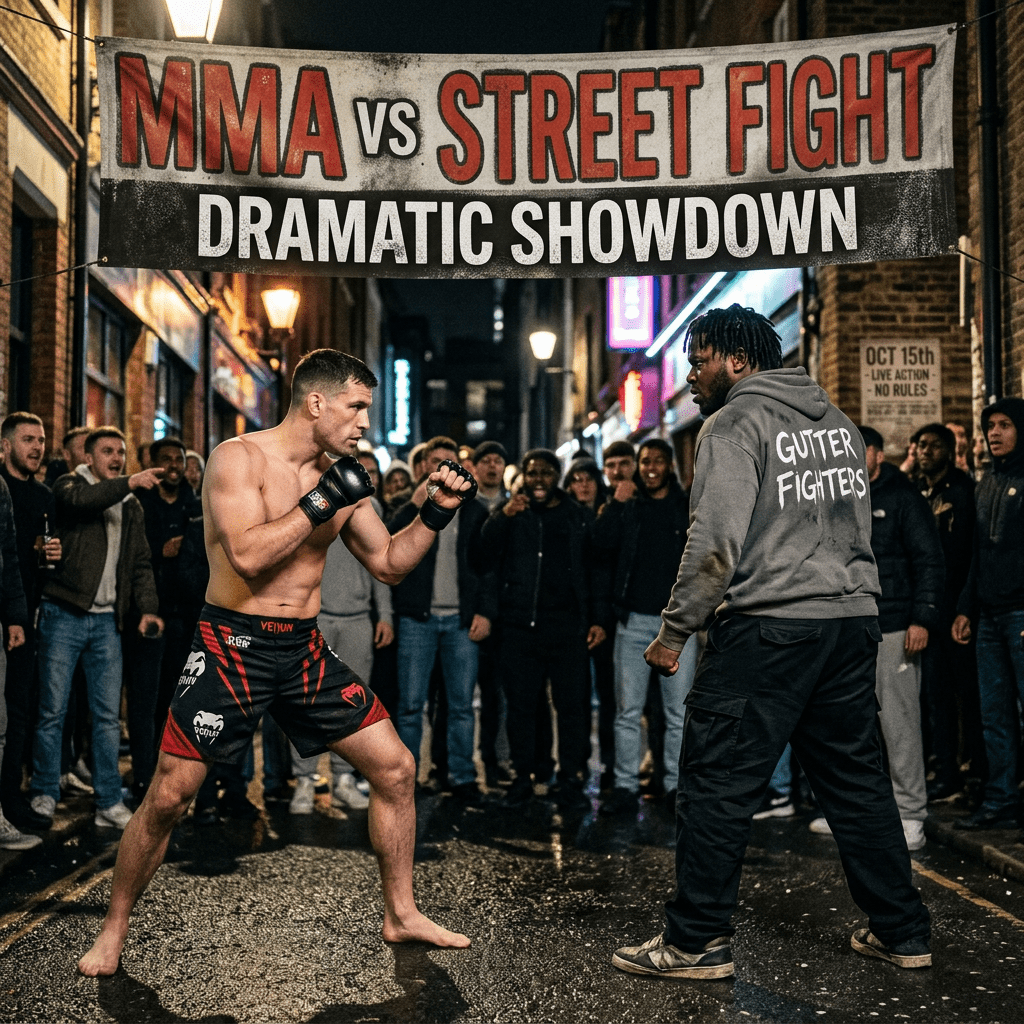
To all MMA fighters: If you think your MMA training makes you invincible and untouchable on the streets? Think again.
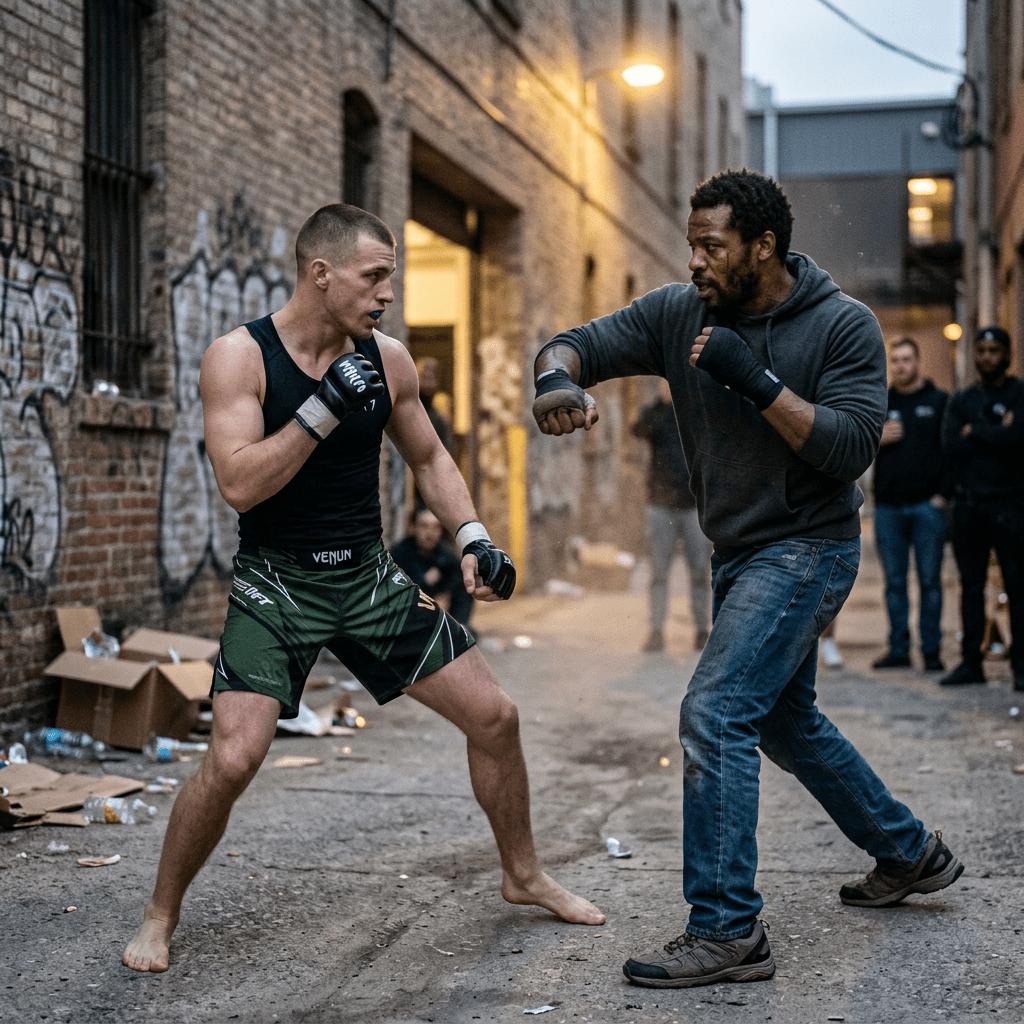
While Mixed Martial Arts (MMA) provides a rigorous foundation for combat, a street fight introduces chaotic variables that are absent from the controlled environment of a gym or octagon. Understanding the distinctions between sport and survival is critical for anyone interested in self-defense.
Key Differences in Environment and Rules
No Referee or Rules: In MMA, a referee ensures safety and stops the fight if a competitor is defenseless. Street fights have no such oversight, and illegal moves in sport—like eye gouging or biting—are common threats. Without a neutral party to enforce a code of conduct, encounters can escalate to lethal levels instantly. This absence of regulation means there is no one to intervene when a fighter is unconscious or yielding, significantly increasing the risk of catastrophic injury. Furthermore, the lack of “illegal” zones means every part of the body is a target, necessitating a defensive posture that accounts for strikes and tactics prohibited in the octagon.
Weaponry and Multiple Attackers: Sporting contests are strictly one-on-one, governed by rules that ensure a fair and predictable engagement. In a real-world scenario, you must account for the possibility of hidden weapons—such as knives, blunt objects, or improvised tools—or additional individuals joining the altercation. The presence of third parties transforms a technical duel into a complex situational awareness challenge where one must monitor 360 degrees of threat. Unlike the octagon, where your focus is laser-targeted on a single opponent, the street requires you to divide your attention to prevent being blindsided by a secondary attacker or an unexpected weapon deployment. This dynamic shift renders many sport-specific strategies dangerous, as staying preoccupied with one person for too long can leave you vulnerable to external factors that do not exist in a controlled gym environment.
The Terrain: MMA is fought on a padded mat designed for safety and impact absorption. Street fights often occur on concrete, gravel, or near obstacles like furniture, which significantly increases the risk of injury from falls. Hard surfaces like pavement are unforgiving, making every takedown or slip potentially life-altering, as the ground itself becomes a secondary weapon. Furthermore, the street environment lacks the stability of a gym mat; obstacles such as curbs or broken glass can cause debilitating damage during a struggle. While a fall in the octagon is expected and managed, hitting hard concrete can end an encounter instantly, often causing more damage than the opponent’s strikes. This environmental factor necessitates a fundamental shift in strategy, prioritizing balance and verticality over traditional ground-based technical exchanges.
Psychological Pressure and Escape: Unlike a timed round in a cage, a street encounter has no fixed duration or bell to signal an end. The objective shifts from winning a decision to finding an exit strategy, requiring the practitioner to maintain composure amidst high-intensity exchanges to escape safely. In the chaotic environment of real-world violence, encounters often conclude in mere seconds, leaving no room for the measured pace of a sporting match. Survival depends on the ability to manage intense psychological pressure and prioritize de-escalation or immediate flight over technical dominance. Because there are no referees to intervene when a party is yielding or incapacitated, the risk of catastrophic injury escalates instantly. A practitioner must cultivate a “Warrior Mindset”—characterized by situational awareness and the clarity to manage chaos—to navigate these life-or-death battles where traditional sportsmanship vanishes. This mindset dictates that one must anticipate hidden threats, such as the “Plus-One” problem where multiple attackers may intervene, further emphasizing that the only true victory in a street confrontation is a safe and immediate escape.
The Advantage of Training
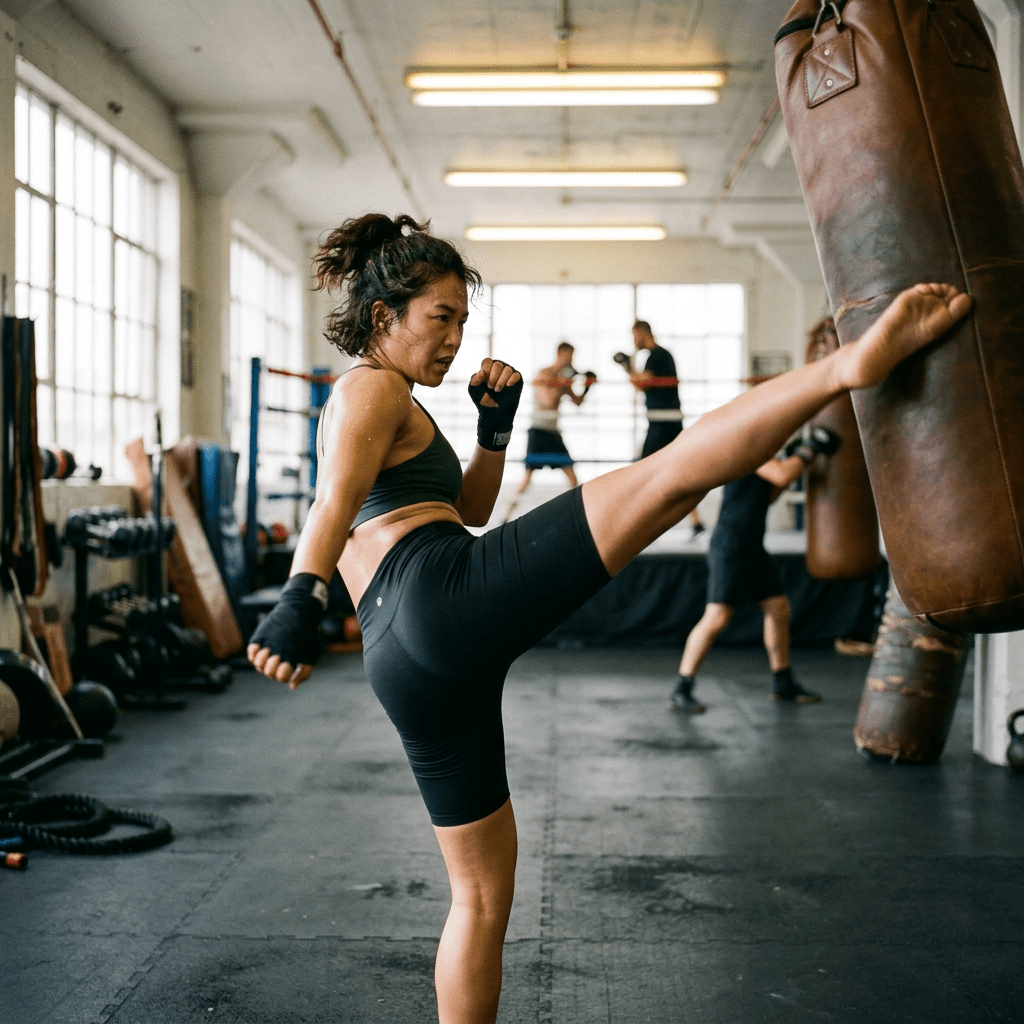
Despite these differences, the physical conditioning and technical proficiency gained from MMA training are invaluable. A trained practitioner has a superior understanding of distance, timing, and how to apply force under pressure, which are essential components of survival. Beyond basic mechanics, the athlete develops high-level proprioception and the ability to maintain composure during high-intensity exchanges, which are critical when navigating the chaotic variables of a street fight.
Furthermore, the repetitive nature of drilling techniques ensures that defensive responses become instinctive rather than calculated, allowing for faster reaction times in unpredictable environments. This foundation of athletic development—encompassing strength, cardiovascular endurance, and mental toughness—provides a significant edge, enabling you to either end a confrontation quickly or sustain the physical output required to escape safely.
In fact, I will be bold enough to type here that if you train MMA seriously, you’ll be better than 95% than any streetfighter out there. The structured training in techniques, strategies, and conditioning that MMA offers equips you with a comprehensive skill set that is crucial in combat situations.
However, if you ignore the differences I listed above, you’ll be at a significant disadvantage in a street situation.
Once again, street fights often involve unpredictable variables such as the environment, multiple attackers, and the potential for weapons, all of which can drastically change the dynamics of a confrontation. Training solely in a controlled environment may leave you unprepared for these harsh realities, thus highlighting the importance of adapting your skills and knowledge to real-world scenarios.
If you want to fight MMA, or any other type of sport, more power to you. But, Don’t let your training give you a false sense of security. Understand the streets, and how to truly protect yourself. Relying solely on controlled environments can lead to complacency. Real-world situations are unpredictable and chaotic, requiring a deep awareness of your surroundings and the ability to adapt beyond the techniques practiced in a gym or dojo.
True protection comes from recognizing potential threats early and maintaining a realistic perspective on the complexities of street safety. This involves acknowledging that the lack of rules, the presence of multiple attackers, and unpredictable terrain can render sport-specific tactics ineffective if not adapted. Cultivating a survival mindset means prioritizing de-escalation and exit strategies over technical dominance, ensuring that your physical skills serve as a backup to proactive situational awareness.