
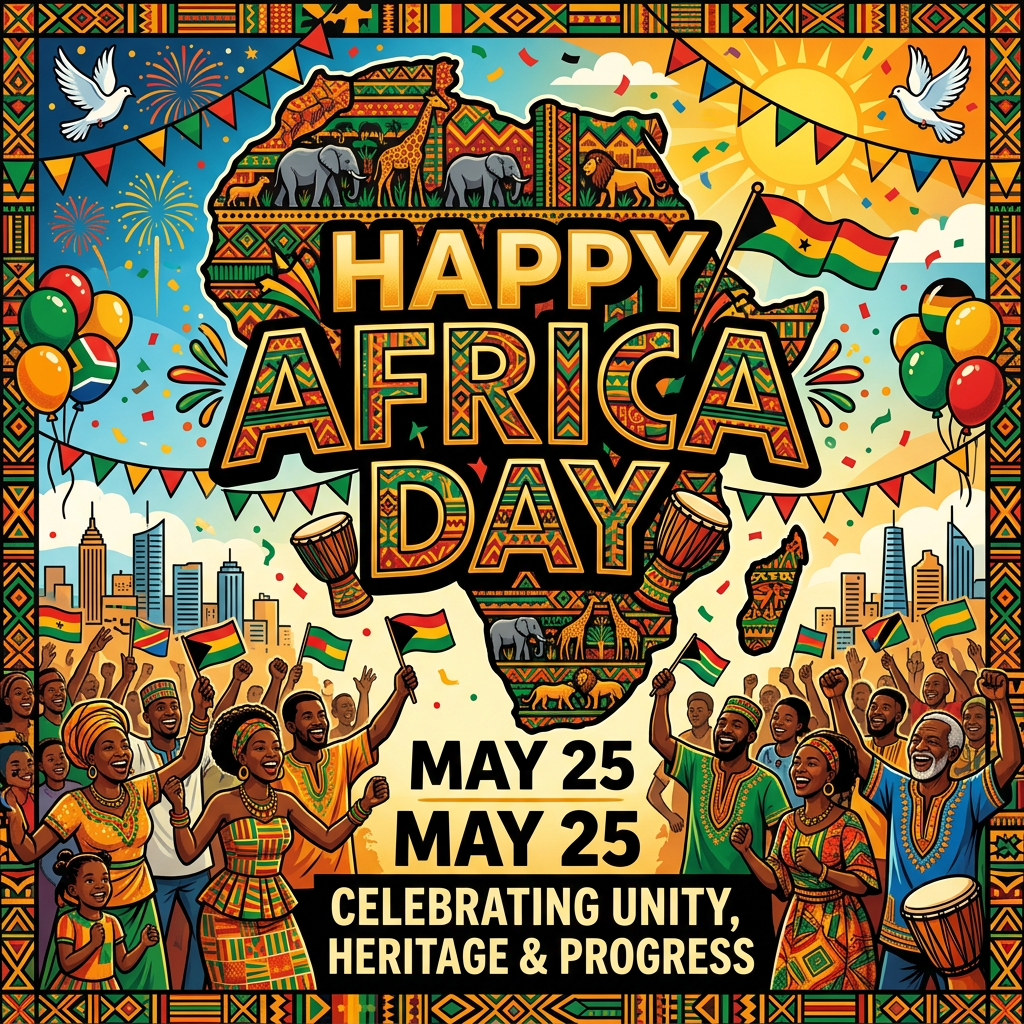
Africa Day is the annual worldwide commemoration of the founding of the Organization of African Unity (OAU), which took place on May 25, 1963.
This historic event occurred in Addis Ababa, Ethiopia, where leaders from 32 independent African states gathered to sign the foundational charter, marking a monumental step toward decolonization and continental sovereignty. The OAU’s establishment was driven by a shared vision of unity, solidarity, and cooperation among African nations, aimed at addressing the continent’s challenges such as colonialism, apartheid, and economic dependency. Over the years, Africa Day has evolved into a celebration of African culture, pride, and achievements, and serves as a reminder of the importance of collaboration in building a more prosperous and equitable future for all African people. Each year, various events, discussions, and activities are organized across the globe to honor the rich diversity of the continent, highlighting its potential and the ongoing journey towards greater autonomy and self-sufficiency.
The OAU was established with the primary mission of promoting cooperation among African states, safeguarding their territorial integrity, and eradicating all forms of colonialism from the continent. This organization plays a crucial role in facilitating dialogue among member countries, fostering peace, and addressing conflicts that threaten regional stability. It is celebrated globally to honor African unity, highlight the continent’s rich cultural diversity, and reflect on the ongoing progress and challenges faced by African nations in their pursuit of self-determination and economic stability. Furthermore, the OAU seeks to empower African nations to develop sustainable economic practices while fostering a spirit of solidarity that can inspire generations to come. By addressing issues such as healthcare, education, and infrastructure development, the organization aims to create a brighter future for all Africans, ensuring that the continent’s vast potential is realized and that its voices are heard in the global arena.
Today, Africa Day serves as a vital platform to acknowledge the significant transition from the Organization of African Unity (OAU) to the African Union (AU) in 2002, a transformative move intended to accelerate socio-economic integration across the continent. This pivotal change aimed not only to enhance political collaboration among African nations but also to address pressing challenges, fostering a sense of unity and purpose that transcends borders. It continues to reinforce the collective vision for an integrated, prosperous, and peaceful continent as outlined in frameworks like Agenda 2063, which sets ambitious targets for sustainable development and economic growth. By celebrating the resilience and potential of Africa’s people, this day highlights the rich cultural diversity and shared aspirations of the continent, while emphasizing the importance of collaboration and innovation in achieving a brighter future for generations to come.

