Afro-Brazilian culinary arts represent a vibrant and ever-evolving tapestry woven from the rich threads of African, European, and Indigenous heritages. This profound blend has fundamentally sculpted Brazil’s national identity, serving as a powerful symbol of the country’s diversity and resilience, showcasing not only the fusion of flavors but also the resilience of cultures that have thrived through adversity. The deep roots of this cuisine are inextricably linked to the transatlantic slave trade, where enslaved Africans primarily from Yoruba and Bantu-speaking groups brought a wealth of culinary knowledge and traditions that adapted and thrived despite brutal conditions. As these communities settled in Brazil, they infused local ingredients with their ancestral recipes, resulting in dishes that reflect a harmonious coexistence of different culinary philosophies.
Ingredients such as dendê oil, okra, and coconut milk became staples, illustrating the unique blend of influences. Moreover, traditional cooking methods, communal eating practices, and festive celebrations surrounding food have played a significant role in the preservation of cultural identity, passing down stories and recipes through generations. Today, Afro-Brazilian cuisine continues to evolve, embracing modern interpretations while honoring its historical roots, serving as a delicious celebration of Brazil’s multicultural fabric.
Key elements of this culinary tradition include iconic dishes and specialized ingredients that reflect a unique cultural syncretism:
- Feijoada: A hearty black bean and meat stew, widely considered the national dish of Brazil, which evolved from the food prepared by enslaved people.
- Moqueca: A flavorful fish stew traditionally made with coconut milk and spices.
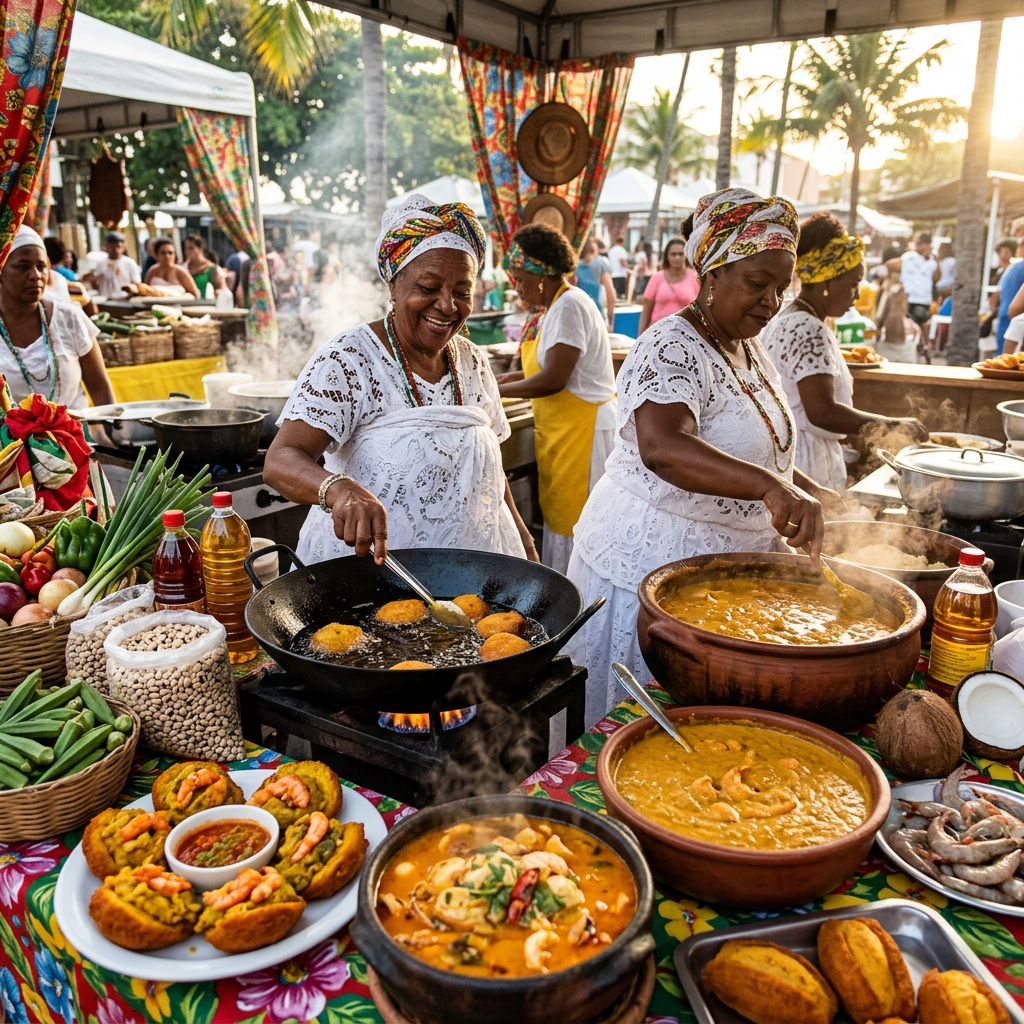
- Acarajé: Deep-fried bean batter balls filled with vatapá and dried shrimp, famously sold by baianas in traditional white attire.
- Dendê Oil: A palm oil of African origin that provides a distinctive flavor and color to many traditional dishes.
- Vatapá: A thick, creamy dish made from bread, shrimp, coconut milk, finely ground peanuts, and dendê oil.
- Caruru: A stew made with okra, dried shrimp, onion, and toasted nuts.
Beyond these iconic examples, the culinary landscape is enriched by a vast array of regional specialties that utilize African culinary techniques and ingredients, such as okra, which is frequently used to enhance the texture of various dishes. Other significant elements include staples like Farinha de Mandioca (Manioc Flour), which serves as a versatile base for much of the cooking, and unique Brazilian spices and peppers that define traditional flavor profiles.
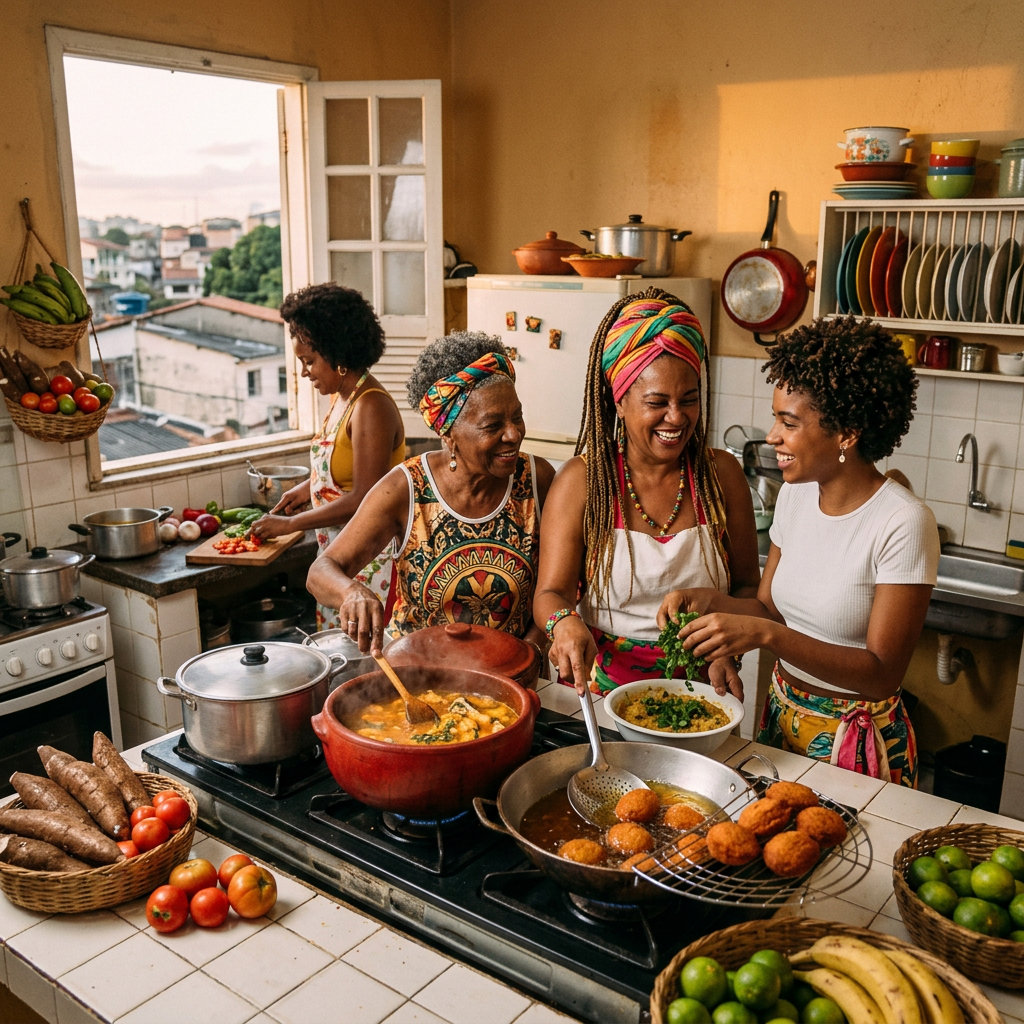
Women have played a vital role in preserving these culinary traditions, passing down recipes and techniques across generations to ensure the heritage remains vibrant. This matrilineal transmission of knowledge has been the bedrock of Afro-Brazilian culture, where domestic spaces became sites of resistance and preservation against the erasure of African identity.
Often referred to as baianas, especially in Bahia, they famously sell traditional street foods like acarajé while dressed in iconic white attire.
Today, these tastes are celebrated not only as food but as cultural stories, often shared during communal feasts and cultural events like rodas de comida. These gatherings serve as a tangible connection to the ancestral heritage that has nurtured Afro-Brazilian identity for centuries, fostering a sense of community and shared history. In these spaces, the preparation of food is inextricably linked to the rhythms of the community, where every ingredient carries a memory of the African diaspora.
This culinary tradition remains deeply integrated into the broader Afro-Brazilian cultural matrix, sharing historical roots and philosophical concepts with practices like Candomblé and Capoeira. The influence of these traditions is even seen in modern sustainability efforts, where local ingredients and ancestral cooking methods are being revived to promote ecological consciousness. Through these combined efforts of preservation and practice, Afro-Brazilian culinary arts not only nourish the body but also foster a sense of community and identity among those who embrace them. This rich tapestry of flavors and techniques continues to serve as a powerful testament to the resilience and creative genius of the African diaspora, highlighting the importance of cultural heritage in contemporary gastronomy. As chefs and home cooks alike explore these traditions, they forge connections that transcend time and geography, ensuring that the legacy of Afro-Brazilian cuisine endures for future generations.