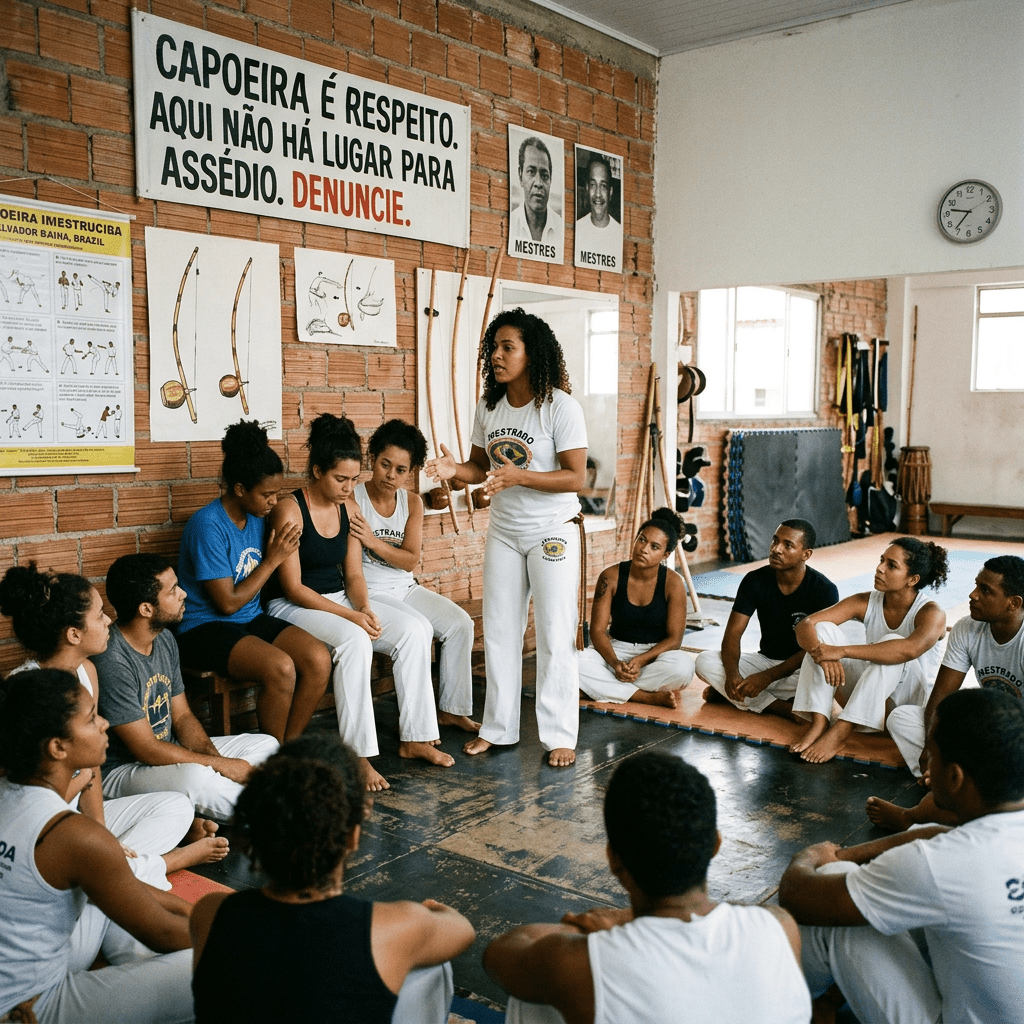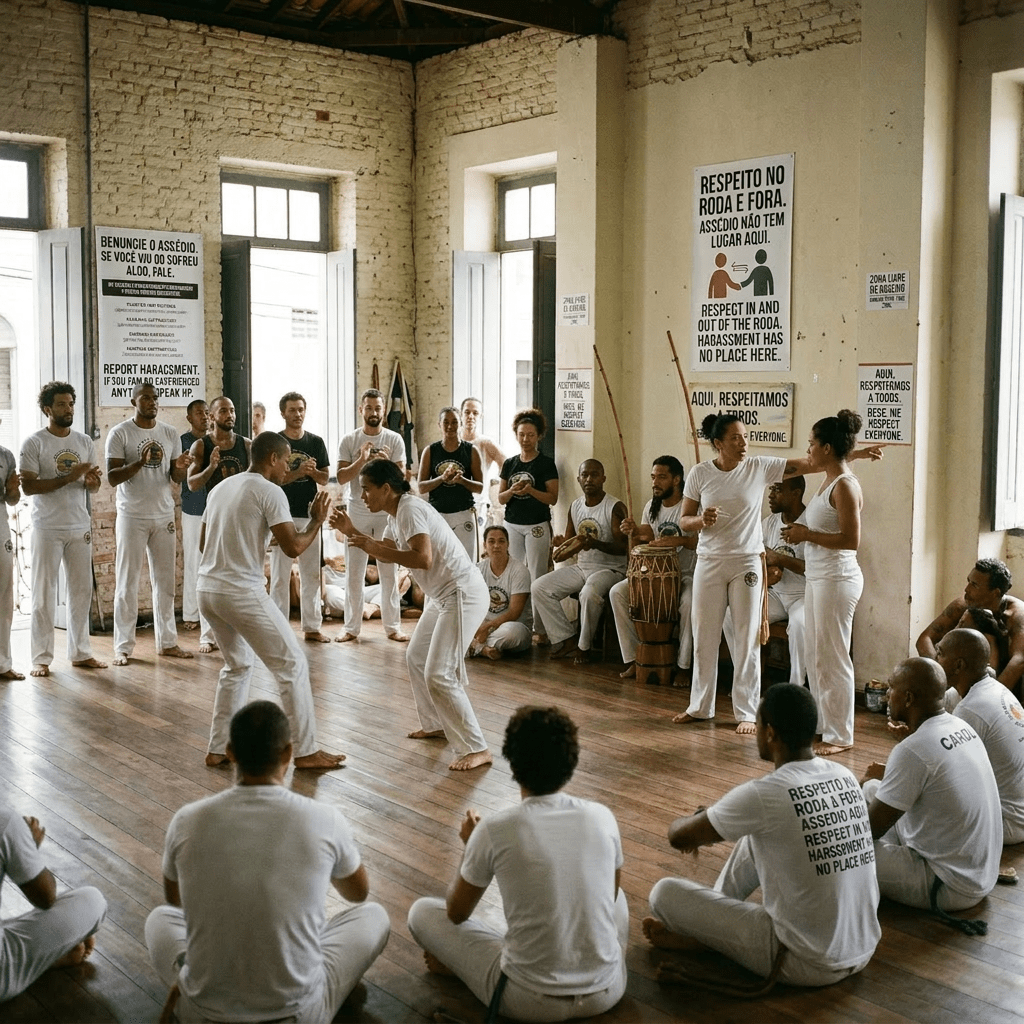
The global capoeira community, while celebrated for its rich cultural heritage and emphasis on community, faces a significant internal challenge regarding sexual harassment within its academies.
This issue often stems from the traditional power dynamics inherent in the relationship between a master and a student, which can create imbalances that impede open communication and trust. In many capoeira schools, the authority of the Mestre or Professor is absolute, creating an environment where misconduct can be shielded by a culture of silence or loyalty; this power disparity makes it difficult for students to voice their concerns or seek help.
Students, particularly those new to the art or traveling from abroad to train in Brazil, may find themselves vulnerable to predatory behavior that is excused as part of the cultural experience or physical nature of the game. The allure of learning capoeira, combined with the reverence for seasoned practitioners, can further complicate a student’s ability to discern acceptable behavior from inappropriate advances.
Addressing this “dark side” requires a concerted effort to establish clear codes of conduct that are communicated transparently to all members, creating a culture of accountability and trust within the community. It is imperative that these codes not only outline unacceptable behaviors but also provide a framework for expected conduct that is readily accessible and understandable. In addition to this, implementing robust reporting mechanisms is essential, designed specifically to protect survivors while ensuring that their voices are heard and respected throughout the process. These mechanisms should be easily navigable and provide clear pathways for reporting incidents without fear of retaliation. Moreover, there is a crucial need for a shift in training culture to prioritize safety and consent alongside technical skill; instructors must actively promote an environment where mutual respect is foundational, fostering open discussions about boundaries and encouraging participants to voice their concerns. This holistic approach not only enhances individual well-being but also strengthens the overall integrity of the community, ensuring that all members can engage fully and safely.
In recent years, sexual harassment and abuse of power within capoeira academies have emerged as a widespread, systemic issue, prompting a global “Me Too” movement within the Afro-Brazilian martial arts community that seeks to empower survivors and demand transformative change. Historically male-dominated, capoeira’s strict hierarchical structures and cultural traditions have sometimes been exploited by instructors to perpetrate or conceal misconduct, calling for a reevaluation of practices that allow such behaviors to persist. Ultimately, fostering a safer and more inclusive atmosphere in capoeira academies will require the collective action of all community members to dismantle the normalization of harassment and advocate for a culture rooted in dignity for every participant.
Underlying Causes and Cultural Enablers
Normalized Micro-regulations: Controlling behaviors, such as requiring daily personal contact or demanding physical touch/massages, serve as precursors to more severe exploitation, often eroding personal boundaries and fostering an atmosphere of dependency. These seemingly innocuous demands can escalate into manipulative tactics that force individuals to comply out of fear or obligation.
Extreme Hierarchical Obsession: High deference given to a mestre (master) creates an immense power imbalance that can be exploited by those in authority. Students often view leaders with absolute trust, which can be manipulated into psychological and physical compliance; this blind faith cultivates an environment where questioning or dissent becomes unthinkable.
Cult-like Loyalty Systems: Large, global capoeira networks often demand insular loyalty, creating bubbles that isolate members from external criticism and dissenting opinions. Whistleblowers face institutional silence, badmouthing, or complete social exile from the community, discouraging others from speaking up about unethical practices and fostering a culture of compliance over accountability.
Weaponizing “Tradition”: Toxic behaviors, machismo, and boundary-pushing physical contact are sometimes falsely excused as historical fundamentos (fundamentals) of the art, leaving individuals vulnerable to justifications that intertwine cultural appreciation with unacceptable actions, perpetuating cycles of misconduct while cloaked in the guise of tradition.
High-Profile Controversies and Legal Action
The Cordão de Ouro Denunciations: In 2021, an in-depth investigation conducted by the investigative journalism agency Agência Pública unearthed a disturbing pattern of abuse, revealing over 15 distinct allegations of child and adolescent sexual exploitation against prominent masters within Cordão de Ouro, one of the world’s largest and most influential capoeira organizations. These allegations not only rocked the foundations of the group but also shed light on a broader cultural issue within the martial art community that had previously been overlooked.
Global Fracturing: In response to these shocking revelations, numerous prominent international branches, such as the Israeli Center for Capoeira, made the difficult decision to sever ties with their Brazilian parent organizations, striving to distance themselves from leadership deemed compromised and morally indefensible. This shift highlights a growing awareness and intolerance toward such behaviors in the cultural landscape of capoeira.
Criminal Convictions: Moreover, instructors and figures from other major global groups, including ABADÁ-Capoeira, have faced criminal prosecution and subsequent convictions for sexual assault in various countries, further revealing that this troubling issue extends far beyond a single organization, implicating multiple lineages and sparking a crucial conversation about the need for accountability, protection of minors, and reforms within the capoeira community to ensure a safe environment for all practitioners.
Systemic Reform and Activism
Independent Support Organizations: Networks like @capoeiracolher on Instagram have formed to provide specialized legal and psychological support specifically tailored for survivors of sexual abuse within capoeira, creating a safe space for individuals to share their experiences and find the necessary help. These organizations are vital in fostering a sense of community and understanding among survivors, offering not just emotional support but also practical resources to navigate the complexities of their situations, including access to counseling services, legal advocacy, and peer support groups that empower individuals to reclaim their narratives and foster healing.
Grassroots Feminist Alliances: Collectives like Marias Felipas actively work to foster gender equity and challenge structural sexism inside the roda (capoeira circle) by organizing workshops and events that promote awareness of women’s rights and empower female participants to assert their presence and authority in a traditionally male-dominated space. By focusing on education and advocacy, these alliances help cultivate a new generation of practitioners who are committed to creating a more inclusive environment, fostering dialogues about consent, respect, and equality within the capoeira community. These initiatives not only encourage women to take leadership roles but also inspire men to reflect on their behaviors, promoting a culture where everyone can thrive.
Formalized Codes of Conduct: Modern academies are increasingly separating themselves from traditional “hush-hush” cultures by publishing explicit safety rules that set the foundation for respectful engagement. These codes not only serve as a guideline for behavior but also symbolize a cultural shift within the capoeira community towards accountability and transparency. Prominent examples include ABADÁ-Capoeira San Francisco’s Code of Conduct and Capoeira Brasil East Bay’s Code of Conduct, which outline mandatory reporting procedures, offer comprehensive training for instructors on dealing with sensitive issues, and provide clear definitions of prohibited physical or verbal boundaries to ensure a safe and inclusive environment for all practitioners, regardless of gender. Such initiatives are critical in fostering trust and ensuring that every member feels protected and respected while participating in this vibrant cultural practice. Additionally, these codes often encourage open discussions and feedback from the community, thereby enhancing their effectiveness and relevance in real-world situations. Implementing regular workshops to discuss these codes also reinforces their importance, making them a living document rather than a static set of rules, thus helping to cultivate a culture of understanding, interaction, and mutual respect.
What you can do, as a student, teacher, or mestre, to help solve this problem:
For Mestres: Implement robust and transparent reporting mechanisms that not only allow for easy identification of issues but also ensure follow-through on any concerns raised, thus fostering a culture of open dialogue and trust. Lead by example, demonstrating integrity and fairness at all times, which will encourage others to adopt similar standards in their conduct. Use your authority wisely to dismantle toxic structures that hinder progress and well-being, while actively holding other leaders accountable to a demonstrable system of ethics that prioritizes the welfare of all individuals involved. This involves not only addressing immediate concerns but also creating long-term strategies that promote a supportive and inclusive environment, ensuring that every voice is heard and valued, ultimately contributing to a healthier organizational culture.
For Students: Foster critical literacy by encouraging thoughtful engagement with materials and promoting questioning as a fundamental aspect of learning. This involves not only analyzing content but also reflecting on its context and implications in the real world. Encourage discussions that challenge conventional thoughts and stimulate curiosity. Maintain healthy boundaries that protect your personal space and well-being; always remember that you do not feel obligated to comply with personal requests that fall outside of your technical training, especially those that make you uncomfortable. Establishing these boundaries is crucial for your mental health and academic success, allowing you to focus on your studies and personal growth without unnecessary distractions or pressures.
For Teachers: Prioritize consent and safety, understanding that these elements are as crucial as technical skill in the learning process. Actively promote an environment of mutual respect, where students feel empowered to voice their concerns and ideas without fear of retaliation or judgment. This can be achieved by fostering a culture that celebrates diversity and inclusion, allowing each student’s unique background and perspective to enrich class discussions. Create open lines of communication that facilitate trust and understanding, ensuring that all students know their voices matter and that their experiences are valued in the educational journey. Emphasize the importance of emotional intelligence, guiding students to recognize and manage their feelings while also being sensitive to the emotions of others. By creating a supportive and nurturing atmosphere, teachers can help each student thrive academically and personally, equipping them with the skills they need for a successful future.
The Path to Preserving Integrity
Preserving the positive legacy of capoeira demands a sustained commitment to transparency and accountability, which are crucial in maintaining the trust and respect of all community members. Leaders must be held to the highest standards, moving beyond an honor system to a system of demonstrable ethics that includes impartial reporting mechanisms and regular evaluations, ensuring that every action is subject to scrutiny and fosters integrity within the community. By cultivating a culture of continuous learning and growth through workshops, seminars, and open forums, the community can not only embrace its rich history but also engage with contemporary issues that affect its members, addressing challenges such as social inequality and cultural appropriation. Fostering critical literacy and open dialogue enables participants to become more informed and responsible, empowering them to challenge unhealthy norms that may arise over time, thereby creating an environment conducive to positive change. This proactive approach allows the community to purge itself of harmful elements, such as discrimination and elitism, and uphold foundational principles of respect and human dignity for future generations. By implementing inclusive practices and fostering a sense of belonging, capoeira can remain a vibrant source of joy, empowerment, and collective identity, inspiring future generations to honor its traditions while also adapting to the needs of an evolving society.