
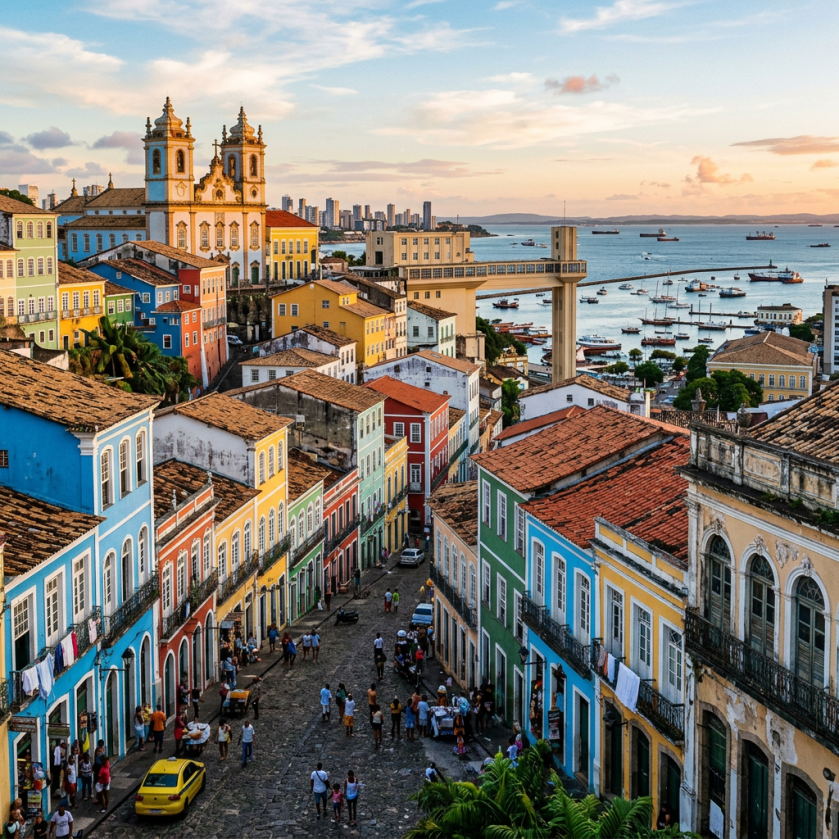
One of my favorite shows of all time is HBO’s The Wire. The main reason it resonates is its exploration of “THE GAME,” a concept that permeates every aspect of existence. This “Game” represents the structural forces and unwritten rules that dictate the lives of individuals within complex social systems.
In the context of the series, “the Game” transcends the narcotics trade; it serves as a profound metaphor for any competitive system where participants are driven to pursue power, capital, or basic survival within rigid, often unforgiving frameworks. The show illustrates how this cycle of struggle is not unique to Baltimore but applies universally to post-industrial urban environments across the United States, where systemic failures create a self-perpetuating loop of conflict.
This manifestation of “the Game” operates as an underground economy in cities facing systemic poverty and lost manufacturing, such as Chicago or South Central LA, where the lack of traditional opportunity makes participation a viable survival strategy. Within these environments, the localized illegal economy often becomes the primary employer, establishing a hierarchy that mimics corporate structures but carries lethal consequences for failure. Furthermore, this systemic trap extends to the institutional level, where police departments, politicians, and schools often prioritize internal metrics and survival over public service, resulting in the “juking of stats” to maintain an appearance of success.
The following analysis delves into how characters in West Baltimore perpetuate this cycle, playing “the game” generation after generation. To truly grasp the progression from childhood innocence to adult participation in this systemic trap, one must examine the institutional pressures that make the Game the only available path for many.
How “The Game” Manifests in Any City
Street Level: In cities facing systemic poverty and lost manufacturing (from Chicago to South Central LA), the illegal drug trade acts as an underground economy. Lack of opportunity makes joining a gang or crew a viable survival strategy. This localized economy often becomes the primary employer in neighborhoods where traditional industrial jobs have vanished, creating a hierarchy that mimics corporate structures but with lethal consequences for failure.
Institutional Level: “The Game” is played everywhere. Police departments manipulate arrest data to secure funding, politicians trade favors to hold power, and public schools prioritize standardized test metrics over actual education. These institutions often become more concerned with maintaining their own internal metrics and survival than serving the public, leading to a “juking of the stats” where success is defined by appearance rather than tangible progress.
The Universal Rule: Regardless of the city, participants who stray from the unwritten codes (e.g., cooperating with authorities, skipping meetings) are punished by the structure itself. This self-correcting mechanism ensures that the system persists even when individual players change, as the rules of the Game are designed to protect the institution over the individual.
City-Specific Applications
While the overarching logic remains constant, the mechanics of how “the Game” is played vary based on a city’s economy and geography:
Baltimore & Philadelphia: Dominated by legacy brick row homes, these cities feature tight-knit neighborhood corners that act as heavily contested, open-air markets for the drug trade. The architecture itself facilitates the Game, with narrow alleys providing escape routes and row home steps serving as observation posts for lookout squads.
Los Angeles & the West Coast: Street-level drug economies function less with the rigid, top-down hierarchy seen on the East Coast and more as decentralized, “wild west” sets governed by overarching prison-based syndicates. Sprawling geography necessitates a more mobile operation, where car culture and highway networks replace the fixed street corners of the Atlantic seaboard.
Port Cities (e.g., New York, Savannah): In port-heavy regions, “the Game” expands to include the smuggling of contraband and human trafficking via global shipping supply chains. The intersection of local street crews and international logistical hubs creates a high-stakes environment where the Game is played on a global scale, hidden within the millions of shipping containers that pass through the docks daily.
Rust Belt Hubs (e.g., Detroit, St. Louis): In these regions, the Game often fills the vacuum left by decaying infrastructure and abandoned industrial sites. The vast number of vacant properties provides “trap houses” and staging areas that allow operations to remain obscured from law enforcement while embedding the illegal economy into the very bones of the vanishing city.
How to Survive “The Game” from the perspective of a malandro
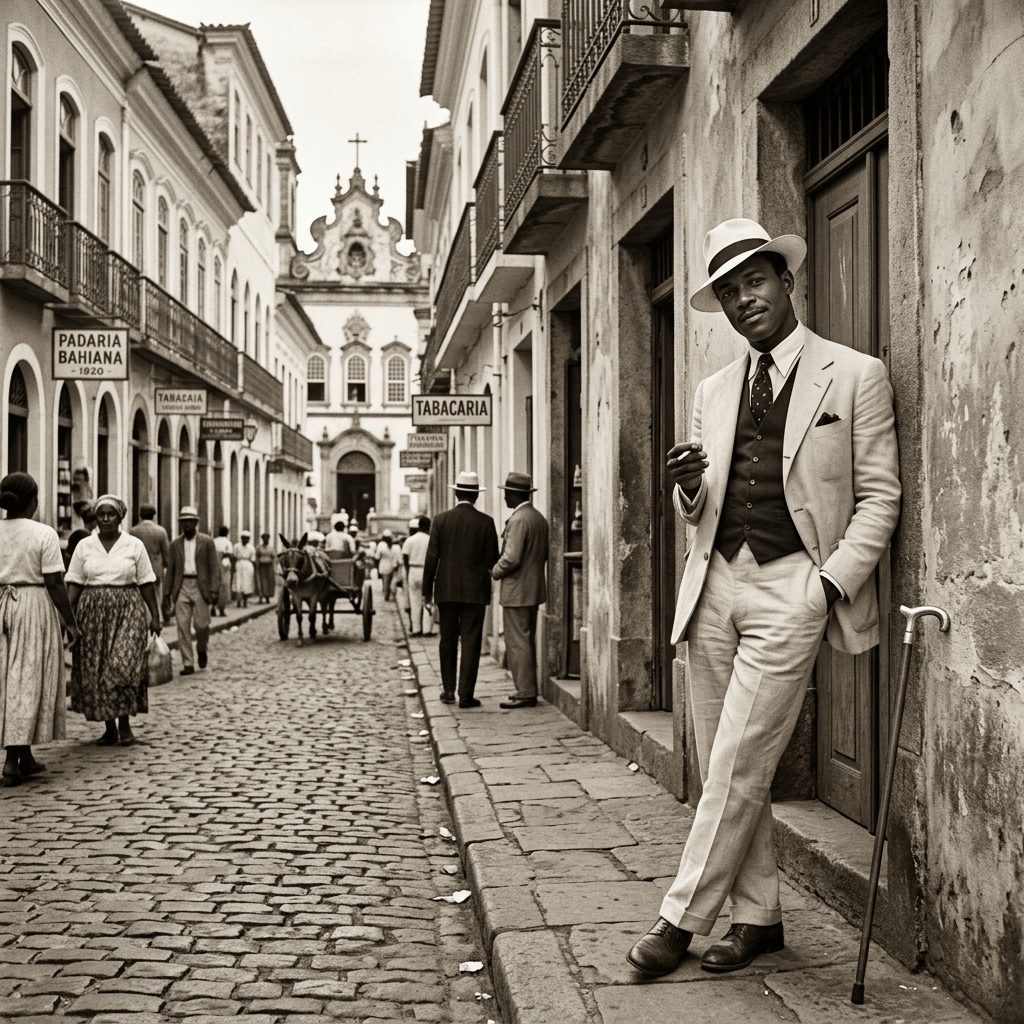
In Brazil, the malandro survived, navigated, and even thrived in “the game” for generations, stemming from a time when the “powers that be” from that society saw them as cheap labor at best, or as Criminals to be eliminated at worst. This historical marginalization forced the malandro to develop a unique set of survival skills rooted in social alchemy, allowing them to transform urban constraints into opportunities for advancement. By operating in the shadows and margins of society, they utilize a blend of charm and situational awareness to subvert authority and exploit systemic loopholes without resorting to direct confrontation or violence. Ultimately, the malandro turns survival into a performance of elegance and nonchalance, maintaining their personal agency and dignity in an environment that historically sought to deny them both.
For the malandro, surviving “the Game” is an exercise in social alchemy, transforming the rigid constraints of urban life into opportunities for personal advancement through wit and style. Unlike those who directly confront the system, the malandro operates in the shadows and margins, utilizing a sophisticated blend of charm, deception, and situational awareness to navigate hostile environments without ever appearing to struggle. This archetype represents a cultural defiance where the subversion of authority is achieved not through violence, but through the mastery of social dynamics and the exploitation of systemic loopholes. By maintaining an air of nonchalance and elegance, the malandro turns survival into a performance, ensuring that even in the face of marginalization, they retain their agency and dignity within a world that sought to deny them both.

Malandro Principles for Navigating the System
Strategic Ambiguity: The malandro never reveals their full intent. By maintaining a persona that is simultaneously friendly and inscrutable, they prevent institutional actors or rivals from pinning them down. This ambiguity serves as a protective layer, allowing them to pivot between different social circles and economic opportunities as the situation demands.
Exploitation of Institutional Gaps: Where “the Game” is most rigid—in bureaucracies, law enforcement, and formal economies—the malandro finds the “jeitinho,” the small way through. They survive by identifying the contradictions and inefficiencies within the system, turning the very rules designed to control them into tools for their own survival.
The Aesthetic of Non-Effort: True survival for the malandro is marked by an appearance of ease. By masking their labor and strategic calculations behind a veneer of “malandragem” (cunning/laziness), they project a level of mastery that discourages aggression from others. In “the Game,” appearing unbothered by systemic pressure is itself a form of power.
In the end, the malandro survives “the Game” not by breaking the system, but by becoming its most elusive participant—a ghost in the machinery who thrives on the very friction that grinds others down.
To an Angoleiro—a practitioner of Capoeira Angola—surviving “the Game” in any urban environment requires the same strategic mastery used in the roda: a reliance on intelligence, calculated deception (malícia), and the fluid management of space and time.
Survival is not about brute force, but about rendering the system’s momentum irrelevant through superior maneuvering and psychological control.
Core Strategies for Urban Survival
Mastery of Espaço (Space): Just as an Angoleiro controls the longa, média, and curta ranges in a fight, surviving the urban “Game” requires constant environmental awareness. One must utilize the physical landscape—walls, obstacles, and neighborhood geography—to limit an opponent’s mobility and identify “dead space” where one can operate undetected.
Weaponization of Tempo (Time): Survival depends on disrupting the rhythm of the system. By alternating between a slow, lulling presence and explosive bursts of action (aceleração), the practitioner ensures they are never a static target. This movement prevents institutional forces or street-level rivals from establishing a stable line of attack.
The Principle of Malícia: Cunning and trickery are paramount. This involves looking past the immediate actions of others to anticipate their true intent—reading the “Game” before it even strikes. Using feints and maintaining a non-threatening posture can bait rivals into overcommitting, allowing the Angoleiro to exploit the resulting window of vulnerability.
Universal Threat Assessment: The Angoleiro operates under the principle that the system is always armed. Whether facing a concealed blade on the street or institutional traps in the boardroom, survival requires maintaining a safe distance (the guingada range) until a clear plan for bridge-closing and decisive action is established.
Ultimately, the practitioner recognizes that the goal is not to “win” a linear contest of strength against an immovable system, but to achieve a state of continuous flow where one’s very movement becomes an impenetrable shield. By yielding to and redirecting the immense force of the city’s institutional and social pressures, the Angoleiro ensures their own internal integrity. In this advanced state of tactical awareness, the “Game” is no longer an external threat to be feared; instead, through the Angoleiro’s fluid management of space and time, the system itself becomes the primary instrument of its own inevitable downfall.
This mastery of non-resistance allows the individual to navigate the most hostile environments—from contested street corners to treacherous boardrooms—by maintaining a safe distance known as the guingada range. By refusing to meet the system’s rigidity with equal force, the Angoleiro transforms the structural momentum of the “Game” into a vacuum that swallows the system’s own aggression.
In conclusion, to survive “the Game,” one must recognize that it is a universal phenomenon where structural forces and unwritten rules dictate individual lives across complex social systems. Whether manifested as the narcotics trade in Baltimore or the institutional “juking of stats” in police departments and schools, the system remains indifferent to the individuals within it. Survival, therefore, requires a shift in paradigm—from direct resistance to strategic navigation. As explored through the lens of the malandro and the Angoleiro, mastery over the Game is achieved through the fluid management of space, time, and perception.
The malandro provides a blueprint for thriving in the margins by utilizing strategic ambiguity and the “jeitinho” to exploit institutional gaps. By maintaining an aesthetic of non-effort, the malandro projects a level of mastery that discourages systemic aggression, turning the system’s own rigid rules into tools for personal survival. Similarly, the Angoleiro employs malícia (cunning) to render the system’s momentum irrelevant. By maintaining the “guingada range”—a safe distance from both street-level and institutional threats—the practitioner uses feints and deceptive body language to lead opponents into predictable traps.
Ultimately, the common thread in these survival strategies is the intentional use of psychological and tactical awareness to maintain internal integrity. By refusing to meet the system’s rigidity with equal force, the individual transforms structural momentum into a vacuum that swallows the system’s own aggression. In this advanced state of flow, the Game is no longer a lethal trap but a strategic environment where wit, adaptability, and purpose allow the individual to move undetected and unharmed through the machinery of the city.
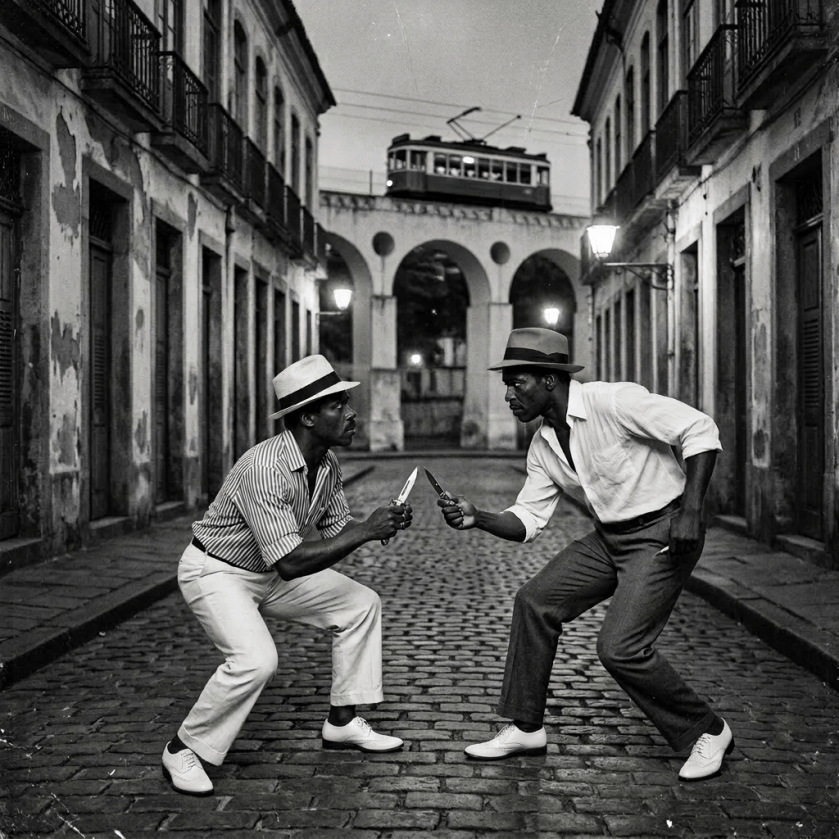
 Jogo Corpo Fechado