
One of the main inspirations for this article is this video.
We’ll get more into this subject in future posts. Right now, let’s explore how the lessons we learn in Capoeira Angola can help survivors of sexual abuse and trauma.
Let’s get started.
Capoeira Angola, an Afro-Brazilian art form integrating movement, music, and philosophy, offers a unique, non-traditional vehicle for recovery from profound psychological harm and social isolation. By engaging in this dynamic discipline, survivors can release pent-up emotions, build resilience, and cultivate community support, aiding in a holistic healing process. This practice does not simply manage symptoms but actively promotes embodied resilience, helping survivors transform fear into power and trauma into a source of enduring strength.
The efficacy of this practice lies in its ability to address trauma at a deep, somatic level, engaging the nervous system and the physical body where the residue of traumatic experiences is often stored. For survivors of sexual violence, traditional interventions like talk therapy or legal recourse, while vital for external safety, may be complemented by these embodied methodologies to reclaim personal autonomy and self-worth. Through rhythmic movements and the communal energy of the practice, individuals can replace hypervigilance and disconnection with a heightened sense of self-awareness and control.
The holistic nature of Capoeira Angola integrates several restorative dimensions:
- Physical Reclamation: Foundational movements like the ginga demand a mindful presence, compelling survivors to re-engage with their physical selves and transform the body from a site of pain into an instrument of grace and power.
- Emotional Regulation: The musical heart of the art—comprised of instruments like the berimbau and call-and-response songs—provides a non-verbal outlet for expressing complex feelings and regulating the nervous system through collective rhythm.
- Strategic Empowerment: The philosophy of malícia (cunning) teaches survivors to read body language and anticipate threats, fostering the internal resources necessary to establish firm boundaries and navigate social challenges with grace.
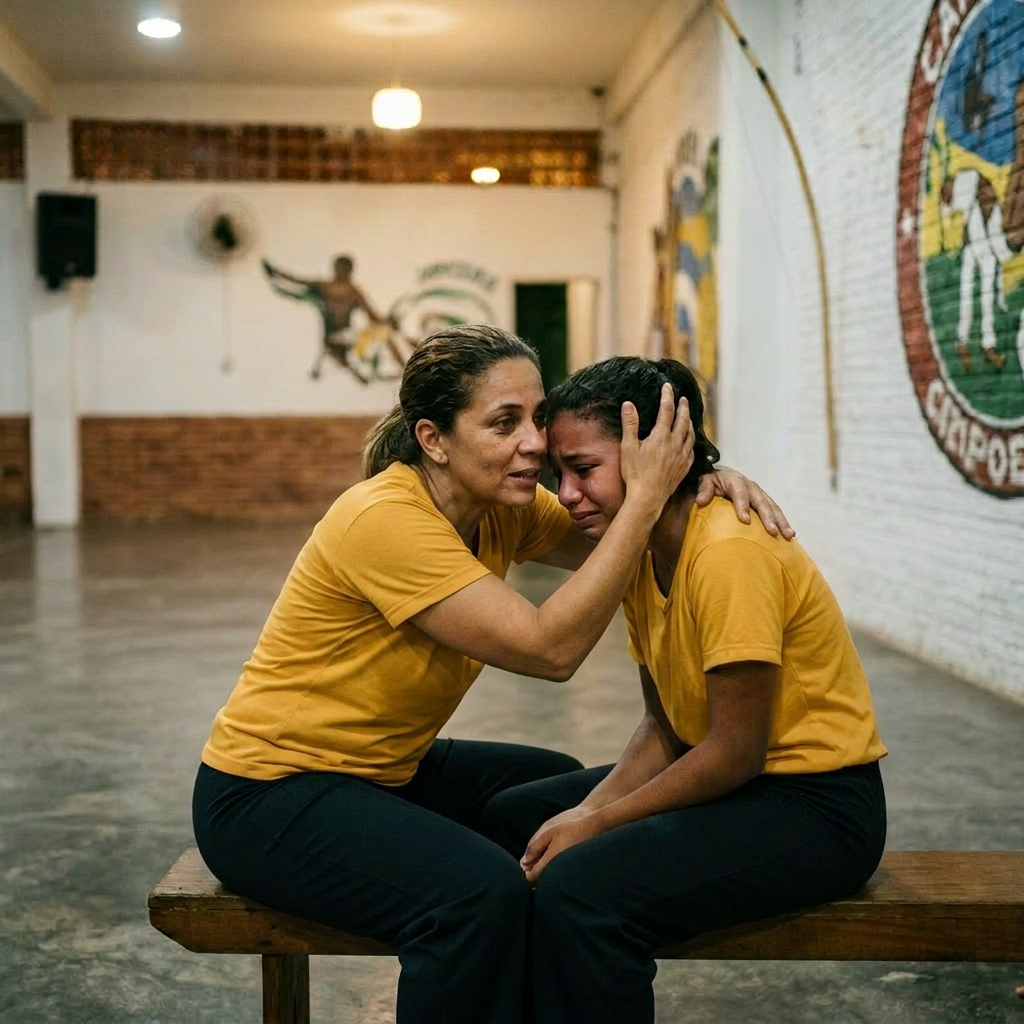
Ultimately, this path of recovery is supported by the Capoeira community, or irmandade, which counters the isolation often used as a tool of abuse. Under the guidance of a sensitive Mestre or Mestra, practitioners find a protective structure where they can model healthy relationships and practice authentic self-expression.
The Roda as a Safe Container
The roda, or the circle where the game is played, serves as a primary micro-community designed to be a “safe container”. Within this structured space, practitioners can experience vulnerability and build trust through a rigorous set of rules and etiquette that govern physical and social interactions. This environment is particularly therapeutic for those healing from traumatic backgrounds, as it provides a predictable framework where individuals can safely internalize healthy boundaries and reclaim bodily agency. By participating in the roda, survivors engage in a collective effort where safety is maintained by the group, countering the isolation and powerlessness often associated with past trauma. This process allows for the transformation of fear into power, facilitating a holistic healing journey through embodied resilience.
Embodied Principles for Recovery
Several core principles of Capoeira Angola contribute to fostering resilience and healing:
- Ginga (The Sway): Serves as a metaphor for emotional fluidity and adaptability, training the nervous system to remain engaged rather than succumbing to freeze or flight responses during stress.
- Respeito (Respect): Mandates deep listening and honoring the autonomy of every participant, ensuring that training is based on genuine partnership and values the individual’s internal world.
- Malandragem (Cunning): Involves reading body language and intentions to anticipate threats, allowing individuals to establish firm personal boundaries and reclaim a sense of agency.
- União (Unity): Emphasizes that safety is a collective endeavor, providing immediate support and validation that counters the isolation often sought by perpetrators of abuse.
The Role of the Mestre and Community
The Mestre or Mestra plays a pivotal role in modeling healthy authority that is firm yet unconditionally supportive. By embodying leadership grounded in empathy and boundaries, they provide a corrective relational experience for survivors of trauma. In a trauma-informed academy environment, open communication is encouraged, and training is adapted to meet the emotional or physical limitations of students dealing with trauma. This flexibility ensures that the practice remains accessible and avoids triggering re-traumatization during physical engagement.
Contemporary masters have utilized Capoeira Angola as a transformative tool for healing marginalized populations, helping practitioners dismantle the legacies of personal and historical oppression. This rich and vibrant cultural practice, rooted in the resilience of the Afro-Brazilian community, integrates movement, rhythm, and history, creating a unique space for individuals to explore their identities and express their emotions. This work extends beyond individual recovery to address systemic harms, viewing personal empowerment as a catalyst for social change. By fostering a sense of community and solidarity, practitioners of Capoeira Angola not only reclaim their narratives but also challenge the socio-political structures that perpetuate inequality, ultimately paving the way for a more just and equitable society.
FOR SURVIVORS OF SEXUAL HARASSMENT AND ABUSE:
If you are a survivor of sexual abuse and don’t know where to turn to, you are not alone. Reaching out for support is a courageous first step toward healing, and there are many dedicated resources available to provide guidance, safety, and specialized care.
National and international organizations that deal with sexual abuse:
Me Too International: Building on the global movement, this organization focuses on survivor-led healing and advocacy. It works to interrupt sexual violence by addressing the root causes and providing resources for community-based support and systemic change.
RAINN (Rape, Abuse & Incest National Network): As the largest anti-sexual violence organization in the United States, RAINN operates the National Sexual Assault Hotline and carries out programs to prevent sexual violence, help survivors, and ensure that perpetrators are brought to justice.
NSVRC (National Sexual Violence Resource Center): This organization provides a wealth of information and tools for advocates and educators. They focus on research-based prevention strategies and offer specialized resources for various communities to address and end sexual violence.
The International Society for Prevention of Child Abuse and Neglect (ISPCAN): ISPCAN is a multidisciplinary international organization that brings together professionals from around the world to support child protection efforts and research aimed at preventing all forms of violence and cruelty toward children.
UN Women: This entity of the United Nations works to eliminate discrimination against women and girls. They specifically address sexual violence in humanitarian and conflict settings, advocating for policy changes and providing support systems for survivors globally.
Capoeira Angola stands as a profound, non-traditional methodology for recovering from the multifaceted trauma of sexual violence and domestic abuse. By addressing the physiological residue of trauma stored within the nervous system, it offers a necessary complement to traditional legal and clinical interventions. Through its unique integration of movement, music, and philosophy, the practice provides a structured yet expressive pathway for survivors to release pent-up emotions and reclaim their bodily agency.
The effectiveness of this art form is deeply rooted in its historical legacy as a powerful tool for survival and resistance among enslaved Africans, who utilized it to maintain their cultural identity and express defiance against oppression. This rich heritage fosters a spirit of resilience that continues to empower marginalized populations today, encouraging them to reclaim their voices and narratives in societies that have often silenced them. Within the safe container of the roda, which serves as both a physical and metaphysical space, survivors can transform the isolation imposed by systemic injustices into a vibrant community filled with shared experiences and mutual support. In this environment, fear is not merely acknowledged but transmuted into a source of enduring strength, enabling participants to confront challenges with renewed confidence and solidarity.
Ultimately, Capoeira Angola does not merely manage symptoms of societal issues but actively promotes a holistic flourishing, viewing personal empowerment as a vital catalyst for both individual healing and broader social change, intertwining personal growth with collective liberation efforts to build a more just world for future generations.

