

Healing from Sexual Trauma with Capoeira Angola

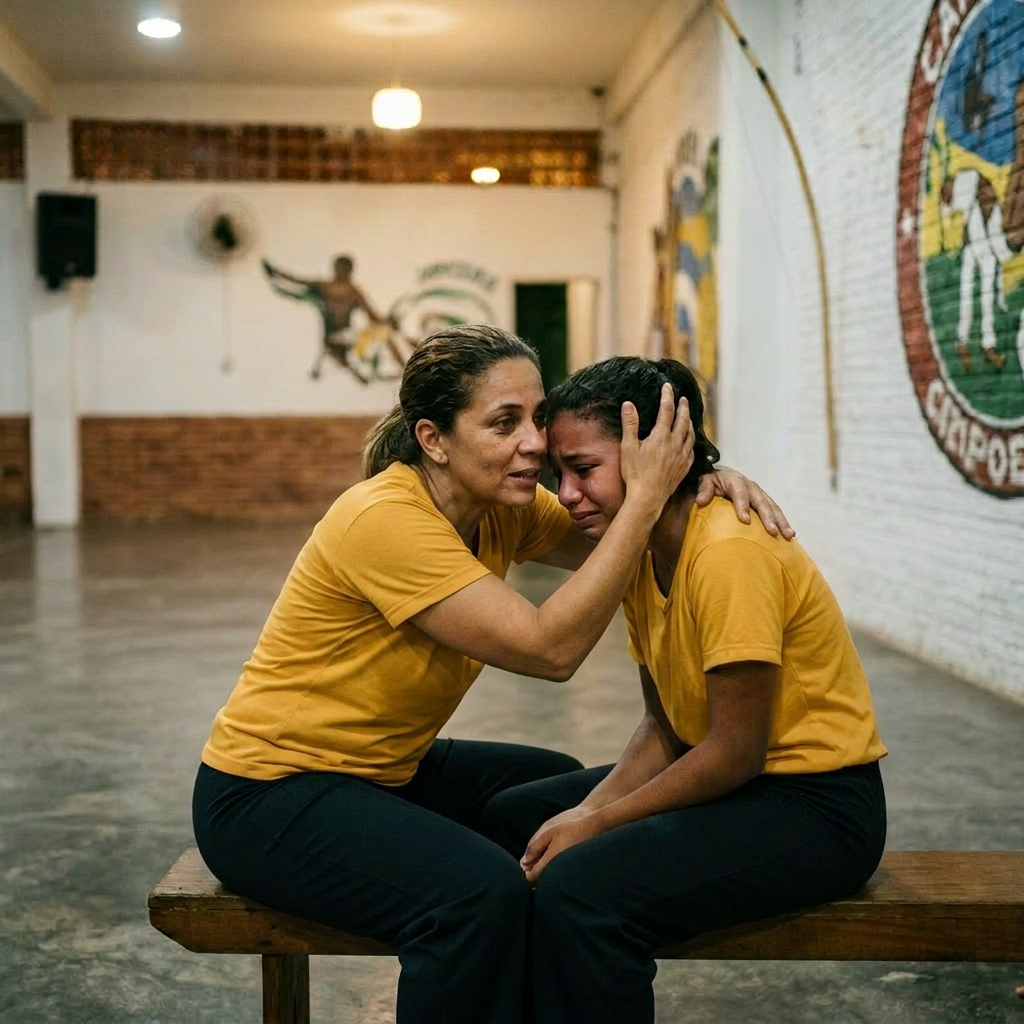
Capoeira instructor consoling a crying young student in a group class

One of the main inspirations for this article is this video.

We’ll get more into this subject in future posts. Right now, let’s explore how the lessons we learn in Capoeira Angola can help survivors of sexual abuse and trauma.

Let’s get started.

Capoeira Angola, an Afro-Brazilian art form integrating movement, music, and philosophy, offers a unique, non-traditional vehicle for recovery from profound psychological harm and social isolation. By engaging in this dynamic discipline, survivors can release pent-up emotions, build resilience, and cultivate community support, aiding in a holistic healing process. This practice does not simply manage symptoms but actively promotes embodied resilience, helping survivors transform fear into power and trauma into a source of enduring strength.

The efficacy of this practice lies in its ability to address trauma at a deep, somatic level, engaging the nervous system and the physical body where the residue of traumatic experiences is often stored. For survivors of sexual violence, traditional interventions like talk therapy or legal recourse, while vital for external safety, may be complemented by these embodied methodologies to reclaim personal autonomy and self-worth. Through rhythmic movements and the communal energy of the practice, individuals can replace hypervigilance and disconnection with a heightened sense of self-awareness and control.

The holistic nature of Capoeira Angola integrates several restorative dimensions:

  • Physical Reclamation: Foundational movements like the ginga demand a mindful presence, compelling survivors to re-engage with their physical selves and transform the body from a site of pain into an instrument of grace and power.
  • Emotional Regulation: The musical heart of the art—comprised of instruments like the berimbau and call-and-response songs—provides a non-verbal outlet for expressing complex feelings and regulating the nervous system through collective rhythm.
  • Strategic Empowerment: The philosophy of malícia (cunning) teaches survivors to read body language and anticipate threats, fostering the internal resources necessary to establish firm boundaries and navigate social challenges with grace.

Ultimately, this path of recovery is supported by the Capoeira community, or irmandade, which counters the isolation often used as a tool of abuse. Under the guidance of a sensitive Mestre or Mestra, practitioners find a protective structure where they can model healthy relationships and practice authentic self-expression.
The Roda as a Safe Container

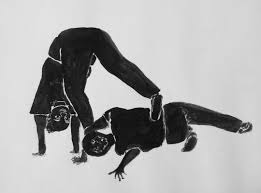
The roda, or the circle where the game is played, serves as a primary micro-community designed to be a “safe container”. Within this structured space, practitioners can experience vulnerability and build trust through a rigorous set of rules and etiquette that govern physical and social interactions. This environment is particularly therapeutic for those healing from traumatic backgrounds, as it provides a predictable framework where individuals can safely internalize healthy boundaries and reclaim bodily agency. By participating in the roda, survivors engage in a collective effort where safety is maintained by the group, countering the isolation and powerlessness often associated with past trauma. This process allows for the transformation of fear into power, facilitating a holistic healing journey through embodied resilience.

Embodied Principles for Recovery

Several core principles of Capoeira Angola contribute to fostering resilience and healing:

  • Ginga (The Sway): Serves as a metaphor for emotional fluidity and adaptability, training the nervous system to remain engaged rather than succumbing to freeze or flight responses during stress.
  • Respeito (Respect): Mandates deep listening and honoring the autonomy of every participant, ensuring that training is based on genuine partnership and values the individual’s internal world.
  • Malandragem (Cunning): Involves reading body language and intentions to anticipate threats, allowing individuals to establish firm personal boundaries and reclaim a sense of agency.
  • União (Unity): Emphasizes that safety is a collective endeavor, providing immediate support and validation that counters the isolation often sought by perpetrators of abuse.

The Role of the Mestre and Community

The Mestre or Mestra plays a pivotal role in modeling healthy authority that is firm yet unconditionally supportive. By embodying leadership grounded in empathy and boundaries, they provide a corrective relational experience for survivors of trauma. In a trauma-informed academy environment, open communication is encouraged, and training is adapted to meet the emotional or physical limitations of students dealing with trauma. This flexibility ensures that the practice remains accessible and avoids triggering re-traumatization during physical engagement.

Contemporary masters have utilized Capoeira Angola as a transformative tool for healing marginalized populations, helping practitioners dismantle the legacies of personal and historical oppression. This rich and vibrant cultural practice, rooted in the resilience of the Afro-Brazilian community, integrates movement, rhythm, and history, creating a unique space for individuals to explore their identities and express their emotions. This work extends beyond individual recovery to address systemic harms, viewing personal empowerment as a catalyst for social change. By fostering a sense of community and solidarity, practitioners of Capoeira Angola not only reclaim their narratives but also challenge the socio-political structures that perpetuate inequality, ultimately paving the way for a more just and equitable society.

FOR SURVIVORS OF SEXUAL HARASSMENT AND ABUSE:

If you are a survivor of sexual abuse and don’t know where to turn to, you are not alone. Reaching out for support is a courageous first step toward healing, and there are many dedicated resources available to provide guidance, safety, and specialized care.

National and international organizations that deal with sexual abuse:

Me Too International: Building on the global movement, this organization focuses on survivor-led healing and advocacy. It works to interrupt sexual violence by addressing the root causes and providing resources for community-based support and systemic change.

RAINN (Rape, Abuse & Incest National Network): As the largest anti-sexual violence organization in the United States, RAINN operates the National Sexual Assault Hotline and carries out programs to prevent sexual violence, help survivors, and ensure that perpetrators are brought to justice.

NSVRC (National Sexual Violence Resource Center): This organization provides a wealth of information and tools for advocates and educators. They focus on research-based prevention strategies and offer specialized resources for various communities to address and end sexual violence.

The International Society for Prevention of Child Abuse and Neglect (ISPCAN): ISPCAN is a multidisciplinary international organization that brings together professionals from around the world to support child protection efforts and research aimed at preventing all forms of violence and cruelty toward children.

UN Women: This entity of the United Nations works to eliminate discrimination against women and girls. They specifically address sexual violence in humanitarian and conflict settings, advocating for policy changes and providing support systems for survivors globally.


Capoeira Angola stands as a profound, non-traditional methodology for recovering from the multifaceted trauma of sexual violence and domestic abuse. By addressing the physiological residue of trauma stored within the nervous system, it offers a necessary complement to traditional legal and clinical interventions. Through its unique integration of movement, music, and philosophy, the practice provides a structured yet expressive pathway for survivors to release pent-up emotions and reclaim their bodily agency.


The effectiveness of this art form is deeply rooted in its historical legacy as a powerful tool for survival and resistance among enslaved Africans, who utilized it to maintain their cultural identity and express defiance against oppression. This rich heritage fosters a spirit of resilience that continues to empower marginalized populations today, encouraging them to reclaim their voices and narratives in societies that have often silenced them. Within the safe container of the roda, which serves as both a physical and metaphysical space, survivors can transform the isolation imposed by systemic injustices into a vibrant community filled with shared experiences and mutual support. In this environment, fear is not merely acknowledged but transmuted into a source of enduring strength, enabling participants to confront challenges with renewed confidence and solidarity.

Ultimately, Capoeira Angola does not merely manage symptoms of societal issues but actively promotes a holistic flourishing, viewing personal empowerment as a vital catalyst for both individual healing and broader social change, intertwining personal growth with collective liberation efforts to build a more just world for future generations.

SELF DEFENSE SERIES (3/16/25)

The Self-Defense Series: A Holistic Blueprint for Personal Empowerment and Survival

The Holistic Path to Personal Empowerment: Beyond Mere Technique

The prevailing, and often dangerously limited, view of self-defense—which focuses narrowly on a collection of physical techniques—is fundamentally inadequate for navigating the true complexities of real-world violence. To be genuinely prepared, resilient, and confident in the face of danger requires a profound and comprehensive transformation. True readiness demands a vital, holistic path to empowerment, one that integrates and systematically strengthens the individual across four critical, interdependent domains.

The Self-Defense Series is not merely a collection of fighting tips; it is a philosophy built upon these four pillars of personal safety: physical, mental, spiritual, and legal. Our core assertion is that effective self-defense transcends the rote memorization of martial arts moves. It requires a deep, well-rounded foundation that cultivates unwavering resilience, genuine readiness, and absolute confidence, ensuring the individual is equipped not just to survive an encounter, but to thrive in its aftermath.

Today’s Essential Insight: Spotting the Hidden Danger

3 SIGNS That Man Can DESTROY You in a Fight…

In the volatile, unpredictable environment of a confrontation, the ability to rapidly assess and categorize your opponent is not merely a desirable skill—it is an absolute, critical matter of survival. The fundamental question you must answer, often in a fraction of a second, is this: How can you discern if the person standing before you is merely an aggressively posturing individual, or a genuinely trained, potentially lethal fighter… and how can you know this before you are committed to a physical situation that is already too late to escape?

The stark, sobering reality is that the vast majority of people are completely blind to the subtle, almost imperceptible signs that betray a person’s inherent combat training, psychological conditioning, and lethal readiness. Failing to recognize and interpret these crucial pre-contact cues is a common, and often catastrophic, mistake. In a high-stakes encounter, it takes only one misstep, one moment of indecision, or one missed signal to find yourself incapacitated, critically injured, or worse.

This document serves as an urgent, tactical guide, moving far beyond generalized self-defense advice. You will be systematically introduced to the advanced principles of genuine threat detection, specifically calibrated for maximum speed and accuracy.

Through this deep-dive analysis, you will master the following essential, life-saving capabilities:

  • Spotting the Hidden Dangers Fast: Learn to process non-obvious environmental and physiological cues—signs of pre-meditation, target fixation, and commitment to violence that an untrained eye simply overlooks.
  • Reading Body Language Like a Pro: Understand the universal tells of a skilled fighter versus an emotional aggressor. This includes interpreting stance, posture, hand positioning, and the absence of wasted movement—the silent language that speaks volumes about a person’s training discipline and intent.
  • Instantly Understanding the Core Difference: Acquire the knowledge to know what truly separates an ordinary, blustering man from someone who is psychologically and physically equipped to destroy you in seconds. This distinction is paramount and will dictate your entire tactical response: whether to de-escalate, flee, or commit to a defensive action.

The goal is preemptive awareness, giving you the priceless advantage of time and informed action against an individual who believes they have the element of surprise. Your life may depend on your ability to see what others cannot.

[Video Resource] We extend our sincere Shoutout to the dedicated YouTube channel FIGHT SCIENCE for creating and posting this invaluable video.—–The Intellect of Combat: Elevating Your Fight IQ

Blending Criminal Psychology and Martial Arts for Superior Self Defence

Effective self-defense is a synthesis of physical capability and intellectual acuity. It demands not just muscle memory, but a sharp, analytical mind capable of preemptive threat assessment. This critical area is illuminated by Dr. Mark Phillips, a renowned Criminal Psychologist, Security Consultant, and dedicated Martial Artist. His “No Nonsense Self Defence Tips & Tricks” presentation bridges the gap between the dojo and the dangers of the street.

Topics Covered in the Fight Science Curriculum:

  • Behavioural Risk Management: Learning to identify pre-attack indicators and situational cues that signal imminent danger, allowing for de-escalation or strategic escape before the physical fight begins.
  • Criminal Behaviour: Understanding the predatory mindset, common attack patterns, and the psychological levers criminals exploit to select and control their targets.
  • Self Defence Techniques & Street Fighting Tips: Practical, high-percentage techniques adapted for survival in non-compliant, unpredictable street environments, prioritizing effectiveness and simplicity.
  • Mindset Preparation: The crucial internal work of forging mental fortitude, controlling the fear response, and maintaining functional decision-making under extreme stress.
  • General Tips: A broad spectrum of actionable advice on personal security, situational awareness, and the legal parameters of self-defense force.

Dr. Philipps’ approach emphasizes Simple Martial Arts training with easy to follow ideas, ensuring the lessons are immediately applicable and require minimal practice time to be effective under pressure.

Stay Connected with Dr. Philipps and the Fight Science Community:

Weekly Self Defence and Martial Arts video releases are posted every Sunday, providing a consistent source of expert instruction.

For In-Depth Martial Arts Training, Visit:

ORIGIN BJJ (Brazilian Jiu-Jitsu) ►http://www.londonbjj.com

SELF-DEFENSE SERIES: Stalking (3/23/25)

Welcome to the Self-Defense series, which offers insights and techniques for physical, mental, spiritual, and legal readiness, emphasizing the importance of training in all these areas to empower you in various situations. By understanding and developing your physical abilities, you not only enhance your confidence but also gain the necessary skills to respond effectively in confrontational scenarios. Moreover, mental preparedness allows you to stay calm under pressure, fostering clarity in decision-making when it matters most. Complementing these aspects, spiritual readiness nurtures a strong sense of self and purpose, which can be a vital source of strength. Lastly, legal awareness ensures you understand your rights and responsibilities, protecting you in the event of a confrontation. Together, these elements form a holistic approach to self-defense, equipping you to face challenges with resilience and assertiveness.

Today, we start this blog by asking, “why does stalking happen?” This is a complex and multifaceted issue that deserves our attention, as it continues to affect many individuals in profound ways. This is something I went over before, but I think we should revisit it, due to the serious nature of stalking and its often devastating consequences on the victims. Understanding the psychology behind such behavior can help us find ways to address it effectively. So, once again, we are going to revisit the trope, “STALKING FOR LOVE.” By delving deeper into this topic, we can start forging a path toward awareness, prevention, and ultimately, healing.

Stalking For Love is a media trope that romanticizes invasive stalker behavior, presenting it as charming rather than harmful. This troubling portrayal often minimizes the serious implications of such actions, leading audiences to view obsessive and frightening behaviors through a distorted lens. In reality, the effects of stalking are severe and tragic, causing emotional, psychological, physical, social, and financial harm to victims.

This video will explore the devastating impact of stalking through personal stories and expert insights to raise awareness of this critical issue while encouraging society to reconsider the glorification of such malevolent behaviors in media.

Victims endure a range of damaging repercussions, including heightened stress levels, debilitating depression, and debilitating anxiety. Furthermore, some may develop PTSD and other health issues that can significantly impact their daily lives, relationships, and overall well-being. This psychological turmoil often manifests in various physical symptoms, such as chronic pain, fatigue, and sleep disturbances, which further complicate their recovery process. The constant fear and uncertainty can lead to feelings of isolation and helplessness, sometimes resulting in thoughts of self-harm or suicide.

Victims may struggle to communicate their experiences, leading to a sense of disconnection from family and friends, who might not fully understand the depth of their suffering. In turn, this can exacerbate their feelings of loneliness, contributing to a vicious cycle that makes healing even more challenging. Support from mental health professionals, community resources, and loved ones becomes crucial in addressing not only the emotional scars but also the physical manifestations of their trauma, fostering a pathway toward recovery and restored hope.

By shedding light on this topic, we hope to foster a deeper understanding of the true nature of stalking and its profound effects on individuals and communities.

DOMESTIC VIOLENCE SERIES(11/18/24) “You wouldn’t get away with it here, you shouldn’t get away with it at home”

Welcome to the domestic violence series, where we raise awareness about the particularly insidious nature of domestic abuse and its lasting impact on individuals’ mental and emotional well-being. Understanding the signs of domestic violence and providing support to those affected is crucial. Through education and open conversation, we strive to create a safer environment free from the shadow of domestic abuse, emphasizing the importance of not only defending oneself but also defending others.

In today’s installment, we have these 2 thought-provoking Public Service Announcements that aim to raise awareness about this critical social issue affecting our community.


“You wouldn’t get away with it here; you shouldn’t get away with it at home.”

These very powerful words resonate deeply when discussing the pervasive issue of domestic violence. They highlight the unacceptable nature of abusive behavior, regardless of the setting. It serves as a stark reminder that such actions should not be tolerated in any environment, emphasizing the importance of accountability and the need for a supportive community.

Victims must know they are not alone, and that there is a collective responsibility to foster a culture where everyone feels safe and respected, both at home and in society. This sense of community is essential, as it empowers individuals to share their experiences and seek help without fear of judgment or stigma. By standing together, we can dismantle the cycles of abuse and create pathways to healing and justice. It is crucial for us to actively engage in discussions that raise awareness about the impacts of abuse, encourage empathy, and support preventative measures. Furthermore, establishing support networks that include trained professionals and compassionate allies can significantly enhance the recovery journey for victims. Together, we can cultivate an environment that not only protects the vulnerable but also promotes resilience, understanding, and hope for a better future.

If you, or anyone you know needs assistance, National Domestic Violence Hotline Free · Confidential · Hours: Available 24 hours

Call 1-800-799-SAFE (7233)

You’re not alone