Welcome to MARTIAL ARTS THEATER, a blog series that passionately celebrates martial arts heritage while fostering personal growth, discipline, and camaraderie for practitioners of all skill levels. We blog about a wealth of resources such as expert interviews, detailed instructional videos, and engaging community events covering a wide range of disciplines including karate, taekwondo, judo, and Brazilian jiu-jitsu. Our aim is to create a supportive, inclusive environment where everyone, from curious beginners to seasoned black belts, can thrive and flourish.
Our commitment to excellence is reflected in our curated educational materials, designed to help you master both the physical and philosophical aspects of your chosen discipline. Whether you are refining your technique through instructional content or gaining inspiration from the journeys of masters, Martial Arts Theater is your dedicated partner in growth. We invite you to explore our inclusive space, where the values of traditional martial arts meet modern community engagement, ensuring that your path toward self-improvement is both rewarding and shared with others who value strength, honor, and mutual support.
In Today’s Installment…
In a compelling and highly relevant exploration of modern safety and legal boundaries, YouTuber Nataniel Cho sat down for an in-depth conversation with renowned criminal defense attorney Mark O’Mara. This discussion seeks to address a critical question facing practitioners and creators alike: When does self-defense, and the content produced about it, cross the line from protection to liability?
During the interview, Mark O’Mara breaks down the three legal pillars of self-defense, providing a clear framework for understanding how the law views the use of force in real-world scenarios. They also delve into the misconceptions that often permeate the martial arts community, effectively busting common myths that can lead to dangerous legal consequences for the uninformed practitioner. Furthermore, O’Mara provides a nuanced legal perspective on controversial legislation, explaining in detail why he finds the popular term “Stand Your Ground” problematic and often misunderstood in a courtroom setting.
By supporting Nathaniel Cho, you are directly contributing to the production of high-quality, educational martial arts content that bridges the gap between physical practice and legal awareness. Your support helps facilitate crucial dialogues with legal experts like Mark O’Mara, ensuring that practitioners have access to accurate information regarding self-defense laws and the three legal pillars of force. This partnership allows Nathaniel to continue debunking common myths within the martial arts community that could otherwise lead to severe legal liabilities.
You can follow his work and stay updated on the latest interviews and instructional segments across his social media platforms:
Introduction: A Comparative Exploration of Internal Arts
This document undertakes a comprehensive comparative analysis between the Afro-Brazilian martial art of Capoeira Angola and the three primary internal Chinese martial arts: Tai Chi Chuan (Taijiquan), Hsing-yi Chuan (Xingyiquan), and BaguaZhang (Baguaquan). At first glance, these disciplines appear to reside in vastly distinct cultural and historical spheres—one rooted in the hidden resistance and communal expression of enslaved Africans in Brazil, and the others emerging from ancient philosophical and military traditions in China.
Despite these disparate origins, a deeper examination reveals a profound convergence in their core principles. All four practices share an intense, non-obvious emphasis on internal power (often referred to as neijin in Chinese arts), characterized by relaxed, fluid movement and the generation of force from the body’s center rather than through brute muscular strength. Furthermore, they prioritize the seamless integration of mind, body, and spirit, making the practice a holistic endeavor that transcends mere combat training.
Crucially, this comparative study focuses on the cultivation of vital energy—chi (or qi) in the Chinese internal arts and axé in the Capoeira context. While the terminology and cultural framing differ, both concepts describe a pervasive, life-force energy that is refined through dedicated practice, enabling the signature fluidity, resilience, and explosive potential that defines these respective disciplines. This shared commitment to internal cultivation offers a rich and fertile ground for cross-cultural martial arts study, allowing for a deeper appreciation of universal principles in human movement, spirituality, and self-defense. The ensuing analysis will explore the specific mechanics, philosophical underpinnings, and application of these shared principles.
Capoeira Angola: The Art of Malícia, Grounding, and the Jogo
Capoeira Angola is a profound and complex Afro-Brazilian martial art, distinguished from its more acrobatic counterpart, Capoeira Regional, by its deliberate pace, low-to-the-ground movements, and deep philosophical underpinnings. Its character is fundamentally defined by three elements: grounding, malícia (malice or deception), and the continuous, strategic flow of the jogo (game).
Grounding and Movement Dynamics:
The physical manifestation of Capoeira Angola is rooted in its dedication to maintaining a low center of gravity. This “grounding” is not merely a stylistic choice but a strategic imperative, ensuring stability and providing the leverage for explosive, whip-like attacks. Signature low movements, such as the rabo de arraia (stingray tail, a low, powerful sweep) and the rasteira (low sweep), are essential tools for unbalancing an opponent. Unlike arts that rely on linear force or high-impact strikes, the power in Capoeira Angola is generated through a sophisticated chain of momentum, originating from the core and lower body. Movements often spiral and undulate, utilizing the entire body to create a dynamic, unpredictable martial dance.
Malícia: The Art of Strategic Deception:
Malícia is arguably the heart of Capoeira Angola. It represents a combination of strategic cunning, feigned vulnerability, and psychological warfare. A player using malícia will employ subtle misdirection, sudden changes in tempo, and masked intentions to draw their opponent into a trap. What appears to be a friendly, playful movement (brincadeira) can instantly transform into a devastating takedown. This element of deception is what makes the jogo unpredictable and requires constant, active interpretation from both players. It is the art of appearing harmless while being acutely dangerous.
The Jogo and the Rhythmic Dialogue:
The interaction between two capoeiristas is called the jogo, or the “game.” It is not a sparring match in the conventional sense but a continuous, cooperative yet combative dialogue. This flow is inextricably linked to the musical accompaniment, which acts as the ultimate director and energy source. The lead instrument, the berimbau (a single-stringed musical bow), dictates the pace, style, and intensity of the jogo—from slow, intense, and deceptive to moderately fast and evasive. Other instruments, like the atabaque (drum) and pandeiro (tambourine), along with the collective singing and clapping, create the roda (circle) energy, enveloping the players and forcing them to harmonize their movements with the rhythm. The jogo is a test of skill, endurance, observation, and adaptability, demanding that players remain in constant, fluid motion, always seeking the strategic opening.
The Internal Chinese Arts: Cultivating Internal Power (Neijia)
The three celebrated internal martial arts—Tai Chi Chuan (Taijiquan), Hsing-yi Chuan (Xingyiquan), and BaguaZhang (Baguaquan)—are collectively known as Neijia, or “Internal Family” arts. These disciplines represent a profound departure from the more externally focused, muscular strength-based Shaolin (Waijia) systems, emphasizing not just physical prowess but also a deep mental and spiritual connection to the practice. Neijia focuses intensely on cultivating and harnessing internal energy, or jing (refined essence) and qi (life force), which is then translated into potent, fluid power that flows harmoniously within the body. This cultivation is achieved through a meticulous methodology that includes slow, deliberate forms and movements that encourage mindfulness, extended periods of standing meditation (zhan zhuang) that enhance stability and balance, and specialized Taoist and Buddhist-influenced breathing techniques designed to synchronize mind, breath, and body structure, creating a unified system of movement and energy flow.
Practitioners engage in these methods not merely to enhance their physical capabilities but to foster a greater sense of awareness and connection to their surroundings. The ultimate goal is to develop “silk reeling energy,” characterized by its smooth and continuous quality, and rootedness, allowing a smaller or weaker practitioner to generate explosive force (fa jing) that originates from the core rather than the limbs. This integration of bodily movement, breath control, and mental focus culminates in a martial practice that transcends mere combat, promoting overall health, longevity, and a serene state of mind.
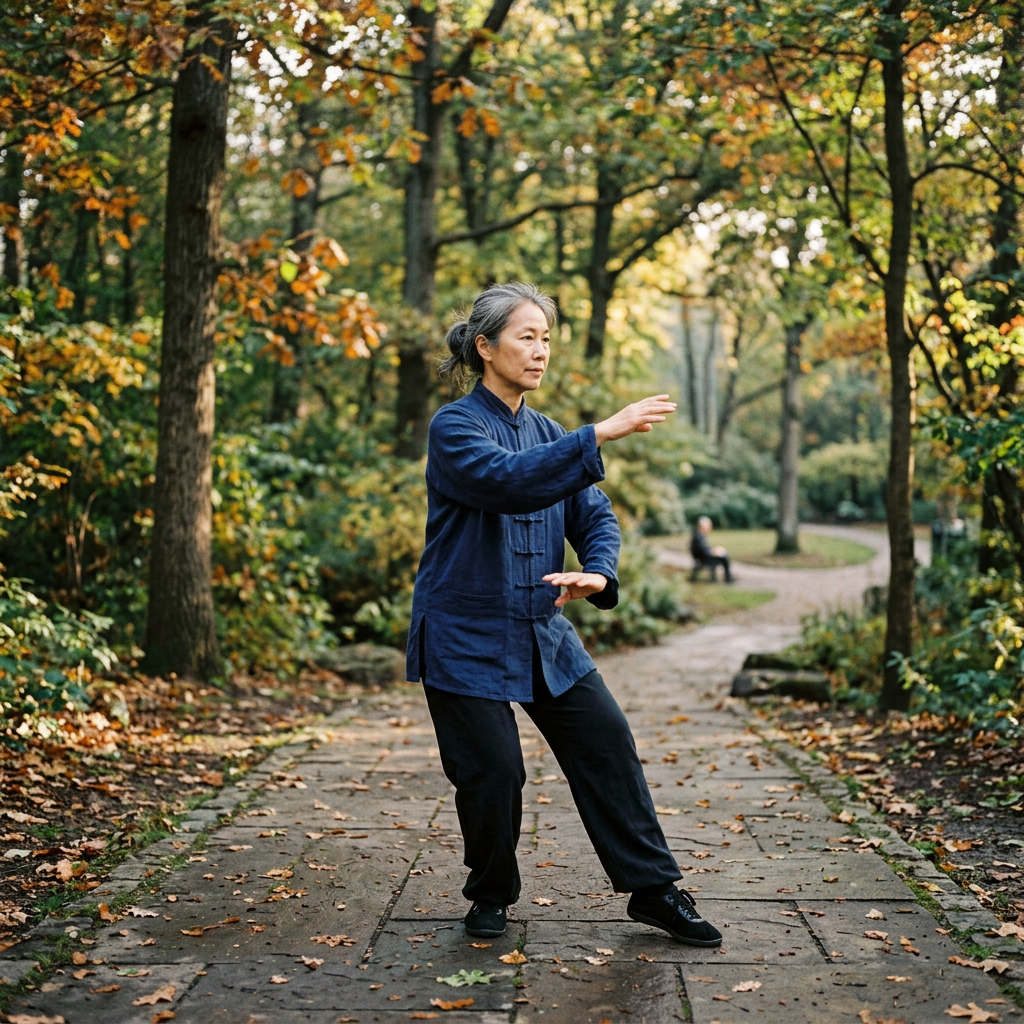
A woman practices Tai Chi on a leafy park path during autumn.
1. Tai Chi Chuan (Taijiquan): The Grand Ultimate Fist
Tai Chi Chuan is arguably the most globally recognized of the Neijia arts, celebrated for its aesthetic beauty and deep philosophical underpinnings. Its movements are characterized as soft, circular, and continuous, resembling a slow, moving meditation.
Core Principles: Tai Chi’s power lies in the principle of yielding to overcome force (sì liăng bō qiān jīn — “four ounces deflect a thousand pounds”). Rather than meeting an opponent’s force directly, the practitioner learns to absorb, neutralize, and redirect it, using the opponent’s own momentum against them. It emphasizes whole-body connection, where every movement is coordinated from the dantian (energy center in the lower abdomen), ensuring that the body moves as a single, integrated unit.
Philosophical Roots: It is deeply rooted in Taoist philosophy, specifically the concepts of Yin and Yang. The continuous, seamless transition between postures perfectly embodies this duality, expressed in the shift between empty (xu, or weightless/soft) and full (shi, or weighted/firm) postures. This constant interchange fosters balance, adaptability, and an effortless, natural power. The practice is often utilized for its profound health benefits, improving balance, flexibility, and circulation.
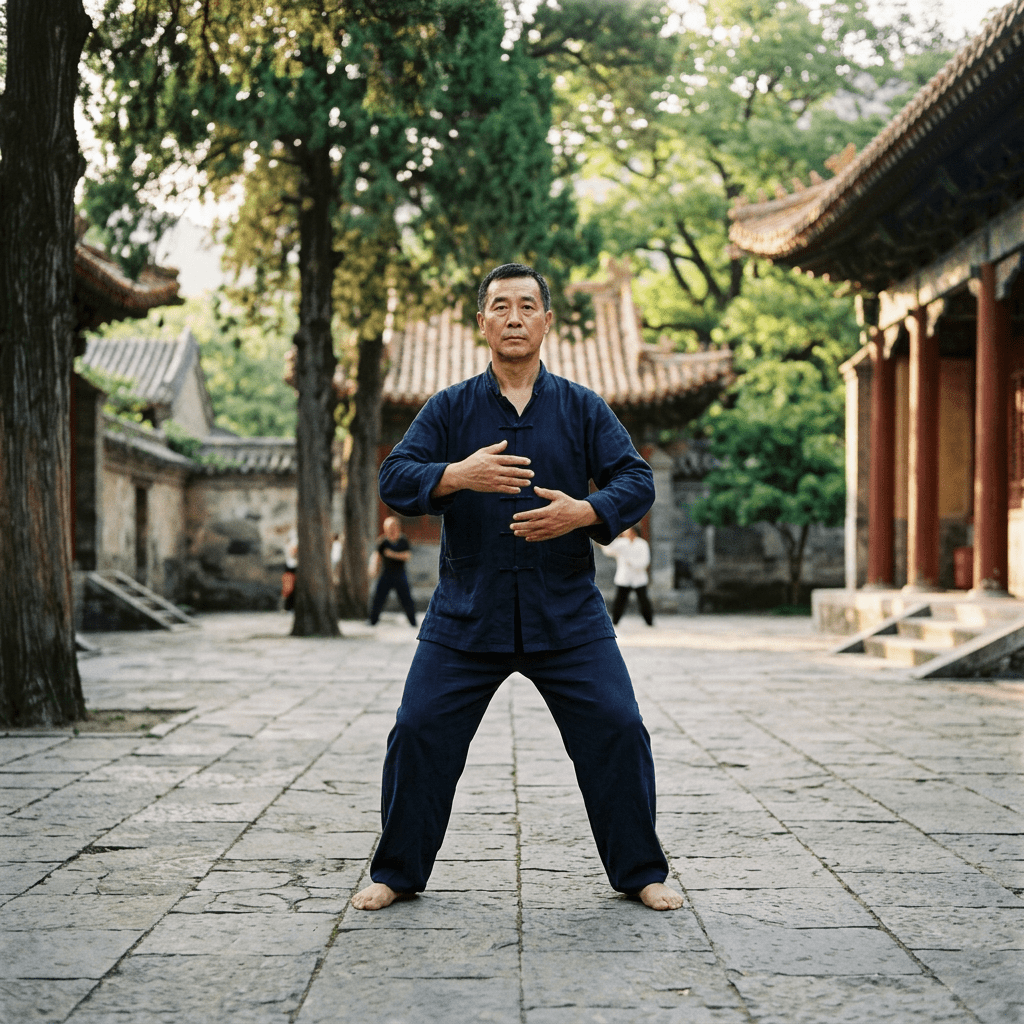
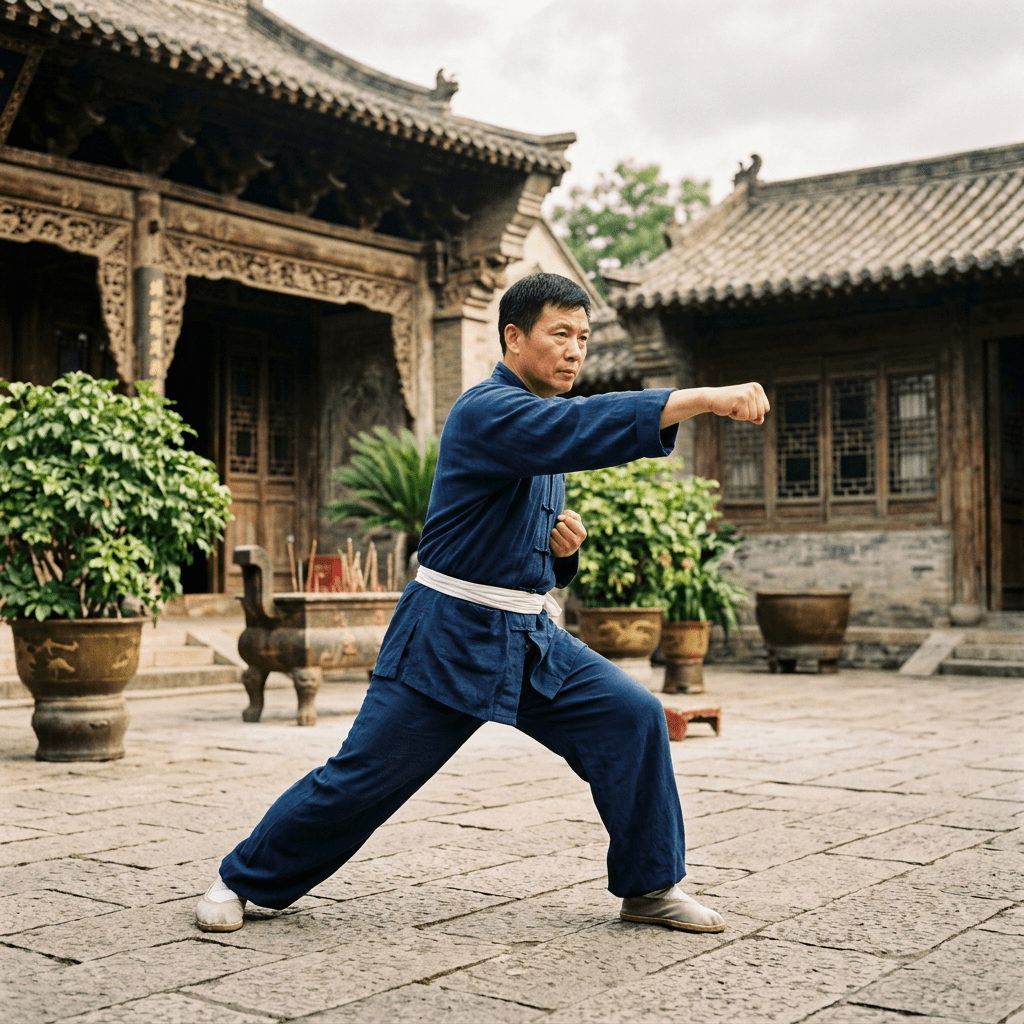
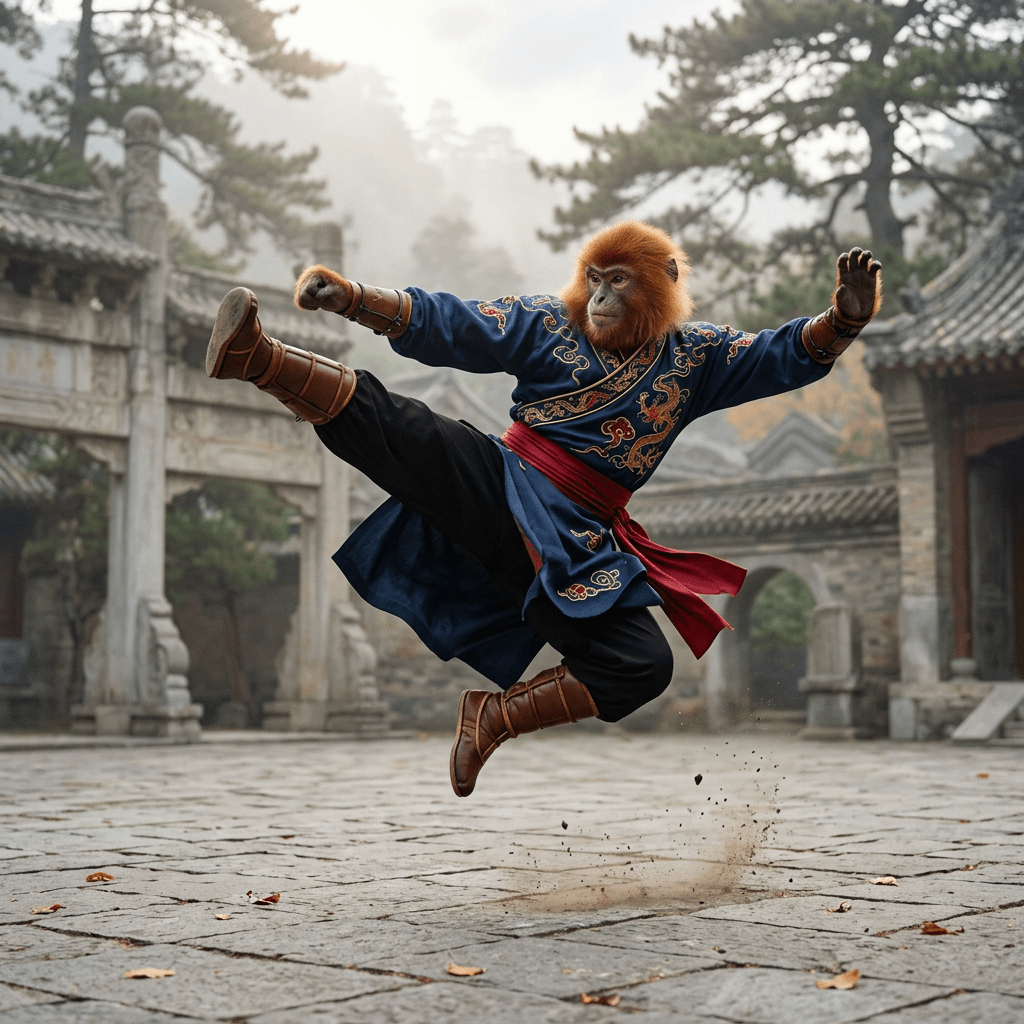
A man practices martial arts in a historic courtyard setting
2. Hsing-yi Chuan (Xingyiquan): Form and Will Fist
Hsing-yi Chuan is the most linear, direct, and explosive of the three internal arts, often described as having the fighting spirit of a spear. It favors immediate entry and decisive action over the more evasive strategies of BaguaZhang or the neutralizing softness of Tai Chi.
The Five Elements: The foundation of Hsing-yi lies in the theory of the Five Elements (Metal, Water, Wood, Fire, Earth). Each element corresponds to a specific type of penetrating power strike and is linked to the internal organs:
Pi Quan (Splitting Fist – Metal): Downward, chopping power.
Zuan Quan (Drilling Fist – Water): Upward, piercing power.
Beng Quan (Crushing Fist – Wood): Forward, penetrating power.
Pao Quan (Cannon Fist – Fire): Exploding, simultaneous defense and offense.
Heng Quan (Crossing Fist – Earth): Horizontal, neutralizing power.
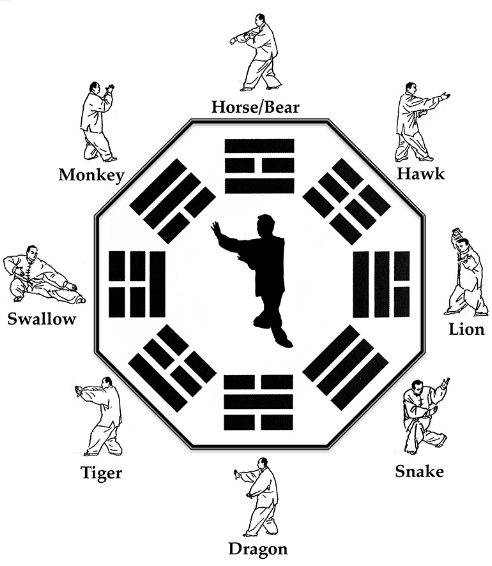
The Twelve Animals: In addition to the elements, the art incorporates the distinct characteristics of the Twelve Animals (e.g., Dragon, Tiger, Hawk, Snake, Bear). These manifest as specialized, focused power strikes and movements.
Fighting Essence: Its core principle is simultaneous offense and defense (shou ji yi ti), often moving aggressively on a straight line. The emphasis is on cultivating a strong, rooted structure and direct forward momentum, allowing the practitioner’s entire body mass to be channeled into a single, devastating strike.
3. BaguaZhang (Baguaquan): Eight Trigrams Palm
BaguaZhang is perhaps the most complex and unique of the Neijia arts, instantly recognizable by its signature practice of “circle walking” (zou zhang). Its name, “Eight Trigrams Palm,” refers to the eight fundamental changes and directions of the I Ching (Book of Changes) which inform its movements.
Evasive and Spiraling Movement: The art is defined by its spiraling, evasive footwork and constant changes of direction, executed while walking continuously around a circle. This constant motion is not merely defensive; it is the engine that generates internal rotational power and keeps the opponent disoriented.
The Circle Walk Advantage: The circle walk allows the practitioner to seamlessly move to the opponent’s blind side and back, effectively “sticking” to them while avoiding their primary line of attack. Once the opponent is compromised, the Bagua practitioner is uniquely positioned to apply a versatile range of techniques, including swift joint locks, powerful throws, and specialized strikes delivered through a revolving, turning body structure. The open-palm strikes and dynamic body weaving movements distinguish its fighting method.
Comparative Themes and Shared Principles: Unpacking the Universal Martial Language
Despite their profound geographical and historical separation—Capoeira Angola emerging from the crucible of Afro-Brazilian enslavement and the Internal Chinese Arts (Tai Chi Chuan, Hsing-yi Chuan, and BaguaZhang) refined over centuries in China—these disciplines articulate several fundamental martial and philosophical principles that point to a universal language of effective human movement and combat strategy.
Internal Energy/Power: The Cultivation of Life Force (Axé and Chi/Jing) The core of true mastery in both traditions is the generation of power from an internal source, not mere muscular bulk. Capoeira’s axé is more than just physical power; it is the vital, spiritual energy or life force that animates the jogo (the game/dance) and is shared between the participants. A powerful rasteira (sweep) or an explosive martelo (kick) is not a result of brute strength but of channeling this collective, centered energy. Similarly, the Internal Arts focus on cultivating chi (vital energy) and transforming it into jing (refined, explosive internal power). This force is generated through a specific body mechanics that emphasizes relaxation, proper skeletal alignment, and coordinated movement of the dantien (the lower abdomen energy center). Both concepts underscore the idea that a relaxed, connected body acts as a conduit, allowing internal energy to drive powerful, yet effortless, external action.
Fluidity, Continuity, and Perpetual Motion: Rejecting the Static Posture A defining characteristic shared by all four arts is the absolute rejection of fixed, static fighting stances in favor of continuous motion. The Capoeira jogo is a non-stop, improvisational flow of attack, defense, evasion, and transition. The moment a player rests, they become vulnerable. This constant movement is mirrored directly in the Internal Arts. Tai Chi Chuan is celebrated for its seamless, unbreaking chain of movements, where every “posture” is merely a transitional moment between the last and the next. BaguaZhang is characterized by its signature circular walking, an exercise in perpetual rotation and spiraling movement that ensures the practitioner is constantly shifting angles and presenting a minimal target. Hsing-yi Chuan, while appearing more linear, focuses on a continuous forward-driving intention, where the five elemental fists flow into one another without interruption. This shared principle of continuity is a strategic advantage: it conserves energy, masks intention, and keeps the opponent constantly reacting to a moving target.
The Power of the Lower Body and Grounding: Rooting to the Earth Capoeira Angola is intrinsically a grounded art. The vast majority of its movements—the gunga (low base position), the sweeps, the headstands, the evasions—are executed close to or on the floor. This low center of gravity ensures dynamic stability and allows for rapid changes in direction. This concept is a cornerstone of the Internal Chinese Arts, which stress the importance of “rooting.” Like an “old tree with deep roots,” the practitioner channels power from the earth. This rooting is achieved by consciously utilizing the kua (the hip/groin complex) to connect the lower body to the ground and facilitate the transfer of energy up through the torso and into the limbs. A strong root allows the practitioner to absorb and neutralize incoming force while simultaneously delivering penetrating power. Whether executing a low Capoeira queda (escape/fall) or a Tai Chi push, the power fundamentally originates from the strength and stability of the lower body.
Deception, Evasion, and Strategic Play: The Art of Malícia The concept of strategic deception is elevated to an art form in these disciplines. Capoeira’s malícia (often translated as malice, cunning, or trickery) is the heart of its strategy. It is the use of playful, dance-like movements (floreios) to mask a lethal attack, the feint that draws the opponent out of position, or the smile that hides a hidden intention. This philosophical approach finds its structural twin in the evasive and non-committal strategies of the Internal Arts. Tai Chi’s yielding, sticking, and spiraling neutralize an opponent’s aggression by refusing to meet force with force, drawing them into a void before redirecting their own power back at them. BaguaZhang’s circular footwork is pure evasion and strategic angling, constantly shifting the practitioner outside the opponent’s line of attack. Hsing-yi Chuan, despite its directness, often uses small, subtle shifts in body structure to evade and enter simultaneously. All four arts prioritize tactical evasion over brute-force blocking, ensuring that the opponent is always fighting a ghost—a moving, deceptive, and unpredictable entity.
This comparative study serves not merely as an academic exercise but as a powerful testament to the universal principles of effective martial movement that transcend specific cultural origins. It emphasizes that true martial mastery, regardless of its birthplace, fundamentally lies in the cultivation of deep internal awareness, sophisticated fluid body control, and strategic psychological play.
Welcome to MARTIAL ARTS THEATER, a vibrant community hub that passionately celebrates martial arts heritage while fostering personal growth, discipline, and camaraderie for practitioners of all skill levels. We provide a wealth of resources such as expert interviews, detailed instructional videos, and engaging community events covering a wide range of disciplines including karate, taekwondo, judo, and Brazilian jiu-jitsu. Our aim is to create a supportive, inclusive environment where everyone, from curious beginners to seasoned black belts, can thrive and flourish. We believe in promoting connections among members by facilitating a transformative journey of self-discovery and empowerment through shared experiences. Join us as we nurture respect, understanding, and support, helping individuals not only excel in their martial arts journey but also build lasting friendships that foster unity and strength within our community. Together, we can cultivate a culture where everyone is inspired to reach their fullest potential, overcoming challenges and celebrating achievements along the way.
In Today’s Installment…
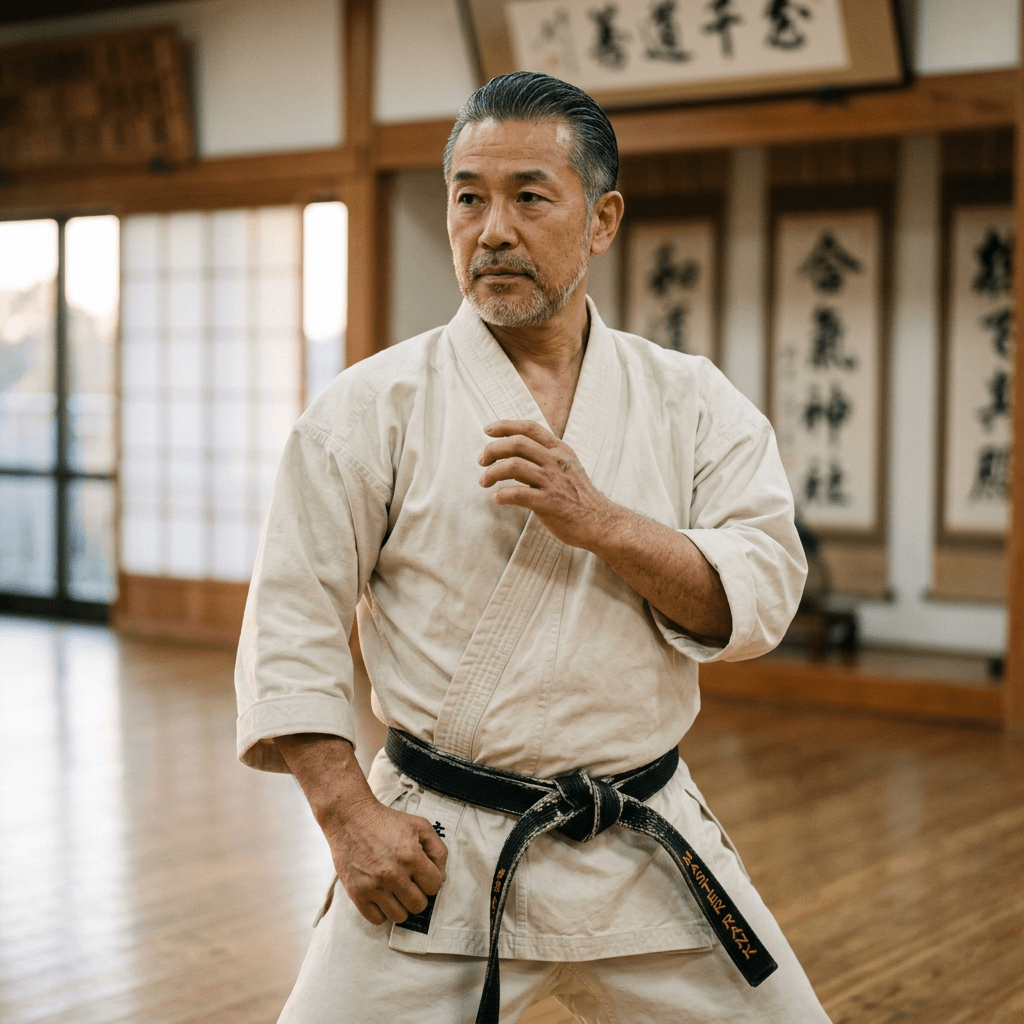
A focused martial artist practicing a kata in a traditional dojo
What is a black belt? And why do so many of them keep losing? Why are there so many fake ones out there? In this video documentary, Youtuber Nathaniel Cho has dug into the real history of the black belt: where it came from, who profits from it today, and why “black belt” means something completely different in Japan than it does anywhere else.
Historically, the black belt was not always a complex hierarchy of colors. In early Japanese systems, there were often only two ranks: white belt and black belt, signifying the transition from a beginner to a student with a teaching diploma. This codified roadmap, known as the Kyu (student) and Dan (master) grades, was designed to chart a practitioner’s journey from absolute beginner to seasoned instructor.
Today, the definition of a black belt has evolved. For some, it represents a state of “indomitable spirit” and the beginning of a warrior’s way of life. For others, it is a statement of maturity and responsibility, achieved through a profound study of basics and an understanding of the ethics and compassion that arise from martial arts. However, the modernization of martial arts into a standardized Western concept has often shifted the focus toward measurable results, tournament victories, and quantifiable performance metrics, sometimes at the expense of its deeper cultural and spiritual roots.
The “black belt” experience also varies wildly across styles, reflecting the rich diversity within martial arts traditions. In Okinawan Isshin-Ryu, the rank signifies a “Whole-Hearted Method” and a deep commitment to preserving tradition, emphasizing not only technical proficiency but also the philosophical and cultural aspects inherent to the art. Practitioners are often tasked with understanding the historical context of their movements, ensuring that they embody the spirit of their predecessors. Meanwhile, in arts like Capoeira Angola or Filipino Martial Arts, the concept of mastery is often recognized through communal acknowledgment and demonstrated skill rather than a formal belt ranking system.
In these vibrant communities, mastery is celebrated in spontaneous demonstrations of technique and prowess, where respect and recognition are earned through participation and contribution to the art form. This communal spirit fosters a unique bond among practitioners, highlighting that the journey of mastery transcends mere titles or rankings, focusing instead on the growth, experiences, and shared knowledge that enrich the martial arts community as a whole.
In this enlightening documentary, Nathaniel Cho embarks on a captivating exploration of the intricate history of the black belt: delving into its origins, the societal and cultural contexts that birthed this significant symbol, and examining who profits from its modern-day association with martial arts and beyond. Cho’s investigation reveals the deeply rooted connections between the black belt and issues of race, identity, and commerce, raising thought-provoking questions about its implications today. Furthermore, he poignantly addresses why “black belt” signifies something entirely different in Japan, where it is deeply woven into the fabric of martial traditions, compared to its often commercialized interpretation in other parts of the world, thereby shedding light on the nuanced understandings and varied impacts of this iconic term.
If you found this documentary insightful and wish to contribute to the continued production of high-quality martial arts research, please consider supporting Nathaniel on Patreon: / nathanielcho
Your contributions help fund the extensive investigative work required to uncover the complex history and modern evolution of martial arts traditions globally.
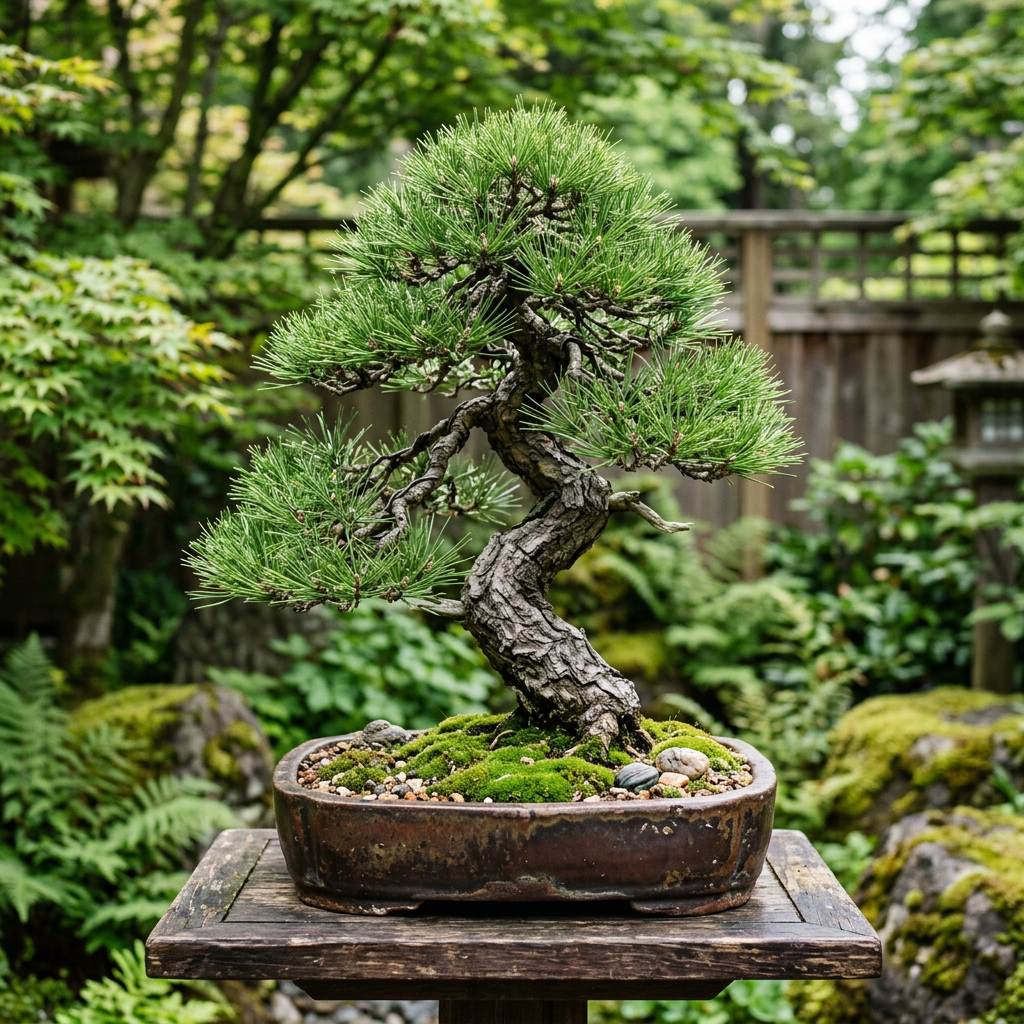
A carefully shaped pine bonsai tree sits on a rustic wooden table in a lush garden.
Welcome to MARTIAL ARTS THEATER, a vibrant community hub dedicated to honoring the rich heritage and diverse practice of martial arts, while enthusiastically promoting personal growth, discipline, and camaraderie among practitioners of all levels. We offer an extensive range of resources, including expert interviews, instructional videos, and engaging community events designed to explore various martial arts disciplines, such as karate, taekwondo, judo, and Brazilian jiu-jitsu. ‘Beyond just training, our goal is to create a supportive, inclusive environment for all members, from curious beginners embarking on their first steps to seasoned black belts honing their skills, fostering genuine connections and a transformative journey of self-discovery and empowerment through the art of martial arts. Join us as we cultivate a spirit of respect and mutual support, encouraging every individual to thrive in their personal martial arts journey, connecting through shared experiences, skills development, and vibrant friendships that extend far beyond the dojo.
In Today’s Installment…
Monkey Kung Fu is one of the most misunderstood styles in martial arts history. Often dismissed as theatrical performance—or exaggerated as a secret Shaolin combat system tied to Bodhidharma and Shaolin mythology—Monkey Boxing (Hou Quan) actually has roots that stretch far beyond modern Kung Fu legends. While Jesse Enkamp, the Karate Nerd, has questioned if it serves as a “special forces style” for Shaolin, the historical reality suggests a much broader evolution. One major hypothesis suggests that Chinese Kung Fu, including its animal styles, may have evolved from South Indian Kalarippayat. Legend states that Bodhidharma, an Indian Buddhist monk from the south where martial arts were part of the curriculum in centers of learning known as salais, traveled to China and established the Shaolin temple.
The stylistic lineage can be traced from ancient India, where the monkey god Hanuman is featured in the Ramayana and serves as the patron deity for wrestlers who train with heavy clubs known as gadas. These Indian influences likely moved into Southeast Asia during the first few centuries of the Christian era through trading activities and the Indian exodus, potentially informing systems like Bokator, Muay Boran, and Silat Monyet. In the Philippines, the term “guro” (teacher) and the name of the supreme god “Bathala” (derived from Indra) reflect this deep Indian cultural export. Historically, the development of monkey movement incorporates Han Dynasty animal mimicry, Ming Dynasty military manuals, and the cultural impact of “Journey to the West” leading to the modern Great Sage Monkey system.
Beyond the mythology, Monkey Kung Fu utilizes specific techniques designed for mobility, unconventional attacks, deception, adaptability, takedowns, and psychological disruption, making it a versatile martial art that emphasizes the importance of creativity and unpredictability in combat. These principles contrast sharply with other regional styles, such as the heavy club methods of Indian warfare—vikshepa (paired combat), abhishepa (single club), and parishepa (circling)—each rooted in their own rich traditions and tactics that prioritize strength and direct confrontation.
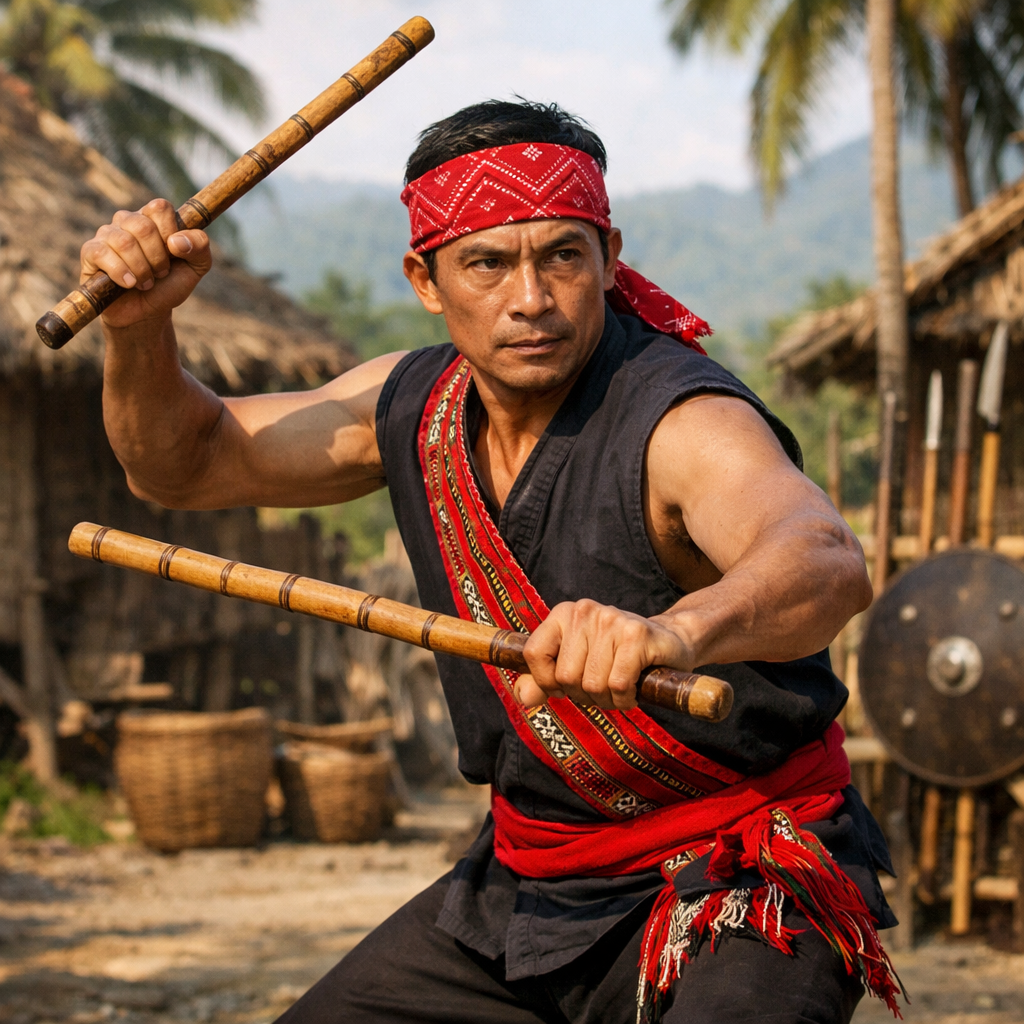
Similarly, the light, rapid-fire rattan stick techniques found in Filipino martial arts like arnis-escrima showcase a different approach to combat, focusing on speed and fluidity rather than the more grounded techniques of the Monkey style. While modern culture often confuses opera and performance with battlefield systems, overlooking the historical context and evolution of these arts, the real function of Monkey Kung Fu remains deeply embedded in a complex historical exchange of martial knowledge across Asia, where influence was not only reciprocal but also adaptive, allowing practitioners to refine and innovate techniques that address both individual and collective challenges in martial practice.
Da’Mon Stith of Austin Warrior Arts recently posed a series of thought-provoking questions on his Facebook page regarding the resilience of martial traditions. These inquiries struck a chord with me, prompting a deep reflection on the nature of our practice. I felt it was essential to move beyond a simple social media reply and instead craft this blog post to thoroughly explore the implications of his questions.
Allright, let’s do this.
If capoeira were illegal to practice, would you still practice it?
Short answer: Hell yeah!
Long answer: Honestly, it took me a significant amount of time to reach a definitive conclusion. One might wonder why anyone would dedicate themselves to studying an illegal martial art when there is a plethora of legal alternatives available that could arguably make you just as effective a “fighter.”
However, after much consideration, I realized that capoeira’s value transcends legality.
The choice to continue practicing, even under the threat of illegality, stems from the realization that capoeira is far more than a mere sport or physical activity. For those of African descent, it represents a unique lineage of skills, power, and hope, embodying the resilient spirit of a warrior that has historically survived through periods of intense suppression. Beyond its immense cultural significance, the art provides vital health benefits, effective self-defense capabilities, and a profound pathway toward self-knowledge and spiritual grounding. This dedication to preservation is reflected in the work of practitioners like Da’Mon Stith of Austin Warrior Arts, who explores various Historical African Martial Arts (HAMA) to keep these traditions alive.
If so, why would you continue to practice, and how would you go about practicing it?
Practicing an illegal art in a modern context would necessitate a strategic transition to a sophisticated underground network, effectively reviving the historical “malandragem”—the art of deception and survival—that once protected capoeira during its years of prohibition in Brazil. Following the clandestine example set by the Old Mestres, I would seek out secluded, out-of-the-way locations such as dense woods, private basements, or forgotten urban corners to train with a tightly-knit, trusted circle of capoeiristas, all of whom share a deep understanding of the stakes involved. This hidden environment would require a heightened level of collective intuition and deep communal trust, as every roda would become a deliberate and dangerous act of cultural resistance, an intimate gathering where we would not only hone our physical skills but also share stories, music, and the rich heritage that binds us together. As we moved in sync to the pulsing rhythms of the berimbau, each kick and dodge would resonate with the legacy of those who fought to keep capoeira alive. In these moments, our training would transcend mere self-defense; it would transform into a powerful statement against oppression, allowing us to reclaim our identity and resist the encroachment of cultural erasure in an increasingly homogenized world. The very act of practicing in secrecy would reinforce our solidarity, reminding us of the weight of our ancestors’ struggles, and each session would further solidify our commitment to preserving this vital form of expression.
In my public life, I would ensure my martial knowledge remains carefully concealed, preserving the art’s most potent secrets through coded movements and subtle discipline, ensuring that the essence of capoeira survives even if its outward expression is forced into the shadows. Ultimately, the practice would serve as a vital engine for community empowerment, acting as a beacon of resilience amidst adversity. By cultivating personal strength and a warrior’s heart, I would aim to provide tangible security and spiritual inspiration to my family, friends, and neighbors, thereby creating a supportive network that thrives on mutual respect and shared values. This art form would transcend mere physical practice, transforming into a dynamic platform for cultural exchange and community engagement, uniting individuals from diverse backgrounds under a common purpose. In this way, I would endeavor to turn the art into a living foundation for a better world that prioritizes ancestral heritage over restrictive, unjust mandates, reaffirming our commitment to freedom and self-expression in every movement and interaction.
And now, for the bonus question:
What would you use it for?
I would use it to make the world around me a better place. I mean my family, my friends, my community. This practice is not just about individual skill; it is about building a foundation of strength that radiates outward. By cultivating the eye and heart of a warrior, I can provide a sense of security and inspiration to those closest to me. This internal development serves as a beacon, guiding others toward their own paths of resilience and fortitude. Such a foundation ensures that the art is not just a personal pursuit but a vital engine for community empowerment, allowing the practitioner to offer tangible security and spiritual inspiration to their neighbors.
Furthermore, the deep-seated knowledge of self and the comprehensive health benefits gained from the art allow me to be a more present, intentional, and capable member of my community. By drawing upon the power and hope inherent in our shared heritage, I can actively work to uplift everyone I encounter, transforming individual practice into a communal asset. By mastering the rigorous discipline required by the art, I become significantly better equipped to navigate and handle the multifaceted stresses of daily life, offering a stable and grounding presence for my neighbors, peers, and family members alike.
The physical vitality and mental clarity derived from consistent, focused training ensure that I possess the sustained energy and sharp focus required to contribute meaningfully to collective efforts and communal projects. This creates a nurturing environment where our shared ancestral heritage becomes a powerful catalyst for collective growth, resilience, and socio-cultural empowerment. Ultimately, this mastery transforms the individual into a more effective and capable member of society, leveraging the resilient, unyielding spirit of the warrior to navigate modern challenges with grace and to prioritize the preservation of ancestral heritage over any restrictive or unjust mandates.
Well, that was my response to the profound questions raised by Da’Mon. I am deeply committed to the survival of capoeira, legal or not. I view it not merely as a physical discipline but as a vital connection to a resilient ancestral heritage that deserves to be protected and passed on, regardless of external legality.
Please show your support for Da’Mon Stith! He hosts a significant community event called the “Rooted in Resistance” Summer Intensive, every year in June which highlights various traditional systems such as Haitian Tire Machet; and Colombian Esgrima de Machete, and we highly encourage you to check it out! This event serves as a vital platform for the preservation and celebration of Historical African Martial Arts (HAMA), fostering a deeper understanding of the resilient spirits that forged these combat arts. By attending, you directly contribute to the continuation of these unique lineages of skill and power. You can find more information about his work and the event at the following link:
This academic exploration is dedicated to establishing, thoroughly analyzing, and articulating the profound connections and subtle yet significant differences that exist between the Afro-Brazilian art of Capoeira Angola and the diverse, ancient, and highly effective systems of Filipino Martial Arts (FMA), which primarily encompass the interrelated disciplines of Eskrima, Kali, and Arnis.
While these traditions are geographically disparate, having evolved on diametrically opposite sides of the globe—Capoeira Angola in the colonial melting pot of Brazil and FMA across the islands of the Philippine archipelago—both share foundational principles. These commonalities are deeply rooted not only in the practical application of self-preservation and combat effectiveness but also in a truly holistic approach to movement, physical culture, and combat philosophy. Crucially, both arts are interwoven with a deep, enduring cultural narrative of resistance, resilience, and survival, forged under the intense pressure of oppressive, often colonial, forces.
Unpacking these compelling historical and kinetic parallels does more than simply catalog similar techniques; it reveals a universal language of combat intelligence. This shared lexicon of strategic movement, adaptable weaponry (or lack thereof), and psychological fortitude was independently shaped by remarkably similar historical pressures, where the mastery of hidden, often disguised, martial skills was a necessity for cultural and physical survival. The investigation aims to move beyond superficial comparisons to identify the deeper structural, philosophical, and tactical mechanisms that bind these global arts of resistance.
Shared Core Principles and Philosophies: A Deep-Rooted Kinship
The underlying ethos of Capoeira Angola and the diverse family of Filipino Martial Arts (FMA) systems reveals a striking philosophical and functional kinship. This connection exists beneath the surface differences in their aesthetic, movement vocabulary, and execution, pointing toward a unified and profound understanding of kinetic combat, psychological strategy, and the essential dynamics of human interaction under pressure. Both traditions prioritize an intelligent, adaptive, and holistic approach to confrontation
The Principle of Flow and Continuous Motion: Ginga and Dynamic FMA Footwork
A central, non-negotiable tenet in Capoeira Angola is the ginga, the constant, flowing, and deliberately deceptive rocking motion, often likened to a pendulum. This movement is frequently misinterpreted by outside observers as merely a stylized dance or a ritualistic preparation. In reality, the ginga is the foundational, functional engine of the art—a dynamic, living defense system.
Functional Importance of Ginga
Dynamic Defense: The ginga ensures the practitioner is never a static, predictable target, constantly shifting the center of gravity and preventing the opponent from establishing a fixed line of attack or accurate range.
Distance Management: It is the active mechanism for maintaining optimal distance (the compasso or espaco) necessary for both immediate evasion and the preparation of an explosive counter-attack.
Kinetic Energy Storage: The continuous motion stores and releases kinetic energy, allowing for powerful strikes, sweeps, and acrobatics to launch from any point in the cycle without telegraphing intent.
This principle of continuous, non-committal motion and dynamic stance finds a direct, functional parallel in FMA’s pervasive emphasis on “flow” and ceaseless movement.
FMA’s Concept of Flow
In Filipino Martial Arts (FMA), the concept of ‘flow’ is not a mere philosophical ideal but a rigorously practiced, systematic methodology integral to both training and live combat. It represents a state of continuous, dynamic motion that manifests as the rapid, seamless transition between distinct techniques, ranges, and weapon applications. This fluidity is a deliberate continuum designed to prevent any arrests, hesitations, or static pauses in the engagement, which an opponent could exploit.
Key aspects that define this ‘flow’ include:
Seamless and Instantaneous Transitions: FMA practitioners are trained to execute immediate shifts across the entire fighting spectrum. This involves moving, without a perceptible break, from a sustained, high-powered weapon strike (such as a bolo or stick) to a close-quarters disarm, or instantly switching from an empty-hand parry or block to an intricate joint lock or submission hold. Crucially, the ability to change ranges—from the long-range fighting (largo), where footwork and reach dominate, to close-quarters grappling (corto)—must be instantaneous and disguised within the motion itself.
Calculated Exploitation of Momentum: Training is heavily focused on controlling and understanding the three primary combat ranges: largo (long range/striking), medio (medium range/trapping), and corto (close range/grappling). However, the mastery of flow goes beyond positional control; it involves the crucial ability to exploit the momentary openings created not by the practitioner’s action alone, but by the opponent’s natural reaction, committed attack, or resulting excessive momentum. The opponent’s force and movement are redirected and utilized against them.
The Unbroken Series (The Art of Dumog): Methods such as dumog (the Filipino system of wrestling, grappling, takedowns, and joint manipulation) are entirely dependent on the principle of the unbroken series. This is not a set of choreographed moves but an adaptive chain of actions and counter-actions. The practitioner constantly pressures the opponent, seeking leverage, control, and a position from which to finish the engagement, never allowing the opponent the time or space to stabilize or recover.
The overarching priority that dictates the tactical doctrine in both FMA and other flow-based arts (like Capoeira Angola) is the absolute avoidance of static, easily-readable, and linear positions. Any pause is an opportunity for the opponent. By cultivating continuous, cyclical, and multi-directional movement, the practitioner transforms their entire presence into a highly elusive, highly difficult target. This continuous motion makes the practitioner a profoundly unpredictable threat, forcing the opponent to perpetually react to a shifting, three-dimensional attack matrix rather than being able to initiate or predict the next step.
Deception and The Element of Play: Malandragem and Juego in Psychological Warfare
Capoeira Angola is famously defined by its essential element of malandragem (a rogue-like cleverness, strategic trickery, or sophisticated deception) and the overarching concept of jogo (the game).
Capoeira’s Psychological Layer
The movements exchanged within the roda (the circle/ring) are frequently playful, deliberately low to the ground, and profoundly deceptive. This is achieved through the use of feints, subtle invitations to attack, and misdirection designed to mask powerful, committed attacks.
The Jogo de Fora (Outside Game): The fluid, dance-like, and seemingly non-aggressive nature of the exchange is a deliberate psychological strategy. It is engineered to lull the opponent into a false sense of security or to make them fundamentally misread the true intent, power, or operational range of the attack.
Counter-Intuitive Power: The attacks often emerge from the lowest points of a sequence (like a low rasteira sweep) or from an inverted position, making them counter-intuitive and difficult to defend against, exploiting the opponent’s linear expectations.
This reliance on psychological warfare is powerfully mirrored across numerous FMA systems. FMA practitioners weaponize rhythm and perception to gain a decisive advantage.
FMA’s Deceptive Strategies
FMA heavily employs broken rhythm, strategic feints—particularly with the lead hand or training weapon—and unexpected shifts in angle or the primary striking tool (punong—shifting the weapon or controlling hand).
Destabilization: The core goal is to overwhelm, confuse, disarm, or critically destabilize an opponent’s perception, timing, and defensive structure.
Control of Perception: Advanced FMA utilizes precise timing, the exploitation of momentary psychological shock, and the meticulous control of the opponent’s visual and kinetic perception. The concept of ‘taking the center’ often involves dominating the opponent’s view and reaction time.
Elevation to a Cerebral Game: This mastery of deception, misdirection, and exploiting the opponent’s psychological state elevates combat from a purely physical exchange to a high-stakes, cerebral game—a cornerstone of advanced practice in both disciplines.
Holistic Body Conditioning, Balance, and Spatial Awareness
Both disciplines require and develop an exceptionally high degree of physical literacy. Their conditioning methodologies emphasize functional attributes: proprioception (the sophisticated sense of self in space), dynamic balance, explosive core strength, and agile flexibility. The training is inherently functional, designed not for external appearance but for immediate, practical application in dynamic, unpredictable, and often hostile scenarios
Functional Strength and Multi-Planar Movement
Capoeira Angola’s foundation—built on constant low movement, rolls (aú), low bridge defenses (queda de quatro), and low sweeps (rasteiras)—systematically builds incredible functional leg and hip strength, unparalleled mobility, and a profound degree of spatial awareness.
Multi-Planar Competency: The art demands the capacity to operate effectively and powerfully from any plane: standing, crouched, inverted, or on the ground. Crucially, this must be achieved without any loss of power generation or stability. This ensures the practitioner remains functionally combat-ready regardless of their body’s orientation, a complete rejection of being locked into a single plane.
FMA’s focus on complex, non-linear footwork—often triangular or diamond-shaped (known variously as sunda, sayaw, or piyok)—and its rapid, intricate hand-eye coordination drills (such as sinawali and doblete) similarly foster complete full-body connectivity.
Integrated Footwork: FMA footwork is designed to simultaneously manage distance, create superior angles of attack (the exploitation of the opponent’s ‘blind’ or weak side), and safely displace the body away from the line of force.
Neurological Speed: The rapid-fire conditioning drills—often involving paired weapon work—foster profound neurological speed and precision, treating the body as a unified, cohesive weapon system where the feet, core, and hands are intrinsically linked and instantaneously responsive.
Consequently, both arts produce athletes who possess not brute strength, but functional strength: the highly practical ability to generate explosive power, maintain perfect equilibrium, and execute complex, precise movements while under maximal physical and psychological duress.
Methodological and Technical Convergence
Beyond philosophical overlap, specific technical and methodological aspects of the arts show fascinating points of convergence, suggesting universal solutions to combat problems.
Footwork, Distance Management, and Angle of Attack: In Capoeira Angola, footwork is the engine of the game (jogo), used not only to evade but critically to control the circular arena (roda) and create strategic openings. The practitioner moves along circular, pendulum-like, and evasive paths. FMA is equally renowned for its sophisticated, geometrical footwork systems, which dictate the precise angle of attack and defense—often utilizing a 4, 6, or 12-point system of entry and evasion. While the aesthetic differs—Capoeira’s movements are often broader, lower, and more sweeping—the functional goal remains identical: to enter and exit the opponent’s range safely and efficiently while simultaneously disrupting the opponent’s balance, rhythm, or equilibrium. Both arts excel at controlling the engagement distance.
Close-Quarters Combat, Trapping, and Sensitivity (The Clinch): The close-range aspects of both arts reveal fascinating, functional similarities. Capoeira Angola features numerous takedowns, controlling clinches, positional sweeps, and techniques like cabeçada (headbutts). The transition to the ground is fluid and intentional. In FMA, particularly in the unarmed sections (known as Pangamut, Dumog, or Hubud Lubud), trapping, joint locks (lukso), throws, and highly sensitive close-range parrying and checking are critical. The concept of “fencing with the hands” emphasizes sensitivity and positional dominance in the immediate close range. Both arts transition fluidly between long range (kicking or striking), middle range (hand-to-hand or weapon range), and short range (trapping, grappling, and locking).
Weapon to Empty-Hand Transition: While Capoeira Angola often appears purely unarmed in the roda, its historical roots include weapon use (e.g., the navalha or razor), and many movements translate perfectly to manipulating or evading weapons. FMA, which is fundamentally a weapons-based art, has empty-hand systems (Pangamut) that are direct methodological reflections of the weapon movements (e.g., the stick-fighting patterns directly inform punching and blocking). This shared principle—that all combat is interconnected, and the body itself is the ultimate tool—underscores the comprehensive nature of both disciplines.
A Comparative Study: Connecting Capoeira Angola with Filipino Martial Arts (FMA) Cultural and Historical Context of Resistance: A Shared Crucible
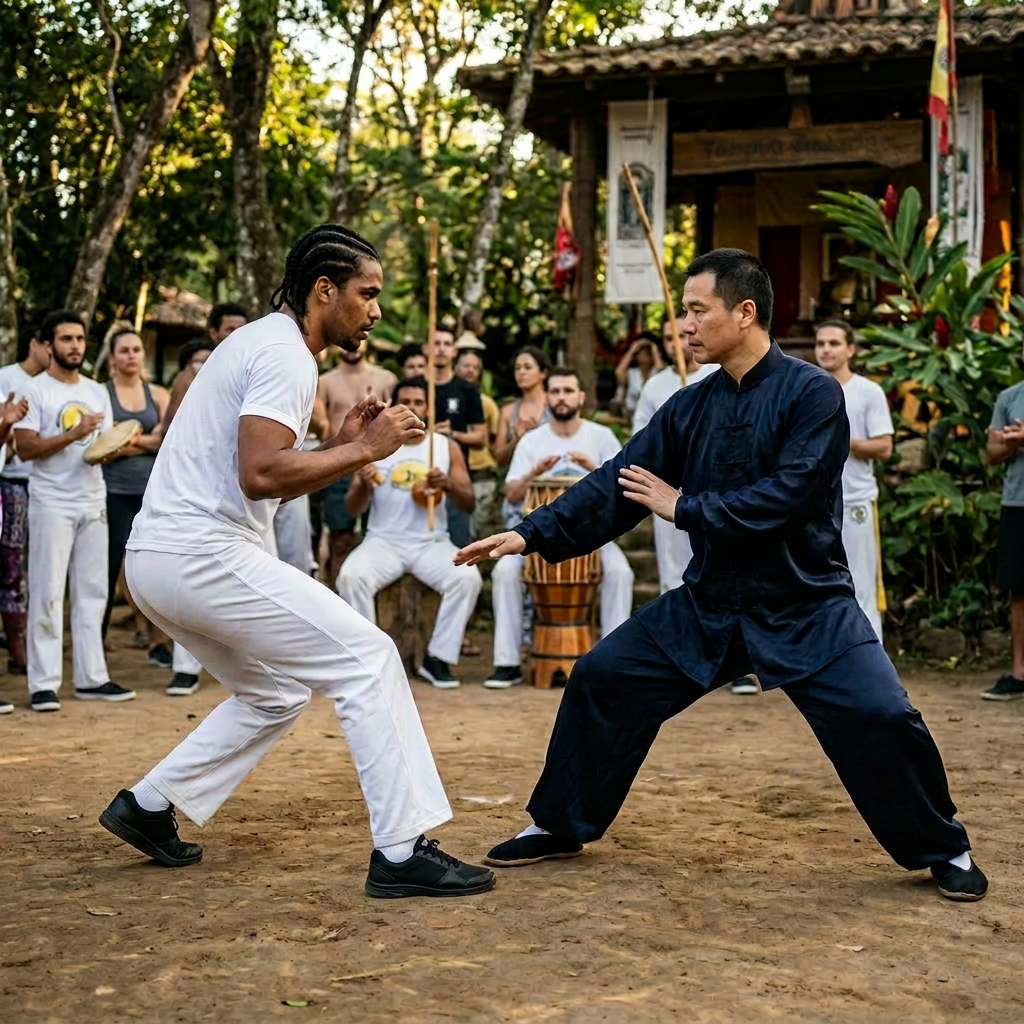
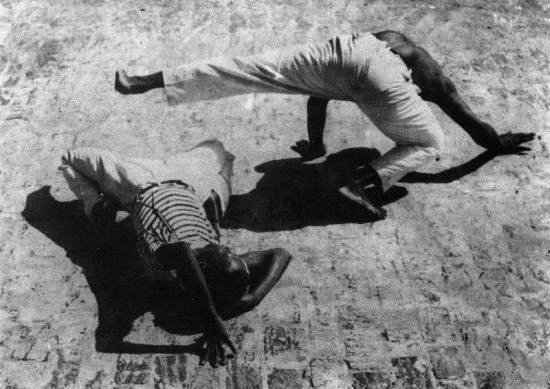
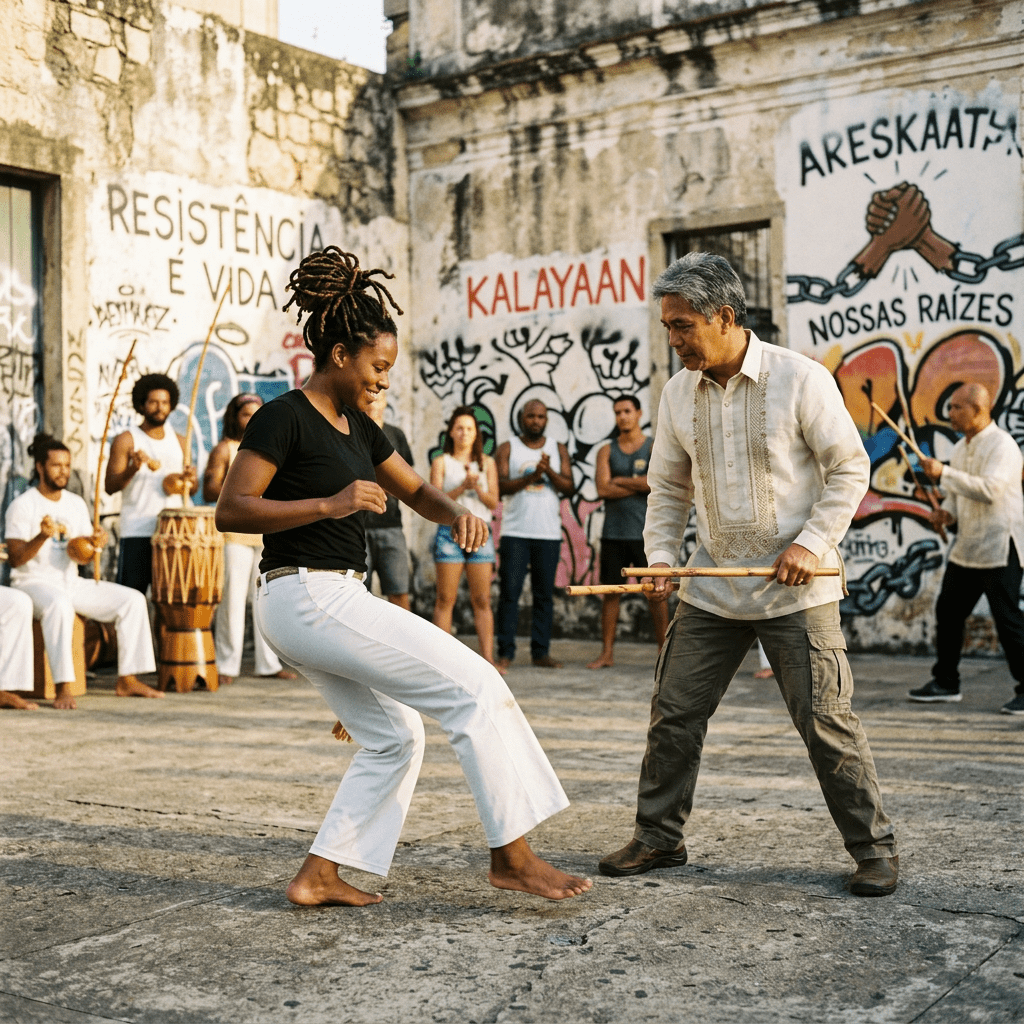
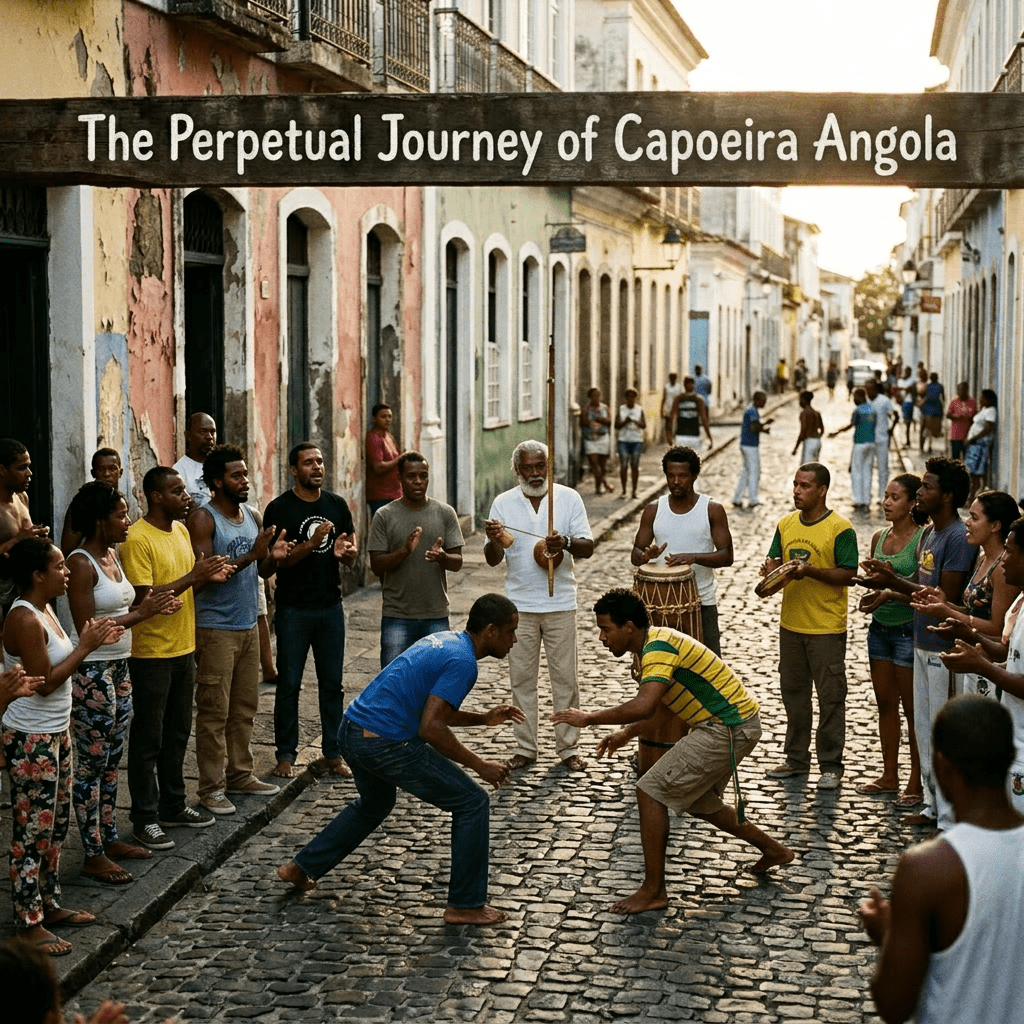
Two people engage in capoeira surrounded by musicians and supporters in an urban setting
Perhaps the deepest and most compelling connection between Capoeira Angola and Filipino Martial Arts (FMA), such as Kali, Arnis, or Eskrima, lies in the shared socio-historical crucible of their development. Both arts were not merely systems of combat; they were complex, clandestine cultural archives forged in environments where practitioners needed to ingeniously disguise their fighting skills to evade the relentless scrutiny, persecution, and outright prohibitions of colonial or ruling powers. This necessity for secrecy transformed the arts into sophisticated, multi-layered forms of cultural resistance.
Disguise, Secrecy, and Preservation
The survival of these martial traditions hinged on their ability to camouflage themselves within the fabric of daily life, transforming innocuous activities into vital tools for self-defense and rebellion:
Capoeira: The Dance of Deception:
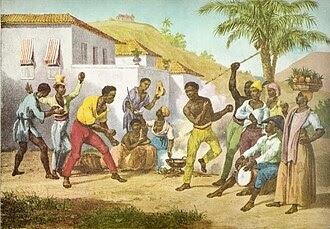
Enslaved Africans in Brazil, stripped of their freedom and cultural identity, developed Capoeira as a means to practice and preserve their martial prowess right under the noses of their captors. The movements—sweeps, kicks, and evasions—were skillfully interwoven with the aesthetics of dance, music, and ritual. This transformation made Capoeira appear as a playful, spiritual, or athletic pastime rather than a deadly fighting system.
The circle (roda) became far more than a performance space; it was a sacred sanctuary, a localized zone of autonomy, and a highly efficient training ground. Its circular nature ensured all-around awareness and allowed for rapid defense against outside intervention.
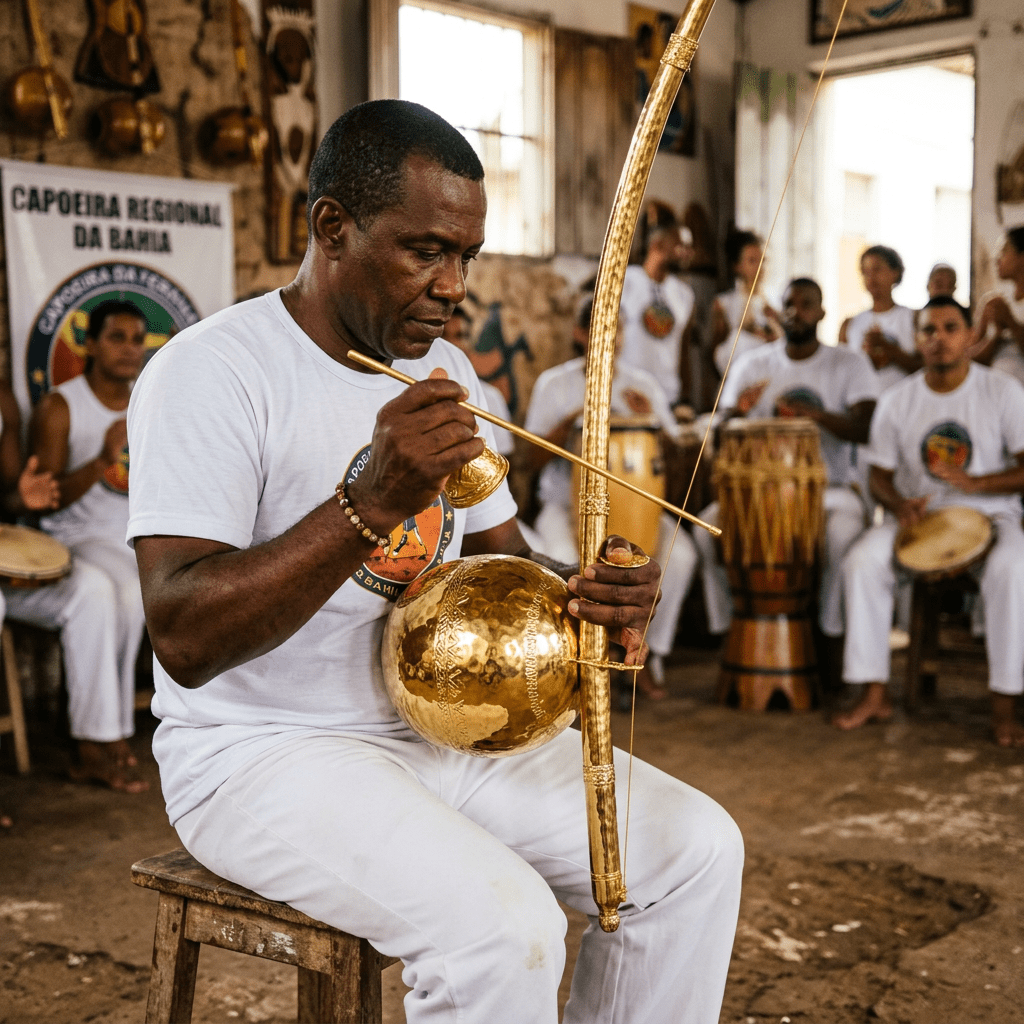
The berimbau—a simple musical bow—was central to this deception. It did not merely dictate the pace and intensity of the jogo (the game/fight); historically, it served as a vital communication and warning system. Changes in its rhythm could signal the approach of overseers (feitores), instantly transitioning the ‘fight’ back into an ‘innocent’ dance. This cultural mechanism was fundamental to the art’s survival and its enduring identity as a cultural marker of resilience.
Filipino Martial Arts (FMA): The Art in the Act:
The fighting movements were frequently disguised as intricate folk dances (Sayaw), ensuring the preservation of complex footwork, striking patterns, and defensive maneuvers within seemingly harmless cultural performances. The flowing, circular motions of the stick-and-blade fighting were retained, albeit stylized, in the Tinikling or other regional dances.
Essential martial knowledge was also embedded in agricultural practices or religious rituals. For instance, the use of the bolo (a common farming implement) mirrored its function as a war implement, and the movements for planting or harvesting could conceal fundamental disarming or trapping techniques. This strategic enculturation ensured that indigenous martial knowledge and the fighting spirit of the people could be passed down through generations despite relentless foreign oppression.
Cultural Artifacts as Symbols of Identity and Resilience
The tools and objects associated with both traditions transcend their functional utility; they stand as powerful symbols of identity, cultural continuity, and historical resilience.
The Berimbau and the Soul of Capoeira:
In Capoeira, the berimbau is the master instrument that dictates the very rhythm, energy, and character of the jogo (game/fight). It acts as the “soul” of the roda. Its sounds communicate not just the speed but the philosophical depth of the interaction, embodying the unity of music, movement, and fighting technique. It is the repository of the tradition’s oral history and ethical code, reminding practitioners that the art is a balance of aggression, evasion, and ritualistic respect.
The Olisi/Bolo and the Extension of the FMA Spirit:
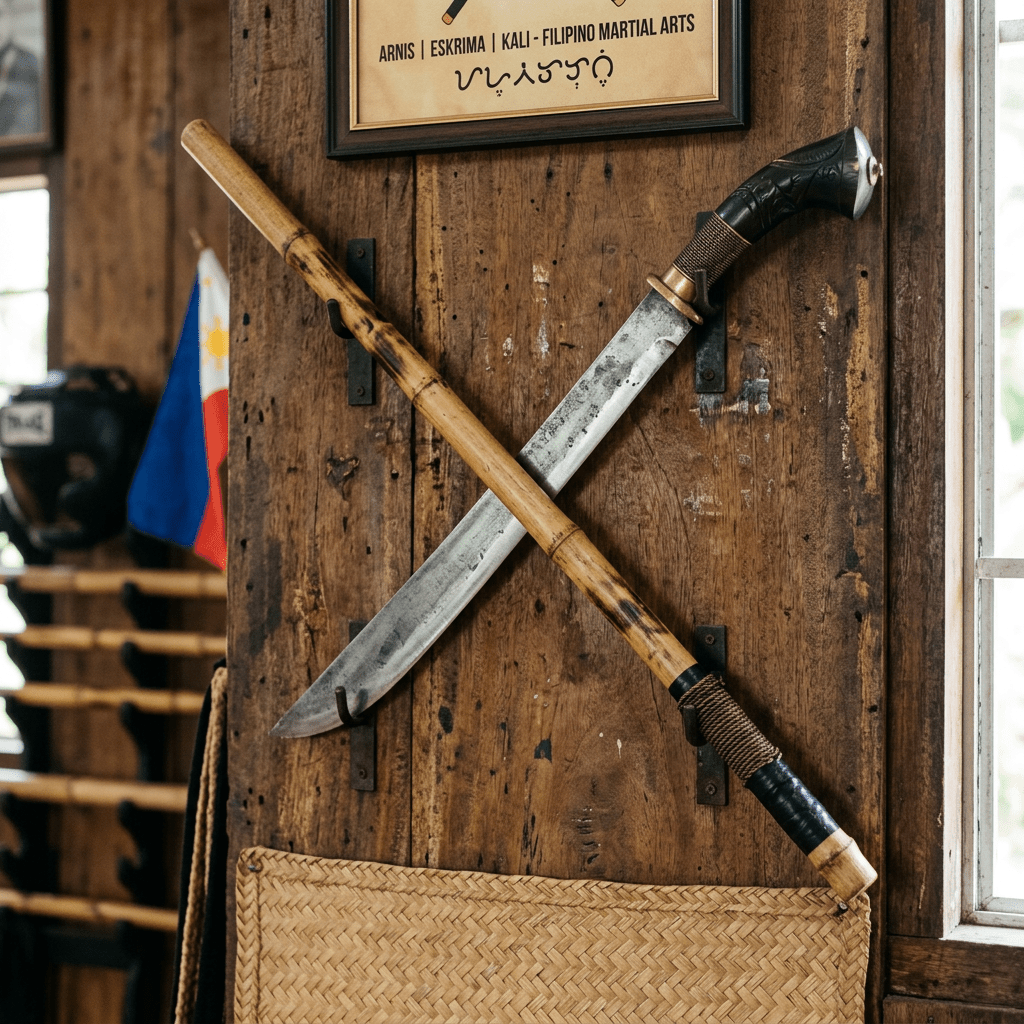
In FMA, weapons like the olisi (rattan stick) or the bolo (machete/sword) are considered direct extensions of the practitioner’s body, spirit, and history. The reverence for the weapon reflects the history of the Filipino people’s struggle for independence, where these tools were essential for both survival and warfare. The intricate relationship between the body and the weapon—emphasizing close-quarters, flowing, and unpredictable movement—is a testament to a complete martial philosophy where the weapon is seamlessly integrated into the natural motions of the human form.
Vehicles of Cultural Transmission
Ultimately, both Capoeira and FMA operate as holistic vehicles for cultural transmission. They are living histories that utilize more than just physical training to perpetuate their legacy. They pass on:
The profound connection between Capoeira Angola and Filipino Martial Arts (FMA) is deeply rooted in their historical and philosophical foundations, as well as their practical function as tools for survival and cultural preservation.
Shared Cultural and Historical Narratives
History and Philosophy: Both arts serve as living archives, meticulously preserving the oral traditions, songs, and practical applications of their techniques. In Capoeira, the rhythmic songs (quadras and chulas) sung in the roda are powerful historical narratives, recounting the struggles, resistance, and enduring spiritual fortitude of enslaved African and Afro-Brazilian ancestors. Similarly, the philosophies and movements embedded within various FMA styles—such as Kali, Escrima, or Arnis—embody the histories of indigenous Filipino peoples and their defiance against colonial powers. They are testaments to a shared human experience of oppression, resilience, and the relentless fight for freedom and cultural identity.
Tools for Practical Survival and Holistic Development
Practical Survival Skills: The arts transcend mere physical combat; they are comprehensive systems for survival that address the mental, spiritual, and communal aspects of existence. Beyond the mastery of strikes, blocks, and evasions, the traditions impart essential, life-sustaining lessons. Discipline is forged through rigorous practice and adherence to the art’s ethical code. Strategic thinking is honed by the improvisational, dynamic nature of the fight or game—demanding practitioners to anticipate, adapt, and exploit openings. Most critically, the arts foster community building and personal resilience. Under colonial regimes, the practice was often a clandestine act, requiring absolute trust and cooperation, thereby strengthening the social fabric. The physical and mental toughness cultivated was not just for fighting, but for enduring harsh living conditions and maintaining hope.
The Reinforcement of Collective Identity
A Sense of Collective Identity: The physical space of practice becomes a sacred crucible for forging collective identity. In Capoeira, the roda (the circle) is a microcosm of society, where individual expression is balanced by communal support and responsibility. The energy, rhythm, and mutual respect within the roda transform individual practitioners into members of a shared lineage. Likewise, in the FMA training group or eskrima school, the communal training reinforces a powerful bond and collective purpose. By learning and embodying the art, practitioners cease to be mere individuals; they become active custodians and inheritors of a deep, complex, and hard-won cultural heritage, ensuring its transmission and vitality for future generations. This collective ownership transforms the martial art into a profound act of cultural sovereignty.
Conclusion:
The comparative study of Capoeira Angola and Filipino Martial Arts (FMA) reveals a profound and often overlooked relationship: that these disparate systems are bound by more than mere coincidence. Their independent evolution represents parallel trajectories in strategic combat intelligence, a testament to the universal capacity for innovation under duress. Both martial traditions emerged from the crucible of oppression—whether the Portuguese colonization of Brazil and the enslavement of African people, or the successive waves of foreign subjugation endured by the Philippines. This shared genesis instilled within them a core philosophy of survival, cultural preservation, and the unrelenting pursuit of physical and spiritual freedom.
The functional and philosophical convergences between Capoeira Angola and FMA are particularly illuminating. Both systems prioritize adaptability, utilizing low-profile stances, misdirection, and sophisticated timing to overcome a larger, often better-armed, adversary. In Capoeira Angola, the malícia (malice or feint) and the principle of constant flow (jogo de dentro) mirror the dynamic footwork, deceptive entries, and continuous flow (eskrima’s continuous attack principle) found in FMA. Furthermore, both arts developed methods of turning everyday objects or the practitioner’s own body into effective weapons—Capoeira’s concealed strikes and sweeping movements, and FMA’s mastery of the blade and impact weapons derived from farming tools. These convergences demonstrate that the most effective martial arts are not isolated technical inventions but organic, culturally-rooted responses to existential necessity.
While the aesthetic and stylistic differences are undeniable—the fluid, dance-like camouflage of Capoeira versus the linear, combative efficiency of many FMA styles—the foundational principles are identical: holistic engagement of mind and body, a profound respect for the lineage of knowledge, and the ultimate objective of resistance. The study ultimately posits that these arts serve as living archives of history, proving that resistance, when encoded into movement and culture, becomes an ineradicable force.
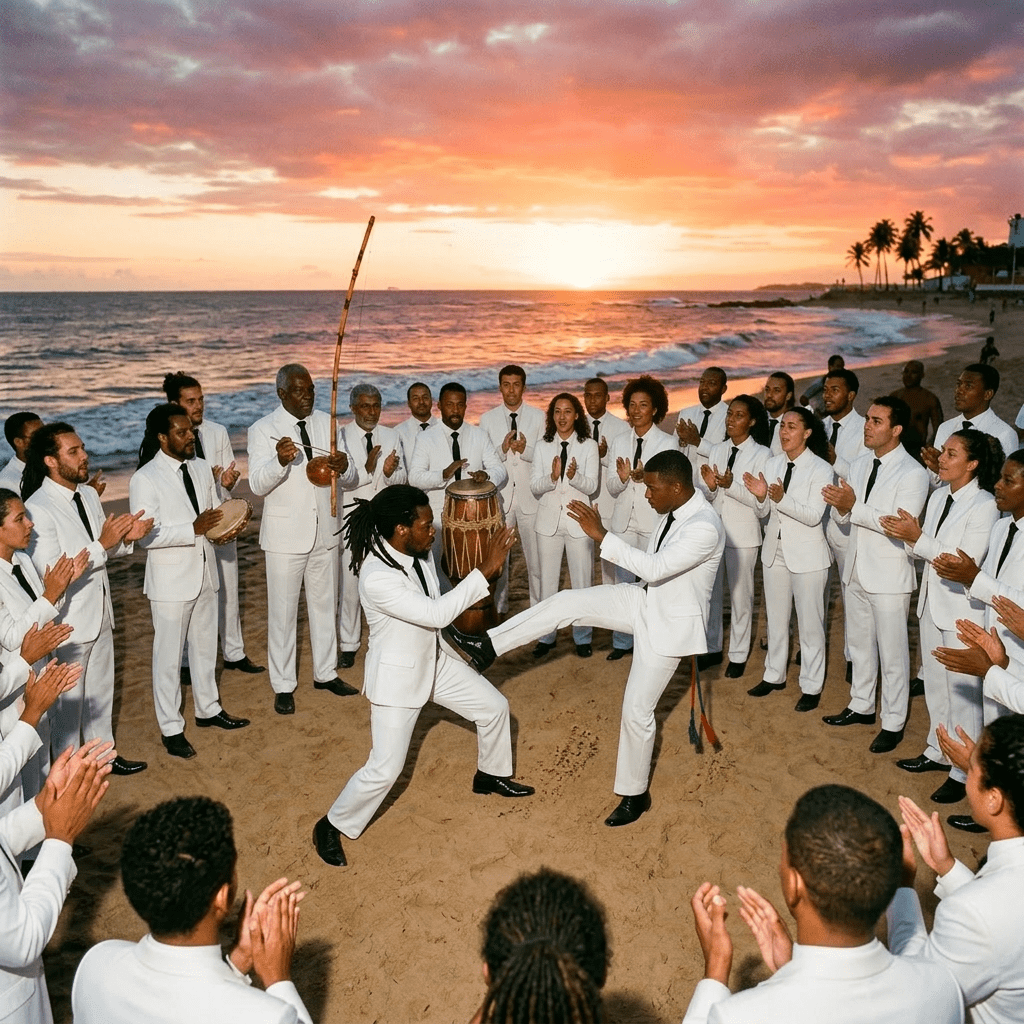
Practitioners engage in capoeira on the beach as the sun sets.
WE ARE ALL BEGINNERS!
In Capoeira Angola, you will often encounter Mestres who have dedicated 20, 30, or even 50 years to the art, yet they still humble themselves by claiming the title of a beginner. This concept can be deeply confusing or frustrating for a new student who has only been training for a few months and is looking for a clear path to mastery. However, this perspective is central to the philosophy of the art.
The reason practitioners, or angoleiros, maintain this “beginner” mindset is because the learning process is viewed as a comprehensive, lifelong commitment that goes far beyond physical movements. In Capoeira Angola, mastery is never considered complete; there is always a new observation to be made, a movement to modify, or a unique experience to be had within the roda. This inherent vastness of the tradition instills a profound sense of humility, reminding even 80-year-old masters that the well of tradition is too deep for any one person to fully exhaust.
To truly “live” the art is to adopt the posture of the eternal student. This journey involves several key dimensions of growth:
Holistic Development: Training requires a relentless focus on fundamental movements like the ginga, esquivas (dodges), and basic strikes. These must be internalized until they become a second-nature physical language that incorporates timing, strategy, and deception. This foundational layer of practice is not merely about physical fitness, but about creating a body that can respond instinctively to the unpredictable nature of the roda. Mastery of these basics allows the practitioner to eventually look beyond the mechanics of their own body and begin reading the subtle cues of their opponent.
Mastering Malícia: Beyond physical prowess, students must develop malícia (strategic cunning) and resilience. This sophisticated quality encompasses street-smartness and the ability to decipher deep truths hidden beneath surface actions, enabling a practitioner to cloak their true intentions while reading an opponent’s objective. In the roda, this manifests as the “poker face” (or “psycho face”) used to process an adversary’s breathing and micro-expressions, allowing for defenses that appear impossibly fast because they respond to pre-movement signals. The art is an integrated system of ethics, history, and music where every note played and every movement made is connected to ancestral roots of resistance and the collective memory of ancestors. Historically, malícia served as the vital “wisdom of the oppressed,” a survival mechanism used by enslaved peoples to navigate social landscapes and turn a position of vulnerability into a sudden, unexpected advantage. This elevated, instinctual intelligence transforms the roda into a cerebral battlefield where the quickest mind, rather than the quickest muscle, secures victory.
Interactive Growth: True progress occurs through the dynamic “conversation” that happens in the roda (circle). Real growth occurs through training with more experienced practitioners where the ginga serves as a primary, non-verbal communication system. This initiates a dynamic dialogue of physical motion and unspoken intent, allowing practitioners to engage in a constant exchange of intention. The roda acts as a microcosm of society, functioning as a high-pressure laboratory where fundamental human instincts, emotions, and calculated deceptions are in perpetual motion. Within this sacred space, practitioners engage in a “high-stakes dialogue” that demands continuous anticipation and predictive empathy. This interactive environment provides a safe container for vulnerability and trust, enabling individuals to model healthy relational patterns and move beyond the isolation of personal trauma. Mastery in this domain is demonstrated not through dominance, but through the ability to lead and define the interaction while maintaining a harmonious, shared flow that elevates the spiritual capacity of both participants.
Life Lessons: Capoeira Angola teaches universal laws such as cause and effect, serving as a real-time classroom for life. By finding the “lesson within the fall” after a takedown, practitioners learn to find lessons in failure. This process develops a resilient mindset capable of tackling long-term challenges in all aspects of their lives. Beyond the physical encounter, the game serves as a metaphor for navigating existence; the ability to remain calm under pressure, to read the intentions of an adversary, and to find beauty in struggle translates directly into personal growth. It instills a philosophy where every setback is reframed as an opportunity for observation and deeper understanding, reinforcing the idea that the journey of an eternal student is both endless and profoundly rewarding.
The immense complexity and cultural depth of Capoeira Angola present a scope that is fundamentally too vast for any single individual to fully master within a single lifetime. This inherent expansiveness is precisely why practitioners, regardless of having spent decades immersed in the game, continue to identify themselves as beginners. Embracing this “beginner” mindset is not merely an act of humility, but a strategic philosophical choice that keeps angoleiros deeply rooted in the art’s decolonial knowledge and historical memory.
By rejecting the finality of “mastery,” the community successfully resists the modern tendency to fragment the practice into a superficial fitness product or a standardized sport. This perpetual studenthood serves as a protective barrier, ensuring that the integrity, philosophical weight, and communal structures of the tradition remain intact despite contemporary pressures for simplification. Within this framework, every roda remains a laboratory for discovery, where ancestral resistance and collective memory are actively preserved through a commitment to lifelong learning.
And for you ACTUAL beginners out there…
Remember that this is a lifelong journey. The available knowledge in Capoeira Angola is like a vast ocean. You’re not gonna learn everything, so don’t worry about that. Just learn, absorb, and make whatever knowledge you can acquire a part of you. And after some time, the skills and knowledge you gained will shine through, and be evident to everyone.
To navigate this vastness, a beginner must embrace the “eternal student” posture, which involves moving beyond mere physical exercise to understand the art as a complete ecosystem of history, music, and philosophy. This process of absorption requires relentless focus on foundational movements like the ginga, esquivas, and rasteiras until they become an intuitive physical language. This foundational layer is the essential prerequisite for developing malícia (strategic cunning), allowing you to eventually read the subtle cues of an opponent within the roda.
Furthermore, your growth is intrinsically tied to the community. Capoeira Angola is a collective heritage that celebrates resilience and human connection. By participating in the roda, you are not just practicing a martial art; you are engaging with a living archive of resistance that has been carefully passed down through generations. This journey is a path of self-discovery where every setback or “lesson within the fall” serves as an opportunity for deeper observation and personal transformation.
This post is dedicated to my friend and “fellow beginner” Angoleira Janelle, who inspired this post.
I like to say in regards to “techniques”, I like to say that the BEST technique done at the WRONG time will never work, but the WORST technique done at the RIGHT time, will always work.
Every martial art, at its core, holds value and possesses techniques that are effective in specific circumstances. The common adage that “every martial art works” is generally true, but this statement must be qualified by the understanding that effectiveness is entirely dependent on the situation. No single martial art is a universal panacea for all forms of conflict.
The fundamental dilemma for any serious practitioner is a matter of time and human limitation. It is simply an impossibility for any individual to dedicate the necessary decades to learn, practice, and ultimately master every martial discipline that exists in the world. Consequently, no one person will ever achieve a state of being victorious in all possible scenarios—be it a grappling engagement, a striking exchange in an open field, a weapons defense in a cramped space, or a multiple-attacker situation.
What, then, is the ultimate answer to this complex challenge? The solution lies not in accumulating an exhaustive repertoire of techniques, but in cultivating adaptability. A fighter must be flexible enough, both mentally and physically, to rapidly adjust their learned skills to the immediate, unpredictable demands of the unfolding situation.
This adaptability manifests in several key ways:
Mental Flexibility: The practitioner must not be rigidly bound to a pre-planned strategy or a specific “school” of fighting. They must be prepared to discard an approach that is failing and transition instantly to one that is better suited to the new range, environment, or opponent’s actions.
Transitional Skill: True mastery involves recognizing the universal principles that underpin all combat, such as balance, distance management, timing, and structural integrity. A truly adaptable fighter can translate these principles across different ranges—moving seamlessly from striking to clinching, to ground work, and back again—regardless of the specific martial art they initially studied.
Situational Awareness: Adaptability requires acute perception of the environment (e.g., uneven ground, obstacles, lighting, presence of bystanders) and the nature of the threat (e.g., armed or unarmed, singular or multiple opponents, aggressive intent). The learned techniques must be modified, simplified, or entirely abandoned based on these external factors.
In essence, while different martial arts provide the tools, adaptability is the intelligence that chooses the right tool for the right moment. It is the core philosophy that allows a limited set of learned skills to be maximized across an infinite variety of conflicts, making it the most critical trait for survival and effectiveness.
The Indispensable Role of Digital Media in Preserving and Propagating Capoeira Angola
Online videos and digital archives stand as an absolutely vital, irreplaceable resource for the preservation and dynamic transmission of Capoeira Angola. This profound cultural practice is far more than a mere sport; it is an intricate, multi-faceted blend of music, fluid movement, practical self-defense, and rich, layered history. These digital visual archives are crucial because they meticulously capture and document the art form’s core characteristics: the incredible agility of the practitioners, the depth of its technical vocabulary, and the complex, strategic interactions (jogos) that unfold within the roda.
A Testament to History and Community
Beyond the physical spectacle, the footage powerfully illuminates Capoeira Angola’s deep historical and profound cultural significance. It is portrayed not just as an artistic endeavor, but as a crucial, unifying social force. The communal space of the roda—the circle where Capoeira is played—is a microcosm of society where bonds are strengthened, respect is actively fostered, and a powerful sense of collective identity is vividly expressed and reinforced. By embodying core values such as resilience in the face of adversity, spontaneous creativity, and fierce cultural pride, the visual record serves as a profound wellspring of inspiration for current and future generations of practitioners across the globe.
The Essential Context of Narrative and Pedagogy
A particularly significant and irreplaceable element of this digital preservation is the inclusion of extensive interviews and personal narratives from highly esteemed mestres (masters) and high-ranking, experienced students. Their voices provide essential, often oral-based, historical context, creating a direct and living bridge between the art’s complex historical origins—often rooted in resistance and survival—and its robust, contemporary global practice. These personal accounts offer unparalleled, intimate insights into the philosophical underpinnings of Capoeira and its transformative personal and social impact on individuals and communities alike. They capture the pedagogical wisdom that has been passed down, often unbroken, for generations.
Conclusion: An Invaluable, Living Cultural Record
Ultimately, the comprehensive visual record of Capoeira Angola is an invaluable, multi-dimensional resource. It is indispensable for a complete appreciation of its history, for a deep understanding of its sociological complexity as a community-building tool, and for recognizing it as a powerful, dynamic, and perpetually living form of cultural expression. It stands as a compelling testament to the power of human unity, the enduring spirit of resistance, and the universal drive for cultural preservation.
In Today’s Installment: A Beautiful, Historical Roda in São Paulo
This particular segment highlights a moment of significant importance and historical weight within the global Capoeira Angola community. We feature the esteemed Mestre Budião, a figure of profound respect and lineage, performing alongside Da Lua at the official opening ceremony (roda abertura) at the Capoeira Angola Beringandão School.
This event took place on August 5, 2023, marking a critical expansion of the art form’s physical presence and pedagogical reach in Brazil. The school is situated in the culturally vibrant Vila Nova Alba neighborhood of São Paulo/SP, a metropolis often seen as a key hub for Afro-Brazilian cultural preservation and development.
The recording of this roda (the circle in which capoeira is played) is more than mere documentation; it serves to immortalize specific historical moments in the art’s global trajectory. By capturing the energy, the skill, the musicality, and the interaction between figures like Mestre Budião and Da Lua, the footage offers viewers a direct, immediate, and invaluable window into the current vitality and living lineage of the Capoeira Angola practice. It acts as a primary source for students, researchers, and enthusiasts worldwide, showcasing the transmission of knowledge and the continuation of the tradition in a contemporary setting.
The Self-Defense Series: A Holistic Blueprint for Personal Empowerment and Survival
The Holistic Path to Personal Empowerment: Beyond Mere Technique
The prevailing, and often dangerously limited, view of self-defense—which focuses narrowly on a collection of physical techniques—is fundamentally inadequate for navigating the true complexities of real-world violence. To be genuinely prepared, resilient, and confident in the face of danger requires a profound and comprehensive transformation. True readiness demands a vital, holistic path to empowerment, one that integrates and systematically strengthens the individual across four critical, interdependent domains.
The Self-Defense Series is not merely a collection of fighting tips; it is a philosophy built upon these four pillars of personal safety: physical, mental, spiritual, and legal. Our core assertion is that effective self-defense transcends the rote memorization of martial arts moves. It requires a deep, well-rounded foundation that cultivates unwavering resilience, genuine readiness, and absolute confidence, ensuring the individual is equipped not just to survive an encounter, but to thrive in its aftermath.
Today’s Essential Insight: Spotting the Hidden Danger
3 SIGNS That Man Can DESTROY You in a Fight…
In the volatile, unpredictable environment of a confrontation, the ability to rapidly assess and categorize your opponent is not merely a desirable skill—it is an absolute, critical matter of survival. The fundamental question you must answer, often in a fraction of a second, is this: How can you discern if the person standing before you is merely an aggressively posturing individual, or a genuinely trained, potentially lethal fighter… and how can you know this before you are committed to a physical situation that is already too late to escape?
The stark, sobering reality is that the vast majority of people are completely blind to the subtle, almost imperceptible signs that betray a person’s inherent combat training, psychological conditioning, and lethal readiness. Failing to recognize and interpret these crucial pre-contact cues is a common, and often catastrophic, mistake. In a high-stakes encounter, it takes only one misstep, one moment of indecision, or one missed signal to find yourself incapacitated, critically injured, or worse.
This document serves as an urgent, tactical guide, moving far beyond generalized self-defense advice. You will be systematically introduced to the advanced principles of genuine threat detection, specifically calibrated for maximum speed and accuracy.
Through this deep-dive analysis, you will master the following essential, life-saving capabilities:
Spotting the Hidden Dangers Fast: Learn to process non-obvious environmental and physiological cues—signs of pre-meditation, target fixation, and commitment to violence that an untrained eye simply overlooks.
Reading Body Language Like a Pro: Understand the universal tells of a skilled fighter versus an emotional aggressor. This includes interpreting stance, posture, hand positioning, and the absence of wasted movement—the silent language that speaks volumes about a person’s training discipline and intent.
Instantly Understanding the Core Difference: Acquire the knowledge to know what truly separates an ordinary, blustering man from someone who is psychologically and physically equipped to destroy you in seconds. This distinction is paramount and will dictate your entire tactical response: whether to de-escalate, flee, or commit to a defensive action.
The goal is preemptive awareness, giving you the priceless advantage of time and informed action against an individual who believes they have the element of surprise. Your life may depend on your ability to see what others cannot.
[Video Resource] We extend our sincere Shoutout to the dedicated YouTube channelFIGHT SCIENCE for creating and posting this invaluable video.—–The Intellect of Combat: Elevating Your Fight IQ
Blending Criminal Psychology and Martial Arts for Superior Self Defence
Effective self-defense is a synthesis of physical capability and intellectual acuity. It demands not just muscle memory, but a sharp, analytical mind capable of preemptive threat assessment. This critical area is illuminated by Dr. Mark Phillips, a renowned Criminal Psychologist, Security Consultant, and dedicated Martial Artist. His “No Nonsense Self Defence Tips & Tricks” presentation bridges the gap between the dojo and the dangers of the street.
Topics Covered in the Fight Science Curriculum:
Behavioural Risk Management: Learning to identify pre-attack indicators and situational cues that signal imminent danger, allowing for de-escalation or strategic escape before the physical fight begins.
Criminal Behaviour: Understanding the predatory mindset, common attack patterns, and the psychological levers criminals exploit to select and control their targets.
Self Defence Techniques & Street Fighting Tips: Practical, high-percentage techniques adapted for survival in non-compliant, unpredictable street environments, prioritizing effectiveness and simplicity.
Mindset Preparation: The crucial internal work of forging mental fortitude, controlling the fear response, and maintaining functional decision-making under extreme stress.
General Tips: A broad spectrum of actionable advice on personal security, situational awareness, and the legal parameters of self-defense force.
Dr. Philipps’ approach emphasizes Simple Martial Arts training with easy to follow ideas, ensuring the lessons are immediately applicable and require minimal practice time to be effective under pressure.
Stay Connected with Dr. Philipps and the Fight Science Community:
Weekly Self Defence and Martial Arts video releases are posted every Sunday, providing a consistent source of expert instruction.