MARTIAL ARTS THEATER 5/5/26

Martial arts theater live show announcement with fighters silhouetted performing kicks and strikes in front of a crowd

Welcome to MARTIAL ARTS THEATER, a vibrant community hub that passionately celebrates martial arts heritage while fostering personal growth, discipline, and camaraderie for practitioners of all skill levels. We provide a wealth of resources such as expert interviews, detailed instructional videos, and engaging community events covering a wide range of disciplines including karate, taekwondo, judo, and Brazilian jiu-jitsu. Our aim is to create a supportive, inclusive environment where everyone, from curious beginners to seasoned black belts, can thrive and flourish. We believe in promoting connections among members by facilitating a transformative journey of self-discovery and empowerment through shared experiences. Join us as we nurture respect, understanding, and support, helping individuals not only excel in their martial arts journey but also build lasting friendships that foster unity and strength within our community. Together, we can cultivate a culture where everyone is inspired to reach their fullest potential, overcoming challenges and celebrating achievements along the way.

In Today’s Installment…
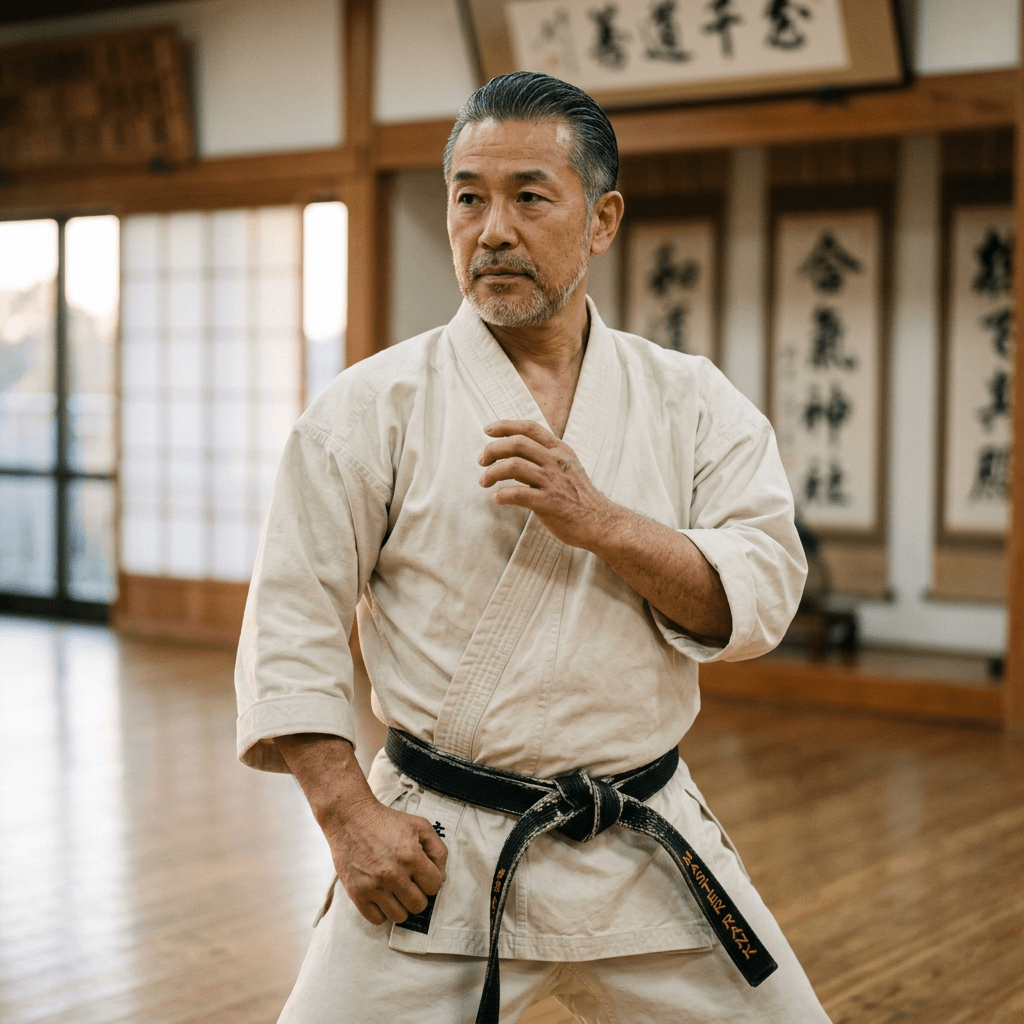
Martial artist in white gi and black belt performing kata in dojo
A focused martial artist practicing a kata in a traditional dojo

What is a black belt? And why do so many of them keep losing? Why are there so many fake ones out there? In this video documentary, Youtuber Nathaniel Cho has dug into the real history of the black belt: where it came from, who profits from it today, and why “black belt” means something completely different in Japan than it does anywhere else.

Historically, the black belt was not always a complex hierarchy of colors. In early Japanese systems, there were often only two ranks: white belt and black belt, signifying the transition from a beginner to a student with a teaching diploma. This codified roadmap, known as the Kyu (student) and Dan (master) grades, was designed to chart a practitioner’s journey from absolute beginner to seasoned instructor.

Today, the definition of a black belt has evolved. For some, it represents a state of “indomitable spirit” and the beginning of a warrior’s way of life. For others, it is a statement of maturity and responsibility, achieved through a profound study of basics and an understanding of the ethics and compassion that arise from martial arts. However, the modernization of martial arts into a standardized Western concept has often shifted the focus toward measurable results, tournament victories, and quantifiable performance metrics, sometimes at the expense of its deeper cultural and spiritual roots.

The “black belt” experience also varies wildly across styles, reflecting the rich diversity within martial arts traditions. In Okinawan Isshin-Ryu, the rank signifies a “Whole-Hearted Method” and a deep commitment to preserving tradition, emphasizing not only technical proficiency but also the philosophical and cultural aspects inherent to the art. Practitioners are often tasked with understanding the historical context of their movements, ensuring that they embody the spirit of their predecessors. Meanwhile, in arts like Capoeira Angola or Filipino Martial Arts, the concept of mastery is often recognized through communal acknowledgment and demonstrated skill rather than a formal belt ranking system.

In these vibrant communities, mastery is celebrated in spontaneous demonstrations of technique and prowess, where respect and recognition are earned through participation and contribution to the art form. This communal spirit fosters a unique bond among practitioners, highlighting that the journey of mastery transcends mere titles or rankings, focusing instead on the growth, experiences, and shared knowledge that enrich the martial arts community as a whole.

In this enlightening documentary, Nathaniel Cho embarks on a captivating exploration of the intricate history of the black belt: delving into its origins, the societal and cultural contexts that birthed this significant symbol, and examining who profits from its modern-day association with martial arts and beyond. Cho’s investigation reveals the deeply rooted connections between the black belt and issues of race, identity, and commerce, raising thought-provoking questions about its implications today. Furthermore, he poignantly addresses why “black belt” signifies something entirely different in Japan, where it is deeply woven into the fabric of martial traditions, compared to its often commercialized interpretation in other parts of the world, thereby shedding light on the nuanced understandings and varied impacts of this iconic term.

 If you found this documentary insightful and wish to contribute to the continued production of high-quality martial arts research, please consider supporting Nathaniel on Patreon:   / nathanielcho  

Your contributions help fund the extensive investigative work required to uncover the complex history and modern evolution of martial arts traditions globally.

Pine bonsai tree with twisted trunk in a shallow pot on wooden table
A carefully shaped pine bonsai tree sits on a rustic wooden table in a lush garden.

MARTIAL ARTS THEATER (3/17/26)

Martial arts theater live show with action, performance, and legend themes

Welcome to MARTIAL ARTS THEATER, a vibrant community hub dedicated to honoring the rich heritage and diverse practice of martial arts, while enthusiastically promoting personal growth, discipline, and camaraderie among practitioners of all levels. We offer an extensive range of resources, including expert interviews, instructional videos, and engaging community events designed to explore various martial arts disciplines, such as karate, taekwondo, judo, and Brazilian jiu-jitsu. ‘Beyond just training, our goal is to create a supportive, inclusive environment for all members, from curious beginners embarking on their first steps to seasoned black belts honing their skills, fostering genuine connections and a transformative journey of self-discovery and empowerment through the art of martial arts. Join us as we cultivate a spirit of respect and mutual support, encouraging every individual to thrive in their personal martial arts journey, connecting through shared experiences, skills development, and vibrant friendships that extend far beyond the dojo.

In Today’s Installment…

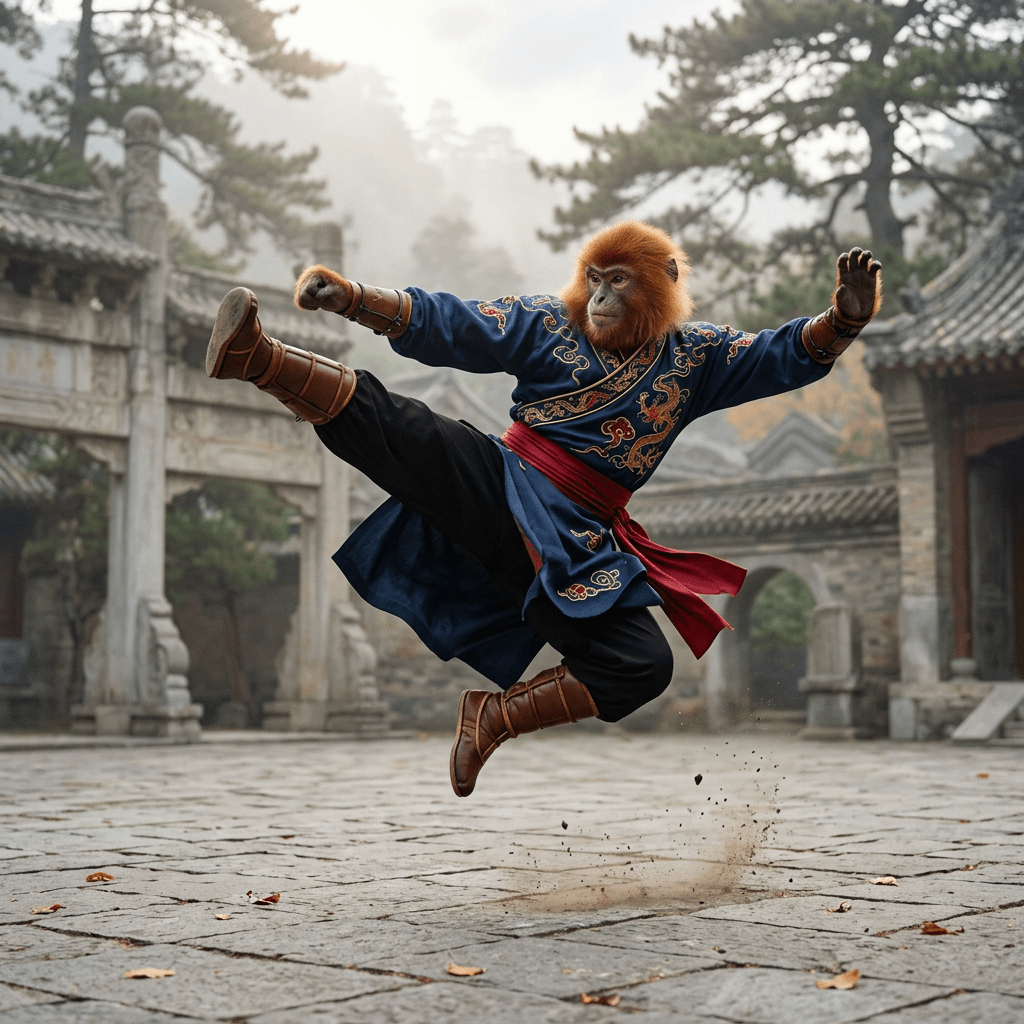
Monkey Kung Fu is one of the most misunderstood styles in martial arts history. Often dismissed as theatrical performance—or exaggerated as a secret Shaolin combat system tied to Bodhidharma and Shaolin mythology—Monkey Boxing (Hou Quan) actually has roots that stretch far beyond modern Kung Fu legends. While Jesse Enkamp, the Karate Nerd, has questioned if it serves as a “special forces style” for Shaolin, the historical reality suggests a much broader evolution. One major hypothesis suggests that Chinese Kung Fu, including its animal styles, may have evolved from South Indian Kalarippayat. Legend states that Bodhidharma, an Indian Buddhist monk from the south where martial arts were part of the curriculum in centers of learning known as salais, traveled to China and established the Shaolin temple.

The stylistic lineage can be traced from ancient India, where the monkey god Hanuman is featured in the Ramayana and serves as the patron deity for wrestlers who train with heavy clubs known as gadas. These Indian influences likely moved into Southeast Asia during the first few centuries of the Christian era through trading activities and the Indian exodus, potentially informing systems like Bokator, Muay Boran, and Silat Monyet. In the Philippines, the term “guro” (teacher) and the name of the supreme god “Bathala” (derived from Indra) reflect this deep Indian cultural export. Historically, the development of monkey movement incorporates Han Dynasty animal mimicry, Ming Dynasty military manuals, and the cultural impact of “Journey to the West” leading to the modern Great Sage Monkey system.

Beyond the mythology, Monkey Kung Fu utilizes specific techniques designed for mobility, unconventional attacks, deception, adaptability, takedowns, and psychological disruption, making it a versatile martial art that emphasizes the importance of creativity and unpredictability in combat. These principles contrast sharply with other regional styles, such as the heavy club methods of Indian warfare—vikshepa (paired combat), abhishepa (single club), and parishepa (circling)—each rooted in their own rich traditions and tactics that prioritize strength and direct confrontation.

Similarly, the light, rapid-fire rattan stick techniques found in Filipino martial arts like arnis-escrima showcase a different approach to combat, focusing on speed and fluidity rather than the more grounded techniques of the Monkey style. While modern culture often confuses opera and performance with battlefield systems, overlooking the historical context and evolution of these arts, the real function of Monkey Kung Fu remains deeply embedded in a complex historical exchange of martial knowledge across Asia, where influence was not only reciprocal but also adaptive, allowing practitioners to refine and innovate techniques that address both individual and collective challenges in martial practice.

Monkey in blue and red martial arts costume performing flying kick in ancient courtyard

Effective Techniques Depend on Adaptability

I like to say in regards to “techniques”, I like to say that the BEST technique done at the WRONG time will never work, but the WORST technique done at the RIGHT time, will always work.

Every martial art, at its core, holds value and possesses techniques that are effective in specific circumstances. The common adage that “every martial art works” is generally true, but this statement must be qualified by the understanding that effectiveness is entirely dependent on the situation. No single martial art is a universal panacea for all forms of conflict.

The fundamental dilemma for any serious practitioner is a matter of time and human limitation. It is simply an impossibility for any individual to dedicate the necessary decades to learn, practice, and ultimately master every martial discipline that exists in the world. Consequently, no one person will ever achieve a state of being victorious in all possible scenarios—be it a grappling engagement, a striking exchange in an open field, a weapons defense in a cramped space, or a multiple-attacker situation.

What, then, is the ultimate answer to this complex challenge? The solution lies not in accumulating an exhaustive repertoire of techniques, but in cultivating adaptability. A fighter must be flexible enough, both mentally and physically, to rapidly adjust their learned skills to the immediate, unpredictable demands of the unfolding situation.

This adaptability manifests in several key ways:

  1. Mental Flexibility: The practitioner must not be rigidly bound to a pre-planned strategy or a specific “school” of fighting. They must be prepared to discard an approach that is failing and transition instantly to one that is better suited to the new range, environment, or opponent’s actions.
  2. Transitional Skill: True mastery involves recognizing the universal principles that underpin all combat, such as balance, distance management, timing, and structural integrity. A truly adaptable fighter can translate these principles across different ranges—moving seamlessly from striking to clinching, to ground work, and back again—regardless of the specific martial art they initially studied.
  3. Situational Awareness: Adaptability requires acute perception of the environment (e.g., uneven ground, obstacles, lighting, presence of bystanders) and the nature of the threat (e.g., armed or unarmed, singular or multiple opponents, aggressive intent). The learned techniques must be modified, simplified, or entirely abandoned based on these external factors.

In essence, while different martial arts provide the tools, adaptability is the intelligence that chooses the right tool for the right moment. It is the core philosophy that allows a limited set of learned skills to be maximized across an infinite variety of conflicts, making it the most critical trait for survival and effectiveness.

NAMED AND SHAMED!!! (9/3/25)

Welcome to NAMED AND SHAMED, a platform exposing abuse in martial arts through personal accounts and expert interviews. We aim to raise awareness about the need for safe environments for affected individuals, empowering victims with a voice and community. Inspired by McDojo Life, our mission promotes transparency and accountability in the martial arts community, fostering discussions that prioritize safety and respect, allowing individuals to train without fear and grow in their martial arts journey.

Today, we cover the Zuma Martial Arts Scandal, delving into the details surrounding the events that shook the martial arts community.

The Zuma Martial Arts scandal involves multiple allegations of sexual harassment and misconduct against the owner and head coach of Zuma Martial Arts, Adam Zugec, in Victoria, British Columbia. Multiple women have come forward with accusations detailing inappropriate behavior, including unwanted advances and coercive tactics that created a hostile training environment. These revelations have sparked outrage within the local community and beyond, leading to calls for accountability and justice for the victims. In response to these serious claims, the Victoria Police Department is conducting a thorough investigation into the matter, examining the evidence and testimonies presented by the accusers. The outcome of this inquiry could have significant implications not only for Zugec but also for the broader culture within martial arts organizations.

The martial arts community should prioritize empowerment and confidence by addressing negative behaviors and providing education on misbehavior in a comprehensive manner. This includes not only recognizing and correcting such behaviors but also instilling a culture of respect and accountability among members. Open discussions and mentorship foster trust, unity, and collaboration, creating a supportive environment where members inspire each other and build strong relationships to face challenges and celebrate successes together. By encouraging personal growth and development, we enhance the collective strength of our community, allowing every individual to flourish while learning valuable lessons in discipline, perseverance, and compassion. This holistic approach not only cultivates skilled martial artists but also responsible citizens who uplift one another in and out of the dojo.

NAMED AND SHAMED!!!(8/14/25)

Welcome to NAMED AND SHAMED, a vital platform addressing abuse in martial arts by revealing stories of practitioners misusing their authority in profound and alarming ways. We share personal accounts and expert interviews to highlight the urgent need for awareness, safe spaces, and supportive environments for those affected by these troubling experiences. Our mission is to expose injustices that often go unnoticed, while also aiming to empower victims by providing them with a voice and community. Inspired by the impactful work of the YouTube channel McDojo Life, we strive to promote transparency and accountability within the martial arts community, encouraging open discussions and fostering a culture that prioritizes safety and respect for all practitioners. Through our efforts, we hope to create an environment where individuals can train without fear and trust their instructors completely, facilitating personal growth and well-being in their martial arts journey.

Today, we check out a martial artist, Martin Amba, who has been accused of some pretty horrific things, including serious allegations of misconduct and unethical behavior, which have sparked a significant backlash within the martial arts community and beyond.

The ripple effect created by these accusations has led to intense discussions among fans, practitioners, and industry professionals, raising important questions about accountability and integrity in the sport. As more details come to light, many are left grappling with the implications of these claims, reflecting on how such controversies can impact not only the individuals involved but also the broader perception of martial arts as a whole. The diverse opinions being shared highlight the complexity of the situation, urging a reevaluation of how standards and ethics are upheld within the community. Furthermore, this discourse has sparked a deeper examination of the mechanisms in place that govern conduct and whistleblowing, shedding light on the potential need for reform to ensure a safe and respectful environment for all participants. As the conversations unfold, they not only serve to illuminate the darker corners of the sport but also advocate for a culture of transparency and respect, which is vital for the future of martial arts.

GOOD NEWS!!!

Well, something good has come from this. Martin Amba, was sentenced to 25 years in prison for sexual assault.

The martial arts community should focus on empowerment and confidence, addressing negative behaviors to foster trust and respect. Education on misbehavior and support among members enhance personal growth and shared values. Open discussions and mentorship promote unity, making members feel valued and fostering collaboration. This sense of belonging creates a resilient community where individuals share experiences and inspire each other towards excellence, while strong relationships and communication build collective strength to face challenges and celebrate successes.

BASIC ELEMENTS OF CAPOEIRA: THE MARTELO

“There are not more than five musical notes, yet the combinations of these five give rise to more melodies than can ever be heard. There are not more than five primary colours, yet in combination, they produce more hues than can ever been seen. There are not more than five cardinal tastes, yet combinations of
them yield more flavours than can ever be tasted.”
― Sun Tzu, The Art of War

Today, I am showing you a basic kick that’s NOT NECESSARILY from Capoeira Angola, but is utilized by many Angoleiros.

The “Martelo” (Portuguese for “hammer”) is a dynamic and powerful roundhouse kick in Capoeira, often delivered with the instep or the lower part of the shin.

This striking technique is not only characterized by its speed and agility, but also by the fluidity and rhythm that are fundamental to Capoeira as a whole. Practitioners often utilize the Martelo to surprise their opponents, executing the kick with precision while maintaining an impressive level of balance and control. In addition to its offensive capabilities, the Martelo can also serve as a defensive maneuver, allowing the practitioner to deflect incoming attacks while simultaneously countering with their own strike. Moreover, mastering this kick requires extensive practice and strength training, as it engages multiple muscle groups and demands coordination and timing, ensuring that it remains an essential component of Capoeira training routines and sparring sessions.

The most common forms of the Martelo include:

Martelo em pé

This is the most common martelo seen in Regional and Contemporânea rodas. Its execution on the very basic level is identical to the sport version of the roundhouse kick commonly seen in Tae Kwon Do and kickboxing. Capoeira emphasizes using kicks anywhere at any time, which allows for a dynamic approach to combat. As practitioners advance, more intricate forms of the martelo em pé can emerge, often springing from feints to mislead opponents, skipping to create distance while launching the kick with the front leg, and employing evasive maneuvers like the esquiva diagonal to avoid strikes. This creative use of movement not only showcases the beauty of Capoeira but also emphasizes the strategic aspect of the art. Players must maintain their balance and awareness, continually calculating the best moments to strike while staying agile. Emphasis is placed on speed and deception rather than merely delivering a knockout blow. However, even with this precaution, knockouts still occur due to the weight and sheer force of the leg, reminding practitioners of the power behind each technique and the importance of control in practice. Such experiences contribute to a deeper understanding of the art’s physicality and underlying principles, fostering a respect for both the discipline and the unpredictability of a roda environment.

Martelo do chão

Martelo do chão or martelo de negativa is a martelo that starts from the negativa position, showcasing the elegant flow and complexity of capoeira techniques. The Martelo do chão is delivered from a lower position, usually right before a rolê, allowing for a seamless transition between movements while in esquiva baixa or downward going into a queda de rins. This kick, characterized by its deceptive angles and powerful execution, has a confusing amount of names, depending on the group, reflecting the rich cultural tapestry of capoeira where different regions and schools impart their unique terminologies and styles. The variation in names not only adds to the intricacy of the art form but also illustrates the diverse approaches practitioners may take, often blending traditional methods with innovative interpretations during their practice.

Martelo rodado

A spinning martelo, similar to a 540 kick, is a dynamic and powerful movement often seen in martial arts and acrobatics. The martelo rodado combines the techniques of the 540 or parafuso with the classic martelo. While the parafuso is characterized by a spinning motion from the outside to the inside, producing a crescent kick that adds elegance to the maneuver, the martelo rodado focuses primarily on delivering force. Unlike its counterpart, the martelo rodado strikes with the instep of the foot, allowing for a more impactful contact with the target. In this execution, control is sacrificed for sheer power, as the leg does not stop abruptly but continues through the motion, following with an impressive full rotation of the hips. This fluidity in movement not only enhances the strength of the kick but also showcases the practitioner’s athleticism and skill, making the spinning martelo a visually captivating and effective technique in various combat sports.

BASIC ELEMENTS OF CAPOEIRA: CHAPA DE COSTAS

“There are not more than five musical notes, yet the combinations of these five give rise to more melodies than can ever be heard. There are not more than five primary colours, yet in combination, they produce more hues than can ever been seen. There are not more than five cardinal tastes, yet combinations of
them yield more flavours than can ever be tasted.”
― Sun Tzu, The Art of War

Chapa de costas (back plate) is a powerful back push kick in capoeira, and one of the few principal capoeira‘s kicks, showcasing the art’s fluidity and dynamism. It is also considered a fundamental kick in the traditional African martial art engolo, which serves as a historical forerunner to capoeira, illustrating the deep cultural roots shared between these martial arts. Specifically, Chapa de costas is a signature kick of capoeira Angola, characterized by its graceful execution and tactical application in both offensive and defensive scenarios. This “malicious” kick not only requires precision but also utilizes agility, being similar to chapa de frente, applied strategically from behind to catch the opponent off guard.

Furthermore, Engolo, an Angolan martial art, embraces a wide range of techniques involving back push kicks, which may include rotations with or without jumping to enhance unpredictability and versatility in combat scenarios. Among its notable variations is the hooking kick, executed from behind when in close proximity to the opponent, emphasizing the element of surprise in combat dynamics. This technique not only demands precision and timing but also highlights the practitioner’s ability to read their opponent’s movements, allowing for a more strategic approach to martial engagements. Engolo also draws profound inspiration from animal behaviors, particularly in the techniques that mimic the fighting styles of zebras, effectively showcasing how these majestic animals have influenced martial training. Practitioners study the grace and agility of zebras in the wild to refine their own skills, emphasizing fluidity and responsiveness in their movements. A key aspect of Engolo is the “zebra kick,” artfully performed with palms on the ground, requiring a remarkable level of balance and strength, and exemplifying the beautifully coordinated movements that define these rich martial arts traditions.

This particular kick serves as a demonstration of the intricate relationship between athleticism and artistry in Engolo, as each movement is executed with an aesthetic quality that speaks to the history and culture of the art. This integration of nature and technique not only underscores the philosophical connections between martial practices and the environment they originate from but also cultivates not just physical prowess but also a deeper understanding of one’s surroundings, fostering a holistic approach to both training and personal development. The practice of Engolo nurtures respect for the natural world, encouraging practitioners to embody the virtues observed in animals, which in turn translates into their martial discipline.

Chapa de costas usually aims at the opponent’s face or groin area. According to mestre Pastinhachapa de costas is a “treacherous strike when used against someone unfamiliar with capoeira”, as the opponent is violently struck when they believe the attacker is withdrawing. So Pastinha warns that a cautious capoeirista is “suspicious” and does not allow to be fooled by the apparent withdrawal of a potential aggressor.

BASIC ELEMENTS OF CAPOEIRA: ARRASTAO

“There are not more than five musical notes, yet the combinations of these five give rise to more melodies than can ever be heard. There are not more than five primary colours, yet in combination, they produce more hues than can ever been seen. There are not more than five cardinal tastes, yet combinations of
them yield more flavours than can ever be tasted.”
― Sun Tzu, The Art of War

Today, I want to talk about the Arrastao.

The term “Arrastão” in Capoeira refers to a specific takedown technique. 

Here’s a closer look:

The Capoeira move “Arrastão” is a classic leg takedown that skillfully combines agility and strategy, where the practitioner closes in on the opponent with precision, sweeping their legs or pushing them to the ground using their shoulder or head. This dynamic maneuver can manifest as both a double or single-leg takedown, showcasing the versatility of Capoeira techniques, and may also involve a lateral technique that enhances its effectiveness in various combat scenarios.

In competitive settings, it can catch opponents off guard, leading to quick transitions into follow-up moves or escapes. Counters to the “Arrastão” include a sprawl or guillotine choke, which require the opponent to be alert and responsive to avoid being taken down. This move not only reflects the athleticism inherent in Capoeira but also underscores its practicality beyond being merely a form of dance.

The term “arrastão” holds additional cultural significance; it also refers to flash robbery in Brazil and Portugal, derived from the verb “arrastar,” illustrating the term’s multifaceted nature within both martial arts and social contexts. Such connections highlight the rich tapestry of language and movement that Capoeira embodies, blending physical skill with deeper cultural narratives.

In essence, the Arrastão is a powerful and strategic takedown within the dynamic art of Capoeira.

MARTIAL ARTS THEATER (4/18/25)

Welcome to MARTIAL ARTS THEATER, a comprehensive hub for martial arts enthusiasts, where we proudly offer an array of expert interviews, detailed instructional videos, and engaging community events designed to inspire and educate. Our platform caters to practitioners of all skill levels, from beginners looking to learn the fundamentals to advanced martial artists seeking to refine their techniques.

With a wide-ranging selection of insights aimed at enhancing your skills across various styles, including karate, judo, taekwondo, and Brazilian jiu-jitsu, we are committed to fostering a supportive and inclusive environment. Join us to connect with others who share your passion, exchange knowledge, and embrace the rewarding journey of self-discovery and excellence in martial arts. Whether you’re training for competition, personal growth, or simply for the joy of movement, MARTIAL ARTS THEATER is your go-to destination for all things martial arts-related.

In today’s installment…

Sensei Seth, a man who appreciates your open-mindedness and diligence in promoting all martial arts, has recently visited the world’s first Wing Chun Museum (Ving Tsun Museum). During his visit, he was given an insightful introduction to Wing Chun’s Triad, as well as the symbolic tiger and dragon concepts from the rich Shaolin Wing Chun lineage, which provided a fascinating look into the philosophy and strategy behind this martial art.

The experience was not only educational but also deeply inspiring, reminding all practitioners of the importance of tradition in their training. As he explored the museum’s various exhibits, Sensei Seth found himself captivated by the historical artifacts and detailed displays that chronicled the evolution of Wing Chun, showcasing the efforts and sacrifices of countless masters who have contributed to its development over centuries. This visit solidified his belief in continually honoring and understanding the foundational aspects of martial arts, encouraging him to share this wisdom with his students and the wider community.

Shout out to ‪@BennyMeng-swc108‬ for graciously creating and guiding us around the Wing Chun Museum! Benny’s extensive knowledge and passion for the art made the tour particularly memorable. To learn more about his teachings and upcoming events, visit https://www.mengsmartialarts.com/. Additionally, make sure you follow the three brothers Vincent, Spencer, and Derikson Meng on IG to see their competitions and witness their remarkable growth in the world of martial arts! Their dedication to training exemplifies the spirit of perseverance that is essential for success in any discipline.

THERE IS NO SUBSTITUTE FOR TRAINING!

No matter what martial art you’re training, the most important thing you will ever learn is the fact that THERE IS NO SUBSTITUTE FOR real TRAINING!!! It’s through consistent practice and dedication that you not only sharpen your techniques but also build the mental fortitude needed to overcome challenges. The sweat, the struggles, and even the setbacks you face during your training sessions are essential components of your growth. Each kick, punch, and block you perfect is a step closer to mastery, and an acknowledgment that the path to becoming proficient is paved with hard work and resilience. Embrace every moment on the mat, as these experiences are what truly shape you into a skilled martial artist, reinforcing the idea that true improvement comes from persistent, real-world practice.

In this video, you will see people who forgot that lesson, a crucial takeaway for anyone in pursuit of mastery. He trained for decades, tirelessly honing his skills and perfecting his techniques, but the stark truth was revealed in mere seconds during an unexpected showdown.

This video not only debunks the myth that time served equals skill but also captures the often-overlooked reality of the fight world, showcasing real fight footage where “masters,” who’ve been training half-heartedly, even for “YEARS”, are outperformed by younger, better-prepared fighters. As the clips unfold, viewers witness the dramatic contrasts between the two groups, emphasizing that dedication and hard work are crucial components to success in combat sports.

These moments starkly highlight the shortcomings of not taking your training seriously against someone who does, serving as a powerful reminder that passion, discipline, and a commitment to continuous improvement can elevate one’s performance far beyond mere experience. Additionally, these encounters reveal the importance of adapting to evolving techniques and staying mentally sharp, illustrating that without the willingness to evolve and challenge oneself, even the most experienced fighters can fall behind in a rapidly changing landscape.