Welcome to MALICIA AS A GAME OF POWER, a thought-provoking blog series that delves deep into the intricate strategies of human interactions, encompassing essential themes such as communication, conflict resolution, negotiation, and manipulation. In this series, we aim to unveil the subtle nuances that define successful interactions and the psychological principles that influence human behavior. It discusses leadership dynamics, personal branding, and the complexities of online reputation management, providing readers with practical strategies designed to enhance their influence and build authentic relationships. Through detailed analysis and real-world examples, the series seeks to empower readers to navigate the often-turbulent waters of interpersonal relationships with confidence and skill, ultimately fostering a greater understanding of the power dynamics at play in everyday encounters. Join us on this compelling journey as we explore the art of interaction and the power it wields in our personal and professional lives.
Today, We’re gonna explore Law 9 from the book, “The Laws of Human Nature” by Robert Greene. You can purchase a copy from AMAZON.COM by clicking HERE.
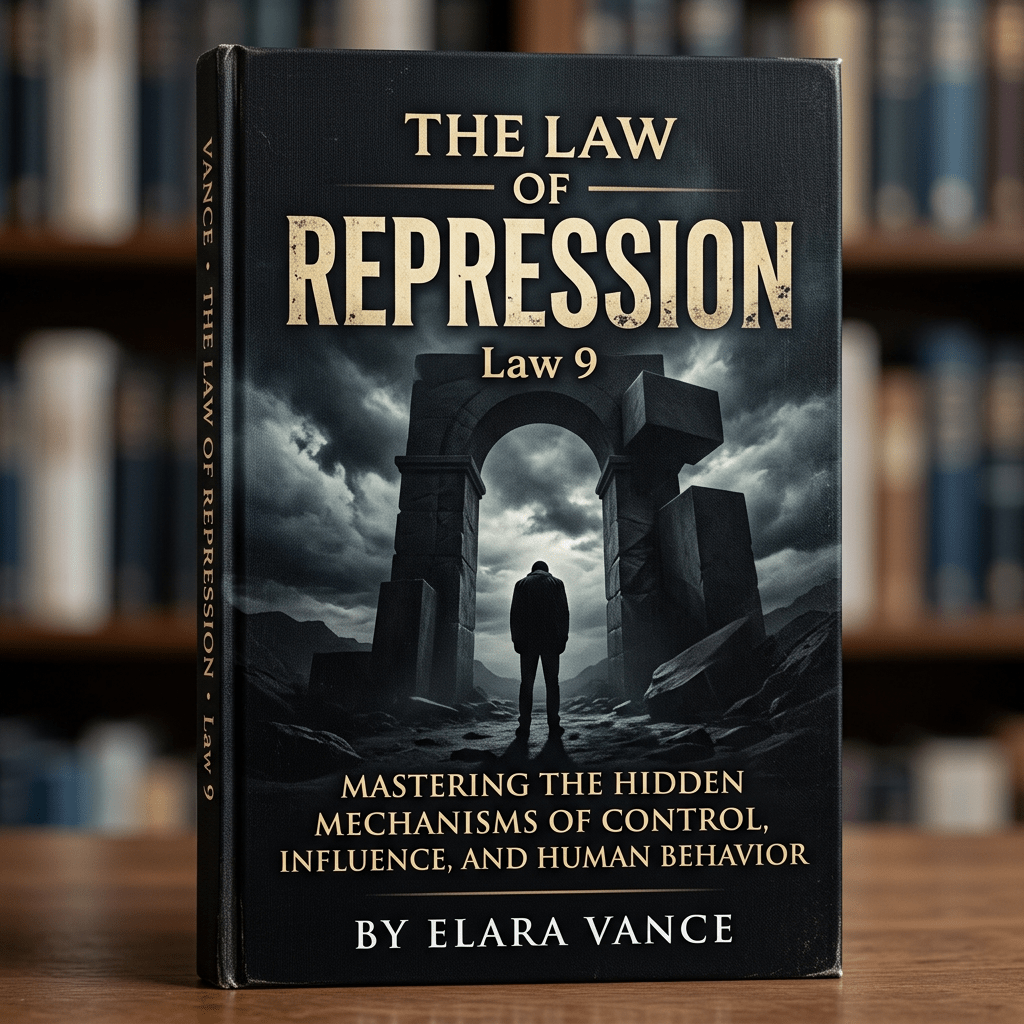
THE LAWS OF HUMAN NATURE BY ROBERT GREENE- Law #9 – The law of repression
The Law of Repression, as outlined by Robert Greene in “The Laws of Human Nature,” focuses on the psychological necessity of confronting one’s dark side. This principle suggests that individuals often hide or deny aspects of their personality that society deems unacceptable, leading to a “shadow” self that can influence behavior in subconscious and often destructive ways. Beyond individual psychology, the term “repression” is frequently used in political and social contexts to describe the forceful suppression of individuals or groups by a state or system.
Examples of this include:
Political Systems: Historical accounts of the Belarusian Soviet Socialist Republic detail how economic policies led to widespread political repression and famine.
Social Control: Religious and patriarchal structures have been cited as tools for sexual and social repression throughout history.
State Authority: Modern critiques often highlight the role of police and legal systems in enforcing the “law and order” of a ruling system through brutality and the criminalization of generations. This includes specific modern manifestations of state control such as ICE raids and the impact of systemic racism.
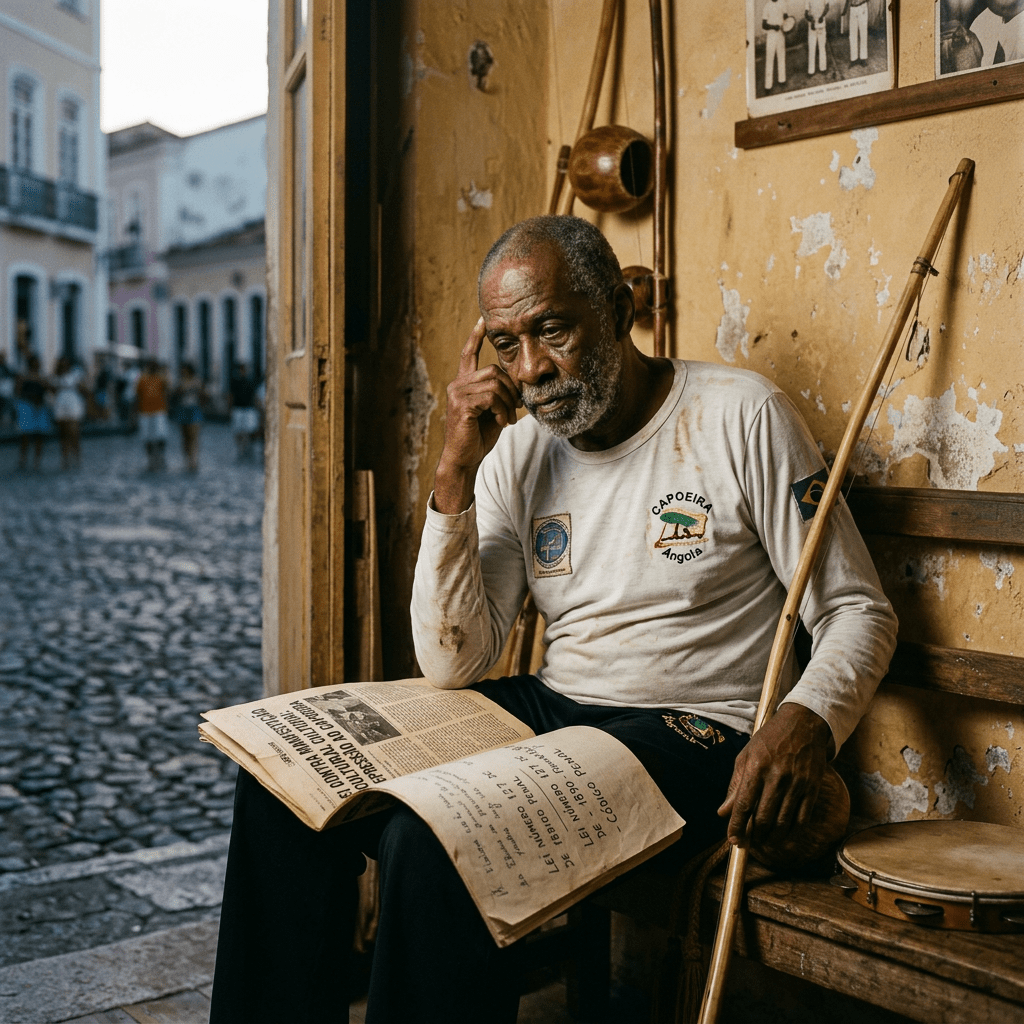
The Law of repression, through the eyes of an Angoleiro
For an Angoleiro—a practitioner of Capoeira Angola—the Law of Repression is understood through the historical crucible of transatlantic slavery in Brazil. Capoeira Angola emerged as a clandestine technology for liberation, specifically designed to survive and subvert the brutal socio-political repression of the colonial state.
Strategic Concealment and Disguise: To evade the state prohibition of martial training, practitioners masked deadly combative techniques within the guise of dance, ritual, and play (brincadeira). This “cultural camouflage” allowed the art to persist despite the constant threat of torture and execution.
The Shadow of the Roda: Just as Greene speaks of the “shadow” self, the Angoleiro utilizes the roda (the circle) as a sacred site where historical trauma is processed and internal resilience is fortified. The practice requires absolute control over fear and ego, transforming the internal psychological struggle into a physical methodology for resistance.
Survival against Modern Oppression: The principles of Capoeira Angola offer a framework for navigating contemporary forms of social repression, including surveillance and police brutality. By utilizing malícia (cunning) and mandinga (deception), the practitioner learns to read the intentions of repressive systems and protect their community through strategic subtlety rather than direct, reckless aggression.
Understanding the dynamics of repression—whether it is the internal psychological suppression of traits or the external systemic oppression of people— is considered a foundational step toward personal liberation and social change. By reclaiming and practicing this art, communities actively work to dismantle the deep-seated psychic and physical legacies of historical and contemporary repression. This involves a multifaceted approach, encompassing education on the origins and mechanisms of such repression, as well as fostering safe spaces for individuals to express their suppressed identities and emotions.
When people share their narratives and experiences, they not only begin to heal personally but also contribute to a collective understanding that challenges the dominant narratives of power. Additionally, creating platforms for dialogue and activism enables these communities to strategize practical responses to current injustices, thereby reinforcing their resilience and commitment to transformative change. Through these interconnected efforts, the journey toward liberation becomes not only an individual pursuit but also a communal endeavor that enhances solidarity and supports the quest for equity in all areas of society.