
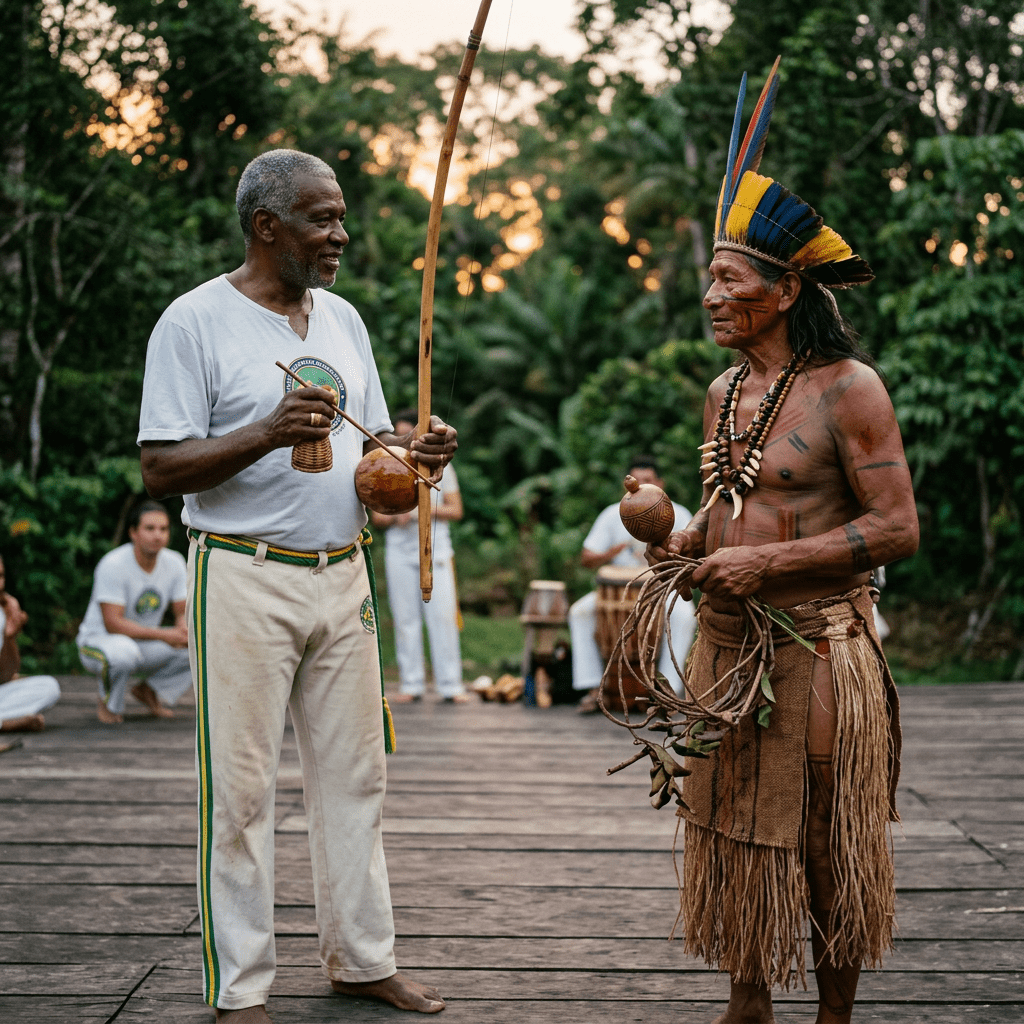
The exploration of the parallels between a Capoeira Mestre and a Shaman reveals a deep-seated connection to spiritual and physical mastery that transcends mere performance. Both roles function as cultural guardians, presiding over rituals that bridge the material and spiritual worlds, thus reinforcing their communities’ values and traditions. Just as a Shaman navigates the spirit realm to facilitate healing and guidance, being attuned to the subtle energies that flow around them, a Capoeira Mestre leads the roda, a ritualized circle that serves as a “safe container” for practitioners to experience vulnerability and build collective resilience. This shared space not only fosters empowerment but also cultivates a profound sense of belonging and identity among participants. Furthermore, the teachings imparted by both figures emphasize the importance of connection—whether it be to one’s ancestors, the natural world, or fellow practitioners—creating a holistic approach to personal and communal well-being. Each movement in Capoeira and each chant in Shamanic practice resonates with deeper meanings, inviting individuals to explore their inner landscapes while honoring the rich heritage from which these traditions emerge. Through this lens, one can appreciate how both the Mestre and the Shaman contribute to the ongoing narrative of their respective cultures, ensuring the continuity of wisdom that has been passed down through generations.
The Ritual Space as a Living Sanctuary
The environment of the Casa de Capoeira Angola is envisioned as a living sanctuary, much like a Shamanic ritual space that transcends mere physical boundaries. It is more than a training facility; it is a spiritual home where the profound historical and philosophical heritage of the art is not only preserved but also celebrated and passed down through generations. Within this sacred space, the roda acts as a micro-community, a gathering point where practitioners from diverse backgrounds come together to share their experiences and knowledge. Here, values of respeito (respect) and união (unity) are practiced diligently, fostering a protective structure that mirrors the communal responsibility found in indigenous spiritual traditions. This environment encourages self-exploration and personal growth while reinforcing the bonds of kinship among its members, creating a vibrant tapestry of interconnected lives and stories that enrich the cultural experience of all who enter.
Spiritual Energy and Manifestation
Central to both roles is the management of life force energy. In Capoeira, this is known as axé, a spiritual power or life force akin to “qi” or the Shamanic concept of spirit energy. The Mestre facilitates the cultivation of this energy through the rhythmic command of the berimbau and the communal singing of traditional songs, which serve as oral histories and life lessons, often passed down through generations. These practices not only reinforce the physical connection among participants but also deepen their spiritual bond, creating a shared experience that transcends the individual. The Mestre’s role goes beyond mere instruction; it is about guiding the players toward an awakening of their inner selves, nurturing their capabilities, and fostering a sense of community within the roda. This spiritual dimension is often described as esoteric, involving states of consciousness where the practitioner may experience a “trance-like” state during intense play, moving without conscious direction. In this state, practitioners report heightened awareness, a deep connection to their lineage, and an invigorated appreciation for the rhythms of life, fostering a unique blend of physicality and spirituality that defines the art form.
Cunning, Deception, and Strategic Wisdom
Both the Shaman and the Mestre utilize strategic subtlety and intuition, creating a dance of perception that transcends mere physical engagement. In Capoeira, this is embodied in the concepts of malandragem (cunning) and mandinga (magic or spell), which serve as vital components in the evolution of the practitioner. Malícia—the ability to understand an opponent’s intentions and skillfully use deception—is not merely a physical tool but a profound psychological one, emphasizing the mind as the first and most valuable weapon in the quest for survival and freedom. This mirrors the Shamanic use of cleverness and indirect influence to navigate complex human and spiritual interactions, illustrating a deep wisdom that is cultivated through experience and awareness. By mastering these elements, both the Shaman and the Mestre engage in a rich tapestry of strategy, where every movement and intention can shift the dynamics of their environment, enabling them to emerge victorious against adversity and challenge.
Healing and Transformation
The role of the Mestre has increasingly been recognized for its profound socio-psychological impact within communities and beyond. Much like a Shaman who heals the community through spiritual connection and guidance, contemporary Mestres like Mestre Roxinho utilize Capoeira Angola as a transformative tool for social cohesion and healing among marginalized populations. This practice transcends mere physical activity; it embodies a rich history of cultural significance and resistance. By deeply grounding the practice in a lineage that celebrates both resistance and cultural reaffirmation, the Mestre plays a crucial role in helping practitioners dismantle the legacies of personal and historical oppression. In this way, they not only teach the skills of Capoeira but also guide individuals on a journey toward self-acceptance and empowerment. Through the shared experience of movement, music, and community spirit, the Mestre transforms the art into a therapeutic practice that fosters resilience, self-determination, and a sense of belonging, ultimately enabling participants to reclaim their identity and purpose in a world that often overlooks their contributions and struggles.

