In contemporary digital and urban slang, the phrase “The Epidemic of Fake YNs” refers to a social trend where individuals adopt the aesthetic and language of the “YN” (Young N***a) lifestyle without actually being involved in the street culture it originates from. This phenomenon is often characterized by the performative use of specific vernacular, fashion choices, and behavioral mannerisms on social media platforms to project an image of street credibility or toughness that does not align with the individual’s actual background or daily reality.
The rise of this trend is closely linked to the algorithmic nature of short-form video platforms, where curated personas can quickly gain traction. By mimicking the “YN” archetype—often associated with youth-led urban movements, specific regional rap scenes, and a distinct sartorial style—these individuals seek to capitalize on the cultural capital of the streets. This appropriation often includes the adoption of hand signs, specific slang terms, and a “crashout” persona, which implies a reckless or high-stakes lifestyle that the individual does not actually lead. Furthermore, these digital platforms create an incentive structure that rewards hyper-masculine performances and high-engagement content, often blurring the line between genuine cultural expression and strategic personal branding. As a result, the “Fake YN” phenomenon serves as a case study in how social media can facilitate the rapid adoption, commodification, and eventual dilution of organic social movements for the purpose of global entertainment consumption.
Critics and members of the communities from which this culture originates argue that this “epidemic” trivializes the real-world struggles and systemic issues inherent in the genuine “YN” experience. For those living the reality, the “YN” archetype is often born out of necessity or navigation of specific socioeconomic environments, rather than a chosen aesthetic for digital consumption. By reducing these lived experiences to a collection of trends, “Fake YNs” essentially strip the culture of its historical and social context, ignoring the gravity of the “crashout” lifestyle they attempt to emulate.
The disparity between the performative toughness displayed online and the lack of authentic lived experience often leads to accusations of “clout chasing” or being a “studio gangster”. This friction highlights a significant disconnect: while the authentic community faces the actual consequences of street-level involvement, performers enjoy the social capital without the associated risks. This dynamic frequently results in intense gatekeeping within urban subcultures as a means of protecting the integrity of their shared identity from outside commodification.
“That moment when Eric labels Terrence as delusional, prompting Terrence to break into song as a defense mechanism against his reality, is a highlight that never fails have me laughing my ass off!”
At first, I considered titling this piece, “Do you believe this sh*t?” However, I decided against such a provocative approach toward Terrence Howard. Instead, I am presenting the content here to allow my audience to independently evaluate the validity of his assertions.
My objective is for anyone viewing this video to engage in a process of observation and analysis. While I do not possess the mathematical background required to parse the technical details of his theories, I am certain there are experts within this community capable of validating or debunking his findings.
The dialogue surrounding these mathematical claims has evolved into a significant cultural spectacle. Beyond the humor of the parody video with Eric and Terrence, the situation serves as a compelling case study in critical thinking and the way we process authoritative claims in a digital age.
While the intricacies of his mathematical assertions are beyond my personal expertise, the public discourse surrounding them has become a fascinating spectacle. There is a particular moment where Eric refers to Terrence as delusional, leading to a scene where Terrence begins singing to avoid his reality—a sequence that has proven to be quite humorous for many viewers.
Ultimately, the veracity of his findings is something I prefer to leave to the audience and those with the technical background to analyze it properly. My focus remains on the broader principle of critical thinking and how we process information in an age of rumors and authoritative claims.
For me, it’s all about that fake buddhist Quote:
“Do not believe in anything simply because you have heard it. Do not believe in anything simply because it is spoken and rumored by many. Do not believe in anything simply because it is found written in your religious books. Do not believe in anything merely on the authority of your teachers and elders. Do not believe in traditions because they have been handed down for many generations. But after observation and analysis, when you find that anything agrees with reason and is conducive to the good and benefit of one and all, then accept it and live up to it.”
Think critically my friends.
We invite you to support BE INSPIRED, which serves as an open-minded platform for individuals dedicated to the pursuit of wisdom and deeper knowledge. To stay updated with their latest educational content and insights, you can subscribe to their official channel at https://www.youtube.com/@BeInspiredChannel.
►►► We also encourage you to check out Terrence Howard’s Book, which is currently available for free to the public through the following link:
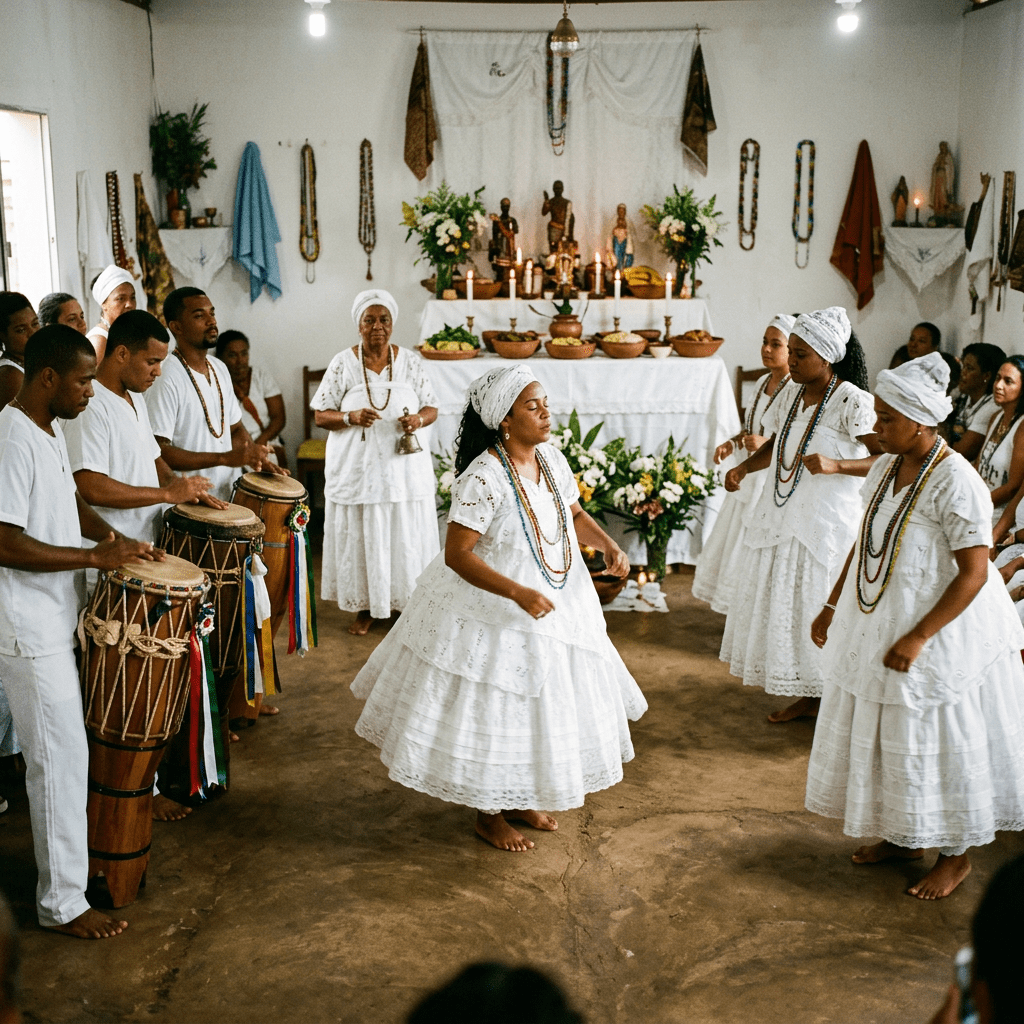
Women dressed in white perform a ritual dance surrounded by musicians in a sacred space.
Greetings! In this expansive blog series, we shall embark on a journey to explore Sub-Saharan Africa’s rich spiritual topographies, meticulously tracing ancestral lineages and their profound global resonance. Our primary objective is to establish a comprehensive framework for examining indigenous cosmologies, ranging from the Akan people’s deep reverence for Nyame to the complex and vibrant Yoruba Orisha pantheon.
This analytical framework further investigates the historical arrival and subsequent localization of world religions such as Christianity and Islam, observing how they synthesized with traditional African faiths to create unique spiritual landscapes. Central to this exploration is the practice of ancestral worship, which serves as a vital contemporary anchor for collective identity and ensures social continuity across generations.
Furthermore, we highlight the remarkable resilience of traditions like Haitian Vodou, Cuban Santería, and Brazilian Candomblé, all of which continue to thrive through the power of oral tradition and storytelling. Investigating these deep-seated roots fosters a more nuanced understanding of how faith, identity, and African cultural resilience intersect and persist in the modern world.
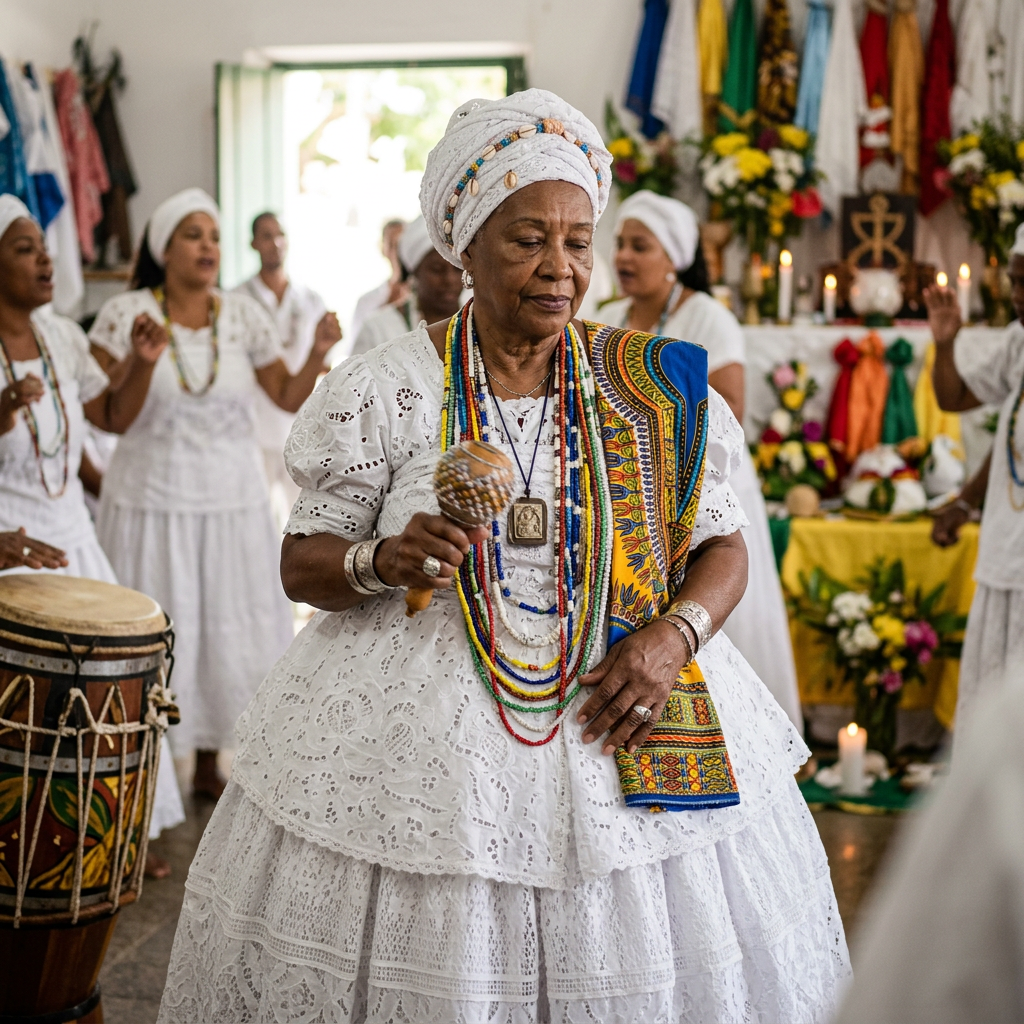
In contemporary Brazil, however, this resilience is frequently tested. The frequency of attacks directed at practitioners of Afro-Brazilian religions significantly exceeds those targeting any other religious groups in the nation. Activists and scholars identify this systematic persecution as “religious racism,” a term specifically utilized to highlight that these acts of violence and discrimination are fundamentally driven by deep-seated racial prejudice against spiritual traditions with African origins.
This framework analyzes the historical arrival and localization of Christianity and Islam as they synthesized with traditional faiths. Central to this is ancestral worship, a vital contemporary anchor for collective identity and social continuity.
Furthermore, we highlight the resilience of traditions like Haitian Vodou, Cuban Santería, and Brazilian Candomblé, which thrive through oral tradition and storytelling. Investigating these roots fosters a nuanced understanding of faith, identity, and African cultural resilience.
In Brazil, the frequency of attacks directed at practitioners of Afro-Brazilian religions significantly exceeds those targeting any other religious groups. Activists and scholars characterize this systematic persecution as “religious racism,” a term used to highlight that these acts of violence and discrimination are fundamentally driven by deep-seated racial prejudice against traditions with African origins.
This phenomenon is particularly visible in the Federal District, where official statistics illustrate a profound inequality: while individuals who follow Candomblé make up a mere 0.2% of the local religious population, they represent a staggering 59% of the registered victims of religious intolerance.
These patterns of disproportionate aggression are documented consistently across various regions of Brazil, reflecting a broader national challenge that poses a severe threat to the preservation of indigenous cosmologies. Despite these challenges, the resilience of faiths such as Candomblé continues to be a central theme in the study of African cultural continuity.
In Brazil, the frequency of attacks directed at practitioners of Afro-Brazilian religions significantly exceeds those targeting any other religious groups. Activists and scholars characterize this systematic persecution as “religious racism,” a term used to highlight that these acts of violence and discrimination are fundamentally driven by deep-seated racial prejudice against traditions with African origins. This phenomenon is particularly visible in the Federal District, where official statistics illustrate a profound inequality: while individuals who follow Candomblé make up a mere 0.2% of the local religious population, they represent a staggering 59% of the registered victims of religious intolerance. These patterns of disproportionate aggression are not isolated incidents but are documented consistently across various regions of Brazil, reflecting a broader national challenge. This systematic targeting poses a severe threat to the preservation of indigenous cosmologies and ancestral worship, which remain essential pillars for the social continuity and collective identity of these communities. Despite these challenges, the resilience of faiths such as Candomblé, alongside Haitian Vodou and Cuban Santería, continues to be a central theme in the study of African cultural continuity, as these traditions utilize oral history and storytelling to maintain their vital presence.
The resilience of these traditions, including Haitian Vodou, Cuban Santería, and Brazilian Candomblé, remains a central theme in the study of African cultural continuity. These faiths often thrive through oral tradition and storytelling, serving as vital anchors for collective identity and social stability. Investigating these roots provides a nuanced understanding of how faith and identity intersect with historical resilience.
In Brazil, this resilience is tested by systematic targeting that activists define as religious racism. This form of intolerance is deeply rooted in racial prejudice against traditions of African descent. Statistics from the Federal District highlight a stark disparity: despite followers of Candomblé making up only 0.2% of the religious population, they account for 59% of the victims of religious intolerance. Such disproportionate aggression is documented throughout the country, yet these communities continue to preserve their indigenous cosmologies and ancestral worship as essential frameworks for social continuity.
For comprehensive insights into the socio-cultural landscape and the ongoing struggle against religious intolerance in Brazil, please visit the Black Brazil Today website. This platform provides extensive resources and reporting on the systematic targeting of Afro-Brazilian religions and the broader implications of religious racism. You can access more information at: https://blackbraziltoday.com/
A woman leads a ritual in traditional white attire and colorful beads.
If you find this content valuable and wish to support the continued production of these educational materials and the advocacy work of the channel, please consider making a contribution via CashApp to: $MrMarques72. Your support helps maintain the visibility of these critical narratives regarding African cultural resilience and identity.
The preservation and promotion of these critical narratives regarding African cultural resilience and identity serve as a cornerstone for understanding the diverse socio-cultural fabric of the African diaspora.
Explore the true narrative of Brazil by engaging with platforms dedicated to the depth and complexity of the Afro-Brazilian experience. We invite you to subscribe to Black Brazil Today, a vital resource for insightful discussions on race, culture, and the evolving landscape of media representation. By joining our community, you gain access to nuanced perspectives on how indigenous cosmologies and traditional faiths like Candombl’e continue to navigate and resist systemic challenges such as religious racism and intolerance.
Stay connected with our latest tutorials and advocacy work by visiting their YouTube channel: https://www.youtube.com/@blackbraziltoday3316. Your engagement helps amplify these essential stories of historical localization, social continuity, and the enduring power of oral traditions.
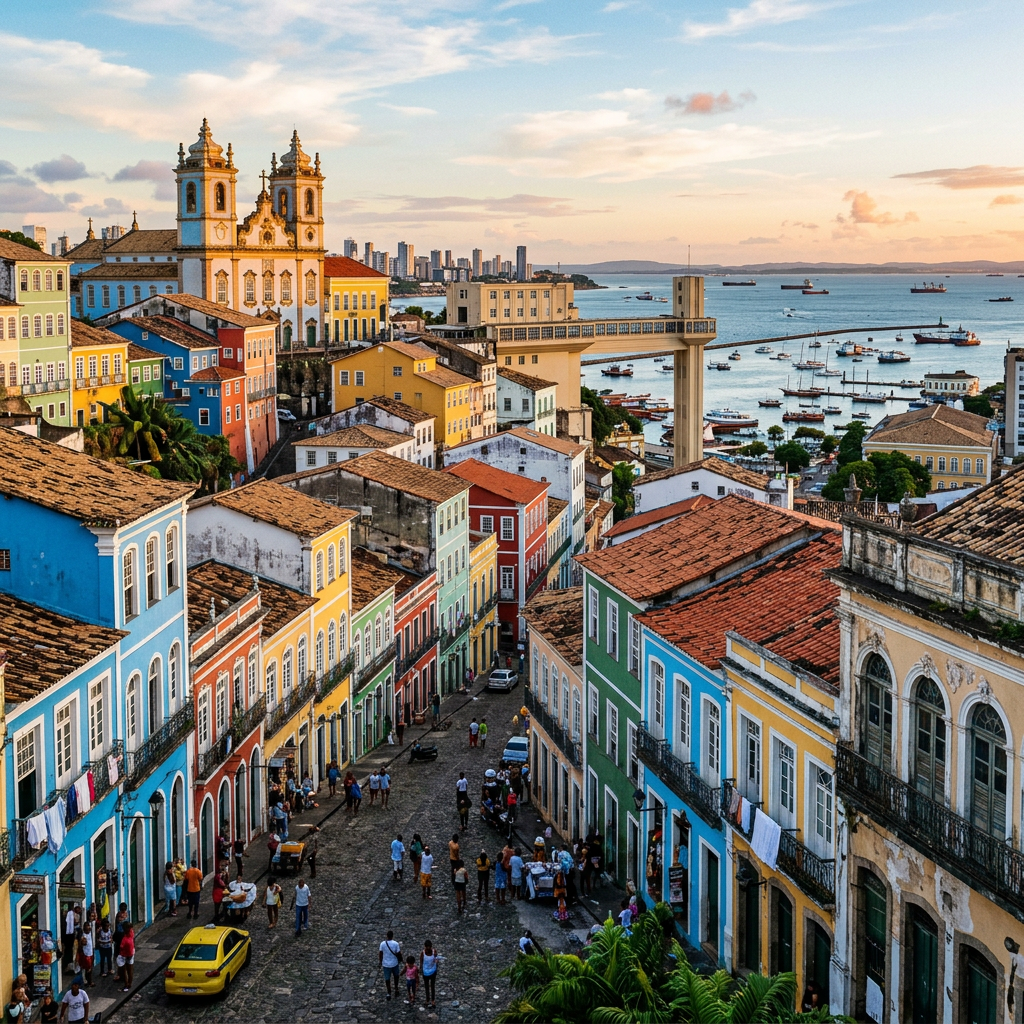
People stroll through a vibrant, historic neighborhood near the water at sunset.
Each Friday, PROFESSOR BLACK TRUTH hosts “The Friday Crime Report,” a comprehensive platform dedicated to examining the deep-seated issues of systemic racism, economic inequality, and police brutality within the Black community. This weekly broadcast serves as a critical space for advocacy and active community engagement, often highlighting the voices of various experts and community members who delve into necessary policy changes and propose actionable solutions. By fostering a consistent dialogue centered on social justice, the program strives to empower its audience, providing them with the tools and information needed to bridge the gap between initial awareness and tangible, long-term societal progress.
In Today’s installment…
While the racist governor of Arkansas has been protecting students from black history, attempting to sanitize the educational curriculum, the University of Arkansas has been rocked by yet another arrest for rape, a painfully recurring incident that points to deeper issues within our educational institutions. This disturbing dichotomy highlights a systemic failure where the state focuses on suppressing historical truths while institutional safety and accountability continue to falter, thereby creating an environment fraught with tension and insecurity. These events underscore a troubling trend where legislative priorities seem decoupled from the urgent need for campus security and the protection of student welfare, raising serious questions about the values that guide our educational policies.
By marginalizing the study of Black history, the administration potentially undermines the development of social awareness and empathy, which are critical in addressing the roots of systemic violence, effectively stifling open dialogue and critical thinking among students. But why do these tragic incidents happen so frequently on campus? We explore the intersection of policy, social neglect, and the ongoing struggle for institutional justice, emphasizing that awareness and education on historical injustices could foster a safer community. Our analysis looks into how the erosion of educational standards and the avoidance of difficult historical dialogues might contribute to an environment where institutional accountability remains elusive and the safety of the most vulnerable is compromised, illustrating the urgent need for reform in both educational practices and campus safety measures.
Shoutout to the professor for creating and posting this video.
Support ProfessorBlacktruth through the following platforms:
Analyze the subtle non-verbal cues and psychological tactics used by the Joker during a tense confrontation with Gotham’s mob bosses. This breakdown examines micro-expressions, eye contact, and emotional regulation to reveal how the character expertly manipulates those around them to gain a strategic advantage.
By scrutinizing the interplay between the Joker’s erratic movements and his calculated pauses, we can understand the underlying mechanisms of his influence. The analysis delves into how he utilizes silence to create discomfort and how his shifting gaze serves as a tool for both intimidation and misdirection. These psychological maneuvers allow him to destabilize seasoned criminals, shifting the power dynamic in the room entirely in his favor.
This mastery of misdirection and subtle influence is a hallmark of high-level psychological warfare. Much like the concept of mandinga in Capoeira Angola, the Joker employs a “veil of dance-like ease” to mask lethal intentions. By adopting a stance that appears deceptively erratic or passive, he creates a psychological bait designed to encourage a lapse in his opponents’ concentration. His ability to maintain a “poker face” while internally processing the micro-expressions and weight shifts of Gotham’s mob bosses allows him to anticipate their reactions before they even commit to them. Ultimately, his control over the tempo of the interaction and the visual focus of those in the room turns his adversaries’ own aggression into the instrument of their undoing.
How does this apply to Capoeira Angola Well….
In Capoeira Angola, these concepts are embodied through “malícia” (cunning) and “mandinga,” where practitioners utilize strategic physicality to mask intent and manipulate the space and timing of an encounter. This deceptive approach uses rhythmic swaying and feigned vulnerability to create a dialogue or “jogo” (game) where every movement is an inquiry into the opponent’s internal state. Much like the psychological tactics described, the capoeirista employs a state of perpetual readiness through the “ginga,” allowing for fluid transitions between offensive maneuvers and defensive stances while maintaining an unpredictable and elusive presence.
This mastery extends into the realm of psychological warfare, where practitioners use low stances and circular movements to minimize their profile while creating unpredictable openings for decisive strikes. By maintaining a calm “poker face” and utilizing subtle shifts in the ginga, a capoeirista can evade attacks and redirect an opponent’s momentum, essentially turning their own aggression into a liability. This holistic system serves not only as a martial strategy but also as a therapeutic “safe container” for personal transformation and the healing of historical and personal trauma through the act of “playing”.
Support Enigma! Your contribution helps sustain deep-dive psychological profiling and high-quality analysis of iconic cinematic moments. Subscribe to his channel at https://www.youtube.com/@enigmabodylanguage to join a community dedicated to unmasking the hidden layers of human behavior. By following the channel, you gain access to expert breakdowns on how micro-expressions, tactical silence, and shifting power dynamics are used to manipulate and control high-stakes environments.
The Self-Defense Series: A Blueprint for Empowerment and Survival
Beyond physical techniques, effective self-defense requires a holistic transformation to navigate real-world violence. The Self-Defense Series builds a four-pillared foundation—physical, mental, spiritual, and legal—to foster resilience, readiness, and confidence.
Moving past rote memorization, this philosophy equips individuals to not only survive encounters but to thrive afterward. This approach integrates preparedness into a lifestyle rather than a temporary skill set.
In today’s installment, neutralizing confrontation requires more than physical skill; it demands a strategic mastery of presence. Today, we examine how to de-escalate and dominate a confrontation in three critical phases.
Section 1: The Architecture of Confidence
This section explores the nuances of body language and maintaining psychological fortitude. Real self-defense isn’t about proving toughness—it’s about control, awareness, and a comprehensive understanding of human violence. The ability to remain calm under extreme pressure is the hallmark of true competence.
Section 2: Tactical Positioning
We break down the optimal fighting stance and angles to mitigate aggressive intimidation. Controlling the environment—both physically and mentally—is the cornerstone of holistic self-defense. When an aggressor enters your personal space, an overt fighting stance can be detrimental. We advocate for a square posture rather than a bladed one to avoid telegraphing intent.
Section 3: Psychological Warfare
This phase focuses on building internal resilience and managing visual focus. Fixating on an attacker’s eyes can create dangerous tunnel vision; instead, we propose a broader focus to detect rapid strikes and headbutt attempts. Mastery comes through positioning—moving laterally to “jam” the attacker and limit their kinetic potential.
These foundational techniques serve as the bedrock for your personal safety blueprint, moving beyond simple drills to foster a mindset of constant readiness.
A special shoutout to FIGHT SCIENCE for their dedication in creating and posting this instructional video, which bridges the gap between traditional martial arts and modern survival needs.
For further insights into the specific mechanics of Wing Chun and advanced defensive tactics, please explore their extensive academy resources. The London Wing Chun Academy is deeply committed to helping individuals like us thrive in any environment by providing professional guidance that integrates physical skill with psychological fortitude.
SUBSCRIBE FOR CONTINUED EMPOWERMENT, STRATEGIC UPDATES, AND NEW LESSONS!
Why do homeschool kids learn faster than public school kids? In this video, we break down why homeschoolers often learn more in less time, how one-on-one teaching speeds up understanding, and why homeschool education can be more efficient than traditional school. As of 2012, approximately 3.4% of children in the United States were homeschooled, a figure that has since grown, with more than 1 in 10 kids being homeschooled today.
This efficiency often stems from the ability to tailor the curriculum to a child’s specific interests and learning pace, eliminating the “one-size-fits-all” approach found in larger classrooms. One-on-one instruction allows for immediate feedback and deep dives into complex subjects, ensuring mastery before moving forward. This contrast is stark compared to public schooling, which is fundamentally structured around the collective progress of a group and requires students to adhere to a standardized timeline.
From my perspective, the current public school system functions primarily as a form of free childcare, providing a supervised environment for children while parents work. Beyond this custodial role, the system can prioritize the transmission of specific social and cultural ideologies over pure academic growth. Consequently, the objective of actual education often seems to rank third in priority, resulting in a less efficient learning process compared to more personalized alternatives like homeschooling.
Public schooling requires adherence to a standardized timeline to ensure the whole class finishes together. In contrast, homeschooling provides the flexibility for a child to move at their own unique pace, free from the constraints of peer synchronization. This environment facilitates immediate feedback and ensures that true mastery is achieved before the student moves forward. This personalized approach can lead to a more efficient educational process where students may learn more in less time compared to the institutional priorities of the public system.
However, homeschooling is not without its challenges; in some cases, it has been used as a fallback for students with disabilities when local schools claimed they lacked the means to teach them in “real” classes. This situation can lead to significant emotional and educational strife for families who want the best for their children but find themselves forced into a decision that may not fully meet their child’s needs. Additionally, families choosing to homeschool must navigate complex state regulations that vary greatly from one jurisdiction to another, making it essential for them to be well-informed to avoid baseless allegations of educational neglect. The process of understanding these regulations can be daunting, as it often involves extensive paperwork, curriculum assessments, and compliance with inconsistent educational standards. As such, families may find themselves under immense pressure, balancing the need to provide quality education at home with the fear of scrutiny from authorities who may not understand their commitment to their children’s learning.
The increased efficiency of homeschooling is largely driven by its departure from the standardized, custodial constraints of public schooling. While the public system often prioritizes group synchronization and the transmission of specific social ideologies, homeschooling allows for a tailored curriculum and immediate one-on-one feedback that ensures subject mastery before advancing. Despite being a growing educational alternative—now accounting for over 1 in 10 children in the United States—homeschooling families must still navigate the complexities of state regulations and the potential for the practice to be used as a fallback for students whom traditional institutions feel unequipped to serve.
Special recognition goes to the YouTube creator Built By Homeschool for the production and sharing of the insightful video featured above. We encourage you to show your appreciation for their high-quality educational content and advocacy by subscribing to their channel, which can be found at https://www.youtube.com/@BuiltByHomeschool. Supporting independent creators like Built By Homeschool ensures the continued availability of diverse perspectives on alternative education models.
An extensive study of 500 real street fights—analyzing every move, outcome, and emerging pattern—reveals a stark discrepancy between traditional gym training and actual violence.
The data indicates that most sporting techniques fail when confronted with the fast, chaotic, and brutal nature of a real attack, which typically concludes in mere seconds. Unlike the structured environment of Mixed Martial Arts (MMA) or boxing, real-world violence lacks referees, rules, and time limits, meaning an encounter only ends when one party is incapacitated or flees. This environment renders technical exchanges like grappling extremely hazardous, as they focus a defender’s attention on a single target, leaving them exposed to environmental dangers or additional attackers—the “Plus-One” problem. Consequently, the objective of self-preservation must shift from technical demonstration to the immediate application of debilitating force to neutralize the threat and secure an escape.
Analysis of real-world violence reveals that the sporting framework of Mixed Martial Arts (MMA), boxing, or Jiu-Jitsu—governed by rules, referees, and time limits—vanishes in street confrontations. Unlike the controlled environment of a gym, the street offers no taps to signify surrender, and the absence of a safety net means a conflict only ends when a party is incapacitated or flees. This breakdown of structure fundamentally changes tactical priorities; for instance, extended technical exchanges like grappling are particularly dangerous. Such maneuvers fix a defender’s attention solely on a single attacker, leaving them vulnerable to the “Plus-One” problem—where unseen accomplices can intervene—or environmental hazards like concrete, curbs, and broken glass. Because street violence is fast, chaotic, and often concludes in seconds, the survival objective must shift from technical demonstration to the creation of immediate, debilitating damage to neutralize threats and facilitate escape.
The fundamental objective in survival is not technical demonstration but the creation of immediate, debilitating damage to neutralise the threat and allow for escape. This requires a shift in mindset and tactics:
Assume the Presence of a Weapon: Never calculate for a “fair fight.” Adopt the non-negotiable assumption that an attacker is armed with a knife, firearm, or blunt object. This dictates maintaining significant distance and ending encounters immediately to minimize the window for a weapon to be deployed.
Move First and Violently: If a physical confrontation is inevitable, do not wait for the attacker to commit. Launch a pre-emptive, explosive attack targeting vulnerable areas such as the eyes, throat, or groin to disrupt the attacker’s plan.
Fight Dirty with Total Commitment: Discard notions of sportsmanship. Utilize every non-lethal object as a potential weapon and target “stop buttons” like the windpipe, knees, and eardrums. Ruthlessness is a prerequisite for survival in a life-or-death battle.
Ultimately, the “Warrior Mindset”—characterized by controlled aggression, situational awareness, and the discipline to cease force once the threat is neutralized—proves superior to the “Predator Mindset” of raw rage. While the predator may gain initial shock value through ferocity, the warrior retains the clarity to manage chaos, navigate legal aftermaths, and maintain psychological resilience post-conflict. This superior approach is built upon several tactical pillars designed for survival in environments where traditional sportsmanship vanishes.
Tactical Awareness and Preparation: Effective survival begins with the non-negotiable assumption that any attacker is armed with a knife, firearm, or blunt object. By refusing to calculate for a “fair fight,” a defender dictates the engagement by maintaining significant distance and working to end the encounter immediately, thereby minimizing the window for a hidden weapon to be deployed.
Pre-emptive Action: When a physical confrontation becomes inevitable, survival often depends on seizing the initiative rather than reacting to an attacker’s commitment. Launching a pre-emptive, explosive attack allows the defender to disrupt the attacker’s plan by targeting high-impact, vulnerable areas like the eyes, throat, or groin.
Unrestricted Commitment to Defense: In life-or-death battles, notions of sportsmanship must be discarded in favor of total commitment to ruthlessness. This includes utilizing any available non-lethal objects as weapons and targeting “stop buttons”—such as the windpipe, knees, and eardrums—to create the immediate, debilitating damage necessary to neutralize a threat and facilitate escape.
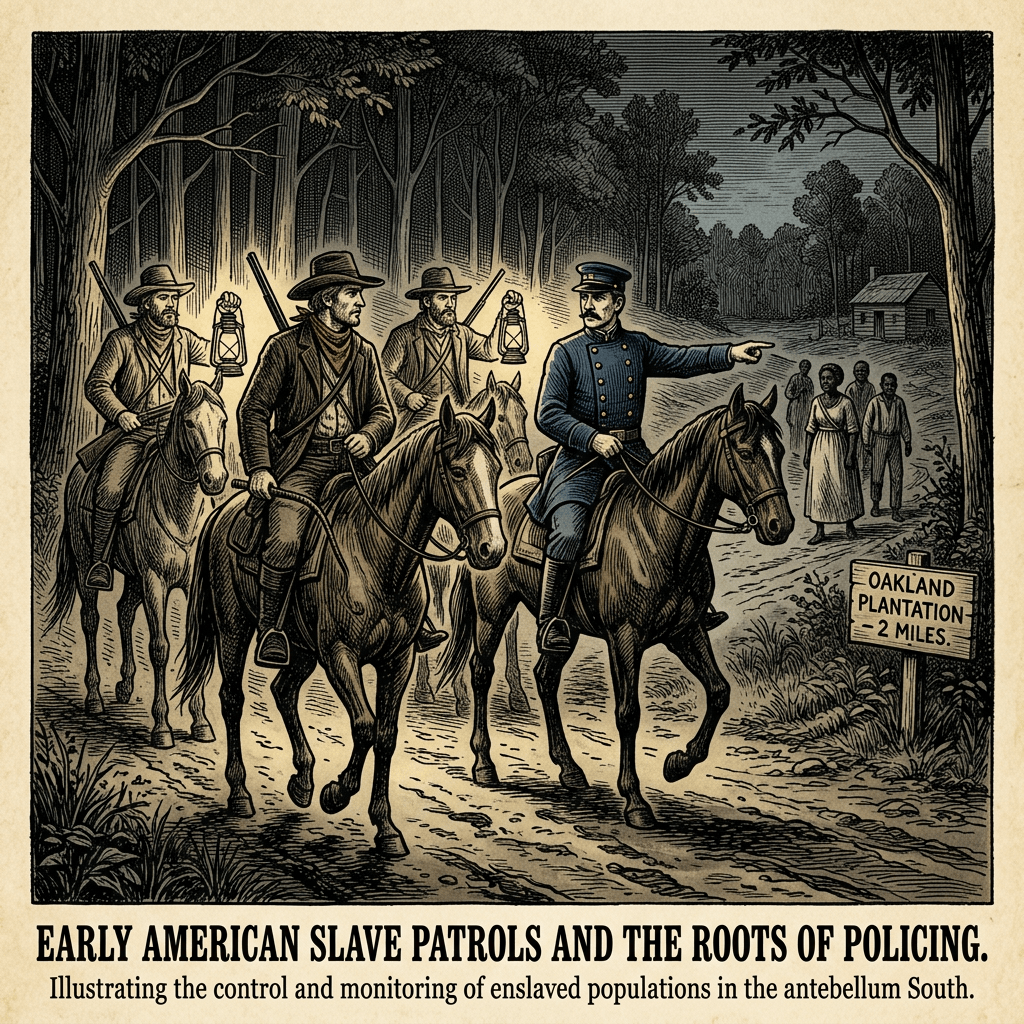
A mounted patrol monitors enslaved people near a Southern plantation at night.
The Historical Evolution and Socio-Economic Foundations of American Policing
The development of American policing is a complex convergence of regional systems, commercial interests, and mechanisms of social control. While modern narratives often suggest police departments emerged as a natural response to urban growth and the need for “law and order,” the historical record reveals a more unsettling foundation rooted in the colonial night watch system, Southern slave patrols, and Gilded Age political patronage.
Regional Origins: From Night Watches to Slave Patrols
In the Northern United States, early policing was largely informal and decentralized. Municipalities typically relied on a combination of part-time constables and night watches, which were often poorly managed, reactive, and funded through a haphazard system of inconsistent fees and fines. These early watchmen were frequently volunteers or individuals serving as a form of communal duty, which led to issues with discipline and effectiveness. This model shifted significantly in 1838 when Boston established the Day Police, marking the creation of the first publicly funded, full-time organized force in the nation. This unit eventually merged with the traditional night watch in 1854 to form the modern Boston Police Department, setting a precedent for municipal policing across the North.
In contrast, the evolution of policing in the Southern United States was inextricably linked to the institution of slavery. Southern forces grew out of organized slave patrols, the first of which were established in the Carolina colonies in 1704. Unlike the Northern night watches, which focused on general public order, these patrols served as a formal and legal mechanism for the surveillance, pursuit, and control of enslaved people. Patrol members were authorized to conduct warrantless searches of slave quarters and enforce codes designed to maintain racial order and prevent insurrection—a paramilitary system of social control that persisted as a primary form of law enforcement until the end of the Civil War.
Commercial Interests and Political Machines
The transition to professionalized forces was frequently driven by economic motives. In Boston, commercial shipping interests sought to shift the cost of protecting private cargo onto the public treasury. Similarly, the creation of New York’s modern force in 1845 was quickly overshadowed by machine politics, particularly Tammany Hall. Policing became an instrument of political patronage and elite influence; notably, NYPD Superintendent Thomas Byrnes admitted to amassing a personal fortune through investments facilitated by industrial titans Cornelius Vanderbilt and Jay Gould.
This era of Gilded Age political patronage meant that police departments often functioned as extensions of the local political machine rather than independent law enforcement agencies. Appointments and promotions were frequently tied to political loyalty, ensuring that the interests of the elite were prioritized over public safety. These historical structures—designed for labor suppression, merchant protection, and racial control—form the fundamental architecture of the modern police system. Today, this institution has expanded into a massive public enterprise, with national expenditures on police, public order, and safety now absorbing hundreds of billions of dollars annually as a major component of government current expenditures.
Legacy and Modern Expenditure
The historical structures of American policing—originally designed for labor suppression, merchant protection, and racial control—constitute the fundamental architecture of the modern police system. From its early iterations in Northern night watches and Southern slave patrols, the institution has evolved into a massive, professionalized public enterprise. This transition was often catalyzed by economic motives, such as Boston’s commercial shipping interests shifting the cost of private cargo protection to the public treasury, and the rise of political patronage in New York City.
Today, this system has expanded into an extensive public order and safety infrastructure. National expenditures on policing and public safety have grown significantly, now absorbing hundreds of billions of dollars annually as a major component of government current expenditures. While the responsibility for law enforcement remains primarily with local departments and sheriff’s offices, it is supported by state services and specialized federal agencies like the FBI and U.S. Marshals Service. Despite the scale of this investment, modern policing continues to face scrutiny regarding its historical origins and its role in maintaining social and racial order.
Shoutout to the YouTube channel Erased Century for consistently creating and posting engaging and informative videos featured in this Blog. Their content not only covers a wide range of fascinating topics but also provides viewers with unique insights and entertaining perspectives. Please take a moment to check out https://www.youtube.com/@ErasedCentury and help support this incredible Channel by subscribing, liking, and sharing their videos with friends and fellow enthusiasts. Your support can make a huge difference in helping them grow and continue producing quality content that informs and entertains audiences around the world.