Each Friday, PROFESSOR BLACK TRUTH presents “The Friday Crime Report,” a program addressing systemic racism, economic inequality, and police brutality that affect the Black community. It promotes advocacy and community engagement by featuring discussions with experts and community members on policy changes and solutions for social justice. The show highlights personal stories to deepen understanding of marginalized groups’ struggles and motivates action in local communities, aiming to foster a more equitable society through education and activism.
In Today’s installment…
In a disturbing display of cowardice, anti-Black racists continue to target the most vulnerable among us, specifically focusing their aggression on our elderly. The recent assault on Dr. Otis C. Lane by a white individual who was essentially a stranger serves as a stark reminder of the persistent threats facing the community. These acts of targeted violence against seniors are not merely isolated incidents but represent a systemic pattern of intimidation intended to demoralize those who represent the heritage and wisdom of the Black community. Such aggression underscores the cowardice inherent in bigotry, as perpetrators seek out those they perceive as unable to defend themselves.
This report examines the broad implications of such violence, analyzing how these attacks impact the psychological well-being of the collective community and the safety of public spaces. It underscores the urgent necessity of collective advocacy and organized protection to safeguard our pioneers. Protecting the elderly must be a primary pillar of social justice activism, as they are the foundational architects of our progress.
To support the professor’s continued mission of providing this critical analysis, education, and activism, which play a vital role in fostering a deeper understanding of our sociopolitical landscape, please consider contributing via Venmo: venmo.com/ProfessorBlacktruth,
Your generous support not only helps sustain the ongoing work but also amplifies the crucial voices in our community that strive to bring about meaningful change. Stay connected on Twitter at / profblacktruth and join the conversation as we work together to uplift and empower our community. Every contribution, no matter the size, makes a significant impact in the pursuit of justice and equity, so thank you for considering this opportunity to support a cause that is more than just education—it’s a movement. #B1
Mark Fuhrman, the former LAPD detective whose history of racial animus and professional misconduct became a central focal point of the O.J. Simpson trial, has died. Known for his disgraced exit from law enforcement after attempting to frame Simpson, Fuhrman’s legacy remains inextricably linked to a career defined by racism and violence.
As the trial unfolded, many were struck by the stark contrast between Fuhrman’s public persona and the latent prejudices he harbored; his approach not only cast a shadow over the proceedings but also sparked widespread discussions about race relations and police conduct in America. We are going to take an in-depth look at his career and how his deep-seated prejudices were finally exposed to the world. During the high-profile “Trial of the Century,” a black defense attorney dismantled Fuhrman’s credibility on a global stage, revealing not just inconsistencies in his testimony but also his troubling views that many felt were indicative of a systemic issue within law enforcement. This breakdown of authority not only served as a pivotal moment in the trial but also ignited a much-needed conversation about justice, accountability, and the intersection of race and policing practices in the United States.
This public unraveling not only impacted the immediate legal proceedings but served as a stark illumination of systemic issues within the LAPD at the time, revealing the various levels of institutional failure that were often overlooked. Fuhrman’s past, filled with instances of racial bias and misconduct, was brought into the light, fundamentally changing the trajectory of the trial and exposing the complex interplay of race and law enforcement practices that permeated the case. Additionally, this episode prompted widespread public discourse about the necessity for police reform and accountability, encouraging communities to reflect critically on their relationships with law enforcement and the overarching judicial system.
During the high-profile “Trial of the Century,” a black defense attorney dismantled Fuhrman’s credibility on a global stage, exposing his deep-seated prejudices to the world. This public unraveling not only impacted the immediate legal proceedings but served as a stark illumination of systemic issues within the LAPD at the time.
For more deep dives into the intersections of law, race, and history, consider supporting this channel through the following platforms:
Each Friday, PROFESSOR BLACK TRUTH hosts “The Friday Crime Report,” a compelling and insightful program that focuses on critical issues of systemic racism, economic inequality, and police brutality deeply affecting the Black community. With each episode, the program seeks to highlight personal stories and real-life experiences, encouraging a deeper understanding of the struggles faced by marginalized groups and motivating listeners to take action in their own communities.
By combining education with activism, “The Friday Crime Report” aspires to create a more equitable and just society for all. Through meticulous reporting and unapologetic analysis, the program serves as a vital platform for dismantling systemic barriers and amplifying the voices of those often silenced by mainstream media narratives. These weekly videos provide a necessary counter-narrative to traditional reporting, ensuring that the socio-economic context of crime and justice is fully explored.
In Today’s installment…
After years of carrying out racist stunts, the individual known as “chud the builder” finally took his performative extremism too far. He has been arrested for attempted murder, a grave escalation from his previous activities. However, investigators emphasize that this is far from his first crime, as his history is marked by a pattern of targeted harassment and radicalized behavior. After years of carrying out racist stunts, the individual known as “chud the builder” finally took his performative extremism too far. He has been arrested for attempted murder, a grave escalation from his previous activities. However, investigators emphasize that this is far from his first crime, as his history is marked by a pattern of targeted harassment and radicalized behavior. Authorities are now meticulously reviewing his digital footprint and past public demonstrations to construct a comprehensive timeline of his radicalization. This investigation seeks to determine if his recent actions were part of a broader, coordinated effort or an isolated escalation of his established history of harassment.
Support The professor! To keep this independent platform running and continue the fight for social justice, please consider contributing through the following channels:
Each Friday, PROFESSOR BLACK TRUTH hosts “The Friday Crime Report,” a compelling and insightful program that focuses on critical issues of systemic racism, economic inequality, and police brutality deeply affecting the Black community. This informative segment not only informs viewers but also fosters advocacy and community engagement by bringing together a diverse range of experts and community members. They engage in profound discussions on necessary policy changes and innovative solutions that aim to empower the audience towards social justice and long-term societal progress. With each episode, the program seeks to highlight personal stories and real-life experiences, encouraging a deeper understanding of the struggles faced by marginalized groups and motivating listeners to take action in their own communities. By combining education with activism, “The Friday Crime Report” aspires to create a more equitable and just society for all. Through meticulous reporting and unapologetic analysis, the program serves as a vital platform for dismantling systemic barriers and amplifying the voices of those often silenced by mainstream media narratives.
In Today’s installment…
Recent events have brought to light two harrowing incidents involving the tragic loss of children at the hands of their fathers, revealing a stark contrast in media narratives. In Louisiana, the perpetrator was met with justifiable condemnation and a complete lack of sympathy from reporting outlets, where the focus remained squarely on the heinous nature of the act. However, a similar tragedy occurring this week in Houston has seen the white mainstream media adopt a markedly different posture. In the Houston case, reporting has often pivoted toward exploring the perpetrator’s background or potential mitigating circumstances, offering a disparate level of treatment that underscores the ongoing issues of bias and systemic disparity in how such crimes are presented to the public. This inconsistency highlights how media framing can humanize certain individuals while dehumanizing others based on racial or systemic biases, further complicating the public’s understanding of justice and accountability.
Support the Professor and Investigative Advocacy!
Support our mission to document systemic challenges and advocate for the safety of Black service workers. Your financial contributions directly fund investigative reporting on racially motivated threats and the pursuit of security protocols for frontline personnel. Please consider donating through the following platforms:
Each Friday, PROFESSOR BLACK TRUTH hosts “The Friday Crime Report,” a compelling and insightful program that focuses on critical issues of systemic racism, economic inequality, and police brutality deeply affecting the Black community. This informative segment not only informs viewers but also fosters advocacy and community engagement by bringing together a diverse range of experts and community members. They engage in profound discussions on necessary policy changes and innovative solutions that aim to empower the audience towards social justice and long-term societal progress. With each episode, the program seeks to highlight personal stories and real-life experiences, encouraging a deeper understanding of the struggles faced by marginalized groups and motivating listeners to take action in their own communities. By combining education with activism, “The Friday Crime Report” aspires to create a more equitable and just society for all.
In Today’s installment…
Black mail carriers and delivery personnel continue to face persistent threats and physical assaults from anti-black racists, a troubling trend that underscores ongoing safety concerns for service workers. Within the past week alone, this pattern of violence manifested in two separate incidents occurring in Florida under the administration of Ron DeSantis. These attacks represent more than isolated crimes; they are part of a systemic issue where frontline employees are targeted while performing essential duties in increasingly hostile environments.
The vulnerability of these workers is exacerbated by their public-facing roles, which often require them to enter diverse and sometimes unwelcoming neighborhoods to ensure the delivery of essential goods and communication. Such events highlight the urgent need for enhanced security protocols, comprehensive de-escalation training, and robust legal advocacy to ensure the safety of Black service workers who remain vulnerable to racially motivated aggression while serving their communities. Furthermore, these incidents signal a broader societal challenge regarding the protection of labor rights and the human dignity of minority employees in the service sector.
Support the Professor and Investigative Advocacy!
To sustain the rigorous reporting, deep-dive analysis, and dedicated advocacy regarding the systemic challenges and safety of Black service workers, you can provide financial support through several platforms. Your contributions directly enable the continued documentation of critical issues, such as the rising trend of racially motivated threats against delivery personnel and the pursuit of enhanced security protocols for frontline employees. Please consider supporting this mission via the following channels:
By contributing, you help ensure that these systemic issues remain in the public eye and that the call for justice and safety for vulnerable service workers continues to be amplified.
As New Black Media Appreciation Month comes to a close, we salute the independent journalists, content creators, and dedicated historians who form the backbone of this movement. You deserve the praise and credit for the remarkable achievements of this new black media infrastructure, which serves as a foundational necessity driven by the principle of Black grassroots self-determination. Today, we are only too glad to provide that recognition.
New Black Media steps into a critical void left by traditional outlets, serving as a truthful mirror for the community and a powerful megaphone for lived truths. It moves beyond simple reporting to provide deep analysis rooted in historical and cultural context, empowering the community to define its own agenda and mobilize for collective action without external filters. By controlling the narrative, these platforms challenge systemic injustice and foster social, political, and economic empowerment.
This media ecosystem is essential for protecting the cultural DNA of the community, ensuring that the transmission of knowledge remains unadulterated by self-serving external reinterpretations. Through cultural gatekeeping and narrative sovereignty, the New Black Media ensures that the richness of the culture is understood on its own terms, emphasizing intellectual depth and revolutionary contributions. It provides the necessary authority to challenge harmful stereotypes and the “Ghetto Lie,” replacing myths of innate pathology with the truth of unfulfilled potential and the standard of Black excellence.
Support the professor!
Supporting these platforms is an act of communal investment that ensures the longevity and independence of voices that truly represent the grassroots. If you value this commitment to truth and critical insight, please consider supporting the work of The Professor through the following channels:
Each Friday, PROFESSOR BLACK TRUTH hosts “The Friday Crime Report,” a comprehensive platform dedicated to examining the deep-seated issues of systemic racism, economic inequality, and police brutality within the Black community. This weekly broadcast serves as a critical space for advocacy and active community engagement, often highlighting the voices of various experts and community members who delve into necessary policy changes and propose actionable solutions. By fostering a consistent dialogue centered on social justice, the program strives to empower its audience, providing them with the tools and information needed to bridge the gap between initial awareness and tangible, long-term societal progress.
In Today’s installment…
This week, a racist former police officer was apprehended while traveling to execute a racially motivated mass shooting targeting Black residents in New Orleans. While mainstream media outlets expressed profound surprise at this development, Black citizens view such events as a predictable manifestation of ongoing systemic threats. The arrest highlights a disturbing pattern where individuals previously entrusted with public safety transition into roles of explicit racial aggression, illustrating the volatile intersection of white supremacy and law enforcement history.
This harrowing incident underscores the persistent reality of racial terrorism and the necessity of independent platforms like “The Moment of Truth” to document and analyze threats that are often minimized or misrepresented by dominant media structures. Professor Black Truth continues to provide an unvarnished look at these injustices, fostering a space for advocacy, community engagement, and the pursuit of actionable solutions to combat systemic racism and police brutality. By providing historical context and real-time analysis, these platforms serve as essential counters to a media landscape that frequently treats systemic violence as isolated anomalies rather than part of a continuous, documented struggle for safety and justice within the Black community.This week, a racist former police officer was apprehended while traveling to execute a racially motivated mass shooting targeting Black residents in New Orleans. While mainstream media outlets expressed profound surprise at this development, Black citizens view such events as a predictable manifestation of ongoing systemic threats.
To support the essential work and continued production of this critical reporting, you can contribute through the following platforms:
Da’Mon Stith of Austin Warrior Arts recently posed a series of thought-provoking questions on his Facebook page regarding the resilience of martial traditions. These inquiries struck a chord with me, prompting a deep reflection on the nature of our practice. I felt it was essential to move beyond a simple social media reply and instead craft this blog post to thoroughly explore the implications of his questions.
Allright, let’s do this.
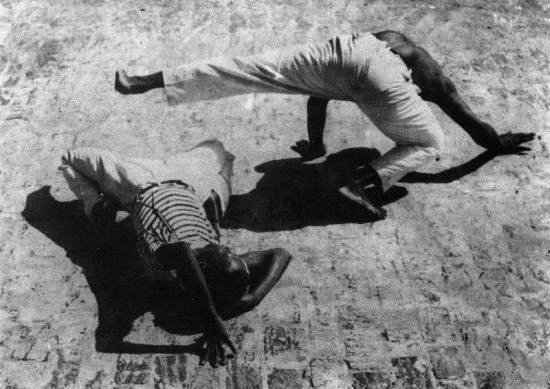
If capoeira were illegal to practice, would you still practice it?
Short answer: Hell yeah!
Long answer: Honestly, it took me a significant amount of time to reach a definitive conclusion. One might wonder why anyone would dedicate themselves to studying an illegal martial art when there is a plethora of legal alternatives available that could arguably make you just as effective a “fighter.”
However, after much consideration, I realized that capoeira’s value transcends legality.
The choice to continue practicing, even under the threat of illegality, stems from the realization that capoeira is far more than a mere sport or physical activity. For those of African descent, it represents a unique lineage of skills, power, and hope, embodying the resilient spirit of a warrior that has historically survived through periods of intense suppression. Beyond its immense cultural significance, the art provides vital health benefits, effective self-defense capabilities, and a profound pathway toward self-knowledge and spiritual grounding. This dedication to preservation is reflected in the work of practitioners like Da’Mon Stith of Austin Warrior Arts, who explores various Historical African Martial Arts (HAMA) to keep these traditions alive.
If so, why would you continue to practice, and how would you go about practicing it?
Practicing an illegal art in a modern context would necessitate a strategic transition to a sophisticated underground network, effectively reviving the historical “malandragem”—the art of deception and survival—that once protected capoeira during its years of prohibition in Brazil. Following the clandestine example set by the Old Mestres, I would seek out secluded, out-of-the-way locations such as dense woods, private basements, or forgotten urban corners to train with a tightly-knit, trusted circle of capoeiristas, all of whom share a deep understanding of the stakes involved. This hidden environment would require a heightened level of collective intuition and deep communal trust, as every roda would become a deliberate and dangerous act of cultural resistance, an intimate gathering where we would not only hone our physical skills but also share stories, music, and the rich heritage that binds us together. As we moved in sync to the pulsing rhythms of the berimbau, each kick and dodge would resonate with the legacy of those who fought to keep capoeira alive. In these moments, our training would transcend mere self-defense; it would transform into a powerful statement against oppression, allowing us to reclaim our identity and resist the encroachment of cultural erasure in an increasingly homogenized world. The very act of practicing in secrecy would reinforce our solidarity, reminding us of the weight of our ancestors’ struggles, and each session would further solidify our commitment to preserving this vital form of expression.
In my public life, I would ensure my martial knowledge remains carefully concealed, preserving the art’s most potent secrets through coded movements and subtle discipline, ensuring that the essence of capoeira survives even if its outward expression is forced into the shadows. Ultimately, the practice would serve as a vital engine for community empowerment, acting as a beacon of resilience amidst adversity. By cultivating personal strength and a warrior’s heart, I would aim to provide tangible security and spiritual inspiration to my family, friends, and neighbors, thereby creating a supportive network that thrives on mutual respect and shared values. This art form would transcend mere physical practice, transforming into a dynamic platform for cultural exchange and community engagement, uniting individuals from diverse backgrounds under a common purpose. In this way, I would endeavor to turn the art into a living foundation for a better world that prioritizes ancestral heritage over restrictive, unjust mandates, reaffirming our commitment to freedom and self-expression in every movement and interaction.
And now, for the bonus question:
What would you use it for?
I would use it to make the world around me a better place. I mean my family, my friends, my community. This practice is not just about individual skill; it is about building a foundation of strength that radiates outward. By cultivating the eye and heart of a warrior, I can provide a sense of security and inspiration to those closest to me. This internal development serves as a beacon, guiding others toward their own paths of resilience and fortitude. Such a foundation ensures that the art is not just a personal pursuit but a vital engine for community empowerment, allowing the practitioner to offer tangible security and spiritual inspiration to their neighbors.
Furthermore, the deep-seated knowledge of self and the comprehensive health benefits gained from the art allow me to be a more present, intentional, and capable member of my community. By drawing upon the power and hope inherent in our shared heritage, I can actively work to uplift everyone I encounter, transforming individual practice into a communal asset. By mastering the rigorous discipline required by the art, I become significantly better equipped to navigate and handle the multifaceted stresses of daily life, offering a stable and grounding presence for my neighbors, peers, and family members alike.
The physical vitality and mental clarity derived from consistent, focused training ensure that I possess the sustained energy and sharp focus required to contribute meaningfully to collective efforts and communal projects. This creates a nurturing environment where our shared ancestral heritage becomes a powerful catalyst for collective growth, resilience, and socio-cultural empowerment. Ultimately, this mastery transforms the individual into a more effective and capable member of society, leveraging the resilient, unyielding spirit of the warrior to navigate modern challenges with grace and to prioritize the preservation of ancestral heritage over any restrictive or unjust mandates.
Well, that was my response to the profound questions raised by Da’Mon. I am deeply committed to the survival of capoeira, legal or not. I view it not merely as a physical discipline but as a vital connection to a resilient ancestral heritage that deserves to be protected and passed on, regardless of external legality.
Please show your support for Da’Mon Stith! He hosts a significant community event called the “Rooted in Resistance” Summer Intensive, every year in June which highlights various traditional systems such as Haitian Tire Machet; and Colombian Esgrima de Machete, and we highly encourage you to check it out! This event serves as a vital platform for the preservation and celebration of Historical African Martial Arts (HAMA), fostering a deeper understanding of the resilient spirits that forged these combat arts. By attending, you directly contribute to the continuation of these unique lineages of skill and power. You can find more information about his work and the event at the following link:
In contemporary digital and urban slang, the phrase “The Epidemic of Fake YNs” refers to a social trend where individuals adopt the aesthetic and language of the “YN” (Young N***a) lifestyle without actually being involved in the street culture it originates from. This phenomenon is often characterized by the performative use of specific vernacular, fashion choices, and behavioral mannerisms on social media platforms to project an image of street credibility or toughness that does not align with the individual’s actual background or daily reality.
The rise of this trend is closely linked to the algorithmic nature of short-form video platforms, where curated personas can quickly gain traction. By mimicking the “YN” archetype—often associated with youth-led urban movements, specific regional rap scenes, and a distinct sartorial style—these individuals seek to capitalize on the cultural capital of the streets. This appropriation often includes the adoption of hand signs, specific slang terms, and a “crashout” persona, which implies a reckless or high-stakes lifestyle that the individual does not actually lead. Furthermore, these digital platforms create an incentive structure that rewards hyper-masculine performances and high-engagement content, often blurring the line between genuine cultural expression and strategic personal branding. As a result, the “Fake YN” phenomenon serves as a case study in how social media can facilitate the rapid adoption, commodification, and eventual dilution of organic social movements for the purpose of global entertainment consumption.
Critics and members of the communities from which this culture originates argue that this “epidemic” trivializes the real-world struggles and systemic issues inherent in the genuine “YN” experience. For those living the reality, the “YN” archetype is often born out of necessity or navigation of specific socioeconomic environments, rather than a chosen aesthetic for digital consumption. By reducing these lived experiences to a collection of trends, “Fake YNs” essentially strip the culture of its historical and social context, ignoring the gravity of the “crashout” lifestyle they attempt to emulate.
The disparity between the performative toughness displayed online and the lack of authentic lived experience often leads to accusations of “clout chasing” or being a “studio gangster”. This friction highlights a significant disconnect: while the authentic community faces the actual consequences of street-level involvement, performers enjoy the social capital without the associated risks. This dynamic frequently results in intense gatekeeping within urban subcultures as a means of protecting the integrity of their shared identity from outside commodification.
Each Friday, PROFESSOR BLACK TRUTH hosts “The Friday Crime Report,” a comprehensive platform dedicated to examining the deep-seated issues of systemic racism, economic inequality, and police brutality within the Black community. This weekly broadcast serves as a critical space for advocacy and active community engagement, often highlighting the voices of various experts and community members who delve into necessary policy changes and propose actionable solutions. By fostering a consistent dialogue centered on social justice, the program strives to empower its audience, providing them with the tools and information needed to bridge the gap between initial awareness and tangible, long-term societal progress.
In Today’s installment…
While the racist governor of Arkansas has been protecting students from black history, attempting to sanitize the educational curriculum, the University of Arkansas has been rocked by yet another arrest for rape, a painfully recurring incident that points to deeper issues within our educational institutions. This disturbing dichotomy highlights a systemic failure where the state focuses on suppressing historical truths while institutional safety and accountability continue to falter, thereby creating an environment fraught with tension and insecurity. These events underscore a troubling trend where legislative priorities seem decoupled from the urgent need for campus security and the protection of student welfare, raising serious questions about the values that guide our educational policies.
By marginalizing the study of Black history, the administration potentially undermines the development of social awareness and empathy, which are critical in addressing the roots of systemic violence, effectively stifling open dialogue and critical thinking among students. But why do these tragic incidents happen so frequently on campus? We explore the intersection of policy, social neglect, and the ongoing struggle for institutional justice, emphasizing that awareness and education on historical injustices could foster a safer community. Our analysis looks into how the erosion of educational standards and the avoidance of difficult historical dialogues might contribute to an environment where institutional accountability remains elusive and the safety of the most vulnerable is compromised, illustrating the urgent need for reform in both educational practices and campus safety measures.
Shoutout to the professor for creating and posting this video.
Support ProfessorBlacktruth through the following platforms: