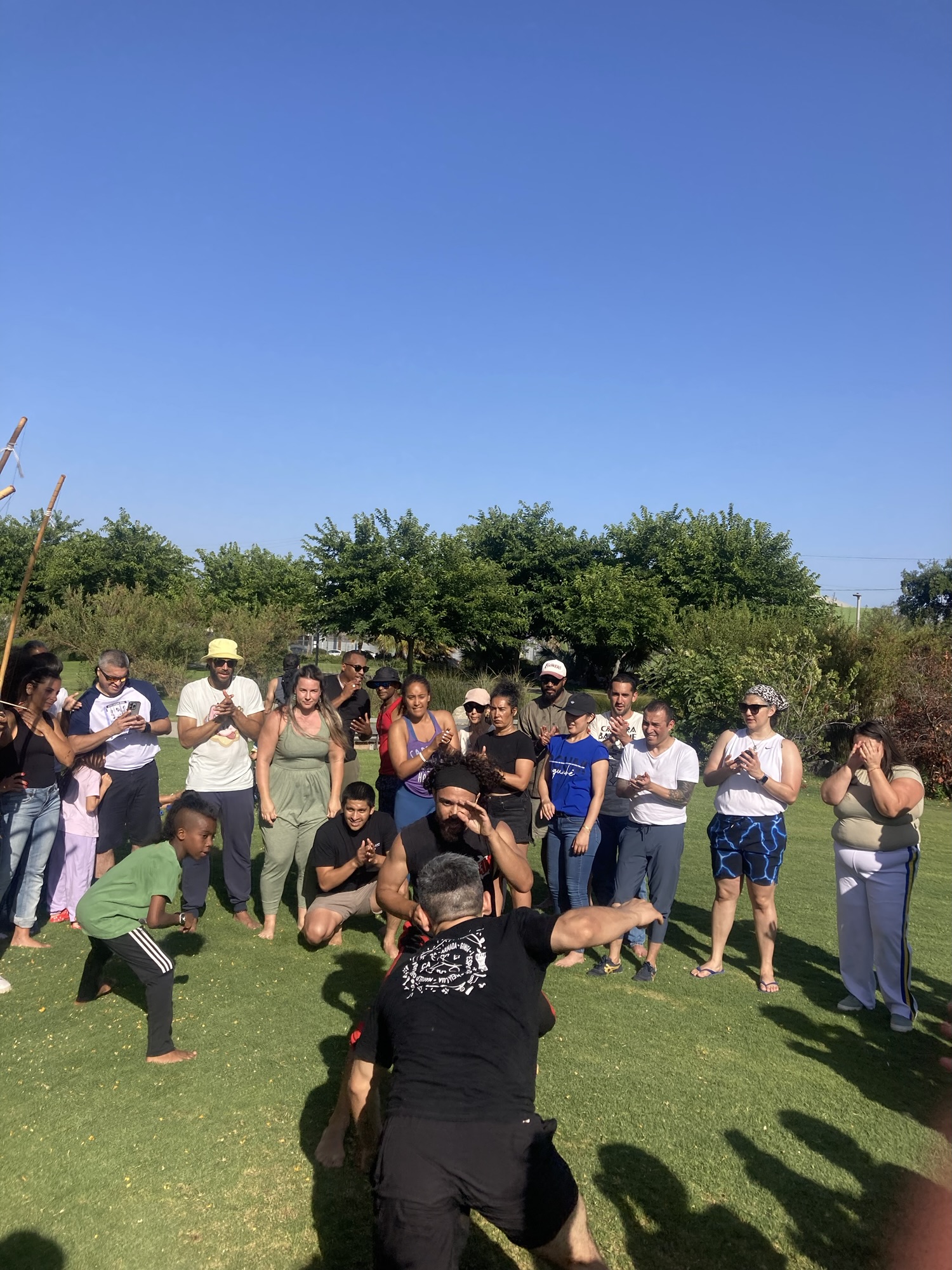
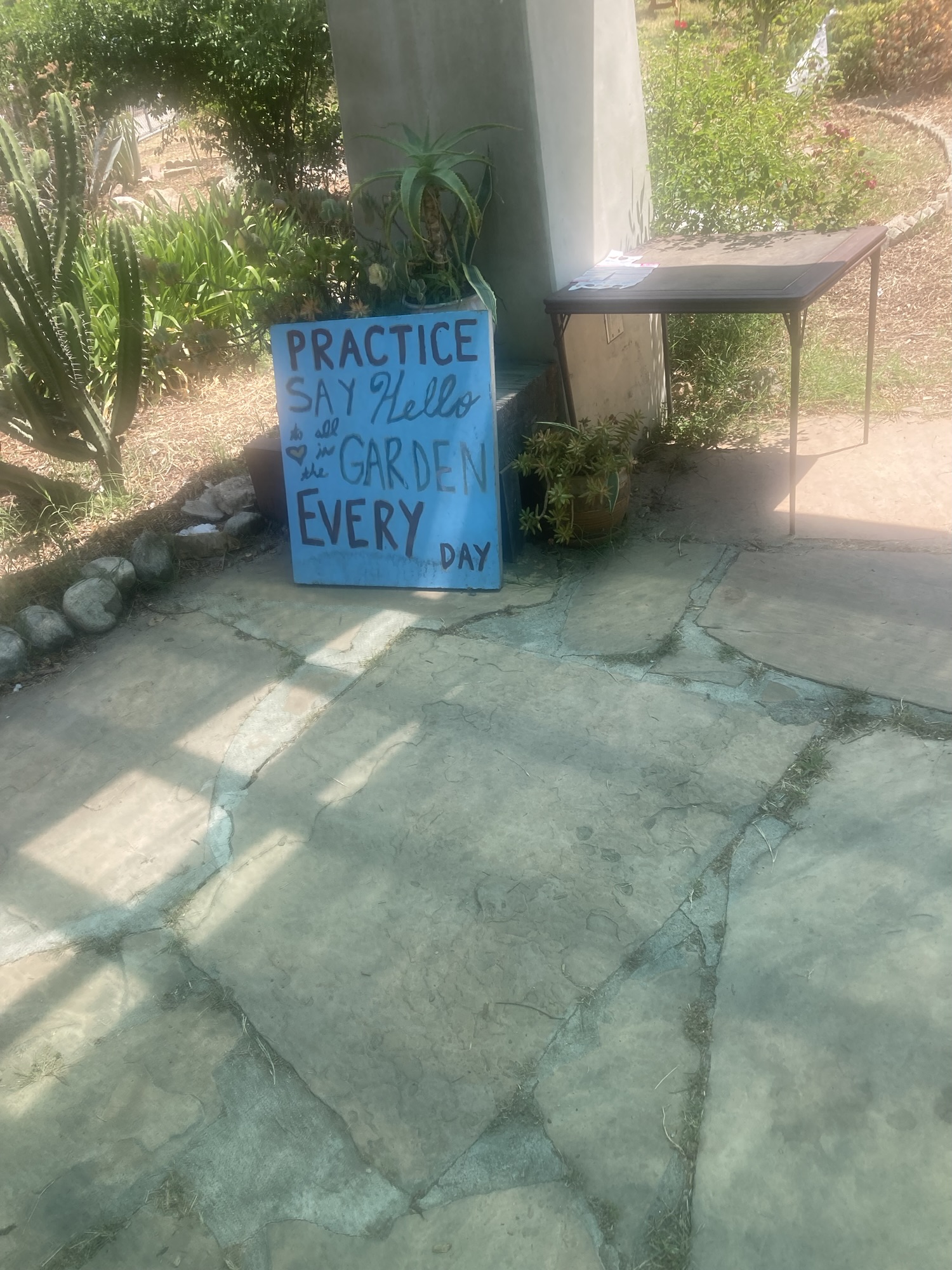
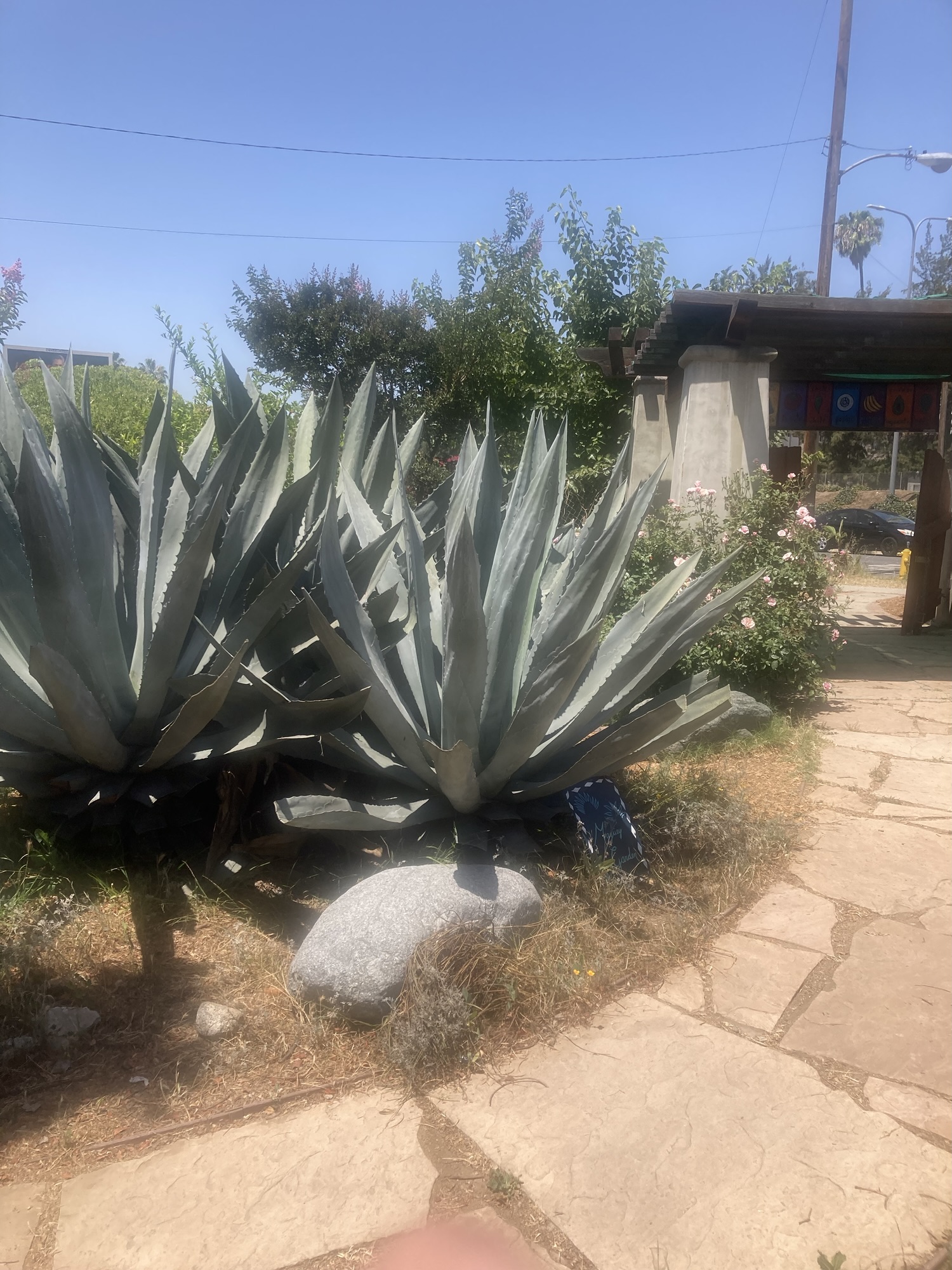
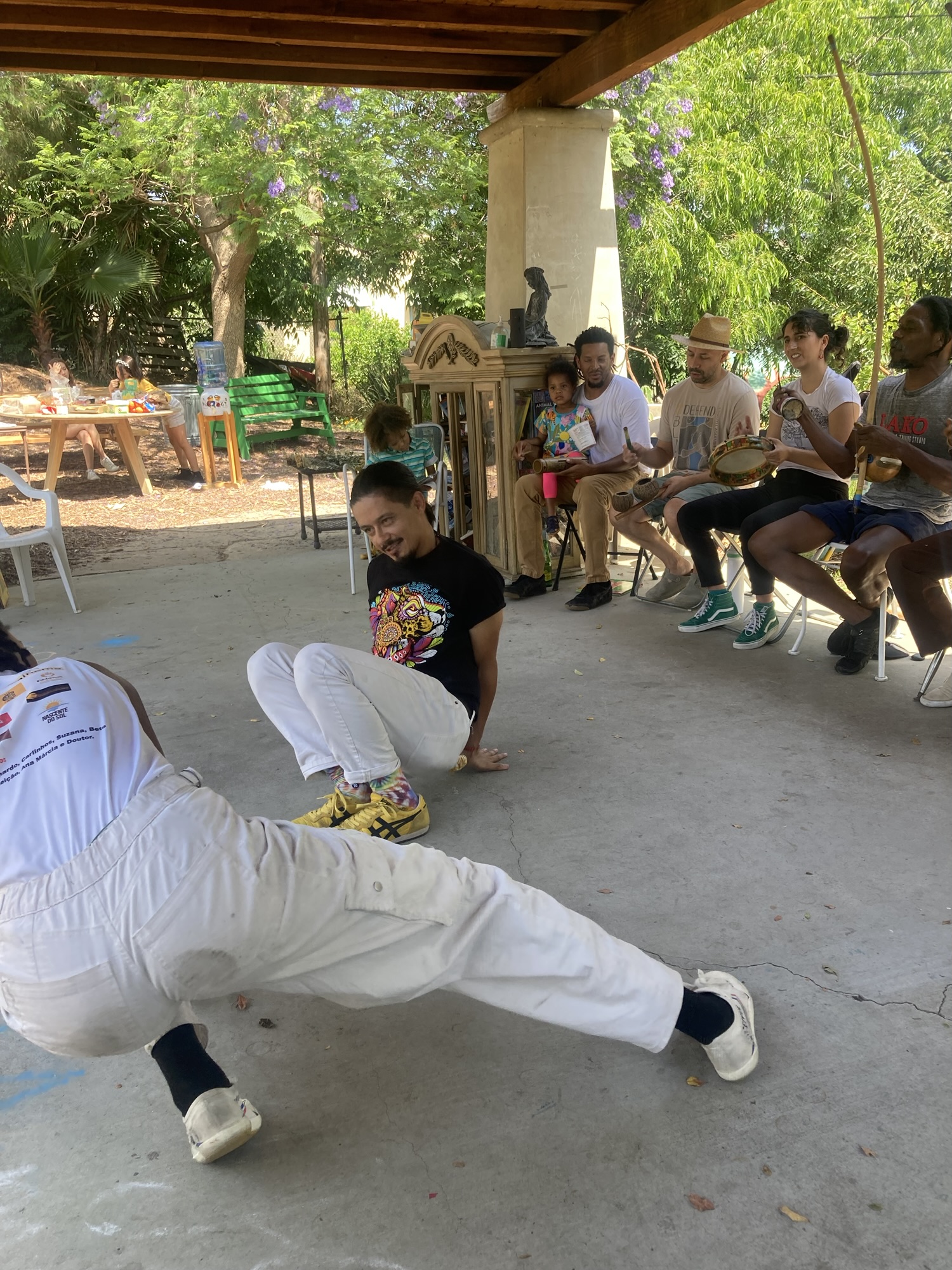
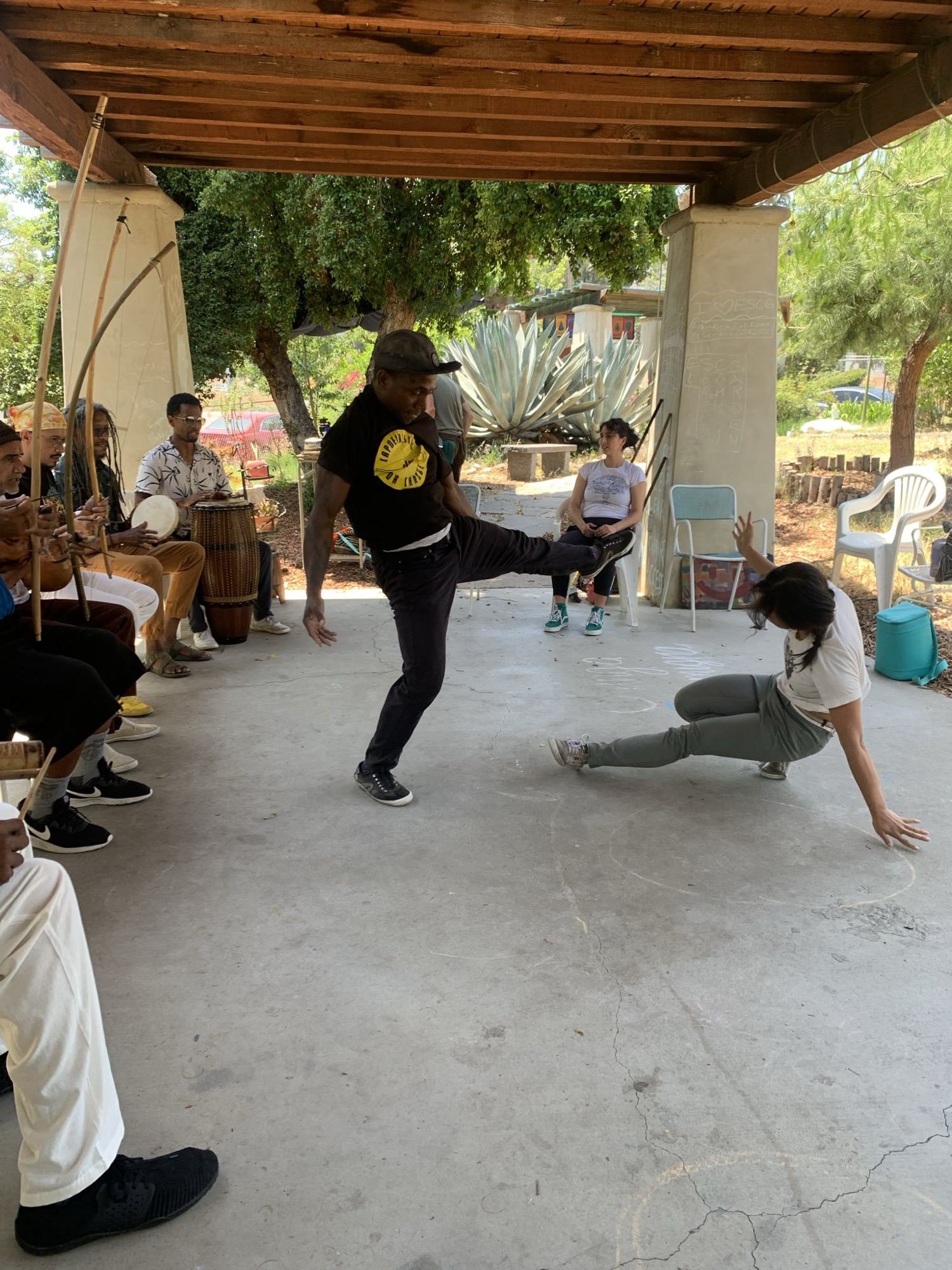
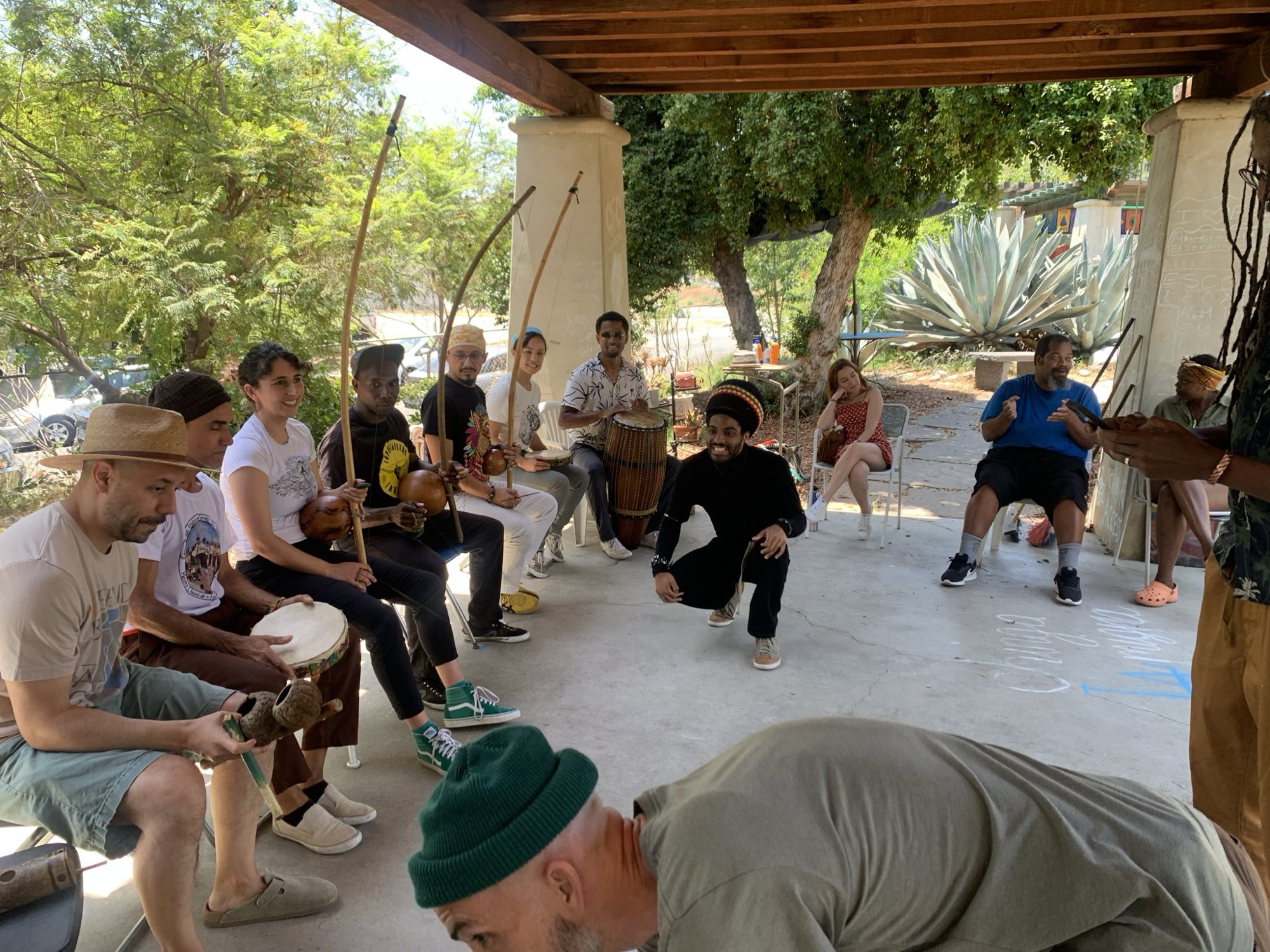
Anyway, I want to tell you about another amazing Capoeira Angola adventure I had last Sunday, June 22nd, a day after the summer solstice. It was an afternoon filled with reuniting with old friends and meeting new friends, creating a vibrant tapestry of connections that warmed the heart. The atmosphere was charged with excitement as practitioners of all levels gathered, each contributing their unique energy to the circle. The rhythm of the Berimbau resonated in the air, and the infectious laughter and lively conversations surrounded us, creating a sense of community. The amazing brotherhood and camaraderie that expresses all that is good about Capoeira reminded me of the essence of this beautiful art form—it’s not just about the physical practice, but also about the relationships we build and the stories we share as we grow together in our journey.
There were quite a few schools of Capoeira there from all over L.A., and a few from Orange County, creating an atmosphere filled with excitement and energy that drew everyone in, igniting a sense of community among practitioners and spectators alike. As the sun set, casting a warm glow over the gathering, we played soft, we played hard, showcasing our skills and passion for the art; the rhythms of the Berimbau resonated in the background, elevating the experience to a transcendental level. We all played beautifully, each move telling a story of dedication and culture, as every kick, spin, and flip blended into a captivating narrative that celebrated our heritage, bridging gaps between generations and uniting us through the vibrant dance of Capoeira.
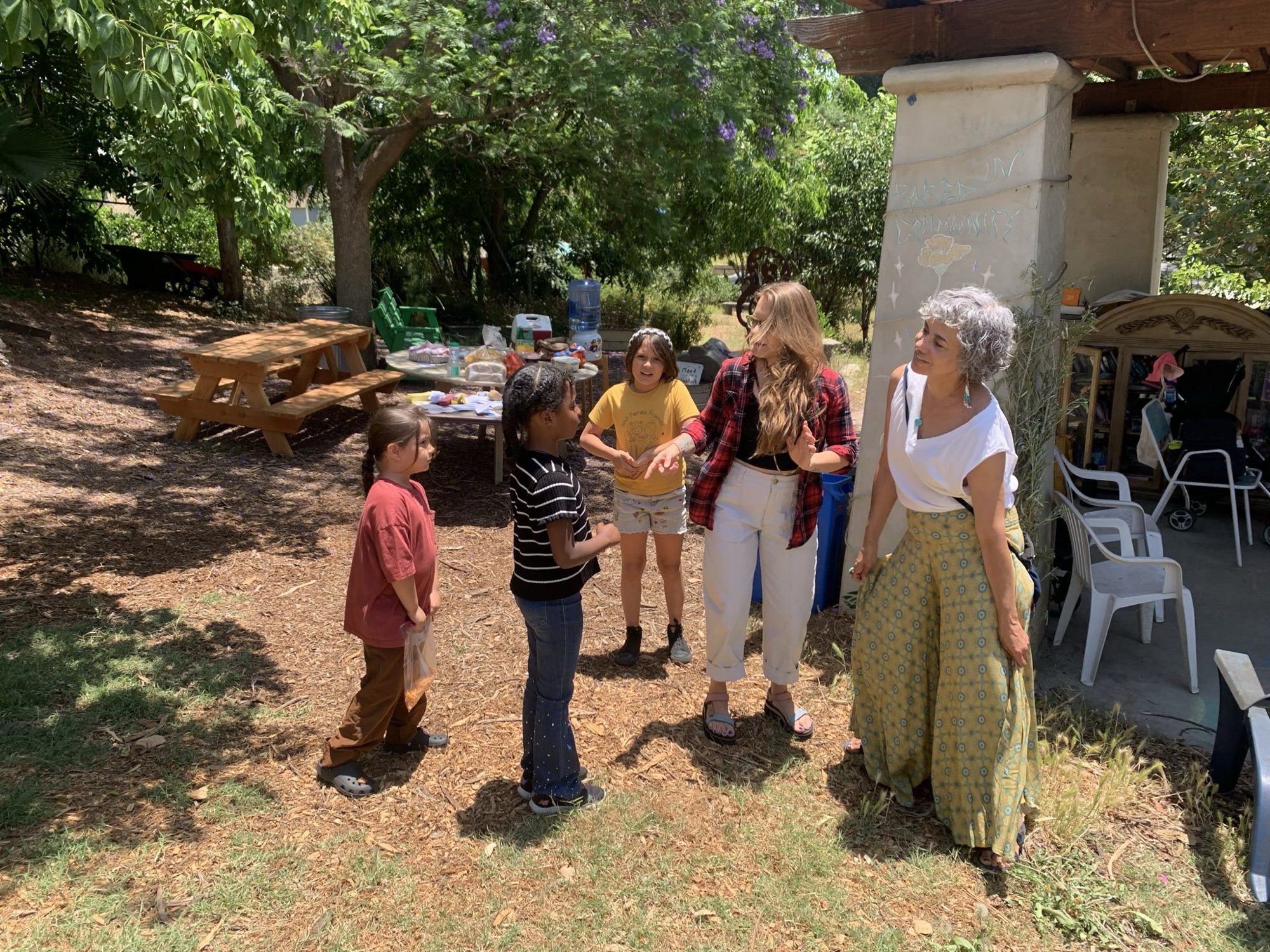
The rhythm pulsed through our veins, and then, after a couple of hours, we ended with an amazing Samba De Roda, where I admit, I danced longer than I should have, completely losing track of time in the joyous celebration. But when the drums call, I have to answer, surrendering to the infectious beat that calls to the very essence of who I am. Then after that was the coolest, most amazing picnic I ever attended, where laughter echoed through the air, delicious fruit was shared, and new friendships were formed under the warm sun, making the entire day an unforgettable experience that I will cherish forever.
This amazing celebration was the start of Capoeira Batuque’s annual batisado, which will be happening all this week, filled with various activities, workshops, and performances that showcase the rich cultural heritage of Capoeira. For more info, please check out their website, brasilbrasil.org. It promises to be an exciting time for participants and spectators alike, as students demonstrate their skills and passion for this unique art form.
I would like to sincerely thank Mestre Amen Santo, as well as Mestres Muito tempo, Minha Velha, Varal, and Contramestres Saracuru for their invaluable contributions to the Capoeira community, which have significantly shaped our culture and practices over the years. A special mention goes out to Arthur Fiu, whose unwavering enthusiasm and vibrant energy truly inspire us all, motivating each member to strive for excellence and to embrace the spirit of Capoeira. Furthermore, I cannot forget to express my appreciation for my uncle in Capoeira, brother Jelani Lateef, whose infectious laughter and warm presence always bring joy and positivity to our gatherings, creating an atmosphere that fosters camaraderie and friendship.
I’m pretty sure I missed some of you, and for that, I sincerely apologize; it was never my intention to exclude anyone, but in the excitement and depth of acknowledgement, I realize that some deserving names may have slipped my mind. Thank you all for your support and passion in keeping the Capoeira tradition alive.
I mentioned that a couple of weeks ago, I went to Oakland for another EVENT. The experience there was truly unforgettable, filled with laughter, connections, and a vibrant sense of community. And as amazing as that was, after coming back here to LA, going to the gathering on JUNETEENTH, and this gathering yesterday, which further highlighted the importance of unity and love, all I can say is,
Today is Juneteenth. It is worth observing and it is more than worth celebrating, as it marks a pivotal moment in our collective history and a powerful reminder of our enduring struggle for freedom and equality.
But we didn’t need the very government that enslaved our people to give us permission to honor our own history; our resilience and triumphs have always been a source of strength and pride within our communities. We have carried the heavy burden of a painful past, yet we have transformed that suffering into a tapestry of culture and heritage that celebrates our identity. From the stories passed down through generations to the vibrant expressions of art, music, and dance that echo our ancestors’ voices, we acknowledge the struggles while embracing the undeniable spirit that has propelled us forward. Each milestone achieved, whether in education, leadership, or social justice, serves as a testament to our unwavering commitment to uplift one another and forge a brighter future.
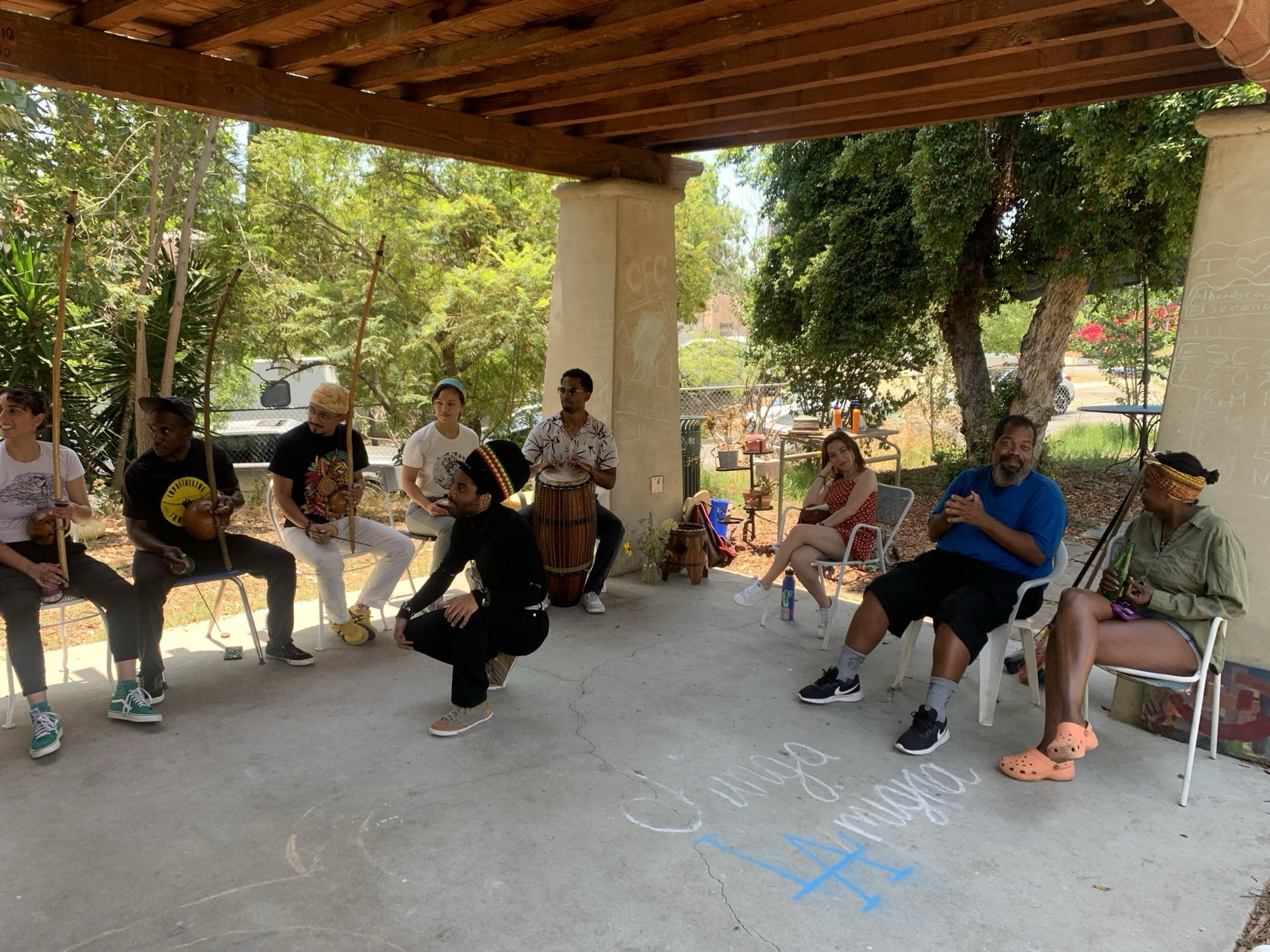
Now, as I said in another POST, we had a Roda and Potluck today. It was a beautiful display of love, brotherhood, and solidarity among all participants, creating an atmosphere rich in cultural heritage and community spirit.
The energy was palpable as we gathered together to share not only food but also stories and laughter, fostering connections that bridge our differences. The rhythm of Capoeira Angola echoed through the space, inviting everyone to join in the movements, transcending barriers and uniting us through the art form that we all cherish. Witnessing such harmony and joy inspired a sense of gratitude for the shared experiences and the vibrant tapestry of our collective journey.
We must all come together in recognition of the sacrifices made by those who came before us, acknowledging their struggles and the legacies they left behind. It is vital to honor the ancestors who bravely faced the adversities of their time, enduring hardships and injustices that many cannot fathom today. Remember the ancestors who fought against oppression and dreamed of a brighter future for us all, envisioning a world where equality and justice reign.
Recall the tireless efforts and the relentless spirit that fueled their fight, paving the way for progress and change. Remember the debt that is owed, not only to those who suffered under slavery but also to those who continue to fight against injustice today, standing up for the marginalized and voicing the concerns of the unheard.
Their courage serves as an inspiration, reminding us of the importance of advocacy and activism. As we reflect on their unwavering spirit, we are called to action, encouraging a collective movement where every voice matters. And remember ALL who owe it, for the responsibility to uplift and empower one another lies within each of us. This duty demands that we not only raise awareness of the challenges faced by marginalized communities but also actively engage in solutions that foster change.
And in that spirit, I’d like to discuss the ICE raids a little bit. At the Roda, our sister soldier Eva recently left some informative flyers from an organization called Union Del Barrio, which is dedicated to empowering ordinary citizens with the knowledge and skills they need to protect themselves and their communities from invasive ICE raids.
These flyers outline critical training sessions and resources designed to raise awareness about immigrants’ rights and ensure that individuals are prepared to respond effectively in challenging situations. I highly encourage everyone to click HERE to check them out and delve deeper into the fantastic initiatives they are actively involved in, as well as to discover various ways you can contribute to their crucial mission and support the fight for justice and dignity for all community members.
Together, as we work towards a more just and equitable world, we must commit to listening, learning, and building bridges across divides. By fostering a community in which everyone, regardless of their background, can thrive and flourish in harmony, we create a shared environment where mutual respect and collaboration flourish, paving the way for future generations to inherit a brighter, more inclusive society.
I saw this video and thought I’d post this here for you to check out, because I think it goes to the root of how we as black people sometimes feel as we navigate through this world. It dives deep into the complexities and nuances of our experiences, illustrating both the struggles and triumphs that define our journey. The content resonates profoundly, showcasing personal stories that highlight the unique challenges we face and the resilience we embody.
Now, what this “racist” woman said didn’t surprise me, but it’s actually sad that this is a reality I as a Black man live with daily. Being black in this society can sometimes be exhausting, as it feels like a constant struggle against a tide of prejudice and misunderstanding. You get hated on just for existing, and those moments chip away at your spirit, reinforcing a narrative that many of us strive to break free from. It’s disheartening to navigate a world where stereotypes are constantly being perpetuated and where our worth is often judged through the lens of outdated beliefs.
We sometimes feel like we’re the most hated people on the planet, yet the most copied by EVERY OTHER CULTURE, as they take elements from our traditions, our music, and our style while ignoring the very humanity that underpins them. Each day presents a new challenge to rise above the misconceptions and to affirm our identity in a landscape that often seems unwelcoming, where biases can overshadow our contributions and achievements. Yet, we continue to push forward, drawing strength from our rich history and vibrant cultures, proud and resilient, knowing that every small victory builds a path to greater understanding.
We cherish our roots while also embracing the complexity of our existence, hoping for a brighter tomorrow where acceptance prevails. It is this hope that fuels our determination to engage in dialogue, educate others about our narratives, and foster genuine connections that transcend superficial replication to celebrate the true essence of who we are.
I will post more about this subject, as I believe it holds significant importance for our community. By sharing this video and posting this blog, I hope it sparks conversations that can lead to greater understanding and solidarity among us. Engaging in thoughtful discussions can illuminate diverse perspectives and experiences, encouraging empathy and awareness. Ultimately, my goal is to create a space where we can all learn from each other, foster meaningful connections, and collectively work towards positive change in our society.
“Be the change you want to see in the world” emphasizes the importance of taking initiative rather than waiting for others or circumstances to change, encouraging action to make a difference. This powerful statement serves as a reminder that each individual holds the potential to impact their environment positively. By embodying the values and qualities we wish to see, we not only inspire those around us but also create a ripple effect that can lead to broader societal transformation. It calls for personal responsibility, urging us to actively engage in our communities and advocate for the changes we desire, thereby fostering a culture of proactive solutions and collective growth. In essence, it is a challenge to reflect on our own actions and strive for improvement, knowing that real change begins within ourselves.
I first saw this video many years ago, and now that I see it through the eyes of a capoeirista, the video makes much more sense.
Historically, oppressed people are taught to go to their church, their priest, their elected official, etc., and wait for someone to rescue them from their oppression. This deeply ingrained mentality can create a sense of helplessness and stagnation, leading individuals to believe that change is beyond their control.
I learned through capoeira that if we want to help ourselves out of the miserable circumstances we find ourselves in, we must first help ourselves. Capoeira has shown me that empowerment comes from within, and through movement, rhythm, and community, we can take the necessary steps to create our own paths.
Each kick, each dance, and each beat of the berimbau serve as reminders that we hold the power to transform our realities. It’s about breaking free from the shackles of expectation and truly believing that change is not just possible, but achievable through our own efforts and bravery. Therefore, let’s embrace the spirit of capoeira, encouraging not only ourselves but also others around us to take action and be the architects of our destiny.
“The world is full of suffering; it is also full of the overcoming of it.” -Helen Keller
Sometimes on this blog, I post about some very ugly things that prevail in society, such as injustice, inequality, and the struggles many individuals face daily. However, amidst these challenges, I thought it would be a good idea to post about some of the love that prevails in society as well. This love manifests in various forms, from the small acts of kindness shared between strangers to the unwavering support among friends and family. It’s important to recognize how love can bring people together, fostering a sense of community and understanding that counters the negativity we often encounter. By highlighting these moments of compassion, I hope to inspire others to embrace love in their own lives, creating a ripple effect that can help to alleviate some of the darker aspects of our world.
In today’s installment…
Good neighbors make all the difference – they can support you, brighten your day, and sometimes even save your life! They are the people you can rely on during tough times, sharing both laughter and tears, helping you celebrate milestones and providing comfort during losses. The sense of community fostered by good neighbors enhances your living experience, creating a network of friendship and trust that can help you navigate life’s challenges.
In a world that can often feel isolating, these connections remind us of the importance of human interaction and the simple joys of knowing you have someone nearby who cares. These bonds, whether forged through shared experiences, common interests, or a simple act of kindness, serve as vital lifelines that enrich our lives. They offer comfort during challenging times and amplify our happiness during moments of joy. Recognizing the value of having friends, family, and community around us fosters a deep sense of belonging and security, making our burdens feel lighter and our successes even sweeter. Ultimately, it is these meaningful relationships that add color and depth to our existence, reminding us that we are never truly alone in this vast world.
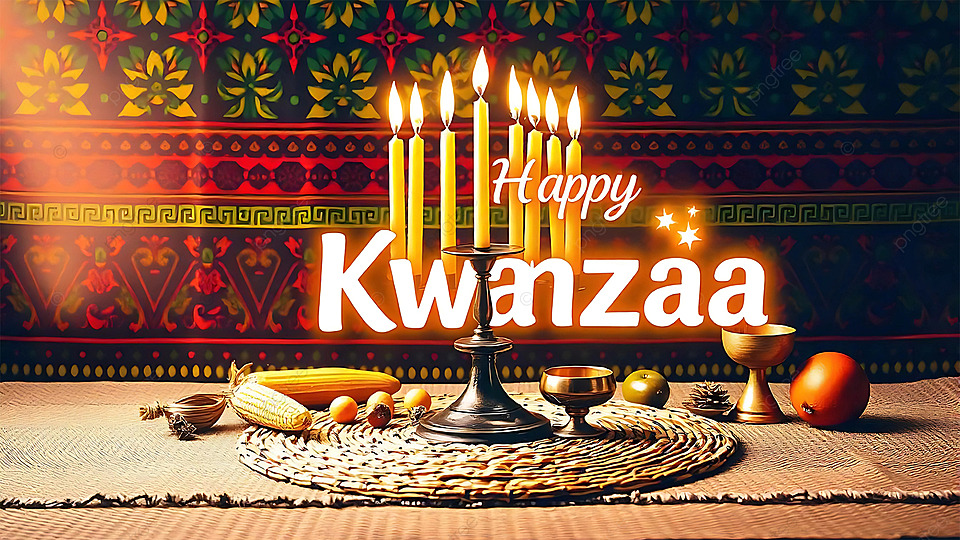
December 26, 1966 Kwanzaa, a week-long celebration honoring universal African heritage and culture, was first practiced in the United States with the intent of promoting a deeper understanding and appreciation of African traditions and values. Kwanzaa was created by Maulana Karenga, who envisioned it as a means to reconnect African Americans with their cultural roots and foster a sense of community and empowerment.
This vibrant festival is observed annually from December 26 to January 1, featuring daily rituals that reflect on the seven guiding principles known as the Nguzo Saba, which include unity, self-determination, collective work and responsibility, cooperative economics, purpose, creativity, and faith. Through family gatherings, storytelling, traditional foods, music, and dance, Kwanzaa serves as a platform for individuals and families to celebrate their heritage, cultivate cultural pride, and strengthen community bonds.
Each of the seven days of Kwanzaa is dedicated to one of the following seven principles:
Umoja (unity), which emphasizes the importance of togetherness and collective strength within the community;
Kujichagulia (self-determination), encouraging individuals to define their own identity and shape their own future;
Ujima (collective work and responsibility), reminding us of the necessity of working together to uplift one another and ensuring the well-being of the community;
Ujamaa (cooperative economics), promoting the idea of supporting one another through shared economic goals and initiatives;
Nia (purpose), inspiring individuals to reflect on and pursue their purpose in life while contributing positively to society;
Kuumba (creativity) in our actions and environments empowers us to unleash our imagination, leading to innovative solutions and vibrant expressions that elevate individual experiences and foster a collective atmosphere of inspiration and artistic collaboration.
and finally, Imani (faith), which calls for a deep belief in ourselves, our people, and our potential to create a brighter future.
Each principle carries profound meaning and serves as a guiding light for individuals and families during this celebration, fostering a deeper connection to heritage and community values. This celebration not only brings people together but also encourages reflection on shared traditions and collective memories that define the very essence of who we are. As families gather to honor these principles, they strengthen their bonds, passing down stories and values from one generation to the next, ensuring that the rich tapestry of their culture remains vibrant and alive. In doing so, individuals are reminded of their roots and the importance of unity, creating a space where diverse voices intersect and new traditions can emerge, all while holding onto the foundational beliefs that have shaped their community’s identity.
Now that we know what Kwanzaa is, let’s talk about the 1st day of Kwanzaa.
Today’s Kwanzaa Principle, Umoja, emphasizes unity among members of the African descent community, highlighting the vital importance of togetherness in family, community, nation, and race. It encourages individuals to support one another, strengthen relationships, and work collaboratively to overcome challenges, cultivating a sense of belonging and camaraderie among all. Umoja inspires gatherings, fostering dialogues that promote understanding and respect, and serves as a reminder of the shared struggles and triumphs that have shaped the African diaspora. Ultimately, this principle aims to create a cohesive society that honors the collective history of the African diaspora, while promoting greater prosperity, resilience, and a future built on mutual respect and cooperation, ensuring that each member of the community feels valued and empowered to contribute to the collective good.
Tomorrow, we will talk about Day 2 of Kwanzaa, and present the next principle, Kujichagulia (self-determination)
Welcome to MALICIA AS A GAME OF POWER. This blog series aims to delve deep into the realm of Strategy. Throughout the series, we will explore various aspects of dealing with certain people, offering insights on effective communication, conflict resolution, and building meaningful connections. Additionally, we will provide valuable tips on avoiding scammers, protecting oneself from online fraud, and maintaining a secure online presence.
Navigating the world we live in can be challenging. In this series, we will share practical guidance on making informed decisions, embracing opportunities, and overcoming obstacles on the path to success. Whether it’s negotiation, identifying manipulation, or honing leadership skills, this series will equip you with the knowledge to thrive in interpersonal dynamics and strategic decision-making. We will also explore personal branding, self-presentation, and managing online reputation, empowering you to craft a compelling image in today’s digital world. Join us as we unravel the complexities of power dynamics and relations, arming you with the expertise to emerge victorious in your pursuits.
In this installment, we will explore the 12th law of power in the book, the 48 laws of power by Robert Greene. You can but a copy by clicking HERE.
One sincere move will cover over a dozen dishonest ones, creating a profound impact that can reshape perceptions and build trust in a world often marred by deceit. In a society where skepticism reigns, honesty can bring down the guard of suspicious people, fostering an atmosphere where genuine connections can form in the most unexpected circumstances. This powerful act of sincerity opens doors to authentic relationships, encouraging individuals to share their vulnerabilities and experiences without fear of judgment. When you approach others with transparency and integrity, you not only open their shield with honesty but also set a precedent that encourages reciprocal openness, creating an environment where they feel safe to lower their defenses. As people begin to feel valued and understood, the foundation of mutual respect solidifies, enabling deeper discussions and collaborative efforts that can lead to greater understanding and compassion among individuals.
Once that barrier is removed, it becomes possible to engage in deeper conversations or, in a more manipulative sense, to deceive. This strategic use of vulnerability and truth invites a complexity in interactions that can ultimately lead to either strengthens or undermines relationships, depending on the intent behind the initial honest gesture. The rawness of shared experiences can create a profound sense of connection, fostering empathy and understanding between individuals. However, this openness also carries the risk of exploitation; when someone presents themselves as vulnerable, it can be an invitation for others to take advantage of their honesty. Furthermore, the dynamics at play often hinge on the context and the history of the relationship, making each interaction unique. As individuals navigate these intricacies, the potential for miscommunication increases, adding another layer to the already delicate dance of human connection. Ultimately, the balance struck between authenticity and manipulation shapes the very foundation of trust and connection in interpersonal relationships.
The 12th Law of Power, Through the Eyes of an Angoleiro: A Study in Strategic Obliquity
—–Part I: The Law According to Power
Robert Greene’s 12th Law is an instruction in sophisticated deception. It dictates that to truly manipulate someone, a continuous pattern of deceit is often less effective than strategic, momentary honesty and calculated acts of generosity.
The Core Principle:
Selective Honesty: A single, genuine act of truthfulness—especially one that seems to go against your own self-interest—builds immense trust. It creates the illusion that you are a person of integrity, lowering the target’s guard for the inevitable larger deception that follows.
Calculated Generosity: A sudden, unexpected gift or favor is an investment. It not only establishes a sense of obligation (the universal human desire to reciprocate) but also paints the manipulator as benevolent and non-threatening.
The Disarming Effect: The combination of these two elements dissolves suspicion. The “victim” (or opponent) is blinded by the veneer of goodwill and openness, making them psychologically and emotionally vulnerable to the actual strategic move.
—–Part II: The Angoleiro’s Interpretation: The Roda as a Laboratory of Strategy
The Angoleiro operates within the roda (the Capoeira circle) where the movements are slow, low to the ground, and deeply rooted in Malandro (trickster) strategy. Unlike the rapid, acrobatic movements of Capoeira Regional, Angola is a protracted game of mental and physical chess. The 12th Law, therefore, is not about outright manipulation, but about Strategic Obliquity—achieving an objective indirectly.1. Selective Honesty: The Ginga as a Truthful Facade
In Capoeira Angola, Ginga is the foundational, rhythmic swaying movement. It is the Angoleiro’s dialogue with the space and the opponent.
The Honest Reveal: The Angoleiro might intentionally present a vulnerability—a slight overcommitment to a movement, a momentarily exposed flank, or a predictable rhythm. This is a form of selective honesty. It says, “Look, I am flawed; I am predictable in this moment.”
The Disarming Effect: This “honest” reveal is a bait. The opponent, seeing an opening, is drawn in and speeds up their attack. The Angoleiro has truthfully shown them a possible action, but the true intent lies in the reversal or counter-attack that the opponent’s reaction enables. The honesty of the bait disarms the opponent’s caution, causing them to abandon their own strategic patience.
2. Calculated Generosity: The Offer of Space and Time
Generosity in the roda is often expressed as the deliberate offering of space or time.
The “Generous” Movement: An Angoleiro may perform a slow, beautiful, almost theatrical movement (floreio) or hold a position that appears to concede ground, giving the opponent ample time to respond. This is the calculated favor. It is a “gift” of initiative.
The Strategic Obligation: The opponent feels compelled to accept this gift by attacking or making a move. However, the generous posture is not a retreat; it is a meticulously crafted trap. The seemingly slow movement is a highly unstable equilibrium, allowing the Angoleiro to execute a lightning-fast transition (chapa, rasteira, or cabeçada) the moment the opponent commits to the attack. The generosity forces a commitment that is then exploited.
Part III: The Philosophical Convergence
The application of the 12th Law by the Angoleiro transcends mere manipulation; it speaks to the deeper philosophical foundations of Capoeira Angola.
Greene’s Law of Power
Angoleiro’s Strategy (in the Roda)
Underlying Principle
Use Selective Honesty
Feigning Vulnerability (The Bait)
Control is achieved by directing the opponent’s perception of reality.
Generosity to Disarm
Offering Initiative/Space (The Trap)
The quickest way to defeat a patient opponent is to force them into impatience.
Goal: Long-Term Control
Goal: Mastering the Flow of the Game
The true power is not in the strike, but in the opponent’s reaction to your action.
Ultimately, the 12th Law, when interpreted through the profound philosophical lens of an Angoleiro—a practitioner of the traditional and foundational style of Capoeira Angola—transcends a simple directive. It crystallizes into a practical lesson in malandragem, which is far more than mere street smarts; it is the art of the cultivated trickster, the strategic rogue who operates in the nuanced space between overt action and veiled intent.
This principle is fundamentally not about the vulgarity of outright lying, but rather about the sophisticated presentation of a perceived truth that is meticulously crafted to serve a larger, overarching strategic falsehood or deception. The Angoleiro, in the execution of their game, consciously employs the inherent aesthetic qualities of Capoeira Angola—its striking beauty, its deliberate slowness, and the deceptive aura of apparent openness and vulnerability. These characteristics are not weaknesses; they are the bait. By inviting the opponent into a false sense of security, the Angoleiro seduces them into a fatal strategic miscalculation. The slow, grounded movements, the seemingly unguarded stances, and the theatrical flourishes of the dance are all part of an elaborate psychological ruse. This masterful control of perception ensures that the true source of power, the decisive counter-movement, remains completely obscured. Power, in this context, does not arrive from a predictable, direct confrontation. Instead, like the sudden and devastating rabo de arraia (the whip-like stingray kick, a hallmark of Capoeira Angola), it manifests from an unseen angle and materializes at the most unexpected, surgically precise moment, completely dismantling the opponent’s strategy and position. The 12th Law, therefore, is the code of the strategic illusionist, where the dance is the mask and the rhythm is the countdown to an unforeseen consequence.
Kwanzaa is a seven-day celebration observed from December 26 to January 1, promoting Pan-African culture and community. It can serve as an alternative or an addition to other winter holidays, focusing on seven key principles applicable throughout the year.
Today’s Kwanzaa principle, Imani (Faith), emphasizes the significance of family and community traditions as a spiritual center, fostering belief in community leaders, elders, and loved ones, both past and present. This principle encourages individuals to cultivate a deep-seated trust and confidence in one another, reinforcing the bonds that unite families and communities. By honoring the lessons and experiences passed down through generations, Imani nourishes a collective identity that celebrates shared heritage and values.
It inspires people to actively participate in the growth and development of their communities, reinforcing the idea that faith in one another is essential for resilience and harmony. This collective engagement not only fosters a sense of belonging but also cultivates a dynamic environment where innovative ideas can flourish, allowing individuals to harness their unique strengths for the greater good. In acknowledging the sacrifices and triumphs of those who came before us, we not only pay tribute to their legacy but also empower ourselves to envision a brighter future for the generations yet to come, embracing a commitment to uplift and support each other through life’s challenges.
By remembering our shared history, we are reminded of the power of unity, instilling a deeper sense of responsibility to carry forward the lessons learned and to strive for a more inclusive and compassionate world. It is through these shared experiences and the bonds we create that we can build a foundation of hope, ensuring that every voice is heard and valued in our collective pursuit of growth.