Capoeira Angola videos online showcase its vibrant culture through music and movement, highlighting its evolution as a form of self-defense and expression that integrates elements of acrobatics, rhythm, and strategy. They demonstrate intricate techniques with astounding agility while exploring the rich history of Capoeira, emphasizing community connections and the art’s ability to unite diverse individuals from various backgrounds and social groups. These videos educate viewers about Capoeira as a living tradition that inspires future generations, illustrating its values of resilience, creativity, and cultural pride, while inviting participation in this unique blend of dance and martial arts. Additionally, they often feature interviews with seasoned practitioners who share insights into their personal journeys, revealing how Capoeira has impacted their lives and fostered a sense of belonging. With each performance, these videos not only entertain but also serve as a vital resource for understanding the depth and significance of Capoeira, ultimately appreciating this dynamic art form as a means of cultural expression and unity.
Today, I recount a very special day for me.
A Day of Capoeira, Community, and Giving Back in MacArthur Park
This is the story of a memorable day, captured in two special videos, marking my first public Capoeira game. While I might be my own harshest critic, and I can’t claim instant mastery, the experience itself was profound. We gathered that day alongside Solsinmotion, who, in collaboration with Revolutionary Autonomous Communities (RAC), had generously volunteered to provide fresh, organic food to the MacArthur Park community, all while showcasing the vibrant art of Capoeira.
From noon until a little after 2 PM, our Capoeira demonstration unfolded. The rhythmic movements, the music, and the energy captivated the community. It was a powerful display of culture, athleticism, and the spirit of collaboration.
Following our performance, we lent a hand to RAC, assisting them in organizing and distributing the much-needed food to the grateful residents of MacArthur Park. It was truly inspiring to witness the direct impact of these efforts, as the smiles on the faces of the families we helped added a profound sense of fulfillment to our work. Many of the residents expressed their heartfelt gratitude, sharing stories of their challenges and the importance of community support during difficult times. We also had the opportunity to engage with the local volunteers, who brought their own enthusiasm and dedication to the cause, making the day even more memorable. For a more detailed account of that day’s events, you can find a comprehensive blog post HERE.
Reflecting on that day, one particular lesson from Charles still resonates deeply within me: the fundamental essence, the very glue that binds Capoeira together, is COMMUNITY. This insight has only grown stronger with time. Community is not merely a collection of individuals; it is the vital force that brings people together, fostering shared experiences, mutual support, and collective growth. It’s about building connections, learning from one another, and creating a sense of belonging that enriches us all. The day in MacArthur Park was a powerful testament to this truth, demonstrating how the synergy of Capoeira and community engagement can create a truly meaningful and impactful experience for everyone involved.
How Capoeiristas have historically dealt with State repression and violence has been a complex and multifaceted issue, steeped in rich cultural traditions and resilience. Throughout history, Capoeira emerged as a form of resistance against oppression, allowing practitioners to blend martial arts with dance and music to evade detection by colonial authorities. The strategic use of Capoeira as both a means of self-defense and a way to foster a strong community has enabled practitioners to maintain their identity in the face of harsh societal challenges. This vibrant art form has not only provided a physical outlet for those subjected to violence but also a spiritual sanctuary, reinforcing bonds among practitioners and serving as a source of pride and cultural heritage. Furthermore, the ongoing evolution of Capoeira has seen it adapt to modern forms of resistance, where the principles of agility and creativity are now extended to address contemporary social injustices, proving that its inherent values of unity and strength continue to resonate deeply within communities striving for autonomy and recognition.
Capoeira, a quintessential Afro-Brazilian art form, stands as a profound testament to human resilience and cultural ingenuity in the face of relentless state repression and violence. Its historical trajectory is not merely a narrative of survival but a vibrant illustration of how a community forged a powerful instrument of resistance from the crucible of oppression. Originating in the dark era of colonial Brazil, Capoeira ingeniously blended martial arts, dance, and music, creating a sophisticated language of defiance that allowed its practitioners, the Capoeiristas, to evade detection by the very authorities who sought to suppress them. This strategic fusion transcended mere disguise; it was a deeply embedded cultural practice that enabled the honing of combat skills in plain sight, veiled under the guise of festive celebration and communal gathering.
The intrinsic duality of Capoeira—serving simultaneously as a potent means of self-defense and a powerful instrument for fostering community cohesion—was absolutely critical in preserving the identity and dignity of its practitioners amidst relentless societal challenges. In a world bent on stripping them of their heritage and humanity, Capoeira offered a sacred sanctuary, a dynamic space where physical prowess seamlessly intertwined with spiritual solace. It acted as a powerful social glue, reinforcing the bonds among practitioners and cultivating a robust network of solidarity that was absolutely crucial for their collective survival. Beyond its practical applications in combat and community building, Capoeira blossomed into a profound source of pride, a living embodiment of cultural heritage, and a vibrant tapestry meticulously woven from threads of resistance, resilience, and unwavering hope.
The enduring legacy of Capoeira is further underscored by its remarkable adaptability, a characteristic that has allowed it to transcend its origins and address contemporary social injustices. As societies evolved and new forms of oppression emerged, so too did Capoeira, continuously transforming itself to remain relevant and impactful. The core principles of agility, creativity, and strategic evasion, meticulously honed over centuries in the face of historical oppression, found new and profound relevance in modern forms of activism and social protest. This continuous evolution powerfully demonstrates that Capoeira’s inherent values of unity, strength, and the unwavering pursuit of autonomy resonate deeply within communities striving for recognition, justice, and self-determination, unequivocally proving its timeless power as a transformative force for social change.
As the Brazilian government intensified its repressive measures against Capoeira practitioners, including outright criminalization and the brutal application of state-sponsored violence, Capoeiristas responded with ingenious and highly effective strategies to navigate this increasingly hostile environment. They masterfully transformed public spaces—city squares, street corners, and open fields—into vibrant stages for their resistance. These gatherings, often appearing as spontaneous festivals and lively performances, were, in fact, cleverly orchestrated acts of defiance. Under the vibrant and seemingly innocuous guise of cultural celebration, they subtly challenged state authority and showcased their indomitable spirit, their physical prowess, and their unwavering cultural pride.
This clever camouflage served a crucial purpose, allowing Capoeiristas to demonstrate their extraordinary skills, practice their art, and reinforce their community ties without inviting direct, often violent, confrontation from the authorities. The vibrant energy and communal spirit of these gatherings fostered an incredibly deep sense of solidarity among practitioners, strengthening their resolve and commitment in the face of persecution. By transforming these events into public spectacles, they not only meticulously preserved their cherished art form but also raised crucial awareness about their struggles, their deep cultural roots, and their unwavering resilience. As Capoeira solidified its reputation as a potent symbol of resistance against oppression, it began to attract diverse audiences, transcending its original context to become a vital expression of broader Brazilian identity and a powerful advocate for social justice, echoing the voices of the marginalized and oppressed.
This innovative practice, born out of necessity and brilliant improvisation, served a critical dual purpose. Firstly, it effectively circumvented direct confrontations with oppressive forces, thereby minimizing casualties and maintaining the integrity of their community. Secondly, and perhaps more profoundly, it played a pivotal role in reclaiming cultural heritage and fostering profound solidarity among community members. It ignited a powerful sense of identity and belonging, providing an unyielding bulwark against the forces of dehumanization and cultural eradication. The transformative journey of Capoeira, from a grassroots struggle for survival among enslaved and marginalized populations to its current elevated status as a globally recognized and celebrated cultural symbol, eloquently underscores the extraordinary tenacity, inventive spirit, and enduring courage of those who practice it. This remarkable evolution vividly illustrates how the art form has adapted and thrived over time, seamlessly blending the rhythmic intricacies of music, the expressive and fluid movements of dance, and the disciplined, potent techniques of martial arts to forge a dynamic, compelling, and utterly unique expression of resistance.
Ultimately, this profound transformation of Capoeira reflects not merely a fight against oppression but also a joyous and vibrant celebration of culture, community strength, and the indomitable human spirit. It serves as a powerful and timeless reminder that even in the darkest hours of oppression, the spirit of Capoeira possesses the extraordinary power to inspire resilience, galvanize resistance, and ignite hope. It stands as a shining beacon of hope and inspiration for future generations, encouraging them to embrace their roots, honor their heritage, and continuously innovate for a brighter, more equitable tomorrow. The enduring legacy of Capoeira is, therefore, a living testament to the human spirit’s boundless capacity for creativity, unwavering resilience, and an unshakeable commitment to freedom and cultural preservation against all odds.
Capoeira’s profound transformation transcends a mere struggle against oppression; it blossoms into a jubilant and vibrant celebration of culture, the unwavering strength of community, and the indomitable human spirit. This evolution serves as a powerful and timeless reminder that even amidst the darkest hours of tyranny, the spirit of Capoeira possesses an extraordinary power to inspire resilience, galvanize resistance, and ignite hope.
It stands as a shining beacon of hope and inspiration for all future generations, actively encouraging them to embrace their roots, honor their heritage, and continuously innovate for a brighter, more equitable tomorrow. The enduring legacy of Capoeira is, therefore, a living testament to the human spirit’s boundless capacity for creativity, its unwavering resilience in the face of adversity, and an unshakeable commitment to freedom and cultural preservation against all odds.
This dynamic art form, born from the crucible of slavery, meticulously wove together elements of martial arts, dance, music, and ritual. It provided an clandestine means for the enslaved to practice self-defense, forge strong communal bonds, and preserve their African traditions under the watchful and often brutal eyes of their oppressors. Each movement, each rhythm, and each song within Capoeira became a coded language, a form of silent defiance against the forces that sought to strip away their humanity.
Over centuries, Capoeira adapted and evolved, transcending its origins to become a global phenomenon. It moved from the hidden senzalas and quilombos to the bustling streets of Brazilian cities, and eventually, to dojos and cultural centers across the world. This journey was not without its challenges, facing periods of state repression and outright prohibition, with capoeiristas often being persecuted and criminalized. Yet, through it all, the essence of Capoeira – its spirit of freedom, adaptability, and cultural pride – persisted.
Today, Capoeira is not just a physical discipline; it is a holistic philosophy that fosters self-awareness, discipline, and respect. It teaches its practitioners the importance of community (“comunidade”), the beauty of improvisation (“improvisação”), and the power of individual expression (“expressão individual”). The “roda,” the circle in which Capoeira is played, symbolizes a sacred space where individuals connect, challenge each other, and collectively create a living, breathing testament to their shared heritage.
In essence, Capoeira’s journey from a tool of survival to a celebrated cultural art form encapsulates the very best of human endurance and ingenuity, illustrating a remarkable transformation over centuries. Rooted in the struggles faced by enslaved Africans in Brazil, Capoeira emerged not just as a means of self-defense but as a means of expression, allowing practitioners to convey their emotions and identities through movement and rhythm. It demonstrates that culture is not static; it is a dynamic, living entity that can adapt, resist, and flourish even in the most hostile environments, shaping itself through the experiences and creativity of its practitioners. Its continued growth and global reach stand as an irrefutable testament to the power of cultural resilience and the universal human yearning for freedom and self-determination, drawing diverse individuals into its fold and fostering a sense of community that transcends borders, languages, and backgrounds. As Capoeira evolves, it continues to inspire future generations, serving as a potent reminder of the enduring spirit of those who fought to preserve their heritage and the importance of cultural exchange in a rapidly changing world.
This series explores the modern malandro in urban society, highlighting their charm and resourcefulness while tackling economic disparity and social justice. It illustrates their resilience and cleverness in overcoming challenges, portraying them as influential figures in discussions of equity. By interweaving personal stories with societal issues, the series examines the complexities of the malandro’s life, showcasing both their struggles and successes. Ultimately, it invites viewers to reassess their views on success and morality, celebrating the malandro’s significant contributions to urban culture, where defiance can signify solidarity.
In Today’s installment, We follow Conor Woodman in a show named scam city, a series where he gets scammed, so we don’t have to.
As soon as Conor arrives in Bogota, he is warned about a dangerous drug made from a flowering shrub that renders victims helpless to thieves’ requests. This drug, known locally as “la flor de la muerte,” has been the center of numerous alarming reports, with locals sharing chilling stories of unsuspecting tourists who fell victim to its effects. Conor learns that the shrub thrives in the lush landscapes surrounding the city, making it not just a symbol of beauty, but a hidden peril.
He becomes acutely aware of the dangers lurking in unfamiliar alleys and crowded markets, where the whispered warnings of street vendors echo in his mind, painting a vivid picture of both intrigue and caution. With each passing hour, the gravity of the situation intensifies, as he realizes that understanding the local culture and its dangers is as essential as exploring the vibrant sights of the city, which pulse with life and energy yet hide complexities beneath their alluring facades.
Each interaction, each fleeting glance exchanged with strangers, serves as a reminder that the excitement of discovery must be tempered with vigilance, for the vibrant colors of the market can just as easily invite opportunity as they can camouflage potential threats. As he navigates through this maze of experiences, he begins to appreciate the depth of the city not just by its sights, but also by recognizing the unsung rules that govern its rhythm and flow, making him increasingly aware that his journey is as much about understanding the heart of the city as it is about visually consuming its beauty.
Welcome to another addition to the “ROOTS OF CAPOEIRA” blog series, which explores the importance of Afro-Brazilian culture in Capoeira, highlighting the connection with the heritage of the AFRO-BRAZILIAN PEOPLE who express their creativity and resilience through art forms like dance, music, and storytelling. This rich cultural tapestry weaves together historical narratives and personal experiences, emphasizing how each element of Capoeira serves not only as a means of self-defense but also as a vital expression of identity and heritage. By understanding these cultural roots, I hope that you can appreciate Capoeira as both a self-defense practice and a unifying cultural expression celebrating shared heritage, where every movement and song embodies a story and every encounter reinforces the legacy of Afro-Brazilian culture. In delving into the interplay between tradition and innovation, we invite our audience to recognize Capoeira not only as a martial art but also as a living tradition, continuously evolving while remaining anchored in its historical significance.
In today’s installment…
What you see in the above video, is a festival called, Nego Fugido, which loosley translated means, Runaway Negro.
The nego fugido is an annual ritual performance in Acupe, Brazil, that reenacts the dehumanization of slavery and the struggle for emancipation. It serves as a form of memorial mediation where the Quilombola community reappropriates its history through a counter-narrative of oppression and resistance, linking art, politics, spirituality, and collective memory. The performance powerfully portrays the history of subjugated people and their tireless struggle for freedom from slavery, shedding light on the cultural richness and resilience often overshadowed by narratives of oppression. Participants create living images (tableaux vivants) that embody the memory of oppression and the resistance of those who were enslaved, communicating not just a story, but an experience etched in the hearts and minds of generations. In contrast to dominant historical accounts, Nego Fugido creates a sovereign counter-narrative from the perspective of those whose history has been suppressed or erased, serving as a radical assertion of identity and dignity. This ritual stands as a testament that the past is not a distant memory but a living influence on the present.
The ritual is a way for the Quilombola community to reclaim its past, reinterpreting its colonial heritage in the context of the present, imbuing contemporary culture with historical significance that resonates with today’s struggles for justice. It operates at the intersection of art, politics, spirituality, and the transmission of knowledge, fostering solidarity and common purpose among participants and the audience. The collective act prompts questions about whose voices shape historical memory and who determines the narratives that form a nation, inviting reflection on the nature of truth, memory, and the continual journey towards liberation. Through this performance, the Quilombola community not only honors the ancestors but also challenges prevailing injustices, forging a path towards a more inclusive future grounded in recognition and respect for all histories.
The “ROOTS OF CAPOEIRA” blog series explores the importance of Afro-Brazilian culture in Capoeira, highlighting the connection with the heritage of the AFRO-BRAZILIAN PEOPLE who express their creativity and resilience through art forms like dance, music, and storytelling. It discusses the role of Capoeira elements, including the berimbau’s rhythm and traditional songs, in honoring ancestors and fostering community. By understanding these cultural roots, readers appreciate Capoeira as both a self-defense practice and a unifying cultural expression celebrating shared heritage.
In today’s installment…
The “Puxada de Rede” is a Brazilian folk art with rich and complex origins in the post-slavery period, representing not just the hard work of fishermen, many of them black, but also their resilience and connection to the sea. These fishermen found sustenance in fishing for the “xaréu,” a fish revered for its taste and significance in regional cuisine. The practice involves the intricate art of casting and pulling a large net, which requires not only physical strength but also teamwork and synchronization among the fishermen. This process is often accompanied by traditional songs and rhythms that reflect the hardships of life, paying homage to the struggles and triumphs of the community.
Today, the “Puxada de Rede” is meticulously preserved in vibrant performances, which are frequently associated with capoeira, creating a unique blend of art and cultural heritage that educates audiences about its historical context.
The net pulling emerged as a crucial means of sustenance for newly freed black individuals who, having been deprived of opportunities, showcased their resourcefulness and adaptability in the face of adversity. This practice, deeply rooted in the culture of the northeastern coast, focuses on fishing for the “xaréu,” which sought warm waters to spawn from October to April, making it not only a means of survival but also a seasonal tradition celebrated by the community. Fishermen would cast the net in the early morning or at night, pulling it only the next morning, a task that required the cooperation of many men, each contributing their skills and knowledge passed down through generations. During the pulling, the often sad songs echoing the fishermen’s experiences, combined with the rhythm of the drums and their synchronized feet, created a powerful atmosphere that served to motivate and unify the fishermen.
At the end of the fishing, heartfelt hymns of gratitude were sung, the fish were shared among the participants and with the community, and a joyous celebration began to honor the successful catch, fostering a sense of camaraderie and communal identity. The net pulling gave rise to a popular legend about a fisherman who fell into the sea and did not return, a story that reflects the dangers associated with this vocation. This tale has evolved into a folk theatrical performance that encapsulates the blend of fear, hope, and reverence for the sea. Capoeira, as a dynamic means of preserving the memory and spirit of Afro-Brazilian culture, incorporated the net pulling, representing the fishermen and their songs in performances that infuse beauty and respect into this ancient and laborious activity.
In some traditions, the net pulling is also performed as a treasured ritual in celebration of Iemanjá, the goddess of the sea, further highlighting the deep spiritual and cultural ties that connect the community to their environment and heritage. This captivating event draws together families and friends, who gather by the shoreline, adorned in white garments as a sign of purity and respect. As the sun rises, casting a golden hue upon the waves, participants engage in rhythmic chants and dances, invoking blessings for a bountiful catch and protection for their loved ones. The act of pulling the nets is not merely a practical endeavor; it symbolizes the collective strength and unity of the community, reinforcing their bond with the ocean and each other. In this way, the ritual not only honors Iemanjá but also serves as a vital reminder of the shared values and traditions that continue to shape their identity across generations.
Greetings! This blog series explores indigenous beliefs and religions in Sub-Saharan Africa, focusing on ancestral worship, Christianity, and Islam. It highlights the region’s cultural heritage through rituals and community gatherings that celebrate identity and wisdom. By showcasing ceremonies, it illustrates the symbolic meanings of practices that strengthen social ties among ethnic groups. The series also examines how these traditions adapt within the diaspora, creating a blend of ancient customs and contemporary beliefs. Additionally, it emphasizes storytelling’s role in preserving oral histories that guide future generations.
In today’s installment,
The Fon people played a key role in the development and spread of Vodou, originating from their language, where “Vodou” means “spirit” or “god”. The Kingdom of Dahomey, dominated by the Fon, was influential in popularizing Vodou in West Africa from the 17th to 20th centuries, establishing a rich cultural and spiritual legacy that resonated throughout the region.
Their traditional polytheistic beliefs, involving a complex pantheon of spirits called “loa” or “lwa”, laid the foundation for Vodou, incorporating various aspects of daily life, nature, and ancestral veneration in rituals and practices. During the transatlantic slave trade, many Fon and Ewe individuals were forcibly brought to the Americas, where they retained their Vodun beliefs, which greatly contributed to the emergence of Haitian Vodou, a unique expression of their heritage.
In the Americas, enslaved Africans blended Vodou with European and indigenous spiritual practices, leading to its syncretism and survival as practitioners adapted to new environments and social realities. This fusion not only facilitated the preservation of their culture but also gave rise to a dynamic spiritual system that reflects a rich tapestry of history and resilience, incorporating various elements such as music, dance, and ritualistic practices that serve not merely as religious expressions but also as vital pathways for community bonding and identity formation.
Thus, the Fon were instrumental in the origins and evolution of Vodou in both Africa and the Americas, ensuring that their ancestral traditions lived on through generations despite the challenges they faced, including brutal oppression and cultural erasure, which they resisted through acts of spiritual defiance and creativity, transforming Vodou into a powerful symbol of empowerment and a testament to their enduring spirit.
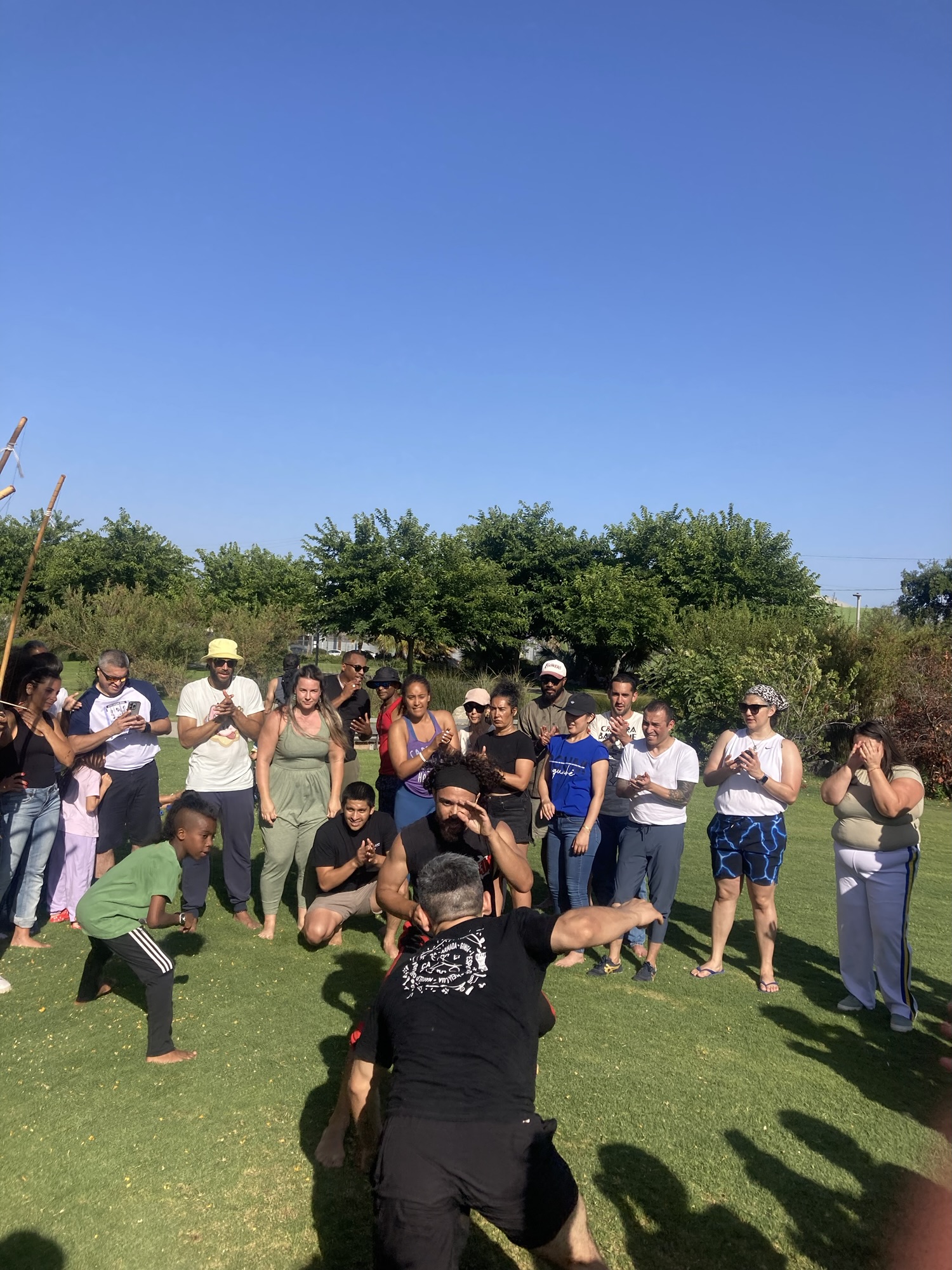
Anyway, I want to tell you about another amazing Capoeira Angola adventure I had last Sunday, June 22nd, a day after the summer solstice. It was an afternoon filled with reuniting with old friends and meeting new friends, creating a vibrant tapestry of connections that warmed the heart. The atmosphere was charged with excitement as practitioners of all levels gathered, each contributing their unique energy to the circle. The rhythm of the Berimbau resonated in the air, and the infectious laughter and lively conversations surrounded us, creating a sense of community. The amazing brotherhood and camaraderie that expresses all that is good about Capoeira reminded me of the essence of this beautiful art form—it’s not just about the physical practice, but also about the relationships we build and the stories we share as we grow together in our journey.
There were quite a few schools of Capoeira there from all over L.A., and a few from Orange County, creating an atmosphere filled with excitement and energy that drew everyone in, igniting a sense of community among practitioners and spectators alike. As the sun set, casting a warm glow over the gathering, we played soft, we played hard, showcasing our skills and passion for the art; the rhythms of the Berimbau resonated in the background, elevating the experience to a transcendental level. We all played beautifully, each move telling a story of dedication and culture, as every kick, spin, and flip blended into a captivating narrative that celebrated our heritage, bridging gaps between generations and uniting us through the vibrant dance of Capoeira.
The rhythm pulsed through our veins, and then, after a couple of hours, we ended with an amazing Samba De Roda, where I admit, I danced longer than I should have, completely losing track of time in the joyous celebration. But when the drums call, I have to answer, surrendering to the infectious beat that calls to the very essence of who I am. Then after that was the coolest, most amazing picnic I ever attended, where laughter echoed through the air, delicious fruit was shared, and new friendships were formed under the warm sun, making the entire day an unforgettable experience that I will cherish forever.
This amazing celebration was the start of Capoeira Batuque’s annual batisado, which will be happening all this week, filled with various activities, workshops, and performances that showcase the rich cultural heritage of Capoeira. For more info, please check out their website, brasilbrasil.org. It promises to be an exciting time for participants and spectators alike, as students demonstrate their skills and passion for this unique art form.
I would like to sincerely thank Mestre Amen Santo, as well as Mestres Muito tempo, Minha Velha, Varal, and Contramestres Saracuru for their invaluable contributions to the Capoeira community, which have significantly shaped our culture and practices over the years. A special mention goes out to Arthur Fiu, whose unwavering enthusiasm and vibrant energy truly inspire us all, motivating each member to strive for excellence and to embrace the spirit of Capoeira. Furthermore, I cannot forget to express my appreciation for my uncle in Capoeira, brother Jelani Lateef, whose infectious laughter and warm presence always bring joy and positivity to our gatherings, creating an atmosphere that fosters camaraderie and friendship.
I’m pretty sure I missed some of you, and for that, I sincerely apologize; it was never my intention to exclude anyone, but in the excitement and depth of acknowledgement, I realize that some deserving names may have slipped my mind. Thank you all for your support and passion in keeping the Capoeira tradition alive.
I mentioned that a couple of weeks ago, I went to Oakland for another EVENT. The experience there was truly unforgettable, filled with laughter, connections, and a vibrant sense of community. And as amazing as that was, after coming back here to LA, going to the gathering on JUNETEENTH, and this gathering yesterday, which further highlighted the importance of unity and love, all I can say is,
This series explores indigenous beliefs and religions in Sub-Saharan Africa, focusing on ancestral worship, Christianity, and Islam. It highlights the region’s cultural heritage through rituals and community gatherings that celebrate identity and wisdom. By showcasing ceremonies, it illustrates the symbolic meanings of practices that strengthen social ties among ethnic groups. The series also examines how these traditions adapt within the diaspora, creating a blend of ancient customs and contemporary beliefs. Additionally, it emphasizes storytelling’s role in preserving oral histories that guide future generations.
This video is taken from a segment of a fascinating livestream. Be sure to check out Hometeam History during these engaging broadcasts, as each one offers a wealth of insight and discussion. In this particular segment, home team delves into the concept of cognitive dissonance faced when studying African spirituality—a rich and complex area of inquiry that often challenges prevailing narratives. He also shares his personal journey of exploration and the transformative experience that led him to reconsider the voodoo ceremony of the Haitian revolution.
By analyzing it through the lens of the results-based African spiritual model of the Niger-Congo peoples, he uncovers the deeper connections that unite these practices with broader African traditions, revealing a rich tapestry of beliefs and rituals that have evolved over centuries. This approach not only enriches our understanding of the cultural significance and historical context surrounding these powerful spiritual expressions but also highlights the intricate ways in which these practices serve as a foundation for community cohesion and individual identity.
Furthermore, it brings to light the ongoing struggles and triumphs faced by African descendants globally, situating their experiences within a framework of resilience and strength that transcends geographical boundaries and historical traumas. Ultimately, this exploration enhances the narrative of resilience and identity among African descendants, celebrating their enduring legacy and the continual adaptation of their spiritual practices in the face of modern challenges.
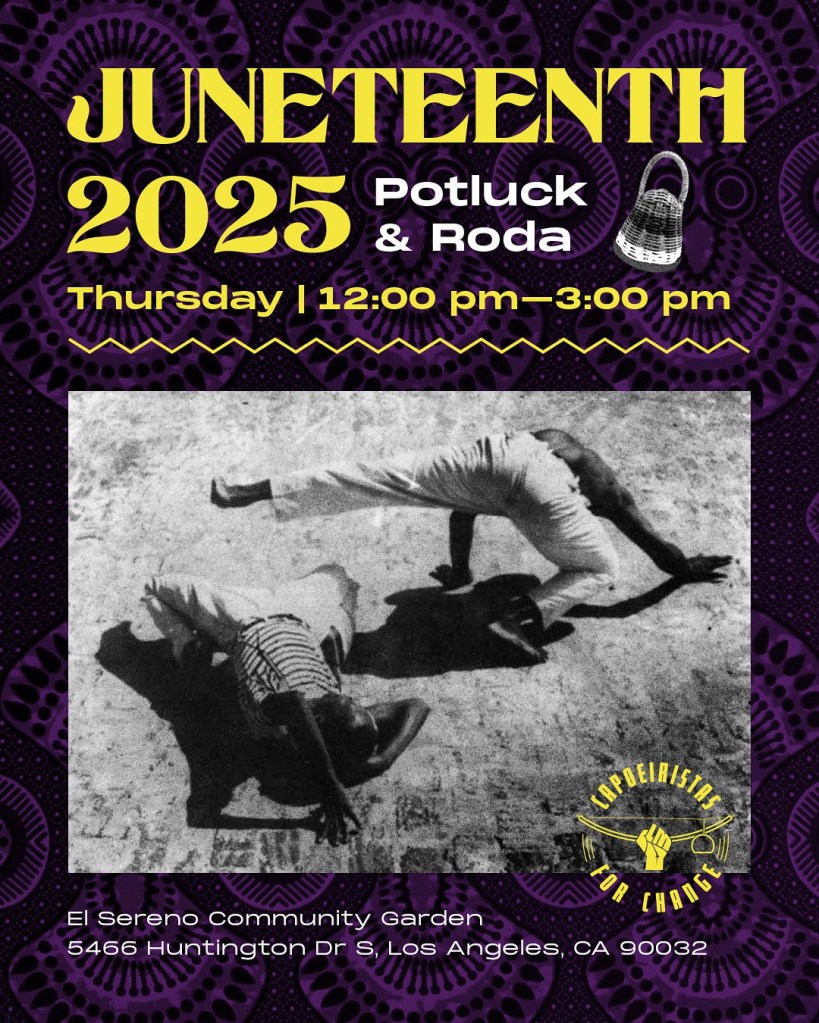
Juneteenth, celebrated on June 19th, marks the emancipation of enslaved African Americans, originating in 1865 when Union soldiers announced freedom in Texas, signaling a monumental shift in the fabric of American society. Initially a local celebration rooted in deep community spirit, it has grown into a nationwide observance of resilience and the ongoing struggle for racial equality, featuring vibrant parades, cultural events, and family gatherings that bring people together in solidarity.
This year, we at CAPOEIRISTAS FOR CHANGE are excited to host a Capoeira Roda and Potluck to commemorate the day, inviting the community to enjoy the rhythmic music, dynamic movement, and shared homemade dishes that reflect our diverse heritage.
The event will serve as a dynamic platform for fostering connection among individuals from diverse backgrounds, encouraging meaningful conversations about freedom, cultural expression, and the importance of unity, while honoring the rich and complex history that has shaped us into who we are today. We hope to create an inclusive atmosphere where everyone can actively participate, gain insights, learn from one another, and celebrate the vibrant and diverse traditions that Juneteenth represents.
This gathering aims not only to recognize the past struggles and triumphs associated with this significant day but also to ensure that the legacy of Juneteenth continues to inspire future generations, instilling a sense of pride and responsibility in preserving and sharing these vital stories. By highlighting the empowerment and resilience that stem from our collective history, we aspire to ignite a renewed commitment to justice, equality, and cultural appreciation that transcends this momentous occasion.
Bring your favorite dish to share and enjoy a diverse array of food while experiencing the vibrant rhythms of Capoeira Angola. Note: If you DO bring food, make sure it’s covered, and no nuts, unless it’s coconuts.
Whether you’re a seasoned practitioner or just curious to learn more about this fascinating cultural art form, this event promises to be a fun and inclusive gathering for everyone! As you sample delicious homemade dishes from various cuisines, you’ll have the chance to connect with fellow attendees, share stories, and immerse yourself in the lively atmosphere filled with energy and excitement. Don’t miss out on the opportunity to learn some moves, enjoy captivating performances, and perhaps discover a new passion in the world of Capoeira!
There are many videos of Capoeira Angola on the internet which showcase its vibrant culture through music, movement, and community, highlighting intricate footwork and acrobatics in a captivating atmosphere that draws viewers in with its rhythmic energy. They offer insights into different styles from masters, celebrating Brazilian heritage and its historical contexts of struggle and celebration, revealing how this art form evolved as a means of both self-defense and expression during colonial times. The dedication of practitioners emphasizes Capoeira Angola’s legacy, inviting appreciation for its beauty and resilience, as performances convey tales of perseverance and cultural pride that resonate deeply within the hearts of those who engage with it.
Additionally, these videos illustrate the communal aspects of Capoeira, where camaraderie and respect forge connections among diverse individuals, demonstrating the power of art and tradition to unite people in shared experiences that transcend linguistic and cultural barriers. The captivating visual storytelling in these performances not only entertains but also educates audiences about the significance of Capoeira as a living tradition, fostering a sense of belonging and inspiring future generations to carry its vibrant spirit forward.
In today’s installment…
This is not a Capoeira Angola video. However, I think this is a very interesting and important video for the readers of this website to check out, as it offers a unique perspective on the representation of capoeira in popular culture. Capoeira Mestre Amen Santo rates nine capoeira scenes in movies and TV shows for realism, drawing from his extensive experience in the art form, which spans several decades and includes numerous international performances and teachings.
Santo breaks down common capoeira strikes, kicks, and defense tactics in “Black Panther” (2018), starring Chadwick Boseman, highlighting how the film integrates the fluid movements of capoeira into its choreography. In “The Batman” (2022), with Robert Pattinson and Zoë Kravitz, he analyzes the combat scenes, emphasizing the unique acrobatic style that reflects the influence of capoeira, making it distinct from other martial arts depicted in cinema. He also critiques “Blade” (1998), starring Wesley Snipes, exploring how the filmmakers captured the essence of capoeira’s dynamic footwork and defensive maneuvers. Santo looks at the acrobatics involved in capoeira in “Ocean’s Twelve” (2004), featuring Vincent Cassel, where he appreciates the creative way capoeira is fused with heist action, providing a captivating visual spectacle. In “The Protector” (2005), with Tony Jaa and Lateef Crowder, he points out the seamless incorporation of capoeira’s fluidity into fight sequences that enhance the storytelling.
He also reviews “The Assailant” (2009) and “Get Hard” (2015), starring Will Ferrell and Kevin Hart, noting how capoeira adds a comedic yet impressive flair to otherwise conventional fight scenes. Santo elaborates on other important elements of capoeira — such as its use of music, which serves to unify the movements and encourages engagement during performance — and its origins as a cultural expression born from African traditions, in “Only the Strong” (1993), starring Mark Dacascos. Additionally, he discusses the representation of capoeira in “Bob’s Burgers” S1E4 (2011), illustrating how animated media can introduce elements of capoeira to a broader audience.
Having practiced capoeira for over 50 years, Santo’s journey began at the young age of 7, instilling in him a deep passion for the art form that has only grown with time. He has performed capoeira in films such as “Only The Strong” (1993) and “Kickboxer 4” (1994), where he not only showcased his skills but also had a hand in creating most of the fight choreography, ensuring authentic representation on screen. As the founding director of Capoeira Batuque, he plays a vital role in promoting capoeira globally, overseeing the group’s schools and enabling students from diverse backgrounds to cultivate their skills and appreciation for this vibrant cultural tradition.