Welcome to O VIDEO DO DIA DA CAPOEIRA ANGOLA! We invite you on a journey through the curated digital archives of Capoeira Angola—a vibrant celebration of a profound heritage that continues to inspire practitioners across the globe.
Historical Roots and Origins
Capoeira Angola is the traditional style of capoeira, an Afro-Brazilian martial art whose history is deeply intertwined with the beginning of African slavery in Brazil. Starting in the 16th century, Portuguese colonists forcibly transported enslaved Africans to Brazil, with a significant portion arriving from West and Central-West Africa, particularly Angola. Enslaved Africans and Indigenous groups developed capoeira as a tool for survival, self-defense, and cultural resistance against their oppressors. By embedding elements of music, dance, and ritual into the practice, they disguised its combative nature from slave masters, allowing them to secretly preserve their traditions and hone their martial skills. Historical and oral traditions connect the discipline to traditional African rituals, notably the “n’golo” or zebra dance—a combat ritual practiced in southern Angola. During the post-abolition period, capoeira faced intense criminalization and police repression in Brazil, forcing practitioners to use nicknames (apelidos) and specific musical rhythms to evade authorities.
Philosophy, Style, and the Lineage of Masters
Unlike the faster and more aggressive Capoeira Regional developed by Mestre Bimba, Capoeira Angola stands out as a rhythm of resistance that prioritizes rituals, oral tradition, and a close connection to its African roots. It is characterized by a strategic, deceptive, and conversational style, often played low to the ground, utilizing a rich variety of speeds, counter-attacks, feints, and acrobatic movements. Vicente Ferreira Pastinha, known as Mestre Pastinha, is widely regarded as the father of modern Capoeira Angola. In 1941, he formalized and elevated the practice by founding the Centro Esportivo de Capoeira Angola (CECA) in Pelourinho, Salvador, establishing a legacy of cultural preservation carried forward by historical masters like Mestre Waldemar da Paixão and Mestre João Grande, as well as contemporary groups today. Inside the roda (circle), the game is guided by a traditional band of instruments—most importantly the berimbau, alongside the pandeiro, atabaque, and agogô—which collectively dictate the energy, polyrhythmic patterns, and spiritual depth of the dialogue.
Today’s featured video highlights historical footage from a 1984 Philadelphia television program showcasing Master Moraes and Master Cobra Mansa.
This broadcast captured a historic milestone, marking their very first visit to the United States and the profound impact it had on the martial arts community. The monumental trip was organized and realized through the formal invitation of Professor Ken Dossar, whose dedication to promoting authentic martial arts led to this significant event. Attendees had the unique opportunity to witness live demonstrations of Capoeira Angola, a traditional Afro-Brazilian martial art whose history is deeply intertwined with the beginning of African slavery in Brazil starting in the 16th century.
As a rhythm of resistance that prioritizes rituals, oral tradition, and a close connection to its African roots, Capoeira Angola stands out for its strategic, deceptive, and conversational style. Played low to the ground, it utilizes a rich variety of speeds, counter-attacks, feints, and acrobatic movements. Through this broadcast, viewers can appreciate the skills that have been passed down through generations, enriching their understanding of the art. The rare archival footage itself, a testament to a pivotal moment in martial arts history, has been meticulously preserved and provided courtesy of Prof. Daniel Dawson, ensuring that this extraordinary experience can be shared with future generations.
Capoeira Angola represents more than just a physical discipline; it stands as a profound testament to cultural resilience, ancestral wisdom, and historical endurance. From its foundational roots forged as a tool for survival and identity preservation by enslaved Africans and Indigenous groups in 16th-century Brazil, to its codification and global expansion spearheaded by legendary figures like Mestre Pastinha, Master Moraes, and Master Cobra Mansa, this Afro-Brazilian art form continues to inspire and educate communities worldwide. By merging music, strategic dialogue, and deceptive physical movement, Capoeira Angola preserves a rich heritage that honors its African roots and ensures that its legacy remains a vibrant, living practice for future generations.
Just note: The below is MY Vision for the kind of Martial Art Academy that I want to create and teach at. I envision a place where individuals from all walks of life can come together to learn not just the physical techniques of martial arts, but also the underlying philosophies that promote discipline, respect, and personal growth. This academy would be a sanctuary for self-improvement, encouraging students to push beyond their limits and embrace challenges with a resilient mindset. With experienced instructors and a supportive community, I hope to cultivate an environment where every student feels empowered to achieve their goals, both on and off the mat. The dream is not just about mastering martial arts, but also about fostering lifelong friendships and promoting a sense of belonging.
This is PURELY CONCEPTUAL for now. One day, it can be a reality. Maybe.
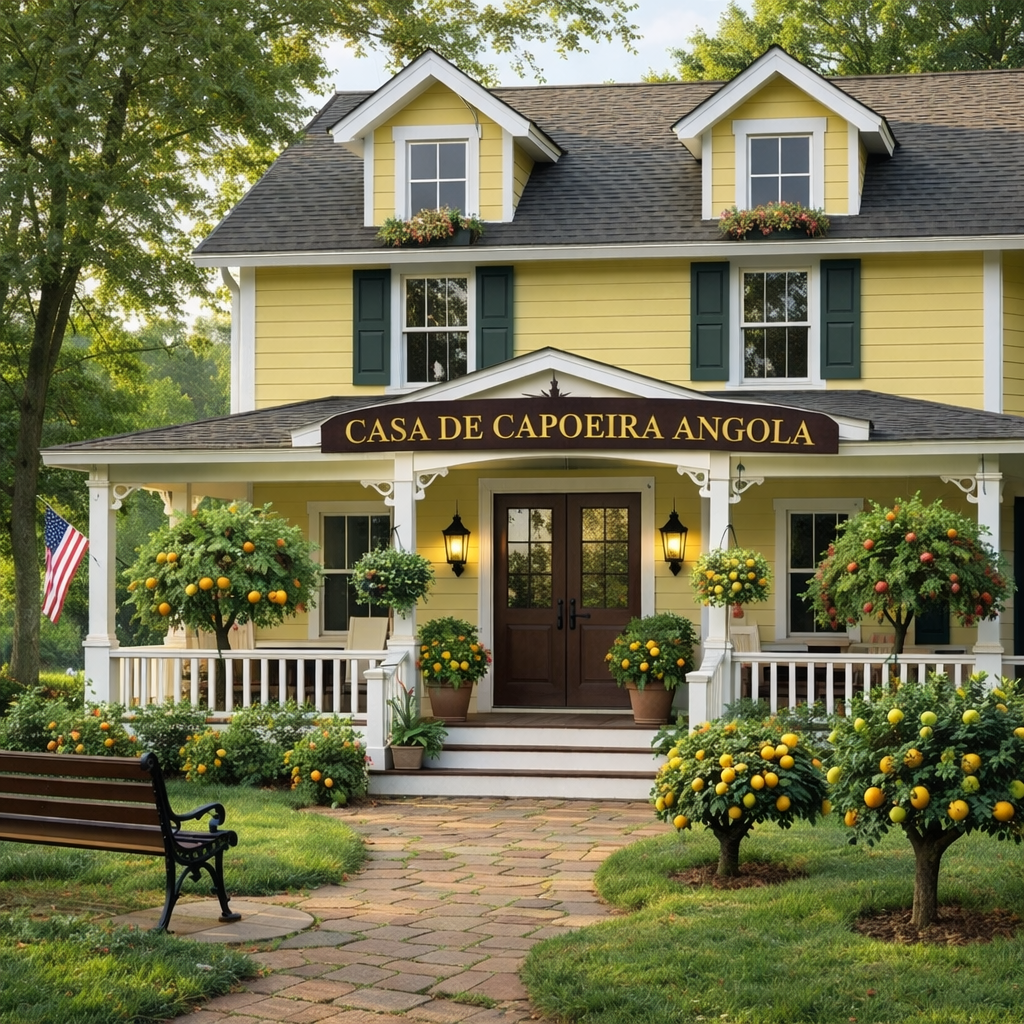
The vision for a “Casa de Capoeira Angola” is the establishment of a dedicated, permanent, and sustainable physical location that serves as the central hub for the study, practice, and continuous development of the tradition of Capoeira Angola. This space is more than just a training facility; it is conceived as a living sanctuary committed to the art’s practice, preservation, and perpetuation.
Elaboration and Expansion: The Casa de Capoeira Angola is envisioned not merely as a gymnasium or studio, but as an authentic cultural institution—a spiritual home for the art form. Its purpose extends far beyond the physical roda (circle) and training sessions; it embodies a commitment to safeguarding the profound historical, philosophical, and musical heritage of Capoeira Angola.
Practice and Study: The Casa will provide a stable and consistent environment necessary for deep, focused study under the guidance of experienced Mestres and teachers. It will host regular classes, workshops, and intensive immersions, offering comprehensive instruction in all facets of the tradition: the movements, the ritual, the history, the Portuguese language, and the core philosophies of respect, community, and resilience.
Preservation and Documentation: A critical function of the Casa is the active preservation of the art form. This includes the documentation of oral histories, traditional songs (including rare or lost quadras and corridos), and instrumental techniques. The facility will house a dedicated library and archive for scholarly research, protecting a wealth of materials that might otherwise be scattered or forgotten. It will serve as a repository of knowledge, ensuring that the integrity of the Angola lineage is maintained for future generations.
Perpetuation and Community: To ensure the art’s perpetuation, the Casa will be a dynamic, intergenerational space. It is designed to foster a strong sense of community (comunidade), serving as a cultural anchor where students, practitioners, and the public can gather, share experiences, and engage in dialogue. The physical structure will be designed to support communal living, hosting cultural events, encontros, and rodas that welcome both local and international visitors. This active engagement guarantees that the art remains a living, evolving tradition, vibrant with continuous learning and cultural exchange.
Conception: Defining the Purpose and Scope
A successful Casa de Capoeira Angola (House of Capoeira Angola) must be built on a clear, comprehensive foundation of purpose. It is not merely a gym or a studio, but a holistic, living environment designed to address and preserve all facets of the tradition—a sanctuary and incubator for the art form. This multi-faceted approach ensures the transmission of knowledge is deep, authentic, and continuous.
Core Pillars of the Casa:
Teaching and Training (A Formação): Providing a rigorous and consistent schedule of classes is the bedrock of the Casa. This must cater to all skill levels, from absolute beginners—who require patient introduction to the basic stances and movements—to advanced practitioners (graduados) and instructors. The curriculum must be comprehensive, focusing equally on:
The Foundations: Mastering the core defensive and offensive movements (movimentos), including the ginga, evasions, and counter-attacks, emphasizing fluidity, balance, and strategic positioning (malícia).
The Jogo (The Game): Developing the dialogue and intuition necessary to play Capoeira Angola effectively within the roda. This includes understanding the rhythm of the game, appropriate moments for entering and leaving the roda, and the non-verbal communication between players.
Music and Song: Detailed instruction on playing all requisite instruments—the berimbau (viola, medio, gunga), pandeiro, atabaque, agôgô, and reco-reco—and the extensive repertoire of traditional songs (quadras and corridos), including the ability to lead the singing and understand the thematic and historical significance of the lyrics.
Historical and Philosophical Context: Integrating lectures and discussion on the socio-historical origins of Capoeira Angola, its roots in resistance and African diaspora culture, and the philosophical underpinnings that define its slower, strategic style compared to other forms of capoeira.
Workshops and Immersion (Vivências): Regular, intensive workshops are crucial for deepening the practitioners’ understanding and connection to the broader lineage. These events should be led by senior masters (mestres) and highly experienced practitioners (contramestres) from both within the Casa’s specific lineage and the wider, global Capoeira Angola community. These sessions allow for:
Deep Dives: Focused study on specific, complex elements, such as regional variations in toques (instrumental rhythms), the intricate process of instrument construction (e.g., curing the berimbau‘s gourd or stringing the arame), or the meticulous breakdown of advanced movement sequences and strategic malícia.
Lineage and Community Exchange: Facilitating direct interaction with different masters ensures that the knowledge remains vital, diverse, and connected to its roots, reinforcing the collective nature of the tradition.
Cultural Hub and Public Engagement: The Casa as a Beacon of Afro-Brazilian Heritage
The Casa de Capoeira Angola is envisioned as far more than a simple training facility; it must function as a dynamic and vibrant center for Afro-Brazilian culture. Its mission is to position Capoeira Angola not merely as an isolated martial discipline, but as a crucial lens through which to understand and experience a rich, deep, and complex historical tapestry. This essential public-facing and educational role includes several core components designed to foster community, academic understanding, and living cultural preservation:
I. Active Community and Performance Spaces
Open Rodas: Organizing regular rodas—the ritual circle where Capoeira Angola is played—that are explicitly open to the general public and the broader capoeira community, transcending the specific lineage of the Casa. These public rodas will serve as a democratic space for spontaneous play, sophisticated musical exchange (including the berimbau, atabaque, and pandeiro), vocal participation, and a powerful, living demonstration of the art form’s philosophy and physical poetry. These events are crucial for maintaining the art’s vitality and accessibility.
Cultural Demonstrations and Workshops: Hosting specialized workshops focused on the intricate physical movements, musical components, and theoretical knowledge of Capoeira Angola, led by visiting mestres and local practitioners. These workshops will be complemented by demonstrations for schools and community organizations, illustrating the art’s historical context and contemporary relevance.
II. Deep Educational and Historical Programming
Lecture Series and Film Screenings: Implementing a structured program of lectures, scholarly presentations, film screenings, and facilitated discussion groups. The topics covered must be vital to the deep cultural understanding of the art, moving beyond simple technique:
Brazilian History and Sociology: Focused specifically on the historical period of slavery, abolition, and the subsequent racial and economic dynamics that shaped the art. This includes exploring the Quilombo tradition and the role of resistance movements.
The Portuguese Language: Offering foundational and intermediate classes in Portuguese, as fluency is essential for authentically understanding the nuanced meanings of the songs (quadras and corridos) and the specific, often metaphorical, terminology of the game.
Folklore and Mythology: Exploring the rich tapestry of Brazilian folklore, including creation myths, regional tales, and the cultural figures (Exu, Iemanjá, Saci) that frequently appear in the songs and cultural imagination.
Candomblé and Afro-Brazilian Religious Syncretism: Providing respectful and accurate education on Candomblé, the Afro-Brazilian religious practice that shares deep historical roots, philosophical concepts, and musical instruments with Capoeira Angola, ensuring a holistic view of the culture.
Socio-Historical Significance: Critically examining the role of Capoeira Angola as a powerful tool for cultural preservation, the reclamation of African identity, and community building in the face of systemic oppression.
Community and Living Space: The Academia Model—A Living Sanctuary
The true essence of the ideal Casa de Capoeira Angola transcends the function of a mere training facility; it lies in fostering a sense of communal responsibility and shared, deeply immersive purpose. It must embody the concept of an academia—a term historically and philosophically richer than the modern “school.” This model posits the Casa as a familial, intergenerational structure, a dynamic sanctuary where the transmission of knowledge is constant and holistic, moving beyond the confines of formal class hours.
In this environment, education is realized through constant, direct interaction. Students (or family members, as they are truly seen) and masters live, work, and create alongside one another. The curriculum unfolds not just in the roda or in focused lessons on toques and movements, but organically through shared meals, which become forums for philosophical discussion and the telling of ancestral stories; through collaborative maintenance of the space, which instills a practical respect for the physical sanctuary and the labor required to sustain it; and through mentorship that extends profoundly beyond the training floor.
This integrated, 24/7 environment is the crucible for cultivating essential virtues. It instills discipline through the practical necessities of community life, not just through rigorous physical training. It cultivates deep respect (respeito)—for the elders, the history, the instruments, and for the space itself. It builds a genuine sense of shared history, as members become living participants in the lineage and narrative of the art. Crucially, the academia model ensures the practical application of Capoeira Angola’s philosophical tenets to daily life. The principles of balance, resilience, patience, and non-aggression, learned in the roda, are tested and solidified in the mundane challenges and joys of communal living, transforming the art from a performance skill into a profound way of being. This seamless integration of art, philosophy, and daily existence is what ultimately defines the Casa as a “Living Sanctuary.”
II. Creation: How to Find and Establish the Space
The successful realization of a Casa de Capoeira Angola hinges on the selection and development of its physical home. This space must be more than a mere gym; it should be a living sanctuary, a place conducive to the art’s cultural depth, spiritual discipline, and communal practice.
A. The Physical Location: A Critical Factor in Success
The chosen location serves as the institution’s face and determines its accessibility and community integration.
Location Strategy: Accessibility and Community Integration
Public Transit and Foot Traffic: The space should be easily accessible via multiple modes of public transportation (bus, subway, light rail). Proximity to major transit hubs is a significant advantage.
Neighborhood Engagement: Ideally, the Casa should be situated in a vibrant, diverse neighborhood where it can actively engage with the local populace. This positioning helps in recruitment, fosters community support, and allows the Casa to serve as a cultural anchor.
Ground-Level Preference: A ground-level location is highly preferable. It minimizes noise complaints from downstairs tenants, simplifies access for all participants (especially those with mobility issues), and allows for better flow during public events or demonstrations. Adequate ceiling height is also a key consideration to accommodate high kicks and acrobatic movements (floreios).
B. Architectural and Design Requirements: Defining the Sanctuary
The internal architecture must be intentionally designed to facilitate the practice and preservation of Capoeira Angola.
The Roda Area: The Heart of the Casa
Dimensions: The primary training space must be generously sized to comfortably host a full roda (the circle of play), requiring a minimum clear diameter of 20 feet. This size allows for two players, the bateria (the musical arc), and the surrounding spectators (the coro) without feeling cramped or unsafe.
Flooring: The flooring is perhaps the most critical physical component. It must be exceptionally durable, capable of withstanding constant movement, impact from falls, and rapid pivots. A non-slip, yet smooth surface (such as high-quality, dense wood or specially treated concrete) is essential to minimize injury while facilitating the fluid movements of Capoeira. Carpet or sprung floors are generally unsuitable.
Acoustics and Ventilation: The space requires good natural light, excellent ventilation to manage heat and humidity from intense practice, and acoustic consideration to properly amplify the sound of the berimbaus and the singers, which is vital to the energy and direction of the roda.
Musical Instrument Storage and Maintenance: Protecting the Tools of the Art
Dedicated Climate Control: A separate, dedicated storage area is absolutely necessary for the delicate musical instruments, particularly the berimbaus (gourd, wood, and steel construction) and the atabaques (drums). This room must be climate-controlled to protect the materials from warping, cracking, or damage caused by fluctuations in temperature and humidity, which can destroy the instruments’ tone and structural integrity.
Maintenance Workshop: Space should be allocated for the necessary tools and materials for the regular maintenance, repair, and crafting of instruments, emphasizing the Casa’s role in preserving the entire cultural infrastructure of the art.
Changing, Gathering, and Study Areas: Fostering Community and Scholarship
Separate Facilities: Clean and well-maintained separate changing rooms and restroom facilities are essential for the comfort and privacy of all students.
Communal Lounge and Study: A communal area or lounge is vital to the Casa’s function as a social hub. This space should be designed for discussion, the sharing of knowledge, and collective study of the history, philosophy, and Portuguese language related to Capoeira Angola.
Retail and Resources: This area can also house a small retail operation for the sale of required attire (uniforms, or abadás), instructional materials (books, videos), and other Capoeira-related merchandise, providing a small, recurring revenue stream.
C. Legal and Financial Foundation: Ensuring Longevity and Stability
The physical establishment must be underpinned by a robust administrative and financial structure to guarantee the institution’s long-term viability.
Organizational Structure: Establishing a clear, legally recognized organizational structure (e.g., formalizing as a non-profit/non-governmental organization or a specific type of cultural association) is crucial. This structure is necessary for securing grants, managing legal liabilities, receiving tax-deductible donations, and ensuring institutional continuity that transcends the lifetime of any single individual teacher or master.
Comprehensive Business Plan: A detailed and forward-looking business plan is mandatory. This document must meticulously detail:
Operating Costs: A full accounting of monthly fixed and variable expenses (rent/mortgage, utilities, insurance, instrument maintenance, instructor stipends).
Tuition Structure: A clearly defined and ethical fee structure that balances accessibility for students with the financial needs of the institution. Consideration should be given to tiered pricing, scholarships, and family rates.
Fundraising Strategies: A diversified plan for generating non-tuition revenue, including public performances, workshops, cultural events, merchandise sales, and securing private and public grants. The financial stability of the Casa is directly tied to its ability to manage these diverse income streams effectively.
III. Maintenance: Sustaining the Tradition and Legacy
The long-term success of the Casa de Capoeira Angola is contingent upon a continuous, multi-faceted commitment to both its physical and ideological upkeep. This dedication ensures the sanctuary remains a robust, vital center for the art form.
A. Financial Sustainability: Building a Resilient Economic Model
The reliance on a single income stream is precarious for any cultural institution. Therefore, the Casa will build a resilient economic foundation through diversification:
Regular Tuition Payments: A tiered membership structure will be implemented to cover core operating costs. This includes standard adult, student, and family rates, along with potential scholarship funds to ensure accessibility for committed practitioners regardless of financial constraints.
Grant Applications and Cultural Funding: Active pursuit of grants specifically designated for cultural non-profits, historical preservation, and arts education is essential. This includes securing funding from municipal, state, and federal arts councils, as well as private foundations dedicated to supporting Afro-Brazilian heritage.
Merchandise Sales: The development of a line of quality merchandise (e.g., custom abadas, berimbau kits, official Casa t-shirts, and instructional media) provides supplementary income while simultaneously promoting the brand and spirit of the Casa.
Hosting External Events and Specialized Classes: Maximizing the utility of the physical space by renting it out or utilizing it for related, complementary disciplines. Examples include hosting workshops in Afro-Brazilian drumming (maculelê), traditional Brazilian folk dance (samba de roda), Portuguese language courses, or cultural seminars. These activities generate revenue and expand the Casa’s cultural footprint.
Targeted Fundraising Campaigns: Launching specific, time-bound campaigns for capital improvements (e.g., instrument replacement, flooring repair) or special cultural events.
B. Infrastructure and Upkeep: Preserving the Physical Sanctuary
The physical space is the crucible of the tradition and must be treated with reverence. Neglect of the facility detracts from the dignity of the art.
Routine Cleaning and Deep Maintenance: A rigorous schedule for daily cleaning and monthly deep maintenance will be enforced. This covers the training floor, administrative areas, and storage spaces.
Instrument and Equipment Repair: Capoeira Angola relies on traditional instruments (berimbau, atabaque, pandeiro), which are subject to wear and tear. A budget and standardized process for the repair, tuning, and replacement of these sacred instruments must be established to ensure the musical quality of the roda is never compromised.
Dedicated Team and Responsibility Schedule: Rather than placing the burden solely on the Mestre or senior leadership, a rotating system of responsibility involving all advanced students (or a small, dedicated staff) will be implemented to foster a collective sense of ownership and accountability for the space’s upkeep.
C. Curriculum Integrity and Ideological Stewardship
The preservation of Capoeira Angola goes beyond the physical space; it fundamentally requires the unwavering maintenance of the art form’s philosophical and technical integrity.
Upholding Authenticity and Lineage: The leadership must be the vigilant guardian of the instruction, ensuring that the teachings and practice remain meticulously aligned with the Mestre’s lineage and the foundational principles of Capoeira Angola. This includes maintaining the emphasis on subtlety in movement, strategy over brute force, dialogue (physical and musical) within the roda, and a profound respect for history and the ancestral masters.
Teacher Training and Mentorship: A formal, rigorous training program for aspiring instructors must be established to ensure that the next generation of teachers can transmit the complex cultural, historical, and physical knowledge with precision and depth.
Ethical Code of Conduct: The maintenance of the art also involves maintaining the decorum and spirit within the roda and the wider community. A clear ethical code, emphasizing respect, humility, and the rejection of ego, is paramount.
D. Community Engagement: Fulfilling the Cultural Mandate
External Engagement and Cultural Integration: Anchoring the Casa within the Wider Ecosystem
The sustainability and transformative power of the Casa de Capoeira Angola depend critically on its ability to transcend its physical walls and thrive as an active participant in the broader cultural and social ecosystem. Its vitality is directly tied to its relevance, visibility, and the depth of its collaborative relationships with surrounding communities, educational institutions, and other cultural organizations. This intentional, outward-facing approach is not merely a strategy for growth, but a foundational commitment to ensure the perpetuation and continued evolution of the ancestral art form, securing its place and significance for generations to come.
This engagement must manifest through several key areas:
Community Outreach and Local Partnerships:
Workshops and Demonstrations: Regularly hosting free or low-cost introductory workshops for local residents, schools, and community centers to demystify Capoeira Angola and make it accessible to diverse populations.
Cultural Exchange Programs: Collaborating with other local organizations dedicated to Afro-Brazilian, African Diaspora, or broader indigenous cultural preservation to share knowledge, resources, and performance opportunities.
Participatory Events: Sponsoring and participating in local festivals, parades, and public celebrations, not just as performers, but as educators who contextualize the art form’s historical and social significance.
Educational and Academic Alignment:
School Curricula Integration: Developing structured modules or guest lecture series for primary and secondary schools, focusing on the history, music, and philosophy of Capoeira Angola as a lens for teaching cultural history, movement arts, and critical thinking.
University-Level Research: Forging partnerships with university departments (e.g., Ethnomusicology, Anthropology, Latin American Studies, Dance) to facilitate academic research, host seminars, and provide authentic cultural immersion experiences for students. The Casa will serve as a living archive and research center.
Digital Presence and Global Connectivity:
Online Documentation and Archiving: Creating a robust digital archive of lessons, historical documentation, interviews with Mestre(a)s, and musical recordings to preserve and share the art form globally, overcoming geographical barriers.
Virtual Exchange: Utilizing technology to host online classes, debates, and virtual Rodas (circles) with Capoeira Angola communities in Brazil and across the diaspora, ensuring a constant flow of knowledge and shared practice.
By prioritizing this external engagement, the Casa de Capoeira Angola transforms from a mere training center into a vital cultural hub—a recognized sanctuary that contributes tangibly to the social well-being and cultural landscape of its geographic location, ensuring the art’s continued relevance and enduring legacy.
Core Pillars of Community and Cultural Outreach:
1. Local Community Partnerships: Cultivating a Grassroots Foundation
Active, systematic collaboration with institutions within the immediate neighborhood is the primary mechanism for building goodwill, ensuring accessibility, and establishing a sustainable recruitment channel.
Educational Outreach: Developing and offering structured introductory workshops and short courses on Capoeira Angola history, philosophy, and basic movements at neighborhood schools and public libraries. These programs can integrate themes of non-violent conflict resolution, cultural resilience, and physical literacy.
Public Engagement: Regularly hosting free historical lectures, film screenings related to Afro-Brazilian culture, and vibrant demonstrations (rodas) in accessible community centers and public parks. This not only attracts new students but also demystifies the art form and positions the Casa as a valuable community resource.
Recruitment and Scholarship: Establishing a formal scholarship or subsidized tuition program specifically for residents of the local community who demonstrate commitment but face financial barriers, ensuring the Casa reflects the diversity of its surroundings.
2. Inter-Capoeira Dialogue: A Shared Heritage and Mutual Enrichment
Recognizing that Capoeira, in all its forms, is a shared heritage, the Casa commits to fostering respectful, cooperative, and non-competitive relationships with other Capoeira groups, including both Angola and Regional styles, and with Masters from various lineages.
Joint Rodas and Workshops: Sponsoring and participating in joint rodas that celebrate the diverse expressions of Capoeira. Hosting guest Masters for specialized workshops allows for the cross-pollination of knowledge and enriches the practice for all participants.
Historical and Theoretical Exchange: Organizing symposia or roundtable discussions focused on the historical evolution, contemporary challenges, and philosophical underpinnings of the art form, promoting deep intellectual exchange rather than rivalry.
Unity in the Art: Working toward a collective vision that recognizes the strength of Capoeira lies in its diversity and the mutual respect among its practitioners.
3. Cultural Institution Linkages: Establishing Authoritative and Academic Relevance
Strategic partnerships with academic and cultural institutions focused on African, Afro-Diasporic, and Brazilian studies are essential to positioning the Casa as an authoritative resource, a living cultural repository, and a subject for serious scholarly inquiry.
Academic Collaboration: Partnering with universities to host seminars, sponsor student research projects on Capoeira’s history and sociology, and offer accredited courses on Afro-Brazilian cultural practices taught by the Casa’s Mestre and senior students.
Museum and Archival Projects: Collaborating with museums and cultural archives to document the Casa’s own history, collect and display artifacts related to the art, and contribute to exhibitions that explore the African diaspora and the trans-Atlantic slave trade’s cultural legacy. This ensures the Casa’s narrative is preserved and shared with a broader public.
Public Lectures and Publications: Utilizing these platforms to disseminate the deep, complex history and philosophy of Capoeira Angola, fulfilling the Casa’s role as a vital contributor to the intellectual and cultural landscape.
4. Ecological and Sustainable Practice: Integrating Land, Livelihood, and Holisitic Wellness
The vision for the Casa de Capoeira Angola is not confined to the physical space of a training studio; it extends into a philosophy of holistic wellness and a deep, reciprocal connection to the natural environment. This approach consciously reflects the traditional, pre-industrial integration of community sustenance, ecological stewardship, and physical and spiritual practice that is inherent in many traditional Afro-Brazilian and African systems of knowledge. By integrating these elements, the Casa seeks to be a living sanctuary, fostering discipline, respect, and sustainability in all facets of life.The Earth-Based Curriculum: Cultivating a Sustainable Community
The project is committed to practical, hands-on environmental education that directly supports the health of the practitioners and the local ecosystem.
Community Garden Initiative: A Living Classroom and Source of Nourishment: A cornerstone of the sustainability plan is the development of a vibrant, accessible on-site community garden. This space will be more than a plot of land; it is conceived as a practical, hands-on learning environment and a source of fresh, nourishing food. The garden will utilize organic and regenerative farming principles, focusing on cultivating native and culturally significant plants, including various herbs and vegetables used in traditional Brazilian cuisine and herbal remedies. The act of gardening itself—requiring patience, observation, and physical labor—will serve as a meditative and strengthening complement to the discipline of Capoeira. Produce harvested from the garden will be used in communal meals and offered to students, further closing the loop between land and livelihood.
Classes in Sustainable Living and Earth Wisdom: The Casa will offer a rotating schedule of regular workshops led by experienced practitioners and community elders specializing in sustainable agriculture, earth-based wisdom, and traditional healing. These classes will include:
Permaculture Design: Introducing students to regenerative design principles for creating self-sustaining human habitats.
Herbalism and Traditional Remedies: Focused on the properties and uses of local and Afro-Brazilian herbs for wellness, connecting physical health to natural resources.
Natural Building Techniques: Exploring environmentally friendly construction methods for potential future expansion. These workshops explicitly tie the physical and mental discipline of Capoeira to the earth-based discipline of sustainable living. They foster a deeper, more mindful respect for natural cycles, resource management, and the fundamental interdependence of human and ecological health among students, participants, and the broader local community.
5. Retail Component: A Curated Cultural Exchange and Financial Anchor
To ensure the long-term financial sustainability of the space and to enrich the cultural immersion experience, the project will feature a small, highly specialized retail component. This enterprise is designed to be an ethical marketplace, offering authentic, high-quality products while directly supporting the operations, maintenance, and expansion of the Casa de Capoeira Angola.
The retail section will serve as a curated cultural hub, offering a selection of authentic Afro-Brazilian products that are essential to the art and culture of Capoeira Angola.
Afro-Brazilian Culinary Goods and Tastes of the Tradition: A carefully selected inventory of imported and locally sourced foodstuffs will provide visitors and practitioners with a tangible connection to the regional cuisine that has nurtured Capoeira for centuries. This will include staples such as:
Farinha de Mandioca(Manioc Flour): A versatile base ingredient in much of Afro-Brazilian cooking.
Unique Brazilian Spices and Peppers: Essential flavor profiles for traditional dishes.
Traditional Snacks and Beverages: Offering a taste of the community’s daily life and celebratory foods. These culinary goods are crucial elements in hosting cultural events and communal feasts (rodas de comida), further complementing the cultural experience.
Cultural Products, Hand-Crafted Items, and Artistry: The retail area will showcase the rich artistic traditions influenced by African heritage in Brazil. This includes unique, ethically sourced, and hand-made goods from Brazilian artists and artisans, such as:
Jewelry: Crafted using natural materials and traditional techniques.
Textiles: Featuring patterns and dyes that reflect cultural narratives.
Decorative Items and Small Sculptures: Pieces that convey the spiritual and historical depth of the culture. Sales of these items offer vital economic support to the original creators and help disseminate the beauty and complexity of Afro-Brazilian aesthetics.
Authentic Capoeira Instruments: The Voice of the Roda: A non-negotiable part of the retail offering is the supply of high-quality, meticulously handcrafted Capoeira instruments. The instruments are the lifeblood of the roda (the circle where Capoeira is played), and practitioners require durable, resonant equipment. The inventory will include:
Berimbaus(Gunga, Médio, Viola): The single-stringed musical bow that dictates the rhythm, tempo, and style of the game.
Atabaques(Drums): Providing the powerful bass and heartbeat of the roda.
Pandeiros(Tambourines) and Agogôs(Double Cowbell): The supporting percussion that completes the orchestra.
The Casa de Capoeira Angola is committed to supporting the art form through both instruction and the provision of essential resources. Specifically, by operating a dedicated retail component, the Casa ensures that all practitioners—from beginners to mestres—have immediate access to authentic, high-caliber equipment, including but not limited to, expertly crafted berimbaus, caxixis, atabaques, and other instruments vital for the roda. This critical service upholds the sonic integrity and traditional authenticity of the art form, guaranteeing that the music, the heart of Capoeira Angola, resonates with the proper tone and quality.
Crucially, this integrated retail operation is not merely an auxiliary service; it is a foundational pillar of the Casa’s financial sustainability model. Every single net proceed generated from the sale of these instruments and training gear will be immediately and systematically reinvested. This capital is channeled directly back into the core functions of the organization: the meticulous maintenance and upkeep of the physical sanctuary, the comprehensive development of its cultural and educational programming, and the strategic planning for future growth. This continuous, internal reinvestment solidifies the Casa de Capoeira Angola’s operational autonomy, shields it from external financial volatility, and ensures its long-term vitality as a living, self-sustaining sanctuary for the global Capoeira Angola community.
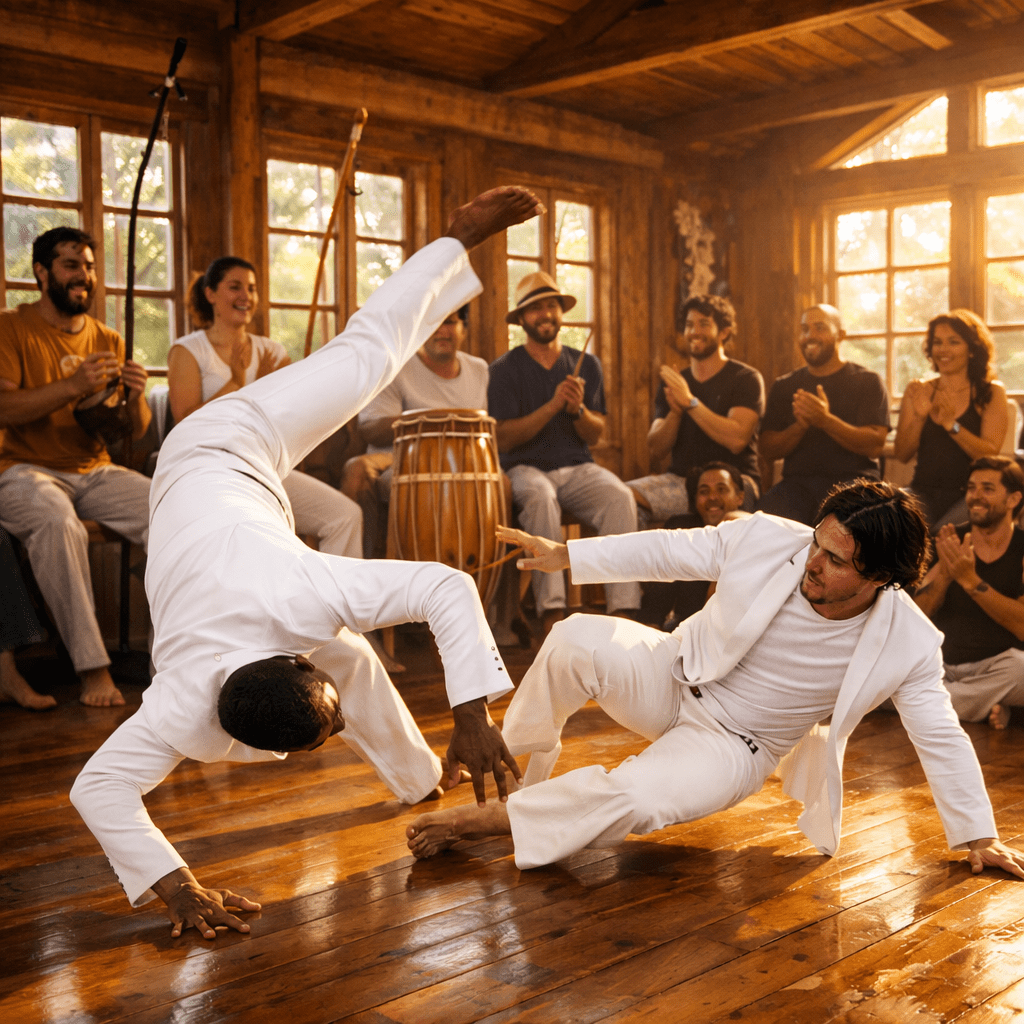
Two men perform dynamic capoeira moves surrounded by clapping musicians in a sunlit wooden room.
Capoeira Angola: A Comprehensive Digital Archive of a Living Tradition
Online video documentation has emerged as an indispensable digital archive, meticulously recording the profound cultural significance, deep historical roots, and continuous evolution of Capoeira Angola. These visual and auditory records are crucial in demonstrating that this Afro-Brazilian art form is far more than a simple sequence of movements; it is a complete, holistic system of self-defense, a vibrant cultural expression, and a rigorous discipline that seamlessly integrates movement, music, rhythm, and sophisticated strategy.
The Interdependent Elements: Technique, Music, and Strategy in the Roda
The rich tapestry of Capoeira Angola is vividly showcased in these videos, revealing the art’s mastery through the fluid, powerful execution of foundational movements. Key techniques—such as evasive esquivas (escapes), the sweeping meia-lua (half-moon kick), grounding rasteiras (sweeps), and acrobatic aús (cartwheels)—are consistently performed with exceptional agility and power, all while maintaining the characteristic low posture of the Angola style. Critically, these physical movements are inseparable from the musical and strategic framework of the roda (the circle in which Capoeira is played). The berimbau, the single-stringed musical instrument central to Capoeira, serves as the undeniable conductor, dictating the game’s pace, energy, and overall character through its specific toque (rhythm or melody). Simultaneously, the call-and-response songs (corridos and ladainhas) act as a dynamic oral library, transmitting philosophical wisdom, ethical lessons, and historical narratives passed down through generations. The interaction within the roda is not merely a physical exchange but a deeply strategic, chess-like dialogue. It places a premium on subtle anticipation, perfect timing, deceptive feints, and non-contact strategy, which fundamentally distinguishes Capoeira Angola from other martial arts.
Preserving Community, Pedagogy, and Heritage
Moving beyond the technical aspects, the digital archive powerfully conveys the emotional and spiritual core of Capoeira Angola: its strong communal bonds and fierce cultural pride. The recordings serve as vital ethnographic tools, illustrating the familial relationships, respect, and deep mentorship structure that exists among mestres (masters), professores (teachers), and alunos (students). This is a living pedagogy, where knowledge is transmitted through direct participation and imitation. Moreover, these videos are essential educational resources for preserving African-Brazilian oral history and heritage. They robustly educate viewers on Capoeira’s origins as a clandestine means of physical and cultural resistance for enslaved Africans in Brazil and meticulously track its transformation from a marginalized practice into a globally recognized and respected tradition.
Global Reach, Personal Transformation, and Social Impact
The archive is further enriched by interviews with long-time practitioners who articulate Capoeira’s profound, multifaceted transformative power. They explain that the benefits extend far beyond physical fitness, fostering essential life skills such as discipline, resilience, enhanced confidence, and a deep, sustaining sense of belonging. The art form continuously acts as a powerful vehicle for social unity and holistic personal development, successfully connecting diverse individuals across cultural and geographic divides through a shared, universal language of movement, music, and mutual respect.
The Foundational Movement: Mestre Cobra Mansa and the Ginga
In a powerful demonstration of this living tradition, the archive features the teachings of figures such as Mestre Cobra Mansa, who masterfully instructs on the Ginga in a dedicated workshop.
The GINGA is not simply a warm-up or a transitional step; it is the philosophical and rhythmic heartbeat of Capoeira. This unique, continuous movement allows practitioners to flow seamlessly and unpredictably between offensive maneuvers and defensive stances while meticulously maintaining rhythm and a deep, energetic connection to the music.
What is the Ginga?
TheGINGAis the quintessential, foundational movement in Capoeira, serving as far more than mere footwork. It fundamentally embodies the spirit and the intrinsic essence of this Afro-Brazilian art form, functioning as the continuous rhythmic pulse that drives the entire engagement. More profoundly, the GINGA acts as the primary, non-verbal communication system between the participants within the roda—the circle where Capoeira is played. It initiates and sustains a constant, dynamic dialogue of physical motion, unspoken intention, feints, and strategic positioning.
Through the continuous shifting from side to side—a perpetual, rhythmic motion that never truly rests—the practitioner transforms their body into a versatile vessel of expression. This fluid, back-and-forth movement allows them to continually showcase and hone several critical attributes: their physical agility, their strategic creative interpretation of the game, their awareness of the other player, and their deep cultural grounding in Capoeira’s history and philosophy.
Moreover, the GINGA is the state of preparedness and the fundamental stance from which all other attacks, defenses, dodges, and acrobatics are launched and to which they return. It is the rhythmic ‘reset’ that ensures the player is never static or an easy target. Consequently, achieving a true mastery of the GINGA is the absolute, non-negotiable prerequisite for anyone aspiring to delve deeply into the rich, complex, and layered world of Capoeira Angola. Without this mastery, one cannot truly appreciate its historical depth, its philosophical weight, or its profound aesthetic beauty as a sophisticated form of martial art, dance, and cultural expression.
Online videos constitute an invaluable digital archive for Capoeira Angola, an Afro-Brazilian art form that stands as a complete system of self-defense, a vibrant expression of culture, and a rigorous holistic discipline. These dynamic digital documents are crucial for showcasing the art’s complex, multilayered nature, its deep historical roots, and its ongoing, continuous evolution, masterfully intertwining movement, music, rhythm, strategy, and philosophy.
The visual evidence provided by these recordings offers a detailed view of the practitioners’ breathtaking technical mastery. They reveal the fluent, almost liquid execution of foundational movements characteristic of the Angola style, such as esquivas (evasions), meia-lua (half-moon kicks), rasteiras (sweeps), and aús (cartwheels). Crucially, all these movements are performed with the Angola style’s distinctively low-to-the-ground, grounded posture, emphasizing connection to the earth and readiness for defense.
It is critical to understand that these physical movements are entirely inseparable from the comprehensive musical and strategic framework of the roda (the circle in which Capoeira is played). The berimbau, a single-string percussion instrument, is the absolute conductor and spiritual anchor of the roda. It dictates the precise pace, intensity, and nature of the game through its specific toque (rhythm or melody). This musical direction is complemented by the accompanying call-and-response songs, known as corridos, which are far more than mere entertainment. They function as repositories of philosophical wisdom, oral history, proverbs, and essential cultural memory, often commenting on the actions within the roda or recalling figures of the past. The interaction within the roda itself is not a simple physical exchange but a sophisticated, strategic, often non-contact dialogue—a complex dance of anticipation, misdirection, and feints, where the mind is engaged in strategic calculation as profoundly as the body is engaged in fluid movement.
Beyond the technical and strategic elements, the video recordings powerfully convey the art’s profound emotional and social heart: a deep and palpable sense of community, shared identity, and unyielding cultural pride. Capoeira Angola is fundamentally a collective ritual, illustrating strong, hierarchical, yet often familial, bonds (irmandade) and a clear, indispensable mentorship system. This structure flows from the mestres (masters), who embody the tradition’s highest wisdom and skill, down to the professores (teachers), and the alunos (students). As essential educational and preservation tools, these videos serve to meticulously safeguard the rich African-Brazilian heritage. They detail Capoeira’s origins as a veiled means of physical resistance and cultural autonomy created by enslaved Africans in Brazil, and its ultimate transformation from a clandestine practice into a globally recognized, living tradition. Through this continuous documentation, the art form ensures that its history of survival, defiance, and cultural genius is never forgotten and continues to inspire future generations.
Today, events like the following highlight this living tradition:
Capoeira Angola: A Cultural Immersion at Midway Mall in Natal, RN
A truly vibrant and authentic expression of Capoeira Angola recently captivated the public at the Midway Mall Shopping Center in Natal, the bustling capital of Rio Grande do Norte (RN). This significant cultural event transformed a high-traffic commercial space into a traditional Afro-Brazilian roda (circle), providing an unforgettable immersion into the heart of this ancestral art form.The Leadership of Contramestre Rodrigo
The entire event was meticulously conducted and led by Contramestre Rodrigo, a figure of profound respect, dedication, and authority within the Capoeira Angola community. His presence was pivotal, serving as a guarantee of the event’s authenticity. Contramestre Rodrigo ensured that the fundamental tradition, profound philosophy, and characteristic rituals of this martial art were strictly maintained. His leadership not only guided the rhythms and movements but also reinforced the ethical and historical underpinnings of Capoeira Angola for both participants and onlookers. The roda under his direction was a living classroom, demonstrating the slow, strategic, and deeply spiritual nature of this cultural practice.A Public Stage for Ancestral Art
The strategic choice of the Midway Mall as the venue was a deliberate and brilliant move to bridge cultural tradition with contemporary public life. By placing the roda in a high-visibility, accessible location, the event successfully brought the richness of Capoeira Angola directly to the public. Shoppers and visitors were momentarily transported, given a direct experience of the art’s powerful yet nuanced aesthetic. The air was filled with the unmistakable, slow, and rhythmic pulses of the berimbau—the soul of the roda—accompanied by the communal energy of the call-and-response choral chants. The visual spectacle was completed by the expressive and strategic movements of the capoeiristas, whose low, grounded, and often deceptive movements showcased a unique blend of dance, fight, and ritual. The energy generated within the circle was infectious, drawing curious crowds who watched in respectful fascination as the cultural exchange unfolded.Promoting and Preserving Brazilian Popular Culture
This initiative transcends a mere performance; it serves as a powerful instrument for the promotion and vital dissemination of Capoeira Angola. By strengthening the visibility and practice of this art form, the event plays a crucial role in bolstering Brazilian popular culture as a whole. Furthermore, it actively encourages the practice, rigorous study, and deeper understanding of this ancestral art within the Natal/RN region. Such public demonstrations are essential for connecting new generations to their cultural heritage, ensuring that the history, philosophy, and physical practice of Capoeira Angola continue to thrive, safeguarding its legacy for years to come.
The “ROOTS OF CAPOEIRA” blog series explores the importance of Afro-Brazilian culture in Capoeira, highlighting the connection with the heritage of the AFRO-BRAZILIAN PEOPLE who express their creativity and resilience through art forms like dance, music, and storytelling. It discusses the role of Capoeira elements, including the berimbau’s rhythm and traditional songs, in honoring ancestors and fostering community. By understanding these cultural roots, readers appreciate Capoeira as both a self-defense practice and a unifying cultural expression celebrating shared heritage.
In today’s installment…
The “Puxada de Rede” is a Brazilian folk art with rich and complex origins in the post-slavery period, representing not just the hard work of fishermen, many of them black, but also their resilience and connection to the sea. These fishermen found sustenance in fishing for the “xaréu,” a fish revered for its taste and significance in regional cuisine. The practice involves the intricate art of casting and pulling a large net, which requires not only physical strength but also teamwork and synchronization among the fishermen. This process is often accompanied by traditional songs and rhythms that reflect the hardships of life, paying homage to the struggles and triumphs of the community.
Today, the “Puxada de Rede” is meticulously preserved in vibrant performances, which are frequently associated with capoeira, creating a unique blend of art and cultural heritage that educates audiences about its historical context.
The net pulling emerged as a crucial means of sustenance for newly freed black individuals who, having been deprived of opportunities, showcased their resourcefulness and adaptability in the face of adversity. This practice, deeply rooted in the culture of the northeastern coast, focuses on fishing for the “xaréu,” which sought warm waters to spawn from October to April, making it not only a means of survival but also a seasonal tradition celebrated by the community. Fishermen would cast the net in the early morning or at night, pulling it only the next morning, a task that required the cooperation of many men, each contributing their skills and knowledge passed down through generations. During the pulling, the often sad songs echoing the fishermen’s experiences, combined with the rhythm of the drums and their synchronized feet, created a powerful atmosphere that served to motivate and unify the fishermen.
At the end of the fishing, heartfelt hymns of gratitude were sung, the fish were shared among the participants and with the community, and a joyous celebration began to honor the successful catch, fostering a sense of camaraderie and communal identity. The net pulling gave rise to a popular legend about a fisherman who fell into the sea and did not return, a story that reflects the dangers associated with this vocation. This tale has evolved into a folk theatrical performance that encapsulates the blend of fear, hope, and reverence for the sea. Capoeira, as a dynamic means of preserving the memory and spirit of Afro-Brazilian culture, incorporated the net pulling, representing the fishermen and their songs in performances that infuse beauty and respect into this ancient and laborious activity.
In some traditions, the net pulling is also performed as a treasured ritual in celebration of Iemanjá, the goddess of the sea, further highlighting the deep spiritual and cultural ties that connect the community to their environment and heritage. This captivating event draws together families and friends, who gather by the shoreline, adorned in white garments as a sign of purity and respect. As the sun rises, casting a golden hue upon the waves, participants engage in rhythmic chants and dances, invoking blessings for a bountiful catch and protection for their loved ones. The act of pulling the nets is not merely a practical endeavor; it symbolizes the collective strength and unity of the community, reinforcing their bond with the ocean and each other. In this way, the ritual not only honors Iemanjá but also serves as a vital reminder of the shared values and traditions that continue to shape their identity across generations.
Capoeira Angola videos showcase the vibrant culture and community aspects of this martial art, featuring intricate movements and traditional music that create a captivating atmosphere. These recordings reveal various styles and insights from masters, highlighting the historical contexts of struggle and celebration inherent in this Brazilian tradition. The dedication of practitioners emphasizes the art’s beauty and resilience, as performances convey perseverance and cultural pride, while also demonstrating the importance of camaraderie and respect that fosters connections among diverse individuals.
In Today’s installment, we have two views of the same game. this game is between Contramestre Boneco, and Professor Neve Angola. Here, we have a view from the outside of the roda.
And here is a inside look.
In both views, you can see the beauty of Capoeira Angola, a rich and dynamic art form that blends elements of dance, martial arts, and music into a captivating performance. The intricate movements of the practitioners, coupled with the rhythmic beats of traditional instruments, create a mesmerizing spectacle that draws in spectators and participants alike.
The vibrant cultural expression of the Afro-Brazilian community encapsulates their history and resilience, offering a profound experience that connects the past and present. This dynamic representation of identity is not merely an art form; it is a rich tapestry woven from the threads of ancestral traditions, social struggles, and the spirit of joy that permeates their celebrations. Through movement, song, and visual elements, it conveys stories of struggle and triumph, promoting appreciation and understanding of their contributions to Brazil’s cultural landscape, as it spreads and enriches people all over the world.
Festivals infused with rhythm and dance serve as a reminder of their enduring legacy and bring together diverse communities, fostering unity and respect. Every note played and every step danced invites individuals to engage with the historic narratives that shape the Afro-Brazilian experience, ensuring that their voices continue to resonate through time.
before I go further, I think I should describe what a roda is in the world of capoeira.
The Roda de capoeira serves as a theatrical space that showcases the art of Capoeira and the vibrant communities involved, where participants learn skills and life lessons that extend beyond the physical practice itself. In this dynamic setting, individuals not only refine their martial techniques but also engage in the rich cultural traditions and musical expressions that accompany Capoeira. Through the rhythmic beats of the berimbau and the spirited singing of the participants, the Roda transforms into a living embodiment of history, solidarity, and creativity, inviting both players and spectators to immerse themselves in a shared experience that honors ancestral legacies. Each movement in the Roda is a dialogue, a blend of acrobatics, dance, and storytelling that fosters connections among diverse groups, encouraging a sense of belonging and mutual respect across generations. As practitioners embrace the challenges of each encounter, they cultivate resilience, adaptability, and the understanding that Capoeira is not merely a sport but a lifelong journey of cultural exploration and personal growth.
The energy of the Roda varies significantly by environment, with formal energy in academies promoting disciplined learning and structured progress…
While street Rodas, or “Roda de rua,” offer a different, more vibrant energy that pulsates through the air, making every moment feel alive with possibility. This is my favorite place to play Capoeira, where there’s more spontaneity and community involvement, as the atmosphere is infused with the sounds of laughter, music, and the rhythmic clapping of the audience. Here, onlookers naturally feel compelled to join in the rhythm, creating an inclusive atmosphere that celebrates cultural heritage and fosters deep connections among participants.
Each session becomes a tapestry of shared experiences, with novice and seasoned practitioners exchanging skills and stories, nurturing a sense of belonging that transcends the act of play and delves into the essence of community life. This rich interaction fosters not only personal growth but also the cultivation of trust and mutual respect among participants, empowering them to learn from one another. The vibrant energy of the street Roda, filled with laughter, rhythm, and movement, not only enhances the practice but also reinforces the bonds of friendship and camaraderie, creating an environment where everyone feels valued and included. It is a collective journey where each participant contributes their unique perspective, enriching the overall experience, and making it a truly unforgettable and transformative moment for everyone involved.
The Festival of Iemanjá is a vibrant and colorful celebration of the West African goddess of the sea, Iemanjá, which takes place not only in Brazil but also in various parts of the world that honor African heritage and spirituality.
This festival is a significant event for followers of the Candomblé and Umbanda religions, which deeply respect Iemanjá as a protector of women, children, and families. From the bustling shores of Bahia to coastal cities across the globe, the festival is marked by lively processions, the offering of flowers and gifts, and an overall atmosphere of reverence and joy.
The biggest celebration of Iemanjá occurs on February 2nd in the Rio Vermelho neighborhood of Salvador, Brazil, where thousands gather to pay homage to the goddess, creating a unique blend of ritual, dance, and music that draws both locals and tourists alike, fostering a sense of community and cultural pride.
This annual gathering not only commemorates Iemanjá but also reinforces the rich traditions and customs that have been passed down through generations, making it a cornerstone of Afro-Brazilian identity. It serves as a vibrant display of culture, with colorful processions, offerings, and rituals that honor the goddess of the sea, further intertwining spirituality with the community’s collective memory. As families come together to share stories, music, and dance, they foster a sense of belonging and pride in their heritage. Additionally, this event attracts participants from diverse backgrounds, cultivating an environment of inclusivity and understanding, thereby expanding awareness of Afro-Brazilian history and its significant contributions to the country’s cultural tapestry.
“There are not more than five musical notes, yet the combinations of these five give rise to more melodies than can ever be heard. There are not more than five primary colours, yet in combination, they produce more hues than can ever been seen. There are not more than five cardinal tastes, yet combinations of them yield more flavours than can ever be tasted.” ― Sun Tzu, The Art of War“
Capoeira Angola is a defensive martial art known for its intricate trap-like defenses designed to catch opponents off guard and provide fluidity in movement. It encompasses 8 basic defenses, each with unique unexpected attacks and counter-attacks based on the opponent’s positioning, which are essential for creating opportunities during a confrontation. Mastery of these movements enables capoeiristas to defend against individuals carrying various weapons, including sticks, clubs, knives, and potentially even firearms with the appropriate skills; by understanding the principles of anatomy, timing, and rhythm, practitioners can enhance their ability to react swiftly and effectively. Furthermore, the art form emphasizes not only physical technique but also the mental aspects of strategy and awareness, allowing capoeiristas to anticipate an opponent’s actions and respond accordingly, making it a holistic approach to self-defense that integrates body and mind.
Today, I’m gonna “type” about one of the most fundamental techniques, one of the “trademarks” if you will, of Capoeira Angola, the RABO – DE – ARRAIA.
Rabo de arraia (stingray’s tail) is a key technique in capoeira involving inverted kicks over the head, reminiscent of a stingray’s strike, characterized by its fluid motion and dynamic execution. This kick is often seen as the most associated with capoeira, serving not only as an offensive maneuver but also as a means of showcasing the practitioner’s agility and finesse. While executing the rabo de arraia, the capoeirista must maintain a deep understanding of balance and timing, which are crucial for delivering the kick effectively.
Moreover, it includes various movements that seamlessly blend into the overall flow of the game, enhancing the aesthetic appeal of the performance. It is regarded as one of the most powerful and effective capoeira kicks and stands out as a signature move, alongside the RASTEIRA, which further highlights the versatility of a capoeirista’s arsenal. A capoeirista’s skill level is often judged by how hard and fast they can perform it, as the beauty of this move lies not only in its impact but also in the seamless integration into the rhythm and spontaneity of the game, reflecting the cultural richness of capoeira.
Rabo – De – Arraia is a parent term includes following major techniques:
MEIA LUA DE COMPASSO with its variations, the traditional rabo-de-arraia in capoeira Angola.
The kick is done with the heel, a technique that is not only unique but also adds a distinct flair to the player’s arsenal. It is extensively used in the “low game,” a traditional sport that emphasizes agility and precision.
In the “inside game” of capoeira, players are in close proximity, which requires cunning and strategic thinking to outsmart one another. A lapse in attention can lead to serious consequences, particularly because kicks to the head, like the rabo de arraia, are more effective in this position, often catching opponents off guard and demonstrating the importance of precision and timing.
Certain movements like rabo de arraia (meia lua de compasso and scorpion kick) originated from the African martial art n’golo. These acrobatic maneuvers not only showcase the physical prowess of practitioners but also reflect a deep cultural heritage intertwined with spiritual beliefs. Inverted positions, foundational to these techniques, likely stem from Bantu Ngangas using handstands to emulate ancestors who walked on their hands in the spirit realm, serving as a bridge between the physical world and the spiritual. This practice highlights the significance of body movement as a form of communication and connection to ancestral lineage.
In engolo, spinning kicks performed with hands on the ground are referred to as okuminunina or okusanene komima, illustrating the unique blend of artistry and combat that defines this martial art, where each technique is rich with historical context and meaning, often telling a story of resilience and cultural identity.
This paragraph discusses the “ROOTS OF CAPOEIRA” blog series, highlighting the significance of Afro-Brazilian culture as the foundation of Capoeira. It emphasizes the deep connection between Capoeira and the rich heritage of the Afro-Brazilian people, who express their struggles, creativity, and resilience through various forms of art, including dance, music, and storytelling. Additionally, it notes the importance of these art forms in celebrating identity and preserving history, showcasing the community’s innovation and resilience in the face of adversity. The series delves into various elements of Capoeira, such as the rhythm of the berimbau, the role of the roda, and the significance of traditional songs, all of which contribute to a collective narrative that honors ancestors and fosters a sense of belonging. By understanding these cultural roots, readers gain a deeper appreciation for how Capoeira not only serves as a form of self-defense and physical expression but also as a vital cultural practice that unites individuals in celebration of their shared heritage.
In today’s installment..
Join us on a culinary journey through Afro-Brazilian cuisine, highlighting its unique blend of African, Portuguese, and indigenous influences that have shaped the rich tapestry of Brazil’s food culture.
Discover iconic dishes like Feijoada, a hearty stew that combines black beans and various types of meat, and Moqueca, a flavorful fish stew made with coconut milk and spices that varies regionally in Brazil, showcasing the diversity of local ingredients and culinary techniques. Learn about key ingredients such as dendê oil, which imparts a distinctive flavor that is essential in many traditional recipes, and okra, often used to enhance the texture of many dishes, providing a unique twist to the overall experience.
Celebrate the vital role of women in preserving these traditions, as they pass down invaluable recipes and cooking techniques from generation to generation, ensuring that the heritage remains vibrant and alive, and fostering a deep connection to their roots. Share this video to spread appreciation for Afro-Brazilian cuisine, inviting others to explore and savor the diverse tastes and cultural stories embedded within each dish, while also recognizing the significance of these culinary practices in shaping community bonds and local identities.



 Jogo Corpo Fechado