Unpacking the “Forbidden Truths” of Black and Indigenous History

Open any social media platform today, and you will likely encounter viral videos with titles like “Forbidden Truth About Black History.” These compilations attract millions of views by promising to reveal secrets hidden from school textbooks.

While some of these viral claims border on historical myth, the core urge driving them is entirely valid: a desire to uncover the suppressed, downplayed, or painful histories of Black and Indigenous peoples in America.

To separate sensational internet trends from rigorous history, let’s explore three critical areas where academic historians have used deep archival research to bring hidden truths to light.


1. The Erasure of Pre-Colonial Indigenous Alliances

A common theme in viral videos is that Black and Indigenous histories are completely separate. However, academic historians have long studied the deeply intertwined histories of African and Native American peoples—histories that colonial powers actively tried to suppress.

The Hidden History

Colonial governments in the Americas feared nothing more than a unified rebellion of enslaved Africans and Indigenous nations. To prevent this, colonial laws were specifically designed to sow division between the two groups. Despite this, vibrant communities of Afro-Indigenous peoples formed, most notably the Black Seminoles of Florida. For decades, escaped African slaves and Seminole Indians lived together, intermarried, and successfully fought off the U.S. Army during the Seminole Wars.

What the Academic Sources Say

  • The Text: Black Indians: A Hidden Heritage by William Loren Katz.
  • The Research: Katz’s pioneering work uses historical documents and photographs to prove that European conquerors intentionally drove a wedge between Africans and Native Americans. He documents how the erasure of their shared resistance served to weaken both groups’ claims to land and freedom.

2. The Physical and Economic Theft of “Black Wall Street”

For decades, the destruction of wealthy Black communities across America was a literal “forbidden truth”—omitted from state curricula, newspaper archives, and history books.

The Hidden History

The most famous example is the Tulsa Race Massacre of 1921, where a white mob destroyed the Greenwood district of Oklahoma, known as Black Wall Street. Up to 300 people were killed, and thousands of homes and businesses were burned to the ground. Crucially, the “hidden” aspect isn’t just the violence itself, but the massive, multi-generational theft of wealth. Black families were never compensated for their property losses, and insurance companies systematically denied their claims.

What the Academic Sources Say

  • The Text: The Nation Must Awake: My Witness to the Tulsa Race Massacre of 1921 by Mary E. Jones Parrish.
  • The Research: Kept alive for decades primarily through oral history and independent Black journalists, academic institutions have only recently integrated these primary accounts into mainstream American history. Scholars today use property deeds and economic data to show how the destruction of Greenwood permanently altered the trajectory of generational Black wealth in America.

3. Medical Exploitation and Unconsented Science

Viral commentary frequently touches on deep-seated distrust of medical institutions. Academics have verified that this distrust is rooted in a dark, historically suppressed reality of medical apartheid.

The Hidden History

Modern medicine was built, in large part, on the unconsented exploitation of Black bodies. In the 19th century, Dr. J. Marion Sims, celebrated as the “father of modern gynecology,” performed agonizing experimental surgeries on enslaved women without anesthesia. In the 20th century, researchers deliberately left Black men untreated to study the ravages of disease in the infamous Tuskegee Syphilis Study, while the cancer cells of an unwitting Black patient named Henrietta Lacks were taken to create the first immortal human cell line (HeLa), generating billions for the medical industry without her family’s knowledge.

What the Academic Sources Say

  • The Text: Medical Apartheid: The Dark History of Medical Experimentation on Black Americans from Colonial Times to the Present by Harriet A. Washington. [1]
  • The Research: Washington’s comprehensive study won the National Book Critics Circle Award by rigorously documenting centuries of medical racism. She reveals that these were not isolated incidents, but an institutionalized practice where the medical establishment viewed Black people as experimental subjects rather than patients.

Moving Past the Clickbait

The internet loves the word “forbidden” because it implies a conspiracy. The reality is often more mundane but equally damaging: history is written by the victors, and the narratives taught in schools have traditionally served to protect institutional power.

We do not need to rely on unverified social media conspiracies to find the truth. By turning to peer-reviewed academic history, we find a reality that is thoroughly documented, deeply challenging, and essential for understanding the modern world.


The Digital Time Machine: How to Access Real Historical Documents From Your Laptop

The internet is flooded with creators talking about “hidden history.” But you don’t have to take a stranger’s word for it. The most powerful tool against historical misinformation is the primary source—the actual diaries, photographs, court records, and audio tapes recorded by the people who lived through these events.

Thanks to massive digitization projects by universities, libraries, and museums, you can now access the raw evidence of Black and Indigenous history for free. Whether you are writing a research paper, building a video script, or simply looking for the truth, here is your ultimate guide to the best online digital archives.


1. Uncovering First-Hand Accounts of Slavery

To understand the psychological and physical realities of the Transatlantic Slave Trade and plantation life, you can bypass secondary textbooks and go straight to the voices of the people who survived it.

  • Born in Slavery (Library of Congress): This massive database contains more than 2,300 first-person accounts and 500 photographs of formerly enslaved individuals. These narratives were collected in the 1930s as part of the Federal Writers’ Project, offering an unfiltered look at plantation life from those who remembered it.
  • Voices Remembering Slavery (Library of Congress): If you want to actually hear history, this archive features rare, digitized audio recordings of freed people sharing their memories of slaveholders, family separations, and the dawn of emancipation.
  • Documenting the American South (UNC Chapel Hill): This project offers full-text, searchable digital editions of autobiographies and narratives written by fugitive and former slaves, providing a deep look into early African American literature and resistance.

2. Tracking Looted Wealth and Racial Violence

A major theme in modern historical commentary is the systematic destruction of Black economic power. These archives house the legal and physical evidence of that destruction.

  • The Smithsonian NMAAHC Digital Collection: The National Museum of African American History and Culture hosts thousands of digitized artifacts. Here, you can examine structural records, business ledgers, and items recovered directly from the ruins of the 1921 Tulsa Race Massacre (Black Wall Street).
  • The National Archives (NARA) African American Heritage Portal: This is the gold standard for official government records. You can search through federal military files, Freedman’s Bureau documents, maps, and land deeds to track exactly how Black and Indigenous properties were legally and physically dismantled across generations.

3. Exposing the Roots of Medical Apartheid

If you are researching the dark history of unconsented medical experimentation on Black Americans, these institutional portals hold the official paper trails.

  • The Tuskegee Syphilis Study Records (National Archives Catalog): You can look through the actual government correspondence, medical charts, and court filings that exposed the decades-long study where Black men were intentionally left untreated for syphilis by public health officials.
  • The HeLa Resource Portal (Johns Hopkins / NIH): This archive documents the historical timeline and modern ethical framework surrounding Henrietta Lacks, the Black patient whose cancer cells were harvested without her knowledge in 1951, creating the foundational cell line for modern biomedical research.

4. Exploring the Intertwined History of Black and Native Peoples

The deep political and cultural alliances between Black and Native American nations—like the Black Seminoles—are often omitted from standard school curricula. You can piece this history back together using these specialized collections.

  • The Amistad Research Center (Tulane University): As the nation’s oldest independent archive specializing in ethnic minority relationships, this center provides rare manuscripts letters, and organizational records detailing shared civil rights and survival struggles.
  • The National Museum of the American Indian (Smithsonian): This online portal allows you to browse colonial legal decrees, treaties, and cultural exhibits that highlight the overlapping histories and shared spaces of Afro-Indigenous communities.

5. The Ultimate Multi-Archive Search Tools

Instead of jumping from website to website, you can use aggregate search engines that comb through hundreds of university libraries and museum basements simultaneously.

  • UMBRA Search African American History: This tool acts like a specialized Google, granting you instant access to over 800,000 digitized primary source materials from more than 1,000 different libraries and archives.
  • Digital Schomburg (New York Public Library): Curated by one of the world’s premier research libraries on the global Black experience, this site connects you to millions of rare books, photographs, and manuscripts spanning centuries of global history.

How to Start Your Search

When diving into these archives, remember that historical language changes. If you aren’t finding what you need, try searching using the terminology of the era you are researching (for example, searching for “Freedmen” or “Colored troops” when looking into Civil War-era documents).


Legislate, Dispossess, and Control: The Real Paper Trail of American History

When viral videos talk about the “forbidden truths” of Black and Indigenous history, they often frames it as a grand conspiracy. But the most shocking reality is that the systems of land theft, human commodification, and racial control weren’t done in secret—they were explicitly written into the federal laws and treaties of the United States.

If you want to understand how these historical events were codified, you have to read the actual legal documents. Here is your digital field guide to the major laws and treaties that shaped Black and Indigenous history, along with direct links to view the primary sources online.


1. Codifying Land Theft: The Indian Removal Act (1830)

  • The Context: Signed into law by President Andrew Jackson, this act authorized the federal government to force Native nations off their ancestral homelands in the American Southeast. It opened up millions of acres of rich agricultural land to white settlers—land that was subsequently cleared and farmed using enslaved Black labor. This act directly caused the forced displacement known as the “Trail of Tears”.
  • The Document: You can read the original text of the bill and view Congressional debates via the Library of Congress Indian Removal Act Digital Guide.
  • The Progress Report: To see how the administration justified this forced migration, read President Andrew Jackson’s Message to Congress “On Indian Removal” on the National Archives portal.

2. Stripping Rights Across Borders: The Fugitive Slave Act (1850)

  • The Context: As part of the multi-statute National Archives Compromise of 1850 Guide, this draconian federal law forced citizens in free Northern states to actively assist in the capture and return of escaped slaves. It denied accused fugitives the right to a jury trial and famously paid federal judges $10 if they ruled a person was an escaped slave, but only $5 if they set them free.
  • The Document: View the digitized physical pages of this law on the National Archives Fugitive Slaves Education Page.
  • The Court Cases: To see how this law operated in real-world courtrooms, browse the digitized National Archives Fugitive from Labor Records to read the actual trial transcripts of captured Black Americans fighting for their freedom.

3. Dividing Shared Heritage: The Dawes Act (1887)

  • The Context: This law authorized the federal government to break up communal tribal lands into individual plots. To decide who received land, the government created the “Dawes Rolls”. Government agents separated citizens into strict categories: “Indians by Blood” or “Freedmen” (the descendants of Black people enslaved by Native nations). Even if a Freedman had Native ancestry, they were frequently stripped of their tribal land rights and categorized with zero “blood quantum”, a legal division that still impacts Afro-Indigenous citizenship rights today.
  • The Document: Search the digitized ledger pages, names, and photographs of the original census via the National Archives Dawes Rolls Records Database.

4. Broken Sovereignty: The Treaty of Fort Laramie (1868)

  • The Context: Treaties are legally binding agreements between sovereign nations. In this specific document, the U.S. government recognized the Black Hills of Dakota as the exclusive territory of the Sioux and Arapaho people. However, once gold was discovered on the land, the U.S. government completely violated the treaty. In 1871, Congress officially ended the century-old practice of making treaties with Native tribes entirely.
  • The Document: Read the timeline of how this and other legal agreements were dismantled on the History Channel Broken Treaties Guide.

Why Primary Legal Source Material Matters

When studying history, laws and treaties serve as immutable proof. They show that systemic displacement and racial control weren’t just a collection of bad individual choices—they were the explicit policy of the United States government, signed into law on parchment paper.


History is Not a Text Hero: How Century-Old Laws Still Rule Modern Courtrooms

Adding a final section on how these laws function today bridges the gap between historical abstractness and modern reality. It shows readers that these centuries-old legal records are not just dusty documents in a museum basement—they are actively being litigated in federal, state, and tribal courts right now.

Here is how you can write this final, impactful section for your blog post or video essay script.


From the Archives to the Courtroom: Why These Laws Still Matter Today

The biggest misconception about Black and Indigenous history is that it is strictly in the past. In reality, the legal ink dried over a century ago, but the ripple effects are still dictating massive land rights, multi-billion-dollar tax battles, and modern civil rights disputes.

1. The Dawes Act and the Modern Battle for Afro-Indigenous Citizenship

The legal division created by the 1887 Dawes Act—which partitioned tribal lands and separated families into “Indians by Blood” and “Freedmen” (the descendants of Black people enslaved by Native nations)—remains a highly contested civil rights issue.

  • The Modern Impact: While nations like the Cherokee Nation have fully restored citizenship rights to Black Freedmen, others are still navigating intense legal battles. For example, descendants of Muscogee (Creek) Freedmen filed a federal lawsuit. Despite a historic tribal Supreme Court ruling affirming that an 1866 treaty guarantees their citizenship, thousands of Black descendants are still fighting tribal administrative boards for their identity cards, voting rights, and healthcare access.

2. The Treaty of Fort Laramie and the Black Hills Land Dispute

When the U.S. government broke the 1868 Treaty of Fort Laramie to seize rich land in South Dakota, they created a legal battle that remains unresolved to this day. This breach not only led to the loss of valuable territory for the Lakota Sioux tribe but also ignited a series of disputes that involved various stakeholders, including indigenous rights advocates and state authorities. Over the years, numerous court cases and legislative measures have attempted to address the grievances stemming from this treaty violation, highlighting the ongoing struggle for justice and recognition faced by Native American communities. As the narrative unfolds, it emphasizes how historical grievances continue to shape contemporary discussions about sovereignty, reparations, and cultural preservation among indigenous peoples in the United States. The implications of these unresolved issues are felt not just in legal terms, but also in the social and economic disparities that persist in the lives of the affected tribes.

  • The Modern Impact: In the landmark case United States v. Sioux Nation of Indians, the U.S. Supreme Court officially ruled that the land was stolen and ordered a financial payout. However, the Sioux Nation famously refused the money, demanding the actual return of their sacred Black Hills land instead. That trust fund has sat in the U.S. Treasury accumulating interest for decades, now worth over $1 billion, because the sovereign nations refuse to sell their sacred heritage.

3. The Resurrection of Broken Treaties: McGirt v. Oklahoma

For over a century, the state of Oklahoma acted under the assumption that the reservations belonging to the Muscogee, Cherokee, Chickasaw, Choctaw, and Seminole nations had been legally dissolved during westward expansion. [1]

  • The Modern Impact: In the monumental Supreme Court case McGirt v. Oklahoma, the highest court in the land looked directly at historical treaties and ruled that because Congress never explicitly dissolved the Muscogee (Creek) reservation, almost half the state of Oklahoma remains sovereign Indian Country for criminal jurisdiction. This single decision completely upended the state’s legal system, forcing state, federal, and tribal police forces to entirely rewrite how they handle law enforcement and jurisdictional boundaries.

What does this have to do with Capoeira Angola?

Capoeira Angola is intimately linked to this legacy as a profound methodology for mobilization and resistance against historical and contemporary legacies of state repression. Far more than a martial art or folk dance, it emerged from the crucible of transatlantic slavery in Brazil as a clandestine technology for liberation, serving as a covert training regimen, a medium for political communication, and a vital mechanism for preserving ancestral knowledge.

Within the oppressive structures of colonial and post-colonial Brazil, colonial laws actively sought to suppress Afro-Indigenous alliances, such as the Black Seminoles, which were emblematic of resistance and solidarity against systemic oppression. These laws aimed to dismantle any semblance of unity among marginalized groups, fearing the power that such alliances could wield. Similarly, in Brazil, Capoeira Angola functioned alongside the revolutionary framework of the quilombos—self-governing communities established by escaped enslaved people who sought refuge from brutalities of the colonial regime. In these all-important havens of freedom,

Capoeira was not merely a form of dance or martial art; it became the essential non-state asset that ensured the quilombo’s survival, fostering a unique cultural identity and resilience among its members. This practice not only provided group defense against potential intrusions by colonial authorities but also facilitated strategic communication and community solidarity outside the control of the state apparatus. Through the rhythms and movements of Capoeira Angola, the quilombo inhabitants cultivated a profound sense of belonging, reinforcing their collective spirit and commitment to autonomy in the face of persistent threats, thereby making their legacy a pivotal aspect of Brazil’s cultural heritage.


The Takeaway

When you watch a viral video discussing the “forbidden truths” of American history, don’t look at it as a closed chapter that is neatly wrapped up and preserved for educational purposes. The laws, treaties, and contracts written in the 1800s remain the “Supreme Law of the Land” under the U.S. Constitution, echoing the intentions and circumstances of a bygone era. We aren’t just living with the memory of history—we are actively living inside the legal architecture that our ancestors built, a framework that influences our everyday lives in profound ways.

These historical documents continue to shape the social, economic, and political landscape of contemporary America, reminding us that the past is not merely a distant story but an ongoing dialogue that defines our identity as a nation. Each document serves as a testament to the values, beliefs, and challenges faced by previous generations, illustrating the complexities of their experiences and decisions. Understanding this connection allows us to engage more critically with present issues, recognizing that the struggles and triumphs of previous generations resonate within our current societal challenges. In doing so, we gain a greater appreciation for the rights and freedoms we enjoy today, while also bringing to light the ongoing injustices that persist. This awareness empowers us to advocate for change, inspiring a commitment to address the inequities that still exist, ensuring that the lessons of history guide us toward a more inclusive and equitable future.
What Does Freedom Mean? Lessons from Douglass

Yes, touching on this again…

On July 5, 1852, Frederick Douglass delivered his famous “What to the Slave Is the Fourth of July?” speech at Corinthian Hall in Rochester, New York, before the Rochester Ladies’ Anti-Slavery Society. In his address, Douglass pointed out the stark chasm between America’s founding principles of liberty and the brutal reality of slavery, calling national celebrations an offense to the enslaved population who lacked those rights. Exactly 174 years later, we ask the same critical question for the descendants of those slaves, confronting the enduring systemic inequities that still haunt our society.

Douglass used biting irony to illustrate how the holiday was a time of mourning rather than celebration for the enslaved, who were constantly reminded of the unfulfilled promises of liberty and equality. He poignantly pointed out that while many Americans were reveling in their freedom, countless others languished in chains, deprived not only of their physical liberty but also of their fundamental human rights. While he fiercely criticized the Fugitive Slave Act of 1850 and the hypocrisy of American churches, which often turned a blind eye to the suffering of the enslaved, he urged his audience to view the U.S. Constitution not as a pro-slavery instrument, but as a “glorious liberty document” hostile to bondage. This re-framing called for a deeper understanding of the Constitution as a foundational text that could, and should, be interpreted to support the struggle for freedom and justice. Today, his powerful rhetoric remains a vital framework for analyzing the ongoing gulf between our nation’s ideals and reality, reminding us that the fight for equality and true liberty is far from complete and that we must continue to strive for the principles upon which this country was founded.

Support the Professor and Independent Black Media!

If you value this critical historical analysis and ongoing commentary confronting systemic inequities, please consider supporting the professor’s work. Your contributions help sustain independent platforms that provide a vital framework for analyzing the gulf between our nation’s ideals and modern reality.

Join the community and amplify independent voices: #B1 #WeAreTheBlackMedia

Understanding the Historical Significance of Quilombos in Brazil

The Quilombos represent one of the most remarkable and enduring examples of self-liberation and societal reconstruction in the history of the Americas. Born from the brutal reality of the transatlantic slave trade, these communities were not merely temporary hideouts but fully functioning, complex societies established by enslaved and marginalized people, primarily of African descent, who had escaped the Portuguese colonial plantations. Their existence was a direct and powerful act of resistance against the institution of slavery and the entire colonial system.

Origins and Formation

The term “quilombo” is derived from the Kimbundu word kilombo, which originally referred to a youth war-camp or settlement in Angola. In Brazil, it became the umbrella term for any settlement founded by escaped slaves (escravos fugidos), though Indigenous peoples and marginalized Europeans were also sometimes included.

Quilombos began to appear shortly after the large-scale introduction of African slavery into Brazil in the 16th century. Life on the sugar, tobacco, and gold plantations was extraordinarily harsh, characterized by relentless labor, violence, and systematic dehumanization.

These settlements were strategically located in remote, difficult-to-access areas: deep in the dense Mata Atlântica (Atlantic Forest), in mountainous terrain, or in the vast, arid interior (sertão). This geographical isolation was crucial for defense and survival, making it difficult for colonial capitães do mato (bush captains or slave hunters) to find and destroy them.

Societal Structure and Culture

Quilombos were pioneering examples of a new social order, blending various African cultural traditions with Indigenous knowledge and the necessities of their unique situation.

  • Political Structure: Many Quilombos developed complex political systems, often led by a king or queen (Zumbi being the most famous leader) or a council of elders. Decisions were made communally, reflecting a strong emphasis on egalitarianism, though military organization and clear lines of command were also vital for defense.
  • Economic Life: Self-sufficiency was the cornerstone of the Quilombo economy. They practiced subsistence agriculture, growing essential crops like manioc, beans, corn, and sweet potatoes, often employing techniques learned from local Indigenous groups. They also engaged in hunting, fishing, and foraging. Furthermore, many Quilombos engaged in commerce with neighboring colonial towns, trading surplus goods, and sometimes even raiding plantations for tools, weapons, and to free more enslaved people.
  • Culture and Spirituality: Quilombos were vital reservoirs of African culture, preserving languages, religions, music, and art that were systematically suppressed on the plantations. Candomblé, Capoeira (a dance-fight form), and a rich oral tradition flourished within these free spaces, serving as a source of identity, community cohesion, and spiritual resilience.

Palmares: The Most Famous Quilombo

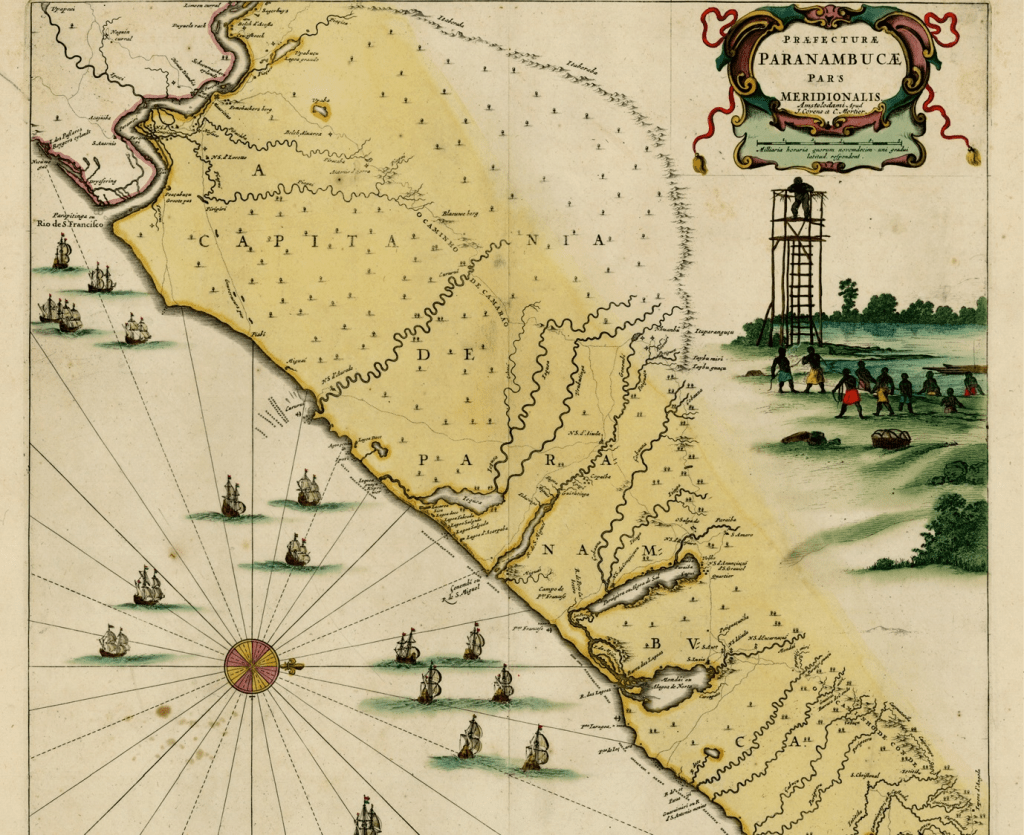
The historical phenomenon of the Quilombo—a community established by formerly enslaved and marginalized people, often in remote, difficult-to-reach areas—is best exemplified by the magnificent and enduring Quilombo dos Palmares. This self-governing republic, often referred to simply as Palmares, was not a temporary refuge but a genuine new society that thrived for nearly a century, roughly from 1594 to 1694. It was situated strategically in the rugged, forested terrain of the Serra da Barriga region, which lies in the interior of what is now the Brazilian state of Alagoas.

Click HERE to watch a movie about Palmares, And click HERE to check out some Capoeira videos, and some Afro-Brazilian cinema.

At its zenith, Palmares was far more than a single village. It functioned as a sophisticated confederation of autonomous settlements, known as mocambos (a term derived from the Bantu language, signifying a hideout or settlement). This network of communities boasted an impressive population that, according to various estimates, ranged from 10,000 to as many as 30,000 residents. This population base was comprised primarily of escaped slaves (known as quilombolas), but also included Indigenous peoples and even poor white settlers who sought refuge and freedom within its borders. Its size and organization rendered Palmares a power comparable to—and in some cases, even larger than—the colonial towns established by the Portuguese along the coast.

Palmares was a genuine proto-state forged by people who had been stripped of their freedom. It developed a complex political and social structure, led by a succession of formidable figures. The early leadership included Ganga Zumba, an imposing king or chief who oversaw the confederation’s diplomatic and military affairs. Following his reign, his nephew, Zumbi (meaning ‘immortal’ or ‘ghost’), rose to prominence. Zumbi rejected attempts at a negotiated peace with the Portuguese, insisting on absolute freedom for all Palmarinos and for any enslaved person who reached the Quilombo. Under his charismatic and uncompromising leadership, Palmares became the definitive symbol of Black autonomy and resistance in the Americas.

The very existence of Palmares was a direct challenge to the economic and social foundation of the Portuguese colony—the institution of slavery. Its continued survival was an intolerable affront to colonial authority. Consequently, Palmares faced repeated, brutal military assaults over its history. Its final, tragic end came in 1694, when the Portuguese Crown—tired of the constant threat Palmares posed—funded a massive military expedition. This force was led by the notorious bandeirante Domingos Jorge Velho, a ruthless frontiersman and professional slave hunter.

In case you want to know what a bandeirante is…

in 1694, with an army of amerindians and mamelucos, he successfully besieged and overran the main settlement of Palmares, the fortified city of Cerca do Macaco, on the mountain of Serra da Barriga .

Though Palmares itself was ultimately conquered, the profound spirit of resistance that it embodied did not immediately extinguish. Following the final, overwhelming assault by Portuguese forces, Zumbi, the last and most iconic leader of the quilombo, managed to evade capture. For nearly a year, he continued a desperate and arduous guerrilla war, utilizing the familiar, dense terrain of the Serra da Barriga to strike against the colonial power. This final, heroic struggle demonstrated an unwavering commitment to the ideals of freedom Palmares represented.

However, the immense resources of the Portuguese crown were not to be denied. Zumbi was eventually captured and, in a brutal act of public terror intended to utterly crush the morale of the enslaved population, he was executed in 1695. His head was severed and displayed in the town of Recife. This gruesome end, far from diminishing his impact, cemented his place not merely as a historical figure, but as a legendary and enduring icon. Zumbi has become the ultimate symbol of Black resistance, the struggle for freedom, and the fight against oppression in Brazil—a figure whose name echoes across centuries as a call to defiance.

Crucially, the government forces, despite their victory over the main settlement, were never truly able to claim a complete and total destruction of the Palmares movement. The deeply ingrained culture of resistance and the decentralized nature of the quilombo meant that the fight simply morphed and persisted. Other courageous warriors took Zumbi’s place, continuing the difficult struggle. A notable example is Camuanga, who carried on the resistance until his death in 1709. The ongoing presence of former Palmares residents and their descendants, coupled with the constant influx of new fugitives, ensured that the region remained a hotbed of anti-colonial activity.

In fact, the last recorded instance of organized resistance in the area that was once Palmares did not occur until 1797—over a century after Zumbi’s execution—underscoring the extraordinary longevity and deep-rooted legacy of this revolutionary settlement. The resilience displayed by the communities in and around Palmares serves as a powerful testament to their unwavering spirit and determination to seek freedom in the face of oppression. Palmares, therefore, was not a failure but a spark that continued to ignite resistance for generations, inspiring countless individuals to rise up against the injustices they faced, fostering a continuous struggle for liberation that echoed through the ages and laid the groundwork for future movements against tyranny and inequality.

Legacy and Modern Significance

Although thousands of Quilombos were eventually destroyed by colonial forces, their spirit and legacy survived. Today, the descendants of these communities, known as Quilombolas, live in officially recognized Quilombo Communities (Comunidades Quilombolas) across Brazil.

The struggle of the modern Quilombola movement is centered on land rights, cultural preservation, and recognition of their unique historical and social contributions. Article 68 of the 1988 Brazilian Constitution grants these communities the right to the definitive ownership of the lands they historically occupied, transforming the Quilombo from a historical phenomenon of resistance into a contemporary legal and political reality. The Quilombo, therefore, remains the essential blueprint for self-determination and the creation of a just society in the face of systemic adversity.

How do you create a quilombo village or group of villages?

The question of “How do you create a quilombo village or group of villages?” delves into a complex historical, social, and political process rooted in the resistance of enslaved and marginalized people in Brazil, primarily during the colonial and imperial periods, but with enduring relevance today.

A quilombo was fundamentally a settlement, often hidden and fortified, founded by self-liberated (runaway) slaves (escravos fugidos), but also including indigenous peoples, poor whites, and other social outcasts seeking autonomy and freedom from the oppressive plantation system (latifúndio) and the broader colonial society.

The creation of a quilombo involved several critical, interlinked stages and factors:

I. The Initial Act of Resistance and Escape (The Genesis)

  1. The Decision to Flee: The primary catalyst was the intolerable brutality, dehumanization, and exploitation of the slave regime. The decision to flee was a high-risk, often communal, act of radical self-determination.
  2. Formation of Escape Groups: Escapes were organized either individually, in small family units, or, most effectively, in pre-planned, larger groups. These groups needed leaders, often those with practical knowledge (e.g., survival skills, navigation, or martial training).
  3. Routes and Resources: Escapees utilized detailed local knowledge—often provided by indigenous allies, sympathetic individuals, or their own labor experience—to navigate dense forests (Mata Atlântica), swamps, and rugged terrain, avoiding capitães do mato (slave hunters). They carried minimal supplies, relying on foraging and survival skills.

II. Site Selection and Initial Settlement

  1. Strategic Location: The chosen site was paramount for survival. It needed:
    • Isolation and Concealment: Deep in remote, inaccessible areas (mountaintops, dense jungles, hidden valleys, or river islands) to deter discovery and attack.
    • Defensibility: Natural barriers (cliffs, rivers, thick undergrowth) that could be augmented with man-made fortifications like palisades, traps, and strategically cleared lines of fire.
    • Resource Access: Proximity to potable water, fertile land for subsistence farming, and materials for construction.
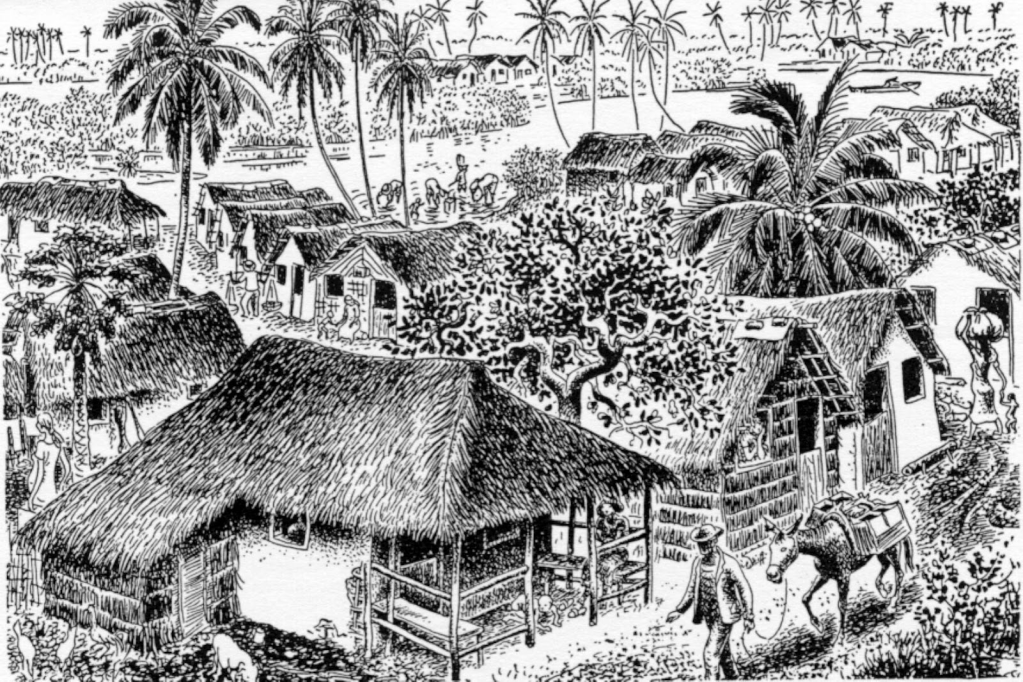
  2. Construction of the Mocambo (Huts): The initial settlement often consisted of simple huts (mocambos) built quickly from local materials. Over time, these settlements would become more structured, sometimes developing a central meeting area, larger community structures, and specialized areas for crafting and storage.

III. Establishing Social and Economic Autonomy

  1. Subsistence Agriculture: Immediate focus was on securing a food supply. Quilombolas cleared land using slash-and-burn techniques (roça) to plant staple crops such as manioc (cassava), corn, beans, and sweet potatoes. This farming was often diversified and hidden among the natural vegetation to make aerial or distant observation difficult.
  2. Internal Governance: Quilombos developed their own internal systems of governance and social order, often blending African political traditions, indigenous practices, and responses to the new environment. Leadership could be hereditary, military, or based on religious or moral authority, with figures like the legendary Zumbi of Palmares.
  3. Defense and Security: A standing defense force was critical. Quilombolas employed guerilla warfare tactics, utilizing their knowledge of the terrain, bows and arrows, spears, and eventually, stolen or bartered firearms. They established extensive watch systems and maintained high vigilance against incursions.

IV. Expansion and Maintenance (The Quilombo Network)

  1. Inter-Quilombo Relations: To increase security and resilience, individual quilombos often formed alliances, creating networks or “groups of villages.” These networks shared intelligence, provided mutual aid, facilitated trade, and coordinated defense against major expeditions launched by colonial forces. The Republic of Palmares (Quilombo dos Palmares) stands as the most famous example of such a large, organized polity.
  2. Maintaining Population: New members arrived continuously through ongoing escapes from plantations. The quilombos also grew through births within the community and, in some cases, through the capture or voluntary inclusion of indigenous people or other marginalized groups.
  3. External Relations and Trade: While aiming for self-sufficiency, quilombos often needed goods (metal tools, salt, ammunition) that they couldn’t produce. They engaged in clandestine trade with poor settlers, small farmers, or even corrupt officials, exchanging agricultural surplus, crafts, or items stolen from plantations. Raids on plantations were also conducted to liberate others, acquire tools, and disrupt the slave economy.

V. Endurance and Legacy (Modern Quilombos)

The historical model of quilombo creation has evolved into the modern context. Today, Comunidades Quilombolas are recognized as ethnic and racial groups with their own specific historical trajectory, territorial relations, and presumption of Black ancestry related to resistance to historical oppression.

The modern “creation” of a quilombo focuses less on physical escape and more on territorial recognition and cultural preservation:

  1. Self-Recognition: A community must self-identify as a quilombo based on its history and relationship to the land.
  2. Legal Process: In Brazil, communities must undergo a complex legal and anthropological process—certified by the Palmares Cultural Foundation (FCP)—to gain official recognition and, crucially, to secure communal land titles (titulação), protecting them from eviction and guaranteeing their collective rights as mandated by the 1988 Brazilian Constitution.

Thus, creating a quilombo historically involved a radical, military, and social transformation from enslaved status to autonomous community; in the contemporary sense, it involves the political assertion of identity and the legal struggle for territory and cultural rights.

The Quilombo and the Roots of Capoeira

Was Capoeira created and/or practiced in the quilombos?

The relationship between the quilombos—the independent settlements formed by runaway enslaved people in Brazil—and the creation and practice of Capoeira is one of the most debated and essential topics in the study of Afro-Brazilian culture and martial arts. While definitive written records from the quilombos themselves are scarce, the overwhelming historical and cultural consensus supports the idea that the quilombos, particularly the largest and most famous, Palmares, were the fertile ground where Capoeira as a distinct art form was forged.

The Quilombo as a Cultural Crucible

The quilombos were not merely places of refuge; they were sovereign, self-governing societies created from scratch, designed to sustain life, resist capture, and preserve an African-rooted identity. This required the development of sophisticated means of self-defense.

  1. Necessity of Self-Defense: Every resident of a quilombo was a potential soldier. The settlements were under constant threat of attack by the capitães-do-mato (bush captains) and organized military expeditions. A fighting system that was both highly effective and capable of being practiced secretly was not a luxury but a fundamental requirement for survival.
  2. Cultural Synthesis: The populations of the quilombos were drawn from various African ethnic groups (Kongo, Angolan, Yoruba, etc.) and often included indigenous peoples and impoverished Europeans. The fighting forms, dances, music, and religious practices of these diverse groups were brought together and synthesized into new, distinctly Brazilian forms. Capoeira is believed to be the ultimate expression of this synthesis—blending African circle dances and fighting techniques with Brazilian necessity.
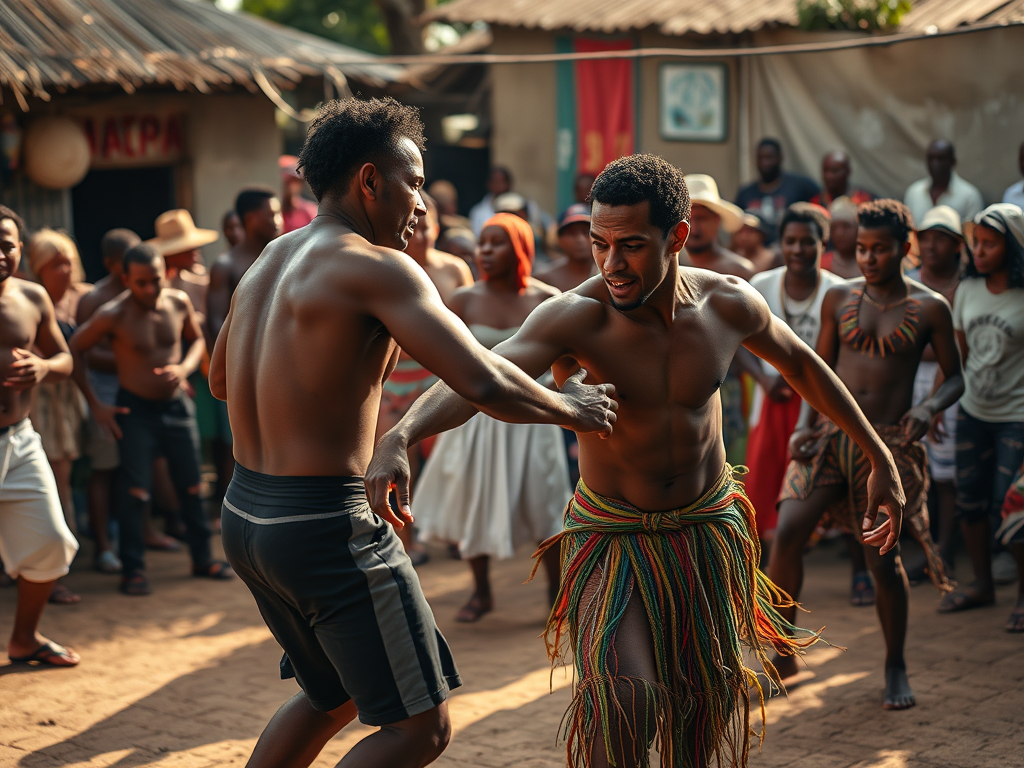
  3. The Element of Deception: One of the most powerful arguments for Capoeira’s quilombo origin is its characteristic use of deception. The fighting movements are often masked within the movements of a dance or a ritualistic game (jogo). This technique of dissimulation was vital: practicing an overt martial art would have immediately exposed the quilombo’s inhabitants to greater danger and confirmed their military threat to the Portuguese. By disguising fighting as brincadeira (play) or dance, the practitioners could train in the open without giving away their true capabilities.

Historical Evidence and Scholarly Debate

While direct documentary proof (a diary entry reading, “Today, we invented Capoeira”) is absent, several lines of evidence point to the quilombo thesis:

  • Oral Tradition: The oral history passed down through generations of Capoeira masters (Mestres) consistently traces the art’s origins to the communities of resistance.
  • The Mandinga Connection: Early descriptions of the fighting style often refer to it as “Mandinga,” “Jogo de Mandinga,” or “brincadeira de Angola”—all terms that strongly connect the art to Central West African traditions prevalent among those taken to Brazil, particularly those who formed the core of Palmares.
  • Location and Early Practice: The earliest documented evidence of Capoeira being practiced openly appears in the major urban centers, such as Rio de Janeiro and Salvador, in the 18th and 19th centuries, often associated with the communities of libertos (freedmen) and the urban poor, many of whom were descendants of those who had passed through or been influenced by the quilombos. They brought the fighting tradition with them as they migrated or were resettled.

The evidence overwhelmingly supports the conclusion that Capoeira was indeed forged and developed within the quilombos. These independent, self-governing communities—established by formerly enslaved people in remote, often inhospitable areas of colonial Brazil—were not merely settlements; they were crucible environments perfectly suited for the gestation of a sophisticated and clandestine martial art.

The existence of quilombos provided a unique confluence of factors necessary for Capoeira’s emergence:

1. Intense External Pressure and the Need for Secrecy

The paramount factor was the relentless, existential threat posed by colonial authorities and the capitães-do-mato (bush captains) tasked with their destruction. Survival depended on the ability to repel armed incursions. This intense external pressure demanded an effective, highly adaptable fighting system. However, openly practicing a martial art would have been suicidal, immediately drawing the full wrath of the Portuguese crown. This necessity for concealment drove the innovation of integrating combat techniques into seemingly innocuous cultural forms. The fluid, dance-like movements, the music, and the songs could have served as a brilliant camouflage, allowing practitioners to hone deadly skills in plain sight. The roda (circle) itself became a laboratory of resistance disguised as a festival.

2. A Diverse and Concentrated Cultural Foundation

The quilombos drew people from a multitude of African ethnic groups, each bringing their own distinct cultural, religious, and combative traditions. From the wrestling styles of Angola (such as Engolo) and the ritual dances of various Central and West African cultures, the quilombo synthesized a rich tapestry of movement and knowledge. This diverse cultural foundation was essential. Rather than simply preserving one tradition, the quilombo environment fostered a dynamic exchange and refinement process, transforming disparate African fighting games and dances into the uniquely deceptive and sophisticated martial art we recognize today. The integration of music, particularly the berimbau, was crucial, acting as both an auditory guide and a code for signaling danger or the intensity of the fight, further masking its martial purpose.

3. The Quilombo as a Laboratory of Resistance

The isolation of the quilombos granted a critical measure of autonomy and the necessary time and space for this cultural synthesis and evolution. They were, in essence, independent “laboratories of resistance.” Within their borders, practitioners could experiment with, develop, and perfect the movements, strikes, sweeps, and feints that define Capoeira, passing the knowledge down in a concentrated environment free from direct colonial observation. This extended period of development, driven by a clear need for self-defense and community cohesion, solidified Capoeira’s dual nature: an elusive, powerful, embodied testament to human resilience and the unrelenting fight for freedom, inextricably linked to the quilombo’s legacy.

In conclusion, the path to establishing and sustaining a successful Quilombo—a free territory and new society born out of resistance—is fraught with peril and demands an unyielding commitment to both internal cohesion and external vigilance. The very act of creating a new social order when surrounded by those who view your existence as a threat requires a complete paradigm shift, moving from a mindset of individual survival to one of collective, revolutionary self-determination.

The essential facts borne out by historical precedent and the foundational principles of this guide can be summarized thus:

  1. Unity is the Ultimate Defense: A Quilombo’s primary strength is the absolute solidarity of its members. Every individual must internalize the understanding that a threat to one is a threat to the whole. Internal dissension, rivalry, or a failure to adhere to the core tenets of the new society—equitable distribution of resources, mutual aid, and democratic self-governance—will prove more fatal than any external attack. Trust must be earned, maintained, and constantly reinforced through transparent decision-making and shared sacrifice.
  2. Resource Independence is Non-Negotiable: A society dependent on its enemies for food, water, or material goods is a society living on borrowed time. The immediate and sustained focus must be on achieving complete self-sufficiency. This includes the development of resilient, diversified agriculture; secure and managed water sources; and localized production of essential tools, medicines, and defensive materials. Dependence is a vulnerability that will inevitably be exploited.
  3. The Environment is a Strategic Ally: The founders of a Quilombo must intimately understand and utilize the surrounding terrain for both camouflage and defense. The land is not merely a place to live, but a living partner in resistance. This involves mastering natural defenses, establishing complex and deceptive travel routes, and using the landscape to monitor and thwart enemy movements.
  4. Constant Vigilance and Intelligence Gathering: Because everyone outside the boundary is a potential enemy, the community cannot afford complacency. A robust, layered, and disciplined security system—including a rapid-response defensive force and an intelligence network dedicated to identifying infiltrators, anticipating attacks, and tracking external political and military developments—is indispensable. The enemy will probe for weaknesses, and the Quilombo must be prepared to respond immediately and decisively to maintain the integrity of its borders and its internal order.
  5. A New Culture of Resilience: More than just a fortress, a Quilombo is a cultural experiment. Its survival depends on cultivating a new social fabric that actively replaces the corrosive values of the old world (hierarchy, exploitation, selfishness) with a regenerative ethos of community, equality, and shared purpose. This requires constant educational efforts, the establishment of rituals that reinforce communal identity, and a commitment to justice that resolves conflicts internally without resorting to the oppressive methods of the outside world.

In essence, creating a new society from the ground up, under continuous pressure, is the ultimate act of defiant creation. It requires not just the courage to fight, but the wisdom to build, and the relentless discipline to maintain the essential balance between freedom and security. The Quilombo is the living proof that a better world is possible, provided its members never lose sight of the fact that their collective survival is a daily, revolutionary undertaking.

Debunking Stereotypes: Godfrey vs. Ignorance on Black History

Godfrey DROPS BOMBS On His Nigerian Co Host About Black American History: A Response to Persistent Misconceptions and Ignorance

Once again, this conversation is necessitated for those of you out there who perpetuate and actually believe the damaging, utterly false, and historically illiterate stereotypes that black people are inherently lazy, lack initiative, or have no discernible culture beyond shallow, modern trends.

The recent exchange between Godfrey and his Nigerian co-host was a critical, unfiltered moment that shone a harsh light on a pervasive issue: the misunderstanding and often outright dismissal of the unique, complex, and profound history of Black Americans, not just by people of other races, but often, jarringly, by individuals from the African diaspora themselves.

Godfrey’s passionate “bombs” were directed at correcting the record, specifically challenging the notion that the struggles and achievements of Black Americans can be glossed over or equated simplistically with the experiences of recent African immigrants or those still on the continent. He meticulously laid out the foundational trauma of chattel slavery, the systematic dismantling of family structures, the enforced illiteracy, and the centuries of post-slavery oppression—Jim Crow, segregation, systemic redlining, and disenfranchisement—that fundamentally shaped the Black American experience.

To suggest that a community subjected to such profound, government-sanctioned oppression has “no culture” or is “lazy” is not only deeply insulting but ignores the monumental feats of resilience and creativity born out of that struggle. Black American culture—which birthed Rock and Roll, Jazz, Blues, Gospel, Hip-Hop, profoundly influenced global cuisine, shaped American English, and drove the most significant civil rights movements in the nation’s history—is one of the most dominant and influential cultural forces in the world.


This wasn’t just a simple disagreement; it was a necessary confrontation designed to educate and remind listeners that the legacy of Black America is not one of failure, but one of triumph over insurmountable odds, creating a civilization of unique richness and contribution under the most hostile conditions imaginable.

Watch the full podcast down below:

Just another day of navigating a world that often perceives my very existence as a provocative plot twist in a crime documentary.

Greetings! Although this website is about the beautiful way of life called Capoeira Angola, throughout this website, I do share articles, personal reflections, and diverse content exploring the multifaceted experiences of Black men, both here in the United States and in Brazil.

For those who genuinely question the fundamental premise behind the “Black Lives Matter” movement, I urge you to watch this video, and immerse yourself in the lived realities and historical injustices that necessitate such a declaration.

This is not merely a slogan; it is a plea for recognition, equality, and an end to systemic discrimination that continues to affect Black communities worldwide.

The narratives presented on this site delve into the daily triumphs and tribulations, the joys and the pains, the resilience and the resistance that define our journeys. From the casual microaggressions that chip away at our sense of belonging, to the more overt forms of discrimination that can have life-altering consequences, we aim to shed light on the pervasive nature of racial bias.

In the United States, the legacy of slavery, Jim Crow laws, and ongoing racial disparities in areas such as criminal justice, education, and healthcare continue to shape the lives of Black men. The fear of being unfairly targeted, the burden of proving one’s innocence, and the constant battle against stereotypes are realities that many of us face daily.

Similarly, in Brazil, a nation with the largest population of people of African descent outside of Africa, Black men grapple with a unique set of challenges rooted in a complex history of slavery and entrenched racial inequality. Despite the vibrant Afro-Brazilian culture, systemic racism manifests in economic disparities, police brutality, and a lack of representation in positions of power.

Through personal stories, analytical essays, and a curated selection of resources, this website seeks to:

  • Amplify the voices of Black men: Providing a space for authentic self-expression and shared experiences.
  • Educate and inform: Offering insights into the historical, social, and cultural contexts that shape our lives.
  • Challenge stereotypes: Dismantling harmful misconceptions and promoting a more nuanced understanding of Black masculinity.
  • Advocate for change: Inspiring dialogue and action towards a more just and equitable society for all.

Join us as we explore the rich tapestry of Black manhood, celebrating our strengths, confronting our struggles, and collectively striving for a future where our lives are not just acknowledged, but truly valued.

HEY, WHY DIDN’T I LEARN THIS IN HISTORY CLASS?

GREETINGS!

Youtube is full of videos that talk about “The history they didn’t tell you,” especially it seems, when they’re about African and Afro-diasporic culture. These videos delve deep into the rich and often overlooked narratives that have shaped these communities, providing insights into their struggles, achievements, and contributions to global culture. From the powerful resistance movements to the vibrant artistic expressions that have emerged, these stories highlight the resilience and creativity of the African diaspora. Well here, we’re gonna highlight some of these stories that not only educate but also inspire, showcasing the vibrant tapestry of history that is often sidelined in mainstream discussions. By exploring these narratives, we hope to contribute to a more comprehensive understanding of the past and its impact on the present.

In this first installment…

The British government vowed freedom to enslaved people if they could escape and take up arms against their Patriot enslavers. This promise, however, was not just a mere obligation; it represented a beacon of hope for many who yearned for liberation from the shackles of bondage. But when the British failed to deliver the promised land in Nova Scotia, leaving the Black Loyalists disillusioned and without the support they were led to expect, they found themselves at a crossroads. The Black Loyalists needed a leader to step up, someone courageous enough to sail across the ocean and demand a solution to their plight.

That man would be Thomas Peters, a former prince who escaped enslavement in North Carolina and embarked on a brave journey toward freedom. Having experienced the brutality of slavery firsthand, Peters understood the gravity of their situation and was determined to advocate for the rights and dignity of his fellow Black Loyalists, whose stories were often overshadowed by the dominant narratives of history. With his noble background and unwavering resolve, he emerged as a pivotal figure in the quest for justice and equality, tirelessly rallying others to join his cause and speaking out against the injustices they faced.

Through his unwavering efforts, Peters not only sought to uplift his community but also aimed to forge a path toward a more equitable society, one that recognized the inherent dignity and worth of every individual. His transformative leadership inspired a renewed sense of hope within a community desperately seeking a way forward in a land that had promised them freedom but delivered only uncertainty and despair. As he worked tirelessly to unite their voices, he championed their struggles against a backdrop of systemic oppression, advocating for justice and equality in every forum available. Peters understood the power of collective action and dedicated himself to educating others about their rights and the importance of standing together, rallying support from neighboring communities and forming coalitions that transcended social and economic barriers. In this way, he not only addressed immediate issues but also planted the seeds for long-term change, fostering a spirit of resilience and empowerment that would resonate for generations to come.

THE STRUGGLE CONTINUES

Hi.

I decided to create a series about modern-day slavery, a troubling issue that remains pervasive around the globe. Capoeira, an art form that developed in Brazil, emerged in part as a response to the trauma experienced by the enslaved Africans who were forced into labor and oppression. This beautiful cultural expression not only showcases their resilience and strength but also serves as a reminder of the deep scars left by slavery. We can’t turn a blind eye to the ongoing reality of slavery today, just because it may seem distant or disconnected from our lives. This injustice continues to affect millions, and it is our collective responsibility to confront it. So, I’m posting instances of slavery happening today, from human trafficking to forced labor, because recognizing and acknowledging these abhorrent acts when they occur is the most effective way to work towards ending them and advocating for those who suffer in silence. By raising awareness, we can contribute to a larger movement aimed at eradicating these violations of human rights and fostering a more equitable society for all.

In this 1st installment…

Brazil leads the world in the number of domestic workers, with official figures indicating nearly 6 million individuals employed in this sector. This workforce is predominantly female, with women constituting 91% of nannies, cooks, and cleaners. A significant demographic factor is the overrepresentation of Black women, who make up 67% of these workers, highlighting the enduring impact of historical and socio-economic disparities within Brazilian society.

Despite their crucial contributions, a majority of these women face precarious employment conditions. Many are paid by the day, lacking formal employment contracts and social security coverage. This vulnerability leaves them without a safety net, exposing them to exploitation and underscoring systemic inequalities in the labor market. This situation is particularly acute for those who become victims of modern slavery, a term that encompasses forced labor and other forms of severe exploitation.

The lack of legal protection and formal employment status exacerbates their vulnerability, making them susceptible to various abuses. In extreme and tragic cases, some domestic workers are trafficked into prostitution. This grim reality serves as a stark reminder of the hidden exploitation that can occur within this often-unseen workforce, where personal dignity and fundamental rights are frequently compromised in the struggle for survival. The challenges faced by these workers reflect not only the specific dynamics of the domestic labor market but also broader societal issues related to race, gender, and economic inequality in Brazil.

TODAY IN BLACK MEDIA (6/22/25)

TODAY IN BLACK MEDIA delivers news and cultural discussions from an African American viewpoint, emphasizing often-overlooked global black achievements and significant stories. It serves as a crucial resource for understanding the nuances of black life, fostering conversations about race, culture, and identity. By amplifying underrepresented voices, it encourages engagement with societal issues and promotes unity within and beyond the African American community, aiming to create a vibrant narrative that celebrates black cultures worldwide.

Today… I have one more thing to report about Junereenth.

A Black North Carolina woman waiting to have her truck serviced decided to spend her money elsewhere after two employees and another customer appeared to mock Juneteenth, a significant holiday celebrating the emancipation of enslaved people in the United States. Frustrated and feeling disrespected, the woman, who was the only Black person in Synergy Auto Care in Wilson, North Carolina, at the time, confronted the staff directly. She emphatically told an employee to, “Give me my f***ing truck! Pull my truck around, please. Pull my truck around and give me my truck.” This moment encapsulates the broader issues of racial insensitivity and the need for businesses to foster an inclusive environment for all customers. Dr. Rashad Richey and Maz Jobrani weigh in on this troubling incident in the above video, delving into the implications of such behavior and discussing the importance of accountability in service industries.

Okay, before I go any further, I want my readers here to understand…

SLAVERY NEVER ENDED IN THE USA, IT ONLY BECAME ILLEGAL!

For the record, slavery in the United States officially became illegal with the ratification of the 13th Amendment to the U.S. Constitution on December 6, 1865. The amendment states that “Neither slavery nor involuntary servitude, except as a punishment for crime whereof the party shall have been duly convicted, shall exist within the United States, or any place subject to their jurisdiction.”  

While President Abraham Lincoln’s Emancipation Proclamation, issued on January 1, 1863, declared that slaves in Confederate states in rebellion would be free, it did not apply to border states loyal to the Union. Therefore, the 13th Amendment was essential to ensure the abolition of slavery throughout the entire United States. 

The Senate passed the 13th Amendment in April 1864, and the House of Representatives followed suit in January 1865. The amendment was then sent to the states for ratification and became law in December 1865 after receiving the necessary approval from three-fourths of the states.

Now for those of you out there who want to learn about Juneteenth and it’s signifignance, I advise you to search this website for other posts I made about it on this website… Or you can GOOGLE IT.

LETTER FROM FREDERICK DOUGLASS TO HARRIET TUBMAN

Rochester, August 29, 1868

Dear Harriet,

I am glad to know that the story of your eventful life has been written by a kind lady, and that the same is soon to be published. You ask for what you do not need when you call upon me for a word of commendation. I need such words from you far more than you can need them from me, especially where your superior labors and devotion to the cause of the lately enslaved of our land are known as I know them.

The difference between us is very marked. Most that I have done and suffered in the service of our cause has been in public, and I have received much encouragement at every step of the way. You, on the other hand, have labored in a private way. I have wrought in the day – you in the night. I have had the applause of the crowd and the satisfaction that comes of being approved by the multitude, while the most that you have done has been witnessed by a few trembling, scarred, and foot-sore bondmen and women, whom you have led out of the house of bondage, and whose heartfelt, “God bless you,” has been your only reward.

The midnight sky and the silent stars have been the witnesses of your devotion to freedom and of your heroism. Excepting John Brown – of sacred memory – I know of no one who has willingly encountered more perils and hardships to serve our enslaved people than you have. Much that you have done would seem improbable to those who do not know you as I know you. It is to me a great pleasure and a great privilege to bear testimony for your character and your works, and to say to those to whom you may come, that I regard you in every way truthful and trustworthy.

Your friend,

Frederick Douglass.

HAPPY INDEPENDENCE DAY, HAITI!

In 1492, Christopher Columbus arrives on Hispaniola, leading to the enslavement of its inhabitants and significant population decline due to disease and harsh conditions introduced by European settlers.

For three centuries, many slaves are imported to serve European colonizers, as the demand for labor to cultivate sugar cane and other valuable crops escalates, further exacerbating the suffering of the indigenous peoples. The Haitian Revolution (1791-1804) is inspired by the French Revolution, which ignites a desire for liberty and equality among enslaved individuals, resulting in a successful rebellion against oppression that astonishes the colonial world.

In Haiti, the machete serves as both a weapon and a vital tool for farmers, exemplified by Alfred Avril, a skilled machete fencer and subsistence farmer whose expertise highlights the deep cultural significance of this implement. The practice of machete fencing has roots in the Haitian Revolution, where enslaved people, facing a lack of firearms, expertly wielded machetes from their sugarcane work as a means of survival and resistance. This historical context not only speaks to the resilience of the Haitian people but also underlines the ingenuity behind their adaptation to adversity.

In a short film by Third Horizon, Avril discusses his craft and the machete’s significance in Haitian history, both practically and spiritually, underscoring how, for many, the machete embodies a dual identity as a tool for agricultural sustenance and a symbol of revolutionary spirit and cultural heritage. He shares the deep connections forged between the machete, the land, and the people, revealing how this simple tool is intertwined with the vibrant tapestry of Haitian identity and collective memory.

Haiti gains independence on January 1, 1804, becoming the first nation founded by former slaves, though it faces isolation from European powers and the U.S., which fears the spread of revolutionary ideas and potential slave uprisings. This historic achievement was not only a remarkable testament to the resilience and courage of the Haitian people but also a significant turning point in the global narrative of freedom and human rights. The U.S. recognizes Haiti’s sovereignty in 1862, during the American Civil War, marking a significant turning point in international relations; however, Haiti continues to struggle with internal challenges such as political instability, economic hardship, and social division, alongside external pressures from foreign interventions and historical debt to France. These difficulties would profoundly shape its complex history in the following decades, as Haiti endeavored to assert its identity and navigate a world often resistant to the ideals of autonomy and self-governance.