Woman did this to a BLACK MAN, showcasing a complex dynamic that reveals not only the intricacies of their interaction but also underlying societal issues that persist in today’s world. This incident highlights the powerful impact of their respective identities, raising questions about race, gender, and the historical context that shapes such relationships.
It serves as a reminder of the challenges faced by individuals in navigating their realities, often marked by prejudice and misunderstanding, as they strive for connection and recognition amidst societal pressures. These struggles can manifest in various ways, affecting their mental well-being and sense of self-worth, as they encounter barriers that hinder their ability to express their true identities.
Additionally, the journey towards acceptance is frequently complicated by societal norms that dictate what is considered “normal,” leading to feelings of isolation and despair. Yet, within this landscape of adversity, there lies a profound resilience that many exhibit, seeking to build communities that foster understanding and empathy, thereby promoting a culture of inclusivity and support for all who feel marginalized.
This paragraph discusses the “ROOTS OF CAPOEIRA” blog series, highlighting the significance of Afro-Brazilian culture as the foundation of Capoeira. It emphasizes the deep connection between Capoeira and the rich heritage of the Afro-Brazilian people, who express their struggles, creativity, and resilience through various forms of art, including dance, music, and storytelling. Additionally, it notes the importance of these art forms in celebrating identity and preserving history, showcasing the community’s innovation and resilience in the face of adversity. The series delves into various elements of Capoeira, such as the rhythm of the berimbau, the role of the roda, and the significance of traditional songs, all of which contribute to a collective narrative that honors ancestors and fosters a sense of belonging. By understanding these cultural roots, readers gain a deeper appreciation for how Capoeira not only serves as a form of self-defense and physical expression but also as a vital cultural practice that unites individuals in celebration of their shared heritage.
In today’s installment..
Join us on a culinary journey through Afro-Brazilian cuisine, highlighting its unique blend of African, Portuguese, and indigenous influences that have shaped the rich tapestry of Brazil’s food culture.
Discover iconic dishes like Feijoada, a hearty stew that combines black beans and various types of meat, and Moqueca, a flavorful fish stew made with coconut milk and spices that varies regionally in Brazil, showcasing the diversity of local ingredients and culinary techniques. Learn about key ingredients such as dendê oil, which imparts a distinctive flavor that is essential in many traditional recipes, and okra, often used to enhance the texture of many dishes, providing a unique twist to the overall experience.
Celebrate the vital role of women in preserving these traditions, as they pass down invaluable recipes and cooking techniques from generation to generation, ensuring that the heritage remains vibrant and alive, and fostering a deep connection to their roots. Share this video to spread appreciation for Afro-Brazilian cuisine, inviting others to explore and savor the diverse tastes and cultural stories embedded within each dish, while also recognizing the significance of these culinary practices in shaping community bonds and local identities.
“A WISE MAN CAN PLAY THE PART OF A FOOL, BUT A FOOL CAN NEVER PLAY THE PART OF A WISE MAN”
– MALCOLM X
I’m making a new blog series…
What’s it about? Well… just watch.
Godfrey C. Danchimah Jr. (born July 21, 1969), known as Godfrey, is a talented Nigerian-American comedian and actor with a diverse career that spans multiple entertainment platforms. He has captivated audiences with his unique sense of humor on channels like BET, VH1, and Comedy Central, showcasing his comedic prowess in various stand-up routines and specials. In addition to his television appearances, he has made notable contributions to film, starring in popular movies such as Soul Plane, which highlighted his comedic timing, and Zoolander, where he displayed his versatility as an actor. Beyond the screen, Godfrey gained recognition as a charismatic spokesperson for 7 Up, solidifying his presence in popular culture. He also made waves in reality television with his participation in the show The It Factor, which provided an insider’s view of aspiring performers navigating the entertainment industry. Currently, he showcases his talent and connects with fans by performing regularly at the iconic Comedy Cellar in New York, a venue renowned for hosting some of the best comedians in the business. Here, he shares some of his wisdom and insights on the WILLIE D Podcast, where he engages in thought-provoking discussions that often reflect his experiences and perspectives shaped by his rich cultural background and career journey.
“There are not more than five musical notes, yet the combinations of these five give rise to more melodies than can ever be heard. There are not more than five primary colours, yet in combination, they produce more hues than can ever been seen. There are not more than five cardinal tastes, yet combinations of them yield more flavours than can ever be tasted.” ― Sun Tzu, The Art of War“
Capoeira Angola is a defensive martial art known for its intricate trap-like defenses designed to catch opponents off guard and provide fluidity in movement. It encompasses 8 basic defenses, each with unique unexpected attacks and counter-attacks based on the opponent’s positioning, which are essential for creating opportunities during a confrontation. Mastery of these movements enables capoeiristas to defend against individuals carrying various weapons, including sticks, clubs, knives, and potentially even firearms with the appropriate skills; by understanding the principles of anatomy, timing, and rhythm, practitioners can enhance their ability to react swiftly and effectively. Furthermore, the art form emphasizes not only physical technique but also the mental aspects of strategy and awareness, allowing capoeiristas to anticipate an opponent’s actions and respond accordingly, making it a holistic approach to self-defense that integrates body and mind.
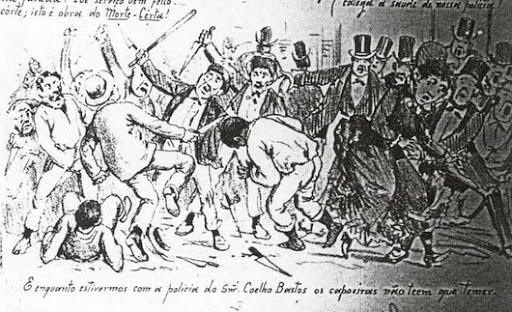
The Cabeçada is a headbutt in capoeira, widely used and considered a fundamental technique. Though easy to perform, it is dangerous and historically deadly in 19th century capoeira carioca, but violent headbutts are now generally avoided in contemporary practice.
By the 19th century, head butts had evolved into the primary technique used by capoeiras, as documented in police records that highlighted the growing notoriety of capoeira in urban settings. This era saw a remarkable surge in interest and participation, prompting authorities to closely monitor the activities surrounding capoeira schools and the practitioners themselves.
In capoeira carioca, cabeçada was a deadly technique. An English visitor to Rio de Janeiro wrote in 1826 on this lethal technique:
They need no stiletto, ferro de gaiola, or any other weapon. In lieu of all these, they use only the head; and with it, they butt like bulls at the chest of their victim. I saw a field officer who had been murdered in this manner and thrown over the wall into his garden, where his family found him in the morning: the upper part of the body had been flattened as if the implement of death had been a mallet.
Between 1822 and 1824, German painter Johann Moritz Rugendas characterized capoeira as a game centered around headbutting, emphasizing not only the physicality of the movement but also the cultural significance it held within the Brazilian landscape, serving as a form of resistance and identity for enslaved and marginalized communities.
Two contestants face each other, each trying to butt his adversary in the chest with his head and knock the opponent down. They turn cartwheels and pause as they launch into an attack. Sometimes they stand like he-goats, butting at each other. The game often turns into a wild brawl when knives are drawn and blood is shed.[6]
Through Rugendas’ artwork, one can glimpse the vibrant energy and spiritedness of capoeira, which continues to resonate to this day, evolving while maintaining its historical roots in the struggle for freedom and self-expression.
Lethal headbutt techniques were also used in the 19th century Bahia.
On the night of February 22, 1883, the soldier José Raimundo de Souza, standing patrol in the Baixa dos Sapateiros, went to arrest the stevedore Celestino, author of a major conflict on that street, from whom he received a ‘cabeçada’ that caused him almost instant death.
Headbutts, once common in street-fighting capoeira for their effectiveness, are now used less frequently in the game, primarily as a defensive strategy against close opponents.
To execute a headbutt, the capoeirista bends down and strikes the opponent with their forehead, targeting various body regions such as the chest, jaw, or even the temple, depending on the opening and the intended impact. This technique not only serves as a powerful offensive move but also helps create space between the capoeirista and their adversary, allowing for a tactical retreat or a swift counterattack. Moreover, mastering the headbutt requires precise timing and body mechanics, as improper execution can lead to self-injury or ineffective blows. With the evolution of capoeira into a more dance-like performance art, the headbutt has become a less favored option, yet it remains a potent reminder of the martial roots from which this vibrant practice originated.
solar plexus, where one firm headbutt can be enough to bring down the opponent.
As long as there’s an opening in the defense, the possibility of a headbutt remains imminent. In this technique, the attacker rapidly approaches, gliding their head along the opponent’s chest with precision and agility, usually targeting sensitive areas like the chin, nose, or forehead upon contact. The speed and intent behind this maneuver can often catch an opponent off guard, making it a risky yet potentially effective tactic in certain situations. However, it’s crucial to emphasize that this technique should never be fully executed in a game situation due to its serious consequences. Not only can a headbutt lead to severe injuries for both the initiator and the target, but it can also result in disciplinary actions from officials, such as penalties or ejections. Understanding the gravity of this action is essential for athletes to maintain sportsmanship and ensure the safety of all players on the field.
According to mestre Pastinha and mestre Bimba, the headbutt, or cabeçada, is a dangerous technique in capoeira that can be effectively used at close range. It involves cunning application and can target the chest or face, often executed unexpectedly as opponents anticipate a withdrawal. Capoeiristas utilize various strategies to deliver headbutts, such as feigning dodges during ginga or dropping objects to surprise reckless opponents, and can also escape holds by using headbutts.
In capoeira carioca, different headbutts have specific names based on execution, such as caveira no espelho for a standing face strike and cocada for an upward jab under the chin. The cocada is performed by lowering the body to hit the opponent with the head, making it a deceptive move that can catch the adversary off guard. It can disorient and terrify the receiver, similar to the rabo de arraia, which is also known for its unexpected nature and effectiveness in combat situations.
The arpão de cabeça is a powerful headbutt that effectively utilizes the attacker’s body weight, initially shielding with crossed arms to create an illusion of vulnerability before delivering the strike with precision. This strikes not only aims to incapacitate but also serves to assert dominance in the rhythm of the game. Defense against a headbutt includes pulling back to hit the attacker’s head or quickly descending to kick upward, which requires agility and quick thinking. Learning to anticipate and react to these specific moves is crucial for any practitioner wishing to excel in capoeira, as each technique has its place in the fluid interplay of offense and defense that defines this dynamic martial art.
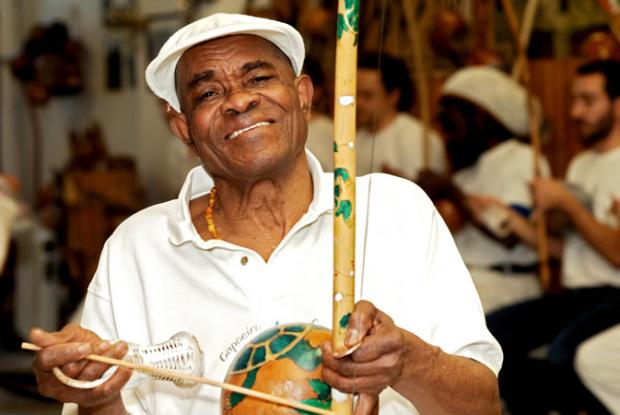
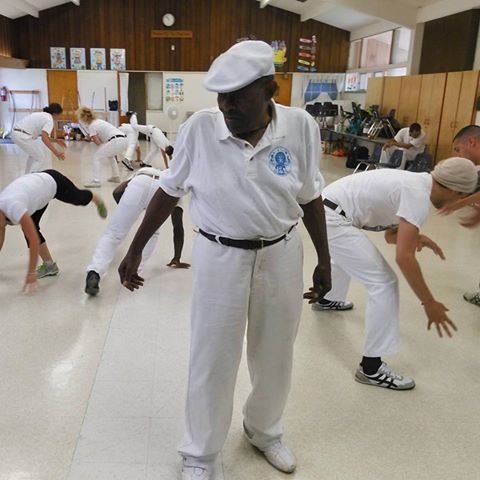
Hello, I would like to introduce to you one of my teachers, and inspirations, Jelani Lateef.
Jelani Lateef is a dedicated teaching artist and capoeirista who actively engages in capoeira Angola and storytelling. He has recently lost his home in the Eaton Fire, which he was renovating for an art studio. His teachings emphasize not only the physical practice but also the cultural significance of the art form, exploring its rich history and the stories woven into each movement.
By integrating elements of personal narrative and cultural exchange, he has encouraged myself, as well as others, to appreciate capoeira Angola not just as a martial art but as a living, breathing tradition that connects people across generations.
Your support will help him continue his journey, enabling him to reach more individuals and cultivate a deeper appreciation for this vibrant cultural practice.
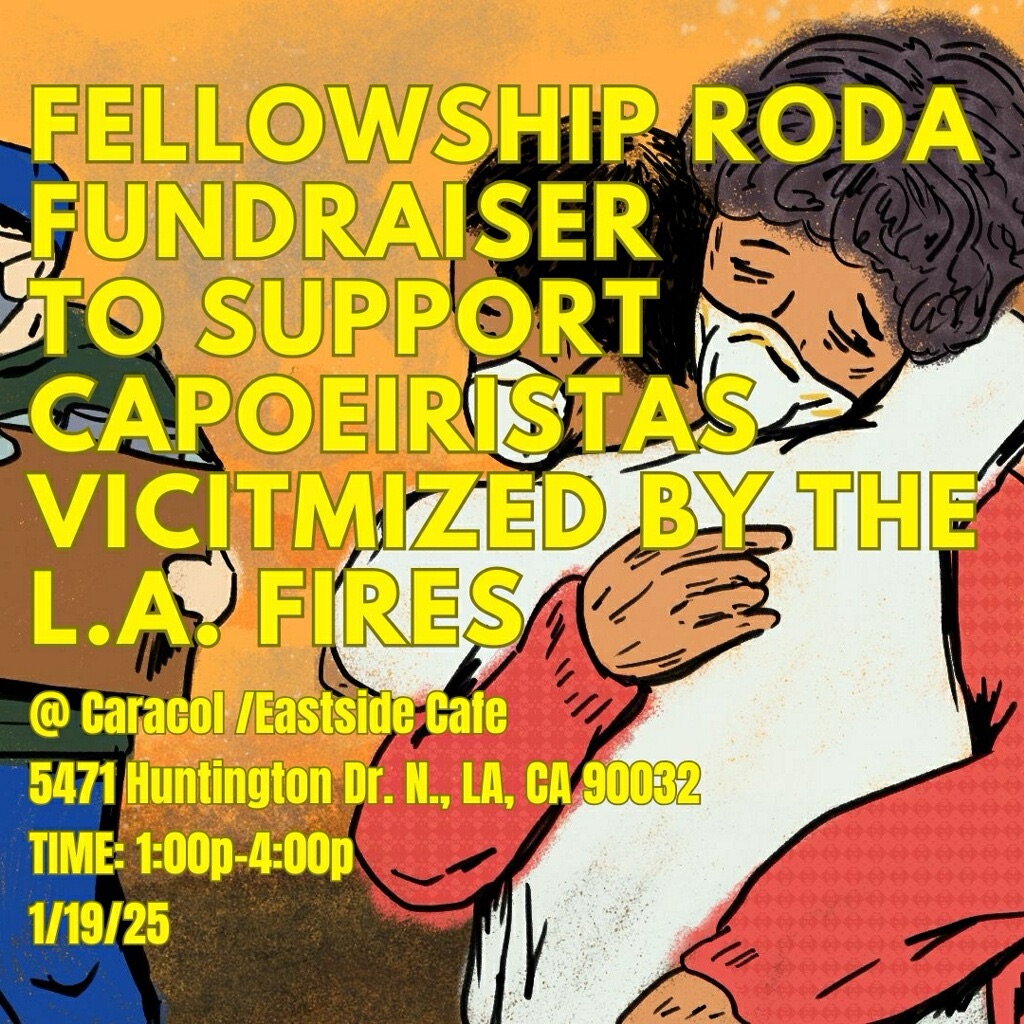
In light of the devastating impacts of the recent fires in Los Angeles, we are organizing a dedicated fundraiser aimed at providing assistance to the capoeiristas who have suffered significant losses. This event will not only help in the recovery of those affected but will also bring our community together to celebrate the spirit of resilience and support.
Join us for an afternoon filled with uplifting music, vibrant dance, and heartfelt camaraderie, as we come together to raise essential funds that will help our fellow capoeiristas rebuild their lives after recent hardships and preserve the rich cultural heritage of capoeira that we all cherish deeply. This event is not just a gathering; it’s an opportunity to bond with friends, make new connections, and show support for a cause that unites us all.
Each rhythm we dance to, every note we hear, contributes to a larger purpose, and we invite you to be a part of this beautiful journey. Your participation and generosity can truly make a profound difference in the lives of those impacted by this tragedy, ensuring that the spirit of capoeira continues to thrive for generations to come.
We need your support to help breathe new life into our community and uphold the traditions that define us.
HAPPY BIRTHDAY, MESTRE JOAO GRANDE!!! May this special day be filled with joy, love, and laughter as we celebrate the incredible person you are. Your wisdom and guidance have touched the lives of many, and today we honor not only your birth but also the remarkable legacy you continue to build.
Here’s to many more years of health and happiness, surrounded by those who care deeply for you!
FELIZ ANIVERSÁRIO, MESTRE JOÃO GRANDE!!! Que este dia especial seja repleto de alegria, amor e risadas enquanto celebramos a pessoa incrível que você é. Sua sabedoria e orientação tocaram a vida de muitos, e hoje honramos não apenas seu nascimento, mas também o legado notável que você continua a construir.
Aqui está a muitos mais anos de saúde e felicidade, cercado por aqueles que se importam profundamente com você!
This series honors African and Diasporic heroes who have impacted politics, arts, sciences, and social justice, inspiring future generations. Their stories highlight resilience and creativity while emphasizing the significance of African heritage in the pursuit of equality. By exploring their lives and struggles, we understand the connection between cultural identity and activism, urging the recognition of contemporary efforts that align with the values of these figures, thus reinforcing that the fight for justice is a continuous, collective journey.
Today is January 15th, the birthday of Rev. Dr. Martin Luther King Jr. On this significant occasion, we not only celebrate the remarkable life and achievements of this iconic leader but also reflect deeply on the profound messages he imparted.
Dr. King was not just a champion for civil rights but also a powerful advocate for peace and social justice. His opposition to the Vietnam War stemmed from a moral conviction that sending troops to fight was a betrayal of the principles he fought for at home. He believed that the war diverted resources and attention away from the pressing issues facing African Americans and the poor. And today, we honor his legacy by telling the truth about why he was REALLY opposed to the Vietnam War, emphasizing his unwavering commitment to nonviolence and his profound understanding of the interconnectedness of all struggles against oppression.
Shout out to Professor Black Truth for creating this insightful video. Professor Black Truth creates engaging videos that simplify complex topics across history, science, and culture, making learning enjoyable for all ages. His approach not only captivates his audience but also encourages critical thinking and a deeper understanding of the subjects he covers. From exploring historical events to dissecting scientific concepts, his content is both thought-provoking and accessible. Check out his unique content HERE and discover the wealth of knowledge that awaits!
Now in case you’re wondering why it’s SO important to honor Dr. King’s TRUE legacy, it’s because certain “entities” have misrepresented him to suit their agenda.
For example…
Below, Anand Giridharadas explains how white moderates (and conservatives) have twisted the legacy of Dr. Martin Luther King in opposition to Dr. King’s own political agenda, often cherry-picking quotes and misinterpreting his calls for justice and equality. They tend to emphasize his vision of peace and unity while conveniently glossing over his fervent critiques of systemic oppression, economic inequality, and the urgent need for radical change. This selective memory serves to uphold the status quo and dilute the powerful messages that Dr. King fought to communicate, ultimately undermining his true vision for a just society that actively confronts and dismantles the structures of racism and inequality.
Today, I’m concluding this post with Dr. King’s iconic “I Have a Dream” Speech, delivered during the March on Washington for Jobs and Freedom on August 28, 1963. This monumental speech, which called for civil and economic rights and an end to racism, served as a pivotal moment in the civil rights movement, resonating deeply with millions and addressing over 250,000 supporters gathered at the Lincoln Memorial.
During this historic gathering, Dr. King passionately expressed his vision of a future where individuals would be judged by the content of their character rather than the color of their skin, a radical idea that challenged the status quo of segregation and inequality.
As you listen, take a moment to reflect on the powerful imagery and the profound hope woven throughout his words, and remember the true significance of his message for our ongoing struggle against injustice and the work that still lies ahead in achieving true equality for all.
Welcome to MARTIAL ARTS THEATER, a vibrant platform for martial arts enthusiasts that offers diverse content on various disciplines, from traditional styles like karate and taekwondo to innovative techniques such as Krav Maga and Muay Thai, celebrating the rich history, profound philosophy, and unwavering dedication inherent in martial arts. Here, we delve into the nuances of each martial art, explore their unique techniques, engage with expert practitioners, and provide training tips for all skill levels, creating a community where passion for martial arts thrives. Whether you are a seasoned fighter or a curious beginner, our extensive resources aim to inspire and educate, fostering a deeper appreciation for the artistry and discipline that martial arts embody.
In this installment, Chu Hong, a Chinese martial artist, trains rigorously to integrate his martial arts skills with archery for an upcoming tournament, competing against other archers and learning lessons about perseverance, focus, and competition.
In 1030 CE, Chu Hong learns from his astute friend Liang Gao that a surprise archery competition, hosted by the local magistrate, is coming to their village, igniting a spark of excitement and nervous anticipation within him. This thrilling event not only draws in participants from neighboring towns but also attracts many spectators eager to witness the display of talent and skill.
As the details unfold, Hong realizes that this competition presents him with a golden opportunity to showcase his remarkable martial arts skills, honed over years of rigorous training, and earn much-needed money for his family, as outlined by Peter Lorge. The prospect of victory fills him with determination, fueling his desire to support his loved ones and bring honor to his name in their small community. With each passing day leading up to the competition, he practices relentlessly, envisioning himself standing at the center of the village square, the cheers of the crowd ringing in his ears as he triumphs over his rivals.
Okay, this blog title is clickbait, so… If you’re looking for some kind of showdown, you will be SORELY MISTAKEN.
But anyway, I found this cool video clip on YouTube, and I thought I’d share it with you.
What you’re actually looking at is a friendly sparring match between two dedicated Martial Artists from each of the two styles mentioned in the title of this blog. Of course, I always say that videos like these, where one style is pitted against another, are for the most part pointless.
Why?
Because although some styles are better than others for fighting, it really depends on the training and skill of the FIGHTERS, as well as the unique experiences that each brings to the mat.
Each practitioner carries with them a wealth of knowledge and personal techniques, honed over countless hours of training and real-world application, which not only shape their physical abilities but also inform their mindset and approach to challenges. What truly matters is how effectively they can leverage their respective skill sets, whether the scenario involves a friendly contest, a simulation of deadly combat, or everything in-between, as each situation presents unique variables that require quick thinking and adaptability. In essence, the outcome is not solely determined by the style itself but rather by the adaptability, strategy, and mental fortitude of the individuals involved, showcasing that the art of fighting transcends mere techniques and delves deep into the heart of each fighter’s spirit and determination.
This interplay of skills and psychological resilience is what elevates a simple competition into a profound expression of personal growth and mastery, ultimately highlighting that the journey of a martial artist is as significant as their victories in the ring.
Now having said or rather, “Typed” about that, there’s another important thing that I would like to type about.
In that video, the narrator mentioned that many of our young sisters have been coming up missing in the USA, in particular the state of Virginia, where the numbers have been rising alarmingly over the past few years. This heartbreaking issue affects families and communities deeply, leaving unanswered questions and a sense of fear in the hearts of many. I for one, URGE you to check out missingkids.org, a vital resource dedicated to finding missing children and raising awareness about this pressing crisis.
Together, we can take proactive steps to help locate these vulnerable children and work towards ensuring their safety and well-being. By leveraging community resources, collaborating with local organizations, and raising awareness through various platforms, we can significantly increase our reach and effectiveness in this critical mission. Let’s unite our efforts and spread the word far and wide so that we can find these missing children and bring them back home, safe and sound, to their loved ones who are desperately waiting for their return. Every shared story, every posted photo, and every conversation can contribute to a greater chance of recovery, reminding us that together, our collective impact can bring hope and healing to families who are suffering in silence.
I will be posting more about this particular subject n the near future.