This series explores the modern malandro in urban society, highlighting their resourcefulness, charm, and adaptability while addressing issues like economic disparity and social justice. It showcases their unique experiences, resilience, and clever tactics, reflecting the complexities of city life. Through vivid storytelling and in-depth character studies, the series delves into the daily struggles faced by these individuals, shedding light on their ingenuity in navigating a world filled with challenges. Additionally, it emphasizes their role as both outliers and contributors to the vibrant tapestry of urban culture, showcasing how their cleverness and streetwise demeanor often lead to unexpected solutions and community bonding. By intertwining personal narratives with broader societal themes, the series paints a compelling picture of the malandro as not just survivors, but as influential figures in the ongoing dialogue about equity and belonging in modern cities.
In Today’s installment, We follow Conor Woodman in scam city, a series where he gets scammed-so we don’t have to.
In Mumbai, Conor Woodman experiences the mother of all taxi scams mere minutes after his arrival from the airport, as he steps out into the vibrant chaos of the bustling city. The heat and noise envelop him, and before he can gather his thoughts, an aggressive taxi driver intercepts him, offering an inflated fare that he foolishly agrees to. Confused and disoriented, Conor finds himself careening through the crowded streets, dodging motorcycles and rickshaws, only to realize he’s been taken for a ride—both literally and figuratively.
Just as he begins to feel the weight of the city’s intensity, he is approached by a charismatic woman who exudes confidence and warmth. Her vibrant smile instantly puts him at ease, and her eyes sparkle with a contagious enthusiasm. She introduces herself as an aspiring talent agent and passionately claims that she can make him a Bollywood star, promising him a life filled with glitz, glamour, and unforgettable adventures in the world of Indian cinema. She describes the exhilarating experiences that await him, from dazzling film sets in picturesque locations to swanky parties attended by the industry’s elite. Her words paint a vivid picture of a whirlwind existence where he would meet legendary actors and take part in grand premieres, igniting a fire of ambition within him that he never knew existed. With each detail she shares, he feels more enticed by the prospect, imagining the excitement and accolades that could finally make his dreams a reality.
Welcome to MARTIAL ARTS THEATER, a vibrant community hub for martial arts enthusiasts offering expert interviews, instructional videos, and a variety of events tailored for all skill levels. Here, you can dive deep into a wealth of information, exploring diverse insights across disciplines such as karate, judo, taekwondo, and Brazilian jiu-jitsu in a supportive environment that not only encourages growth but also nurtures a sense of camaraderie among practitioners. We invite both seasoned practitioners and beginners alike to connect, share experiences, and embark on the transformative journey of self-discovery in the world of martial arts. By participating in our workshops, seminars, and discussion panels, you can hone your skills, learn from respected masters, and forge lasting friendships with fellow enthusiasts who share your passion and dedication to the art of combat.
In today’s installment…
“The Karate Nerd“, one of YouTube’s biggest martial artists, has stirred quite the pot lately by posting several controversial videos focused on Brazilian Jiu-Jitsu (BJJ), including one particularly provocative installment where he joined a tournament to “prove it doesn’t work.” In a quest to challenge the status quo, he even traveled to Gracie University to engage with Ryron Gracie himself, attempting to disprove the effectiveness of sport jiu jitsu. This bold move caught the attention of the AMAZING YouTuber JOSH BEAM, who decided to take matters into his own hands.
Fueled by a desire to defend the honor of BJJ, he promptly booked a ticket straight to Stockholm with the intention of challenging Jesse at his dojo, Combat Academy! However, realizing that his Jiu Jitsu skills were not quite enough to take on such a formidable opponent, Josh committed himself to training in judo for an entire year, where he diligently honed his throws and ground game. After a grueling year of preparation, he returned to Stockholm, ready to reclaim his pride and seek revenge against Jesse. But what transpired next was completely unexpected and far from what he had initially anticipated.
He came for revenge but instead found himself experiencing a profound lesson in martial arts and humility, as well as an aspect of Karate that’s not often displayed or talked about. Through rigorous training and thoughtful reflection, he discovered that true strength lies not only in physical prowess but also in the cultivation of inner peace and respect for others. Each session brought new challenges that tested his resolve, pushing him to confront both his fears and preconceived notions about fighting and power.
Click HERE to watch the full Kata he learned, showcasing the incredible journey of growth and transformation that unfolded during his time training, capturing the essence of discipline and the deep connections formed with fellow practitioners on this unexpected path.
Every Friday morning, PROFESSOR BLACK TRUTH hosts “The Friday Crime Report,” focusing on systemic racism, economic inequality, and police brutality in the black community. The program aims to raise awareness, encourage dialogue, and equip individuals for advocacy, while calling for policy changes and promoting community engagement for social justice and equality.
This week a Fairmont West Virginia cop was charged with sexually assaulting his own child. But disgusting as this is, the white media’s downplaying the fact that he could have been stopped years ago before he even did it! There are numerous systemic issues at play here, including the lack of accountability for law enforcement officers and the failure of institutions to recognize and address warning signs of abusive behavior.
Despite past complaints and reports, he was allowed to continue his duties, raising serious questions about oversight and the protection of vulnerable individuals. This troubling decision not only undermines the credibility of the institutions responsible for safeguarding the community but also instills fear among those who rely on these systems for their safety.
It is crucial for the media to take a stand and highlight these failures rather than dismissing them, as doing so perpetuates a cycle of violence and impunity that must be broken for the safety of all. By shining a light on these issues, journalists can expose the negligence that allows such individuals to operate unchecked, ultimately fostering a culture of accountability and ensuring that those who are vulnerable are given the protection they rightfully deserve.
Shout out to the professor for creating and posting this insightful video.
The Professor produces engaging videos on black empowerment that tackle both historical and contemporary issues, effectively promoting critical thinking among his audience. Through rigorous analysis and thoughtful commentary, he sheds light on pivotal events and figures that have shaped the black experience, encouraging viewers to reflect on their own perspectives. His YouTube channel HERE builds a vibrant community centered on sharing knowledge about significant black topics, enriching diverse viewpoints, and fostering active dialogue among subscribers. By inviting guest speakers and incorporating various multimedia elements, he not only enhances the learning experience but also empowers individuals to discuss and disseminate important narratives in their own circles. This approach cultivates a sense of belonging and mutual respect, ultimately driving positive change within and beyond the community.
Today is Juneteenth. It is worth observing and it is more than worth celebrating, as it marks a pivotal moment in our collective history and a powerful reminder of our enduring struggle for freedom and equality.
But we didn’t need the very government that enslaved our people to give us permission to honor our own history; our resilience and triumphs have always been a source of strength and pride within our communities. We have carried the heavy burden of a painful past, yet we have transformed that suffering into a tapestry of culture and heritage that celebrates our identity. From the stories passed down through generations to the vibrant expressions of art, music, and dance that echo our ancestors’ voices, we acknowledge the struggles while embracing the undeniable spirit that has propelled us forward. Each milestone achieved, whether in education, leadership, or social justice, serves as a testament to our unwavering commitment to uplift one another and forge a brighter future.
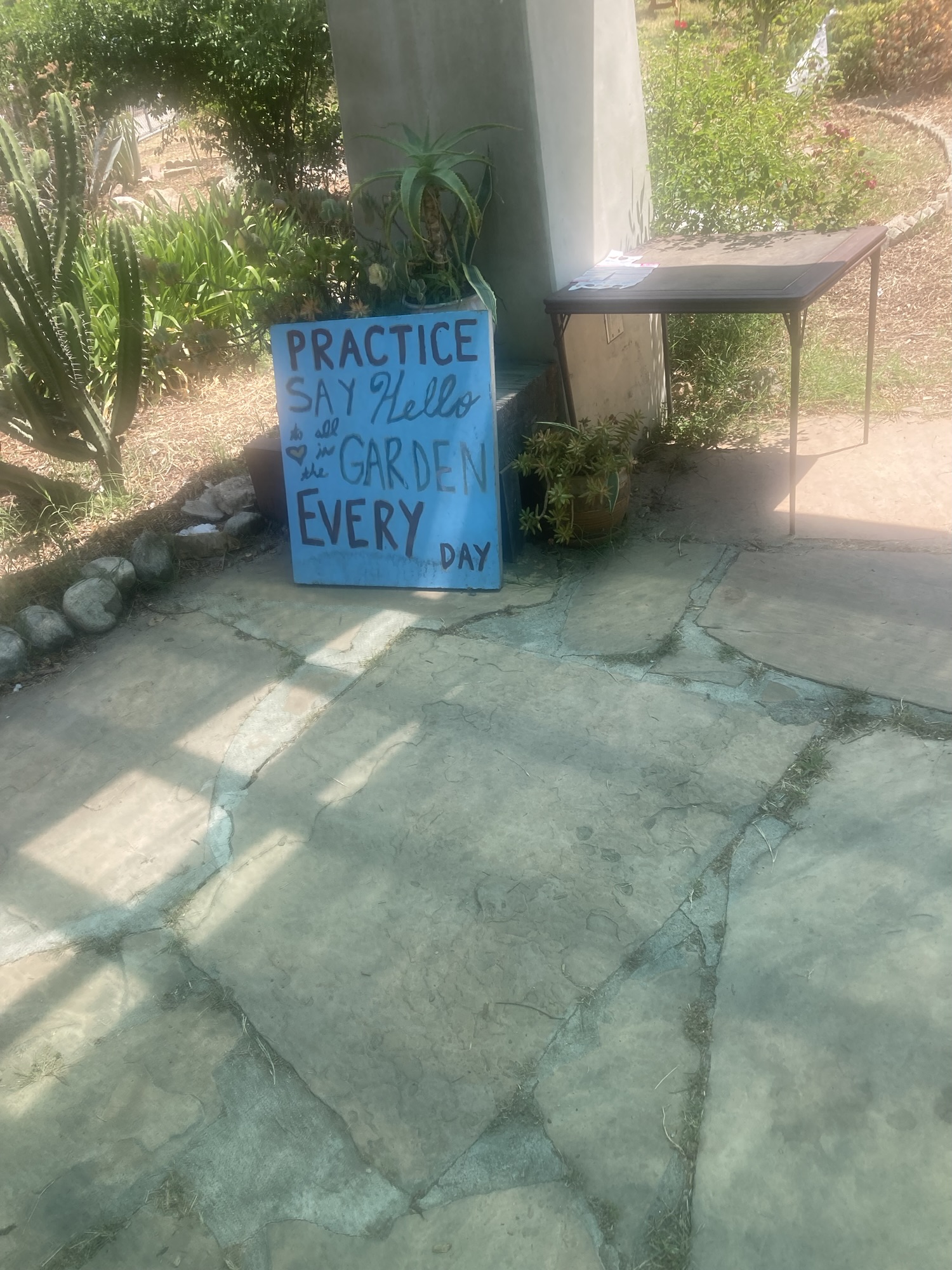
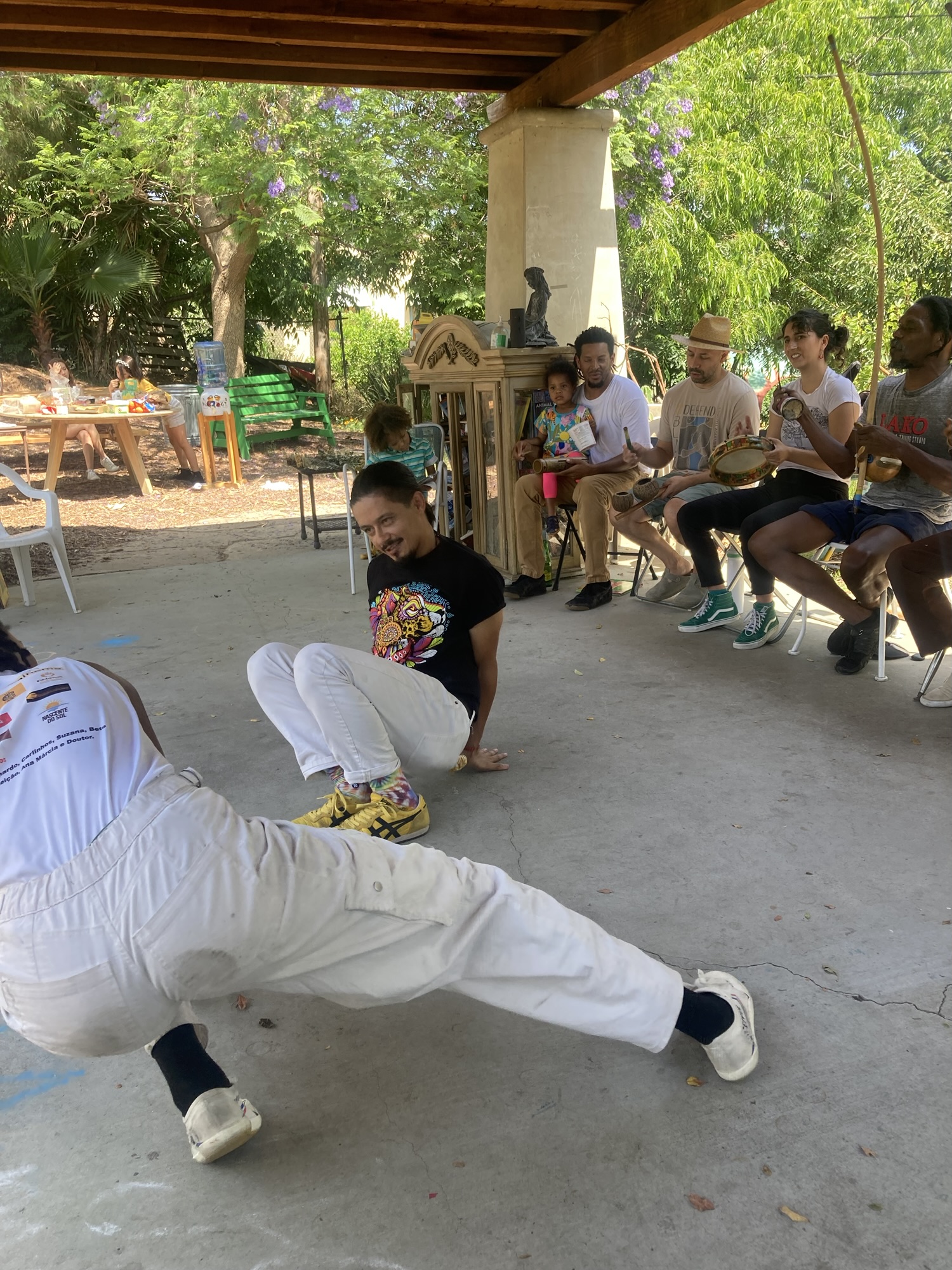
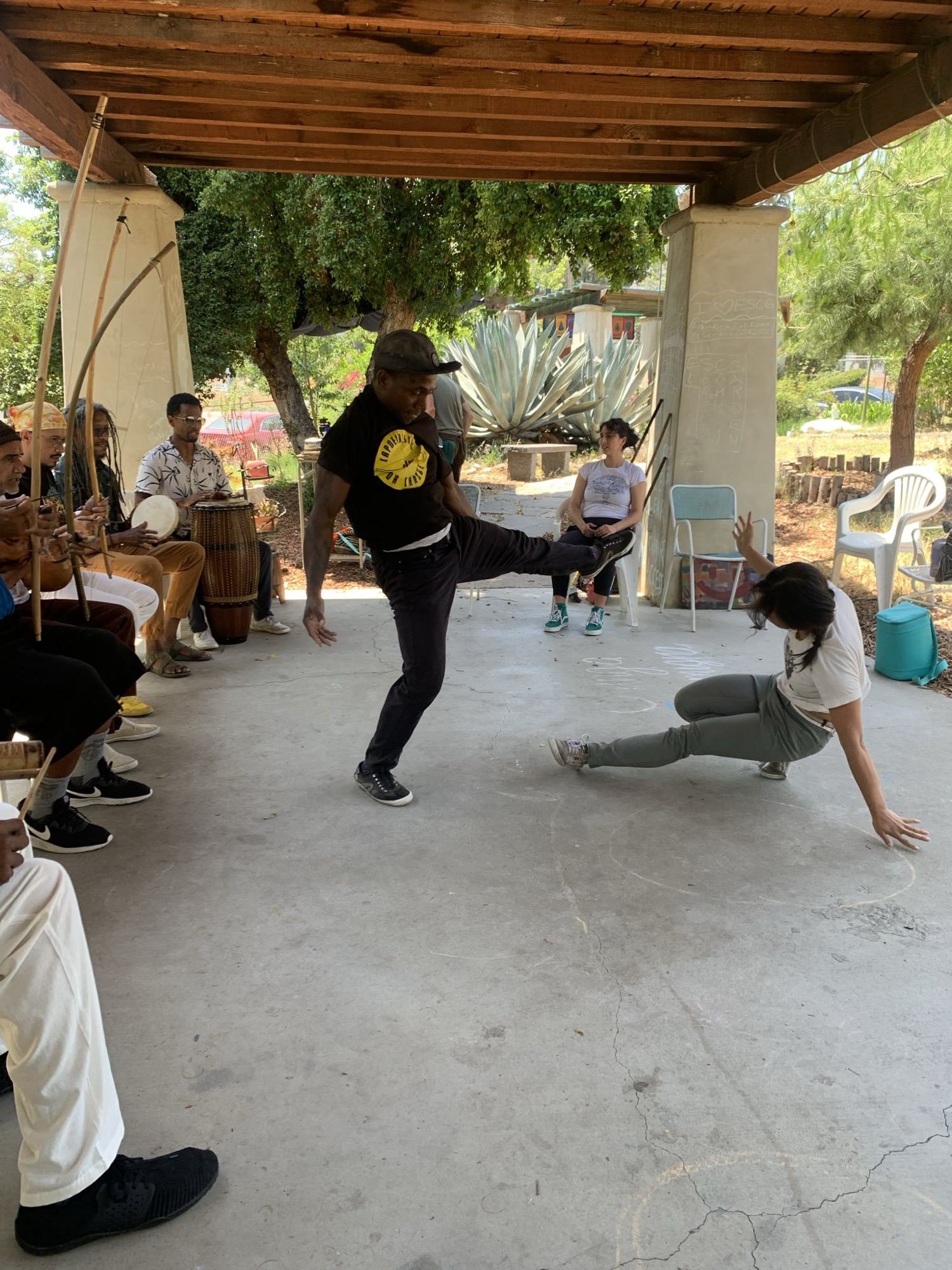
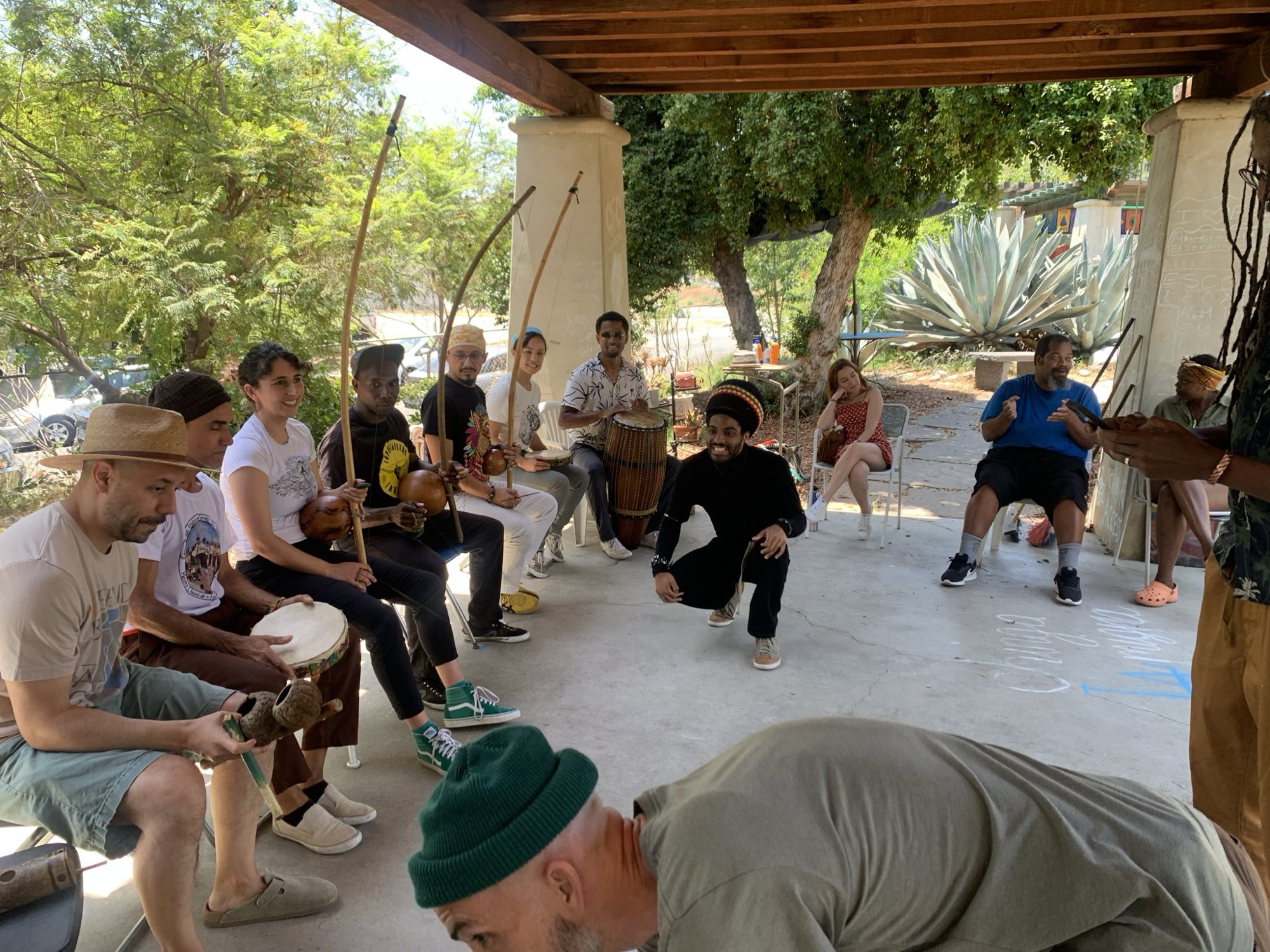
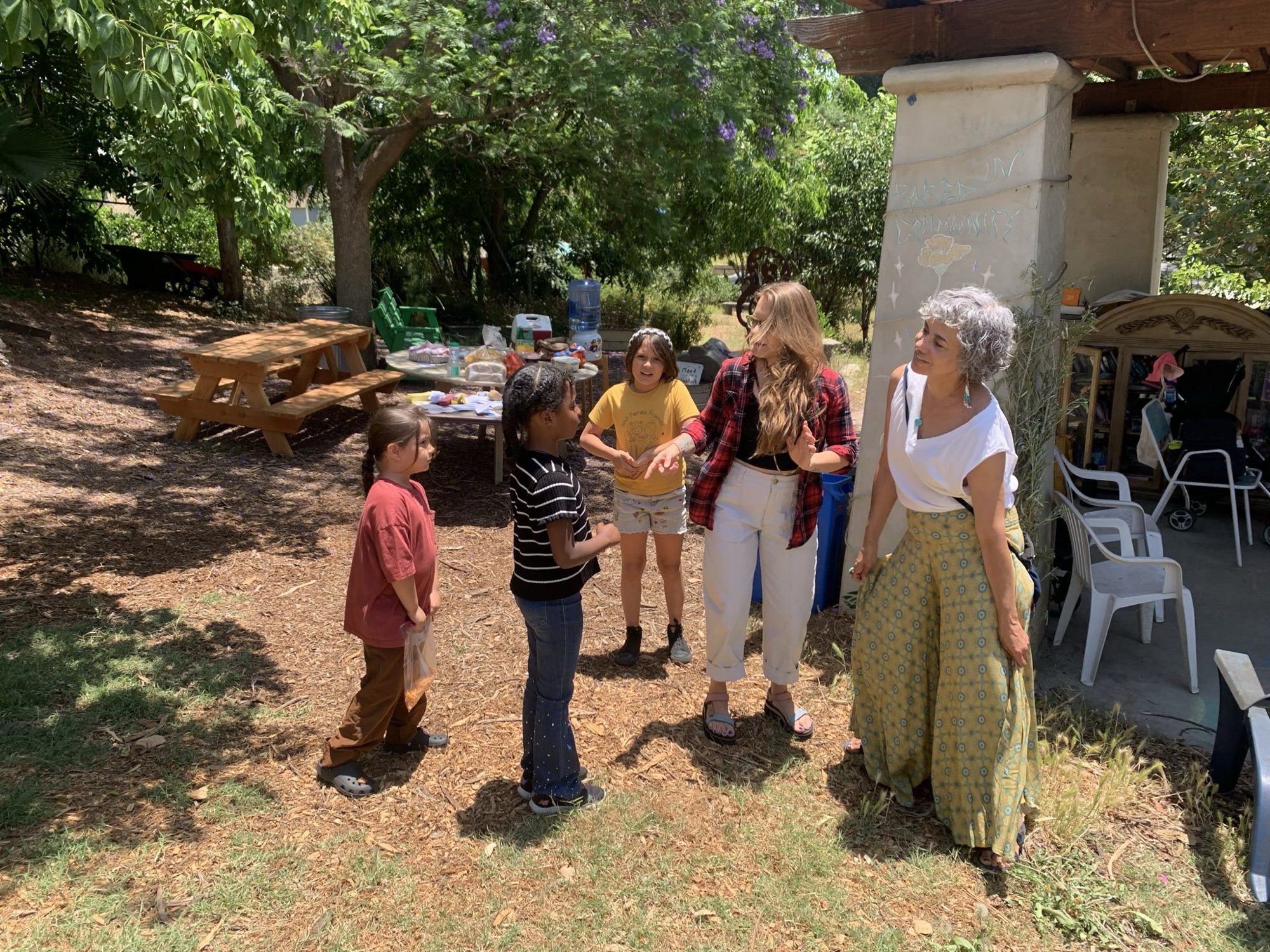
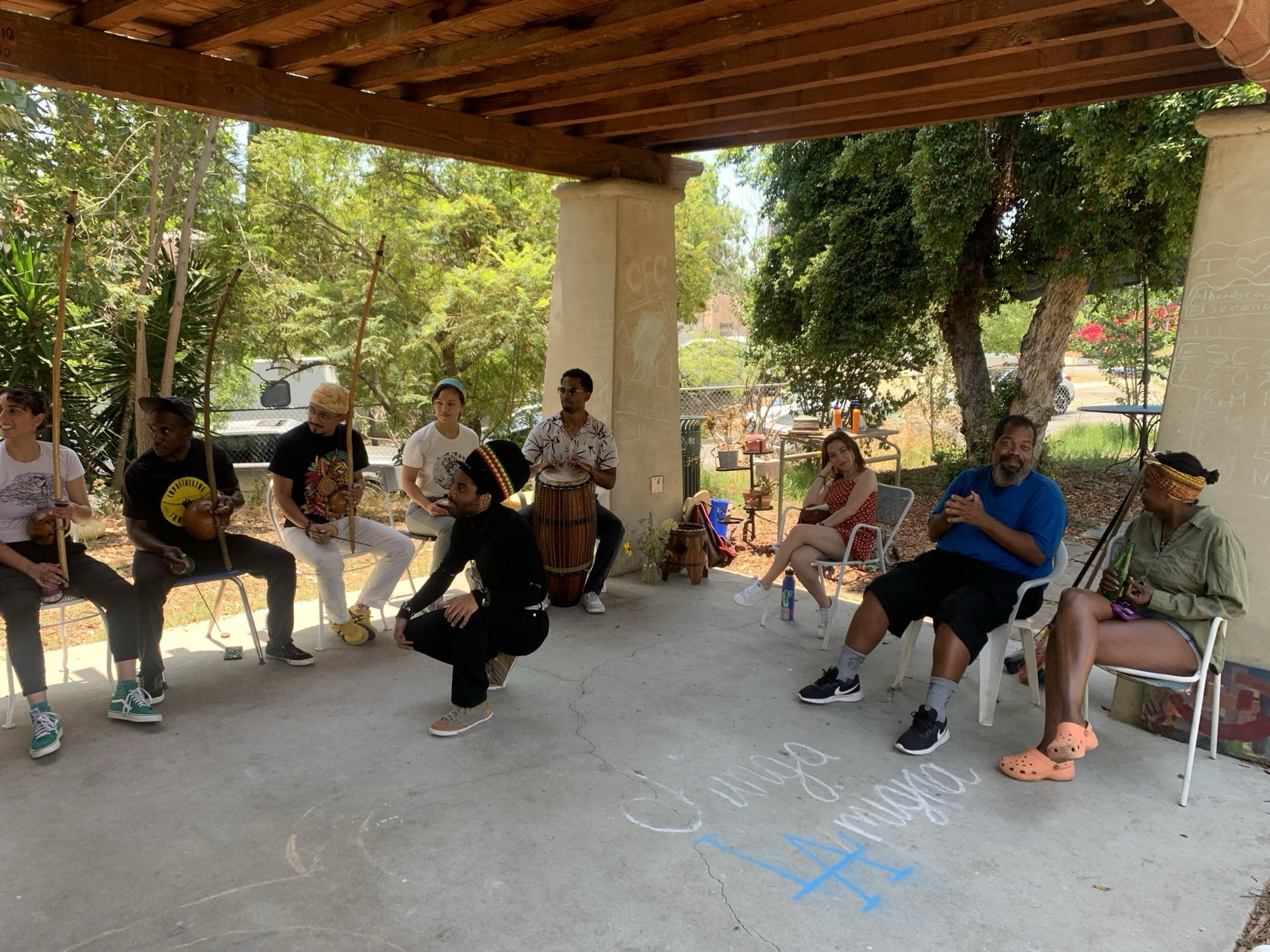
Now, as I said in another POST, we had a Roda and Potluck today. It was a beautiful display of love, brotherhood, and solidarity among all participants, creating an atmosphere rich in cultural heritage and community spirit.
The energy was palpable as we gathered together to share not only food but also stories and laughter, fostering connections that bridge our differences. The rhythm of Capoeira Angola echoed through the space, inviting everyone to join in the movements, transcending barriers and uniting us through the art form that we all cherish. Witnessing such harmony and joy inspired a sense of gratitude for the shared experiences and the vibrant tapestry of our collective journey.
We must all come together in recognition of the sacrifices made by those who came before us, acknowledging their struggles and the legacies they left behind. It is vital to honor the ancestors who bravely faced the adversities of their time, enduring hardships and injustices that many cannot fathom today. Remember the ancestors who fought against oppression and dreamed of a brighter future for us all, envisioning a world where equality and justice reign.
Recall the tireless efforts and the relentless spirit that fueled their fight, paving the way for progress and change. Remember the debt that is owed, not only to those who suffered under slavery but also to those who continue to fight against injustice today, standing up for the marginalized and voicing the concerns of the unheard.
Their courage serves as an inspiration, reminding us of the importance of advocacy and activism. As we reflect on their unwavering spirit, we are called to action, encouraging a collective movement where every voice matters. And remember ALL who owe it, for the responsibility to uplift and empower one another lies within each of us. This duty demands that we not only raise awareness of the challenges faced by marginalized communities but also actively engage in solutions that foster change.
And in that spirit, I’d like to discuss the ICE raids a little bit. At the Roda, our sister soldier Eva recently left some informative flyers from an organization called Union Del Barrio, which is dedicated to empowering ordinary citizens with the knowledge and skills they need to protect themselves and their communities from invasive ICE raids.
These flyers outline critical training sessions and resources designed to raise awareness about immigrants’ rights and ensure that individuals are prepared to respond effectively in challenging situations. I highly encourage everyone to click HERE to check them out and delve deeper into the fantastic initiatives they are actively involved in, as well as to discover various ways you can contribute to their crucial mission and support the fight for justice and dignity for all community members.
Together, as we work towards a more just and equitable world, we must commit to listening, learning, and building bridges across divides. By fostering a community in which everyone, regardless of their background, can thrive and flourish in harmony, we create a shared environment where mutual respect and collaboration flourish, paving the way for future generations to inherit a brighter, more inclusive society.
Welcome to the first installment of “PEOPLES OF THE AFRICAN DIASPORA,” where we celebrate the rich cultural heritage, historical journeys, and contemporary contributions of African descents around the globe. Here, you will find a vibrant tapestry of stories that illuminate the resilience and creativity of diverse communities, showcasing their unique traditions, art forms, and pivotal achievements across various fields. Join us in exploring the legacies that have shaped identities, fostered connection, and inspired future generations. Together, we honor the ancestral roots that bind us and pave the way for a collective future filled with hope and unity.
Today, since this is a CAPOEIRA ANGOLA website, we’re gonna start-off this series with the creators of Capoeira Angola… the Afro-Brazilian people.
Afro-Brazilians are people of predominantly or total sub-Saharan African ancestry who live in Brazil. They represent a significant portion of Brazil’s population, with many identifying as Black or of mixed race. Their history is deeply intertwined with the transatlantic slave trade, which brought millions of Africans to Brazil, particularly from regions such as Angola, the Democratic Republic of Congo, and Mozambique. This forced migration led to the establishment of vibrant communities that maintained their cultural heritage, despite the harsh realities of slavery. Afro-Brazilians have significantly shaped Brazilian culture, including language, religion, and the arts, contributing to the rich tapestry of Brazilian identity. The influence of Afro-Brazilian traditions can be seen in samba music, capoeira, and the various religious practices such as Candomblé and Umbanda, which blend African spirituality with elements of Catholicism and Indigenous beliefs. Today, Afro-Brazilians continue to advocate for their rights and recognition, striving to address social inequalities and celebrate their contributions to the country’s heritage.
Key aspects of Afro-Brazilians:
Diverse Ancestry:
While the term “Afro-Brazilian” generally refers to those of African descent, many individuals also have European and Indigenous Brazilian ancestry due to centuries of intermixing, which has contributed to a rich and diverse cultural heritage that reflects a blend of various traditions, languages, and customs, ultimately enriching the identity of the Afro-Brazilian community and its contributions to the broader Brazilian society.
Large Population:
Brazil has the largest population of African descent outside of Africa. Official statistics and self-identification vary, but it’s estimated that over half the population has African ancestry.
Cultural Influence:
Afro-Brazilian culture is a vibrant blend of African traditions and Brazilian influences, creating a rich tapestry of cultural expression that captivates both locals and visitors alike. This is evident in various aspects such as music (like samba, which has become synonymous with Brazilian identity), dance (like capoeira, which combines elements of martial arts and performance), religion (with practices including Candomblé and Umbanda, both of which reflect the spiritual history of African descendants in Brazil), and cuisine, featuring dishes that showcase an array of flavors and ingredients rooted in this diverse heritage.
Historical Context:
The transatlantic slave trade brought millions of Africans to Brazil, where they faced forced labor and harsh conditions that were often brutal and dehumanizing. Despite their immense contributions to the economy and culture of Brazil, these individuals endured significant suffering and loss. The struggle for abolition and the long-lasting legacy of slavery continue to shape the experiences of Afro-Brazilians today, influencing social dynamics, cultural identity, and ongoing conversations about racial equality and justice in contemporary Brazilian society.
Social Issues:
Despite their significant contributions to Brazilian society, Afro-Brazilians continue to face systemic racism and inequalities, including poverty and limited access to opportunities, which perpetuate social injustices and hinder their progress in various sectors such as education, employment, and healthcare, thereby affecting their quality of life and overall well-being.
Diverse Terminology:
While “Afro-Brazilian” is used in formal contexts to acknowledge the diverse heritage and cultural contributions of individuals with African ancestry in Brazil, Brazilians may also use terms like “pardo” (mixed race) or “preto” (black) to describe their racial identity based on personal experiences and societal perceptions. These terms reflect the complex nature of race in Brazil, where identity can be fluid and influenced by factors such as appearance, social status, and historical context.
Growing Awareness:
There is a growing sense of pride and self-identification among Afro-Brazilians, with many actively celebrating their heritage and challenging racial stereotypes, fostering a strong community spirit that encourages the preservation and promotion of their cultural traditions, history, and contributions to Brazilian society while also advocating for social justice and equality in the face of ongoing discrimination.
I’m gonna end with this short video on what it means to be black in Brazil, a topic that encompasses a rich tapestry of cultural history, struggle, and resilience.
In the future, I will write more about black people from the African diaspora, exploring their unique experiences, contributions, and the challenges they face not just in Brazil, but all over the world. Understanding these narratives is crucial for fostering empathy and solidarity among diverse communities and delving deeper into the ongoing fight for equality and justice that continues to shape our societies today.
Welcome to MALICIA AS A GAME OF POWER, a blog series that explores the strategies of human interactions, including communication, conflict resolution, negotiation, and manipulation. It discusses leadership, personal branding, and online reputation management, providing practical strategies for influence and relationship-building. Through analysis and examples, the series aims to help readers navigate interpersonal relationships successfully.
In this installment, we will explore the 31st law of power in the book, the 48 laws of power by Robert Greene. You can buy a copy by clicking HERE.
Law 31: Control the opinions: get others to play with the cards you deal
Control the opinions: get others to play with the cards you deal. The best deceptions seem to give the other person a choice, creating an illusion of freedom within a carefully constructed framework. By presenting options, you not only avoid confrontation but also encourage engagement, making them feel involved in the decision-making process.
Each option should be enticing, leading them to believe they are steering the course of events. This strategy ensures that no matter their choice—whether they select option A or option B—you win, as both paths ultimately serve your interests and objectives. Through this method, you can subtly influence their thoughts while maintaining the guise of generosity and independence, making your ultimate control less apparent. By framing the options in a way that appears to prioritize their preferences or desires, you enhance their engagement and investment in the process. In doing so, you create an illusion of freedom and choice, which can foster a deeper emotional connection to the decisions they are making.
This psychological manipulation allows you to guide them toward a conclusion that aligns perfectly with your goals while they remain blissfully unaware of the underlying orchestration at play. Through various techniques and strategies, you can subtly introduce thoughts and ideas that seem to stem from their own reflections, thus reinforcing their sense of independence. Ultimately, it is a delicate balance of persuasion and influence, where you orchestrate their journey while appearing as a facilitator of their autonomy. By skillfully crafting your words and employing an array of social cues, you not only lead them to their destination but also cultivate a profound sense of trust and rapport, making the entire process appear natural and organic, as if they were always meant to reach this particular conclusion on their own. As they traverse this path, the intricate web of your influence remains hidden, allowing them to feel empowered, even as you gently steer their thoughts and decisions.
The 31st law of power, through the eyes of an Angoleiro:
In the intricate, often veiled, world of Capoeira Angola, the ancient and profound Brazilian art form, the concepts of power, strategy, and self-preservation are not merely academic—they are embodied, lived, and danced. The “Angoleiro,” a practitioner of Capoeira Angola, views the conventional laws of power not through the lens of a courtroom or boardroom, but through the crucible of the roda—the circle where the game is played, the history is remembered, and the deepest secrets are exchanged.
The 31st law, often interpreted in a general sense as “Control the Options: Get Others to Play with the Cards You Deal,” takes on a specific, visceral meaning for the Angoleiro. It is the mastery of controlling the rhythm, space, and emotional climate of the roda to guide the opponent toward a predetermined vulnerability.The Application in the Roda
For the Angoleiro, this law is practiced through:
1. The Control of Tempo and Ginga:
The ginga, the foundational sway or movement, is the Angoleiro’s primary tool for dealing the cards. It is deliberately slow, low, and deceptive. By controlling the tempo (the speed and rhythm set by the berimbau and the ensemble), the Angoleiro dictates the pace of the encounter. A slow tempo forces the opponent to also move slowly, limiting their high-impact, fast-strike options. This creates a psychological pressure that encourages the opponent to break character and rush, thus making a predictable mistake.
2. The Use of Malícia (Malignancy/Cunning):
Malícia is the intelligence of deception. The Angoleiro doesn’t force a move; they lure it. By leaving a perceived opening—a slightly raised hand, a momentarily exposed flank, or a seemingly precarious balance—they offer a ‘bait’ option. The opponent, seeing an easy win, commits to this option. However, this is the very card the Angoleiro has dealt. The moment the opponent executes the predictable attack, the Angoleiro is already executing the contra-ataque (counter-attack), utilizing the opponent’s committed momentum against them.
3. Mastering the Art of Chamar (Calling/Inviting):
To control the options, one must first invite the interaction. Chamar is the act of gently or playfully drawing the opponent in, often through non-aggressive, exploratory movements or eye contact. It is a verbal and non-verbal agreement to play a certain way. By initiating the conversation, the Angoleiro establishes the theme of the game—whether it will be a high-risk, acrobatic match or a low-to-the-ground, strategic encounter. The opponent who accepts the chamar has tacitly agreed to the set of rules, or “cards,” offered by the Angoleiro.
The Philosophic Corollary: Paciência (Patience) The power of controlling options is fundamentally rooted in paciência. A true Angoleiro understands that rushing to an advantage is the quickest way to lose control. The 31st law, when interpreted by an Angoleiro, becomes: “Wait for the perfect moment to present the onlyoption the opponent is willing to take, and then be ready to negate it.” It is not about overwhelming the opponent with choices, but about narrowing their perception until only one path seems viable—a path that leads directly into the Angoleiro’s strategic trap.
Juneteenth, celebrated on June 19th, marks the emancipation of enslaved African Americans, originating in 1865 when Union soldiers announced freedom in Texas, signaling a monumental shift in the fabric of American society. Initially a local celebration rooted in deep community spirit, it has grown into a nationwide observance of resilience and the ongoing struggle for racial equality, featuring vibrant parades, cultural events, and family gatherings that bring people together in solidarity.
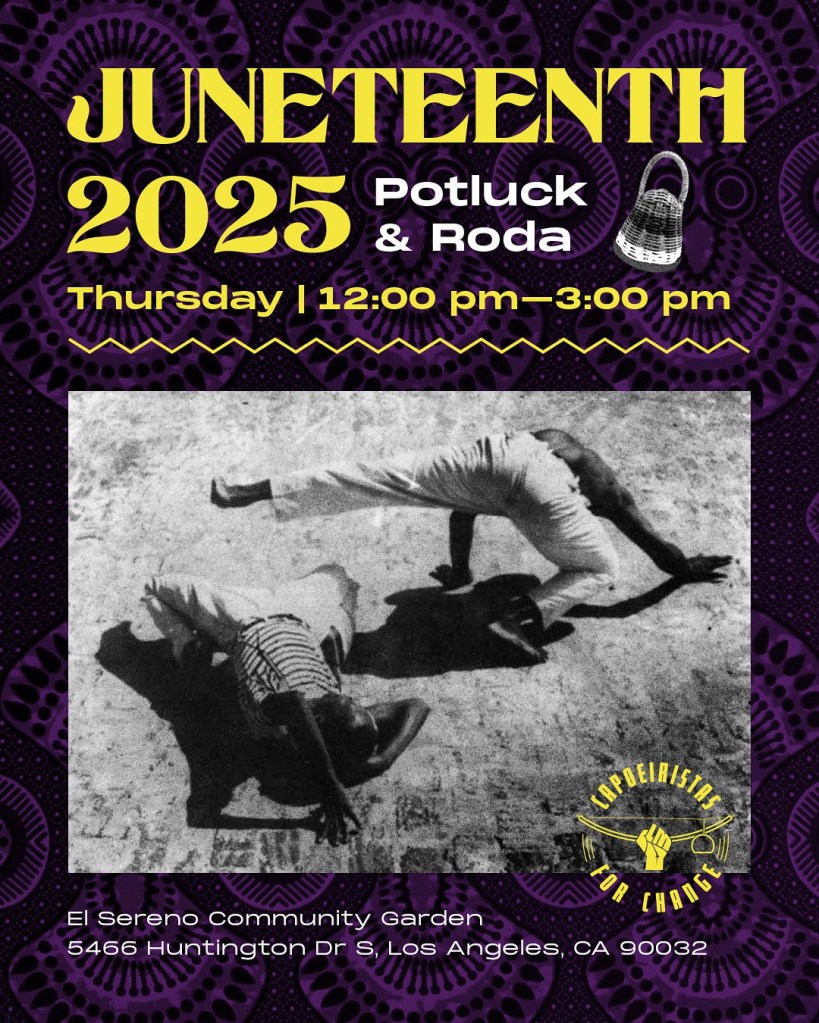
This year, we at CAPOEIRISTAS FOR CHANGE are excited to host a Capoeira Roda and Potluck to commemorate the day, inviting the community to enjoy the rhythmic music, dynamic movement, and shared homemade dishes that reflect our diverse heritage.
The event will serve as a dynamic platform for fostering connection among individuals from diverse backgrounds, encouraging meaningful conversations about freedom, cultural expression, and the importance of unity, while honoring the rich and complex history that has shaped us into who we are today. We hope to create an inclusive atmosphere where everyone can actively participate, gain insights, learn from one another, and celebrate the vibrant and diverse traditions that Juneteenth represents.
This gathering aims not only to recognize the past struggles and triumphs associated with this significant day but also to ensure that the legacy of Juneteenth continues to inspire future generations, instilling a sense of pride and responsibility in preserving and sharing these vital stories. By highlighting the empowerment and resilience that stem from our collective history, we aspire to ignite a renewed commitment to justice, equality, and cultural appreciation that transcends this momentous occasion.
Bring your favorite dish to share and enjoy a diverse array of food while experiencing the vibrant rhythms of Capoeira Angola. Note: If you DO bring food, make sure it’s covered, and no nuts, unless it’s coconuts.
Whether you’re a seasoned practitioner or just curious to learn more about this fascinating cultural art form, this event promises to be a fun and inclusive gathering for everyone! As you sample delicious homemade dishes from various cuisines, you’ll have the chance to connect with fellow attendees, share stories, and immerse yourself in the lively atmosphere filled with energy and excitement. Don’t miss out on the opportunity to learn some moves, enjoy captivating performances, and perhaps discover a new passion in the world of Capoeira!
Greetings! Throughout history, the despair of being an African slave in the Americas was profound, marked by unimaginable suffering and brutal circumstances. However, in Brazil, a remarkable resistance emerged as escaped slaves formed communities called quilombos, which became sanctuaries of hope and autonomy. In these settlements, individuals not only sought refuge but also forged a vibrant culture blending African traditions and local influences, showcasing resilience and solidarity.
They lived independently, cultivating the land and practicing self-governance, establishing systems that allowed them to thrive amidst adversity. These resilient communities not only managed their resources wisely, but also fostered a strong sense of identity and belonging. They even negotiated with former owners and colonial governments to assert their rights and demands, demonstrating remarkable diplomacy and strategic thinking.
Come learn about these extraordinary kingdoms of fugitive slaves, where courage and community thrived in the face of oppression, standing as a testament to the indomitable human spirit and the unyielding quest for freedom and justice! These remarkable societies, born from the ashes of despair, exemplified the resilience of individuals who broke the chains of bondage and sought sanctuary from the brutality that surrounded them. In these enclaves, bonds were forged not only between individuals seeking refuge but also among families and groups united by a shared purpose.
The vibrant cultures that emerged from these communities reflect a rich tapestry of traditions, storytelling, and the relentless pursuit of dignity, highlighting the extraordinary lengths to which people would go to create a haven free from tyranny. Each thread of this tapestry tells a tale of resilience and hope, intricately woven with the values of kinship and solidarity. Their vibrant celebrations, music, and art serve not only as forms of expression but as tools for preserving their history and identity against the encroachment of modernity. Their stories are a powerful reminder of the enduring fight against oppression, inspiring future generations to continue the struggle for equality and rights for all.
However, if you think these communities are a relic of the past, you are mistaken! There are many Quilombos still out there in Brazil, and some of them still face some of the same struggles their ancestors did, battling systemic inequality and fighting for land rights and cultural recognition in a rapidly changing world. Their determination to maintain their ancestral heritage in the face of adversity stands as a testament to the human spirit, showcasing not only their resilience but also the rich cultural traditions that have been passed down through generations.
Each Quilombo is a vibrant tapestry of history, struggles, and triumphs, where members work tirelessly to preserve their unique identities while navigating the challenges posed by modernization and globalization. Click HERE if you want to see a modern quilombo, where tradition meets contemporary challenges in a remarkable blend of resilience and hope, illustrating the ongoing journey of these communities as they continue to forge a path toward a more equitable and just society.
This series explores indigenous beliefs and religions in Sub-Saharan Africa, focusing on ancestral worship, Christianity, and Islam. It highlights the region’s cultural heritage through rituals and community gatherings that celebrate identity and wisdom. By showcasing ceremonies, it illustrates the symbolic meanings of practices that strengthen social ties among ethnic groups. The series also examines how these traditions adapt within the diaspora, creating a blend of ancient customs and contemporary beliefs. Additionally, it emphasizes storytelling’s role in preserving oral histories that guide future generations.
Today, we’re gonna do something different. Lately, I’ve been watching a series from the SPIRIT SCIENCE YouTube channel called “Hidden Spirituality”, where they explore lessions in spirituality hidden in popular movies. I thought it would be a good idea to explore this series and learn these lessons that often go unnoticed in our everyday lives. So, welcome to the first episode of this series, Hidden Spirituality! Join us as we delve into the hidden spiritual themes in movies, starting with an in-depth analysis of “The Princess Bride”.
In this enlightening video, Patchman explores the themes of love and romance in the classic movie The Princess Bride, offering a thought-provoking message that challenges conventional ideas about love. With insightful analysis and visuals, the video encourages both fans and those curious about pop culture to rethink their perceptions of love. By delving into the intricate dynamics between the characters, it highlights not only the charming moments that define their relationships but also the deeper layers of sacrifice, friendship, and the unpredictability of true affection.
Through a captivating narrative, Patchman illustrates how the film intertwines humor and heart, revealing that love isn’t merely a fairytale but a complex journey filled with obstacles and growth. The story explores the often unpredictable nature of relationships, showcasing the moments of joy and laughter that accompany the struggles faced by its characters. As they navigate through misunderstandings and trials, viewers are invited to witness the transformative power of love, which emerges stronger when tempered by adversity. This journey not only deepens the emotional connections between characters but also encourages the audience to celebrate the multifaceted nature of romantic connections, embracing both the highs and lows as essential aspects of a genuine partnership.
If you want to watch the full movie for a small price, then click HERE. Shout out to SPIRIT SCIENCE for posting this video, which provides a unique perspective on consciousness and our connection to the universe. Looking for a place to connect with others on the path of truth, love, and authentic inner light? Join the Spiritverse community, an online haven for the evolution of consciousness, where like-minded individuals gather to share insights, experiences, and support one another on their journeys. Explore fascinating discussions, engage in workshops, and participate in events that inspire personal growth and enlightenment. To be a part of this vibrant network, follow this link: https://www.spiritverse.app/. Embrace the journey of self-discovery and spiritual awakening alongside a supportive community that thrives on connection and shared wisdom.
This series explores the modern malandro in urban society, highlighting their resourcefulness, charm, and adaptability while addressing issues like economic disparity and social justice. It showcases their unique experiences, resilience, and clever tactics, reflecting the complexities of city life. Through vivid storytelling and in-depth character studies, the series delves into the daily struggles faced by these individuals, shedding light on their ingenuity in navigating a world filled with challenges. Additionally, it emphasizes their role as both outliers and contributors to the vibrant tapestry of urban culture, showcasing how their cleverness and streetwise demeanor often lead to unexpected solutions and community bonding. By intertwining personal narratives with broader societal themes, the series paints a compelling picture of the malandro as not just survivors, but as influential figures in the ongoing dialogue about equity and belonging in modern cities.
In Today’s installment, We follow Conor Woodman in scam city, a series where he gets scammed-so we don’t have to.
In this documentary series, a host exposes various con artist schemes to educate viewers about scams, highlighting the importance of awareness and empowering them to better recognize and avoid fraud. Today, Conor is in London, investigating scams there, where he will delve deep into the city’s underbelly of deception and trickery.
Through in-depth interviews with both victims and law enforcement officials, he aims to unveil the intricate methods employed by fraudsters, revealing the cunning strategies they utilize to deceive unsuspecting individuals. By showcasing real-life stories of those affected, Conor hopes to shine a light on the emotional and financial toll these scams take on individuals and families, illustrating not only the immediate impacts but also the long-lasting consequences that often ensue. Through these poignant narratives, he seeks to foster empathy and understanding, ultimately equipping viewers with the knowledge and awareness they need to recognize warning signs and safeguard themselves against potential threats in an increasingly complex digital landscape.