Viola Ford Fletcher, affectionately known as “Mother Fletcher,” was a true icon and a powerful voice for justice, known globally as the oldest living survivor of the horrific Tulsa Race Massacre of 1921. Her life spanned over a century, a period during which she bore witness to immense change and persistent struggle for civil rights in America.
The devastating two-day massacre, which saw the destruction of the prosperous Black neighborhood of Greenwood—often called “Black Wall Street”—was a trauma etched into her memory from the time she was a young girl. For decades, the tragedy was largely absent from history books, and survivors like Mother Fletcher carried their pain in silence.
However, in the later years of her extraordinary life, she chose to break that silence, stepping into the national and international spotlight as an unwavering advocate for recognition and reparations. At the remarkable age of 107, she made international headlines when she testified before the U.S. Congress on May 19, 2021, just weeks before the massacre’s 100th anniversary.
Her testimony, delivered with clarity and profound emotional weight, was a stark reminder of the atrocity. “I have lived through the massacre every day,” she stated, recounting the terror of watching her community burn and her family flee for their lives. She stood as the human embodiment of the historical injustice, asserting, “We are asking for justice. We are asking you to help us.”
Mother Fletcher, alongside her younger brother Hughes Van Ellis and fellow survivor Lessie Benningfield Randle, became a leading plaintiff in a historic lawsuit seeking reparations from the city of Tulsa and other entities for the wealth, lives, and property lost during the attack.
Upon her passing, Viola Ford Fletcher transitioned to take her rightful place among the ancestors—a title of profound respect in African and African American culture. Her death is a call to action, reminding the world that the fight she so courageously waged for accountability, historical accuracy, and economic justice is far from over. Her legacy compels the current and future generations to take up the torch and continue the pursuit of the justice and healing she so desperately sought for her community.
We extend our sincere and deepest gratitude to the professor for generously sharing this exceptionally helpful and insightful video. The quality of the content is truly outstanding, and it serves as a testament to their profound expertise and dedication.
The professor’s unwavering commitment to the noble cause of education—specifically, the free and open dissemination of knowledge to a broad public audience—is truly admirable and sets a high standard for academic outreach.
For those who found this video valuable and wish to explore the full breadth of the professor’s important work, we strongly encourage you to visit their official YouTube channel. You can easily access it by clicking on the link provided HERE.
The channel is a rich repository of valuable information, featuring a diverse collection of videos that go into great depth on complex social issues and critical historical contexts. Engaging with this material is an excellent way to continue your learning journey and significantly deepen your comprehensive understanding of these essential topics.
Anne Askew, a figure of extraordinary fortitude and conviction, remains a powerful symbol of resistance against religious persecution in Tudor England. A staunch Protestant during the reign of Henry VIII, a period marked by violent shifts in doctrine and political maneuvering, she refused to recant her beliefs or betray her co-religionists, even in the face of the most barbaric state-sanctioned cruelty.
Her steadfast refusal led to her being taken to the Tower of London. There, she was subjected to the rack—an agonizing instrument of torture that systematically pulled the victim’s joints from their sockets. This act of torturing a woman was itself a gross violation of English law, underscoring the desperation and brutality of her interrogators, led by Chancellor Thomas Wriothesley and Richard Rich, who were obsessed with uncovering a network of high-ranking Protestant sympathizers at court, including Queen Katherine Parr.
Despite the excruciating pain of having her limbs dislocated—a suffering few can comprehend, let alone endure—Askew remained utterly silent regarding the names of anyone else involved in the Protestant movement. Her refusal to yield stood in stark contrast to the response of many others, such as Guy Fawkes centuries later, who, under similar duress, often gave their captors whatever information was demanded merely to hasten the end of their torment. Askew’s physical and mental endurance was truly exceptional.
Having failed to break her spirit through the rack, the authorities condemned her for heresy. On July 16, 1546, a frail Anne Askew, unable to walk due to her injuries, was carried on a chair to her execution. She was burned at the stake in Smithfield, London, alongside three other Protestants. Her final moments were marked by the same incredible bravery and unwavering faith she displayed throughout her ordeal. Her testimony, later documented and smuggled out of the country, cemented her legacy as a courageous martyr and a woman of immense strength.
Welcome to MALICIA AS A GAME OF POWER, a blog series exploring human interactions through topics like communication, conflict resolution, negotiation, and manipulation. It covers leadership, personal branding, and online reputation management while providing strategies to enhance influence and build relationships. The series empowers readers to navigate interpersonal dynamics with tools for personal and professional growth, focusing on social influence, emotional intelligence, and strategic thinking to thrive in complex power dynamics.
In this installment, we will explore the 42nd law of power in the book, the 48 laws of power by Robert Greene. You can buy a copy by clicking HERE.
Law 42: STRIKE THE SHEPHERD & THE SHEEP WILL SCATTER
This Law speaks to the profound strategic importance of targeting the leader, the primary figure of authority, or the central nervous system of any group, organization, or resistance.
The Essence of the Law
Every cohesive group—be it a political movement, a business competitor, a military unit, or even a strong social clique—is held together by its leader, or “shepherd.” This figure provides direction, inspiration, stability, and a unifying symbol. They are the linchpin. The moment this leader is removed, discredited, or neutralized (“struck”), the group loses its cohesion, morale, and sense of purpose. The followers, the “sheep,” become disoriented, panicked, and rudderless, leading to internal conflict, fragmentation, and ultimately, the dissolution or scattering of the collective.
Application in Power Dynamics
Destabilization Through Decapitation: The most effective way to dismantle a powerful opponent is often not to engage in a costly, attritional battle with the entire group, but to perform a precise, surgical strike against the leadership. Removing the head saves the effort of fighting the body.
Symbolic Warfare: A successful strike against the shepherd delivers a powerful psychological blow to the remaining members. It shatters their confidence and proves the vulnerability of their shield, often leading to rapid capitulation or surrender.
Exploiting Succession Crises: Even if a strong second-in-command exists, the disruption caused by the removal of the original leader invariably creates a power vacuum, breeding rivalry, suspicion, and infighting among potential successors. This internal conflict is often more destructive to the group than any external pressure.
Countermeasures
The shepherd must protect themselves by:
Creating a Robust System, Not a Cult of Personality: Ensuring the group’s structure, rules, and mission are so deeply ingrained that they can function autonomously, even in the leader’s absence.
Delegating Authority and Cultivating Multiple, Decentralized Leaders: Making it impossible for an opponent to cripple the entire organization by neutralizing one person.
Maintaining a Low Profile When Necessary: Understanding that the most visible figure is the most obvious target, and occasionally obscuring the true center of power.
In Practice: In any structured organization, whether military, political, or corporate, there exists a critical point of gravity—a singular individual who embodies the group’s spiritual, strategic, or operational will. This is the source of strength, the true center of cohesion and direction. To achieve a decisive, often bloodless, victory, one must look past the rank-and-file and the immediate tactical opposition.
The strategic imperative is to target the source of strength, be it the charismatic spiritual commander who provides the ideological foundation and unshakeable resolve, or the operational commander who serves as the tactical mastermind and logistical nerve center. This is not merely about removing a leader; it is about severing the organizational brain stem. When this vital link is neutralized—whether through isolation, discredit, removal, or capture—the effect is immediate and cascading. Watch as their followers lose their will and direction. The troops become a rudderless ship, their tactical aggressiveness dissipates, and their strategic objectives blur. The ideological certainty that propelled them forward collapses into confusion and doubt. Without the commander’s voice, the vision fades, morale plummets, and the cohesive fighting or operating force disintegrates into disconnected, easily managed fragments. This focused strike on the core leadership is the key to paralyzing an entire apparatus from the top down.
The Ethical Application of the 42nd Law of Power:
Striking the Shepherd and Scattering the Sheep involves understanding the delicate balance between influence and authority. This principle suggests that when a leader or a dominant figure is neutralized, the followers often lose their direction and cohesion, creating a vacuum that can lead to instability. This law can be applied ethically by focusing on strategically addressing toxic leadership, enabling positive change within communities or organizations. By recognizing manipulative behaviors and dismantling harmful hierarchies, individuals can empower those who have been suppressed, thus fostering a healthier environment where diverse voices can flourish. However, the execution of this strategy must be carried out with wisdom and compassion to avoid unnecessary chaos, ensuring that the ultimate goal is not merely to scatter the followers but to inspire them towards a more constructive path. In this context, one must tread carefully, weighing the moral implications and potential consequences of ‘striking the shepherd’ while keeping in mind the greater good that can emerge from such actions.
The 42nd Law of Power: A Perspective from an Angoleiro
The profound wisdom encapsulated in the 42nd Law of Power—Strike the Shepherd and the Sheep will Scatter—finds a compelling and unique interpretation when viewed through the lens of an Angoleiro, a practitioner and master of Capoeira Angola. This law, fundamentally about strategic disruption and the neutralization of leadership, resonates deeply with the core principles of the jogo (the game) and the philosophy of this Afro-Brazilian martial art.
In the context of power dynamics, the “shepherd” represents the central pillar of strength, authority, or morale—the leader, the dominant structure, or the key source of a group’s cohesion. The “sheep” are the followers, dependent on the shepherd for direction and confidence. To “strike” is not necessarily a physical act, but a strategic move designed to undermine, isolate, or neutralize that central figure.
The Angoleiro, through years of training, understands this concept implicitly. The roda (the circle where Capoeira is played) is a microcosm of society and conflict. The Angoleiro’s strategy in the jogo is often not to engage in a direct, forceful confrontation with every single opponent, but rather to disrupt the flow, the rhythm (o ritmo), and the emotional balance (o axé) of the roda itself.
Disrupting the Axé (Spiritual Energy): The central figures in the roda are the Mestre (master) and the bateria (the orchestra), particularly the berimbau gunga (the lead instrument). In a strategic sense, these are the “shepherds.” If an Angoleiro can play in a way that breaks the concentration of the gunga, forces the Mestre to intervene, or shifts the communal energy (o axé) from harmony to confusion, they have effectively “struck the shepherd.” The cohesion of the roda—the “sheep”—is instantly compromised, leading to scattering, hesitation, or a temporary collapse of the collective will.
The Art of Malícia (Mischief/Cunning): The 42nd Law is an exercise in malícia. It demands a cunning perception of where true power lies. The Angoleiro uses feints, concealed movements, and psychological warfare to make the opponent reveal their weaknesses or their leader’s dependency. The strike is subtle, often preemptive, aimed at the opponent’s confidence or their most critical support system, whether it is a highly skilled teammate or a psychological anchor.
The Long Game of Influence: Unlike the swift, aggressive movements of Capoeira Regional, Capoeira Angola favors the low, slow, and deceptive approach. This aligns perfectly with the strategic patience required by the 42nd Law. The Angoleiro may spend time simply observing, calculating the psychological linchpin of the group before making a decisive, understated move that shatters the opposition’s morale, leaving the followers aimless and scattered without a clear directive.
Thus, for the Angoleiro, the 42nd Law of Power is not a theoretical concept but a practiced philosophy: neutralize the source of command and cohesion with precision and cunning, and the lesser elements of the structure will naturally dissipate.
Every Friday morning, PROFESSOR BLACK TRUTH hosts “The Friday Crime Report,” a critically acclaimed program addressing systemic racism, economic inequality, and police brutality in the black community. Through thoughtful exploration and comprehensive discussions, the show features expert interviews, in-depth analysis, and moving personal narratives, all aimed at raising awareness and promoting advocacy for meaningful change. It delves into historical contexts and contemporary issues that illustrate the enduring impact of these societal problems, encouraging an informed dialogue among listeners. The program also emphasizes the importance of community engagement, empowering listeners to understand, confront, and address these pressing societal issues while fostering solidarity and collaboration for a more equitable society. Each episode serves as a call to action, inspiring individuals to mobilize in support of justice and equality, making it an essential resource for anyone seeking to contribute to the fight against systemic oppression.
In Today’s installment…
Tushar Atre, a self-described “tech bro” with ambitions in the burgeoning California cannabis industry, found himself at the center of a volatile employment dispute in 2019. The conflict reportedly stemmed from a significant disagreement over compensation with two of his employees, eventually leading to their termination or resignation.
This professional falling out, fueled by the contentious pay dispute, simmered for a couple of months. However, the matter was far from settled. In a dramatic and ultimately tragic escalation, the two former employees allegedly arrived at Atre’s Santa Cruz County home in the early hours, intent on a final, violent confrontation to “collect” what they believed they were owed. This confrontation marked the terrifying climax of the pay dispute, transforming a workplace disagreement into a deadly home invasion.
A big thanks to the professor for sharing this helpful video. Their commitment to spreading knowledge is admirable. If you want to learn more about the professor’s work, click HERE to visit their YouTube channel. It features a lot of valuable information that can deepen your understanding of social issues and history.
Every Friday morning, PROFESSOR BLACK TRUTH hosts “The Friday Crime Report,” a program addressing systemic racism, economic inequality, and police brutality in the black community. The show features expert interviews, analysis, and personal narratives to raise awareness and promote advocacy for change. It encourages dialogue and community engagement, empowering listeners to understand and address these societal issues while fostering solidarity for a more equitable society.
In Today’s installment…
The state of Florida, under the administration of Governor Ron DeSantis, has once again become the Racist Attack on Black Solar Salesman in Florida Ignites National Scrutiny
A deeply disturbing incident involving blatant racial hostility has brought the underlying tensions in Florida’s social and political climate into sharp focus. The incident centers on a Black solar panel salesman who, while simply attempting to perform his job, was subjected to a torrent of menacing language and explicit racial slurs by white residents. Crucially, the salesman’s quick thinking in documenting the encounter on video has provided stark, undeniable evidence of the bigotry and aggression he faced, transforming a private act of hate into a matter of public accountability.
The viral video, which circulated rapidly across major social media platforms, captured the salesman performing routine door-to-door sales calls when he was confronted by a group of white individuals. The footage records their use of egregious racial epithets and menacing, intimidating language, creating an environment of palpable fear and hostility. This public documentation serves as a grim and potent reminder of the challenges and outright dangers Black Americans continue to face in their daily lives, even when engaging in legitimate and routine commercial activity. The fact that an individual performing a service could be met with such virulent hatred has shocked many and spurred widespread outrage.
Systemic Issues Under the Microscope
The fierce public reaction following the video’s release has renewed intense scrutiny of Florida’s political and social environment concerning race relations. Critics argue that the state’s leadership and its adoption of policies and rhetoric—which opponents contend often minimizes or dismisses systemic racism—may inadvertently embolden far-right, racially motivated individuals. This incident, for many, is not an isolated anomaly but a symptomatic manifestation of a broader, persistent climate of racial tension and aggression. It highlights an uncomfortable societal tolerance for hate speech and racially charged intimidation that allows such public displays of bigotry to occur.
Authorities are expected to launch a thorough investigation into the matter, potentially bringing charges against the perpetrators based on the compelling video evidence. However, many commentators and civil rights advocates maintain that legal action against the individuals is merely a superficial response. They argue that the underlying issues are deeply systemic, requiring a more profound societal reckoning with the roots of racial hatred and the policies that seem to enable it.
The Courage of Documentation as a Tool for Accountability
The courage and presence of mind displayed by the salesman in capturing the encounter on video are essential to the case and its public impact. In a legal and social landscape where the word of a victim of color is often doubted or minimized, the video evidence acts as an unimpeachable witness, ensuring accountability and forcing a public confrontation with this ugly reality. The footage bypasses the potential for obfuscation or denial, creating a clear record that demands justice and highlights the ongoing need for vigilance against racial discrimination and violence in all its forms.
—–A Note on Further Context and Analysis: A heartfelt shoutout and immense gratitude goes to the professor who generously uploaded this insightful video. Their dedication to sharing knowledge and fostering understanding is truly commendable. For those eager to delve deeper into the professor’s work and explore their extensive collection of educational content, you are invited to click HERE to access their YouTube channel. The channel offers a wealth of information, providing further context and analysis that can enrich one’s understanding of complex social issues and historical narratives.
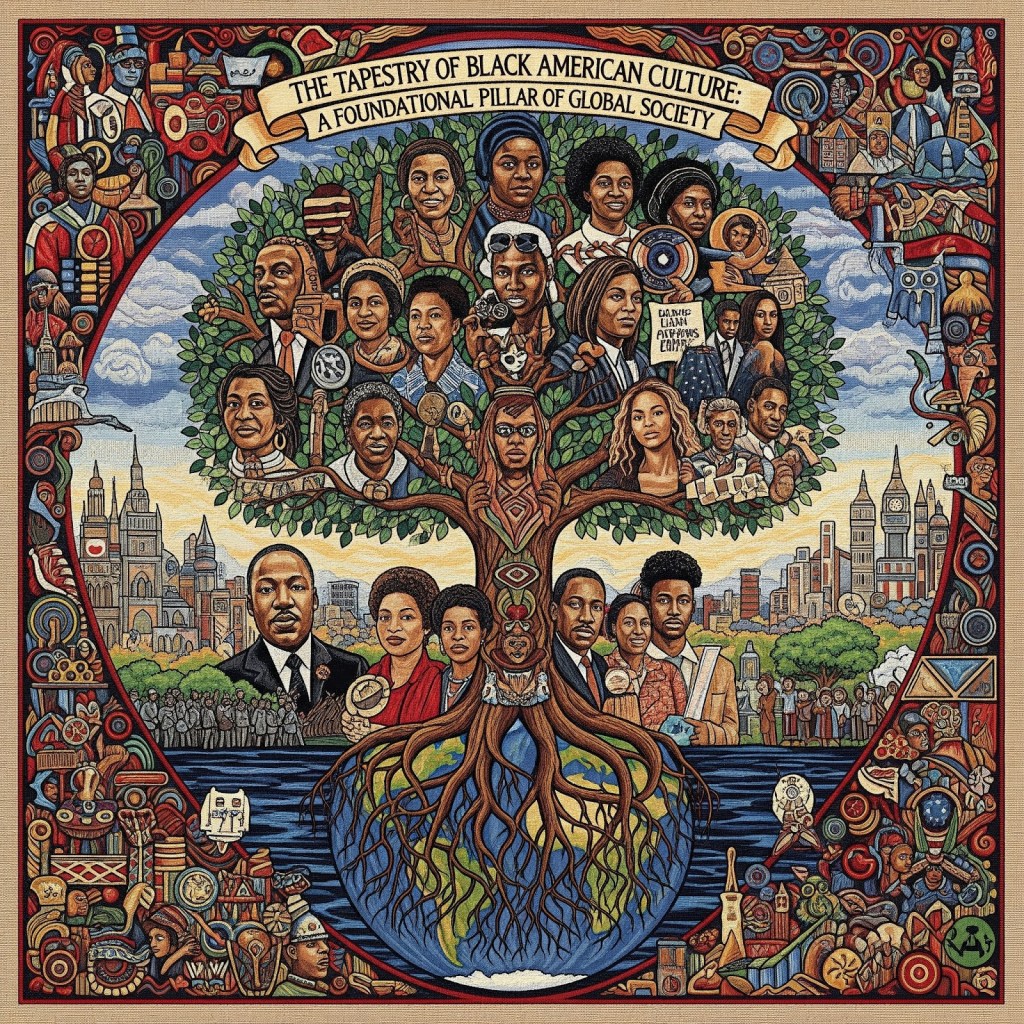
This is for those of you who actually think we Black Americans don’t have a culture… You know who you are!
Now family, if you don’t want to read this long article, just watch the video below from the YouTube Channel Foundational Black American History. It basically says the same thing.
Click HERE if you want to watch a longer version of this video.
The video is an excellent visual resource that summarizes the key concepts discussed in this article, providing a more engaging and easily digestible format. Watching it can offer valuable insights and a deeper understanding of the historical context, and it allows you to absorb the information while multitasking or relaxing.
Black American culture, alternatively recognized as African American culture, is an extraordinarily rich, dynamic, and fundamental component of the broader American society, and an immense force in shaping global culture. It is a profound cultural tradition that emerged from the unique and often brutal experiences of African descendants in the United States, representing a powerful synthesis of ancestral African heritage—preserved and adapted under duress—and the transformative, often oppositional, American environment. This culture is deeply forged by the historical crucible of chattel slavery, the persistent, multi-generational reality of systemic oppression, and the enduring, monumental struggle for fundamental freedom, equality, and dignity. This historical context has fostered an unparalleled collective spirit characterized by resilience, unbreakable community bonds, deep pride, and a constantly evolving, distinctive identity that finds creative expression across every facet of human endeavor.
—–Core Elements and Enduring Contributions: Transformative Influence
The contributions of Black American culture are not merely additive; they are transformative, profoundly shaping the core character of the nation and influencing global trends across numerous domains.Music: The Global Soundtrack and Revolutionary Art Forms
African American culture has exerted a pervasive, revolutionary, and foundational influence on global musical forms. Genres born from the Black experience are the undisputed bedrock of much of modern popular music, driving innovation in melody, rhythm, harmony, and performance worldwide:
Blues: Originating in the Deep South post-emancipation, the Blues served as a vital emotional and narrative outlet, utilizing a distinct 12-bar structure and “call-and-response” patterns to express the existential hardships, hopes, and spiritual strength of the community. It is the direct ancestor of multiple subsequent genres, carrying a foundational emotional gravitas.
Jazz: A uniquely American art form that developed in the vibrant, multicultural setting of New Orleans at the turn of the 20th century. Jazz—with its complexity, polyrhythms, improvisation, and syncopated rhythms—swiftly became recognized as America’s classical music, demanding high artistry and influencing musicians and composers across all continents.
Gospel: Evolving from spirituals—the coded songs of enslaved people—Gospel music is the uplifting, powerful, and deeply emotional voice of the Black church. It provides both profound religious inspiration and a crucial, technical foundation for R&B, Soul, and eventually, Pop music, emphasizing vocal dexterity and powerful, communal harmony.
R&B (Rhythm and Blues), Rock and Roll, and Funk: These genres further expanded the landscape, bridging the gap between sacred and secular music. R&B and Rock and Roll pioneers synthesized the structures of Blues and the energy of Gospel, while Funk, rooted in deep, syncopated basslines and percussive horns, utilized infectious rhythms and raw, passionate delivery to create a distinct sound that influenced disco, pop, and dance music globally.
Hip-Hop and Rap: Emerging from the urban centers of the late 20th century, particularly the Bronx, New York, Hip-Hop culture is a potent, multifaceted global phenomenon. Encompassing MCing (rapping), DJing, breakdancing (B-Boying), and graffiti art, it serves as a powerful and unfiltered medium for storytelling, political commentary, social critique, linguistic innovation, and entrepreneurship, constantly redefining the global popular music landscape.
Oral Tradition and Language: The Spoken Legacy
The maintenance of a strong oral tradition was critically important for cultural and historical preservation during the era of slavery, when literacy was often forbidden by law. This tradition continues to thrive, shaping communication and artistic expression:
Storytelling and Proverbs: These were and remain vital tools for teaching history, preserving cultural memory, communicating ethical principles, and transmitting cultural values across generations, often through stylized and highly dramatic performance.
African American Vernacular English (AAVE): Far from being mere slang, AAVE is a complex, structured, and linguistically rich form of English with its own consistent grammar, syntax, vocabulary, and expressive nuances. It is a powerful cultural identifier and a source of continuous linguistic innovation that profoundly shapes not only literature but also mainstream American speech and global communication via music and media.
Spoken-Word Poetry and Rap: These modern forms are direct and powerful descendants of the traditional oral legacy, emphasizing rhythmic language, sophisticated wordplay, rhetorical flourish, and often containing piercing social and political commentary.
Family, Church, and Community: The Social and Political Foundation
In the face of systemic adversity and the systematic destruction of biological family units during slavery, the Black community built robust, resourceful institutions that served as vital centers of survival, support, and activism:
The Black Church: Historically and contemporarily, the church has been more than a spiritual sanctuary; it has been the single most central social, educational, economic, and political hub for the community. It provided essential leadership, organized the monumental Civil Rights Movement, and continues to foster a critical sense of collective purpose and hope.
Extended Family and Kinship Networks: Strong, often non-biological, extended family structures and “fictive kinship” (treating close friends as relatives) have been essential. This network ensures the care of children, the support of the vulnerable, and the preservation of values, creating a safety net where traditional institutional support was lacking.
Core Values: Central values emphasize deep respect for elders as carriers of history and wisdom, a high degree of community inter-dependency (often summarized by the concept of Ubuntu—”I am because we are”), and a commitment to “giving back” for the collective upliftment of the race.
Cuisine: Soul, Sustenance, and Cultural Ingenuity
The development of “Soul food” and distinct Southern Black cooking traditions is a profound testament to cultural creativity and ingenuity, transforming limited, often poor-quality resources into flavorful, communal, and spiritually resonant meals.
Origins: These food ways were developed by enslaved Africans, blending West African staples (like rice, okra, and black-eyed peas) and traditional cooking techniques (like deep frying and long stewing) with the ingredients available in the Americas, often using overlooked or discarded animal parts and vegetables.
Key Dishes: Signature dishes include staples like fried chicken, richly seasoned macaroni and cheese, collard and other seasoned greens, black-eyed peas, candied yams, and red beans and rice. Soul food is a vital, symbolic part of celebrations, weekly family gatherings, and the preservation of cultural memory.
Art and Literature: Resistance, Identity, and A Declaration of Self
African American art, literature, and performance arts have consistently served as both a detailed record of struggle and a powerful declaration of self-worth, identity, and beauty in a society that often denied all three.
The Harlem Renaissance (1920s-1930s): This period marked an explosive cultural flowering in which writers (like Langston Hughes and Zora Neale Hurston), artists, and musicians celebrated Black life, asserted their intellectual and creative identity, and powerfully challenged racist narratives both domestically and internationally.
Themes: Contemporary expressions continue to explore universal themes—love, loss, morality—through the highly nuanced lens of the Black experience: identity formation, the persistent struggle for justice, the celebration of Black joy, and the complex, intersectional nature of Black American life.
Fashion and Aesthetics: Style, Statement, and Global Influence
Black American fashion is a dynamic force that constantly innovates and influences global trends, often turning necessity into high style:
African Aesthetics: Traditional African elements, such as the use of vibrant, expressive colors, intricate textiles (like kente cloth), and symbolic motifs (like Adinkra), are frequently incorporated and adapted into contemporary styles.
Modern Trends: Modern styles, exemplified by hip-hop fashion (e.g., oversized clothing, high-top fades, visible luxury branding) and the global impact of athletic wear (like iconic Air Jordan sneakers), not only originated in but were fiercely driven and popularized by Black American culture.
Cultural Practices: The tradition of elaborate, highly decorative “Sunday hats” worn by women in Black churches is a notable sartorial expression of dignity, status, and artistry that connects back to African head-wrapping traditions.
Holidays and Commemorations: Honoring History and Collective Memory
Several observances are central to acknowledging and celebrating the history, endurance, and achievements of the culture, ensuring collective memory is maintained:
Black History Month (February): Founded as “Negro History Week” by historian Carter G. Woodson, this month is dedicated to honoring the monumental contributions, history, and achievements of African Americans throughout U.S. and global history.
Juneteenth (June 19): Now a federal holiday, Juneteenth commemorates the day in 1865 when enslaved people in Galveston, Texas, finally received the news of their freedom, marking the effective, though delayed, end of slavery in the United States. It is a celebration of freedom and persistence.
Kwanzaa (December 26 – January 1): A cultural, non-religious holiday established in 1966 that celebrates African heritage, unity, and culture, based on seven core principles known as the Nguzo Saba (The Seven Principles).
Resilience and Activism: The Ongoing Fight for Justice
A shared history of enduring extreme circumstances—from chattel slavery to Jim Crow segregation and modern systemic inequality—has cultivated an extraordinary, deep-seated sense of resilience, collective pride, and unwavering hope against all odds.
Social and Political Engagement: This foundation is the engine for ongoing social and political activism, most famously embodied by the Civil Rights Movement and continuing through modern movements for social justice. This commitment ensures the culture remains active, engaged, and focused on collective advancement, constantly demanding that America live up to its stated ideals.
—–The Profound Diversity and Non-Monolithic Nature of Black American Culture
Black American culture is an extraordinarily complex, dynamic, and fundamentally diverse phenomenon that defies a single, simple definition. It is emphatically non-monolithic, meaning it cannot be treated as a uniform entity but rather as a vast, rich tapestry woven from countless threads of heritage, environment, class, region, and religious experience.
This immense richness is manifested through a broad spectrum of variations, including:
Regional Specificity: Distinct cultural ecosystems have emerged across different American landscapes.
Gullah/Geechee Culture: The unique, isolated culture of the Sea Islands (South Carolina, Georgia, Florida), which has preserved a deep linguistic, artisanal (e.g., basket weaving), and spiritual connection to West Africa that is unparalleled in the continental U.S.
Louisiana Creole and Cajun Traditions: Vibrant, syncretic cultures that blend African, French, Spanish, and Native American influences, giving rise to unique music (Zydeco) and cuisine.
Urban Cultures: The diverse, fast-paced urban cultures of Northern and Midwestern cities like New York, Chicago, and Detroit, which fostered landmark movements in Jazz, Blues, Motown, and Hip-Hop, and developed distinct local dialects and style.
Socioeconomic and Class Stratifications: Experiences within the Black community are also shaped by economic status and social class. Different socioeconomic groups often have distinct cultural markers, traditions, educational priorities, and leisure activities, further fragmenting the idea of a singular “Black experience” while still sharing the overarching legacy of the struggle for racial equality.
Religious and Spiritual Practices: A wide array of spiritual traditions contribute to the culture, from the historically central Black Christian denominations (Baptist, AME, CME) that served as cultural and political anchors, to the significant presence of Islam (including the Nation of Islam and Sunni communities), African indigenous religions, and non-theistic belief systems.
Crucially, the dynamism of Black American culture is continuously enhanced by the growing population of Black immigrants from the Caribbean and the continent of Africa. This ongoing infusion acts as a profound catalyst for cultural evolution, deepening and broadening the overall Black experience in the United States. Each incoming group contributes invaluable, unique elements:
Caribbean Contributions: Immigrants from nations like Jamaica, Haiti, Trinidad, and Barbados introduce distinct English, French, and Spanish-based creole languages, influential musical forms (e.g., Reggae, Soca, Zouk), rich political traditions, and diverse culinary staples (e.g., jerk seasoning, roti, patties).
African Contributions: New arrivals from West, East, and South Africa bring a multitude of national languages (e.g., Yoruba, Amharic, Swahili), diverse cuisines, and specific cultural practices, enriching the community’s connection to the global African diaspora.
The rich tapestry of Black American culture is a dynamic and ever-evolving mosaic, continuously enriched by a multitude of influences. These influences, particularly the recent cultural contributions from the African diaspora—including immigrants from the Caribbean, various African nations, and elsewhere—interact with and often hybridize established Black American traditions. This makes the culture a living, breathing entity that is perpetually redefining itself.
This continuous process of synthesis and cross-pollination is visible across all facets of Black American life. In music, the sounds of Afrobeats and Caribbean dancehall blend seamlessly with the foundational genres of jazz, hip-hop, R&B, and gospel, creating new, globally infectious rhythms and styles. In cuisine, new spices, cooking techniques, and ingredients from West Africa and the islands are being incorporated into and expanding the scope of traditional Southern and soul food, leading to a culinary renaissance. Fashion, language, and artistic expression also reflect this vibrant fusion, with distinctive accents, sartorial choices, and narrative perspectives adding layers of complexity to the broader cultural narrative.
The vibrant tapestry of Black American culture is a dynamic and ever-evolving phenomenon, rooted in the profound history of the descendants of enslaved Africans, whose resilience, ingenuity, and cultural contributions form the indispensable bedrock of the American experience. This deep historical foundation, marked by both struggle and triumph, acts as the primary source of its unique character, artistic forms, and community structures.
Yet, this culture is not a static relic of the past; it is a constantly shifting, self-renewing mosaic, significantly enriched by the ongoing cultural dialogue with recent Black immigrants from the Caribbean, Africa, and other parts of the global Black diaspora. The interplay between these two powerful streams—the established Black American heritage and the expansive, diverse traditions brought by new arrivals—creates a cultural entity that is more complex, resilient, inventive, and globally connected than ever before. This convergence is a powerful demonstration that Black culture in the United States is fundamentally not monolithic. Instead, it is an integrated network of local, national, and transnational identities, each drawing strength from its deep historical roots while simultaneously expanding its scope through global connections.
This ongoing cultural dialogue manifests across every facet of American life. In music, for example, the foundational genres of jazz, blues, gospel, and hip-hop, created by the descendants of the enslaved, continually absorb and integrate new rhythms and sonic textures from Afrobeats, Dancehall, and Zouk, propelling Black music to the forefront of global innovation. In cuisine, new spices, cooking techniques, and ingredients from West Africa and the Caribbean blend with established soul food and Creole traditions, creating a fusion that is both nostalgic and avant-garde. In language and fashion, the infusion of global Black perspectives keeps the culture at the cutting edge of identity expression.
This continual cross-pollination ensures that Black American culture remains a potent engine of American creativity and global soft power. It is an enduring testament to the power of cultural synthesis, demonstrating how the retention of a painful, yet ultimately powerful, heritage can coexist and thrive alongside a radical, expansive embrace of the new. It is this unique ability to draw strength from both deep history and expansive global input that guarantees Black American culture will remain at the very forefront of global innovation, social discourse, and identity formation for generations to come.
Greetings! Although this website is about the beautiful way of life called Capoeira Angola, throughout this website, I do share articles, personal reflections, and diverse content exploring the multifaceted experiences of Black men, both here in the United States and in Brazil.
For those who genuinely question the fundamental premise behind the “Black Lives Matter” movement, I urge you to watch this video, and immerse yourself in the lived realities and historical injustices that necessitate such a declaration.
This is not merely a slogan; it is a plea for recognition, equality, and an end to systemic discrimination that continues to affect Black communities worldwide.
The narratives presented on this site delve into the daily triumphs and tribulations, the joys and the pains, the resilience and the resistance that define our journeys. From the casual microaggressions that chip away at our sense of belonging, to the more overt forms of discrimination that can have life-altering consequences, we aim to shed light on the pervasive nature of racial bias.
In the United States, the legacy of slavery, Jim Crow laws, and ongoing racial disparities in areas such as criminal justice, education, and healthcare continue to shape the lives of Black men. The fear of being unfairly targeted, the burden of proving one’s innocence, and the constant battle against stereotypes are realities that many of us face daily.
Similarly, in Brazil, a nation with the largest population of people of African descent outside of Africa, Black men grapple with a unique set of challenges rooted in a complex history of slavery and entrenched racial inequality. Despite the vibrant Afro-Brazilian culture, systemic racism manifests in economic disparities, police brutality, and a lack of representation in positions of power.
Through personal stories, analytical essays, and a curated selection of resources, this website seeks to:
Amplify the voices of Black men: Providing a space for authentic self-expression and shared experiences.
Educate and inform: Offering insights into the historical, social, and cultural contexts that shape our lives.
Challenge stereotypes: Dismantling harmful misconceptions and promoting a more nuanced understanding of Black masculinity.
Advocate for change: Inspiring dialogue and action towards a more just and equitable society for all.
Join us as we explore the rich tapestry of Black manhood, celebrating our strengths, confronting our struggles, and collectively striving for a future where our lives are not just acknowledged, but truly valued.
The terms “white supremacy” and “white unity” are often conflated, but it’s crucial to understand their distinct meanings and implications. While both concepts revolve around the idea of whiteness, their goals, methods, and underlying ideologies differ significantly.
White Supremacy is a racist ideology predicated on the belief that white people are inherently superior to people of other racial backgrounds. This belief system asserts a right to dominate and control non-white populations, often advocating for the maintenance or re-establishment of social, economic, and political systems that privilege white people. Historically, white supremacy has manifested in various forms, including:
Explicit racial discrimination: Laws and policies (like Jim Crow laws or apartheid) designed to segregate and disenfranchise non-white individuals.
Violence and terrorism: Acts committed against non-white groups to maintain power and instill fear.
Cultural and institutional biases: Subtle yet pervasive forms of discrimination embedded within societal structures, media, and education.
Pseudo-scientific justifications: Attempts to use distorted scientific claims to rationalize racial hierarchies.
The core of white supremacy is about power and hierarchy, seeking to establish and enforce the dominance of one racial group over all others. It is inherently oppressive and exclusionary, relying on the dehumanization of non-white people.
White Unity, on the other hand, is a concept that emphasizes solidarity and cooperation among people who identify as white. While not inherently racist in the same way as white supremacy, the concept can be problematic depending on its context and objectives. When “white unity” is promoted as a means to counter perceived threats from non-white groups, or to protect “white interests” at the expense of others, it can quickly devolve into a form of ethno-nationalism or become a stepping stone towards white supremacist ideologies.
However, it’s also important to acknowledge that the desire for unity within any cultural or ethnic group is not inherently negative. For some, “white unity” might simply refer to a shared cultural heritage, a sense of community, or an appreciation for European ancestry, without any intent to denigrate or harm other groups. The critical distinction lies in whether this unity is formed against other groups or in conjunction with a broader understanding of human solidarity and equality.
The Dangerous Overlap:
The conflation of “white supremacy” and “white unity” is dangerous because it can normalize or even rationalize the former. When individuals or groups promoting white supremacy frame their agenda as merely seeking “white unity,” they attempt to sanitize their hateful ideology and make it more palatable to a wider audience. They exploit the natural human desire for belonging and community, twisting it to serve a racist agenda.
It is crucial to recognize that:
Not all forms of white identity or community are white supremacist. However, any expression of white unity that actively promotes exclusion, discrimination, or dominance over other racial groups falls squarely within the realm of white supremacy.
White supremacy is a system of oppression. It seeks to harm and disadvantage non-white people. White unity, when conceived benignly, does not inherently seek to harm others, but its proximity to white supremacist rhetoric makes it highly susceptible to being co-opted.
In conclusion, the term “white unity,” while seemingly innocuous on the surface, carries a complex and often insidious duality. While it can genuinely refer to a harmless sense of shared cultural identity, heritage, or community among people of European descent, it is regrettably and frequently co-opted. More often than not, “white unity” functions as a thinly veiled euphemism or a calculated recruitment tool for “white supremacy,” an ideology that is unequivocally racist, hateful, and profoundly harmful.
The critical distinction between these two interpretations is not merely semantic; it is foundational to understanding and addressing racial injustice. White supremacy is a deeply entrenched and dangerous belief system that asserts the superiority of the white race over in this context, it seeks to mobilize individuals under a banner that, while appearing benign, ultimately serves to perpetuate and strengthen a system of racial hierarchy and power imbalance.
Therefore, a discerning understanding of how “white unity” is being used is absolutely essential. It empowers us to identify and effectively combat the insidious manifestations of racial injustice and to dismantle the structures that perpetuate inequality. By recognizing the potential for this term to be weaponized, we can challenge its misuse, expose the underlying supremacist agendas, and actively promote a truly equitable and inclusive society where all individuals are valued and respected, regardless of their racial or ethnic background. This vigilance is not about condemning shared heritage, but about unequivocally rejecting and actively working against ideologies that seek to divide and harm based on race, often leading to discrimination, oppression, and violence.
When “white unity” is invoked, it is crucial to scrutinize the underlying motivations and implications. Is it being used to foster a sense of shared community and positive cultural affirmation among people of European descent, similar to how other ethnic groups might celebrate their heritage? Or is it being deployed as a rallying cry to consolidate power, exclude others, and maintain existing racial hierarchies? The latter, often subtly or overtly, underpins movements that actively seek to marginalize and disadvantage non-white communities.
History provides numerous examples of how appeals to “white unity” have been exploited to justify discriminatory policies, enforce segregation, and even incite violence. From the Jim Crow era to contemporary white nationalist movements, the concept has been a potent tool for those who wish to preserve a racial pecking order. Understanding this historical context is vital to recognizing the warning signs in present-day discourse.
Furthermore, a critical examination of “white unity” requires an awareness of its intersection with other forms of oppression. When it is used to reinforce a sense of a singular, monolithic “white” identity, it often overlooks the diverse experiences and socio-economic realities within white communities themselves. More importantly, it can overshadow the struggles of people of color and detract from the collective effort required to achieve genuine racial equity.
True progress towards a just society demands a rejection of any framework that promotes division and hierarchy based on race. Instead, we must champion unity that is predicated on shared humanity, mutual respect, and a commitment to justice for all. This means actively challenging and dismantling systems that privilege one group over others, and fostering an environment where diversity is celebrated as a source of strength, not a cause for division. Our vigilance in this regard is not merely an academic exercise, but a moral imperative to ensure a future where everyone can thrive free from prejudice and discrimination.
Youtube features numerous videos discussing “The history they didn’t tell you,” particularly focusing on African and Afro-diasporic culture. These videos uncover neglected narratives that highlight the struggles, achievements, and contributions of these communities to global culture, showcasing their resilience and creativity. By delving deep into historical contexts, they shed light on the vibrant traditions, artistic expressions, and significant events that have shaped these cultures over centuries. The aim is to educate and inspire by revealing a rich tapestry of history often overlooked in mainstream discussions, thus fostering a deeper understanding of the past and its influence on the present. Each video serves as a powerful reminder of the diverse perspectives that play a critical role in shaping our collective identity, urging viewers to reflect on the interconnectedness of cultures and the importance of inclusivity in our understanding of history. In doing so, these narratives not only honor the past but also encourage a dialogue about cultural heritage and its relevance in today’s society, ultimately striving to empower future generations with knowledge and appreciation for the myriad contributions of African and Afro-diasporic peoples.
In today’s installment…
Today marks the 105th anniversary of a tragic and pivotal event in American history: the Ocoee Massacre. Beginning on November 2, 1920, this horrific atrocity in the rural settlement of Ocoee, Florida, stands as a stark and painful reminder of the depths of racial violence and its devastating, long-lasting consequences. Fueled by deeply ingrained racial tensions and a pervasive culture of white supremacy, the violence escalated with terrifying rapidity, leading to the deaths of an untold number of Black and white individuals.
One of the most poignant and brutal outcomes of the massacre was the lynching of Julius ‘July’ Perry. Perry was not merely a resident of Ocoee, but a successful Black businessman and a respected community leader. His murder in downtown Orlando was a calculated act of terror, explicitly intended to intimidate and suppress the burgeoning aspirations of the Black community. It was a stark message of the dangers faced by those who dared to challenge the established racial hierarchy.
Historians have rightly described the Ocoee Massacre as the “single bloodiest day in modern American political history.” Its impact reverberated far beyond the immediate violence, leading to the forced displacement of hundreds of Black citizens from Ocoee. These families, stripped of their homes, their livelihoods, and everything they had painstakingly built, were driven out of the town in a brutal act of racial cleansing. For decades, Ocoee remained an almost exclusively white town, a chilling testament to the power of racial violence to reshape communities and erase Black presence.
The events of November 2, 1920, and the days that followed, lay bare a dark chapter in American history where Black citizens were systematically denied their fundamental rights, most notably the right to vote. The spark that ignited the massacre was the courageous attempts by Black residents to exercise their suffrage, a right guaranteed by the 15th Amendment, but violently resisted by white mobs. This tragic episode serves as a powerful and painful illustration of the systemic racism and pervasive voter suppression that characterized the Jim Crow era, highlighting the lengths to which white supremacists would go to maintain their power and control.
For a more comprehensive and in-depth understanding of this critical historical event, further details can be found HERE. The Ocoee Massacre is not merely an isolated incident; it serves as a crucial case study for examining the historical roots of racial inequality, the enduring legacy of white supremacy, and the ongoing struggle for civil rights and justice in the United States. Its lessons remain profoundly relevant as we continue to grapple with issues of racial injustice and the fight for true equality.
This documentary embarks on an extraordinary journey into the life of Venture Smith, an African boy whose indomitable spirit, though tragically ensnared by the horrors of capture and enslavement, ultimately triumphed through an unwavering force of will. More than just a historical recounting, this powerful film, set against a backdrop of a deeply moving instrumental score, transforms into an emotional odyssey. It is a profound exploration of the unimaginable pain and suffering endured by countless individuals over centuries, yet it simultaneously stands as a radiant testament to the indomitable resilience that allowed the human spirit to not only survive but to ultimately prevail against overwhelming odds.
The evocative melodies and pulsating rhythms that permeate the documentary serve as the very heartbeat of freedom itself. They are a powerful, almost visceral, testament to the unwavering hope and courageous fight for liberation that defined the lives of so many. Through the remarkable and deeply personal story of Venture Smith, viewers are confronted with the devastating impact of injustice – the brutal rupture of families, the theft of identity, and the systemic dehumanization that characterized the era of slavery. However, and perhaps more importantly, the film inspires with Smith’s unyielding determination to reclaim his autonomy, to defy the chains that sought to bind him, and to forge a path towards a self-determined future.
Venture Smith’s narrative is a microcosm of a larger, pivotal chapter in human history. Born in what is now Ghana in 1729, he was ripped from his home as a child, brutally transported across the Atlantic, and forced into servitude in the American colonies. Yet, his story is not merely one of victimhood. It is a testament to the extraordinary strength of character that allowed him to endure unimaginable hardships, to work tirelessly to earn his freedom, and ultimately, to purchase the freedom of his family members. His autobiography, A Narrative of the Life and Adventures of Venture, a Native of Africa: But Resident above Sixty Years in the United States of America, published in 1798, stands as a rare and invaluable firsthand account of the transatlantic slave trade and the struggle for freedom.
This film invites viewers not just to observe, but to bear witness to this critical period, offering a poignant and enduring reminder of the individual spirit’s power in the face of overwhelming adversity. It delves into the nuances of his life, from the strategic labor he undertook to earn money for his freedom, to the shrewd business dealings that allowed him to establish himself as a landowner and entrepreneur in Connecticut. The documentary meticulously pieces together historical accounts and Smith’s own words to paint a vivid portrait of a man who refused to be defined by his circumstances. His legacy is not just one of personal triumph, but also a powerful message of resistance, perseverance, and the universal human longing for liberty and dignity. This cinematic exploration of Venture Smith’s life is an essential experience, shedding light on the darkness of the past while illuminating the enduring flame of hope and the unyielding pursuit of self-determination.