Spiritual practices across Africa and its Diaspora emphasize the connection between the living, ancestors, and the divine. These intricate belief systems reflect rich cultural heritages, featuring a supreme being and various mediating deities who facilitate communication with the sacred realm. Rooted in oral traditions and rituals, foundational cosmologies like Yoruba Orishas and Gbe Vodun have evolved into diverse faiths such as Santeria, Candomblé, and Vodou. Despite historical and colonial suppression, these systems survived through syncretism and are currently experiencing a global revival as vital cultural anchors for identity.
Today, this exploration deepens into the specific roles of sacred spirit healers—such as the Igbo Dibia, the Nguni Sangoma, and the Bantu Nganga—who serve as intermediaries restoring cosmic wholeness. Their practices are built upon sophisticated philosophical frameworks where healing is a restoration of balance, often initiated by a sacred calling through prophetic dreams. This journey also encompasses the venerated artifacts of the continent, including the Royal Staff, Spirit Masks, and Talking Drums, which serve as physical anchors for spiritual communion and ancestral memory.
African Coral and Sacred Beads: The Spiritual Technology of Power, Protection, and Royal Blood explores one of Africa’s most enduring sacred traditions. Far more than ornaments, beads served as symbols of identity, lineage, initiation, royalty, spiritual protection, ancestral memory, and cultural power across African civilizations.
Discover the meanings and significance of African coral and sacred beads through Kemet bead nets, Kush gold and stone beads, Igbo akaa, Yoruba ileke, iyun coral, Benin coral regalia, Olokun traditions, waist beads, wrist beads, and ankle beads. Learn how kings, queens, priests, warriors, initiates, brides, elders, and communities used these sacred adornments to express status, preserve heritage, honor ancestors, and connect with spiritual forces.
Across Africa, beads were never merely jewelry. They carried power, protection, beauty, wealth, royalty, spiritual meaning, cultural identity, and ancestral memory. They marked who a person was, what lineage they belonged to, what responsibilities they carried, and what stage of life they had entered.
This documentary reveals how African civilizations developed a sacred language of the body—a spiritual technology that connected the living to their ancestors, royal bloodlines, divine forces, and collective memory. From initiation rites and royal courts to ceremonies of protection and transformation, beads served as living expressions of authority, belonging, wisdom, and sacred connection.
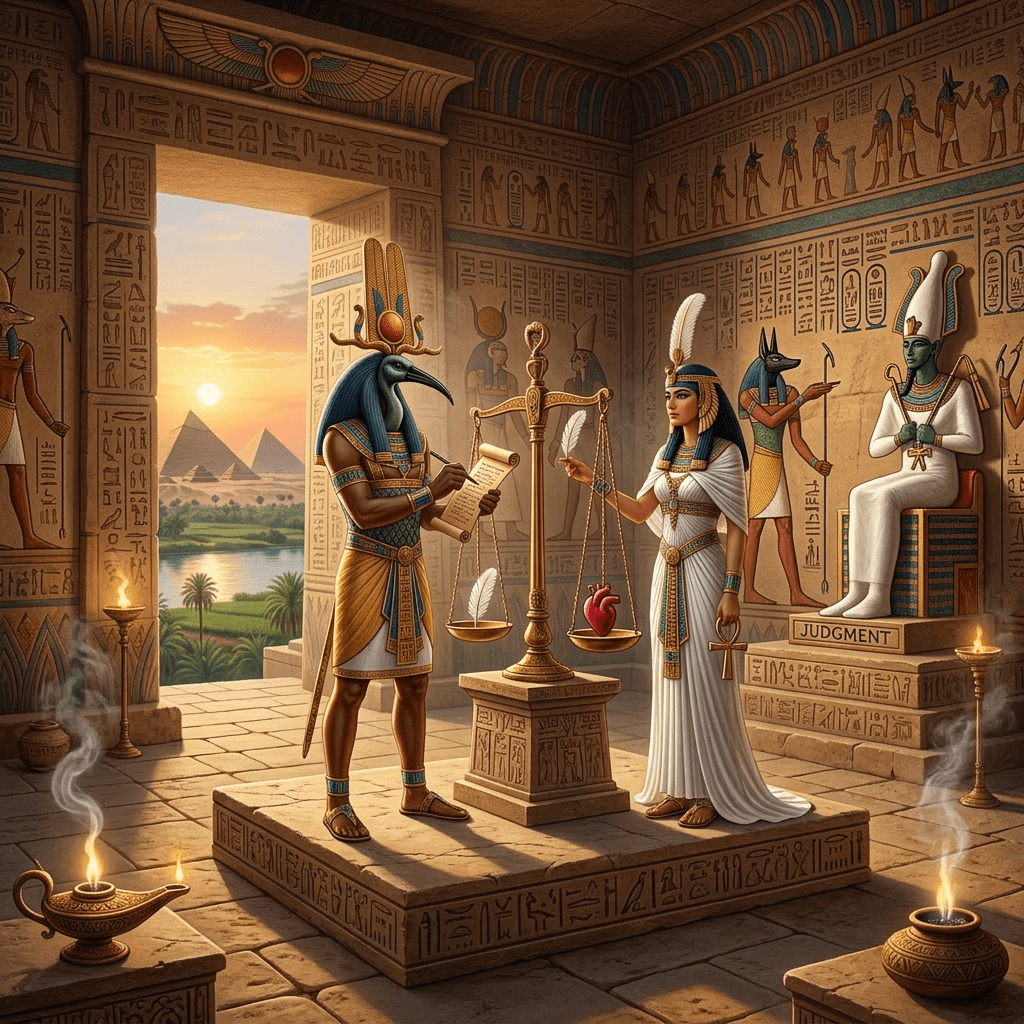
Explore the connections between African spirituality, lineage, kingship, sacred adornment, cultural identity, initiation, wealth, protection, and the ancient understanding that the body itself could become a vessel of memory and power. This spiritual science extends to ancient Kemet, where the “divine words” of Medu Neter anchored historical memory and ethical accountability within the Hall of Judgment.
I should have posted this yesterday, but I have a big project that I’m working on, and didn’t get time to.
Since the acquittal in the murder case of 14-year-old Cyrus Carmack-Belton, a tragedy that has sparked profound national discourse, there have been increasing calls to initiate strategic boycotts against businesses perceived as racist. This growing movement seeks to address the systemic devaluation of Black lives, underscoring the urgent need for societal change and enhanced accountability within various sectors. Activists advocate for these boycotts as a means to apply economic pressure, highlighting the profound impact of financial decisions on corporate behavior.
Essays such as “A Black Life Should Be Worth More Than a Bottle of Water” by Allison Wiltz poignantly illustrate the stark disparities faced by Black individuals in daily life, reinforcing the belief that true justice must extend beyond legal acquittals to include comprehensive societal reform and the elevation of all Black voices. As this conversation unfolds, community leaders emphasize the importance of solidarity and sustained action, urging citizens to consider their purchasing power as a crucial tool for fostering equity and justice.
This analysis will delve into the historical and structural reasons why such widespread economic mobilization has faced significant hurdles in the past, including systemic inequalities, entrenched power dynamics, and socio-political barriers that have often muted the voices of those advocating for change. Furthermore, we will outline the critical components required to transform these calls for action into an effective and sustainable boycott of anti-Black racist businesses, emphasizing the importance of community organization and economic leverage.
This includes fostering strong alliances among various community stakeholders, utilizing strategic communication to raise awareness, and implementing creative tactics to ensure a unified front that can exert pressure on targeted businesses. By examining both past failures and successful initiatives, we aim to provide a comprehensive understanding that can guide future efforts in achieving meaningful economic justice and equity.
Support the professorthrough the following platforms:
Spiritual practices in Africa and the Diaspora center on the interconnectedness of the living, ancestors, and the divine, often featuring a supreme being and various mediating deities. These intricate belief systems reflect rich cultural heritages and histories, embodying values and teachings transmitted through generations via oral traditions, ceremonies, and rituals that reinforce communal bonds. Foundational cosmologies, such as Yoruba Orishas and Gbe Vodun, have evolved into faiths like Santera, Candomble, and Vodou, each adapting to specific cultural and environmental contexts while maintaining core spiritual principles. These resilient systems survived colonial suppression by syncretizing with Christianity and Islam, using external symbols to shield traditional rituals. Today, a global revival is reclaiming these sacred philosophies as cultural anchors for identity and community, appealing to individuals seeking deeper connections to their roots.
Today, we explore the specific roles and enduring significance of the continent’s profound sacred spirit healers: the Dibia of the Igbo, the Sangoma of the Nguni, and the Nganga found across Bantu cultures. These revered figures serve as vital intermediaries between the temporal world and the sacred realm of the ancestors, facilitating communication and understanding. Their practice is built upon a sophisticated philosophical framework where spiritual healing is viewed as the restoration of cosmic wholeness and balance. The path to becoming such a healer is rarely a personal choice but a sacred calling thrust upon individuals through prophetic dreams or spiritual illness, followed by a rigorous initiation process designed to strip away the former ego and identity. As modern society seeks deeper connections to cultural roots, these ancient practices offer a sacred map of historical memory and wisdom for navigating the complexities of contemporary life.
Today…
For those drawn to ancient Egyptian wisdom, the profound depths of African spirituality, suppressed historical narratives, Kemetic philosophy, and the laws governing the universe—this journey is for you. By exploring the sacred realms of Thoth, the deity of wisdom and writing, and Ma’at, the personification of truth and cosmic order, we engage with a civilization where truth was the foundational architect of reality and justice was the ultimate cosmic law.
Millennia ago, the sages of Africa posed a question that remains vital to the human experience today: What remains of a civilization once truth is extinguished? This inquiry challenges us to consider the sophisticated spiritual science and moral equilibrium that characterized ancient Kemet, where script served to safeguard the eternal soul and uphold sacred law. In this ancestral framework, the acts of writing and recording were not merely administrative but were divine manifestations known as Medu Neter, or “divine words.” This spiritual technology anchored historical memory, ensuring that ethical accountability remained central to both the temporal world and the hallowed Hall of Judgment.
How does the soul navigate when memory is severed from justice? Within this narrative, we find one of humanity’s earliest visions of interconnected cosmic justice, where the universe itself was believed to harmonize with moral balance. This spiritual practice views healing as the restoration of cosmic wholeness, creating a sacred map of historical memory and wisdom for navigating the complexities of contemporary life. This legacy of spiritual science resonates today through global revivals reclaiming these sacred philosophies as cultural anchors for identity and community. Modern practices, such as Ital Yoga, continue to draw upon this ancient brilliance, using breath and movement to reconnect individuals to their inner power and ancestral wisdom.
How does the soul navigate when memory is severed from justice? In this ancestral framework, the acts of writing and recording were not merely administrative but were divine manifestations known as Medu Neter. This spiritual technology anchored historical memory, ensuring that ethical accountability remained central to both the temporal world and the hallowed Hall of Judgment. By exploring the sacred realms of Thoth and Ma’at, we engage with a civilization where truth was the foundational architect of reality and justice was the ultimate cosmic law. Within this narrative, we find one of humanity’s earliest visions of interconnected cosmic justice, where the universe itself was believed to harmonize with moral balance. This sophisticated spiritual science and moral equilibrium characterized ancient Kemet, where script served to safeguard the eternal soul and uphold sacred law. Through these divine words, the sages of Africa established a system where spiritual healing was viewed as the restoration of cosmic wholeness, creating a sacred map of historical memory and wisdom.
“The Friday Crime Report,” hosted weekly by PROFESSOR BLACK TRUTH, serves as a critical educational and activist platform. This program is dedicated to deconstructing systemic racism, documenting instances of police brutality, and analyzing the persistent economic inequality facing the Black community. By offering a rigorous counter-narrative to mainstream media outlets, the show utilizes detailed analysis and poignant personal stories to catalyze community action and advocate for a more equitable and just society.
In Today’s installment…
While the dominant society remains fixated on the Karmelo Anthony self-defense narrative, a glaring omission persists in the Pacific Northwest. In Oregon, a white male with a two-decade history of criminal activity has been apprehended for the brutal slaying of his spouse and two additional victims, highlighting the systemic failures often ignored by the corporate press.
This video, created by Professor Black Truth, serves as a necessary corrective to such mainstream narratives, which frequently treat systemic violence as isolated anomalies rather than part of a continuous, documented struggle for safety and justice within the Black community. By offering a rigorous counter-narrative, the show utilizes detailed analysis and poignant personal stories to catalyze community action and advocate for a more equitable and just society.
Professor Black Truth consistently illuminates these deep-seated systemic threats and institutional failures that many mainstream outlets choose to ignore, downplay, or misrepresent. This mission is fueled by the belief that informed discussion, backed by facts and academic rigor, is the indispensable precursor to meaningful and enduring societal change. Your generous financial support directly funds the independent analysis, rigorous research, and investigative journalism required to document these critical issues and ensure the call for equity and safety is amplified.
“The Friday Crime Report” is dedicated to deconstructing systemic racism, documenting instances of police brutality, and analyzing the persistent economic inequality facing the Black community. By offering a rigorous counter-narrative, the show utilizes detailed analysis and poignant personal stories to catalyze community action and advocate for a more equitable and just society. This mission is fueled by the belief that informed discussion, backed by facts and academic rigor, is the indispensable precursor to meaningful and enduring societal change.
Support the professor’s mission via Venmo: venmo.com/ProfessorBlacktruth or CashApp: $ProfessorBlacktruth.
Join our community on Patreon at / professorblacktruth , where recurring monthly contributions provide a stable foundation for the program’s long-term growth and planning.
Your generous financial support directly funds the independent analysis, rigorous research, and investigative journalism required to document critical issues facing the Black community and advocate for social justice. Every contribution, regardless of size, helps ensure that systemic injustices remain in the public eye and that the call for equity and safety for vulnerable individuals is amplified.
The blog series “MALICIA AS A GAME OF POWER” analyzes human interaction through the concept of “malicia,” which is defined as a sophisticated form of social intelligence used to navigate high-stakes environments. The series explores power dynamics and how individuals use strategic foresight and adaptability to read unspoken cues and maneuver through social hierarchies. By utilizing case studies and theoretical frameworks, the content aims to demystify strategic calculation, helping readers recognize and ethically apply the mechanics of influence in professional and interpersonal contexts.
Today, we will delve into Law 18 from Robert Greene’s influential work, “The Laws of Human Nature.” You can purchase a copy of the book from AMAZON.COM by clicking HERE.
Law 18 of The Laws of Human Nature: The Law of Death Denial
Robert Greene’s eighteenth and final law, the Law of Death Denial, explores the pervasive human tendency to live in a persistent state of avoidance regarding our own mortality. This deep-seated denial often results in a life lived on the surface, driven by petty anxieties and a lack of true priority. However, Greene posits that by actively meditating on our common mortality, individuals can transform this paralyzing fear into a powerful catalyst for living with profound intent and ethical clarity.
By stripping away the illusions of the ego and the false sense of infinite time, we are forced to confront what is truly essential, leading to an expansion of consciousness and a more disciplined, purposeful existence. This confrontation with the inevitable end does not diminish life but rather heightens our appreciation for the present moment, fostering a sense of connection with others and a commitment to personal integrity.
From the perspective of an Angoleiro
In the philosophy of Capoeira Angola, Law 18—The Law of Death Denial—is navigated through the cultivation of presence and the strategic use of malícia (cunning). While the law suggests that humans often live in a state of avoidance regarding their mortality, the Angoleiro uses the roda as a training ground for psychological control and composure in the face of lethal threats. This mastery begins with situational awareness and a pre-conflict mindset, where the practitioner maintains a “soft focus” to allow for rapid threat assessment and proactive, non-violent decisions.
Just as an Angoleiro must manage the “adrenal dump” during a life-or-death confrontation to avoid tunnel vision and a loss of motor skills, overcoming death denial requires a conscious awareness of one’s own vulnerabilities. In the jogo de baixo (low game), the practitioner stays emotionally grounded and neutral, avoiding the triggers that lead to self-sabotaging reactions. This strategic groundedness allows the capoeirista to transform a moment of existential crisis into a tactical advantage. True wisdom in this context involves understanding the motivations behind actions without judgment, finding connection and intrinsic worth even when faced with the gravity of mortality. By confronting the reality of the end, the practitioner strips away the ego’s illusions, focusing instead on the purity of the present movement and the preservation of axé.
This expansion of consciousness ensures that the fear of death is not a paralyzing force, but a catalyst for living with profound intent and ethical clarity within the roda of life. The Angoleiro’s approach to Law 18 is a testament to tactical deception and ethical responsibility. By acknowledging the finite nature of life, the practitioner takes full responsibility for their actions and commits to de-escalation as the highest form of mastery. This awareness transforms the fear of the end into a decisive, purposeful intent to neutralize threats and protect one’s axé (life force), ensuring that every moment in the roda of life is treated with profound humility and respect.
O VIDEO DO DIA DA CAPOEIRA ANGOLA curates digital archives to celebrate and preserve this profound Afro-Brazilian heritage. These online videos serve as vital cultural archives, functioning as a robust digital repository for documenting the intricate blend of music, movement, and history while safeguarding a tradition that was once marginalized and repressed.
These videos are vital cultural records that document traditional songs and the specific rhythmic patterns of the bateria, ensuring that the auditory heritage remains accessible to practitioners worldwide. By recording the roda‘s dialogue—including elements of mandinga and malícia—these archives bridge generational gaps. Malícia, or strategic deception, is the heart of the art, employing feints and masked intentions to draw an opponent into a trap. These digital safeguards preserve the wisdom of masters and present Capoeira Angola as a global philosophy of resistance and cultural pride.
Music from instruments like the berimbau, atabaque, and pandeiro drives the jogo, dictating its energy, pace, and character. The berimbau, a single-stringed musical bow, serves as the master conductor, determining the speed and style of the game. While the ginga—a constant, swaying motion—maintains readiness and stores kinetic energy, the philosophy of malandragem prizes cleverness and cunning over brute force. This living art form fosters a strong sense of community and safeguards an ancestral legacy rooted in the historical struggle for freedom. Through the digital preservation of filmed jogos and interviews with masters, the art remains a vital tool for social resistance and identity formation for future generations.
Today, we have a Capoeira Angola roda held on May 16, 2026 at the Municipal Park in downtown Belo Horizonte.
This roda recently celebrated its 19th anniversary, serving as a testament to the enduring nature of this cultural gathering.
It is worth noting that this roda is not intended to be a “giant” or pretentious event; instead, it belongs to the people. By holding the gathering in a public space like the Municipal Park, practitioners return the art form to the streets—the very place from which it originated. This gathering functions as a living sanctuary of art that fosters community, shared history, and a commitment to safeguarding an ancestral legacy born from the historical struggle for freedom.
This specific roda takes place in the city of Belo Horizonte on the third Saturday of every month. By maintaining a consistent and reliable schedule, the community creates essential gathering points that transcend individual group affiliations, allowing capoeiristas from various schools, lineages, and backgrounds to meet, train together, exchange knowledge, and collectively celebrate the art. Such events foster a cross-pollination of styles and reinforce the overarching global Capoeira family.
This particular roda was graced by the presence of Mestre Ivan de Santo Amaro, who can be seen playing with a child, highlighting the multi-generational transmission of the art.
The inclusion of children in the roda brings a unique and vital energy among the players. This vibrant presence evokes what can be considered the true essence of the jogo de capoeira, reinforcing its significance as a communal and educational practice rather than merely a physical performance. Children, with their infectious enthusiasm and curiosity, breathe life into the roda, allowing the experienced practitioners to rekindle their passion for the art. They remind us that capoeira is not only about mastery of movement but also about cultural exchange, connection, and the joy of participation. Like in this magical moment created by my teacher, Charles Williams, where the laughter and excitement of young participants intermingled seamlessly with the sounds of the berimbau, creating a beautiful tapestry of music and movement that symbolizes the heart of our shared experience.
The roda serves as a sacred circle and a living museum where the traditions of the African diaspora are reenacted through movement, song, and the rhythmic pulse of the berimbau. This vibrant space not only fosters creativity but also serves as a vital educational platform, inviting participants to immerse themselves deeply in the rich history and culture that underpin these art forms. Within this “safe container,” practitioners experience vulnerability and build trust through a rigorous set of rules and etiquette, which are essential for maintaining harmony and respect during the practice.
This structured environment allows individuals to internalize healthy boundaries and empowers them to transform fear into power through embodied resilience. Furthermore, the community formed within the roda becomes a support network, encouraging personal growth and collective strength, thereby ensuring that the legacy of the African diaspora continues to thrive and evolve.
HIDDEN SPIRITUALITY, a platform by Spirit Science, serves as a dynamic bridge between ancient spiritual wisdom and contemporary popular culture. We operate on the assertion that timeless truths and enduring human archetypes are active foundational blueprints for modern films, video games, literature, and anime. Our mission is to transform passive entertainment consumption into a vehicle for self-discovery and personal growth by decoding these embedded themes.
Core Spiritual Themes in Modern Narratives
Our primary mission involves illuminating universal spiritual themes woven into the fabric of modern stories:
The Hero’s Journey (Monomyth): A universal map for the soul’s path of transformation and individuation.
Karma and Causality: The principle that actions have corresponding spiritual and physical consequences, often explored through character redemption or downfall.
Oneness (Non-Duality): The underlying unity of all existence, frequently explored through moments of profound connection or collective consciousness.
Cycles of Death and Rebirth: The esoteric concept of continuous transformation and renewal, symbolizing deep personal change.
Notable Deep Dives
We apply this esoteric lens across various media types to reveal their hidden mystical cores:
Avatar: The Last Airbender: A spiritual allegory where elemental bending mirrors internal self-mastery and the integration of contradictory principles.
Limitless: An analysis of whether cognitive expansion leads to authentic enlightenment or serves the desires of the ego.
Gurren Lagann: An exploration of the human spirit and the concept of “Spiral Power” as a symbol for evolutionary drive.
The Joker: A provocative look at societal pressure and a controversial examination of a “dark” form of self-realization.
By building this critical bridge, HIDDEN SPIRITUALITY fosters a conscious, engaged community that recognizes the inherent spiritual value present in everyday entertainment.
In this latest exploration within our Hidden Spirituality series, we embark on a deep dive into the metaphysical architecture of Kingdom Hearts. We analyze its intricate narrative and the esoteric synthesis of disparate universes, revealing how its iconic characters and legendary conflicts serve as mirrors for the human psyche.
By examining the spiritual resonance of this gaming odyssey, we invite both devoted enthusiasts and the spiritually curious to witness how these digital landscapes function as modern mythologies, facilitating a journey of profound inner transformation. This exploration seeks to decode how the interplay of light and darkness within the game reflects the internal struggles for self-mastery and authentic enlightenment, suggesting that these virtual experiences act as metaphysical architecture mirroring the human psyche. Furthermore, this synthesis of ancient wisdom and digital storytelling acts as a powerful catalyst for self-discovery, revealing how the foundational blueprints of timeless truths—such as the Hero’s Journey and cycles of death and rebirth—are actively woven into its modern narrative. By building this critical bridge, HIDDEN SPIRITUALITY transforms passive entertainment consumption into a vehicle for personal growth, fostering a conscious community that recognizes inherent spiritual value in everyday media..
This synthesis of ancient wisdom and digital storytelling acts as a catalyst for self-discovery. As we deconstruct the hidden layers of this popular culture phenomenon, we reveal how the foundational blueprints of timeless truths are active within its modern narrative. By building this critical bridge, HIDDEN SPIRITUALITY fosters a conscious, engaged community that recognizes the inherent spiritual value present in everyday entertainment. Our analysis suggests that these modern myths, such as Kingdom Hearts, function as metaphysical architecture that mirrors the human psyche and the eternal interplay between light and darkness.
This approach transforms passive consumption into a profound vehicle for personal growth, allowing seekers to witness how digital landscapes serve as modern mythologies. By decoding embedded themes—ranging from the Hero’s Journey to cycles of death and rebirth—we facilitate a journey toward self-mastery and authentic enlightenment. Through this exploration, the Spirit Science community continues its mission to apply ancient archetypes and universal truths to contemporary life, inviting enthusiasts to find sacred meaning within the secular world.
Support the good people at Spirit Science!
The Spirit Science community is a vibrant and expansive global collective dedicated to consciousness, spirituality, and personal growth. Our mission is to foster a conscious global collective where seekers can explore universal spiritual truths and ancient archetypes. By engaging with this enlightening network across various digital platforms, you support a movement toward the active application of timeless spiritual wisdom to modern life.
Spirit Science Complete Series ~ Dive into the foundational explorations of consciousness, sacred geometry, and the hidden history of humanity that started it all. This series represents the full compilation of our flagship educational animation series, offering a comprehensive spiritual education.
The Sumerian Epic ~ A comprehensive journey through the ancient Mesopotamian origins of civilization, uncovering the mysteries of the Anunnaki and our lost heritage. This is a historical and esoteric look at ancient myths and their modern implications.
NEW PATCH PARABLES ~ Experience profound spiritual lessons delivered through short, engaging parables designed to inspire and illuminate your daily life. These lighthearted, concise spiritual entertainments provide a gateway to understanding deeper truths.
Hidden Spirituality ~ Our flagship series that bridges ancient wisdom with modern media, decoding the esoteric blueprints within films, anime, and games. We deconstruct the hidden layers of popular culture to find the sacred within the secular, transforming passive consumption into a catalyst for self-discovery.
Spiritverse Academy ~ To take your exploration even further, we invite you to join our dedicated Academic Community Space. The Academy offers hundreds of hours of carefully curated classes, intensive workshops, and engaging challenges committed to the evolution of your consciousness.
Spirit Science Complete Series ~ Dive into the foundational explorations of consciousness, sacred geometry, and the hidden history of humanity that started it all.
The Sumerian Epic ~ A comprehensive journey through the ancient Mesopotamian origins of civilization, uncovering the mysteries of the Anunnaki and our lost heritage.
NEW PATCH PARABLES ~ Experience profound spiritual lessons delivered through short, engaging parables designed to inspire and illuminate your daily life.
Hidden Spirituality ~ Our flagship series that bridges ancient wisdom with modern media, decoding the esoteric blueprints within films, anime, and games.
The blog series MALICIA AS A GAME OF POWER analyzes human interaction strategies, including leadership and conflict resolution, to help readers navigate power dynamics and build authentic relationships.
Today, we will delve into Law 17 from Robert Greene’s influential work, “The Laws of Human Nature.” You can purchase a copy of the book from AMAZON.COM by clicking HERE.
Law 17 of The Laws of Human Nature: The Law of Generational Myopia
This law focuses on the importance of seizing the historical moment. It suggests that individuals are often defined by the generation they belong to, which can lead to a narrowed perspective or “myopia” regarding the broader historical context. By understanding the spirit of the times and the unique characteristics of one’s own generation, one can better navigate social dynamics and influence the course of events.
From the perspective of an angoleiro, the Law of Generational Myopia manifests in the tension between preserving the ancestral foundations of Capoeira Angola and adapting to the contemporary “spirit of the times”. Just as Greene suggests individuals are defined by their generation, an angoleiro must navigate the specific social dynamics and historical context of their era while remaining rooted in a tradition that spans centuries. This struggle is often visible in the way older mestres emphasize the ritualistic, slower, and more theatrical elements of the game, while younger practitioners may be influenced by the speed and globalization of the modern world.
Overcoming generational myopia in the roda involves recognizing how modern biases—such as a focus on athleticism over ritual—might narrow one’s understanding of the art’s broader historical and spiritual significance. In the context of Capoeira Angola, this myopia often manifests as a disconnect from the ancestral foundations that define the practice. By bridging this gap, the practitioner can ensure that the malicia and wisdom of the past continue to inform the expressions of the present, allowing for a more nuanced and powerful engagement with the art form.
Expanding on this, the “spirit of the times” often dictates that faster and more spectacular movements take precedence, yet an angoleiro must resist the urge to let speed overshadow the strategic depth of the game. To truly master Law 17, one must synthesize the unique characteristics of their own era with the ritualistic and theatrical elements emphasized by older mestres. This synthesis allows the practitioner to navigate modern social dynamics without losing the spiritual core that makes Capoeira a profound game of power and resistance.
Robert Greene’s exploration of this law, which is the 17th of 18 laws in the book, helps readers recognize how generational shifts impact collective behavior and individual psychology, providing strategies to overcome these inherent biases.
The blog series “MALICIA AS A GAME OF POWER” offers an in-depth analysis of the intricate strategies that govern human interaction. By examining the concept of ‘malicia’—not as simple malice, but as a sophisticated form of social intelligence—the series unpacks how individuals navigate complex environments to achieve their goals.
Core Pillars of Interaction
The series focuses on several critical areas of interpersonal dynamics:
Strategic Leadership: Investigating how leaders utilize psychological insights to influence, inspire, and manage teams effectively.
Conflict Resolution: Dissecting the power shifts that occur during disagreements and providing frameworks for resolving tension without compromising one’s position.
Social Intuition: Developing the ability to read unspoken cues and anticipate the moves of others within any social hierarchy.
Building Authentic Relationships
While the series explores power dynamics, its ultimate objective is to empower readers to build more authentic and resilient relationships. By understanding the mechanics of power, individuals can move beyond being passive participants and instead proactively shape their social realities with clarity and purpose.
Today, we will delve into Law 16 from Robert Greene’s influential work, “The Laws of Human Nature.” You can purchase a copy of the book from AMAZON.COM by clicking HERE.
Law 16 from The Laws of Human Nature: The Law of Aggression
This law examines the deep-seated human impulse to assert power and control over our environment and the people within it. According to Robert Greene, aggression is an inherent part of human nature, often masked by social veneers but remaining a potent force in our interactions. Greene posits that this energy is not inherently evil but is a fundamental biological drive that has allowed our species to survive and dominate.
From the perspective of an Angoleiro
In the philosophy of Capoeira Angola, aggression is not met with brute force but is transcended through fluid motion and the strategic use of malícia (cunning). The law suggests that by understanding the roots of this energy, individuals can learn to channel their own aggressive impulses into productive ambition and persistence, rather than destructive behavior. For an Angoleiro, this involves the cultivation of axé (life force) and the internal stillness of the “Strategic Pause,” which allows one to look past an opponent’s immediate aggressive outburst to understand the larger strategy of the jogo (game).
Simultaneously, it provides a framework for recognizing and navigating the passive or overt aggression of others in the professional and personal spheres of the MALICIA power game.
The Angoleiro utilizes a “Groundedness and Rooting” strategy, lowering their center of gravity through positions like the Negativa or Queda de Quatro to achieve enhanced stability and a reduced target profile against aggressive attacks. By maintaining a close proximity to the ground, the practitioner not only protects their vital organs but also gains a tactile connection to the environment, allowing for rapid weight shifts that can unsettle an opponent. Defensive maneuvers such as Esquivas (escapes) are not mere retreats; they are calculated geometric movements designed to side-step or sink beneath an attacker’s path, turning their forward momentum into a wasted effort and creating an opening for a counter-offensive. This tactical descent forces the aggressor to overextend, effectively using their own physical mass against them. In the broader MALICIA power game, this translates to maintaining a low profile during high-conflict situations, ensuring that one’s foundational principles remain unshakeable while the opposition exhausts their resources on a shifting and elusive target.
Furthermore, the concept of “Movement as a Shield” dictates that the defender remains a dynamic, non-linear target, making it exceptionally difficult for an aggressor to track and recalibrate their strikes. In the context of the MALICIA power game, this fluidity serves as a psychological deterrent; when a leader or strategist refuses to remain static or predictable, they deny their opponent the steady friction required for a direct confrontation. By mastering the psychological undercurrents of the roda, the Angoleiro transforms the fragile nature of social bonds into a durable foundation for leadership and mutual respect, ensuring their influence is maintained through genuine connection and strategic presence rather than simple coercion. This approach emphasizes that true power lies in the ability to adapt and flow with the energy of human nature, utilizing internal stillness to navigate external aggression.
Welcome to O VIDEO DO DIA DA CAPOEIRA ANGOLA, where we curate digital archives of Capoeira Angola to celebrate its profound heritage.
Online Capoeira Angola videos serve as essential cultural archives, documenting the fusion of music, movement, and history. These digital resources preserve traditional songs, the specific rhythmic patterns of the bateria, and the physical dialogue of the roda, including core concepts like mandinga, ritual, and malícia. Beyond technical instruction, these recordings bridge generational gaps by capturing the wisdom of elder masters and diverse lineages, promoting a global understanding of Capoeira Angola as an expression of Afro-Brazilian identity and a philosophy of resistance.
The music—comprised of the berimbau, atabaque, pandeiro, agogô, and reco-reco—is the beating heart of this practice. It is not a mere accompaniment but the conductor that dictates the tempo and energy of the jogo. The ginga, a fluid and swaying movement, maintains a state of perpetual readiness, while the philosophy of malandragem emphasizes cleverness and indirect resistance over brute force. This living sanctuary of art fosters community, shared history, and a commitment to safeguarding an ancestral legacy born from the struggle for freedom.
Today, we reflect on how Capoeira Angola serves as a living bridge between the present and the past.
A Capoeira *roda* is also an encounter with ancestry—a form of reverence and a means of preserving memory. This sacred circle serves as a living museum where the traditions of the African diaspora are not merely remembered but reenacted through movement, song, and the rhythmic pulse of the berimbau.
For a long time, Mestre Moa do Katendê, together with Mestre Valdec, hosted the *Roda do Dique* in Salvador as a tribute to Mestre Bobó of the Academia 5 Estrelas. This specific gathering at the Dique do Tororó became a significant cultural landmark, reinforcing the lineage of the masters and ensuring that the teachings of Mestre Bobó continued to resonate within the community. Through these efforts, the *Roda do Dique* functioned as a vital space for the transmission of Afro-Brazilian heritage and the strengthening of the social fabric in Salvador.
This occasion marked the first year following the tragic passing of Mestre Moa do Katendê, transforming the nature of the event into a solemn act of remembrance. The roda is now held to honor his enduring spirit and massive cultural contribution, under the dedicated leadership of Mestre Valdec and Mestre Plínio—two of Moa’s closest companions and lifelong keepers of his tradition.
Following the conclusion of the roda, the community engages in a deeply symbolic procession toward Dique Pequeno. This historic neighborhood in Salvador serves as a living monument to his legacy, as it is the primary site where Mestre Moa do Katendê lived, taught, and dedicated his life’s work to the community.
The procession moves in unison to the vibrant and sacred rhythm of Afoxé, a musical expression that bridges the spiritual and the communal realms. As they walk, participants actively recall and sing the Mestre’s original compositions, ensuring his voice and message of resistance continue to resonate through the very streets he once walked, preserving the ancestral wisdom he championed.
These songs represent far more than simple melodies; they are a profound cultural legacy. Each lyric encapsulates a philosophy of resistance and serves as a vessel for the cultural soul of Salvador, preserving the ancestral wisdom and Afro-Brazilian identity that the Mestre championed throughout his life.
Check it out!
Note: This video is in Protuguese. If you have any issues with that, then maybe you should LEARN IT!

 Jogo Corpo Fechado