
Spiritual practices in Africa and the Diaspora center on the interconnectedness of the living, ancestors, and the divine, often featuring a supreme being and various mediating deities. These intricate belief systems reflect rich cultural heritages and histories, embodying values and teachings transmitted through generations via oral traditions, ceremonies, and rituals that reinforce communal bonds. Foundational cosmologies, such as Yoruba Orishas and Gbe Vodun, have evolved into faiths like Santera, Candomble, and Vodou, each adapting to specific cultural and environmental contexts while maintaining core spiritual principles. These resilient systems survived colonial suppression by syncretizing with Christianity and Islam, using external symbols to shield traditional rituals. Today, a global revival is reclaiming these sacred philosophies as cultural anchors for identity and community, appealing to individuals seeking deeper connections to their roots.
Today, we explore the specific roles and enduring significance of the continent’s profound sacred spirit healers: the Dibia of the Igbo, the Sangoma of the Nguni, and the Nganga found across Bantu cultures. These revered figures serve as vital intermediaries between the temporal world and the sacred realm of the ancestors, facilitating communication and understanding. Their practice is built upon a sophisticated philosophical framework where spiritual healing is viewed as the restoration of cosmic wholeness and balance. The path to becoming such a healer is rarely a personal choice but a sacred calling thrust upon individuals through prophetic dreams or spiritual illness, followed by a rigorous initiation process designed to strip away the former ego and identity. As modern society seeks deeper connections to cultural roots, these ancient practices offer a sacred map of historical memory and wisdom for navigating the complexities of contemporary life.
Today…
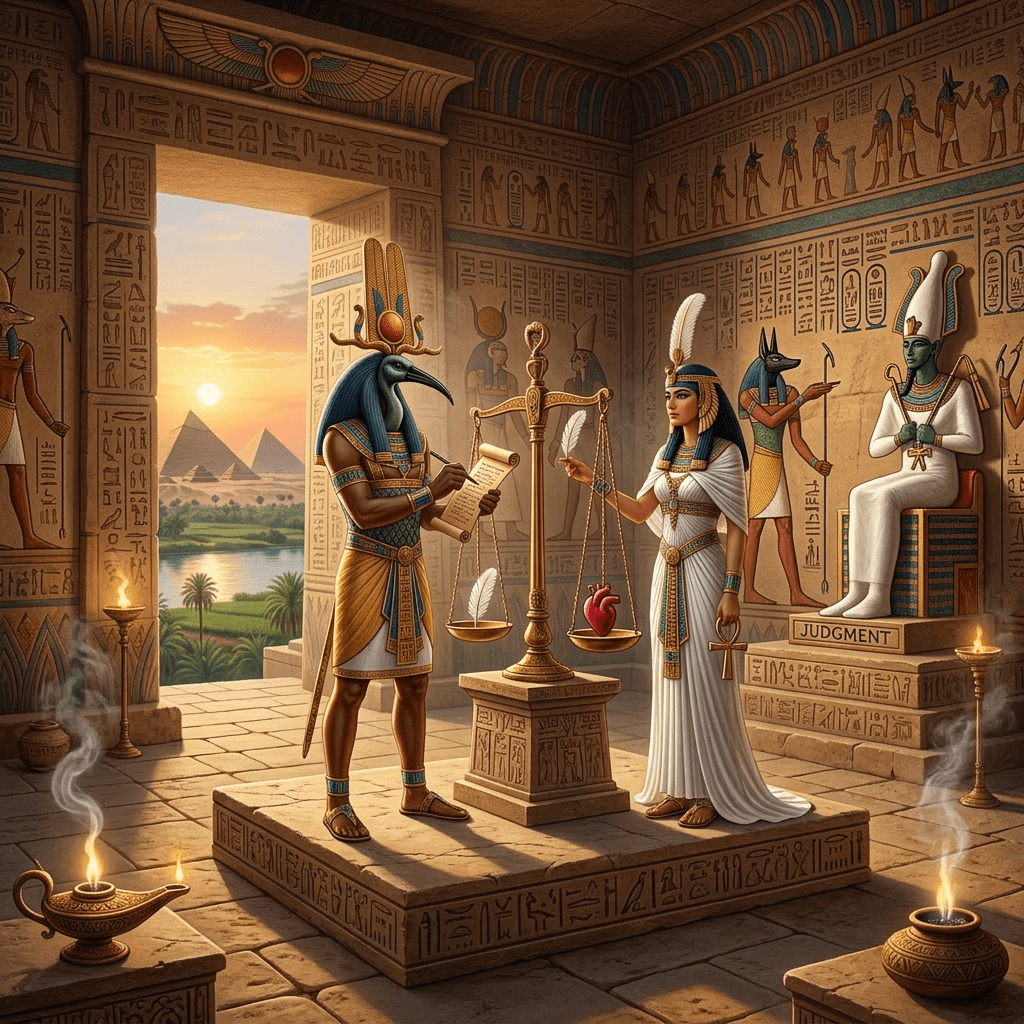
For those drawn to ancient Egyptian wisdom, the profound depths of African spirituality, suppressed historical narratives, Kemetic philosophy, and the laws governing the universe—this journey is for you. By exploring the sacred realms of Thoth, the deity of wisdom and writing, and Ma’at, the personification of truth and cosmic order, we engage with a civilization where truth was the foundational architect of reality and justice was the ultimate cosmic law.
Millennia ago, the sages of Africa posed a question that remains vital to the human experience today: What remains of a civilization once truth is extinguished? This inquiry challenges us to consider the sophisticated spiritual science and moral equilibrium that characterized ancient Kemet, where script served to safeguard the eternal soul and uphold sacred law. In this ancestral framework, the acts of writing and recording were not merely administrative but were divine manifestations known as Medu Neter, or “divine words.” This spiritual technology anchored historical memory, ensuring that ethical accountability remained central to both the temporal world and the hallowed Hall of Judgment.
How does the soul navigate when memory is severed from justice? Within this narrative, we find one of humanity’s earliest visions of interconnected cosmic justice, where the universe itself was believed to harmonize with moral balance. This spiritual practice views healing as the restoration of cosmic wholeness, creating a sacred map of historical memory and wisdom for navigating the complexities of contemporary life. This legacy of spiritual science resonates today through global revivals reclaiming these sacred philosophies as cultural anchors for identity and community. Modern practices, such as Ital Yoga, continue to draw upon this ancient brilliance, using breath and movement to reconnect individuals to their inner power and ancestral wisdom.
How does the soul navigate when memory is severed from justice? In this ancestral framework, the acts of writing and recording were not merely administrative but were divine manifestations known as Medu Neter. This spiritual technology anchored historical memory, ensuring that ethical accountability remained central to both the temporal world and the hallowed Hall of Judgment. By exploring the sacred realms of Thoth and Ma’at, we engage with a civilization where truth was the foundational architect of reality and justice was the ultimate cosmic law. Within this narrative, we find one of humanity’s earliest visions of interconnected cosmic justice, where the universe itself was believed to harmonize with moral balance. This sophisticated spiritual science and moral equilibrium characterized ancient Kemet, where script served to safeguard the eternal soul and uphold sacred law. Through these divine words, the sages of Africa established a system where spiritual healing was viewed as the restoration of cosmic wholeness, creating a sacred map of historical memory and wisdom.

