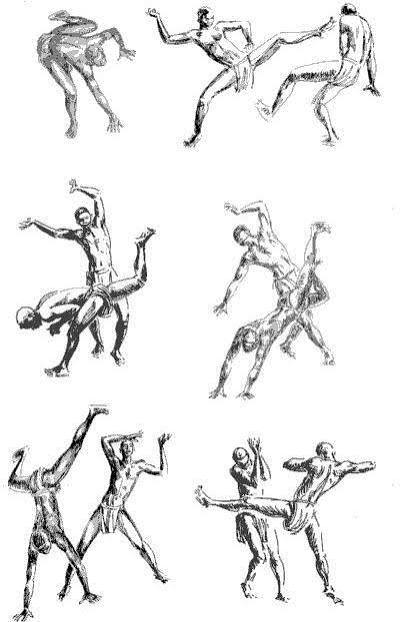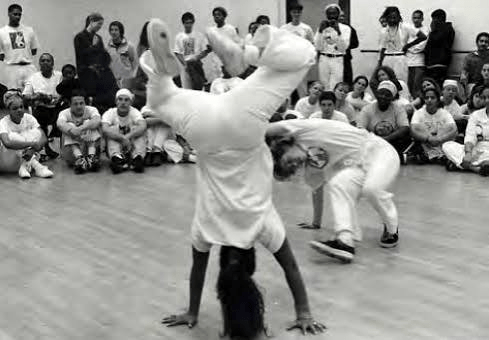
In standard martial arts, combat is a game of linear metrics: the shortest distance, the straightest punch, and the direct collision of force against force. Capoeira Angola completely rejects this linear framework. Born from Central African metaphysics and forged as a tool of survival on colonial Brazilian plantations, this art form replaces straight lines with continuous curves. By moving in circles and spirals, the angoleiro (practitioner) protects their joints, de-escalates high-impact strikes, and cloaks lethal intent in unpredictable geometry. This strategic physicality is deeply rooted in malícia (deception) and mandinga (strategic cunning), which allow a practitioner to manipulate space and timing by masking intent through rhythmic swaying and feigned vulnerability.
This “liberation geometry” prioritizes an alignment with universal forces—gravity, momentum, and rhythm—over the self-destructive friction of linear resistance. By internalizing these spiral dynamics, mirroring the rotational mechanics found from DNA helices to galaxies, the capoeirista ensures that every movement is optimized for balance, reach, and structural integrity. Ultimately, the circularity of the art facilitates a state of “perfect movement,” where the beginning of a defense is structurally indistinguishable from the launch of an offense.
1. Movement Mechanics: Torque and Continuity
Spirals allow a practitioner to generate immense structural force without subjecting their own body to high-impact collision damage. Linear movements create rigid, structural endpoints that shock the skeletal system. Spirals, by contrast, distribute kinetic energy along an ongoing curve. This is exemplified through several core patterns:
- The Ginga Figure-Eight: Capoeira’s fundamental step is a continuous, elliptical figure-eight. Weight shifts dynamically along a loop, ensuring the practitioner never becomes a static target.
- Coiling Torque: Ground movements like the rolê (a low, spinning transition) wind the torso and limbs tight like a spring, storing elastic potential energy within the myofascial web.
- The Centrifugal Axis: In the meia-lua de compasso (half-moon kick), the player plants their hands to form a fixed anchor. The torso becomes a spinning axle, driving the heel outward in a devastating centripetal strike.
- The Tucked Vista: During the aú (cartwheel), practitioners maintain a low, curved posture. This protects the belly and keeps the player’s gaze threaded through their legs, maintaining a spiral line of sight.
2. Strategic Self-Defense: Tactical Geometry
In Capoeira Angola, defensive strategy is an exercise in vector physics, where the essence lies not merely in thwarting an incoming assault but in skillfully manipulating its trajectory. You do not block an incoming attack; instead, you introduce a curve, redirecting the force and momentum of the opponent’s move. This approach transforms the engagement into a dance of techniques, where understanding the physics of motion allows you to create opportunities for counter-attacks. By embracing such fluidity and creativity, practitioners can pivot gracefully, ensuring that each defensive maneuver becomes an integral part of a larger strategic flow, enhancing both protection and offense in the intricate rhythms of capoeira.
- Tangential Stepping: When an opponent launches a linear strike, the defender steps off the centerline along the tangent of the incoming vector, letting the attack shoot past into empty space.
- Harvesting Momentum: Using low sweeps like the rasaste or banda, the capoeirista captures the attacker’s overextended momentum to pull them off balance.
- Three-Dimensional Target Matrix: By constantly spiraling between standing and ground stances, the practitioner removes the expected target area, forcing the attacker to reset their spatial calculations.
3. Spiritual and Historical Geometry: The Ancestral Loop
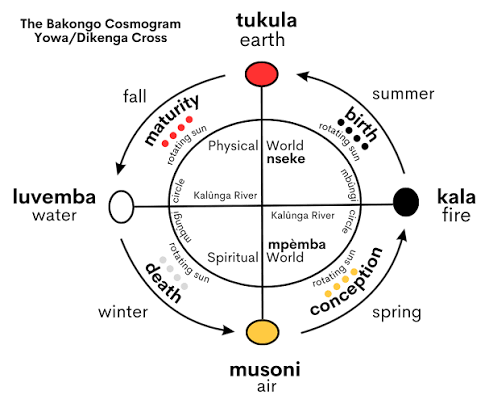
The physical circles of Capoeira Angola mirror the Dikenga dia Kongo (the Kongo Cosmogram), a foundational spiritual symbol of the Bakongo people. This geometry provided both spiritual connection and tactical utility: the circular arrangement creates a space that fosters communal engagement, where participants not only showcase their skills but also embody the essence of harmony and collaboration inherent in the dance. The dynamics within the circle serve as a symbolic representation of the cycles of life and the interconnectedness of all beings, encouraging practitioners to engage deeply with their roots and heritage. Furthermore, the tactical aspect of the circle allows for strategic movements, where players can anticipate and counter their partners’ actions effectively, enhancing the fluidity and rhythm of the game while reinforcing the importance of unity and respect within the Capoeira community.
- The Counter-Clockwise Vortex: The roda moves in a counter-clockwise direction, matching the spiritual cycle of time and cosmic evolution.
- Crossing the Kalunga Line: The horizontal line of the cosmogram represents the boundary dividing the physical world from the ancestral realm. Inverting or dropping to the dirt symbolically draws mandinga (cunning) from the earth.
- The Tactical Disguise: On plantations, practice was disguised. By bending martial strikes into fluid, rhythmic loops, practitioners deceived overseers; what looked like dance was a geometric delivery system for combat.
4. Somatic Restoration: The Closed Loop of Health
Because circular movements distribute load evenly and eliminate high-impact stress, the art functions as a system of somatic therapy focused on functional longevity: by engaging in these rhythmic motions, individuals not only enhance their physical endurance but also promote a deeper sense of body awareness and emotional balance. This approach nurtures the body’s natural ability to heal and adapt, enabling practitioners to minimize the risk of injury while maximizing their performance in daily activities. As such, the therapeutic benefits extend beyond mere physical improvements, paving the way for a holistic integration of mind and body that fosters long-term well-being and resilience.
- Synovial Fluid Stimulation: Rotational patterns force major joints through full ranges of motion, stimulating the distribution of lubricating fluid.
- Fascial Elasticity: Rhythmic coiling and uncoiling rehydrates the connective tissue web, preventing the stiffness common in linear regimens.
- Spinal Decompression: Inversions and ground transitions use the torso’s weight to traction the spinal column, relieving chronic tension.
5. The Philosophy of Mandinga: Liberation Geometry
The circular movements of Capoeira Angola act as a physical shield against predictability, creating an intricate dance of deception and strategy. Mestre Pastinha asserted that mandinga (cunning and street-smarts) has no linear method, defining a system meticulously designed to outsmart and defeat a rigid oppressor. These movements, which include the rolê or negativa (low, coiled crouch), deliberately break the conventional vertical and linear lines that a standard tracker relies on, transforming the practitioner into a fluid and elusive target. Because the movement is circular, its coil intricately disguises the practitioner’s intentions, rendering it difficult to discern whether they will strike, escape, or sweep.
This ambiguity ensures that the beginning of a defense is structurally indistinguishable from the launch of an offense, allowing for a seamless transition between attack and defense. The rhythmic nature of these movements not only enhances physical agility but also cultivates a mental readiness, as practitioners must constantly adapt to the unpredictable dynamics of their opponents, making Capoeira Angola not just a form of martial art, but a profound expression of cultural resilience and ingenuity.
Conclusion: The Weaponized Curve
Ultimately, the circles and spirals of Capoeira Angola dismantle the Western urge to partition reality into linear boxes like “dance vs. fight” or “mind vs. body.” As Mestre Pastinha noted, capoeira is an inclusive, boundless loop—a total way of life that encompasses martial art, sport, culture, music, and philosophy. By mastering the arc, the practitioner transforms a vulnerable position into a lethal trajectory, proving that the most direct path to survival is a continuous curve.
This geometric commitment is not merely aesthetic; it is a “liberation geometry” that prioritizes alignment with universal forces—gravity, momentum, and rhythm—over the self-destructive friction of linear resistance. In Capoeira Angola, working against nature by meeting force with force is viewed as a strategic error that leads to fatigue and predictable failure. Instead, the angoleiro internalizes the spiral, mirroring the rotational dynamics found throughout the cosmos, from the double helix of DNA to the swirling arms of galaxies. This commitment to the curve allows for the “theft” of an opponent’s energy, guide-lining their trajectory along a tangent until their own momentum becomes their downfall.
Furthermore, these circular paths facilitate a state of mandinga and malícia, where the beginning of a defense is structurally indistinguishable from the launch of an offense. By moving in accordance with the Golden Mean and sacred geometry, the practitioner ensures their actions remain an extension of the natural world, achieving a state of unpredictable, non-linear presence. Whether through the swaying pendulum of the ginga or the centrifugal power of the Rabo – de – Arraia, the art remains a moving meditation—a living archive of Afro-Brazilian resilience that transforms trauma into enduring strength.