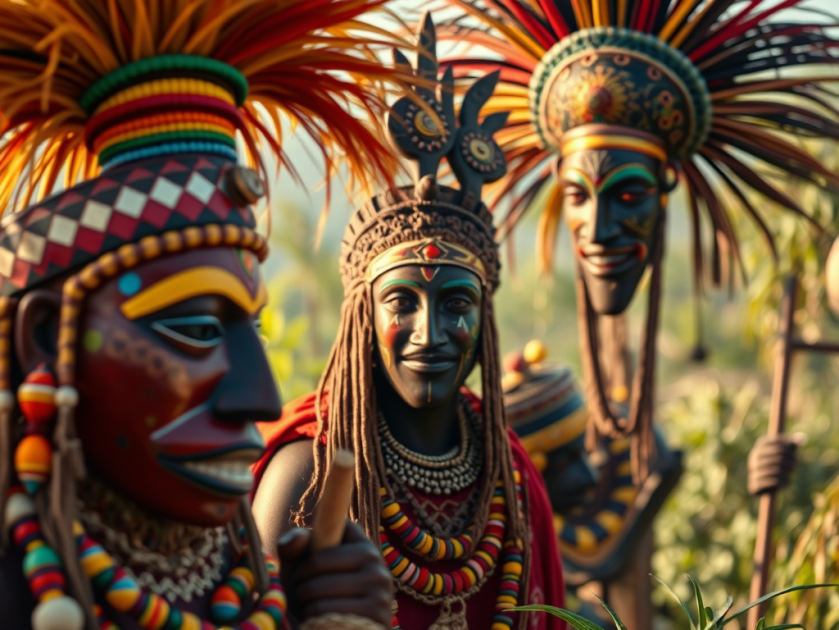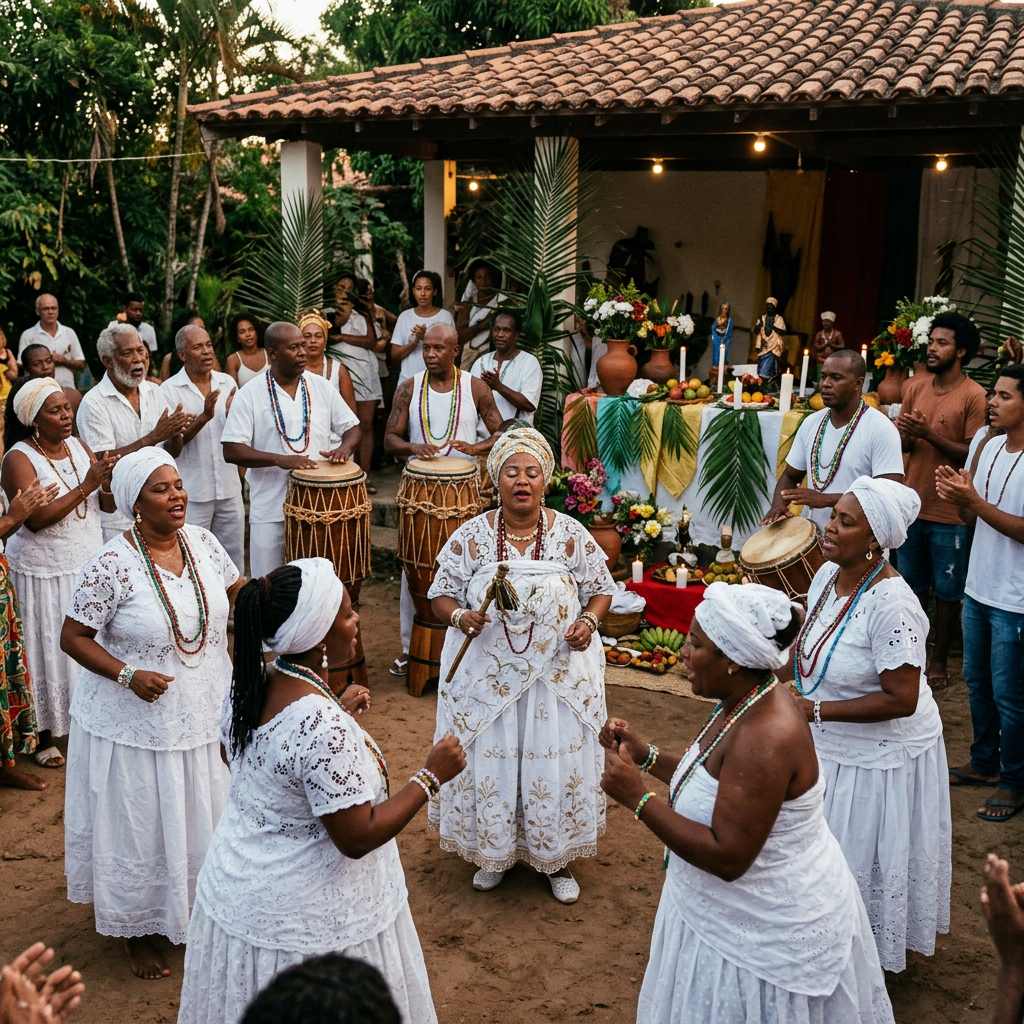
Spiritual practices across Africa and its global Diaspora serve as a profound bridge, connecting the living with their ancestors (Egún) and the divine through intricate cosmologies and mediating deities. Foundational belief systems, such as the Yoruba pantheon of Òrìṣà and Gbe Vodun traditions, are experiencing a significant contemporary resurgence as individuals worldwide seek to rediscover, reclaim, and honor their ancestral roots. These resilient traditions, structurally maintained over centuries through the flexible mechanisms of oral history, sacred rituals, and storytelling, remain vital anchors for collective identity, community belonging, and social continuity.
Foundational Cosmologies and the Resurgence of Òrìṣà and Vodun
The Yoruba Òrìṣà worship system is one of the most widely practiced African traditions globally, demonstrating a remarkable versatility to integrate into contemporary social movements, particularly across the Americas. Originating among the Yoruba people of southwestern Nigeria, these deities are also venerated by neighboring West African populations, including the Edo, the Ewe, and the Fon, who refer to them as voduns. An Òrìṣà represents a complex, multidimensional unity linking people, deified ancestors, and natural forces—such as earth, rivers, and trees. They rule, guide, and control human destiny, acting as crucial intermediaries between humanity and the untamed aspects of nature.
During the transatlantic slave trade, enslaved African captives reestablished these sacred frameworks in the New World, adapting them into highly influential traditions such as Santería (Lukumí) in Cuba, Candomblé in Brazil, and Vodou in Haiti. These adaptations often incorporated outward elements of Catholicism to survive systemic suppression while firmly preserving the core of their original philosophy, theology, and ancestral connection. Devotees cultivate deeply personal relationships with the deities through dedicated practices that include initiation, mediumship, rhythmic drum dances (bembés), and specialized divination, where a babalawo interprets the fall of consecrated palm nuts to reveal divine guidance.
Ancestral Veneration, Healing, and Spiritual Continuity
In the Yoruba cosmology, the relationship with the dead is active and continuous; ancestors are described as having transitioned into Ancestorhood rather than having died, emphasizing their close proximity to the living. The double meaning of the Yoruba word Egún—signifying both “ancestors” and “bones”—underscores this deep, somatic bond between living descendants and their lineage. Ancestors are viewed as a community’s first line of defense, possessing divine power and energy known as Àṣẹ (Aché), which they utilize to protect and guide descendants through their daily lives.
Sacred healers and mediums within these traditions play a critical role in community health by identifying and treating ancestral trauma, which can manifest as modern mental or physical health crises when an ancestor suffered an unsettled or violent death. Through targeted spiritual cleansings (limpiezas), breaking rituals (rompimientos), and festive drumming ceremonies (El Cajón), practitioners actively heal their ancestors’ souls, helping them settle in peace while subsequently restoring balance and well-being to the living descendants.
Botanical Treasures: The Ritual Role of the Kola Nut
Venerated botanical elements are essential to facilitating communion and reinforcing cultural identity within Afro-diasporic practices. Chief among these is the kola nut (known as Ọjị or Obi), which serves as a quintessential emblem of hospitality, divine covenant, and sacred communication across West and Central African societies. Revered as the “king of all fruits,” the kola nut is used to initiate communal councils, validate marriages, seal diplomatic truces, and serve as a standard ritual offering to the spirits and ancestors.
The traditional protocol of breaking the kola nut (Iwa Oji) is governed by strict protocols where the host presents the fruit using two hands to signify goodwill and respect. An elder or title holder then offers prayers and incantations to invoke blessings of long life, prosperity, and protection. Once broken, the number of internal lobes (cotyledons) holds distinct divinatory significance: three lobes signify individual achievement; four lobes represent social justice, peace, and balance; five lobes indicate fertility and communal increase; while six or more lobes signify outstanding prosperity and a direct communion with the ancestral realm. The broken pieces are shared among participants to establish an enduring bond of oneness and solidarity.
Evolutionary Contexts: Hoodoo and the Kongo Cosmogram
In North America, historical displacement necessitated alternative adaptations, resulting in autonomous spiritual systems like Hoodoo. Developed by enslaved African Americans in the Southern United States, Hoodoo synthesized traditional West and Central African spiritualities, indigenous North American botanical knowledge, and European grimoires into a practical system of healing, justice, and protection. To safeguard these traditions from suppression, practitioners utilized the “invisible institution,” blending and concealing their rituals inside traditional Christian church settings and baptismal services, such as praying to traditional Central African Simbi water spirits during Christian baptisms.
A foundational element retained within Hoodoo is the Kongo cosmogram (dikenga or Yowa cross) originating from the Bakongo people of Central Africa. Represented as a simple cross (+), the cosmogram symbolizes the trajectory of the sun and cosmic energies, where the horizontal axis represents the watery divide between the physical world of the living and the spiritual realm of the dead. This cosmology manifests physically in Hoodoo through the sacred significance of physical crossroads—spaces where specialized rituals are conducted to communicate directly with ancestral spirits, perform sacred counterclockwise circle dances, or leave ritual remains to remove negative influences.
Resilience and Counter-Narratives
The endurance and modern revitalization of these practices highlight the profound resilience of African traditions in the face of centuries of colonial governance, slavery, and forced assimilation. The systematic efforts to police language, control movements, and eliminate indigenous religious expressions aimed to strip displaced Africans of their personal and collective power. By maintaining these embodied ritual traditions, current generations actively establish direct links to an African past, constructing powerful historical counter-narratives that bypass historical trauma and foster a deep, shared sense of spiritual ethnicity and communal agency.
Deep within Africa’s sacred forests, ancient traditions remain alive, sustained across generations through customary values and local knowledge. These protected woodlands, common throughout diverse countries like Senegal, Ivory Coast, Benin, Liberia, Cameroon, and Ethiopia, serve as vital tools for biodiversity conservation and climate resilience. Guided by traditional authorities and local custodians, the preservation of these forests relies on strict community standards, prohibitions, and social taboos that regulate resource governance and limit access to prevent deforestation and resource depletion.
For generations, local communities have entered these protected woodlands to seek healing, spiritual guidance, and a connection with their ancestors. These forests are more than natural wonders—they are living temples where plants, rituals, and ancestral beliefs come together. Serving as active places of worship, they accommodate forest spirits, deities, and nature spirits. Devotees perform religio-cultural rituals, all-night ceremonies, prayers, and offerings to consult the spiritual realm, seek advice, or ensure the benevolence of ancestral spirits, such as the animal-form mhondoro in Zimbabwe, who reside within the undisturbed landscape.
These ecosystems are categorized by their specific cultural functions, including ancestral forests used for community rituals, hunting reserves, and specialized “forests of the dead” for those who suffered violent or unusual fates. Furthermore, the mystical qualities of specific botanical resources play a crucial role in traditional healing practices. The forests serve as natural medicine gardens and essential repositories of ethno-botanical knowledge. Traditional healers and practitioners gather wild fruits, herbs, and medicinal plants—such as moringa, antibiotic basil, ginger, and papaya leaves—to treat physical illnesses, manage ancestral trauma, and restore overall well-being to the living descendants.
Discover the mystery, cultural significance, and healing traditions of Africa’s sacred forests. These sacred natural sites represent some of the oldest conservation areas in the world, acting as crucial refugia, genetic reservoirs, and in-situ seed-banks that protect vulnerable, threatened, and critically endangered flora and fauna. By functioning as structural links between the physical world and the ancestral past, the continued protection of these ancient groves allows modern generations to honor their cultural heritage, promote national identity, and apply historical counter-narratives to combat contemporary climate change and biodiversity degradation across the African continent.