Four men in traditional attire play chess under a large tree in an African village courtyard.
Welcome to MALICIA AS A GAME OF POWER, a blog series that explores the strategies of human interactions, including communication, conflict resolution, negotiation, and manipulation. It discusses leadership, personal branding, and online reputation management, providing practical strategies for influence and relationship-building. Through analysis and examples, the series aims to help readers navigate interpersonal relationships successfully.
Today, We’re gonna explore Law 4 from the book, “The Laws of Human Nature” by Robert Greene. You can purchase a copy from AMAZON.COM by clicking HERE.
The Laws of Human Nature Law 4: The Law of Compulsive Behavior
The Law of Compulsive Behavior, as presented by Robert Greene in The Laws of Human Nature, is the fourth of 18 laws dedicated to understanding the depths of psychological and social behavior. This specific law focuses on determining the true strength of people’s character.
Key Concepts
Character Assessment: The law suggests that an individual’s character is not defined by their words or the “mask” they wear in social settings, but by their recurring patterns of behavior.
Compulsion: Humans often act under the influence of deeply ingrained, unconscious drives and primal forces. These compulsions often lead to repetitive behaviors that reveal an individual’s underlying nature.
Strength vs. Weakness: By observing these patterns, one can gauge whether a person possesses a “strong” character—one that is adaptable and self-aware—or a “weak” character prone to destructive repetitions.
Strategic Context
Understanding this law provides a significant advantage in social and professional environments. Similar to the Law of Irrationality (Law 1), which highlights the dominance of the emotional brain over logical deliberation, Law 4 emphasizes that true insight comes from identifying the systematic, predictable patterns that govern how others act when under pressure or when their guard is down.
The law of compulsive behavior, through the eyes of an Angoleiro
A man sits thoughtfully on a wooden bench with rope tied to his arm in a rustic room during martial arts training
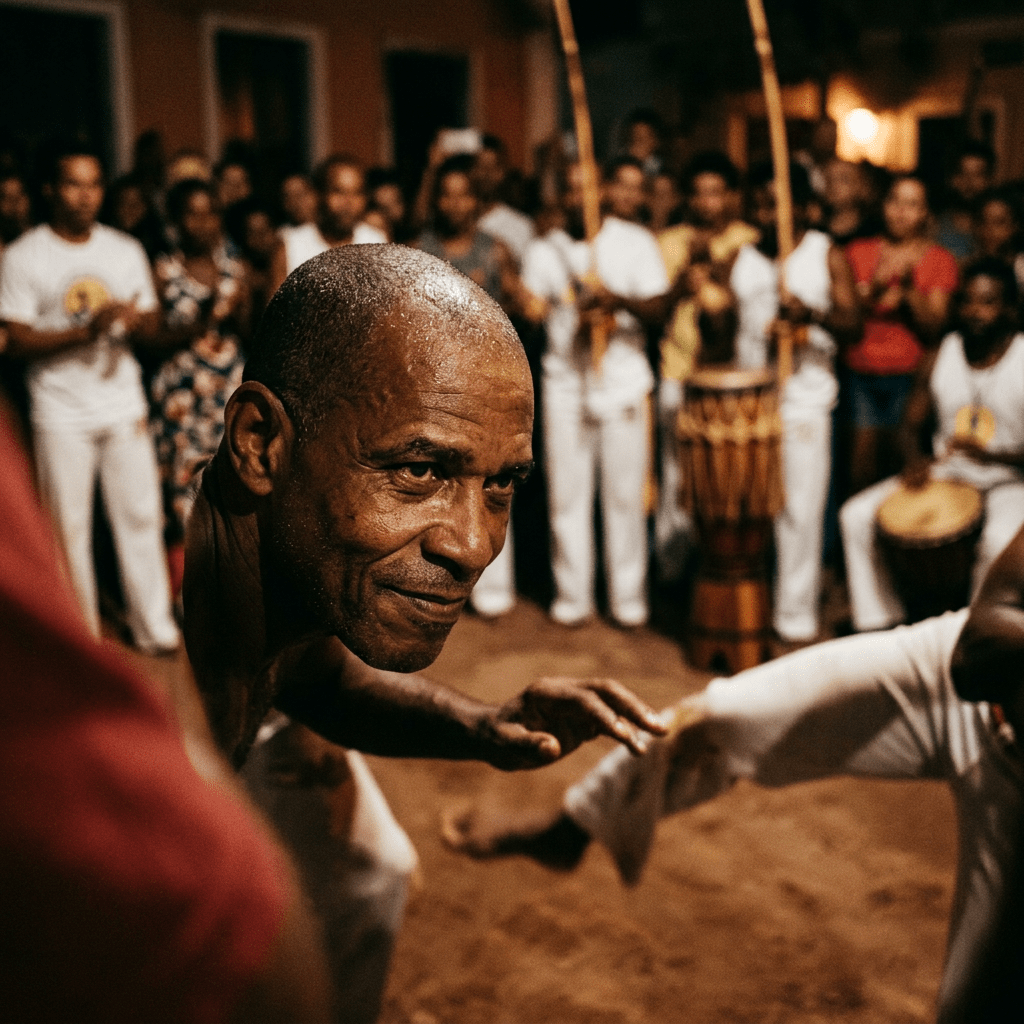
To an Angoleiro, the Law of Compulsive Behavior manifests within the roda as the predictable “vices” or habits of an opponent. Just as Robert Greene posits that character is revealed through recurring patterns rather than social masks, the Angoleiro looks past the flamboyant movements to find the underlying compulsions that dictate a player’s rhythm, their preferred strikes, and their habitual reactions to pressure. By carefully observing these subtle yet significant patterns, the practitioner can not only identify an opponent’s responses but also gain insight into their strategic mindset during the game.
This understanding allows for a deeper psychological engagement in the roda, where finesse and intuition play crucial roles. Recognizing the repetitive behaviors, the Angoleiro can gauge whether an opponent possesses the “strong” character of adaptability—able to navigate the unpredictable nature of the game with creative and fluid responses—or a “weak” character tethered to destructive, predictable repetitions. Such discernment elevates the level of engagement, transforming each encounter into a nuanced dance of strategy and instinct that testifies to the rich depth of the art form.
Welcome to HIDDEN SPIRITUALITY from Spirit Science, a platform where we examine how universal spiritual truths and ancient archetypes—including consciousness, cosmic cycles, and the soul’s arduous journey—permeate modern media. By analyzing films, games, and literature, we serve as a vital bridge connecting the profound, timeless wisdom of spiritual traditions with the sprawling landscape of contemporary popular culture. Our objective is to move beyond the surface level of entertainment, turning the media we engage with daily into a dynamic vehicle for profound self-discovery, personal growth, and a deeper cosmic understanding.
The Unseen Threads: Decoding Spirituality in Modern Media
We believe timeless spiritual principles shape contemporary narratives, resonating with our collective subconscious and mirroring our internal quests for meaning in the 21st century. We operate on the core assertion that ancient, universal truths and enduring human archetypes are not relics of the past but are, in fact, active, foundational blueprints shaping modern media. By analyzing the mystical symbolism and philosophical underpinnings embedded within these stories, we seek to understand their enduring and universal appeal, recognizing them as profound mirrors for the inner journey.
Dedicated to fostering a conscious global community, HIDDEN SPIRITUALITY empowers readers to find transformative potential in their entertainment. We build a vital bridge between passive consumption and active spiritual application, using modern storytelling to catalyze personal growth, self-realization, and a deeper cosmic understanding. Our mission is to move beyond the surface level of entertainment, turning the media we engage with daily into a dynamic vehicle for profound self-discovery and personal awakening.
In Today’s Deep Dive…
Did you know that the director of ‘They Live’ actually described it as a documentary? That’s right, this cult classic sci-fi thriller may not be as fictional as you think. In fact, it could be a chilling exposé of a hidden truth about our society. Join us as we dive deep into the world of ‘They Live’ and explore the shocking implications of its supposed documentary status.
We explore how timeless spiritual principles and ancient archetypes—such as consciousness and cosmic cycles—permeate modern media, mirroring our internal quests for meaning and understanding. By decoding these unseen threads in modern storytelling, we build a vital bridge between passive consumption and active spiritual application, using cinema to catalyze personal growth and transformation. This journey through the lens of film allows audiences to connect with profound themes of love, resilience, and purpose, inviting them to reflect on their own life experiences. As we engage with these narratives, they resonate with our deepest emotions and aspirations, encouraging us to seek out wisdom and clarity in our everyday lives. Ultimately, this exploration not only enriches our appreciation of art but also empowers us to embark on our unique paths of self-discovery and enlightenment.
What does John Carpenter’s vision tell us about the hidden agendas of those in power? And how might it change the way we see the world around us? Watch now to find out!
Connect and Engage with the Global Spirit Science Community
Our mission at Spirit Science is to foster a conscious global collective where seekers can explore universal spiritual truths and ancient archetypes. Join our growing network across multiple platforms to participate in the conversation, share your insights, and access exclusive content designed to catalyze personal growth and a deeper cosmic understanding.
Facebook ~ /spiritscienceofficial — Follow us for daily updates, community discussions, and live event announcements.
Instagram ~ /spiritscienceofficial — Discover visual inspirations, behind-the-scenes content, and bite-sized wisdom from our latest deep dives.
Twitter ~ /spiritsciences — Stay updated with real-time news, quick thoughts on modern media, and links to our newest articles.
Discord ~ Join our Discord Community — Enter our dedicated space for real-time interaction and deeper communal exploration.Website ~ https://spiritsciencecentral.com — Visit our central hub for comprehensive articles, the Hidden Spirituality series, and our full archive of transformative resources.
In contemporary digital and urban slang, the phrase “The Epidemic of Fake YNs” refers to a social trend where individuals adopt the aesthetic and language of the “YN” (Young N***a) lifestyle without actually being involved in the street culture it originates from. This phenomenon is often characterized by the performative use of specific vernacular, fashion choices, and behavioral mannerisms on social media platforms to project an image of street credibility or toughness that does not align with the individual’s actual background or daily reality.
The rise of this trend is closely linked to the algorithmic nature of short-form video platforms, where curated personas can quickly gain traction. By mimicking the “YN” archetype—often associated with youth-led urban movements, specific regional rap scenes, and a distinct sartorial style—these individuals seek to capitalize on the cultural capital of the streets. This appropriation often includes the adoption of hand signs, specific slang terms, and a “crashout” persona, which implies a reckless or high-stakes lifestyle that the individual does not actually lead. Furthermore, these digital platforms create an incentive structure that rewards hyper-masculine performances and high-engagement content, often blurring the line between genuine cultural expression and strategic personal branding. As a result, the “Fake YN” phenomenon serves as a case study in how social media can facilitate the rapid adoption, commodification, and eventual dilution of organic social movements for the purpose of global entertainment consumption.
Critics and members of the communities from which this culture originates argue that this “epidemic” trivializes the real-world struggles and systemic issues inherent in the genuine “YN” experience. For those living the reality, the “YN” archetype is often born out of necessity or navigation of specific socioeconomic environments, rather than a chosen aesthetic for digital consumption. By reducing these lived experiences to a collection of trends, “Fake YNs” essentially strip the culture of its historical and social context, ignoring the gravity of the “crashout” lifestyle they attempt to emulate.
The disparity between the performative toughness displayed online and the lack of authentic lived experience often leads to accusations of “clout chasing” or being a “studio gangster”. This friction highlights a significant disconnect: while the authentic community faces the actual consequences of street-level involvement, performers enjoy the social capital without the associated risks. This dynamic frequently results in intense gatekeeping within urban subcultures as a means of protecting the integrity of their shared identity from outside commodification.
“That moment when Eric labels Terrence as delusional, prompting Terrence to break into song as a defense mechanism against his reality, is a highlight that never fails have me laughing my ass off!”
At first, I considered titling this piece, “Do you believe this sh*t?” However, I decided against such a provocative approach toward Terrence Howard. Instead, I am presenting the content here to allow my audience to independently evaluate the validity of his assertions.
My objective is for anyone viewing this video to engage in a process of observation and analysis. While I do not possess the mathematical background required to parse the technical details of his theories, I am certain there are experts within this community capable of validating or debunking his findings.
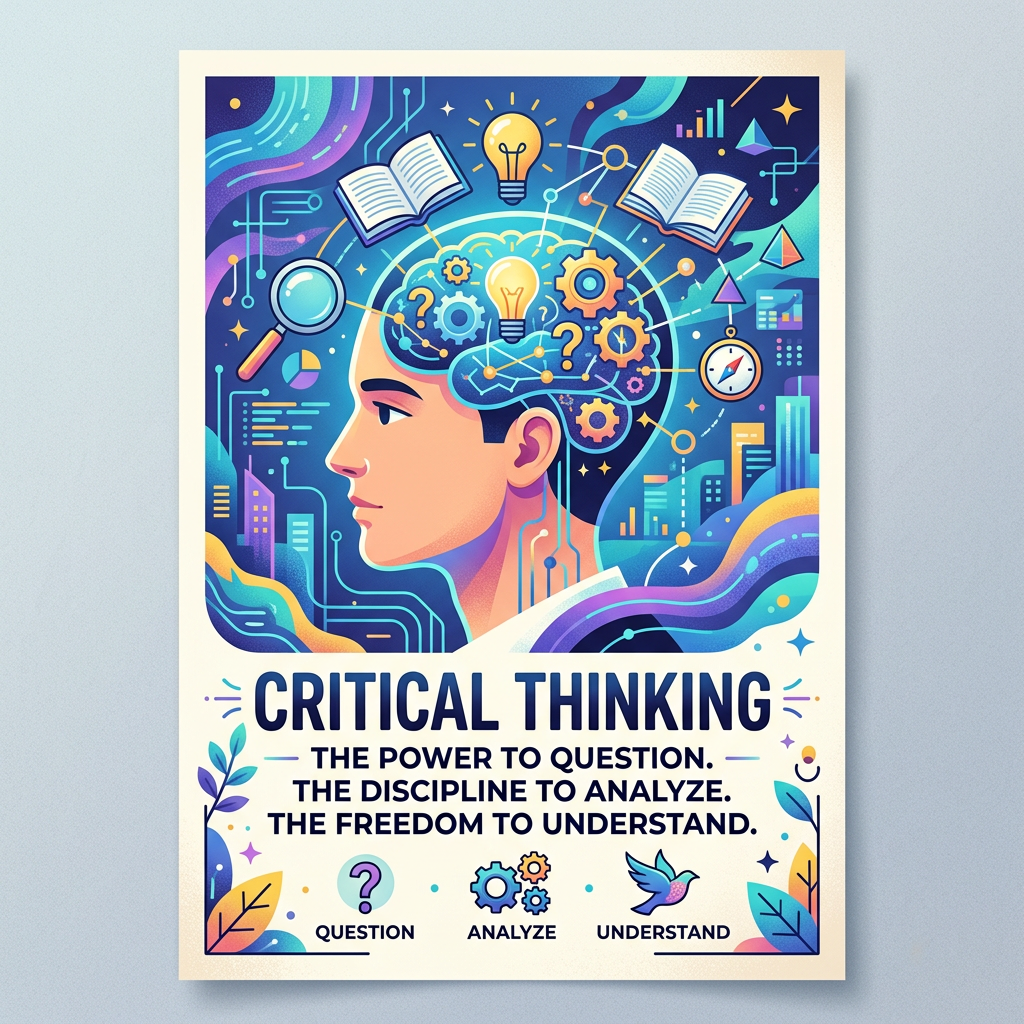
The dialogue surrounding these mathematical claims has evolved into a significant cultural spectacle. Beyond the humor of the parody video with Eric and Terrence, the situation serves as a compelling case study in critical thinking and the way we process authoritative claims in a digital age.
While the intricacies of his mathematical assertions are beyond my personal expertise, the public discourse surrounding them has become a fascinating spectacle. There is a particular moment where Eric refers to Terrence as delusional, leading to a scene where Terrence begins singing to avoid his reality—a sequence that has proven to be quite humorous for many viewers.
Ultimately, the veracity of his findings is something I prefer to leave to the audience and those with the technical background to analyze it properly. My focus remains on the broader principle of critical thinking and how we process information in an age of rumors and authoritative claims.
For me, it’s all about that fake buddhist Quote:
“Do not believe in anything simply because you have heard it. Do not believe in anything simply because it is spoken and rumored by many. Do not believe in anything simply because it is found written in your religious books. Do not believe in anything merely on the authority of your teachers and elders. Do not believe in traditions because they have been handed down for many generations. But after observation and analysis, when you find that anything agrees with reason and is conducive to the good and benefit of one and all, then accept it and live up to it.”
Think critically my friends.
We invite you to support BE INSPIRED, which serves as an open-minded platform for individuals dedicated to the pursuit of wisdom and deeper knowledge. To stay updated with their latest educational content and insights, you can subscribe to their official channel at https://www.youtube.com/@BeInspiredChannel.
►►► We also encourage you to check out Terrence Howard’s Book, which is currently available for free to the public through the following link:
The landscape of modern hip-hop is a complex ecosystem, one where the pursuit of authenticity clashes daily with the imperative of performance and monetization. This essential tension, surprisingly, was articulated and dissected years ago through the lens of Aaron McGruder’s groundbreaking animated series, The Boondocks.
Using The Boondocks as an incisive analytical framework, this video documentary undertakes a deep, critical breakdown of the diverse ways in which identity—particularly Black identity—is constructed, performed, grossly misunderstood, and ultimately co-opted and reshaped within the confines of the modern rap industrial complex.
The documentary traverses a spectrum of contemporary artists, categorizing their relationship with the culture and the industry:
The Authenticists (The Riley Freemans): These are the artists who emerge from a genuine cultural context, using rap not merely as an art form but as an essential gateway and a raw, unfiltered expression of their lived experience. For them, the performance is an organic extension of their identity.
The Imitators (The Wuncler/Stinkmeaner Archetypes): This group comprises those who have meticulously studied the aesthetics, jargon, and performance markers of rap culture, often without possessing the foundational understanding or lived experience that birthed it. They become proficient at imitation, mistaking costume for culture, and leverage this superficial performance for commercial gain. Their success highlights a flaw in the system that rewards replication over genuine creation.
The Refusers (The Huey Freemans): Representing a small but powerful contingent, these artists actively refuse the demands of the performance machine. They resist the pressure to package, sanitize, or simplify their identity for mass consumption, often prioritizing artistic integrity and message over marketability and mainstream acceptance. Their stance offers a profound critique of the entire system.
This is more than just a surface-level critique of music; it is a deeper, more sociological examination of authenticity, the necessity of performance in a media-driven world, and the powerful, often exploitative, system that is designed to reward—and extract value from—both the genuine article and the skilled façade.
The modern entertainment and cultural economy has erected a sophisticated machinery around the concept of “identity.” This machine doesn’t just passively reflect culture; it actively shapes, standardizes, and commodifies it. Authenticity is no longer an inherent state of being, but a highly effective marketing asset. The industry requires a constant, high-stakes performance from its artists, blurring the line between personal expression and a meticulously managed brand. This dynamic creates a system where genuine talent must often compromise its integrity to survive, while a manufactured persona, expertly crafted to hit market trends and demographic targets, can achieve equivalent or even greater success. The underlying mechanism is a form of cultural alchemy: turning the raw material of human experience into profitable intellectual property, regardless of its original sincerity.
We live in an age where identity itself is a commodity that can be systematically studied, meticulously replicated, and ruthlessly monetized. Global digital platforms have accelerated this trend, offering unprecedented tools for self-curation and presentation, but simultaneously subjecting every aspect of human life—from personal taste to political opinion—to metrics and market logic. In this hyper-commercialized environment, the critical line separating genuine culture from mere costume—between deep-rooted, complex expression and a superficial, market-ready aesthetic—becomes increasingly blurred. This indistinction precipitates a profound crisis of truth and meaning that Aaron McGruder’s The Boondocks foresaw with startling, prophetic clarity. The animated series, with its incisive satire, recognized that the infrastructure supporting celebrity and cultural production was fundamentally rigged, prioritizing surface-level consumption over substantive artistic merit or cultural truth.
The fundamental query has thus shifted from a moral or existential one to a purely practical and transactional one. The question is no longer “Are you real?” in the sense of possessing inherent integrity, but “Is your performance convincing enough?” This reframing highlights the victory of skilled execution over essential truth. In the spectacle of contemporary life, the reward goes not to the person who is most authentic, but to the one who can most convincingly simulate authenticity for mass consumption, thereby maximizing their value within a system designed for maximum extraction. The real tragedy is the systemic devaluation of unmarketable truth in favor of profitable illusion.
HIDDEN SPIRITUALITY from Spirit Science shows how deep, universal spiritual The Unseen Threads: Decoding Spirituality in Modern Media
At HIDDEN SPIRITUALITY, we operate under the profound conviction that timeless spiritual truths and ancient archetypes are deeply woven into the fabric of modern pop culture—including contemporary films, video games, literature, and comic books. We assert that fundamental perennial principles such as the nature of consciousness, the concept of cosmic cycles, and the transformative journey of the soul are not merely philosophical abstractions but active forces that profoundly shape and permeate contemporary media narratives.
Our core mission is to decode these embedded spiritual and mythological themes, effectively turning passive entertainment consumption into a dynamic vehicle for profound self-discovery and personal awakening. We focus our analysis on universal, perennial concepts found consistently across major world spiritual and wisdom traditions:
The Hero’s Journey (The Monomyth): We explore Joseph Campbell’s foundational monomyth, which serves as a universal map for the soul’s path of transformation, individuation, and ultimate return. Every call to adventure and descent into the unknown mirrors the psychological and spiritual stages of personal growth.
Karma and Causality: We analyze how the universal law of cause and effect—that every action generates a corresponding reaction—is meticulously reflected in narrative arcs, character development, and the moral lessons inherent in storytelling. Characters’ fates are rarely accidental; they are often the inevitable consequence of their choices.
Oneness (Non-Duality): We delve into the ultimate truth of unified consciousness and the interconnectedness of all existence. Many powerful narratives subtly or overtly point toward the dissolution of the ego and the realization that all separation is ultimately an illusion.
Cycles of Death and Rebirth: We examine the constant, inescapable pattern of dissolution, transformation, and renewal that is essential for both cosmic and personal evolution. This theme symbolizes profound personal change, the necessary end of old ways of being, and the emergence of a renewed self.
Building a Conscious Community and Bridge
HIDDEN SPIRITUALITY is dedicated to fostering a conscious and interconnected global community. We empower viewers and readers to recognize the deep spiritual significance and transformative potential latent within their everyday entertainment. Our work strives to build a vital and robust bridge between casual, passive media consumption and the active application of timeless, perennial spiritual truths to navigate life’s complex challenges and foster a more awakened existence.
In Today’s Deep Dive: The Dark Enlightenment of The Joker
Beyond our featured Avatar analysis, today’s installment offers a provocative and unflinching look at the film Joker (2019). This cinematic masterpiece, starring Joaquin Phoenix, is far more than a comic-book origin story; it functions as a raw, visceral, and powerful reflection of the escalating shadows within modern, atomized society. It meticulously highlights the devastating, cascading effects of a hostile environment, profound institutional neglect, and systemic failures on the most vulnerable individuals, ultimately detailing the catastrophic collapse of one man’s quality of life and the rapid deterioration of his mental health.
But what if this cinematic narrative holds an even deeper, more challenging, and arguably more dangerous spiritual or philosophical meaning? We propose that Arthur Fleck’s transformation into The Joker is a grotesque, albeit potent, parable about the nature of enlightenment itself—a spiritual awakening that is twisted into a “dark” or shadow-laden version, a radical self-acceptance found not in light and love, but in chaos and utter rejection of the social contract.
In this featured video, we undertake a deep, psycho-spiritual exploration into the twisted, chaotic world of Arthur Fleck and his final, terrifying emergence as The Joker. Our aim is to uncover the hidden spiritual themes and subterranean philosophical currents that lie beneath the surface of his descent.
Key areas of our analysis include:
The Crippling Effect of Societal Pressure: We examine how unrelenting societal pressure, contempt, and the systematic failure of support structures (represented by the gutting of social services and mental healthcare) crush the vulnerable individual, leading to a profound alienation that is both psychological and existential.
A Controversial Examination of “True Enlightenment”: We delve into the concept of what constitutes “true enlightenment.” Is it possible for a radical break from societal norms—a full embrace of one’s authentic, uninhibited inner self, however destructive—to be seen as a form of self-realization? We explore the Joker’s journey not as a tragedy of failure, but as a disturbing success in achieving a terrifyingly uncompromised state of inner authenticity.
The Shadow Work of Madness: We meticulously examine how this disturbing, yet profoundly layered film offers a unique and unsettling perspective on critical topics like authenticity, self-acceptance, and the cost of integrity in a fractured world. Arthur’s final, manic dance is interpreted as the completion of a destructive form of “shadow work,” where the suppressed, rejected aspects of the self are not integrated in a healthy manner, but violently burst forth to consume the individual and threaten the world around him.
Join us as we undertake a complex analytical journey into the core themes and incendiary messages of the Joker movie. Our goal is to uncover the dark, unvarnished truths about the extreme, often misunderstood, and highly dangerous path to a radical form of self-realization. Discover how this film fiercely challenges our most fundamental, preconceived perceptions of what it means to be whole, sane, or “enlightened.” Ultimately, Joker provides a disquieting new perspective on the journey towards finding some twisted version of inner peace—or perhaps, just inner authenticity—even when that journey demands the ultimate cost: the complete forfeiture of societal acceptance and sanity itself.
The Spirit Science community is a vibrant and expansive collective dedicated to exploring consciousness, spirituality, and personal growth. To join the conversation and immerse yourself in this enlightening network, you can connect with us across various digital platforms.
Stay Connected on Social Media:
Facebook: Join the global discussion and engage with like-minded individuals by visiting our official Facebook page. We regularly share thought-provoking articles, updates on new content, and community-driven insights.
Instagram: Experience the visual and inspirational side of Spirit Science. Our Instagram feed is curated with uplifting visuals, concise spiritual wisdom, and sneak peeks into the creation of our content.
Twitter (X): Follow us for real-time updates, quick philosophical musings, and links to trending topics within the wider spiritual and conscious community.
Official Website: The Spirit Science Central website serves as the primary resource for all our content, including in-depth animated series, articles, courses, and more. It is the central repository for diving deeper into the concepts we explore.
We encourage you to utilize these platforms to connect with the material, participate in discussions, and become an active member of the expanding Spirit Science family.
The Media-Driven Engine of Antagonism: A Post-Barney Miller Cynicism and the Business of Societal Fragmentation
The observation, which firmly established itself as a cultural touchstone by the turn of the 21st century—its popular articulation gaining significant traction around the era of late 20th-century television, perhaps best exemplified by the procedural realism of shows like Barney Miller (circa 1980)—articulates a pervasive, deeply rooted, and now widely accepted cynicism concerning the fundamental motivations and operational mandates of mainstream media. This critique posits that, irrespective of any lofty public service declarations, mission statements, or traditional journalistic creeds, the true, primary, de facto objective of major news and entertainment conglomerates is not the enlightenment of the public, the promotion of civic dialogue, or the preservation of social unity. Instead, its core function is interpreted as the systematic sowing of discord, the calculated manufacture of disagreement, and the active encouragement of antagonism among the populace.
This interpretation views the media’s polarizing effect not as a regrettable, accidental byproduct of competitive or rushed journalism, but rather as a calculated, deliberate, and highly effective business model—a feature, not a bug, of the modern information economy.
The Economics of Outrage: The Business Motivation
The motivation underpinning this strategy is multifaceted, rooted deeply in the cold, hard economics of attention and engagement in a saturated information market. The media landscape has discovered that negative emotion and conflict are, by far, the most reliable currencies.
1. Maximizing Viewership, Engagement, and Profit
Conflict as Engagement: Conflict is inherently more compelling, emotionally potent, and viscerally resonant than consensus, cooperation, or complexity. The human brain is naturally wired to pay immediate and heightened attention to potential threats, danger, and interpersonal friction.
The Heat Generation: Divisive stories, structured confrontations between talking heads, partisan debates, and polarizing reports generate “heat.” This emotional temperature translates directly into measurable, commercial metrics: higher Nielsen ratings for broadcast, more clicks, sustained time-on-page, and increased subscriber retention.
The Emotional Triggers: Fear, anger, outrage, and contempt are potent and addictive emotional triggers. When repeatedly deployed, they ensure high viewer retention, guarantee return visits, and establish a feedback loop where the audience is conditioned to seek out the next source of emotional intensity. The continuous production of “villains” and “crises” thus becomes the engine of content consumption.
2. Fulfilling Specific Political and Financial Agendas
The Ownership Lens: Beyond mere profit derived from advertising, the media landscape is frequently and profoundly influenced by the political, ideological, or financial interests of its corporate owners, major shareholders, institutional sponsors, or affiliated corporate entities.
Steering Public Opinion: By consistently amplifying narratives that strategically benefit a particular political party, ideological faction, or corporate interest—often achieved through the selective demonization or dehumanization of the opposition—the media wields an immense, subtle power to steer public opinion, influence voting behavior, and shape public policy in commercially or politically advantageous directions. Polarization simplifies complex issues into a binary choice, making the audience more susceptible to guided narratives.
The stark, cynical implication of this entire framework is that the ultimate, unstated operational directive underpinning modern media—the secret motto whispered in the executive suites—is, in essence, the command: “Hate everyone else!” This is not a formal HR memo, but a systemic function of the content production machine.
Techniques for Engineered Antagonism
This corrosive directive is not issued explicitly but is achieved through a set of sophisticated, systematic content production techniques that optimize for division.
A. Selective Reporting and Deliberate Framing
The Focus on Extremes: Media organizations choose to extensively cover stories that highlight the most extreme, uncompromising, or outrageous views on a spectrum, while systematically downplaying or entirely ignoring instances of cooperation, common ground, compromise, or moderate, nuanced perspectives.
The Linguistic Frame: The specific frame used to present a story is critical. Terms like “battle,” “crisis,” “war,” “showdown,” or “clash” are deployed instantly to elevate emotional stakes and encourage the audience to adopt a partisan, adversarial alignment, turning civic discussion into a zero-sum contest.
B. Sensationalism, Hyperbole, and Loss of Context
The Disproportionate Emphasis: Journalism is replaced by sensationalism, applying a disproportionate emotional and airtime emphasis to shocking, violent, or emotionally charged events. This is often executed at the expense of necessary historical context, quantitative data, or crucial nuance.
The Simplistic Morality Play: This process transforms complex, multi-faceted societal issues—which require patience and study—into simplistic morality plays featuring clear, unambiguous villains and victims. This emotional shortcut bypasses intellectual engagement in favor of righteous outrage.
C. Amplification of Divisive Narratives and False Balance
Rewarding the Fringe: Disproportionate airtime and platform space are consistently granted to the most extreme, inflammatory, or controversial voices on any given issue. This creates a destructive phenomenon of “false equivalence” or “false balance,” where fringe ideas are presented as if they represent a significant, representative portion of the general population.
Solidifying Polarization: This strategic amplification actively solidifies, rewards, and legitimizes the most uncompromising positions, making constructive, consensus-seeking dialogue—the lifeblood of a functioning democracy—increasingly impossible and politically unprofitable.
The Systematic Omission of Context
Crucially, the complex and ongoing process of manufacturing polarization involves a strategic and systematic omission of vital contextual and unifying information.
Minimizing Commonality: Media coverage frequently minimizes or entirely neglects to report on factors that might unify various segments of society, the common ground shared among differing groups, or the necessary structural complexity required to fully understand deep-seated issues.
The Sanitized Reality: By sanitizing content of these unifying, contextual, and moderating elements, the media presents a fragmented, conflict-heavy reality that is, in effect, a curated distortion. The reality presented is one where antagonism is the default state of human interaction.
The net outcome of this constant, high-intensity focus on disagreement is the continuous heightening of an environment marked by deep-seated distrust, mutual suspicion, and outright hostility among various social, political, or economic factions. This engineered state of perpetual, low-grade warfare in the public square serves a clear commercial purpose: capturing and sustaining audience attention. Conflict, drama, moral outrage, and a sense of existential threat have proven to be exceptionally potent and durable drivers of engagement in the 24/7 digital media environment.
Ultimately, the cynical observation suggests that the media consciously functions as an engine of division, recognizing that an audience locked in mutual suspicion and conflict is a highly engaged, extremely profitable, and ultimately, a more pliable audience. The resulting, profound societal fragmentation and the erosion of civic trust are thus not an unfortunate externality of objective reporting, but a predictable, deliberate, and commercially essential tool for achieving both economic and ideological ends.
The drive to maximize attention and ensure the perpetual consumption of their content—whether through clicks, ratings, or subscriptions—becomes the paramount commercial objective, pursued with seemingly little regard for the profound and escalating cost this strategy exacts on the structural integrity and cohesion of society itself. This view concludes that the media’s economic model incentivizes the propagation of division at the expense of a functional, unified public sphere.
Capoeira Angola: A Comprehensive Digital Archive of a Living Tradition
Online video documentation has emerged as an indispensable digital archive, meticulously recording the profound cultural significance, deep historical roots, and continuous evolution of Capoeira Angola. These visual and auditory records are crucial in demonstrating that this Afro-Brazilian art form is far more than a simple sequence of movements; it is a complete, holistic system of self-defense, a vibrant cultural expression, and a rigorous discipline that seamlessly integrates movement, music, rhythm, and sophisticated strategy.
The Interdependent Elements: Technique, Music, and Strategy in the Roda
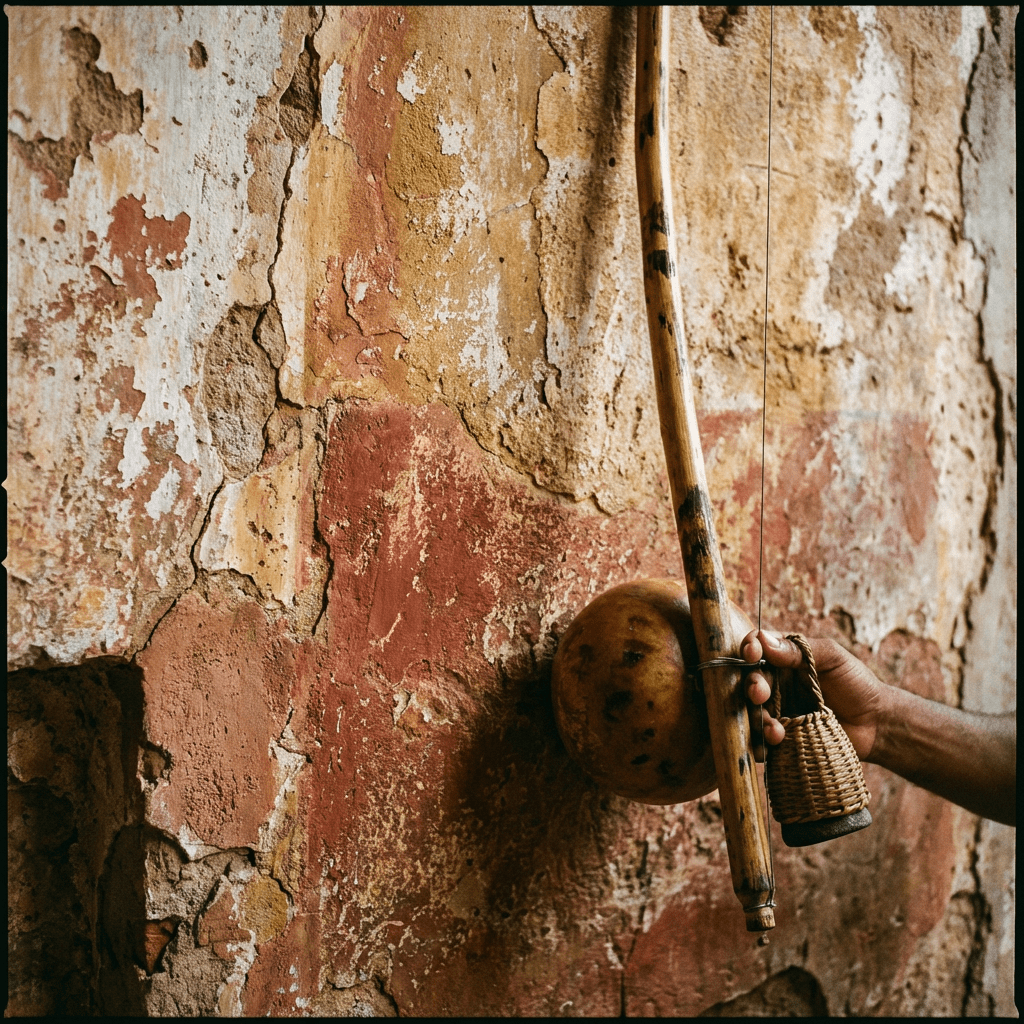
The rich tapestry of Capoeira Angola is vividly showcased in these videos, revealing the art’s mastery through the fluid, powerful execution of foundational movements. Key techniques—such as evasive esquivas (escapes), the sweeping meia-lua (half-moon kick), grounding rasteiras (sweeps), and acrobatic aús (cartwheels)—are consistently performed with exceptional agility and power, all while maintaining the characteristic low posture of the Angola style. Critically, these physical movements are inseparable from the musical and strategic framework of the roda (the circle in which Capoeira is played). The berimbau, the single-stringed musical instrument central to Capoeira, serves as the undeniable conductor, dictating the game’s pace, energy, and overall character through its specific toque (rhythm or melody). Simultaneously, the call-and-response songs (corridos and ladainhas) act as a dynamic oral library, transmitting philosophical wisdom, ethical lessons, and historical narratives passed down through generations. The interaction within the roda is not merely a physical exchange but a deeply strategic, chess-like dialogue. It places a premium on subtle anticipation, perfect timing, deceptive feints, and non-contact strategy, which fundamentally distinguishes Capoeira Angola from other martial arts.
Preserving Community, Pedagogy, and Heritage
Moving beyond the technical aspects, the digital archive powerfully conveys the emotional and spiritual core of Capoeira Angola: its strong communal bonds and fierce cultural pride. The recordings serve as vital ethnographic tools, illustrating the familial relationships, respect, and deep mentorship structure that exists among mestres (masters), professores (teachers), and alunos (students). This is a living pedagogy, where knowledge is transmitted through direct participation and imitation. Moreover, these videos are essential educational resources for preserving African-Brazilian oral history and heritage. They robustly educate viewers on Capoeira’s origins as a clandestine means of physical and cultural resistance for enslaved Africans in Brazil and meticulously track its transformation from a marginalized practice into a globally recognized and respected tradition.
Global Reach, Personal Transformation, and Social Impact
The archive is further enriched by interviews with long-time practitioners who articulate Capoeira’s profound, multifaceted transformative power. They explain that the benefits extend far beyond physical fitness, fostering essential life skills such as discipline, resilience, enhanced confidence, and a deep, sustaining sense of belonging. The art form continuously acts as a powerful vehicle for social unity and holistic personal development, successfully connecting diverse individuals across cultural and geographic divides through a shared, universal language of movement, music, and mutual respect.
The Foundational Movement: Mestre Cobra Mansa and the Ginga
In a powerful demonstration of this living tradition, the archive features the teachings of figures such as Mestre Cobra Mansa, who masterfully instructs on the Ginga in a dedicated workshop.
The GINGA is not simply a warm-up or a transitional step; it is the philosophical and rhythmic heartbeat of Capoeira. This unique, continuous movement allows practitioners to flow seamlessly and unpredictably between offensive maneuvers and defensive stances while meticulously maintaining rhythm and a deep, energetic connection to the music.
What is the Ginga?
TheGINGAis the quintessential, foundational movement in Capoeira, serving as far more than mere footwork. It fundamentally embodies the spirit and the intrinsic essence of this Afro-Brazilian art form, functioning as the continuous rhythmic pulse that drives the entire engagement. More profoundly, the GINGA acts as the primary, non-verbal communication system between the participants within the roda—the circle where Capoeira is played. It initiates and sustains a constant, dynamic dialogue of physical motion, unspoken intention, feints, and strategic positioning.
Through the continuous shifting from side to side—a perpetual, rhythmic motion that never truly rests—the practitioner transforms their body into a versatile vessel of expression. This fluid, back-and-forth movement allows them to continually showcase and hone several critical attributes: their physical agility, their strategic creative interpretation of the game, their awareness of the other player, and their deep cultural grounding in Capoeira’s history and philosophy.
Moreover, the GINGA is the state of preparedness and the fundamental stance from which all other attacks, defenses, dodges, and acrobatics are launched and to which they return. It is the rhythmic ‘reset’ that ensures the player is never static or an easy target. Consequently, achieving a true mastery of the GINGA is the absolute, non-negotiable prerequisite for anyone aspiring to delve deeply into the rich, complex, and layered world of Capoeira Angola. Without this mastery, one cannot truly appreciate its historical depth, its philosophical weight, or its profound aesthetic beauty as a sophisticated form of martial art, dance, and cultural expression.
The Enduring Tapestry of African Spirituality: From the Continent to the Diaspora
This comprehensive blog series will embark on an extensive, multi-part exploration of the profound spiritual landscape of Sub-Saharan Africa, tracing its historical roots, rich diversity, profound theological depth, and its enduring, global impact that spans continents and centuries. Our primary goal is to move beyond superficial accounts and establish a robust, systematic theological and cultural framework through which to rigorously examine a variety of foundational indigenous belief systems.
Core Cosmologies of the Continent
Central to this inquiry will be a deep dive into the specific, intricate traditions that form the bedrock of African religious thought. We will dedicate significant focus to the metaphysical and ethical systems of West Africa, illuminating traditions such as the Akan people’s sophisticated concept of the Supreme Being, Nyame—a distant yet all-powerful creator, whose will is often mediated by a complex hierarchy of lesser deities and spirits.
Furthermore, we will meticulously dissect the elaborate and highly influential cosmology of the Yoruba people, a system whose impact has resonated across the Atlantic world. This section will focus intensely on the dynamic and diverse pantheon of spiritual entities known as the Òrìṣà (or Orishas). These entities are not merely gods in the Western sense, but rather deified ancestors, forces of nature, and spiritual principles that govern all aspects of human life and the natural world, from war and fertility to the intellectual and emotional life of individuals. Key figures like Ogun (of iron and war), Yemọja (mother of all waters), and Ṣàngó (of thunder and justice) will be examined in detail to illustrate the principle of balance (àṣẹ) that underpins all Yoruba spiritual practice.
The Interplay of Global Faiths and Indigenous Practice
The series will dedicate significant attention to detailing the historical arrival, theological evolution, and cultural integration of the Abrahamic faiths—specifically Christianity and Islam—on the African continent. This segment will move beyond the colonial narrative to explore how these global religions were not simply imposed, but were actively received, interpreted, and transformed by African communities.
A core focus will be on the complex, often synergistic, and occasionally syncretic interaction of these global religions with traditional African religious practices. This profound synthesis has given rise to distinct, localized African Christian and Islamic faiths, characterized by their unique liturgical practices, a deep reverence for spiritual intermediaries (such as African-born prophets, saints, or marabouts), and a powerful adaptation of indigenous worldviews, demonstrating a compelling and vibrant indigenization of global theological frameworks. This is evident in the rise of African Initiated Churches (AICs) and unique Sufi brotherhoods, which blend the sacred texts of their global faith with African concepts of healing, prophecy, and community structure.
The Bedrock: Ancestral Veneration
A crucial and unifying theme throughout the entire exploration is the enduring, vital, and indispensable role of ancestral veneration. This practice is far more than a simple memorial rite; it is an active, central religious and social principle that serves as the very bedrock for maintaining collective identity, ensuring cultural continuity, and efficiently transmitting ethical wisdom and communal laws from one generation to the next.
In this worldview, the relationship between the living and the dead is not severed; rather, the ancestors are viewed as an active spiritual parliament—the “living dead”—intimately involved in the affairs, moral guidance, and protection of the living community. Their counsel is sought through ritual, libation, and divination, ensuring that the past remains a dynamic force in shaping the present.Resilience in the Crucible: The African Diaspora
Furthermore, the series will highlight the extraordinary resilience, sheer spiritual fortitude, and complex transformation of these traditions within the global diaspora, a phenomenon forged in the crucible of the transatlantic slave trade. This journey of spiritual survival and adaptation represents one of the most compelling narratives of intangible cultural preservation in human history.
We will cite compelling, detailed examples of African-derived religions in the Americas, illustrating how core African principles were protected, hidden, and blended with elements of Catholicism to ensure their survival. This includes the rich syncretic faiths of Haitian Vodou (Vodoun), where the West African spirits (Lwa) are veiled behind Catholic saints; Cuban Santería (or Regla de Ocha), which meticulously preserves Yoruba cosmology and ritual; and Brazilian Candomblé, a faith that has maintained the integrity of many different ethnic African spiritual systems.
The remarkable preservation of these complex spiritual and cultural systems across centuries and continents is a profound testament to the power of intangible heritage, attributed primarily to three indispensable cultural pillars: the rigorous maintenance of oral tradition (the mnemonic device for history and law), the faithful and precise execution of sacred rituals (including drumming, complex dance movements, and ritual possession), and the artistry of storytelling, which collectively ensured the survival and dynamic evolution of African cosmologies despite the systematic, violent attempts to erase them.-
Credo Mutwa & the Ancient Knowledge They Tried to Silence
In this compelling and necessary installment, we turn our attention away from a singular spiritual system to focus on a singular, monumental figure: Vusamazulu Credo Mutwa. His life was a testament to the resilience, depth, and revolutionary power of ancient wisdom in the face of relentless colonial, religious, and political erasure.The Living Library of Zulu Wisdom
Long before the seismic forces of colonization, the widespread adoption of Christianity, and the imposition of apartheid fundamentally reshaped and often fractured Africa’s spiritual and cultural landscape, there existed powerful voices—the living libraries—who fiercely guarded the authentic, old truths. They preserved the complex philosophical, historical, and cosmic knowledge of the continent.
Vusamazulu Credo Mutwa was not merely one of them; he was perhaps the last great public conduit of this ancestral memory. Born in 1921, Mutwa would rise to become a revered Zulu Sanusi (a high-ranking shaman, traditional healer, and prophet), an prolific author, a self-taught historian, and a passionate, sometimes controversial, guardian of a knowledge system that fundamentally challenges the conventional Western narrative of Africa’s past.
Unpacking a Controversial Legacy
In this deep-dive exploration, we will meticulously unpack the life, profound wisdom, and often controversial teachings of Credo Mutwa. We will trace his journey from his spiritual awakening and initiation into the sacred traditions of his people—often involving painful, mandatory training and intense spiritual communion—to his global recognition as a cultural custodian whose stories often blurred the lines between history, metaphysics, and the extraterrestrial.
His work encompasses a vast and often startling spectrum of forgotten lore, from detailed accounts of ancestral memory and pre-colonial African history, to a startlingly complex cosmology that speaks of star beings (Chitauri), ancient cosmic wars, and the true, multi-ethnic origins of humanity. He was not afraid to speak about secret societies, advanced ancient civilizations, and suppressed knowledge that contradicted the accepted academic timeline.
Mutwa’s narratives are not the simple, often-patronizing fables and myths found in colonial-era ethnographies. They are living, breathing accounts that speak of advanced ancient civilizations, forgotten technologies, and a deep, unified philosophical understanding of the universe held by indigenous African cultures. This story directly challenges—and seeks to overturn—everything the modern world thinks it knows about the true chronology, technological ingenuity, and spiritual depth of Africa’s long-suppressed past.
This is not myth, folklore, or mere legend.
This is living, unfiltered, and fiercely defended ancestral memory.
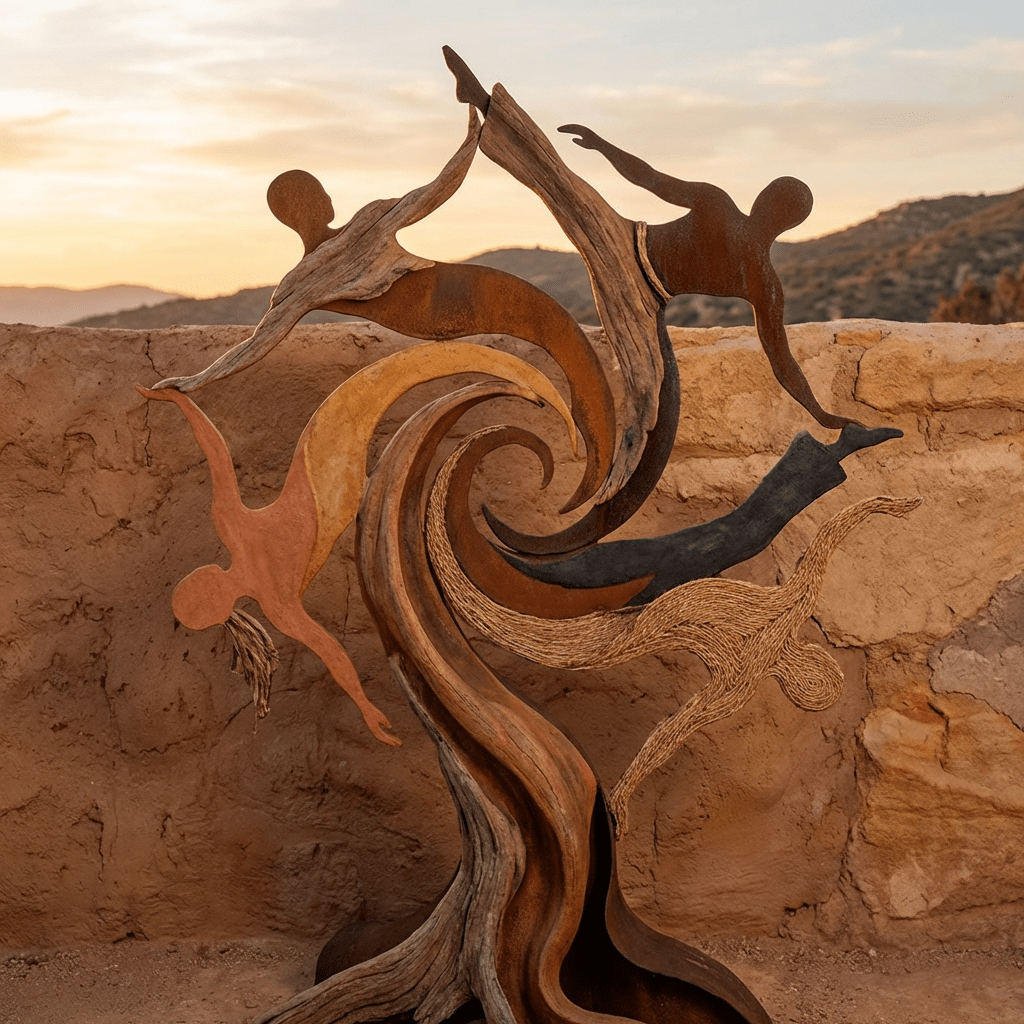
A breathtaking mixed-media sculpture depicts figures flowing together in a graceful, spiraling dance against a desert sunset.
The relentless expansion of capitalist logic has profoundly impacted cultural forms, transforming them into marketable commodities, a process that is particularly visible and damaging when applied to practices with deep spiritual and historical roots, such as Capoeira Angola. This process of cultural commodification, viewed through a critical lens, functions as a powerful mechanism of alienation. It systematically strips a practice like Capoeira Angola of its original, integrated social, spiritual, and historical context, reframing its purpose solely to serve the accumulation of capital. The art is pulled from its organic community setting—the roda (circle), the terreiro (sacred ground), and the oral tradition—and re-packaged for global consumption.
The production, packaging, and consumption of Capoeira in contemporary capitalist society often prioritize spectacle, marketability, and standardization over its deep-rooted philosophical and communal foundations. The authentic experience, which encompasses the history of resistance, the specific rhythm and movements of a tradition passed down from enslaved Africans, and the philosophical dialogue between players, is often sidelined. Instead, commercial studios and international workshops tend to focus on the acrobatic, easily digestible aspects of the art, which translate better to consumer demand for fitness, performance, and easily quantifiable skill acquisition.
This trend not only undermines the integrity of Capoeira but also obscures the rich cultural narratives that inform it, reducing a multifaceted practice to mere entertainment. The vibrant community ethos that traditionally accompanied Capoeira, characterized by collective participation and shared learning, is frequently replaced by a competitive spirit fueled by individual accomplishment. This simplification and emphasis on the superficial inevitably leads to a dilution of its essential elements—the subtle dialogue of the game, the intricate meanings of the songs and instruments, and the critical consciousness embedded within the practice, leaving future generations disconnected from the profound social and historical context that gives Capoeira its true meaning and significance.
Furthermore, this transformation fosters a profound disconnection between the practitioner and the full, authentic experience of the art. The historical trauma, resilience, and spiritual depth that gave birth to Capoeira Angola become mere footnotes in a commercial curriculum. Practitioners, especially those in Western contexts, may relate to the practice primarily as a form of exercise or an exotic hobby, rather than as a living historical document and a mode of cultural resistance. This alienation is twofold: it separates the art from its cultural producers (the Mestres and the communities of origin) by turning their knowledge into a purchasable good, and it separates the new practitioner from the art’s true, transformative power by presenting a sanitized, commodified version devoid of its radical core. The challenge, therefore, lies in preserving the integrity, philosophical weight, and communal structure of Capoeira Angola against the overwhelming pressure to conform to the standardized, profit-driven dictates of the global market.
How can a Capoeira Angola teacher navigate this commodification process in a way that is beneficial for themselves and their students?
This pervasive challenge requires a highly sensitive and delicate balance—it demands acknowledging the practical economic realities of sustaining a professional teaching practice and an escola (school) while simultaneously erecting defenses against the commercial pressures that inherently threaten the art’s cultural integrity, philosophical depth, and spiritual essence. A truly dedicated teacher must move beyond mere passive instruction and consciously employ proactive strategies that transform the traditional classroom space and the roda into a powerful site of cultural resistance, rather than allowing it to become just another compliant node in the global cultural market.
This navigational strategy involves several interconnected and mutually reinforcing principles:
Reclaiming and Prioritizing Educational Autonomy and Integrity: The core of this resistance lies in consciously moving the curriculum’s emphasis away from purely physical, measurable, and easily marketable techniques. The teacher must prioritize the holistic transmission of the art’s complete system: its profound history, its foundational Afro-Brazilian philosophy and worldview, its complex musicality (the berimbau and accompanying instruments), its songs (the quadras and chulas), and the deep ritual structure of the roda. This intentional focus ensures that students internalize Capoeira Angola as a complete, integrated, and living system of decolonial knowledge, historical memory, and resistance—not merely a convenient form of physical exercise, competitive sport, or a shallow consumer-grade entertainment product designed for immediate gratification.
Developing Ethical Pricing and Sustainable Access Models: To actively resist the market’s tendency to restrict cultural access only to those who can afford a high price, the teacher must develop sustainable and socially conscious financial models for the escola. This ethical approach directly counters economic exclusion. Practical solutions might include:
Sliding Scales: Implementing a tiered payment structure based on a student’s economic capability.
Community Outreach Programs: Actively recruiting and subsidizing training for students from economically disadvantaged or historically marginalized communities.
Cooperative or Collective Structures: Shifting the financial burden away from a purely transactional model toward a system where students and community members collectively contribute time, skills, and resources to the escola‘s maintenance and growth, fostering a deeper sense of ownership. This deliberate strategy ensures that financial hardship does not become a barrier to the preservation and transmission of this vital cultural heritage.
Fostering Critical Consciousness and Cultural Stewardship: A crucial element of the pedagogy must involve educating students not just about the history of Capoeira Angola, but about the very modern-day processes of commodification and cultural appropriation that are at play. By discussing market forces, media portrayals, and the historical struggle for cultural autonomy, the teacher empowers students to become highly informed, critically engaged participants and proactive protectors of the tradition. The goal is to move the student’s role from that of a passive consumer of a commercial product to that of an active steward, critical thinker, and responsible guardian of the art’s future.
Prioritizing the Comunidade (Community) over the Market:
Ultimately, navigating commodification requires a foundational philosophical shift in how the training environment is conceptualized and structured. The teacher must rigorously structure the roda and the entire training process to emphatically emphasize principles derived from Afro-Brazilian communal values:
Mutual Respect (Respeito) and Cooperation: Countering the hyper-individualism and self-interest promoted by capitalist competition. The roda must be a space for mutual upliftment, where the development of the collective is paramount.
Historical Memory and Ancestry: Ensuring that every practice is consciously tied to the lineage, the Mestres (Masters) of the past, and the original context of the art’s creation, thus resisting the market’s drive toward constant, decontextualized innovation for novelty’s sake.
Collective Development and Shared Responsibility: Structuring assessment and progression around contributions to the community and the roda, rather than solely on quick, measurable, individual physical results (which cater directly to a consumer mindset seeking fast, tangible returns on investment).
By intentionally embedding these collective, philosophical, and ethical principles into every facet of the escola and the roda, the Capoeira Angola teacher can ensure their practice remains economically sustainable without sacrificing the soul, purpose, and revolutionary integrity of this profound African-Brazilian art form.
How can we properly preserve Capoeira Angola as complete as possible, despite this process [of commodification]?
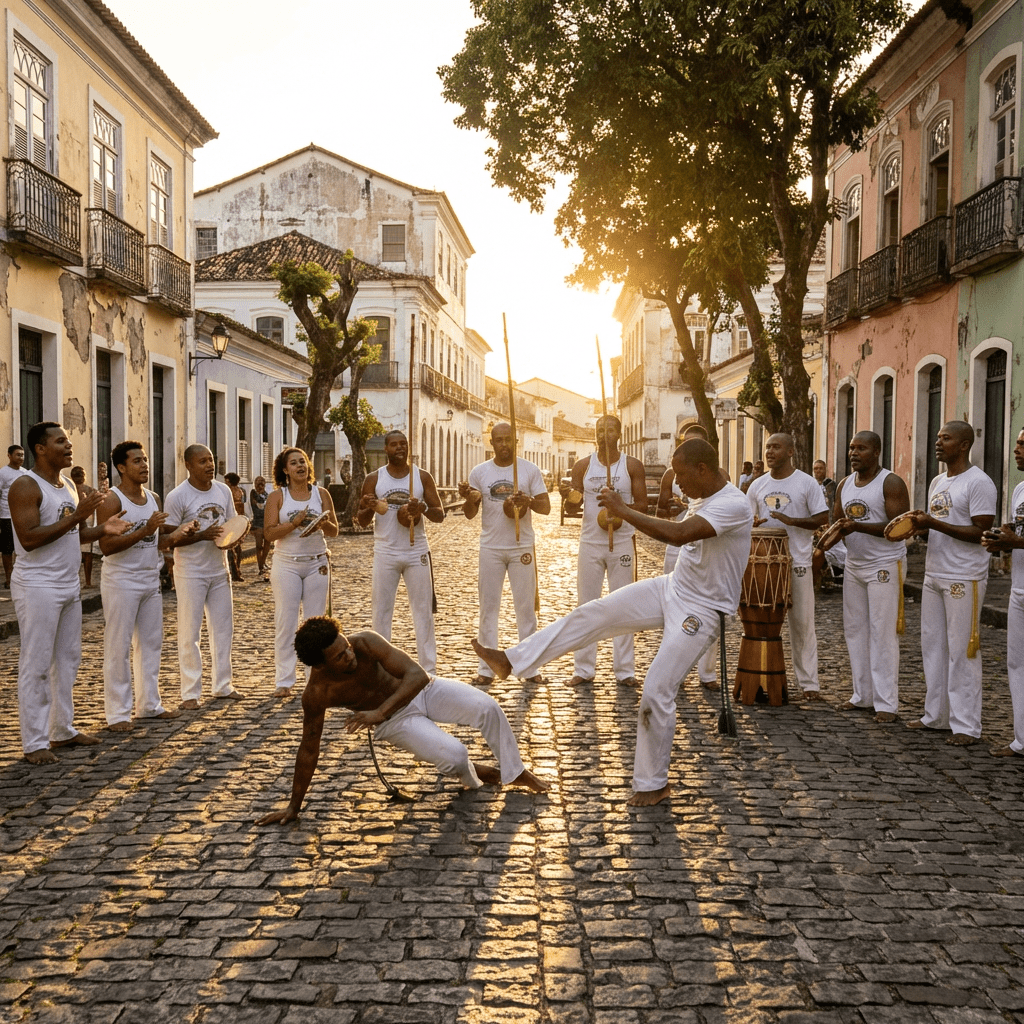
Practitioners showcase the rhythmic beauty of Capoeira during a golden hour performance in a historic Brazilian street.
The essential challenge in the modern global landscape is the preservation of Capoeira Angola’s completeness—its interwoven tapestry of fight, dance, music, history, philosophy, and spirituality. This totality demands active, intentional, and multi-faceted effort to resist the fragmenting and reductive forces of commodification that often prioritize marketable elements over deep cultural integrity.
The preservation of this complex art form hinges on several critical, interconnected actions:
1. Maintaining the Integrity of the Roda as a Sacred and Cultural Space
The roda is the crucible of Capoeira Angola, the essential arena where all its components converge. Preservation requires uncompromising vigilance in upholding its traditional structure, hierarchy, and musical canon.
Upholding Ritual Structure: The roda must be maintained as a ritual space—a circle of shared cultural performance, dialogue, and spiritual connection—and not permitted to devolve into merely a venue for athletic display or competitive spectacle. This includes adhering to the proper seating arrangement, the sequence of instruments, the call-and-response dynamics, and the appropriate reverence shown to the instruments and the space itself.
Prioritizing the Musical Core: The berimbau and the complete bateria (instrumental ensemble) are the heart and voice of the roda. Protecting the traditional rhythms (toques) and the historical song canon is paramount. The music dictates the energy, pace, and philosophical depth of the game (jogo); its authentic preservation prevents the roda from becoming a silent, purely physical exercise.
Honoring Hierarchy and Authority: The traditional hierarchy, centered around the Mestre (Master) and experienced players, is essential for maintaining order, safety, and the transmission of nuanced, often non-verbal knowledge. Respect for this structure safeguards the art from being dictated by transient, commercial interests or inexperienced practitioners.
2. Deepening the Historical, Philosophical, and Cultural Rootedness
Capoeira Angola is fundamentally an embodied form of historical memory and political resistance. Its preservation requires practitioners to continuously emphasize its profound link to the broader history of the Black Diaspora, African spiritual traditions, and anti-colonial resistance movements.
Understanding as Historical Memory: Students must be taught to understand the practice not just as a martial art or dance, but as a living testament to the resilience, ingenuity, and cultural survival of enslaved Africans in Brazil. This ensures the practice is understood as a form of political action and a continuous conversation with ancestral knowledge.
Integrating Philosophy and Malícia: Beyond physical technique, the philosophical principles—such as humility, respect, community (comunidade), and malícia (a complex blend of cunning, wisdom, and street-smarts)—must be central to the curriculum. This depth of character training is what separates Capoeira Angola from a purely physical discipline.
Engagement with Source Culture: Practitioners must be encouraged to engage deeply with Brazilian and African history, language (Portuguese), music, and spiritual practices (where appropriate to the individual and lineage) to understand the full context from which Capoeira Angola emerged.
3. Protecting Oral Tradition, Pedagogy, and Lineage (Linhagem)
Commodification thrives on standardization and mass-produced curricula, which often strip the art of its subtlety and personal touch. The traditional mode of transmission is crucial to resist this simplification.
Prioritizing Direct Transmission: The art form must safeguard the direct, hands-on transmission of knowledge and wisdom from Mestre to student. This intimate relationship fosters an understanding of the jogo that cannot be codified in books or videos. The knowledge is personal, contextual, and often passed on through observation, correction, and shared experience.
Honoring the Linhagem: Recognizing and actively honoring the continuity of the teaching lineage is vital. This establishes a sense of accountability to the past Masters and their unique contributions, preventing the practice from being detached from its historical roots and becoming a generic, self-invented interpretation.
Preserving the Nuanced Oral Culture: The traditional pedagogy relies heavily on oral tradition, metaphor, song, and subtle, non-verbal cues. This nuanced culture, which commercialization often seeks to simplify and formalize into static, easily digestible curricula (e.g., rigid belt systems or standardized lesson plans), must be actively protected.
4. Engaging with the Global Community Critically and Ethically
While Capoeira Angola’s global spread is a testament to its power and universal appeal, this expansion must be managed with stringent ethical considerations and profound respect for the source culture.
Setting Ethical Boundaries: The global community must prioritize ethical stewardship, ensuring that the art is not reduced into a generic “world music” background, a mere “fitness trend,” or a commodity stripped of its cultural context. This includes educating local instructors on the importance of cultural fidelity.
Support for Source Communities: Global schools and practitioners must find ways to ethically support the continued practice and existence of the art in its places of origin (Brazil), ensuring that the economic benefits of its globalization flow back to the traditional communities.
Distinction from Commercialized Forms: Practitioners must be clear about the distinction between Capoeira Angola and more commodified, gymnastic styles of Capoeira, and advocate for the unique importance and preservation of the Angola tradition’s deep cultural substance.
Preservation, in this context, is not a passive plea for stagnation or isolation. It is the active, conscious, and complex practice of the tradition in its complete and demanding form within the dynamic, often turbulent, pressures of the modern world. It is a continuous act of resistance against cultural erasure.
Now, I have a treat for you. The inspiration for this post, “Commodification and Capoeira Angola: Preserving an African Art in a Western World,” didn’t spring from a vacuum. It was sparked by a fascinating and rather intense conversation I had with two people deeply immersed in the world of Capoeira: my Capoeira sister, Liza Bernstein, and my highly respected Capoeira Teacher, Charles Williams.
We were wrestling with the core challenge of how to maintain the spiritual, cultural, and historical integrity of Capoeira Angola—an inherently anti-colonial, African-rooted art form—while navigating the commercial pressures and cultural appropriations so common in a Western context. It’s a conversation about survival versus popularization, tradition versus trend.
In the midst of this dialogue, Liza—always a fantastic source of academic insight—mentioned a seminal dissertation that directly addresses this very subject. The work was authored by Womualy Omowale. This academic work provides a deep dive into the mechanisms of commodification and the preservation strategies employed by practitioners.
To further enrich the discussion and provide a primary source perspective, Liza also shared a compelling video with me, which I am now sharing with you. Fair warning: this video is entirely in Portuguese, the language of Capoeira’s origin and the essential tongue for understanding its deepest cultural nuances. And honestly, if that poses a problem for you, then maybe you should just LEARN THE LANGUAGE!
The challenge of learning Capoeira Angola without relying on immediate translation is not merely an inconvenience to be overcome; it is, fundamentally, a transformative opportunity and a crucial gateway to truly understanding the profound art form you are engaging with. To truly engage with Capoeira is to wholeheartedly embrace its complete ecosystem: its language (primarily Portuguese), its deep and often challenging history, its philosophical underpinnings, and the vibrant, complex culture from which it emerged. Attempting to master the art while clinging to the ‘crutch’ of constant, on-demand translation creates a barrier, preventing a fluid and intuitive integration of the physical, musical, and oral traditions. Therefore, the accompanying video is designed as a foundational component of that deeper, essential education, urging the student to immerse themselves fully and directly into the heart of the art form’s authentic expression.
A traditional Brazilian berimbau is held against a rustic, peeling wall, showcasing the beauty of Capoeira culture.