Capoeira Angola and Esgrima de Machete y Bordón: A comparative analysis

At first glance, Capoeira Angola and Esgrima de Machete y Bordón might appear to be distinctly different martial arts, one focusing on unarmed combat and the other on weaponry. However, a deeper examination reveals a fascinating tapestry of shared principles, philosophies, and movement patterns that bind them together. These striking similarities are not coincidental but rather deeply rooted in their historical origins, cultural contexts, and the ingenious ways in which communities adapted to adversity.

1. Shared Cultural Heritage and Adaptation:

A Response to Oppression

One of the most profound overarching similarities lies in their very genesis. Both art forms emerged from communities that, at various points in history, faced significant oppression or a pressing need for self-defense. This shared crucible of challenging circumstances led to the development of martial traditions that prioritized adaptability, resourcefulness, and often, a degree of subterfuge. Moreover, these traditions were not merely reactive; they fostered a deeper understanding of the human condition and the complexities of conflict. Practitioners learned to channel creativity and innovation into their techniques, resulting in a rich tapestry of styles that reflected not only the necessity for survival but also the cultural heritage of the communities involved.

The evolution of these art forms was further influenced by the exchange of ideas and practices across different regions, which enriched their strategies and philosophies, ensuring their relevance throughout changing historical landscapes. Ultimately, this intertwining of necessity and cultural expression laid the foundation for art forms that continue to resonate deeply with practitioners and enthusiasts alike, inspiring them to engage with more than just the physical aspects of combat, but also the mental and spiritual dimensions inherent in these traditions.

  • Capoeira Angola: The Disguised Fight: Born from the crucible of slavery in Brazil, Capoeira Angola evolved as a “disguised fight.” Enslaved Africans, forbidden from practicing martial arts, cleverly presented their combative training as a dance, often accompanied by music and song. This inherent need for subtlety and a non-confrontational appearance is a defining characteristic of its identity. The fluid, low-to-the-ground movements, the rhythmic ginga, and the interplay of feints and evasions allowed practitioners to develop formidable fighting skills while appearing to engage in cultural expression. This dual nature not only protected its practitioners from their oppressors but also served as a powerful symbol of resistance and the preservation of African cultural heritage.
  • Esgrima de Machete y Bordón: Tools of Liberation: Similarly, Esgrima de Machete y Bordón, frequently associated with various Latin American and Caribbean cultures (with a strong historical presence in places like Colombia and Cuba), arose from environments where individuals required practical self-defense tools using readily available implements. The machete, a common agricultural tool, and the staff (bordón), a simple walking stick, were ingeniously transformed into instruments of defense and martial prowess. While perhaps less overtly “disguised” than Capoeira Angola, its development speaks to an identical spirit of resilience and adaptation in the face of adversity. This art form embodies the resourcefulness of communities who, in the absence of formal weaponry or training, forged a sophisticated martial system from everyday objects. Both arts represent an ingenious utilization of available resources and a profound cultural response to challenging circumstances, demonstrating how communities transform tools of labor into instruments of liberation and self-preservation.

2. Movement Principles and Deception: The Art of Unpredictability

At the very core of both disciplines lies a sophisticated understanding of movement, rhythm, and, crucially, deception. This shared emphasis on unpredictable motion and the ability to mislead an opponent forms a strong connection, turning every encounter into a dynamic chess match where wit and agility prevail over brute force.

  • Ginga (Capoeira Angola): The Foundation of Flow and Deception: The continuous, fluid, swaying movement known as the ginga in Capoeira Angola is far more than a mere dance step. It is a fundamental defensive and offensive posture, a dynamic base from which all other movements emanate. The ginga keeps the practitioner in constant motion, transforming them into a difficult and elusive target. Simultaneously, it creates strategic openings and cleverly disguises attacks, making it challenging for an opponent to anticipate the next move. The essence of the ginga is about maintaining impeccable balance, an internal rhythm, and a state of perpetual readiness, all while projecting an outwardly non-aggressive demeanor. It’s a dance of readiness, a perpetual feint that keeps the “jogo” (game) alive, always probing, always shifting, always searching for an advantage. It’s a physical embodiment of malícia, the cunning and trickery central to Capoeira Angola.
  • Fluid Footwork and Body Mechanics (Esgrima): The Dance of the Blade: While perhaps not as overtly “dance-like” as the ginga, effective Esgrima de Machete y Bordón also hinges on fluid footwork, precise body mechanics, and a deep understanding of distance and timing. Practitioners move in a way that meticulously minimizes their exposure to attack, creates advantageous angles, and allows for rapid, seamless changes in direction. The feint, the artful evasion, and the calculated entry are all crucial components, mirroring the deceptive elements inherent in the ginga. Every step, pivot, and body shift is designed to control the engagement, create opportunities, and misdirect the opponent. The footwork in Esgrima is a sophisticated dialogue with space and momentum, allowing the practitioner to “dance” around threats while simultaneously setting up devastating counter-attacks. The subtle shifts in body weight and the precise placement of feet enable lightning-fast transitions between offense and defense, making the Esgrimista an unpredictable and dangerous opponent.

A crucial commonality between Capoeira Angola and Esgrima de Machete y Bordón lies in their sophisticated approach to defense. Both martial arts diverge significantly from the prevalent Western notion of static, brute-force blocking. Instead, they champion body evasion and deflection as their primary defensive strategies, embodying a philosophy of intelligent movement and energy management.

  • Evasive Defense in Capoeira Angola: In Capoeira Angola, an incoming assault is rarely met with a rigid, immovable block. Such an action would disrupt the flow and rhythm central to the art. Instead, a practitioner might respond with a graceful dodge, a low sweep that shifts the body’s center of gravity, or a rapid, fluid shift in position. The essence of this defense is to move with or around the attack, rather than directly opposing its raw force. This allows the Capoeirista to maintain their own momentum and opens up opportunities for counter-attack, often before the opponent has fully committed to their strike. The defensive maneuver becomes an integral part of an ongoing dialogue of movement, constantly transforming potential threats into strategic advantages. Techniques like esquivas (dodges), rolês (rolls), and negativas (low evasions) exemplify this principle, keeping the body in constant motion and making it an elusive target.
  • Deflection and Displazamiento in Esgrima: Similarly, in Esgrima de Machete y Bordón, a cutting blow from a machete or a thrust from a stick is not typically met with a direct, forceful block that would risk damaging the practitioner’s own weapon or hand. Instead, the defense often involves a subtle angling of the blade or staff, designed to deflect the incoming force rather than absorb it. This technique, known as enganche or desvío, allows the practitioner to redirect the opponent’s momentum safely. Alternatively, a swift step to the side (desplazamiento) or a precise pivot can entirely remove the practitioner from the line of attack, allowing the opponent’s momentum to carry them past the defender. This principle enables the Esgrimista to “ride” the opponent’s momentum, redirecting or neutralizing the attack with minimal effort and without engaging in a direct, forceful confrontation. This conserves the practitioner’s energy and maintains their balance, setting them up for an effective riposte (counter-attack). The weapon becomes an extension of the body’s evasive intelligence, guiding and deflecting threats with surgical precision.

This principle of yielding to overcome, or ginga in Capoeira Angola and the concept of desplazamiento and enganche in Esgrima, is a powerful shared thread that underscores the deep strategic intelligence embedded within both martial traditions. They prioritize adaptability, fluidity, and an understanding of physics over brute strength, making them remarkably effective and efficient in combat. The goal is not merely to survive an attack, but to transform the opponent’s aggression into an opportunity for one’s own advantage, thereby turning defense into a prelude for offense.

3. Strategic Nuances: The Art of the “Game”

Both Capoeira Angola and Esgrima share a depth of strategy that extends far beyond simple, reactive attack and defense. They are, in essence, intricate “games” of wit and anticipation, demanding not just physical prowess but also keen intellect and psychological acumen.

  • The “Game” (Capoeira Angola): A Dialogue of Cunning: The roda, the circle in which capoeira is played, is fundamentally a “game” where strategy, trickery (malícia), and improvisation are paramount. There’s a constant back-and-forth, a complex, non-verbal dialogue between players that involves feints, traps, and a significant psychological component. The primary objective isn’t always to “defeat” an opponent in a conventional, aggressive sense, but rather to outsmart, outmaneuver, and skillfully control the flow and narrative of the game. It’s a contest of intelligence and adaptability, where one player attempts to read and exploit the other’s intentions while simultaneously concealing their own. The use of deceptive movements, unexpected attacks from low positions, and the subtle manipulation of rhythm all contribute to this intricate strategic dance, often leading to a moment of decisive opportunity.
  • Strategic Engagement (Esgrima): The Conversation of Weapons: Similarly, effective Esgrima is far more than just swinging a weapon. It demands a deep understanding of the opponent’s intentions, the ability to read their nuanced movements, and the skill to set up opportune moments for attack or defense. There’s a profound “conversation” that unfolds with the weapons, where each movement, each parry, and each thrust acts as a question or a calculated answer. The precise use of feints, the meticulous control of distance (often referred to as “measure”), and the ability to dictate the rhythm of the engagement are all highly strategic elements. The practitioner seeks to impose their will on the opponent, creating confusion and controlling the tempo of the interaction. This involves anticipating lines of attack, understanding the mechanics of weapon engagement, and skillfully baiting an opponent into a vulnerable position. The “game” of Esgrima is a high-stakes intellectual battle, where a single misstep can have immediate and severe consequences.

4. The Importance of Rhythm and Flow: The Unifying Pulse

Rhythm is not merely an incidental element; it is absolutely integral to the very essence of both Capoeira Angola and Esgrima. It is the invisible force that unifies movements, guides actions, and deepens the practitioner’s connection to the art.

  • Musical Heartbeat in Capoeira Angola: In Capoeira Angola, the music and singing are not simply accompaniment; they are the undeniable heart of the art form. Instruments like the berimbau, atabaque, pandeiro, and agogô, along with the call-and-response singing, dictate the pace, energy, and even the specific types of movements performed. The rhythm guides the players, fostering a fluid, almost trance-like state that significantly enhances their ability to react instinctively and improvise seamlessly. It creates a collective consciousness within the roda, uniting players through a shared temporal experience. The change in the toque (rhythm played on the berimbau) can instantly transform the “jogo” from a slow, deceptive interplay to a fast, aggressive exchange, demonstrating the music’s profound control over the martial interaction.
  • Internalized Cadence in Esgrima: While less explicit in a musical sense, rhythm is equally vital in Esgrima. Here, the “rhythm” refers to the cadence of engagement, the precise timing of attacks and defenses, and the natural flow of movements. A skilled Esgrima practitioner moves with a natural, almost musical cadence, anticipating and responding with breathtaking precision and fluidity. This internalized rhythm allows for the effective chaining of techniques, enabling seamless transitions between offensive and defensive actions, creating a relentless and unpredictable flow. It is the ability to break and establish rhythm, to disrupt an opponent’s timing while maintaining one’s own, that often dictates success. The “song” of Esgrima is found in the clash of blades, the whisper of swift footwork, and the controlled aggression of each movement.

5. Respect and Philosophy: Beyond Physical Combat

Finally, both arts often embody a deep-seated respect – for tradition, for the opponent, and for the practice itself. While undeniably capable of being devastatingly effective in a combative context, they are also profound disciplines that actively promote self-awareness, rigorous discipline, and a strong connection to a rich cultural heritage.

  • Capoeira Angola’s Ethical Framework: The “malícia” (cunning, trickery) in Capoeira Angola is not malicious in a negative, destructive sense, but rather a cultivated intelligence, wit, and strategic acumen used within the confines of the game. It emphasizes outsmarting rather than simply overpowering. The roda itself is a space of community and learning, fostering mutual respect among practitioners regardless of skill level. The philosophy teaches patience, humility, and the understanding that true mastery comes from internal growth as much as external technique. It’s a holistic practice that nurtures the body, mind, and spirit.
  • Esgrima’s Principles of Conduct: Similar philosophical underpinnings can be found in the ethical and respectful practice of Esgrima, even when engaged in a combative scenario. While a practical self-defense system, it also instills discipline, mental fortitude, and a deep appreciation for the history and wisdom embedded in its techniques. Respect for the weapon, the opponent, and the lineage of teachers is paramount. The precision and control demanded by Esgrima cultivate a sense of responsibility and a judicious use of power, reflecting the values of the cultures that nurtured its development. Both teach not just how to fight, but how to live with intention and respect, to navigate challenges with intelligence and grace, and to find strength not only in physical might but also in cultural identity and ancestral wisdom.

Deep Cultural Significance: Living Testaments to Resilience

Beyond their physical techniques, both Capoeira Angola and Esgrima de Machete y Bordón carry immense cultural significance. They are not merely fighting systems but living testaments to human ingenuity, resilience, and the enduring power of cultural expression in the face of adversity.

  • Capoeira Angola: An Embodied History: Capoeira Angola embodies the spirit of resistance, the preservation of African heritage, and a profound connection to ancestry. It is a form of embodied history, a way of remembering and celebrating a people’s struggle for freedom and identity in Brazil. The roda is a community space, a place for learning, sharing, and reinforcing cultural bonds, where songs narrate historical events, offer proverbs, and dictate the emotional landscape of the game. It is a vibrant bridge connecting the past and the present, ensuring that the legacy of those who fought for liberation continues to inspire.
  • Esgrima de Machete y Bordón: A Legacy of Self-Determination: Similarly, Esgrima de Machete y Bordón represents a powerful legacy of self-determination and cultural pride within the Afro-Caribbean and Latin American communities where it originated. It speaks to the resourcefulness of communities who, despite hardship, developed sophisticated means of protection and self-expression. These practices often hold deep ties to local traditions, folklore, and historical events, becoming symbols of regional identity and a connection to the struggles and triumphs of past generations. Its continued practice in places like Puerto Tejada, Colombia, with a motto like “Memory, freedom, and resistance,” underscores its profound role as a cultural anchor and a source of collective strength and identity for its practitioners.

In conclusion, the seemingly disparate worlds of unarmed Capoeira Angola and the weapon-based Esgrima de Machete y Bordón are, in fact, profoundly interconnected, revealing a striking commonality that transcends their surface differences. Both disciplines, forged in the crucible of necessity and cultural survival, demonstrate an intricate dance between adaptability and tradition. Their shared emphasis on fluid, deceptive movement is not merely a stylistic choice but a strategic imperative. In Capoeira Angola, this fluidity allows practitioners to evade attacks, set up unexpected counters, and maintain an unpredictable rhythm, often disguising offensive intentions within the graceful flow of the ginga. Similarly, in Esgrima de Machete y Bordón, the seemingly spontaneous shifts in footwork, body angling, and weapon manipulation are designed to create openings, disrupt an opponent’s balance, and maximize the impact of strikes, all while presenting a constantly shifting target.

Strategic adaptation, born from dire circumstances, lies at the heart of both practices. Capoeira Angola, developed by enslaved Africans in Brazil, evolved as a means of self-defense and cultural expression under the watchful eyes of their oppressors, often camouflaging its martial nature as a dance. This forced ingenuity led to a system rich in feints, subterfuge, and a deep understanding of movement dynamics in confined or challenging environments. Esgrima de Machete y Bordón, originating from the practical needs of self-preservation in various historical and social contexts where everyday tools became instruments of defense, embodies a similar spirit. Its practitioners learned to maximize the effectiveness of their tools—the machete and the staff (bordón)—through innovative techniques that adapted to different threats and scenarios, often in the absence of formal military training. This inherent rhythm, whether expressed through the berimbau and accompanying instruments in Capoeira Angola or through the precise timing and cadence of strikes and parries in Esgrima de Machete y Bordón, serves as more than just a tempo; it is a vital communicative element, a generator of flow, and a psychological tool that can both calm and disorient.

Beyond their physical techniques, both Capoeira Angola and Esgrima de Machete y Bordón are imbued with deep cultural significance. They are not merely combat forms but intricate systems of movement, philosophy, and cultural memory. Capoeira Angola serves as a living archive of Afro-Brazilian history, resistance, and identity, its movements and music carrying the echoes of generations past. It is a communal practice that fosters solidarity, respect, and a profound connection to ancestral heritage. Esgrima de Machete y Bordón, while perhaps less widely known, holds similar importance within the communities where it is practiced, representing a tangible link to historical forms of self-reliance, community defense, and the practical application of skill in the face of adversity. These arts embody ethical frameworks, principles of respect, humility, and the judicious use of power, reflecting the values of the cultures that nurtured them.

As they continue to evolve, adapting to modern contexts while steadfastly honoring their rich and vital legacies, these traditions serve as powerful reminders of humanity’s boundless capacity for creativity, unwavering perseverance, and the enduring power of culture to shape, sustain, and empower individuals and communities. They demonstrate how practical skills can transcend their immediate utility to become profound expressions of identity, resilience, and the human spirit. In a world that often seeks to divide, the convergence of these two seemingly disparate martial arts highlights universal truths about movement, strategy, and the profound ways in which culture informs and enriches our understanding of conflict and connection.

HIDDEN SPIRITUALITY – From Spirit Science (10/29/25)

Welcome to HIDDEN SPIRITUALITY – From Spirit Science, where we explore global spiritual practices in movies and games. Our goal is to reveal the spiritual wisdom in cinematic narratives, enhancing our appreciation of film and spiritual journeys. By examining various cultures and their stories, we aim to illuminate valuable lessons and insights that resonate deeply with our individual experiences and collective consciousness. We invite you to discover how symbolism and storytelling influence our lives and spirituality, fostering reflection on the interconnectedness of all beings, regardless of their backgrounds or beliefs. Through thoughtful discussions and open dialogues, we seek to create a vibrant community passionate about the spiritual dimensions of art and life. Join us as we bridge spirituality and entertainment, uncovering hidden messages that resonate within us, and encouraging personal growth and transformation through the power of storytelling. Together, we can embark on a journey of discovery, seeking to understand the profound impact that these narratives can have on our perception of reality and our quest for meaning in a complex world.

In today’s installment…

“Obvious Spirituality”: The Dark Crystal and Its Enduring Legacy

As many discerning viewers and critics have observed, certain cinematic works wear their spiritual heart on their sleeve, inviting an immediate recognition of their deeper philosophical and existential themes. For these films, the term “Obvious Spirituality” feels not like a critique, but rather an apt description of their overt engagement with matters of the soul and the cosmos. The Dark Crystal stands as a quintessential example within this fascinating subgenre.

A Deep Dive into the Original Film:

It is crucial to clarify at the outset that this exploration will meticulously focus on the original 1982 Jim Henson and Frank Oz masterpiece, The Dark Crystal. While the recent Netflix prequel series offered a captivating expansion of the lore, our current discussion will not delve into its narrative or thematic elements. However, the allure of revisiting the world of Thra through the lens of the prequel remains a tempting prospect for future discourse.

Before we embark on this journey, a Spoiler Warning is in order. Given the film’s long-standing presence in cinematic history, many will undoubtedly be familiar with its plot developments. Nevertheless, for those who may be experiencing this profound narrative for the first time, or those who wish to revisit its intricacies with fresh eyes, this heads-up is provided as a courtesy.

Unveiling the Hidden Spirituality of Thra:

Join us, then, as we embark on an immersive journey through the mystical and richly imagined world of The Dark Crystal. Beyond its groundbreaking puppetry and enchanting visual design, this film offers a remarkably clear and resonant portrayal of spirituality and the archetypal journey of the soul. In this dedicated episode of “Hidden Spirituality,” we will meticulously unpack the layers of meaning woven throughout this enchanting movie.

Our analysis will illuminate the pervasive alchemical symbolism embedded within the narrative, exploring how the film’s characters and events mirror the transformative processes of spiritual refinement. We will also uncover the subtle yet impactful astrological references that provide an additional dimension to the characters’ destinies and the cyclical nature of Thra’s existence. Furthermore, we will delve into the overarching spiritual themes that underpin the entire saga, examining concepts such as duality, balance, sacrifice, and redemption.


While the film’s spiritual undercurrents are, as we’ve established, quite “obvious” to the attentive viewer, our mission is to dive beyond the surface. We aim to explore the profound subtle nuances that elevate The Dark Crystal from a mere fantasy film to a timeless classic. These intricate details, often overlooked, contribute significantly to its enduring power and its ability to resonate deeply with audiences across generations.

THE WARRIOR CLASS (10/25/25)

Welcome to the WARRIOR CLASS podcast, the dopest, most unique self-protection, self-defense, martial arts, and prepping podcast in the universe! Here, the hosts delve into the essential skills and knowledge you need to empower yourself and navigate the world safely, ensuring that you feel equipped to handle any situation that may arise. With each episode comes engaging discussions, expert interviews, and practical tips designed to enhance your personal safety and self-defense prowess, giving you the confidence to walk through life with assurance and readiness. The podcast also features in-depth analysis of various martial arts techniques, the psychology behind self-defense, and stories of resilience and strength from incredible guests who have faced adversity and triumphed. Self-protection with Black Power!

Tune in every Saturday at 1pm EST and be empowered to become the strongest version of yourself, physically and mentally, while exploring the rich cultural heritage of martial arts and the importance of community resilience in everyday life. Don’t miss out on the journey to becoming a warrior!

Today, we have a older episode.

In this captivating episode of Warrior Class, our seasoned Instructors delve into a profound and comprehensive exploration of the 15 Strikes. These powerful techniques, famously showcased in the critically acclaimed film The Woman King, represent a rich tapestry of martial traditions prevalent across diverse cultures throughout the African continent.

The Instructors meticulously trace the historical significance and profound origins of each strike, unraveling how these methods have been honed and passed down through generations of warriors. Viewers will gain a deep appreciation for the strategic brilliance and cultural wisdom embedded within these ancient combat forms.

Beyond their historical context, the episode provides compelling and practical demonstrations. These hands-on illustrations reveal the incredible adaptability of these techniques, demonstrating how they can empower individuals to skillfully wield virtually ANY tool. Whether it’s traditional weaponry, such as a staff or a bladed instrument, or even common, everyday objects found in modern environments, the Instructors illustrate how these strikes can be effectively applied for self-protection. This training is designed to equip individuals with the knowledge and confidence to safeguard themselves and their loved ones in a myriad of challenging situations.

Instructors meticulously dissect each of the 15 strikes, elucidating their unique purpose, optimal application, and strategic advantages. Students are strongly encouraged to engage in precise and mindful practice of these techniques. The emphasis extends beyond rote memorization, focusing instead on cultivating a deep understanding and embodying these principles. The ultimate goal is to transform these techniques from simple actions into invaluable skills that foster personal empowerment, enhance situational awareness, and ensure a heightened sense of safety and security.

HIDDEN SPIRITUALITY – From Spirit Science (10/22/25)

Welcome to HIDDEN SPIRITUALITY – From Spirit Science, where we explore global spiritual practices and philosophies reflected in movies and games. Our goal is to uncover the profound spiritual wisdom embedded within cinematic narratives, enhancing our appreciation of film while significantly enriching our spiritual journeys. By diving deep into various cultures and their narratives, we aim to illuminate the lessons and insights that these visual art forms can provide. We invite you to discover how these elements, deeply rooted in symbolism and storytelling, influence our lives and spiritual practices, fostering a deeper reflection on the interconnectedness of all beings and the universe. Through discussions, analyses, and open dialogues, we hope to create a vibrant community of seekers who share a passion for understanding the spiritual dimensions of art and life. Join us on this enlightening journey as we bridge the worlds of spirituality and entertainment, uncovering the hidden messages that resonate within our hearts and minds.

Today…

Prepare for an unparalleled intellectual and spiritual adventure as we embark on a profound exploration of “Lucy,” the cinematic masterpiece that transcends mere entertainment to offer a startling glimpse into the boundless frontiers of human consciousness. This film is far more than a thrilling narrative; it’s a meticulously crafted journey that challenges our most deeply held perceptions of reality, urging us to question the very fabric of existence.

Join us as we meticulously unravel the intricate tapestry of mystical and spiritual themes woven into the very heart of this gripping story. We will delve into the profound and often overlooked connections between psychedelics as tools for inner exploration, the concept of ascension as a path to higher states of being, and the ultimate evolution of human potential. These elements coalesce to form a rich and compelling existential inquiry, inviting viewers to ponder the deepest questions about purpose, meaning, and the nature of intelligence itself.

Discover the myriad secrets that “Lucy” holds, as we follow the titular character, brilliantly portrayed, on an extraordinary odyssey that defies the conventional boundaries of space and time. Her transformation becomes a metaphor for our own latent capabilities, unlocking not only the mysteries of the universe but also posing profoundly significant questions about the true nature of intelligence, the elusive concept of freedom, and the inherent responsibilities that accompany such power.

Each meticulously framed scene in “Lucy” serves as a potent portal, inviting us to step through into different levels of awareness and perception. The film masterfully urges us to contemplate the true and often underestimated limitations of the human mind and spirit in their current state, suggesting that there is so much more within us waiting to be awakened. It’s a cinematic call to action, inspiring introspection and a desire to transcend our perceived boundaries.

Get ready to significantly expand your mind and profoundly elevate your spirit with this special, in-depth episode of Hidden Spirituality. We extend an earnest invitation for you to engage in a contemplative journey, pondering the far-reaching implications of embracing our fullest, most authentic potential. Imagine a world brimming with wonders, insights, and uncharted territories of understanding, just waiting to be explored and integrated into our collective human experience. “Lucy” is not just a film; it is a catalyst for personal and collective awakening.

BASIC ELEMENTS OF CAPOEIRA: THE MACACO

“There are not more than five musical notes, yet the combinations of these five give rise to more than can ever be heard. There are not more than five primary colours, yet in combination, they produce more hues than can ever been seen. There are not more than five cardinal tastes, yet combinations of
them yield more flavours than can ever be tasted.”
― Sun Tzu, The Art of War

Today, I’m going to introduce you to the MACACO.

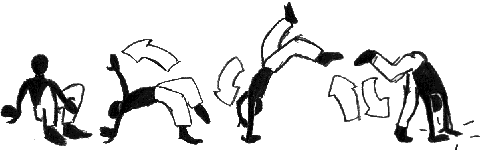
The Macaco in Capoeira is an acrobatic movement, often described as a “monkey flip,” involving a handstand and rotation, transitioning from a low crouch to a handstand and back down. In Capoeira, it’s not just a single move but a dynamic transition, often used to evade, attack, or flow into other movements, adding rhythm and creativity to the practice. Capoeira Angola and Capoeira Regional both utilize the Macaco, but the overall style and context of its use can differ significantly, showcasing the artistry and adaptability inherent in this Brazilian martial art. The macaco serves as a building block for more complex movements like the back handspring and can also be used as a launchpad for various attacks and kicks within the Capoeira game, including powerful aerial kicks that demonstrate both skill and agility. It involves an inverted motion where the capoeirista (Capoeira practitioner) places one hand on the ground behind them and swings their legs over, jumping in an arched trajectory that reflects both grace and strength. The macaco bears a strong resemblance to a back handspring but differentiates itself by typically starting from a low crouch and planting one hand behind the player, emphasizing the importance of starting low to gain momentum.

Learning the macaco, particularly the full backward version that showcases advanced skill, takes dedication and consistent practice over weeks and even months, requiring not just physical training but also mental resilience to overcome the challenges intrinsic to mastering this impressive maneuver.

In essence, the macaco is a dynamic and essential element of Capoeira, combining strength, flexibility, and coordination into a fluid and powerful acrobatic move that showcases the unique blend of martial arts and dance inherent to this Afro-Brazilian cultural expression. This acrobatic feat not only demonstrates remarkable physical prowess but also highlights the practitioner’s rhythm and timing, as they gracefully maneuver through the air, executing the move with precision and style. As a crucial component of Capoeira’s repertoire, mastering the macaco allows practitioners to enhance their overall agility and create impressive sequences that captivate audiences, transforming a simple fight into an intricate performance art.

BASIC ELEMENTS OF CAPOEIRA: CORTA CAPIM

“There are not more than five musical notes, yet the combinations of these five give rise to more melodies than can ever be heard. There are not more than five primary colours, yet in combination, they produce more hues than can ever been seen. There are not more than five cardinal tastes, yet combinations of
them yield more flavours than can ever be tasted.”
― Sun Tzu, The Art of War

The Corta Capim, or “Grass Cutter,” is a versatile Capoeira movement used for offense, defense, and as a transitional floreio technique that showcases the blend of martial prowess and artistic expression inherent in Capoeira. Practiced from a low crouch with proper posture, it involves sweeping one leg in a wide circle for a seamless 360-degree rotation while maintaining stability, which requires both physical strength and mental focus. Fluidity and controlled movements are essential for effective execution, and coordinating breathing helps enhance performance and relaxation, allowing practitioners to connect more deeply with their movements and the rhythm of the music.

This connection not only improves technique but also cultivates a sense of harmony with the surrounding environment, creating a deeper mind-body connection in Capoeira practice.

The Corta Capim movement holds historical significance, as it was a pivotal point in the life of MESTRE JOAO GRANDE, who is renowned for his contributions to the art form.

He encountered the movement as a child while observing Capoeira practitioners and initially believed it was a dance of the NAGOS, later realizing it was a crucial component of Capoeira. His fascination with Corta Capim inspired his journey into the art form, igniting a passion and commitment that led to countless hours of training and dedication, ultimately establishing him as a leading figure in Capoeira. Today, the movement not only embodies the spirit of resilience and creativity but also serves as a testament to the rich cultural heritage of the Afro-Brazilian community, showcasing the transformative power of Capoeira as a form of both self-defense and artistic expression.

There are various ways to perform Corta Capim, allowing for adaptation to individual styles and skill levels.

Some common progressions include practicing with your weaker leg to build balance and strength, which can significantly enhance your overall performance and contribute to a more well-rounded skill set. This focused practice not only aids in physical development but also helps cultivate mental resilience as you push through challenges. Performing the movement in the opposite direction can also help you develop ambidexterity and a deeper understanding of the techniques involved, broadening your capabilities and preparing you for diverse scenarios in your training.

Additionally, executing the sweep with only one hand for support can challenge your core stability and refine your precision, pushing you to engage your muscles in new ways while also honing your focus. Understanding and mastering Corta Capim not only enhances your physical capabilities but also deepens your appreciation for the rich history and cultural significance of Capoeira, as it connects practitioners to centuries of tradition and the vibrant community that surrounds this martial art.

The beauty of Capoeira lies not only in its technical motions but also in the stories and philosophies intertwined within its practice. By immersing yourself in these practices, you not only improve your skills but also foster a greater respect for the cultural roots and the art form’s evolution over time, learning from the generations that came before you and contributing to the ongoing narrative of this dynamic expression of culture and identity. This holistic approach encourages a sense of belonging and commitment to the endless journey of learning that Capoeira represents.

BASIC ELEMENTS OF CAPOEIRA: AU BATIDO

“There are not more than five musical notes, yet the combinations of these five give rise to more melodies than can ever be heard. There are not more than five primary colours, yet in combination, they produce more hues than can ever been seen. There are not more than five cardinal tastes, yet combinations of
them yield more flavours than can ever be tasted.”
― Sun Tzu, The Art of War

Today, I will Introduce you to one of Capoeira’s Trademark kicks, the AU BATIDO.

Aú batido is a traditional capoeira cartwheel kick, known under various names in breakdancing, MMA and other disciplines. This dynamic and visually striking maneuver is characterized by the graceful arc of the body, utilizing momentum and strength to execute a seamless transition from standing to upside-down and back again. The cartwheel kick originated as a combat kick, primarily used to evade attacks while simultaneously delivering a powerful blow to an opponent, showcasing the versatility and effectiveness of capoeira as both an art form and a martial discipline. Over time, it has become very popular as an acrobatic decoration, often featured in performances and demonstrations that highlight the athleticism and skill of practitioners. Beyond its practical applications, the aú batido has also gained a place in popular culture, being frequently depicted in media and competitions, making this likely the most photographed capoeira move, admired not only for its technical execution but also for the fluidity and style it conveys.

This movement is a defensive move, used when attempting to perform a cartwheel and the opponent attacks. Generally with a cabeçada, a headbutt, the aú batido takes place, attacking the opponent by surprise before the attack is executed. The aú batido is a clever and strategic technique that not only showcases the agility of the practitioner but also serves as an effective counter to incoming strikes, making it a valuable addition to any martial artist’s arsenal. This move is sometimes also used in moments of doubt, allowing the practitioner to regain control of the situation, or simply as a trick move to confuse the opponent. The versatility of the aú batido is evident as it can adapt to various combat scenarios.

Names used in different Capoeira schools may also include Beija Flor (Humming Bird, literally Flower Kiss(er)), Leque (Fan), Aú Québrado (also “broken cartwheel”), Aú Malandro (wily cartwheel), Aú Amazonas (Amazon cartwheel) or Amazonica, reflecting the diverse cultural influences and interpretations surrounding this fascinating technique. Each name carries its own unique story, adding depth to the practice and connecting practitioners with their heritage and the community. Moreover, these names often symbolize the characteristics associated with the movements, resonating with the emotions and spirit of those who perform them.

For instance, the Aú Malandro not only highlights agility but also the cleverness required to execute it gracefully, while Aú Amazonas captures the essence of strength and resilience found in the majestic Amazon rainforest. Such rich nomenclature emphasizes Capoeira’s role as a living art form, continuously evolving while remaining deeply rooted in its historical and cultural foundations, thus fostering a sense of belonging among practitioners from various backgrounds.

In addition to its defensive applications, this move is also performed in tricking, where it emphasizes style and creativity, showcasing the athlete’s ability to blend athleticism with artistic expression. Furthermore, in the world of dance, particularly for quality performances, it is frequently utilized in BREAKDANCING, where it is known as the L-kick. This dynamic movement captivates audiences not only due to its technical difficulty but also because it highlights the dancer’s unique interpretation of rhythm and flow. Its popularity in breakdancing underscores the cross-disciplinary nature of movement arts, revealing how varied techniques can be embraced and adapted across different forms of physical expression, ultimately fostering a rich tapestry of creative possibilities in both performance and personal style.

BASIC ELEMENTS OF CAPOEIRA: VINGATIVA

“There are not more than five musical notes, yet the combinations of these five give rise to more melodies than can ever be heard. There are not more than five primary colours, yet in combination, they produce more hues than can ever been seen. There are not more than five cardinal tastes, yet combinations of
them yield more flavours than can ever be tasted.”
― Sun Tzu, The Art of War

Today, I want to go into a fundamental takedown that I posted about before in another PAGE, but I want to expand on it and delve into a bit more detail for clarity and depth. This technique is called THE VINGATIVA, and it plays a crucial role in understanding the intricacies of Capoeira.

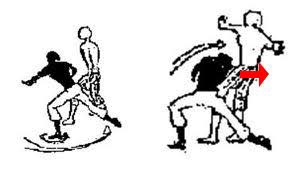
The Vingativa is a low takedown that involves stepping forward and trapping the back legs of an opponent who is in a side stance. This movement is characterized by the capoeirista also protecting their face with their elbow, demonstrating the importance of defense while executing an offensive maneuver.

Once the lead leg of the capoeirista has successfully trapped the leg of the opponent, they skillfully shift their weight in a fluid motion, pushing their hips forward and up, utilizing balance and leverage to maximize effectiveness. If the contact is maintained with the legs of the other player, they should be thrown up and away, thus executing the takedown with precision.

It’s fascinating to note that although this move originally came from batuque, it shares similarities in appearance with certain throws and sweeps found in traditional martial arts such as Baguazhang and Bajiquan, as well as the effective tai otoshi executed in various styles of karate. Other schools of thought in martial arts teach a variation of the Vingativa that resembles the sukui nage or obi otoshi techniques that are foundational in judo. You can even see this technique in Filipino Martial Arts, highlighting the interconnectedness of different martial arts traditions and the rich tapestry of techniques that practitioners can draw upon.

Understanding the nuances of the Vingativa allows martial artists not just to enhance their skillset, but also to appreciate the cultural heritage and evolution of capoeira as a dynamic and impactful form of combat art. By delving deeper into its techniques and philosophy, practitioners can cultivate not only physical prowess but also a profound respect for the history and traditions that have shaped this unique art form.

The Vingativa offers a gateway into the fusion of rhythm, movement, and strategy that defines capoeira, inviting artists to explore its rich narrative and the diverse influences that contribute to its ongoing evolution. Engaging with this practice enables martial artists to connect with a broader community, fostering a spirit of camaraderie and mutual growth as they share in the celebration of capoeira’s roots and its relevance in contemporary society.

HIDDEN SPIRITUALITY – From Spirit Science (7/24/25)

Welcome to HIDDEN SPIRITUALITY – From Spirit Science, where we delve into spiritual practices and philosophies from all over the world, revealing the rich tapestry of beliefs that shape our understanding of existence, hidden in some of the movies that we watch, and the games we play. Our exploration aims to uncover the profound messages embedded within cinematic narratives, illustrating how these films often serve as vehicles for transmitting spiritual wisdom. As we analyze various cultural traditions and contemporary interpretations, we invite you to join us on a journey of discovery that not only enhances our appreciation of film but also enriches our own spiritual journeys, encouraging a deeper reflection on the interconnectedness of all beings and the universe itself. Through this lens, we hope to foster a greater understanding of how these elements influence our daily lives and spiritual practices.

In today’s installment, We explore Final Fantasy 7.

As lovers and players of Final Fantasy ourselves, this episode is an homage to the precious, imaginative moments of childhood that many of us hold dear. It draws us back to a time when our dreams were filled with adventures in fantastical worlds, battling mighty foes and forging unbreakable bonds with companions. What at first seems like a regular “fantasy” experience becomes completely transformed when you understand the deeper mystical meaning behind each symbol and character; every twist and turn in the plot offers a new layer of complexity and nuance.

Final Fantasy 7 is rich with insight, exploring themes of identity, loss, and the relentless pursuit of hope, if only we choose to dig deep and uncover its many secrets. This captivating journey invites players to immerse themselves in the intricate narratives of its characters, each with their own struggles and triumphs, revealing the profound connections we share as human beings. As we navigate through the beautifully crafted landscapes and face formidable foes, we experience a rollercoaster of emotions that resonates with our own lives. The game encourages us to reflect on our choices and relationships, serving as a poignant reminder that the adventure is not just about the destination but also about the bonds we form along the way.

In our pursuit of understanding this complex world, we find joy in celebrating both the laughter and the tears that come with each new encounter in this timeless saga, ultimately reminding us of the delicate balance between light and dark that defines our existence.

Shoutout to SPIRIT SCIENCE for creating this video.

Discover the power of connection and community with Spiritverse – our online haven for the evolution of consciousness. In this vibrant space, individuals from all walks of life come together to share their experiences, insights, and journeys towards self-discovery and spiritual growth. Here, you will find a wealth of resources, interactive tools, and inspiring content designed to help you navigate the complexities of life and cultivate a deeper understanding of yourself and the universe. Join us as we embark on this transformative journey, fostering connections that uplift and inspire. Click here to gain access now: https://www.spiritverse.app/

SPIRITUAL PRACTICES OF AFRICA, AND THE DIASPORA (6/15/25)

This series explores indigenous beliefs and religions in Sub-Saharan Africa, focusing on ancestral worship, Christianity, and Islam. It highlights the region’s cultural heritage through rituals and community gatherings that celebrate identity and wisdom. By showcasing ceremonies, it illustrates the symbolic meanings of practices that strengthen social ties among ethnic groups. The series also examines how these traditions adapt within the diaspora, creating a blend of ancient customs and contemporary beliefs. Additionally, it emphasizes storytelling’s role in preserving oral histories that guide future generations.

Today, we’re gonna do something different. Lately, I’ve been watching a series from the SPIRIT SCIENCE YouTube channel called “Hidden Spirituality”, where they explore lessions in spirituality hidden in popular movies. I thought it would be a good idea to explore this series and learn these lessons that often go unnoticed in our everyday lives. So, welcome to the first episode of this series, Hidden Spirituality! Join us as we delve into the hidden spiritual themes in movies, starting with an in-depth analysis of “The Princess Bride”.

In this enlightening video, Patchman explores the themes of love and romance in the classic movie The Princess Bride, offering a thought-provoking message that challenges conventional ideas about love. With insightful analysis and visuals, the video encourages both fans and those curious about pop culture to rethink their perceptions of love. By delving into the intricate dynamics between the characters, it highlights not only the charming moments that define their relationships but also the deeper layers of sacrifice, friendship, and the unpredictability of true affection.

Through a captivating narrative, Patchman illustrates how the film intertwines humor and heart, revealing that love isn’t merely a fairytale but a complex journey filled with obstacles and growth. The story explores the often unpredictable nature of relationships, showcasing the moments of joy and laughter that accompany the struggles faced by its characters. As they navigate through misunderstandings and trials, viewers are invited to witness the transformative power of love, which emerges stronger when tempered by adversity. This journey not only deepens the emotional connections between characters but also encourages the audience to celebrate the multifaceted nature of romantic connections, embracing both the highs and lows as essential aspects of a genuine partnership.

If you want to watch the full movie for a small price, then click HERE. Shout out to SPIRIT SCIENCE for posting this video, which provides a unique perspective on consciousness and our connection to the universe. Looking for a place to connect with others on the path of truth, love, and authentic inner light? Join the Spiritverse community, an online haven for the evolution of consciousness, where like-minded individuals gather to share insights, experiences, and support one another on their journeys. Explore fascinating discussions, engage in workshops, and participate in events that inspire personal growth and enlightenment. To be a part of this vibrant network, follow this link: https://www.spiritverse.app/. Embrace the journey of self-discovery and spiritual awakening alongside a supportive community that thrives on connection and shared wisdom.