SPIRITUAL PRACTICES OF AFRICA, AND THE DIASPORA (6/29/25)

Greetings! This blog series explores indigenous beliefs and religions in Sub-Saharan Africa, focusing on ancestral worship, Christianity, and Islam. It highlights the region’s cultural heritage through rituals and community gatherings that celebrate identity and wisdom. By showcasing ceremonies, it illustrates the symbolic meanings of practices that strengthen social ties among ethnic groups. The series also examines how these traditions adapt within the diaspora, creating a blend of ancient customs and contemporary beliefs. Additionally, it emphasizes storytelling’s role in preserving oral histories that guide future generations.

In today’s installment,

The Fon people played a key role in the development and spread of Vodou, originating from their language, where “Vodou” means “spirit” or “god”. The Kingdom of Dahomey, dominated by the Fon, was influential in popularizing Vodou in West Africa from the 17th to 20th centuries, establishing a rich cultural and spiritual legacy that resonated throughout the region.

Their traditional polytheistic beliefs, involving a complex pantheon of spirits called “loa” or “lwa”, laid the foundation for Vodou, incorporating various aspects of daily life, nature, and ancestral veneration in rituals and practices. During the transatlantic slave trade, many Fon and Ewe individuals were forcibly brought to the Americas, where they retained their Vodun beliefs, which greatly contributed to the emergence of Haitian Vodou, a unique expression of their heritage.

In the Americas, enslaved Africans blended Vodou with European and indigenous spiritual practices, leading to its syncretism and survival as practitioners adapted to new environments and social realities. This fusion not only facilitated the preservation of their culture but also gave rise to a dynamic spiritual system that reflects a rich tapestry of history and resilience, incorporating various elements such as music, dance, and ritualistic practices that serve not merely as religious expressions but also as vital pathways for community bonding and identity formation.

Thus, the Fon were instrumental in the origins and evolution of Vodou in both Africa and the Americas, ensuring that their ancestral traditions lived on through generations despite the challenges they faced, including brutal oppression and cultural erasure, which they resisted through acts of spiritual defiance and creativity, transforming Vodou into a powerful symbol of empowerment and a testament to their enduring spirit.

SPIRITUAL PRACTICES OF AFRICA, AND THE DIASPORA (6/22/25)

This series explores indigenous beliefs and religions in Sub-Saharan Africa, focusing on ancestral worship, Christianity, and Islam. It highlights the region’s cultural heritage through rituals and community gatherings that celebrate identity and wisdom. By showcasing ceremonies, it illustrates the symbolic meanings of practices that strengthen social ties among ethnic groups. The series also examines how these traditions adapt within the diaspora, creating a blend of ancient customs and contemporary beliefs. Additionally, it emphasizes storytelling’s role in preserving oral histories that guide future generations.

This video is taken from a segment of a fascinating livestream. Be sure to check out Hometeam History during these engaging broadcasts, as each one offers a wealth of insight and discussion. In this particular segment, home team delves into the concept of cognitive dissonance faced when studying African spirituality—a rich and complex area of inquiry that often challenges prevailing narratives. He also shares his personal journey of exploration and the transformative experience that led him to reconsider the voodoo ceremony of the Haitian revolution.

By analyzing it through the lens of the results-based African spiritual model of the Niger-Congo peoples, he uncovers the deeper connections that unite these practices with broader African traditions, revealing a rich tapestry of beliefs and rituals that have evolved over centuries. This approach not only enriches our understanding of the cultural significance and historical context surrounding these powerful spiritual expressions but also highlights the intricate ways in which these practices serve as a foundation for community cohesion and individual identity.

Furthermore, it brings to light the ongoing struggles and triumphs faced by African descendants globally, situating their experiences within a framework of resilience and strength that transcends geographical boundaries and historical traumas. Ultimately, this exploration enhances the narrative of resilience and identity among African descendants, celebrating their enduring legacy and the continual adaptation of their spiritual practices in the face of modern challenges.

TODAY IS JUNETEENTH!!!

Today is Juneteenth. It is worth observing and it is more than worth celebrating, as it marks a pivotal moment in our collective history and a powerful reminder of our enduring struggle for freedom and equality.

But we didn’t need the very government that enslaved our people to give us permission to honor our own history; our resilience and triumphs have always been a source of strength and pride within our communities. We have carried the heavy burden of a painful past, yet we have transformed that suffering into a tapestry of culture and heritage that celebrates our identity. From the stories passed down through generations to the vibrant expressions of art, music, and dance that echo our ancestors’ voices, we acknowledge the struggles while embracing the undeniable spirit that has propelled us forward. Each milestone achieved, whether in education, leadership, or social justice, serves as a testament to our unwavering commitment to uplift one another and forge a brighter future.

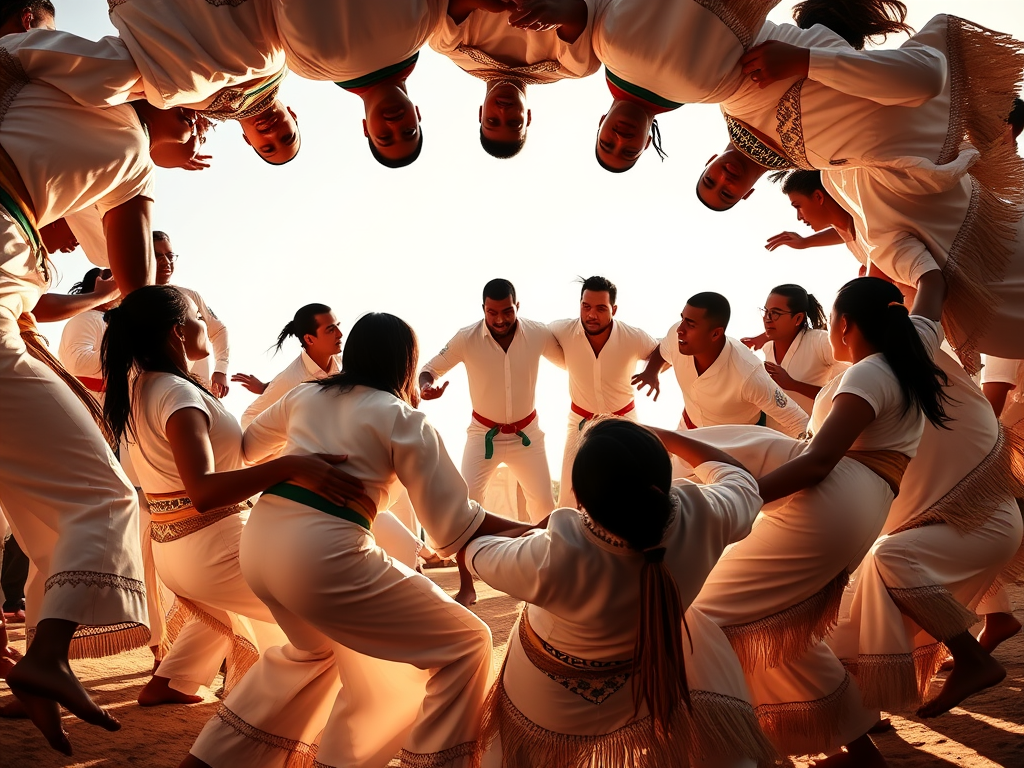
Now, as I said in another POST, we had a Roda and Potluck today. It was a beautiful display of love, brotherhood, and solidarity among all participants, creating an atmosphere rich in cultural heritage and community spirit.

The energy was palpable as we gathered together to share not only food but also stories and laughter, fostering connections that bridge our differences. The rhythm of Capoeira Angola echoed through the space, inviting everyone to join in the movements, transcending barriers and uniting us through the art form that we all cherish. Witnessing such harmony and joy inspired a sense of gratitude for the shared experiences and the vibrant tapestry of our collective journey.

We must all come together in recognition of the sacrifices made by those who came before us, acknowledging their struggles and the legacies they left behind. It is vital to honor the ancestors who bravely faced the adversities of their time, enduring hardships and injustices that many cannot fathom today. Remember the ancestors who fought against oppression and dreamed of a brighter future for us all, envisioning a world where equality and justice reign.

Recall the tireless efforts and the relentless spirit that fueled their fight, paving the way for progress and change. Remember the debt that is owed, not only to those who suffered under slavery but also to those who continue to fight against injustice today, standing up for the marginalized and voicing the concerns of the unheard.

Their courage serves as an inspiration, reminding us of the importance of advocacy and activism. As we reflect on their unwavering spirit, we are called to action, encouraging a collective movement where every voice matters. And remember ALL who owe it, for the responsibility to uplift and empower one another lies within each of us. This duty demands that we not only raise awareness of the challenges faced by marginalized communities but also actively engage in solutions that foster change.

And in that spirit, I’d like to discuss the ICE raids a little bit. At the Roda, our sister soldier Eva recently left some informative flyers from an organization called Union Del Barrio, which is dedicated to empowering ordinary citizens with the knowledge and skills they need to protect themselves and their communities from invasive ICE raids.

These flyers outline critical training sessions and resources designed to raise awareness about immigrants’ rights and ensure that individuals are prepared to respond effectively in challenging situations. I highly encourage everyone to click HERE to check them out and delve deeper into the fantastic initiatives they are actively involved in, as well as to discover various ways you can contribute to their crucial mission and support the fight for justice and dignity for all community members.

Together, as we work towards a more just and equitable world, we must commit to listening, learning, and building bridges across divides. By fostering a community in which everyone, regardless of their background, can thrive and flourish in harmony, we create a shared environment where mutual respect and collaboration flourish, paving the way for future generations to inherit a brighter, more inclusive society.

SPIRITUAL PRACTICES OF AFRICA, AND THE DIASPORA (6/15/25)

This series explores indigenous beliefs and religions in Sub-Saharan Africa, focusing on ancestral worship, Christianity, and Islam. It highlights the region’s cultural heritage through rituals and community gatherings that celebrate identity and wisdom. By showcasing ceremonies, it illustrates the symbolic meanings of practices that strengthen social ties among ethnic groups. The series also examines how these traditions adapt within the diaspora, creating a blend of ancient customs and contemporary beliefs. Additionally, it emphasizes storytelling’s role in preserving oral histories that guide future generations.

Today, we’re gonna do something different. Lately, I’ve been watching a series from the SPIRIT SCIENCE YouTube channel called “Hidden Spirituality”, where they explore lessions in spirituality hidden in popular movies. I thought it would be a good idea to explore this series and learn these lessons that often go unnoticed in our everyday lives. So, welcome to the first episode of this series, Hidden Spirituality! Join us as we delve into the hidden spiritual themes in movies, starting with an in-depth analysis of “The Princess Bride”.

In this enlightening video, Patchman explores the themes of love and romance in the classic movie The Princess Bride, offering a thought-provoking message that challenges conventional ideas about love. With insightful analysis and visuals, the video encourages both fans and those curious about pop culture to rethink their perceptions of love. By delving into the intricate dynamics between the characters, it highlights not only the charming moments that define their relationships but also the deeper layers of sacrifice, friendship, and the unpredictability of true affection.

Through a captivating narrative, Patchman illustrates how the film intertwines humor and heart, revealing that love isn’t merely a fairytale but a complex journey filled with obstacles and growth. The story explores the often unpredictable nature of relationships, showcasing the moments of joy and laughter that accompany the struggles faced by its characters. As they navigate through misunderstandings and trials, viewers are invited to witness the transformative power of love, which emerges stronger when tempered by adversity. This journey not only deepens the emotional connections between characters but also encourages the audience to celebrate the multifaceted nature of romantic connections, embracing both the highs and lows as essential aspects of a genuine partnership.

If you want to watch the full movie for a small price, then click HERE. Shout out to SPIRIT SCIENCE for posting this video, which provides a unique perspective on consciousness and our connection to the universe. Looking for a place to connect with others on the path of truth, love, and authentic inner light? Join the Spiritverse community, an online haven for the evolution of consciousness, where like-minded individuals gather to share insights, experiences, and support one another on their journeys. Explore fascinating discussions, engage in workshops, and participate in events that inspire personal growth and enlightenment. To be a part of this vibrant network, follow this link: https://www.spiritverse.app/. Embrace the journey of self-discovery and spiritual awakening alongside a supportive community that thrives on connection and shared wisdom.

SPIRITUAL PRACTICES OF AFRICA, AND THE DIASPORA (5/18/25)

Welcome to SPIRITUAL PRACTICES OF AFRICA AND THE DIASPORA! This series highlights the diverse indigenous beliefs and religions in Sub-Saharan Africa, showcasing ancestral worship and the profound impacts of Christianity and Islam on local traditions and practices. By illustrating the region’s rich cultural heritage and vibrant spiritual life, we delve into a variety of rituals and community gatherings that not only celebrate identity and belonging but also serve to preserve ancient wisdom and foster intergenerational connections. As we explore these practices, we will discover how they evolve and adapt within the diaspora, creating a dynamic tapestry of faith and cultural expression that resonates with millions around the world.

In today’s installment, I wanted to talk a bit about Islam in Africa.

There is a misconception that Islam is new in Africa, but Africans were among the first non-Arabs to accept Islam, embracing its teachings and principles with open hearts. It’s unfortunate that many believe Africans are recent converts or unaware of the rich history of Islam on the continent, while in reality, the Prophet Muhammad (SAWS) sent his companions to Africa before anywhere else, establishing early Muslim communities that flourished in regions such as Abyssinia.

These early interactions not only facilitated the spread of Islamic beliefs but also fostered significant cultural exchanges between Arab and African societies, laying the groundwork for a vibrant Islamic civilization that would grow and evolve over centuries across the diverse landscapes of Africa.

Now, to go into more detail…

Join Dr. John Henrik Clarke in his enlightening lecture “The Rise of Islam in Africa,” where he not only discusses the historical significance of Islam’s expansion in Africa but also delves deeply into the complex interactions between various African societies and the rich Islamic traditions that emerged as a result.

He explores the multifaceted factors that facilitated Islam’s spread across the continent, such as the pivotal roles of trade networks, cultural exchanges, and migratory patterns, which served as conduits for ideas, beliefs, and practices to traverse vast distances. Furthermore, Dr. Clarke highlights the invaluable contributions of African Muslims to the cultural, intellectual, and artistic landscape of Islamic civilization, showcasing remarkable figures and communities that have enriched the faith’s legacy through their innovations in philosophy, art, and science.

He delves into the fascinating stories of scholars and artisans whose legacies continue to influence modern thought and creativity, illustrating how their contributions have laid the foundation for numerous fields ranging from philosophy to the arts. In addition, he examines how Islam has been integrated into diverse African cultures, adapting to and influencing local customs and practices in a myriad of ways, which ultimately shapes the identities of millions across the continent. This intercultural exchange not only enriches the local cultures but also promotes a deeper understanding among communities that may otherwise remain isolated. The synthesis of Islamic tenets with indigenous beliefs has led to unique expressions of faith and community that celebrate both spirituality and heritage, giving rise to vibrant traditions, festivals, and artistic endeavors that draw on the rich tapestry of history while fostering a sense of belonging in an ever-changing world. Such interactions highlight the dynamic nature of culture, emphasizing that identities are not static but continually evolving through dialogue and shared experiences.

ATTEMPTING TO DECODE THE MIND

I’M STARTING A NEW SERIES. Here, we delve into how certain people, i.e., fake friends, narcissists, toxic individuals, and others, think and operate within social interactions. This exploration is an outgrowth of the MALANDROS IN ACTION series, where we discuss the actual cons that humans perpetrate against one another, examining the darker aspects of interpersonal relationships. In this new series, we aim to investigate not only the behaviors exhibited by these individuals but also the underlying psychology and motivations that drive such toxic actions. We will analyze the emotional and environmental factors that contribute to this detrimental mindset, seeking to understand the complexities of their thought processes. By doing so, we hope to shed light on the causes of the kind of thinking that enables a person to engage in such harmful behaviors, providing insight into their world and possibly offering a path toward healing for those affected by their actions. As we journey through these narratives, we will uncover the masks these individuals wear and the vulnerabilities they hide, ultimately inviting readers to reflect on their own experiences and the relationships they cultivate.

Today, we start this series off with this fascinating video that delves deep into the intricate concepts we will explore in subsequent episodes. The video serves as an excellent introduction, setting the stage for what promises to be an enlightening journey filled with compelling insights and engaging discussions.

As we embark on this adventure, we encourage you to pay close attention… And take notes.

Everything is energy, and your reality is influenced not only by your actions but also by those around you. Some people may despise what you embody rather than what you do, reacting to the energy you exude, which can sometimes lead to misunderstandings and conflict. Carl Jung highlighted this psychological struggle: subtle energetic assaults that foster self-doubt and create an internal battle within ourselves.

This psychic dynamic can cause us to second-guess our worth and intentions. In this video, we explore Jung’s Shadow Theory, which delves into the aspects of our psyche that we tend to deny or ignore, often leading to internal conflict and confusion.

By identifying these hidden facets of ourselves, we can confront the discomfort they bring and work towards integration and acceptance. Moreover, we will identify signs of deceitful friends and envious individuals who may project their insecurities onto us, thus creating a toxic environment that undermines our self-esteem. By recognizing these patterns early, we can better navigate our social environments and protect our emotional well-being.

Additionally, we also provide comprehensive strategies for self-protection, emphasizing the importance of setting firm boundaries, cultivating a supportive network of positive influences, and practicing self-reflection consistently to maintain a strong sense of self amidst external challenges. In today’s fast-paced world, it is essential to recognize when our boundaries are being tested, as this awareness allows us to respond proactively rather than re actively. Surrounding ourselves with individuals who uplift and encourage us can significantly impact our mental well-being; these relationships serve as a buffer against negativity and can inspire us to pursue our goals with renewed vigor.

Moreover, engaging in regular self-reflection enables us to better understand our thoughts and emotions, giving us the tools needed to address any internal conflicts that arise. Employing these techniques can empower us to reclaim our narrative and foster healthier relationships, ultimately leading to personal growth and resilience. By committing to this holistic approach, we can navigate the complexities of life with greater confidence and a clearer sense of purpose, ensuring that we remain anchored in our values even when faced with adversity.

Shout out to PHILOSOPHICAL ESSENCE for creating this insightful and thought-provoking video, which explores deep questions and offers unique perspectives that challenge our understanding of various concepts. Please click HERE to go to their YouTube channel, where you can find a wealth of content that stimulates the mind and encourages reflection.

Additionally, check out their website: https://philosophical-essence.com/, where you can access more resources, articles, and information on their philosophy and projects, enhancing your journey into meaningful exploration and understanding of life’s mysteries.

SELF-DEFENSE SERIES (4/11/25)

Welcome to the Self-Defense series, which empowers you through essential physical, mental, spiritual, and legal skills for personal safety. The program emphasizes readiness, resilience, and confidence, covering practical techniques that are designed to be effective in real-life situations, as well as situational awareness that sharpens your ability to identify potential threats before they escalate. Psychological components are integrated to foster a strong mindset, enabling you to confront fear and anxiety with courage and clarity. It also incorporates spiritual practices, such as mindfulness and meditation, for inner strength and balance, helping you cultivate a peaceful yet alert state of mind. Furthermore, the series discusses legal frameworks that promote informed actions and community responsibility, ensuring that you are not only prepared to protect yourself but also to act within the bounds of the law. By the end of this comprehensive program, you will find that this series not only promotes personal growth and empowerment for facing challenges in various aspects of life but also builds a sense of community and support among participants, encouraging a collective commitment to safety and well-being.

In today’s installment, we present to you this episode of Fight Science.

In this episode of FIGHT SCIENCE, titled “Why Fake Tough Guys Always Get Humbled,” we delve into the intricate dynamics of masculinity and perception. Some men believe they possess a certain dangerous edge—confidently swaggering through life, exhibiting bravado until the harsh light of reality proves otherwise. They act tough, talk big, and flex in front of their friends, often driven by a deep-seated need for validation and recognition. Yet when a real fight occurs, when the stakes are high and the adrenaline is pumping, they tend to fold under pressure, revealing their true insecurities.

In this eye-opening video, we break down the psychology of fake tough guys, exploring why they consistently overestimate their capabilities and the role of social pressure in compelling men to present a version of toughness that frequently mismatches their actual abilities. By examining real-life examples and expert commentary, we aim to shed light on the consequences of this facade, questioning the very essence of what it means to be truly tough in today’s society. Furthermore, we delve into the cultural narratives that glorify aggression and bravado, often overshadowing the importance of vulnerability and emotional intelligence.

This exploration not only highlights the pitfalls of projecting an artificial image of toughness but also encourages viewers to redefine strength on their own terms, fostering a healthier dialogue around masculinity.

MALICIA AS A GAME OF POWER (3/13/25)

Welcome to MALICIA AS A GAME OF POWER, a blog series that explores strategy in interactions, focusing on effective communication, conflict resolution, and building connections. It covers topics like negotiation techniques, manipulation tactics, leadership skills, personal branding, and online reputation management to equip you with tools for navigating power dynamics and achieving success in social and professional settings.

In this installment, we will explore the 20th law of power in the book, the 48 laws of power by Robert Greene. You can but a copy by clicking HERE.

LAW 20 PART 1: DO NOT COMMIT TO ANYONE 

DO NOT COMMIT TO ANYONE, as relationships can often lead to complications that may hinder personal growth and freedom. It is essential to focus on your own goals and aspirations, allowing yourself the space to explore new opportunities without being tied down. This journey of self-discovery not only empowers you but also cultivates resilience, enabling you to navigate life’s challenges with confidence.

By prioritizing your independence, you can develop a stronger sense of self and make decisions that truly align with your values and desires, ultimately leading to a more fulfilling life experience. Embracing your individuality can open doors to vast experiences, enriching your life in ways that relationships may sometimes overshadow, allowing you to fully realize your potential while enjoying the journey of life on your own terms. This journey of self-discovery not only fosters personal growth but also enhances your ability to interact meaningfully with others.

When you understand and embrace who you are, you cultivate a confident self-image that enables you to pursue your passions wholeheartedly. Furthermore, being independent means that you can explore varied interests and activities without feeling beholden to the preferences of others, leading to unique opportunities and memorable adventures that shape your character and resilience. Through independence, you learn to trust your intuition and judgment, creating a solid foundation for future endeavors, while also inspiring those around you to seek their own paths toward self-fulfillment.

The 20th Law of Power: Do Not Commit to Anyone, as viewed through the philosophical and physical lens of an Angoleiro of Capoeira Angola.

This exploration delves into the nuanced application of the Machiavellian principle, “Do Not Commit to Anyone,” interpreting it not as a call for outright disloyalty or isolation, but as a strategic path toward maintaining autonomy, flexibility, and a balanced perspective, a vital necessity for practitioners of Capoeira Angola.The Angoleiro’s Stance: Malícia, Autonomy, and the Roda

For the Angoleiro, a student and master of Capoeira Angola, life is a constant jogo (game/dance) where power dynamics are subtle yet profound. The 20th Law is translated into the core Capoeira concepts of malícia (cunning, street smarts) and corpo fechado (literally “closed body,” meaning spiritual and mental protection).

  1. Strategic Neutrality and the Malícia:
    An Angoleiro must cultivate malícia—the ability to read the unspoken intentions of others and to navigate conflicts without taking a permanent, limiting side. Committing absolutely to one faction, one patron, or one rigid dogma is to forfeit the ultimate weapon: unpredictability. In the roda (the circle where Capoeira is played), an opponent who is too predictable is easily countered. Similarly, in life, an individual too closely aligned with a singular source of power becomes vulnerable to that source’s eventual downfall or changing whims. The Angoleiro maintains a position of watchful neutrality, allowing them to shift alliances or retreat gracefully when necessary, mirroring the evasive, fluid movements of the jogo.
  2. Freedom of Movement and the Ginga:
    The ginga is the foundational, continuous movement of Capoeira. It is not merely a warm-up; it is a philosophy of perpetual motion and non-commitment to a fixed point. An Angoleiro who commits to a static position in the roda is immediately exposed to attack. Applying this to the 20th Law, “Do Not Commit to Anyone” means never allowing a single person, organization, or ideology to become your permanent, unmoving center. This freedom ensures the Angoleiro‘s path is always their own, enabling them to move around and utilize multiple resources (patrons, teachers, communities) without being bound by their limitations or demands. They become the essential, free-floating element that others must court, rather than the beholden servant.
  3. Patronage and Independence (The Mestre and the System):
    Historically, Capoeira masters often had to navigate complex political and social landscapes, relying on temporary patrons for survival and the right to practice. The wise master learned not to be permanently indebted. The law advises keeping a distance even from powerful mentors or Mestres once their essential teachings have been absorbed. While respect and loyalty are paramount, absolute commitment risks becoming a mere reflection or extension of the patron, stifling one’s own unique development. The goal is to establish one’s own independent school and authority—a roda that orbits no one but is respected by all.
  4. Playing the Game of Demand:
    By refusing to commit fully, the Angoleiro keeps their services scarce and their value high. If you are known to be solely dedicated to one cause, your commitment is assumed, and your influence diminishes. If you are the sought-after neutral expert—the one who can be temporarily persuaded by various sides—both parties will vie for your attention and loyalty, granting you greater leverage and independence than a fully committed subordinate. This strategic ambiguity is the essence of advanced jogo.

In conclusion, for the Angoleiro, the 20th Law is a principle of survival and supremacy: maintain the freedom to move, the clarity to observe, and the distance to negotiate, ensuring that one’s power remains rooted in self-possession, not in the fluctuating fortunes of others.

SELF DEFENSE SERIES (3/11/25)

Welcome to the Self-Defense series, designed to empower you through physical, mental, spiritual, and legal aspects that are crucial in today’s world. This comprehensive program provides essential skills for protection, promoting not just readiness, resilience, and confidence but also a deep understanding of personal safety. We cover a wide range of self-defense strategies that include practical techniques and situational awareness, coupled with psychological components that help build a strong mindset to face potential threats. Additionally, we explore spiritual practices that enhance your inner strength and focus, fostering a sense of peace and balance. The legal frameworks discussed are vital for encouraging informed actions that ensure your rights are upheld, while also contributing to a sense of responsibility within the community. Ultimately, this series is not just about defense; it’s a journey towards personal growth and empowerment that prepares you for challenges both on and off the mat.

In today’s installment…

How far would you defend yourself or others in dangerous situations? In this video are some compelling examples of actual situations that showcase the courage and quick thinking of individuals when faced with threats.

For instance, you’ll see a woman who bravely fights off a robber in a store, demonstrating not only her strength but also her determination to protect herself and her belongings. Her prompt response serves as a reminder of the importance of being aware of one’s surroundings and having the confidence to act when necessary. Additionally, there is a situation where a woman comes to the aid of an autistic customer being harassed, illustrating the importance of standing up for those who may not be able to defend themselves. This particular incident sheds light on the social responsibility we hold towards the vulnerable individuals in our communities, reminding us that kindness and bravery can coexist in even the most challenging circumstances.

Of course, law enforcement does not advise that someone goes up against an armed attacker, for that is extremely dangerous. However, these real-life scenarios provoke thought about the lengths we are willing to go to ensure safety for ourselves and others, sparking important conversations about personal responsibility and altruism in today’s society. Such discussions encourage us to reflect on our values and the actions we might take to foster a safer environment, not just for ourselves but for those around us who may need our support. Moreover, contemplating our responses to dangerous situations can lead to a deeper understanding of the complexities surrounding personal safety, community vigilance, and the moral obligations we have towards our fellow citizens.

It raises questions such as: What measures are we prepared to take when confronted with violence? What role do bystanders play in crisis situations, and how can we empower individuals to act wisely and safely? Engaging in these reflections can galvanize us into proactive community involvement, driving efforts to educate ourselves about self-defense, emergency preparedness, and intervention strategies, ultimately working together to build a society where safety and compassion are paramount.

MARTIAL ARTS THEATER (3/7/25)

Welcome to MARTIAL ARTS THEATER, a vibrant platform for martial arts enthusiasts that offers a wealth of resources, including expert interviews, comprehensive instructional videos, and engaging community events designed for practitioners of all skill levels. Whether you are a novice stepping onto the mat for the first time or an experienced martial artist seeking to refine your techniques, our platform provides invaluable insights to help you enhance your skills. Join us to foster connections with like-minded individuals who share your passion, and immerse yourself in the vast cultural significance of martial arts. Our community not only facilitates personal growth and camaraderie but also encourages a deep appreciation for the rich traditions and philosophies that underpin these ancient practices. Participate in workshops, attend events, and benefit from the knowledge of skilled instructors, all while being part of a supportive environment that celebrates the artistry and discipline of martial arts.

In today’s installment, We’re gonna talk about How and why FMA has DOMINATED Hollywood.

Discover how Filipino Martial Arts (FMA), practiced for over 500 years, has not only shaped the skills of individual practitioners but also significantly influenced Hollywood’s fight scenes, paving the way for more realistic and engaging choreography in action cinema. This unique martial art, known for its fluidity and use of various weapons such as sticks, knives, and empty hands, has inspired iconic moves from films like John Wick and Jason Bourne, where swift strikes and dynamic movements capture audiences’ attention.

FMA’s emphasis on adaptability and response to an opponent’s actions has led filmmakers to integrate its techniques into their storytelling, creating not just visually stunning fight sequences but also a deeper connection to the characters engaging in battle. As a result, many action stars have sought training in FMA to enhance their performance, further solidifying its place in modern cinema, and showcasing the rich cultural heritage that continues to evolve through the screen.

In addition, this video highlights the intricate connection between traditional FMA techniques and the memorable action sequences we see on screen today, delving into how filmmakers have integrated these elements to elevate the storytelling of their films, making it a must-watch for martial arts fans and movie lovers alike who appreciate the blend of culture, skill, and cinematic artistry. It provides an in-depth analysis of how these time-honored methods not only enhance the choreography of fight scenes but also contribute to character development and plot progression.

And, in case you want to see some real FMA, check out this bit of vintage footage of Guro Dan Inosanto, showcasing the art. This extraordinary clip not only highlights their incredible skills but also offers a glimpse into the rich history and philosophy behind Filipino Martial Arts. The synergy between these two masters brings to life the fluidity and effectiveness of techniques that have been passed down through generations.

As you watch, you’ll appreciate the depth of knowledge each practitioner possesses and the dedication required to master such a diverse and effective combat system. Whether you’re a seasoned martial artist or new to the world of FMA, this footage is a treasure trove of inspiration and insight.