
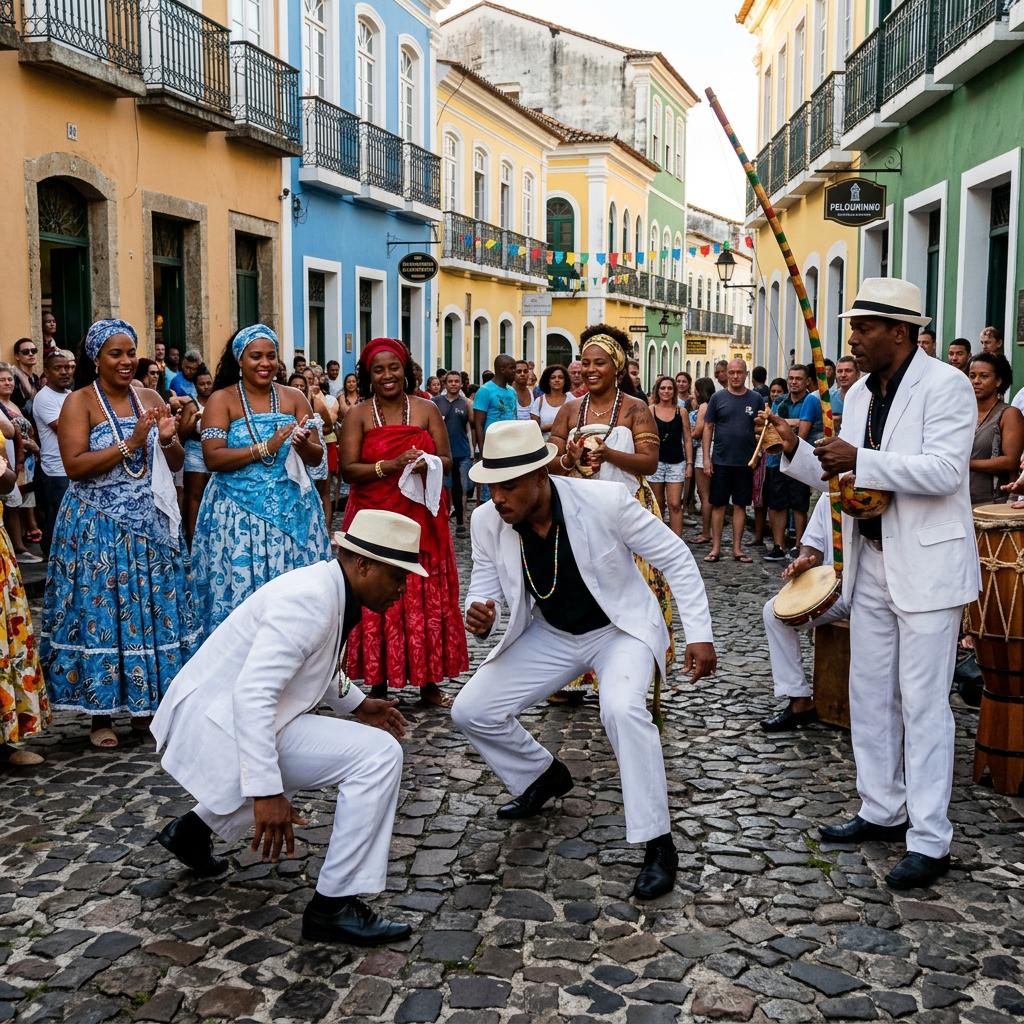
In a culture obsessed with surface-level aesthetics and displays of dominance, true attractiveness stands out through quiet confidence, emotional stability, competence, and genuine consideration for others. Real magnetism is not something you put on; it radiates through how you handle pressure, listen, and treat people. It grows from self-respect and integrity, drawing others to those who are comfortable in their own skin, stand firm without belittling others, and remain kind without seeing kindness as weakness. While trends fade, character creates a lasting, authentic presence.
Few traditions cultivate this kind of deep, embodied presence quite like Capoeira Angola.
Rooted in Afro-Brazilian history, liberation, and community resilience, Capoeira Angola is far more than a martial art or a workout. Unlike modern combat sports that focus purely on aggression and overpowering an opponent, Angola is a dialogue of strategy, rhythm, and awareness. Stepping into its traditions doesn’t just build a capable body—it shapes a character that naturally draws people in.
1. Grounded Presence and Fluid Body Language
Attractiveness begins long before you speak your first word. People subconsciously read tension, insecurity, and rigidity in a man’s posture. Capoeira Angola rewires how you occupy space.
- The Power of the Ginga: Every movement in Capoeira stems from the ginga—a continuous, rhythmic sway. Instead of standing stiffly on guard, you learn to stay loose, balanced, and constantly adaptable. That effortless, grounded grace follows you out of the training hall and into every room you enter.
- Comfort in Vulnerability: Capoeira Angola is played close to the ground, often from inverted or unconventional angles. Training your body to feel completely at home while low, off-balance, or upside down strips away fragile masculine ego. A man who isn’t afraid to look vulnerable—and who recovers with smooth composure—projects an unmistakable, relaxed self-assurance.
2. Emotional Regulation Under Pressure
There is nothing more magnetic—or reassuring to a partner—than a man who remains calm when things get chaotic.
- Smiling in the Roda: Inside the roda (the circle where the game is played), kicks pass inches from your face while the tempo of the music accelerates and dozens of eyes watch your every move. In Capoeira Angola, flinching in fear or reacting in anger means you have already lost the game. You are trained to breathe, keep a relaxed smile, and respond smoothly under fire.
- Nervous System Mastery: By pairing intense physical strategy with the hypnotic rhythms of the berimbau and atabaque drums, the art conditions your nervous system to stay regulated under stress. In daily life and relationships, this translates into emotional steadiness. You don’t get rattled by minor conflicts, and your calm energy naturally puts others at ease.
3. Malícia: Social Intuition and Playful Wit
In Capoeira Angola, practitioners cultivate a quality known as malícia. Outside the art, the word might sound negative, but inside the tradition, it refers to street-smart intuition, cleverness, and playful deception.
- Reading Unspoken Cues: Playing a high-level game requires reading your partner’s subtle micro-movements, rhythm, and intentions without staring them down. Off the floor, malícia sharpens your emotional intelligence. You become an attentive, perceptive listener who notices subtle shifts in a conversation and understands what people are feeling beneath their words.
- The Art of Playfulness: A great game of Capoeira Angola is a witty conversation filled with feints, humor, and unexpected turns. Adopting this mindset keeps you from taking yourself too seriously. Men who bring warmth, humor, and a sense of play into their interactions are endlessly engaging to be around.
4. Rituals of Social and Dating Confidence
Beyond general mindset, the specific rituals and movements practiced inside the roda serve as direct training for social poise and romantic dynamics.
- The Chamada (The Call): During a game, one player suddenly stops moving and opens their arms wide, inviting the other player to approach. The approaching player must step in calmly while keeping their guard up against a hidden sweep or trick. In social and dating dynamics, this mirrors the confidence to initiate and hold space without rushing or over-pursuing. You learn to invite someone closer with open, relaxed body language while maintaining healthy personal boundaries.
- Mandinga (Charisma and Mystique): Mandinga refers to the subtle magic, personal flair, and unpredictability a player brings into the circle. It is never forced; it comes from total comfort with your own rhythm and timing. In daily interactions, mandinga translates to authentic charm and unpredictability. Instead of relying on rehearsed lines or seeking approval, you trust your natural timing, use well-placed pauses, and bring an engaging energy that keeps people curious.
- Yielding with Negativa: Rather than meeting a kick with a rigid block, an Angoleiro drops low into a negativa—yielding space to let the attack pass harmlessly over them before rising into a counter-movement. Socially, this teaches you to absorb tension rather than escalate it. When faced with an awkward moment, a test of composure, or an emotional reaction, you step back mentally, stay grounded, and redirect the conversation with grace.
- The Volta ao Mundo (Trip Around the World): When the game gets too intense or tangled, players walk in a circle around the perimeter of the roda together to reset their breathing and energy before re-engaging. In relationships and social settings, this represents emotional pacing. You develop the maturity to pause, reset the mood, and ensure both people are comfortable before moving forward.
5. Historical Resilience and Modern Masculine Leadership
To understand why Capoeira Angola creates such a distinct kind of masculine authority, you have to look at its origins. Its history offers a powerful blueprint for modern leadership.
- Strength Forged Under Constraint: Capoeira Angola was born among enslaved Africans in Brazil who were denied weapons, freedom, and open expression. Instead of surrendering their dignity, they disguised a lethal combat system inside music, dance, and joy. Modern masculine leadership requires this same alchemical resilience—the ability to face financial, personal, or social pressure without becoming bitter, cynical, or defeated.
- Liberation Over Domination: Unlike martial arts built for conquest or battlefield subjugation, Capoeira Angola is an art of self-liberation. Its goal is to stay free, untouchable, and fluid rather than to crush an opponent. A truly attractive leader operates the same way: he does not need to control, belittle, or dominate others to feel powerful. His authority comes from mastering himself and creating an environment where others feel free to be themselves.
- The Quilombo Mindset (Collective Uplift): Historically, runaway communities known as quilombos relied on mutual aid, shared vigilance, and deep cultural solidarity to survive. Inside the roda, no one plays alone; the musicians, singers, and players sustain the energy together. In modern life, this parallels servant leadership. Whether leading a family, a team, or a community, a man demonstrates his highest value when his strength is used to protect, uplift, and serve the collective good rather than his own ego.
- Respect for Lineage: Traditional Capoeira Angola rejects flashy belt systems and individual trophy hunting, placing immense value instead on honoring the Mestres and ancestors who preserved the art through centuries of oppression. Embracing this philosophy teaches humility and accountability. A man who respects the wisdom of those who came before him—and recognizes that he is always a student—carries a grounded maturity that sets him apart from men driven by arrogance.
The Takeaway
True attractiveness cannot be faked with memorized lines or rigid posturing. It comes from alignment—when your body, mind, and spirit move in harmony. Capoeira Angola offers a lifelong blueprint for that alignment, teaching a man how to stay grounded in who he is, remain calm in the storm, and bring rhythm, wit, and generosity into every connection he makes. Through its deliberate movements, playful exchanges, and deep respect for timing, space, and the other person, the practice develops a presence that feels natural rather than performed. It teaches him to listen before reacting, adapt without losing his center, and express strength without needing to dominate. Over time, this inner discipline becomes visible in the way he carries himself, speaks, handles uncertainty, and creates room for others to feel seen. The result is not a manufactured persona, but a quiet confidence rooted in self-knowledge, emotional steadiness, curiosity, and the freedom to meet each moment with authenticity.

