Welcome to MALICIA AS A GAME OF POWER, a thought-provoking blog series that delves deep into the intricate strategies of human interactions, encompassing essential themes such as communication, conflict resolution, negotiation, and manipulation. In this series, we aim to unveil the subtle nuances that define successful interactions and the psychological principles that influence human behavior. It discusses leadership dynamics, personal branding, and the complexities of online reputation management, providing readers with practical strategies designed to enhance their influence and build authentic relationships. Through detailed analysis and real-world examples, the series seeks to empower readers to navigate the often-turbulent waters of interpersonal relationships with confidence and skill, ultimately fostering a greater understanding of the power dynamics at play in everyday encounters. Join us on this compelling journey as we explore the art of interaction and the power it wields in our personal and professional lives.
Today, We’re gonna explore Law 6 from the book, “The Laws of Human Nature” by Robert Greene. You can purchase a copy from AMAZON.COM by clicking HERE.
Law 6: The Law of Shortsightedness
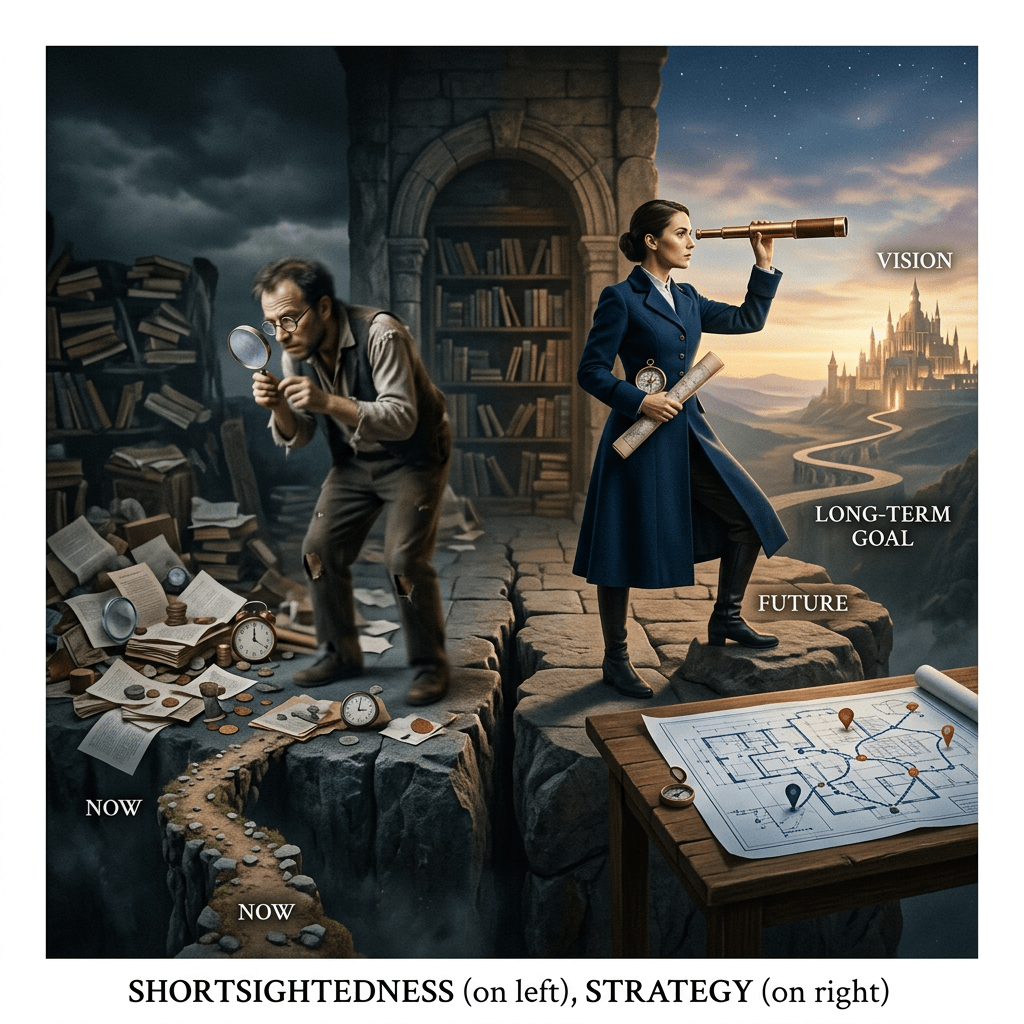
The Law of Shortsightedness, as defined by Robert Greene, focuses on the importance of elevating your perspective to avoid being overwhelmed by immediate trends, emotions, and small details that distract from long-term goals. In the context of the blog series “MALICIA AS A GAME OF POWER,” this law is a critical strategic tool for navigating complex interpersonal dynamics and maintaining personal agency.
Key Concepts of Law 6
- The Trap of the Immediate: Humans have a natural tendency to overreact to present circumstances, which often leads to poor decision-making based on temporary emotions or passing fads.
- Elevated Perspective: Mastery involves the ability to detach from the “heat” of the moment to see the broader patterns and potential future consequences of current actions.
- Long-Term Thinking: Success is found by focusing on distant goals rather than immediate gratification or the need to “win” a minor, inconsequential argument.
Strategic Application: The Angoleiro’s Vision
From the perspective of Capoeira Angola, Law 6 is manifested through the practitioner’s ability to look past an opponent’s immediate feint or aggressive outburst to understand the larger strategy of the jogo. While a shortsighted player might react impulsively to a single strike, the experienced Angoleiro maintains their axé and balance, waiting for the opponent to overextend themselves through their own lack of foresight.
This “Strategic Pause” or devagar (moving slowly) allows the practitioner to study the opponent’s emotional patterns and engineer a predictable error.

In the philosophy of Capoeira Angola, the concept of shortsightedness is countered by the development of visão—a peripheral and psychological awareness that transcends the immediate physical threat. While Robert Greene identifies the human tendency to overreact to present circumstances, the Angoleiro views this tendency as a vulnerability to be exploited through malícia.
The Ritual of the Jogo as a Lesson in Time
The roda is a microcosm of Greene’s “Trap of the Immediate.” A beginner often reacts to a single kick with panic or an immediate, uncalculated counter-strike, mirroring the shortsighted person who makes life decisions based on a temporary emotion, impulsively chasing fleeting sensations without considering the long-term consequences. This hasty response not only disrupts their flow but can also leave them vulnerable to counterattacks, illustrating the dangers of emotional volatility.
Conversely, the master Angoleiro employs the “Strategic Pause” or devagar, a technique that emphasizes the importance of mindfulness and composure in the face of adversity. By intentionally slowing down the tempo, the practitioner detaches from the “heat” of the moment, allowing their mind to cool and gain clarity. This pause is not merely a moment of inaction; it is a tactical opportunity to assess the situation comprehensively, gaining the elevated perspective necessary to see the broader patterns of the opponent’s behavior. Through this reflective approach, the master can anticipate movements, exploit weaknesses, and ultimately respond with precision, transforming the chaos of the roda into a dance of strategic creativity and finesse.
Operationalizing Malícia Against Shortsightedness
Countering the Feint: A feint is a tactical application of shortsightedness; it forces the opponent to focus on a false immediate reality. The Angoleiro looks at the opponent’s center of gravity, not just their hands or feet, maintaining a long-term focus on the ultimate balance of power.
Preserving Axé: Reacting to every minor provocation drains one’s energy (axé), leading to a state of fatigue that can impair overall effectiveness. Mastery involves a strategic approach, where one learns to identify and ignore inconsequential “wins.” This means prioritizing emotional and mental reserves to maintain focus and clarity. By doing so, a practitioner ensures they have ample resources available for the critical moment when the opponent inevitably overextends. It is crucial to recognize that not every challenge requires a response; sometimes, the most potent reaction is the decision to remain calm and grounded, allowing one to conserve energy for moments that truly matter. In this way, the mastery of self-control not only protects one’s axé but also enhances overall performance in confrontations.
Architecting the Outcome: By refusing to be distracted by passing trends or outbursts, the practitioner becomes an architect of the interaction, leading the opponent into a predictable error through superior foresight. This careful navigation requires an acute awareness of various strategies and tactics that often accompany competitive environments. As the practitioner maintains focus on their long-term objectives, they skillfully anticipate the moves of their opponent, recognizing patterns and tendencies that may not be immediately apparent. By doing so, they position themselves not just as a participant in the interaction but as a strategist who orchestrates each step with precision, ultimately guiding the opponent towards decisions that align with their own favorable outcome.
Such deliberation transforms the engagement into a game of wits where mental acuity and thoughtful planning prevail over mere reactive measures. In this complex tapestry of interaction, the practitioner also pays close attention to the psychological undercurrents at play, understanding that emotions and perceptions can significantly influence decision-making. As they read the room and gauge the mental landscape of their opponent, they expertly exploit vulnerabilities and hesitations, turning potential distractions into opportunities for advancement. This multifaceted approach not only reinforces their tactical superiority but also builds a rapport that can be advantageous in future engagements, creating a cycle of influence that continually positions the practitioner at the helm of the interaction.
Ultimately, viewing Law 6 through the eyes of an Angoleiro transforms a theoretical strategy into a lived practice of patience and deep observation, ensuring that one’s actions are always aligned with distant, meaningful goals rather than the noise of the present. This perspective encourages a deeper understanding of the intricate dance between intention and execution, allowing individuals to cultivate a sense of awareness that transcends the immediate challenges they face.
By engaging with the world in this contemplative manner, practitioners become adept at navigating uncertainty, learning to trust the rhythm of their journey as they synchronize their efforts with a broader vision that transcends mere daily tasks. This deeper awareness not only enhances their decision-making skills but also cultivates a profound understanding of their environment, enriching their experiences along the way. As a result, the practice fosters resilience and adaptability, making it possible to remain steadfast in pursuit of long-term aspirations while skillfully managing the distractions and pressures of day-to-day life. Additionally, this approach encourages individuals to reflect on their values and priorities, enabling them to align their actions with their ultimate goals, thereby creating a more fulfilling and meaningful existence in the midst of life’s inevitable challenges.