

Welcome to MALICIA AS A GAME OF POWER, a thought-provoking blog series that delves deep into the intricate strategies of human interactions, encompassing essential themes such as communication, conflict resolution, negotiation, and manipulation. In this series, we aim to unveil the subtle nuances that define successful interactions and the psychological principles that influence human behavior. It discusses leadership dynamics, personal branding, and the complexities of online reputation management, providing readers with practical strategies designed to enhance their influence and build authentic relationships. Through detailed analysis and real-world examples, the series seeks to empower readers to navigate the often-turbulent waters of interpersonal relationships with confidence and skill, ultimately fostering a greater understanding of the power dynamics at play in everyday encounters. Join us on this compelling journey as we explore the art of interaction and the power it wields in our personal and professional lives.
Today, We’re gonna explore Law 7 from the book, “The Laws of Human Nature” by Robert Greene. You can purchase a copy from AMAZON.COM by clicking HERE.
Law #7: The Law of Defensiveness
In “The Laws of Human Nature,” Robert Greene explores Law #7, known as The Law of Defensiveness. This law posits that people are naturally guarded and resistant to influence because they want to feel independent and in control of their own actions.
Softening Resistance
To effectively influence others, one must lower their defenses. Greene suggests that instead of direct persuasion, which often triggers resistance, you should make people feel that what they are doing is their own idea.
The Five Strategies of Influence
Confirm their self-opinion: Validate how they see themselves to make them more open.
Allay their insecurities: Identify and soothe their hidden fears.
Use the power of active listening: Let them speak and feel heard to build rapport.
Infect them with the right mood: Use your own emotional state to subtly shift theirs.
Provide a sense of autonomy: Ensure they feel they have a choice in the matter.
By mastering these techniques, you can navigate the Law of Defensiveness and become a master of indirect influence.
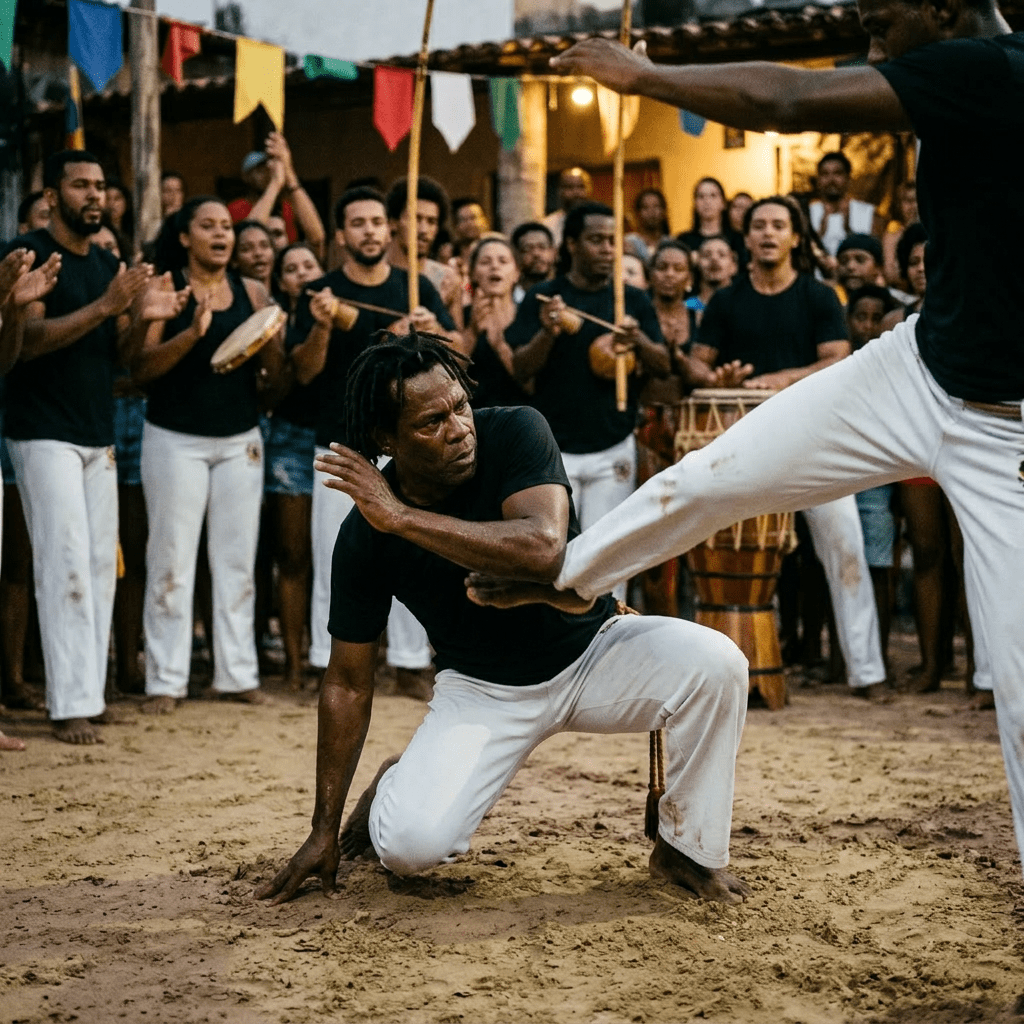
Law #7: The Law of Defensiveness, through the eyes of an angoleiro
In the context of Capoeira Angola, Law #7—The Law of Defensiveness—is not merely a psychological theory but a tactical reality embedded in the concept of malícia (cunning). For an angoleiro, influencing or overcoming an opponent requires the same softening of resistance that Robert Greene describes, yet it is executed through the physical and psychological language of the jogo (game).
Strategic Deception and the Softening of Resistance
The angoleiro masters indirect influence by manipulating an attacker’s expectations. Just as Greene suggests making people feel their actions are their own idea, a capoeirista uses feints and deceptive body language to lead an opponent into a false sense of security or a predictable line of attack. A classic example is the story of the master Besouro, who lowered the defenses of four armed officers by feigning pathetic cowardice; by appearing non-threatening, he dissolved their psychological readiness, allowing for a clean, non-violent escape.
Applying the Strategies of Influence in the Roda
Confirm their self-opinion: In a fight, this means playing into the opponent’s perception of you as a “weak” or “distracted” target. By confirming their belief that they have the upper hand, you make them open to a sudden counter-movement like a rasteira (sweep).
Infect them with the right mood: Through the rhythm of the ginga and the music of the berimbau, the angoleiro dictates the emotional temperature of the encounter, using subtle re-positioning to keep the opponent guessing.
Provide a sense of autonomy: A master of malandragem (trickery) often provides a “treacherous invitation”—an apparent opening that the opponent chooses to exploit, unaware that they are stepping into a trap.
Ultimately, the angoleiro views the Law of Defensiveness as a tool for survival. By bypassing direct confrontation and utilizing psychological dominance, the practitioner ensures that physical violence remains a last resort, used only when the “lie” of the game no longer suffices to guarantee safety.

