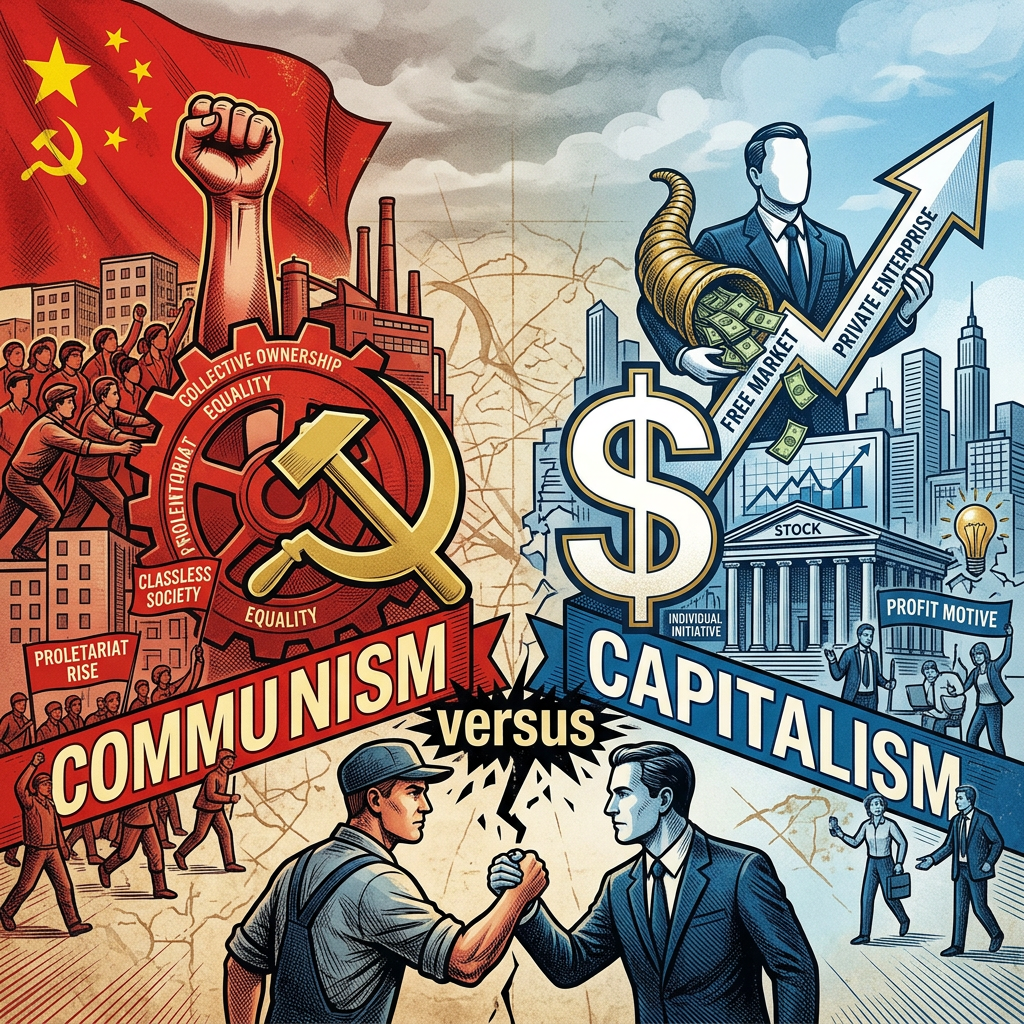
In the late 1940s, the world was gripped by competing ideologies, primarily the struggle between Communism and Capitalism.
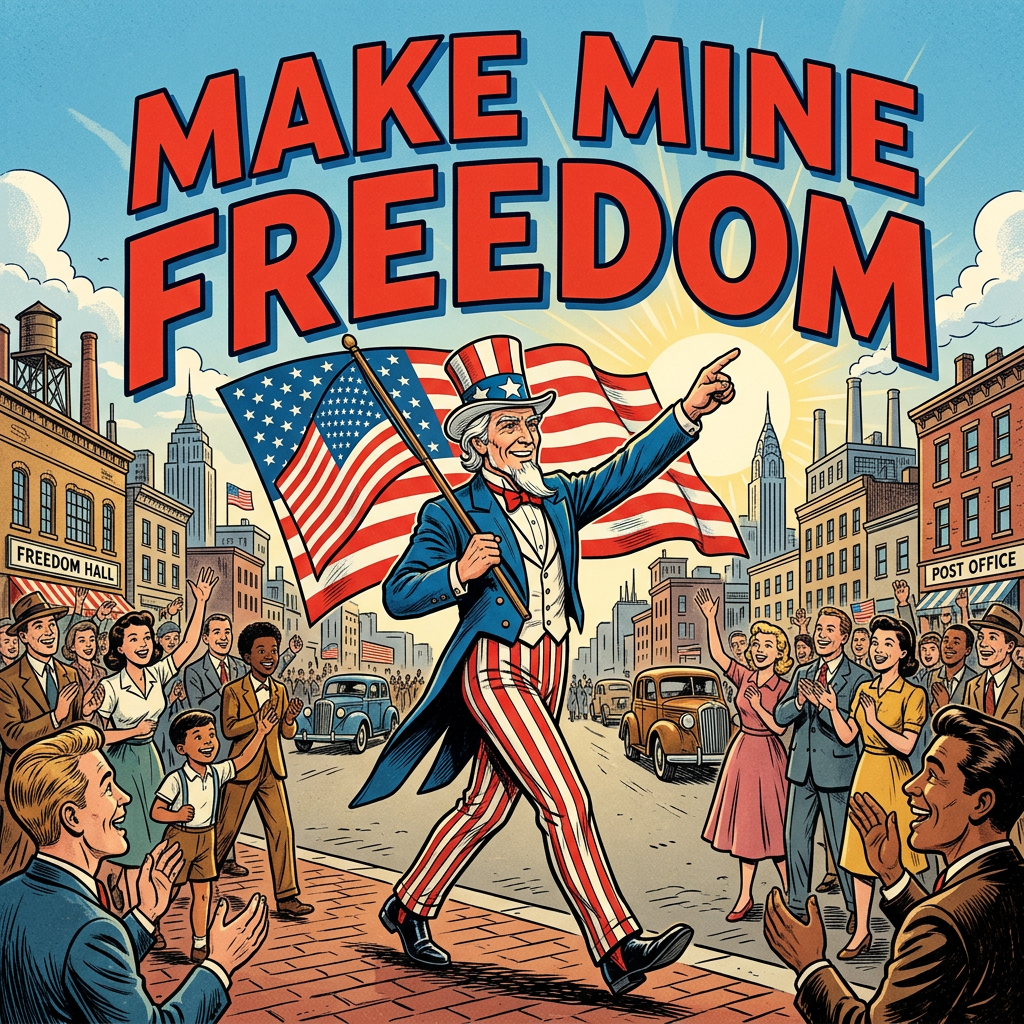
Amidst this ideological battle, the 1948 film Make Mine Freedom serves as a clear artifact of this era, firmly advocating for the capitalist model and highlighting the virtues of individualism and economic freedom. The film illustrates the dangers of government overreach and the risks posed by centralized economic control. However, its central warning regarding “snake oil salesmen”—those who promise the public everything while delivering nothing—remains strikingly relevant in 2026, as contemporary society continues to grapple with misleading promises from charismatic leaders and corporations. In an age inundated with information and competing narratives, the cautionary message of vigilance against false promises becomes increasingly crucial, reminding us to scrutinize the motives of those in power and to champion authentic, value-driven choices in our economic and social landscapes.
The film’s themes of identity and the manipulation of public belief echo through modern discourse, resonating in an age where social media shapes perceptions at an unprecedented scale. Much like the historical figures who utilized anonymity to shape national liberty and inspire change, today’s digital landscape is rife with unchecked anonymity that can be weaponized to divide nations and threaten election integrity. This duality of anonymity serves both as a cloak for legitimate free expression and a veil for malicious intent. The “online disinhibition effect” has allowed masked actors and bots to replace the snake oil pitchmen of the past, fanning flames of incivility for short-term profit, and amplifying polarizing narratives that disrupt societal cohesion. As misinformation spreads like wildfire across platforms, the challenge of discerning truth from deception becomes increasingly daunting in an environment designed for rapid consumption.
Furthermore, the film’s focus on chasing promises of freedom and abundance finds a parallel in current psychological research. Experts note that people often pursue “ego desires”—goals driven by a need to prove oneself or compare with others—which rarely deliver the promised emotional payoff. This cycle of chasing false dreams mirrors the empty promises of the 1948 salesmen, who offered solutions that ultimately fell short of bringing real satisfaction or fulfillment. Similarly, today’s consumers navigate a landscape filled with social media influencers and marketing strategies that capitalize on these ego desires, leading individuals further down a path of illusion rather than genuine contentment. This suggests that while the medium of the message has shifted from physical rallies to digital platforms, the underlying struggle against deceptive influence and the search for genuine alignment remains a defining challenge in our pursuit of authenticity. As we grapple with these modern parallels, it becomes increasingly important to critically assess both our personal goals and the societal narratives that shape our aspirations.