
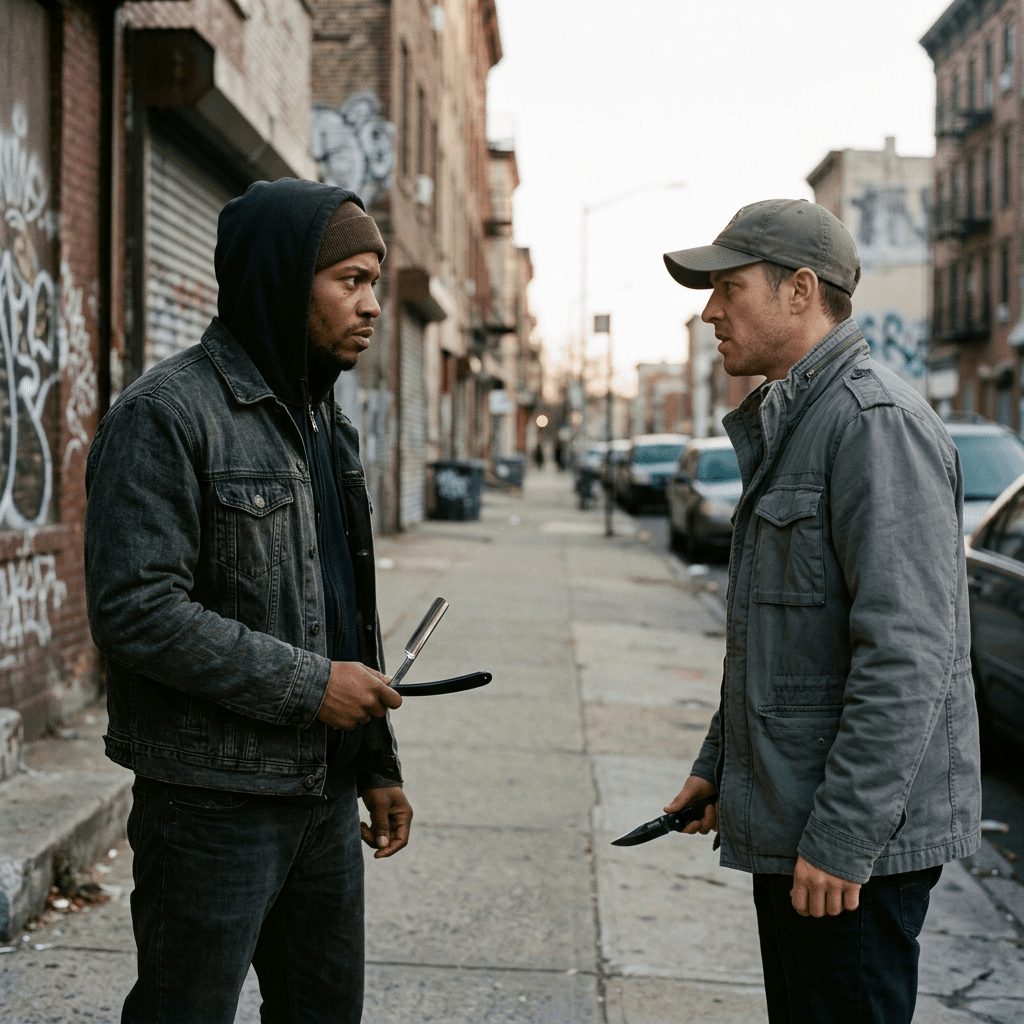
The historical and cultural practice of Capoeira Angola, forged in the crucible of resistance against oppression and the necessity of survival, demanded a comprehensive mastery that extended far beyond the realm of unarmed combat. The Angoleiro, a practitioner for whom every interaction was potentially a matter of life or death, developed a complete defensive arsenal that included high proficiency with readily available, improvised, and often concealed weaponry. This expanded guide offers a detailed, multi-layered examination into the specific application, underlying philosophy, and advanced technical requirements for employing two distinct yet equally potent tools in a self-defense or street-fighting engagement: the straight razor and the short knife. These implements, typically carried not just as weapons but as part of an individual’s common utility, necessitate a specialized mindset and a technical approach that is seamlessly integrated with the hallmark evasive, deceptive, and kinetic movements unique to the Angoleiro tradition, known collectively as malícia and the jogo de cintura (the game of the waist).
I. The Straight Razor: The Art of the ‘Fio de Navalha’ (Razor’s Edge)
The straight razor, or navalha, stands as arguably the most emblematic, fearsome, and distinctive concealed weapon within the Capoeira Angola lineage. Its formidable reputation is derived from its unparalleled capacity for swift, devastating cutting, its near-invisible profile when folded, and the profound psychological disruption inflicted by its quick, surgical strike. It represents the ultimate expression of minimal force applied for maximum effect, an instrument designed to end the fight before it can even begin to escalate beyond the Angoleiro’s control.
A. Weapon Characteristics, Carry, and Deployment
1. Absolute Concealment and Reflexive Deployment
The razor’s ingenious folding mechanism is the key to its tactical supremacy. It allows for effortless, deep concealment, typically secured within a waistband, a deep pocket, or, most effectively, palmed and hidden within the hand or sleeve, making the weapon an appendage of the body itself rather than an external object. The signature deployment is achieved through a technique honed to a reflex: a rapid, almost invisible flick of the wrist (the ‘corte de repente’) that snaps the blade open with a mechanical precision. This motion is practiced hundreds of times, transforming a passive, open hand into an immediate, lethal threat in a fraction of a second, capitalizing on the opponent’s sensory lag. The deployment is often executed mid-movement—during the recovery from a negativa or the setup of a kick—further masking the action
.2. The Intentional Grip: A Deadly Extension
The navalha is held not with the crushing strength reserved for a blunt weapon, but with a firm, nuanced, and flexible grip. The goal is for the razor to feel like a natural, deadly extension of the index finger and thumb—the very tip of the hand’s kinetic chain. This specific grip geometry is crucial as it inherently favors rapid, shallow, drawing slashes (cortes) rather than deep, linear thrusts. The cutting action focuses on the draw rather than the push, maximizing the razor’s razor-thin edge on soft tissue. The forefinger often rides high on the tang, providing surgical index and pressure control for the delicate, yet devastating, cut.
3. The Tactical Principle: Distance Closer and Fight Ender
The razor is not a weapon for extended duels, blocking, or prolonged exchanges; its use fundamentally breaks the established rules of combat. Its philosophy dictates that its use must be decisive, focused on creating immediate, overwhelming, and systemic damage to disable an aggressor and irrevocably secure a path of escape. It is deployed to shorten the engagement window dramatically, serving as a non-negotiable punctuation mark to the confrontation. Its mere presence, often revealed only after the first strike, is designed to shatter the opponent’s morale and will to continue fighting.
B. Advanced Tactical Application in a Streetfight Scenario
1. The Kinetic Distraction Cut: Setting the Stage
The Angoleiro’s primary tactic is to set the stage for the razor strike. This involves a coordinated feint or movement that forces the opponent’s focus away from the striking hand, capitalizing on the opponent’s inherent instinct to track the largest, most committed movement. Common setups include:
- A sudden, low sweep (rasteira) that forces the opponent’s gaze to the ground, drawing their visual focus down while the navalha is deployed high.
- A feigned, yet committed, push kick (bênção) aimed high to occupy the opponent’s guard and force their hands up.
- An evasive dive (negativa) that creates a momentary blind spot or requires the opponent to shift their weight, destabilizing their stance.
The razor is then delivered in a blindingly fast, peripheral action, focused on creating immediate, shallow, yet profoundly disabling wounds. This is not a kill shot; it is an escape shot.
2. Prioritized and Systemic Targeting
The Angoleiro’s targeting strategy is not based on lethality alone, but on immediate functional neutralization. The primary targets are carefully selected for their vulnerability and their critical role in an opponent’s ability to fight or pursue, prioritizing the immediate loss of the opponent’s offensive capacity:
- The Face and Eyes: A cut across the face (“The Line,” or Corte de Malícia) is a massive psychological shock and a source of blinding blood flow, obscuring the opponent’s vision. Cuts targeting the eyes or surrounding musculature are instantly incapacitating.
- The Hands and Forearms (The Capoeirista’s Tools): Cuts focused on the flexor tendons and arteries of the hands or the inside of the forearms seek to sever the opponent’s ability to grip, punch, or block. This systemic targeting prioritizes the immediate loss of their primary weapons, turning their hands into non-functional bleeding assets.
- Major Vascular Zones: Quick, shallow strikes to the neck (jugular vein) or wrist exploit the concentration of major blood vessels near the skin’s surface, leading to rapid blood loss, shock, and a swift, irreversible shift in the power dynamic.
C. Integration with Capoeira Movement
The razor strike is rarely a static attack; it is an organic, inseparable element of the overall evasive strategy. The weapon is drawn and delivered at the exact moment of maximum body evasion and kinetic transfer—for instance, at the zenith of a queda (fall), the apex of a sweep’s counter-movement, or as the body rolls out of a low dodge (negativa).
The genius of this integration is threefold:
- Unpredictability: The fluid, low-to-the-ground Capoeira movement masks the intention and the draw of the weapon, ensuring the attack’s arrival is a complete surprise. The opponent is focused on the evasive body movement, not the hidden hand.
- Kinetic Power: The full torque and momentum of the body—the energy generated by the ginga and the evasive maneuver—is channeled into the blade. The entire physical structure is converted into a kinetic delivery system for the strike, turning a simple wrist movement into a devastating, power-assisted cut that is incredibly difficult to anticipate, track, or block.
- Efficiency: The attack is a fluid, continuous motion. The razor strike becomes a moment in the transition, ensuring no energy or time is wasted on unnecessary wind-up or recovery. The corte is completed as the Angoleiro is already moving into the next defensive or escape maneuver.
II. The Short Knife: The Utility of the ‘Faca Curta’
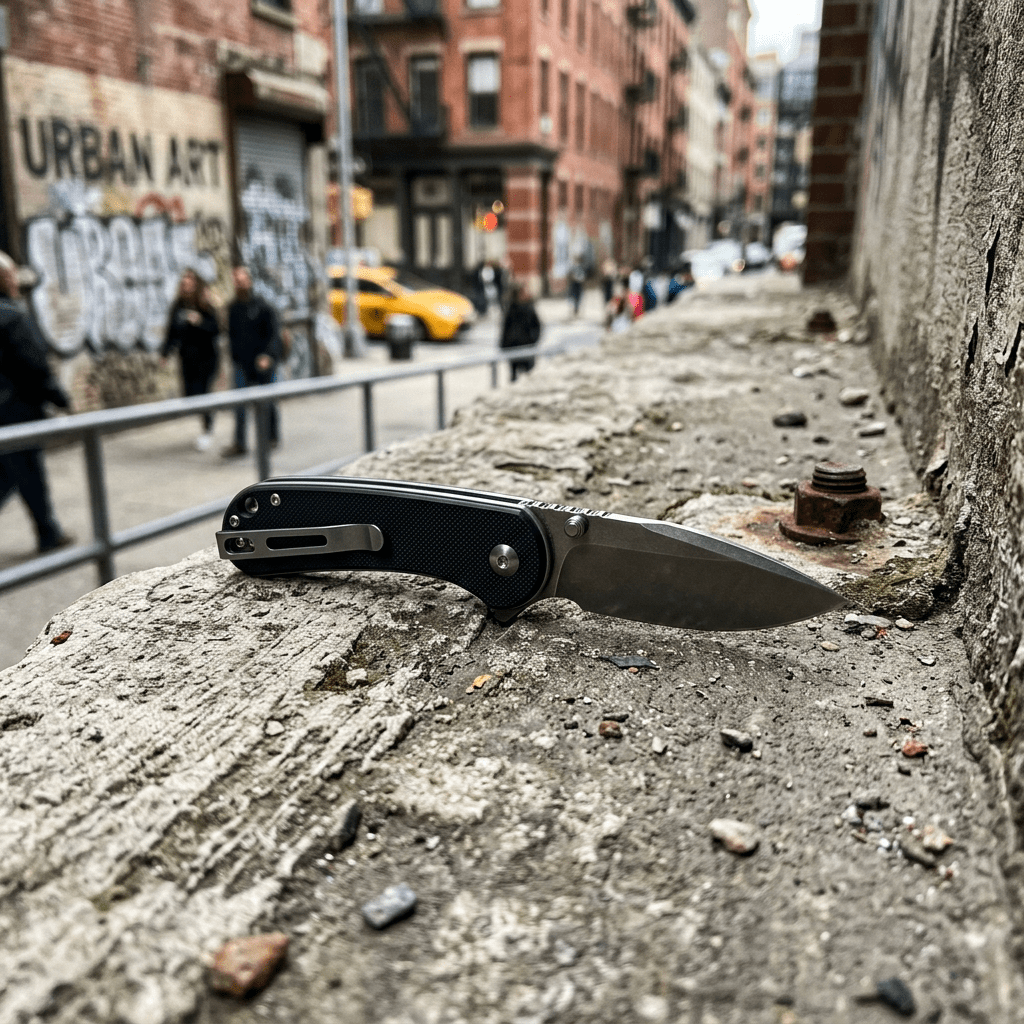
The short knife, or faca curta, represents a crucial escalation in the Capoeirista Angoleiro’s arsenal, moving beyond the pure shock and threat of the razor. It is a more robust, versatile, and decisive tool that shifts the user’s tactical profile from a pure opportunist to a formidable close-quarters combatant. Unlike the razor, which is primarily a soft-tissue cutting threat, the short knife—whether a sturdy utility blade, a classic punhal (dagger), or a dedicated fighting knife—offers superior mechanical advantage, particularly in terms of penetration, defense, and control. It serves dual roles: an immediate, non-negotiable deterrent and a tool capable of swiftly and decisively ending a confrontation to facilitate disengagement.
A. Weapon Characteristics and Grip: The Science of Close-Quarters Control
The selection and handling of the faca curta are rooted in the practical demands of a sudden, chaotic street encounter. Efficiency, concealment, and maneuverability are paramount.
1. Optimal Size and Concealment
A blade length in the 4-6 inch range is universally preferred, representing the Angoleiro’s gold standard. This size achieves the critical balance between necessary reach and lethality for deep penetration, while remaining highly maneuverable within the confined space of a clinch or a tight street fight. Critically, it is an ideal size for deep concealment, aligning with the core principle of malícia—the weapon must be unexpected. A longer blade is unwieldy and immediately telegraphs the intent; a shorter one sacrifices the vital reach needed to effectively target internal organs or major muscle groups.
2. Grip Variations: Harnessing Mechanical Advantage
The Angoleiro masters two primary grips, each tailored for a specific phase or outcome of the fight, providing instant tactical adaptability:
| Grip | Primary Application | Description and Rationale |
| Forward Grip (Saber/Hammer Grip) | Thrusting and Powerful Slashing | This grip maximizes the kinetic transfer from the arm and shoulder, making it the superior choice for deep thrusting and powerful, curving slashing motions. The thumb rests naturally on the spine of the blade or handle, providing excellent index and control for precision attacks. It is utilized in direct, often unavoidable engagements where maximum reach and penetrating power into the torso or head are required. It allows the faca curta to act as a focused, high-velocity spear, maximizing the blade’s potential for lethal penetration. |
| Reverse Grip (Icepick/Pikal Grip) | Close-in Combat, Clinch, and Ground Fighting (No Chão) | The reverse grip is the signature grip for close-in, dynamic combat, ground fighting, and clinches. By holding the blade edge-out, facing down, the user gains tremendous leverage for downward, hooking, and ripping strikes. This grip is specifically leveraged to attack over the shoulder (into the collarbone/neck) or execute devastating downward thrusts into the mid-section, kidneys, or inner thighs during a struggle, a position that naturally leverages body weight for deep penetration. It is an indispensable technique for creating space or forcing a swift termination during a grappling exchange. |
3. The Fundamental Principle: Control and Penetration
The short knife is not merely a cutting tool; it is a weapon designed for control and penetration. Its physical presence forces an immediate psychological barrier upon the opponent. The user leverages the threat of deep, disabling injury to dominate the immediate fight space, dictating range and forcing the adversary into a perpetual defensive posture. The tip is the primary weapon, aimed at deep, disabling strikes.
B. Tactical Application in a Streetfight: Integrating the Blade with the Art
The integration of the short knife with Capoeira Angola’s dynamic, deceptive movement is what fundamentally distinguishes this fighting style. The weapon is not fought with but is incorporated into the flow of the jogo (the game).
1. Defense, Parry, and the Counter-Thrust
Moving beyond the razor’s pure offensive role, the sturdy nature of the faca curta allows it to be employed defensively. The knife can be used to parry or block incoming punches, kicks, or even the opponent’s weapon arm (though the latter is a high-risk maneuver). The most critical tactic is the “capture and cut” (or capturar e cortar), a classic Capoeira trapping technique. The non-weapon hand captures or checks an incoming limb (wrist, shoulder, leg) to momentarily immobilize or misdirect the opponent. Simultaneously, the short knife executes a rapid, disabling thrust into an adjacent vulnerable area (e.g., the armpit, bicep, or femoral artery). This action is swift, unexpected, and devastatingly efficient.
2. Thrusting vs. Slashing: Maximizing Lethality
While slashes are possible and useful for deterring or distracting, the short knife excels overwhelmingly at thrusting. This emphasis reflects a pragmatic focus on lethality and immediate disablement. Thrusts are aimed at deep tissue, major organs, and vascular targets in the torso (e.g., abdomen, solar plexus, sternum). To maximize the surprise factor, these attacks are almost always masked: a thrust may follow or precede a simultaneous kick (chute), a deceptive body lean (queda), or be delivered at the conclusion of a complex movement sequence, making the weapon’s deployment seamless and often invisible until impact. The goal is to make the knife attack an inescapable extension of a movement the opponent was already trying to counter.
Biomechanical cutting is a concept rooted in understanding the vulnerabilities of the human body and applying an edged weapon to exploit those weaknesses with maximum efficiency. It goes beyond mere hacking or slashing and emphasizes precise targeting of critical anatomical structures to rapidly incapacitate an opponent.
Key Principles of Biomechanical Cutting:
- Anatomical Targeting: This is the core of the discipline. It requires an in-depth knowledge of human anatomy, specifically the location and function of major blood vessels (arteries and veins), nerve clusters, and tendons. The goal is to identify points where a cut, even a shallow one, can cause immediate and catastrophic functional failure, severe hemorrhage, or debilitating pain.
- Major Arterial Structures: Targeting the carotid artery (neck), brachial artery (inner arm/bicep), and femoral artery (groin/inner thigh) leads to rapid blood loss and shock.
- Motor Control Nerves and Tendons: Cuts aimed at the flexor tendons of the forearm or the motor nerves that control the hands and feet can instantly destroy an opponent’s ability to grip, hold a weapon, or maintain balance. The peroneal nerve near the knee or the radial/ulnar nerves in the wrist are prime targets.
- Angle of Attack: The effectiveness of a cut is highly dependent on the geometry of the blade meeting the target. A properly executed biomechanical cut utilizes the blade’s edge in a drawing or slicing motion, maximizing the length of the incision while minimizing the force required. This is in contrast to a chopping motion, which relies on blunt force. The ideal angle should be oblique or perpendicular to the fibers of the tissue being cut to ensure a clean, deep severing action.
- Efficiency of Motion: The cut must be delivered with minimal telegraphing, using the shortest, most direct path to the target. This ensures speed, surprise, and reduces the chance of the attack being intercepted or parried. Economy of motion is paramount; a single, well-placed, deep slice is infinitely more effective than multiple superficial hacks.
- Tissue Layer Penetration: The cutter must understand the depth required to reach the intended structure. For instance, severing the jugular vein or carotid artery requires penetrating skin, subcutaneous fat, and layers of muscle, which demands a sharp blade and correct technique. A cut intended to disable a limb through tendon severance may require a shallower penetration but an extremely precise angle.
In the context of the straight razor or short knife, biomechanical cutting transforms the weapon from a simple threat into a surgical tool of extreme prejudice, focusing entirely on a calculated, decisive ending to the encounter.
3. The Ground Game (No Chão): Dominating the Clinch
The Angoleiro’s inherent comfort with the ground game—the movements of sweeps, trips, and ground-based escapes—makes the short knife an extremely dangerous asset in a grappling scenario. In this environment, the reverse grip (Icepick) becomes paramount. From a compromised or mounted position, the blade can be used to threaten and attack soft targets—the throat, groin, kidneys, inner thigh, or armpit—from angles unavailable while standing. This immediate, high-consequence threat is often used not to kill, but to force the opponent to disengage, loosen their hold, or shift their attention, creating the crucial window for a dramatic and explosive escape maneuver like the aú (cartwheel) or rabo de arraia (stingray tail). The knife’s role No Chão is to shatter the opponent’s ability to maintain control.
4. Integrating the Ginga: The Rhythmic Attack
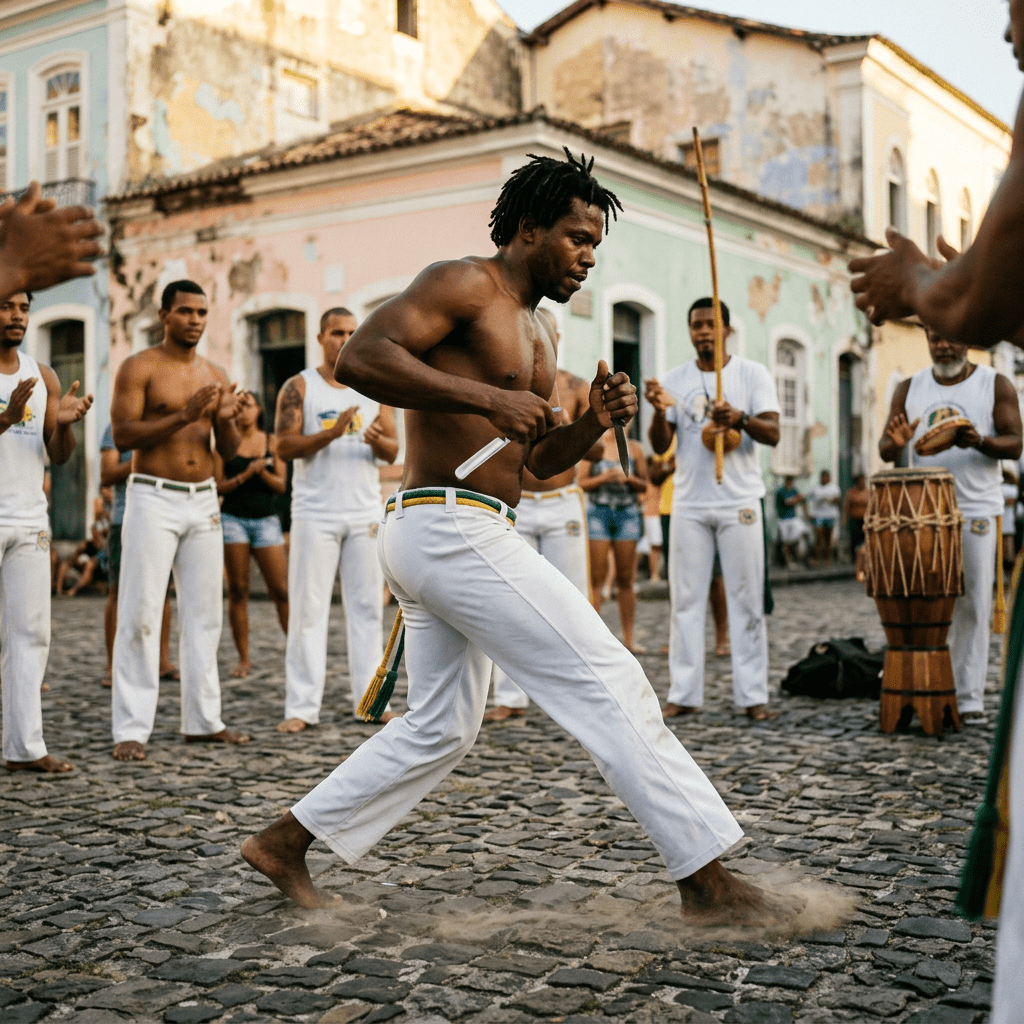
The ginga, the characteristic rocking, foundational movement of Capoeira, is not abandoned when the knife is drawn; it is adapted. The ginga keeps the armed hand in perpetual, unpredictable motion, making it a difficult target to track and the attack difficult to anticipate. The knife is often kept low, close to the body, and deployed only on the forward or backward step of the rhythm, concealing the commitment. This integration means the attack is not a sudden, telegraphic lunge, but an organic, integral part of the rhythm itself, a core principle of blending the weapon into the dance of combat.
—–III. The Angoleiro Mindset: Philosophy of Weapon Use
The guiding philosophy dictates that the Angoleiro does not rely on the weapon; rather, the weapon is a last resort, a necessary tool of survival when the pure, unarmed movement of Capoeira Angola proves insufficient against an armed opponent or multiple assailants. The ethical and tactical principles underpinning the use of the faca curta or razor are centered on cunning, efficiency, and escape.
A. Core Principles of the Armed Angoleiro
1. Deception (A Malícia): The True Strength
The strength of the armed Angoleiro is not in the weapon itself, but in the malícia—the cunning, trickery, and deceptive intent woven into the movement. The entire rhythm, the feints, and the body language are designed to make the opponent forget or ignore the weapon until the final, last possible moment. The weapon itself becomes an extension of the feint, deployed only when the opponent’s attention has been successfully diverted or their balance compromised. The Angoleiro fights with movement and misdirection, and kills with a surprise attack.
2. Disengagement: The Ultimate Goal
The objective is never to win a prolonged duel or “defeat” the opponent in a traditional sense. The goal is solely survival and preservation of one’s freedom. The use of the razor or knife is intended to inflict enough immediate, disabling damage (psychological or physical) to secure a clean disengagement and escape. The moment the opponent is shocked, stunned, or immobilized, the Angoleiro retreats, adhering to the principle of avoiding prolonged, unnecessary conflict and avoiding attention from authorities.
3. Economy of Motion: Lethality and Efficiency
Every action, whether a kick, a block, or a thrust, must serve the singular purpose of survival and escape. Strikes with the weapon are short, direct, and delivered with maximum commitment to the target. There is no room for hesitation or wasted movement; the technique reflects the brutal efficiency and absolute lethality required in a genuine, life-or-death street encounter, where a drawn-out struggle risks further injury or capture.
—–IV. The Angoleior’s Guide to Using Improvised and Everyday Carry (EDC) Weapons
This section moves beyond theoretical conflict to the tangible, detailing the philosophy and practical application of transforming readily available items—both those habitually carried and those found in the immediate environment—into effective tools for self-defense. For the Angoleior, true mastery is not predicated on access to exotic or restricted weaponry, but in the disciplined ability to instantly recognize and convert the mundane into a potent means of protection. The goal is to cultivate a state of mindset superiority, where the environment itself becomes an extension of the warrior’s will.
A. Improvised Weapons: Transforming the Ordinary into the Tactical
An improvised weapon is, by definition, an object not originally manufactured or designed for combat, but which is swiftly and effectively adapted for use in a self-defense situation. The foundation of this skill is a dynamic process of perceptual agility and rapid risk assessment, allowing the Angoleior to see lethal or disabling potential where others see only clutter, furniture, or debris.
1. The Five Principles of Improvisation (The Angoleior’s Taxonomy)
The effectiveness of any improvised weapon can be categorized by the primary function it performs, guiding the Angoleior’s choice based on the distance, the opponent, and the intended outcome:
- Impact/Mass (The Blunt Force Trauma): These objects are designed to deliver a heavy, focused, non-penetrating blow. The goal is blunt force trauma, targeting skeletal structures (joints, hands, shins) or the head to create disorientation and systemic shock. Examples: A brick, a full metal water bottle, a heavy hardback textbook, a fire extinguisher cylinder.
- Edge/Point (Penetration/Laceration): These are items that can be used to stab, slash, or tear through clothing and flesh, primarily targeting vulnerable soft tissue (eyes, throat, hands, major arteries). The intent is to cause immediate pain and bleeding, forcing the assailant to break off the attack. Examples: A broken glass or ceramic shard, a sharpened pencil or pen, car keys held in an ice-pick grip, a flat-head screwdriver.
- Flail/Whip (Reach Extension and Velocity): Objects that can be swung with velocity to strike a target at a greater range than a direct punch or kick. This technique leverages centrifugal force for increased power and provides a crucial stand-off distance. Examples: A belt with a heavy metal buckle, a length of chain, a sock filled with coins or a billiard ball.
- Shield/Barrier (Defense/Cover and Space): Items large enough and sturdy enough to absorb or deflect an incoming strike, or to create a physical separation between the Angoleior and the threat, disrupting the assailant’s attack rhythm and buying time. Examples: A briefcase, a chair (used to create distance), a rolling office chair (used for a rapid shove).
- Restrict/Bind (Control/Entanglement): Objects that can be used to temporarily restrain, trip, tangle, or unbalance an assailant, giving the Angoleior time to escape or follow up with a striking attack. Examples: A long scarf or necktie, a power cord or charging cable, a jacket or coat (thrown over the head to blind and confuse).
2. Situational Examples and Advanced Application (The “Seeing Eye” in Practice)
The Angoleiro’s ability to transition from passive civilian to lethal combatant is exemplified by the rapid assessment and application of objects within specific environments:
| Environment | Improvised Weapon | Application and Rationale (Angoleiro’s Logic) |
| Office/School | Fire Extinguisher | Application: High-impact blunt force trauma to the chest or head using the cylinder, immediately followed by discharging the agent into the assailant’s face for a blinding, choking, and disorienting cloud of suppressant. Rationale: Dual-purpose tool providing both kinetic impact and chemical/sensory overload, guaranteeing a system failure in the opponent. |
| Restaurant/Bar | Bar Stool or Chair | Application: Held out as a defensive barrier to keep the assailant at bay, then thrust into the opponent’s midsection as a spear, or thrown heavily as a striking weapon. Rationale: Utilizes size and weight for distance control and immediate, overwhelming force, forcing the assailant to deal with a large, non-standard attack vector. |
| Street/Park | Rock/Cobblestone/Hard Fruit | Application: A projectile weapon for distraction or a focused impact on vulnerable points (head, knee cap) at medium range. Rationale: Provides a non-contact, stand-off option for disabling or creating an opening for escape; maximizing the use of medium range before the fight closes. |
| Garage/Tool Shed | Hammer/Wrench/Crowbar | Application: Extreme blunt force used for targeted, disabling strikes against joints or the head. The leverage provided by a longer handle significantly increases kinetic energy. Rationale: Dedicated tools of high density, maximizing mass and velocity for critical, fight-ending strikes. |
| Public Transport | Umbrella (Long/Metal) | Application: Used as a walking stick for jabbing into soft tissue, a leverage tool for blocking, or hooked around a limb/neck for control. Rationale: Provides reach, rigidity, and is entirely non-suspicious (maximizes malícia). |
B. Everyday Carry (EDC) Weapons: The Prepared Angoleior’s Commitment
Everyday Carry (EDC) refers to the small, essential items an individual carries on a daily basis. For the Angoleior, the EDC kit is curated with dual-purpose potential in mind, where utility tools can transition instantly into defensive instruments. This preparation reflects a proactive commitment to self-preservation and the principle of always having a concealed edge.1. Common EDC Items and Their Defensive Applications
- Tactical Pen/Robust Marker: These are often manufactured with a flat end (bezel) and grooved body for maximum grip. The point can be used for deep, penetrating strikes against nerve clusters, pressure points, or soft tissue (eyes, throat, hands, armpit). It is essentially a modernized Kubotan or yawara stick—a non-permissive environment tool that is always available.
- Keychain/Keys (The Fist Spike): When held in a tight, reinforced fist with the key head protruding between the index and middle fingers, they create a small, hard, and sharp point for jabbing and raking attacks to the face or hands. This turns the fist into a precision impact weapon, capable of inflicting severe, localized pain to create a disengagement opportunity.
- Flashlight (High Lumen/Metal Body): A metal-bodied, high-lumen tactical flashlight is an indispensable defensive tool:
- Blunt Force (Impact): The heavy, crenulated bezel (strike face) can be used for a devastating hammer-fist strike, maximizing kinetic transfer into a small area.
- Distraction/Disorientation (Sensory Attack): A powerful strobe light setting, directed immediately into an aggressor’s eyes from close range, causes temporary blindness, severe disorientation, and overwhelming light shock. This buys precious seconds for escape, counter-action, or follow-up attack.
- Belt (The Flail/Lash): The belt, particularly one with a heavy metal buckle, can be quickly removed and swung as a flail-type weapon, significantly extending the Angoleior’s effective striking range and creating a wide, unpredictable attack. The leather or canvas strap can also be used for temporary restraint (hand or wrist binding) or thrown to trip an attacker.
2. The Mental Edge of the Angoleior (Mind Over Matter)
Crucially, the inherent effectiveness of both improvised and EDC weapons relies entirely on the Angoleior’s mindset and training. The object itself is inanimate; it is the unwavering commitment to use these items aggressively, without hesitation, and with lethal intent that transforms a simple pen into a spike or a book into a life-saving shield.
Training and visualization are the non-negotiable components of this process. The Angoleiro must mentally rehearse the adaptation: identifying the threat, assessing the environment, choosing the best available tool, and launching the counter-attack instantaneously under duress. The true weapon is the mind—calm, focused, and adaptable—and the objects carried or found are merely extensions of the Angoleior’s will and commitment to survival.
Legal, Ethical, and Psychological Mastery
The Angoleiro, or practitioner of this combative discipline, must understand that true mastery of edged weaponry extends far beyond the physical techniques of cutting and thrusting. It requires a profound, tripartite commitment to legal compliance, ethical conduct, and psychological control—especially in the high-stakes, chaotic environment of a street encounter.
Legal Compliance: The Rule of Law and Self-Defense
The use of deadly force, which any edged weapon constitutes, is subject to the strictest scrutiny under law. The practitioner must be intimately familiar with the specific laws governing self-defense, concealed carry, and weapon possession in their jurisdiction. Legal mastery is not simply knowing the law, but internalizing the principles that dictate justifiable force:
- Necessity: The threat must be imminent, unavoidable, and pose a genuine risk of death or serious bodily harm. The weapon should only be drawn or used as a last resort, when all avenues of de-escalation or retreat are exhausted.
- Proportionality: The force used must not be excessive in relation to the threat. Introducing a straight razor or short knife into a situation where a lesser level of force (e.g., empty-hand control or escape) would suffice drastically increases the legal burden on the defender. The moment the threat is neutralized, the use of force must cease immediately.
- Reasonable Belief: The practitioner’s belief that they were in imminent danger must be one that a “reasonable person” would share, based on the totality of the circumstances. Emotional reaction or paranoia is not a legally acceptable defense.
The Angoleiro must always be prepared for the legal aftermath, which includes police interrogation, potential arrest, and a lengthy court process, regardless of the justification. Documentation, witnesses, and a clear, composed account of the events are vital components of this mastery.
Ethical Conduct: Morality, Responsibility, and Restraint
The ethical burden of carrying a tool designed to kill or gravely injure is immense. Ethical mastery is the internal compass that guides the Angoleiro to use their skills only for the preservation of life—their own or that of an innocent third party—and never for aggression, ego, or retribution.
- The Principle of Minimum Force: The ethical choice is always to apply the minimum force necessary to stop the attack and no more. This means targeting non-lethal, incapacitating areas if possible, and avoiding excessive injury even when lethal force is justified. The goal is to survive, not to inflict maximal harm.
- Accountability: The practitioner takes full responsibility for the consequences of their actions, including the potential death or permanent disability of an attacker. There is no moral escape from the gravity of taking a life. This responsibility necessitates a commitment to de-escalation and avoidance as the highest form of mastery.
- The Warrior’s Code: True martial ethics dictate that power is wielded with profound humility and respect for human life. The weapon is a shield, not a means of dominance. This ethical framework promotes continuous self-assessment to ensure the practitioner does not cross the line from defender to aggressor.
Psychological Control: Composure in the Face of Lethal Threat
Psychological mastery is perhaps the most difficult domain, governing the mind’s response to the adrenaline dump and terror induced by a lethal confrontation. This control dictates whether the Angoleiro acts as a surgical instrument or a panicked victim.
- Situational Awareness and Pre-Conflict Mindset: Mastery begins long before the fight with a state of relaxed vigilance—a “soft focus” that allows for rapid threat assessment. The ability to recognize pre-attack indicators and make proactive, non-violent decisions is the first line of psychological defense.
- The “Adrenal Dump” Management: In a life-or-death scenario, the massive surge of adrenaline can cause tunnel vision, auditory exclusion, and a loss of fine motor skills. Psychological training must focus on maintaining gross motor function and mental clarity through simulated stress. The practitioner must learn to acknowledge the fear but refuse to be governed by it.
- Intention and Decisiveness: Once the decision to use the weapon is made, hesitation is lethal. Psychological control means acting with decisive, purposeful intent. The mind must be focused solely on the objective: neutralizing the threat to survive. The ability to execute complex motor skills while under extreme duress is the ultimate test of psychological preparation.
- Post-Conflict Processing: The ability to immediately switch from the fight-or-flight state back to a functional, legally compliant mindset (e.g., calling emergency services, securing the scene, giving a coherent statement) is a critical component of psychological mastery that often determines the legal outcome.
In Conclusion: The Capoeira Angoleiro’s mastery of edged and improvised weaponry is a testament to a philosophy rooted in historical necessity and malícia. It is a skill set that elevates simple movement into a lethal form of tactical deception, ensuring that in the inescapable event of a desperate confrontation, the Angoleiro is never truly unarmed.
 Jogo Corpo Fechado