
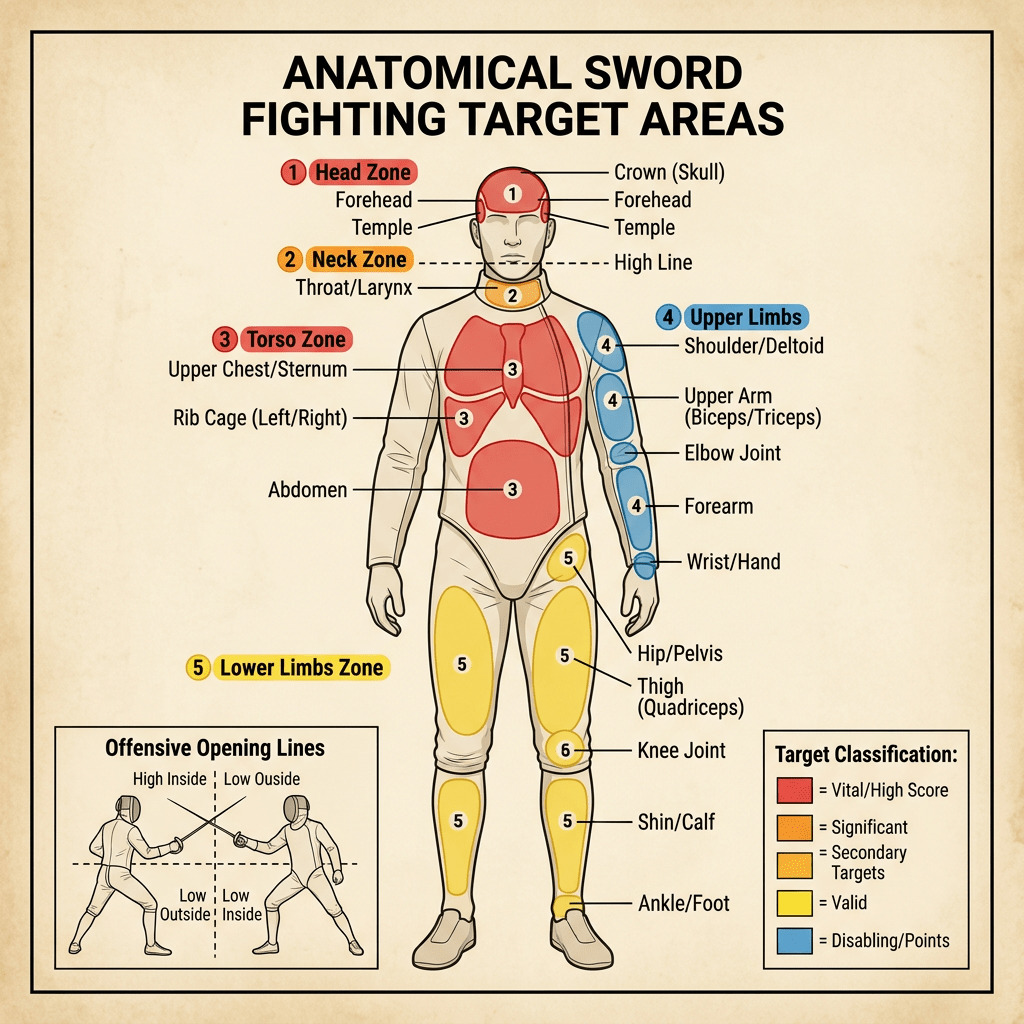
In any bladed confrontation involving instruments such as machetes, bolos, sabers, or rapiers, the objective of utilizing such a weapon must be immediate incapacitation. This requires a disciplined focus on strikes directed at vital anatomical targets designed to rapidly stop an attacker’s ability to fight or pursue. Beyond the immediate physical trauma, practitioners must consider the tactical efficiency and the legal implications of their targeting choices, as strikes to non-vital areas can be legally misinterpreted.
Primary Vital Zones
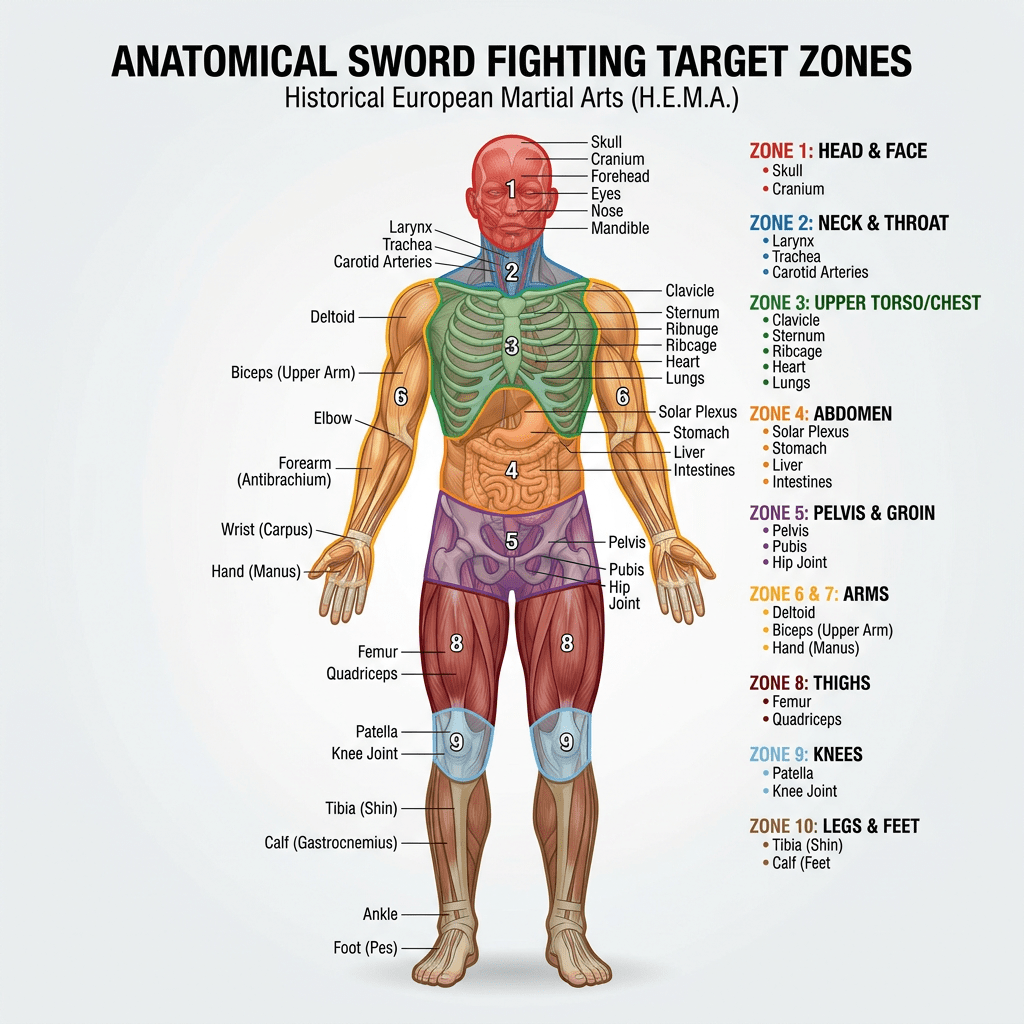
- Heart and Major Chest Cavity: Strikes here are intended to cause rapid internal bleeding and cardiac arrest. Penetrating trauma to the thoracic cavity compromises the central circulatory pump, leading to a precipitous drop in blood pressure and the cessation of motor function.
- Lungs: Targeting the lungs results in an immediate loss of breath capacity and massive internal hemorrhage. This physiological collapse, often involving a pneumothorax or hemothorax, rapidly depletes the attacker’s oxygen supply, rendering sustained aggression impossible.
- Kidneys: Attacks to this region induce severe pain, shock, and significant internal bleeding. Because the kidneys are highly vascularized organs located in the posterior abdominal cavity, a successful strike can cause rapid systemic shock and long-term physiological failure.
- Eyes: Focused strikes can cause instant, debilitating blindness and massive pain or shock. Disrupting the visual sensory input immediately terminates the attacker’s ability to track targets or coordinate offensive movements. This is a primary sensory target used to overwhelm the opponent and create openings for more decisive follow-up strikes.
- Major Arteries: Targeting areas such as the Carotid, Femoral, or Brachial arteries is intended to cause rapid exsanguination (bleeding out), leading to unconsciousness or death within seconds. These targets are prioritized because they facilitate a definitive end to a life-threatening assault through rapid physiological shut-down.
- The Temples and Throat: Impacts to the temples can cause immediate disorientation or internal bleeding due to the thinness of the skull protecting the Middle Meningeal Artery. Strikes to the throat or jugular notch disrupt airflow through tracheal collapse or shut down blood flow to the brain, leading to instantaneous results.
The Legal and Tactical Risk of Ambiguous Targets
Tactical professionals often advise practitioners of bladed combat to avoid targeting an opponent’s arms whenever feasible. While the limbs may present accessible targets during a dynamic confrontation, striking them carries significant forensic and legal repercussions. In a court of law, lacerations, cuts, or slashes discovered on an attacker’s arms are almost universally categorized by medical examiners and legal experts as defensive wounds.
This specific legal interpretation creates a narrative hurdle for the defender. It suggests that the person struck was attempting to shield themselves or parry a blow, implying the defender was the primary aggressor or was fending off a less-than-lethal engagement rather than fighting for their life. Such a characterization can drastically undermine a legal defense predicated on the use of proportional and necessary lethal force.
The presence of defensive wounds creates a significant evidentiary challenge during legal proceedings, as it often complicates the assertion that lethal force was a necessary response to an immediate and imminent threat of death or great bodily harm. When forensic evidence suggests an attacker was attempting to shield themselves, it can shift the legal narrative to imply that the defender was the primary aggressor. To preserve a clear legal standing and ensure that the intent to stop a life-threatening assault is unmistakable, practitioners are advised to focus their strikes on primary vital zones—specifically the heart, lungs, or major arteries. These targets are anatomically aligned with the goal of rapid incapacitation, providing a more definitive and legally defensible link between the threat faced and the physiological results of the defensive action.
 Jogo Corpo Fechado