
NOTE: Although I wrote this article with Capoeira Angola in mind, I also drew from other Martial Arts I’ve had experience in.
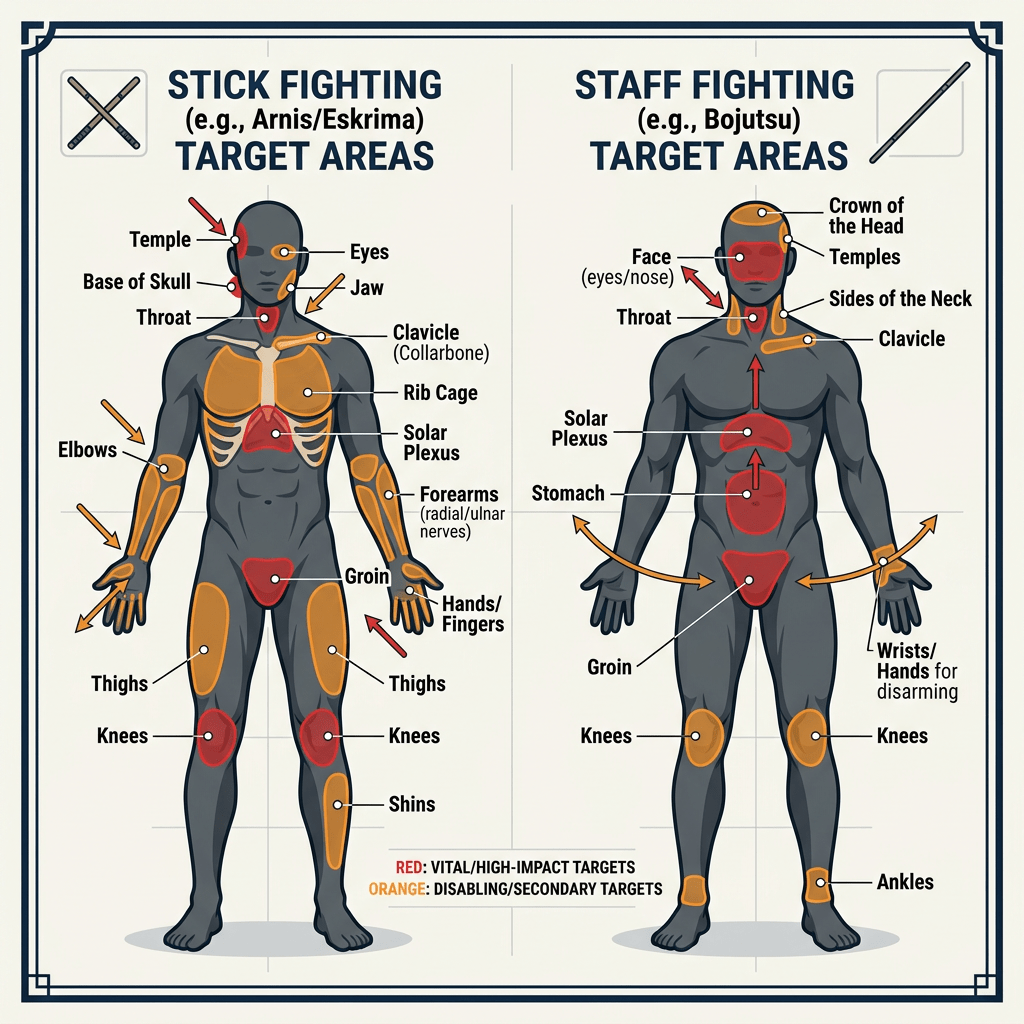
The combat philosophy of stick and staff fighting, as seen in disciplines like Escrima (Kali or Arnis), is rooted in anatomical precision and the intelligent application of concussive force. When utilizing a baston (stick), walking stick, or baton, the primary objective is to maximize structural breakdown and achieve immediate systemic shutdown through overwhelming kinetic energy. This strategy focuses on exploiting the body’s rigidity by targeting specific “Hard Targets”.
Key target areas for impact weapons include:
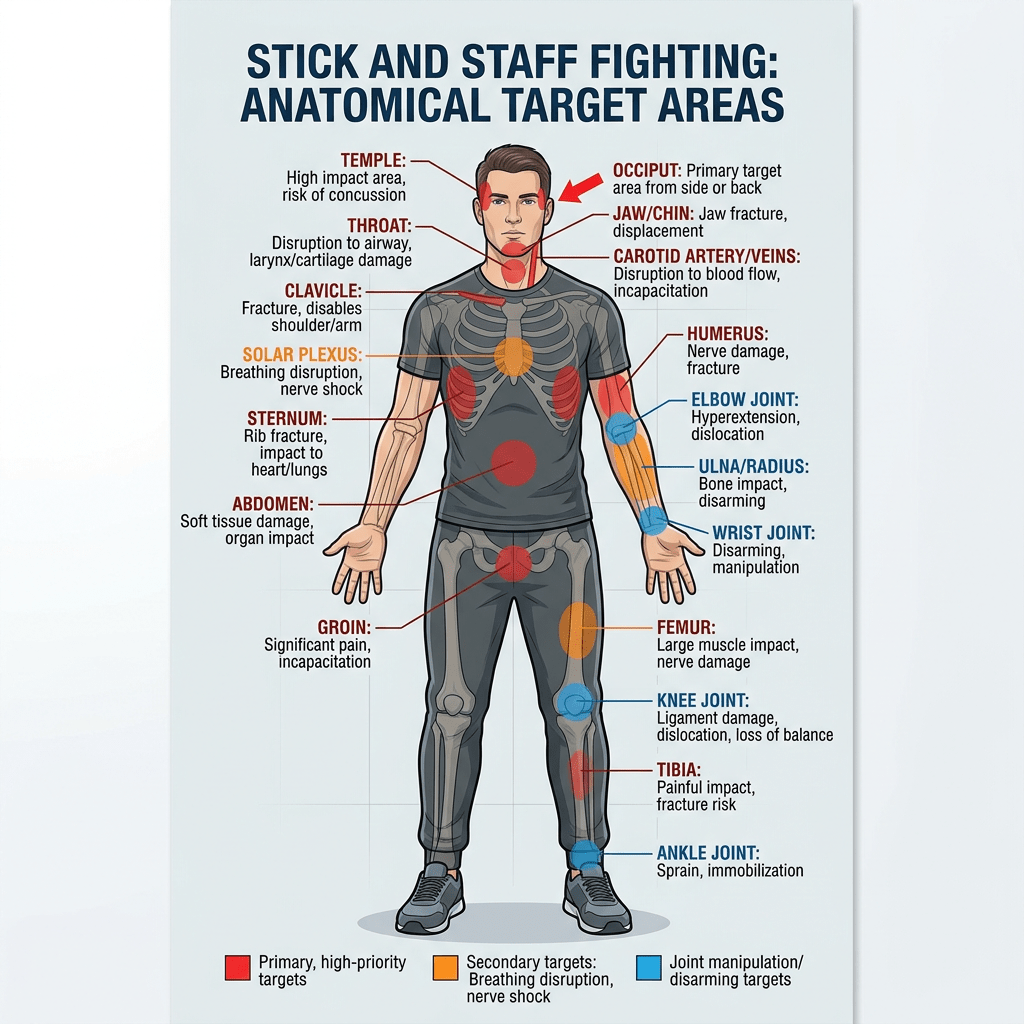
- Skeletal Structure and Joints: Precision strikes are directed at the forearm (ulna/radius), elbow, wrist, clavicle, kneecap, and shins. A focused blow to the clavicle can shatter the bone, immediately immobilizing the shoulder and arm. Strikes to the limbs are designed to inflict extreme pain and disabling fractures, compromising the opponent’s ability to hold a weapon or maintain a stable base. This method of “defanging the snake” focuses on destroying the weapon-bearing limb to neutralize offensive capability.
- Cranial and Facial Targets: The skull—particularly the temples, jaw, and bridge of the nose—represents a high-risk, high-reward zone. Concussive force delivered to these areas is intended for immediate central nervous system (CNS) shutdown, causing disorientation or instantaneous incapacitation. These targets are often engaged when an immediate termination of the threat is required due to their direct impact on the opponent’s consciousness and sensory processing.
- Torso and Axial Skeleton: Targets such as the sternum and ribs are chosen because bone mass in these areas can absorb and transfer maximum kinetic energy, leading to systemic shock and difficulty breathing. Compromising the integrity of the rib cage not only causes significant internal trauma but also limits the opponent’s mobility and stamina.
- Soft Tissue and Vital Centers: While sticks are primarily for impact, they can be utilized against soft tissue for devastating effect. A precise thrust to the throat, solar plexus, or eyes can cause respiratory failure, neurological disruption, or overwhelming psychological shock. These techniques emphasize the stick’s versatility as both a bludgeoning and a thrusting weapon, capable of exploiting the body’s most vulnerable physiological gateways.
In advanced systems like Cinco Teros Escrima, these targets are engaged through five primary angles of attack, which prioritize economy of motion and depth of skill over a broad catalog of techniques. This methodology ensures that strikes are not wasted on non-vital areas but are concentrated on points that definitively terminate a threat. By streamlining the offensive repertoire into five distinct vectors, practitioners can develop instinctive reactions and maintain structural integrity during high-stress encounters, ensuring that every movement contributes directly to neutralizing the opponent.
The effectiveness of this concentrated approach lies in its focus on anatomical weak points such as the skeletal structure, cranial regions, and vital soft tissues. Rather than relying on a vast array of complex maneuvers, Cinco Teros emphasizes the mastery of five fundamental angles of attack to exploit the body’s natural vulnerabilities with maximum kinetic efficiency. This disciplined focus allows for immediate systemic shutdown or structural breakdown, prioritizing immediate results through overwhelming force applied to high-reward targets.
By distilling combat into these five primary vectors—typically comprising diagonal slashes, horizontal cuts, and a central thrust—the system creates a versatile conceptual framework that transcends specific weaponry. Whether utilizing a rattan stick (baston), a blade (bolo), or empty hands, the practitioner targets the most common and instinctively executed lines of attack. This methodology facilitates accelerated mastery, as training time is dedicated to internalizing the geometry of the five trajectories rather than memorizing individual responses for every conceivable target.
Strategic advantages of this streamlined repertoire include:
- Anatomical Precision: Strikes are concentrated on high-value zones such as the temple, neck, clavicle, and joints to ensure every movement contributes directly to neutralizing the threat. By prioritizing targets like the skeletal structure and vital soft tissues, practitioners can achieve immediate systemic shutdown or structural breakdown with maximum kinetic efficiency.
- Economy of Motion: The system eliminates unnecessary movement, focusing on the most potent trajectories to achieve immediate incapacitation or “defanging the snake” by targeting the weapon-bearing limb. This methodology emphasizes mastery over a broad catalog of techniques, ensuring that offensive maneuvers are not wasted on non-vital areas but are concentrated on points that definitively terminate a threat.
- Instinctive Reaction: Through rigorous repetition, these angles become reflexive natural responses, allowing practitioners to adapt instantaneously to the high-pressure chaos of real-world encounters without the delay of conscious thought. Dedicating training time to internalizing the geometry of specific trajectories, such as those in Cinco Teros, facilitates accelerated mastery over memorizing individual responses for every conceivable target.
- Adaptability: The focus on angles over fixed targets allows the practitioner to apply core trajectories to whatever opening becomes available, ensuring effectiveness regardless of the opponent’s stance or range. This creates a versatile conceptual framework that transcends specific weaponry, whether utilizing a rattan stick, a blade, or empty hands.
 Jogo Corpo Fechado