Is walking away actually quitting, or is the act of leaving sometimes a profound display of inner fortitude?
We often associate ‘walking away’ with defeat, a failure of endurance, or the easy path. The narrative of persistence—of staying and fighting, of never giving up—is deeply ingrained in our cultural psyche. But this perspective overlooks the critical distinction between reckless abandonment and a deliberate, self-preserving retreat. To ‘quit’ implies a giving up on something worthwhile—a goal, a relationship, a challenge—out of fear or lack of will.
However, there comes a point in certain struggles—be they professional, personal, or emotional—where the cost of staying far outweighs any potential benefit. This is the moment when leaving demands more courage, more self-awareness, and more strength than simply continuing to endure the familiar pain.
Or is there a point where leaving takes more strength than staying?
Staying can often become the default, the comfortable rut of inertia, even if that inertia is destructive. It can be easier to tolerate the known misery—the toxic environment, the stagnant relationship, the soul-crushing job—than to face the terror and uncertainty of the unknown future. Staying requires a kind of passive tolerance.
Leaving, on the other hand, is an active decision. It requires a brutal reckoning with reality, an acknowledgment that one’s own well-being is non-negotiable. It demands the strength to:
Acknowledge Failure: To accept that a given path, despite best efforts, has reached a dead end.
Embrace Uncertainty: To step into a void without a guaranteed safety net.
Overcome External Judgment: To face the inevitable questions and criticisms from those who mistake self-respect for weakness.
Break Momentum: To shatter the comfortable routine and rebuild from the ground up.
When staying means sacrificing one’s mental health, core values, or sense of self, the ‘walk away’ is not a surrender; it is a declaration of self-respect. It is not quitting the effort; it is quitting the path that demanded too high a price. In these instances, the true measure of strength is not how long one can suffer, but the clarity of mind required to choose life, peace, and a fresh start.
The True Meaning of Valentine’s Day: A Relationship Perspective
Valentine’s Day, celebrated annually on February 14th, is often superficially viewed through a commercial lens—a flurry of red hearts, chocolates, flowers, and expensive dinners. However, when examined through the deeper, more meaningful prism of human connection and relationships, its true significance emerges as a powerful opportunity for reflection, appreciation, and intentional nurturing of emotional bonds. This holiday is far more than a mandated date for grand gestures; it is an annual pause dedicated to celebrating the diverse forms of love that enrich our lives.
Beyond Romantic Love: The Spectrum of Connection
While contemporary culture heavily emphasizes romantic partnerships on this day, the true meaning of Valentine’s Day historically and fundamentally extends far beyond the confines of a boyfriend, girlfriend, husband, or wife. It is an occasion to recognize and honor agape (unconditional love), philia (affectionate, friendly love), and storge (familial love), alongside eros (romantic love).
Friendships (Philia): Valentine’s Day is an ideal time to acknowledge the backbone of our social lives—our friends. These are the chosen family who provide unwavering support, shared laughter, and mutual growth. A simple, heartfelt acknowledgment can strengthen these vital bonds.
Familial Bonds (Storge): The love between parents and children, siblings, and extended relatives forms the foundation of our emotional security. Celebrating this day with family reinforces the deep, often unspoken, ties that define our sense of belonging.
Self-Love and Self-Care: Perhaps the most overlooked relationship is the one we have with ourselves. Valentine’s Day serves as a vital reminder that self-compassion and self-acceptance are prerequisites for healthy relationships with others. It’s a day to intentionally practice self-care and gratitude for one’s own journey and resilience.
The Relationship Audit: Intentional Nurturing
From a relationship perspective, Valentine’s Day functions as an annual relationship audit—a cue to pause the daily grind and assess the health and vitality of our most important connections. The true value lies not in the monetary cost of the gifts exchanged, but in the intentionality of the actions taken.
Reaffirming Commitment: For romantic partners, it is a focused day to verbally and behaviorally reaffirm the commitment made to one another. This involves expressing gratitude for the partner’s role in one’s life and acknowledging the shared history and future goals.
Quality Time and Presence: In an age of digital distraction, the most precious gift is often undivided attention. Valentine’s Day provides a framework for scheduling genuine, uninterrupted quality time. This presence fosters deeper intimacy and ensures both partners feel seen and heard.
The Language of Appreciation: The holiday reminds us to articulate our feelings, often through the lens of Dr. Gary Chapman’s Five Love Languages (Words of Affirmation, Quality Time, Receiving Gifts, Acts of Service, Physical Touch). True celebration means expressing love in the language most meaningful to the recipient, ensuring the gesture is received as intended.
Moving Beyond Commercialism
The trap of Valentine’s Day is allowing commercial pressure to overshadow its relational core. The societal narrative often creates unrealistic expectations, leading to disappointment and stress. The healthier, truer interpretation rejects the mandate for extravagant displays and substitutes it with authenticity and meaning. A handwritten letter expressing genuine appreciation, a shared experience, or a simple act of service that addresses a partner’s ongoing need often speaks louder than the most expensive box of chocolates.
In conclusion, the true meaning of Valentine’s Day, viewed from a holistic relationship perspective, is not about the superficial exchange of commodities. It is a dedicated, annual moment to slow down, reflect on the foundational importance of love and connection in all its forms, and intentionally invest energy into nurturing the human bonds—romantic, familial, and friendly—that give life its richness and purpose. It is, fundamentally, a celebration of human interconnectedness.
O.k., listen up. Before you start taking this too seriously, let me just state for the record: this is entirely for fun. It’s Valentine’s Day, and in the spirit of this inherently corny, commercially-driven, yet ultimately heartwarming holiday, I felt compelled to write something.
What I’ve done is a short—Well not too short—write-up, attempting to view the universal experience of “love” through the very specific, occasionally rough, but undeniably passionate lens of an Angoleiro.
You know, one of us. A Capoeira Angola player.
I’ve tried to draw parallels between the slow, grounded movements, the call-and-response rhythm of the roda, the intense focus on the berimbau, and the dizzying, complex, and utterly necessary connection between two people in love.
Think of it as a love letter (Even though it’s more of a how to kind of thing), written in the language of the jogo—a playful, yet deeply respectful, exploration of connection, balance, and the moment you realize you’ve finally met your perfect parceiro (partner) for the game of life.
It’s a tongue-in-cheek attempt to blend the sweat, the music, the history, and the philosophy of the roda with the mushy, romantic sentiments floating around this time of year.
Okay, here we go.
The Angoleiro’s guide to keep a woman in love with you forever: A comprehensive manual for enduring affection and lasting partnership.
Introduction: The Philosophy of the Angoleiro
The term “Angoleiro” refers to a dedicated practitioner of the Angolan style of Capoeira, known as Capoeira Angola. This title signifies more than just martial skill; it embodies a profound philosophy. The Angoleiro operates with a deep respect for patience, an unwavering commitment to tradition, a mastery of rhythm, and the cultivation of deep, internal connection.
In the delicate and complex context of a loving relationship, the Angoleiro’s approach is antithetical to superficial games, fleeting manipulation, or transient romance. Instead, it is a methodology built on sustained, deliberate effort, a harmonious rhythm, and a profound, intuitive understanding of the partner. These are the very, non-negotiable elements required to not just ignite, but to keep the flame of love burning “forever.” This comprehensive guide meticulously distills the Angoleiro philosophy into actionable, timeless principles for any man committed to forging an enduring and deeply fulfilling relationship.
I. Mastering the Rhythm: Consistency, Reliability, and Presence
In the practice of Capoeira Angola, the bateria (the orchestra of instruments) doesn’t just provide music; it provides the essential, governing rhythm. A lasting relationship, too, demands a consistent, reliable rhythm that can be felt and depended upon.
The Drumbeat of Presence: The Soul of the Relationship
Just as the powerful, resonant berimbau is recognized as the soul of the roda (the circle where Capoeira is played), your emotional and mental presence must be the soul of the relationship. This is not mere physical proximity; it is being fully, consciously present. This means establishing an absolute sanctuary from digital noise: putting away the phone, silencing distractions, engaging in active listening, and truly immersing yourself in shared moments. This consistent, focused presence builds the bedrock of trust and security, assuring her that she is the most important element in your immediate world.
The Daily Overture: Power in Small Gestures
The greatest loves are sustained not by grand, sporadic spectacles, but by a continuous stream of small, consistent gestures. These daily efforts significantly outweigh the impact of a single, massive act of romance. A daily “How was your day?” delivered with genuine, sincere interest, a thoughtful morning text that shows she was your first thought, or consistently sharing a meal together without rushing—these acts form the stable, comforting routine she can rely on. Love does not just survive; it thrives on this kind of daily, emotional reliability.
Adaptation and Flow (A Ginga): The Art of Dynamic Partnership
The ginga is the foundational, fluid, and adaptable back-and-forth movement in Capoeira. It teaches you to always be in motion, ready to react. Your love must possess this same dynamic fluidity. You must develop the perceptiveness to recognize and gracefully adapt to her constantly changing needs, moods, and life circumstances. The true Angoleiro knows when the moment calls for him to take the lead with decisive action and when it requires him to step back and be the gentle, non-judgmental confidante. This intelligent flow prevents stagnation and keeps the partnership vibrant.
II. The Respectful Game: Honor, Clarity, and Communication
Capoeira Angola is fundamentally a game of mutual respect, where the “opponent” is viewed as a vital partner in the dance. This principle of honor and respect is utterly paramount in a committed relationship.
The Call and Response (O Coro): Mastering Dialogue
Effective, profound communication functions as a continuous, organic call and response. You must speak your truth—your thoughts, feelings, and needs—with kindness, precision, and clarity. But more importantly, you must listen actively to her without the internal distraction of immediately formulating your rebuttal. The goal is connection, not victory. Validate her feelings and perspective, allowing her to feel heard and understood, even if your ultimate conclusion differs from hers. Validation is the cornerstone of emotional safety.
Honoring Her Space: Encouraging Autonomy
Respect for your partner extends to honoring her individuality, her deep-seated passions, and her essential need for personal space and restorative time spent with her own friends or family. A healthy, flourishing partnership is the union of two whole, complete individuals who consciously and joyfully choose to walk side-by-side, not two insecure halves clinging out of need. The Angoleiro encourages her growth, celebrates her independent successes, and trusts her freedom.
Fair Play in Conflict: Seeking Resolution, Not Domination
Arguments are an inevitable, and sometimes necessary, part of any deep relationship. However, they must be conducted under strict rules of respect. Focus relentlessly on the issue at hand, never the person. Under no circumstances should you ever weaponize past mistakes, insecurities, or vulnerabilities as ammunition. The Angoleiro seeks to resolve and understand, never to dominate or inflict lasting pain. After the conflict, always make a conscious, affectionate return to a place of mutual affection and demonstrated understanding.
III. The Art of Patience: Cultivating Deep Roots and Endurance
Capoeira Angola is not about reckless speed or explosive force; it is about strategic timing, deliberate depth, and controlled execution. Lasting love demands this exact same, profound patience.
The Long View: Building a Shared History
You must internalize the understanding that “forever” is not a sudden destination. It is built slowly, deliberately, on the vast accumulation of shared history, the resilience gained from overcoming challenges together, and the quiet joy of witnessing each other’s personal transformations over time. Resist the urge to rush significant milestones or to demand immediate, unrealistic perfection. The journey is the commitment.
The Beauty of the Slow Movement: Intentional Investment
Invest your time and attention into activities that truly deepen the bond: learning a complex new skill together, exploring shared intellectual interests, or simply enjoying the profound comfort of companionable, meaningful silence. These slow, deliberate, and deeply meaningful interactions are the enduring mortar that secures the relationship’s foundation against time and pressure.
Forgiveness as a Core Skill: Releasing the Grievance
Be swift to offer complete forgiveness and slow to entertain anger. Holding onto grudges introduces corrosive, unnecessary tension and inevitably poisons the atmosphere of mutual trust. Forgiveness is not a gift to her; it is a critical act of self-care for the relationship itself, clearing the path for growth and future connection.
IV. Maintaining the Mystery: Effort, Growth, and Self-Improvement
A dedicated Angoleiro never stops training; he continuously refines his technique, increases his strength, and deepens his knowledge. Similarly, you must never cease the effort to be the absolute best version of yourself, primarily for yourself, but also for her.
The Eternal Courting: Never Stop Earning Her
The greatest error is assuming the effort ends once the relationship status changes. Never stop courting her. The attention, creativity, and genuine effort you invested during the initial, passionate stages must be maintained and even amplified years later. Consistently plan surprise dates, write unexpected heartfelt notes, and consciously prioritize and nurture your intimate life. This continuous effort is the tangible proof that you do not, and will not, take her presence or her love for granted.
Personal Development (O Jogo Interno): The Inner Game
Focus actively on your own life and growth. Rigorously pursue your career goals, maintain your physical and mental health, and continuously nurture your own emotional and intellectual growth. A man who is confident, purposeful, striving, and genuinely happy in his own life is naturally more attractive, more intriguing, and infinitely better equipped to be a strong, stable, and supportive partner. Your personal growth is a continuous gift to the relationship.
Passion and Purpose: A Shared Destiny
Share your personal purpose and passion with her, allowing her to be part of your vision. Love achieves its greatest endurance when a couple shares a sense of destiny, a common mission, or a significant collective goal—whether it is raising a family with clear values, contributing meaningfully to the community, or simply building a remarkable life together. This shared purpose transcends the everyday and gives the relationship transcendent meaning
Conclusion: The Legacy of Enduring Love
Keeping a woman in love with you forever is not the result of a magic trick, a clever technique, or fleeting luck; it is a profound, demanding discipline. It is the conscious, daily, and unwavering choice to embody the principles of the Angoleiro: unyielding respect, emotional and physical consistency, profound patience, and the demonstration of relentless, daily effort.
By thoughtfully mastering the rhythm of your shared life, honoring her complete individuality and autonomy, and constantly striving for your own self-improvement, you will create a bond that is deep, fiercely resilient, and truly timeless. The immense reward for this discipline is a love that does not, in fact, fade or diminish over time, but instead deepens, matures, and grows more rich and resonant with every passing year, much like the powerful, magnetic sound of the berimbau calling the faithful to the roda.
The Angoleiro’s Essential Guide: Keeping a Man in Love with You Forever
For generations, the Angoleira have been revered not just for their striking beauty and formidable spirit, but for the profound, enduring relationships they cultivate. Their secret lies not in fleeting charms or superficial tactics, but in a deep-rooted understanding of human nature and the art of partnership. This guide distills their wisdom into actionable principles, ensuring the bond you share with your man is not just passionate, but permanent.
This is not merely a collection of tips, but a philosophy rooted in the profound principles of Capoeira Angola—a blend of art, strategy, and deep-seated respect. To keep a man’s love enduring and passionate, you must approach the relationship as you would the roda (the circle in which capoeira is played): with grace, intelligence, rhythm, and unwavering authenticity.
1. Master the Art of Presence and Independent Light
Do not dim your own light to fit into his. An Angoleira knows that the most potent attractant is a vibrant, fulfilled self.
Cultivate Your Own Garden: Maintain hobbies, friendships, and goals that exist entirely outside of the relationship. A man is drawn to a woman who is passionately engaged with her own life. This creates a compelling magnetic pull—he must pursue your attention, not simply receive it as a default.
The Power of Space: Understand that healthy interdependence requires moments of independence. Encourage him to pursue his interests and take your own space without generating drama or suspicion. Absence, when used judiciously, reinforces value. He should miss you, not just be accustomed to your proximity.
Be a Source, Not a Drain: Ensure that when he spends time with you, he feels energized, inspired, and respected. Do not allow the relationship to become a constant tally of grievances or emotional burdens. Your presence should be a refuge and a celebration.
2. The Unwavering Foundation of Respect
Respect is the bedrock upon which lasting love is built. Passion may ignite the flame, but respect keeps the fire burning steadily.
Honor His Efforts: Acknowledge and genuinely appreciate his contributions, no matter how small—from fixing a lightbulb to supporting your career aspirations. Men thrive on feeling competent and needed. When you show genuine appreciation, you reinforce his desire to do more for you.
Hold Him in High Regard: Never belittle him, especially in public or in front of his peers. Your unwavering belief in his capabilities is one of the greatest gifts you can give him. Be his most enthusiastic cheerleader and his fiercest defender.
Communicate with Dignity: During conflicts, focus on the issue, not his character. Avoid name-calling, generalizations (“You always,” “You never”), or bringing up past hurts. Address problems as a team facing a challenge, not as adversaries.
3. Fulfill the Core Need for Emotional Safety and Admiration
A man needs to feel safe in his vulnerability and truly seen by the woman he loves.
Be His Soft Place to Land: Create a sanctuary where he can drop his guard. The world is often demanding and critical; your relationship should be his haven. Listen without judgment, especially when he shares his fears or professional setbacks.
Admire the Man He Is, Not Just the Man You Want Him to Be: Love is accepting the whole person. Show genuine admiration for his strengths, his moral compass, his unique way of viewing the world. True, lasting love is built on a foundation of profound liking.
The Power of the Affirming Gaze: Look at him with love and admiration. The way you physically see him and respond to him—a lingering glance, a genuine smile, a touch that says “I value you”—communicates more than words ever could. Let him feel he is still the most desirable and competent man in your life.
4. Cultivate Shared Purpose and Growth
A relationship that stands still eventually suffocates. Angoleiro women are partners in life’s great adventure.
Establish a Shared Vision: Ensure you both agree on the long-term goals for your lives together—whether it’s financial freedom, raising a family, traveling, or community involvement. Working towards a common future binds you together more strongly than any romantic feeling.
Challenge and Support: Do not let him become complacent. Encourage him to take risks, learn new skills, and strive for greater achievements. Be the supportive anchor that allows him the courage to venture out. You should be the wind beneath his wings, not the weight pulling him down.
Never Stop Dating: Routines kill romance. Continuously inject novelty and excitement into the relationship. Plan dates, surprise him, introduce new shared experiences, and keep the spark of curiosity alive. The moment you stop putting in effort is the moment you invite stagnation.
By integrating these four Angoleiro principles—maintaining an independent, vibrant self, practicing unwavering respect, creating a safe emotional sanctuary, and pursuing shared growth—you build a love that is not only passionate but impervious to the trials of time. You secure his love not by trapping him, but by making your shared life the most fulfilling place he could ever imagine being.
I hope you guys enjoyed this little ‘how-to’ guide to love, viewed through the unique and insightful perspective of a capoeirista of Capoeira Angola.
Capoeira Angola is more than just a fight or a dance; it is a philosophy, a constant dialogue between two people, much like a loving relationship. The jogo (the game) in the roda (the circle) is a microcosm of the complexities of love. It requires patience, deep listening, respect for your partner’s rhythm, and the ability to anticipate and respond without dominating.
Just as a relationship thrives on mutual growth and understanding, the jogo of Capoeira Angola demands that both players are present, attentive, and fully engaged. The slower, more grounded movements of Angola teach us the beauty of taking our time, savoring the present moment, and finding strength not in aggression, but in subtlety, balance, and connection. May the lessons learned from the berimbau‘s steady beat—the grounding rhythm that guides the roda—help you find harmony, flexibility, and enduring connection in your own journey of love.
I came across this video, which is titled, THIS SONG SHOULD BE TRANSLATED TO ALL THE LANGUAGES IN THE WORLD. #WORLDPEACE, and I wholeheartedly agree with its central message about universal understanding and the power of music to connect people across cultures. The song is called Rien ne m’étonne (nothing surprised me), and it’s beautifully performed by the talented Ivorien Revolutionary singer Tiken Fah Koli. His lyrics resonate with themes of resilience and hope, touching on the struggles faced by communities while also inspiring listeners to embrace peace and unity. This song truly deserves to be shared worldwide, allowing its uplifting spirit to reach every corner of the globe and remind us of our shared humanity.
Here are the lyrics in English:
They’ve divided up the world
Nothing surprises me anymore
Nothing surprises me anymore
Nothing surprises me anymore
They’ve divided up the world
Nothing surprises me anymore
Nothing surprises me anymore
Nothing surprises me anymore
If you let me have Chechnya,
Me, I’ll let you have Armenia
If you let me have Afghanistan,
Me, I’ll let you have Pakistan
If you don’t leave Haiti,
Mе, I’ll send you to Bangui
If you help me bomb Iraq,
Mе, I’ll sort out Kurdistan for you
They’ve divided up the world
Nothing surprises me anymore
Nothing surprises me anymore
Nothing surprises me anymore
They’ve divided up the world
Nothing surprises me anymore
Nothing surprises me anymore
Nothing surprises me anymore
If you let me have Uranium,
Me, I’ll let you have Aluminum
If you let me have your mineral deposits,
Me, I’ll help you chase out the Taliban
If you give me a lot of wheat,
Me, I’ll go to war at your side
If you let me extract your gold,
Me, I’ll help you kick the General out
They’ve divided up the world
Nothing surprises me anymore
Nothing surprises me anymore
Nothing surprises me anymore
They’ve divided up the world
Nothing surprises me anymore
Nothing surprises me anymore
Nothing surprises me anymore
They divided Africa without consulting us
And they wonder why we are disunited
Part of the Mandinka Empire ended up with the Wolof
Part of the Mossi Empire ended up in Ghana
Part of the Soussou Empire ended up in the Mandinka Empire
Part of the Mandinka Empire ended up with the Mossis
They shared Africa without consulting us!
Without asking us!
Without informing us!
They’ve divided up the world
Nothing surprises me anymore
Nothing surprises me anymore
Nothing surprises me anymore
They’ve divided up the world
Nothing surprises me anymore
Nothing surprises me anymore
Nothing surprises me anymore
Let’s bring Peace for all of humanity! This aspiration goes beyond mere words; it embodies the collective hope for a world where understanding, compassion, and goodwill prevail among all individuals, transcending borders and differences. By fostering open dialogue, embracing diversity, and nurturing empathy, we can create an environment where everyone feels valued and respected.
Together, we can work towards a future where peace is not just a dream, but a reality that enriches the lives of generations to come. This vision requires collaboration and commitment from individuals, communities, and nations alike, fostering an environment where understanding and empathy prevail over conflict. By investing in education and open dialogue, we can cultivate a culture that embraces diversity and promotes harmony, allowing future generations to thrive in a world free from discord. As we unite our efforts, we pave the way for sustainable solutions that address the root causes of strife, ensuring that the dream of a peaceful coexistence becomes an integral part of our shared journey forward.
Welcome to MALICIA AS A GAME OF POWER, a blog series that explores the strategies of human interactions, including communication, conflict resolution, negotiation, and manipulation. It discusses leadership, personal branding, and online reputation management, providing practical strategies for influence and relationship-building. Through analysis and examples, the series aims to help readers navigate interpersonal relationships successfully.
In this installment, we will explore the 34th law of power in the book, the 48 laws of power by Robert Greene. You can buy a copy by clicking HERE.
LAW 34: BE ROYAL IN YOUR OWN FASHION. ACT LIKE A KING TO BE TREATED LIKE ONE.
This philosophy encourages individuals to embrace their unique identities and strengths with confidence, reminding us that true royalty comes from within. By cultivating a mindset of self-worth and dignity, you not only elevate yourself but also inspire those around you to recognize their own innate value. In a world often filled with comparisons and societal pressures, it’s vital to celebrate our individual journeys and the distinct qualities that make us who we are.
When we honor ourselves authentically, we create a ripple effect, encouraging others to shed their insecurities and fully express their true selves as well. This shared journey of empowerment fosters a stronger, more connected community where everyone feels valued and appreciated for their contributions. As we uplift each other, we collectively build a space that honors diversity and individuality, illustrating that self-acceptance is a powerful catalyst for positive change in our lives and the lives of those we touch.
Surround yourself with positivity, make decisions that reflect your principles, and carry yourself with grace. Remember, the way you present yourself to the world will often dictate how the world responds to you, so wear your crown proudly and let your actions set the standard for how others should treat you. By embodying kindness and confidence, you not only uplift yourself but also inspire those around you to rise to the same level of respect and dignity.
Each interaction is an opportunity to reinforce your values; therefore, choose your words and actions carefully, ensuring they align with the legacy you wish to leave behind. In moments of challenge, stand firm in your beliefs, knowing that your authenticity shines through even in the face of adversity. Embrace the journey of self-improvement, as every step forward brings you closer to becoming the best version of yourself.
How to Navigate the 34th Law of Power with an Ethical Compass
The 34th Law of Power, often summarized as “Be Royal in Your Own Fashion: Act Like a King to Be Treated Like One,” is a principle rooted in presenting an image of self-assurance, confidence, and inherent value. This law suggests that by embodying the outward characteristics of royalty—dignity, generosity, and an unshakeable belief in one’s own worth—others will naturally respond by granting you respect, deference, and the resources associated with high status. It is a psychological tool for influencing perception and, consequently, reality.
However, the pursuit of power and influence must be tempered by a strong ethical framework. Applying the 34th Law ethically means leveraging its psychological mechanisms without resorting to deceit, exploitation, or arrogance. It transforms the law from a tool of manipulation into a principle of genuine, value-driven leadership.Ethical Pillars for Implementing the 34th Law
To ensure an ethical application, one must focus on the substance behind the royal facade:
1. Authentic Self-Possession, Not Arrogance:
The Ethical Approach: The “royal” demeanor should stem from deep, authentic self-respect and competence, not from a manufactured superiority complex. Ethically, this means putting in the work to earn the confidence you project. True self-possession is quiet, grounded, and secure, recognizing the value in oneself while respecting the value in others.
The Unethical Pitfall: Using a show of arrogance, entitlement, or contempt for others to mask insecurity or a lack of substance. This damages relationships and is ultimately unsustainable.
2. Generosity and Reciprocity (The Royal Patron):
The Ethical Approach: Historical royalty often maintained their status through calculated acts of generosity—patronage, providing protection, and bestowing honors. Ethically, this translates to being a leader who genuinely supports their team, shares credit, mentors subordinates, and contributes value far beyond what is strictly required. The power you accrue is used to lift others up.
The Unethical Pitfall: Being a “tyrant” who hoards resources, demands service without offering commensurate value, or acts purely out of self-interest. This may grant short-term obedience but breeds resentment and instability.
3. Maintaining Dignity Through Integrity:
The Ethical Approach: The royal image is preserved through consistency, transparency (where appropriate), and a commitment to one’s stated values. Ethical application of the 34th Law means avoiding petty disputes, refraining from gossip, and always honoring one’s word. A king’s word is his bond; an ethical leader’s word is their reputation.
The Unethical Pitfall: Engaging in duplicitous behavior, making false promises, or allowing your actions to be inconsistent with your projected image. This quickly erodes trust, and without trust, the projected image of “royalty” collapses into farce.
4. Focusing on Service and Purpose:
The Ethical Approach: The most ethical expression of the 34th Law is when the projected image of competence and authority serves a higher, positive purpose—leading a successful initiative, advocating for a just cause, or creating genuine value for a community or organization. The power is not an end in itself but a means to achieve constructive goals.
The Unethical Pitfall: Adopting the “royal” persona solely for personal gain, luxury, or to dominate others, leading to a focus on superficial status rather than meaningful contribution.
Practical Ethical Application Steps
Define Your True Value: Identify the unique skills, expertise, and positive influence you bring to a situation. This is the foundation of your legitimate claim to a “royal” status.
Project Confidence, Not Conceit: Use body language, clear communication, and decisive action to project competence. Ensure your confidence is always paired with humility—a willingness to listen, learn, and admit mistakes.
Invest in Your Appearance and Environment: Presenting a professional, thoughtful image is an ethical signal that you respect your role, your time, and the people you are engaging with. This is not about extravagance but about care and quality.
Practice Strategic Generosity: Be liberal with praise, mentorship, and opportunities for others. Make deposits into your relational capital by being a reliable source of support and fair treatment.
By focusing on these ethical underpinnings, the 34th Law of Power becomes a framework for powerful, yet principled, leadership, ensuring that the influence you gain is both lasting and morally sound.
The 34th law of power, through the eyes of an Angoleiro:
For those who walk the path of Capoeira Angola, the 34th Law of Power—Be Royal in Your Own Fashion: Act Like a King to Be Treated Like One—takes on a profound, almost spiritual significance. It is not about ostentatious wealth or inherited titles, but about the postura (posture), the inherent dignity, and the self-respect that define a true master, or Mestre.
In the roda (the circle where Capoeira is played), the Angoleiro learns to carry themselves with an internal regality, a quiet confidence that commands respect without demanding it. This “royalty” is earned through:
Mastery of the Jogo (Game): A Mestre’s authority is rooted in their deep, fluid knowledge of the movements, the songs (quadras and corridos), the rhythms of the berimbau, and the history of the art. Their every move—slow, deliberate, and efficient—is the expression of a cultivated mind and body. They don’t have to boast; their jogo speaks for them.
The Axé (Life Force/Energy): Royalty in Angola is synonymous with a strong axé. It’s the powerful, positive energy and presence they bring into the roda. When they enter, the energy shifts. They are the anchor, the one who sustains the fire and depth of the game. They hold the wisdom and the spirit of the lineage.
Self-Control and Patience: Acting like a king means never showing desperation, fear, or petty anger. A true Angoleiro maintains a calm, almost impenetrable demeanor. They are deliberate, observing the flow, waiting for the perfect moment to execute a dangerous rasteira (takedown) or a clever malandragem (trickery). Their patience is their power; they rule the space by not rushing the interaction.
Humildade(Humility) as a Crown: Paradoxically, the highest form of Capoeira “royalty” is not arrogance, but profound humility. A Mestre understands that the art is bigger than any single person. They serve the roda and the tradition. This genuine humility—the willingness to always be a student—is what makes their authority magnetic and legitimate, rather than tyrannical.
To be “royal in your own fashion” as an Angoleiro is to embody the legacy of the enslaved Africans who created this art as a form of cultural and physical resistance. It means carrying the weight of that history with dignity, showing that even without physical chains, one possesses an unbreakable spirit—the spirit of a sovereign within their own skin. Their postura is a statement: “I am worthy of respect because I respect the art, my ancestors, and myself.” They are treated like a king because they act like the living embodiment of the Rei da Capoeira (King of Capoeira).
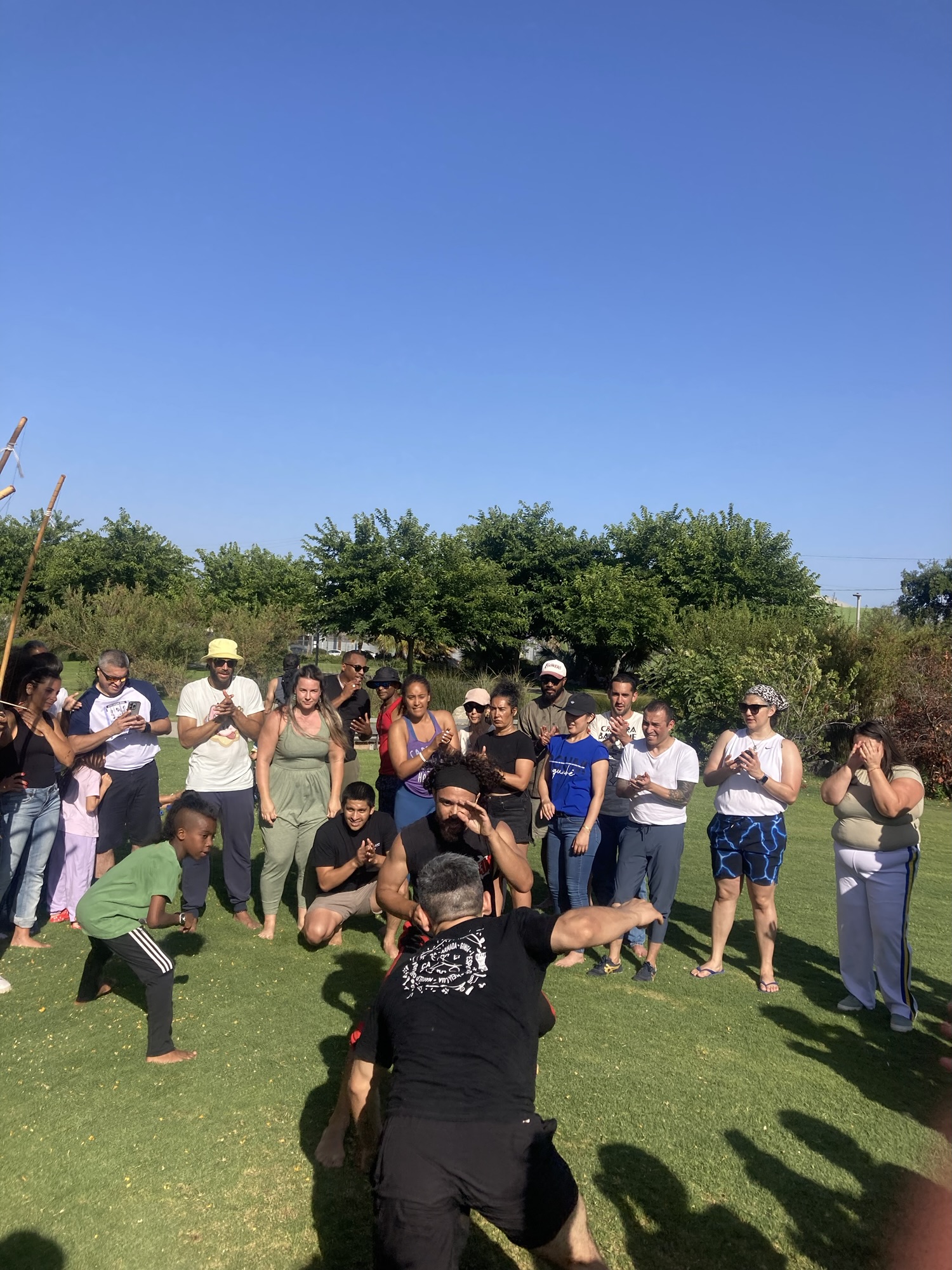
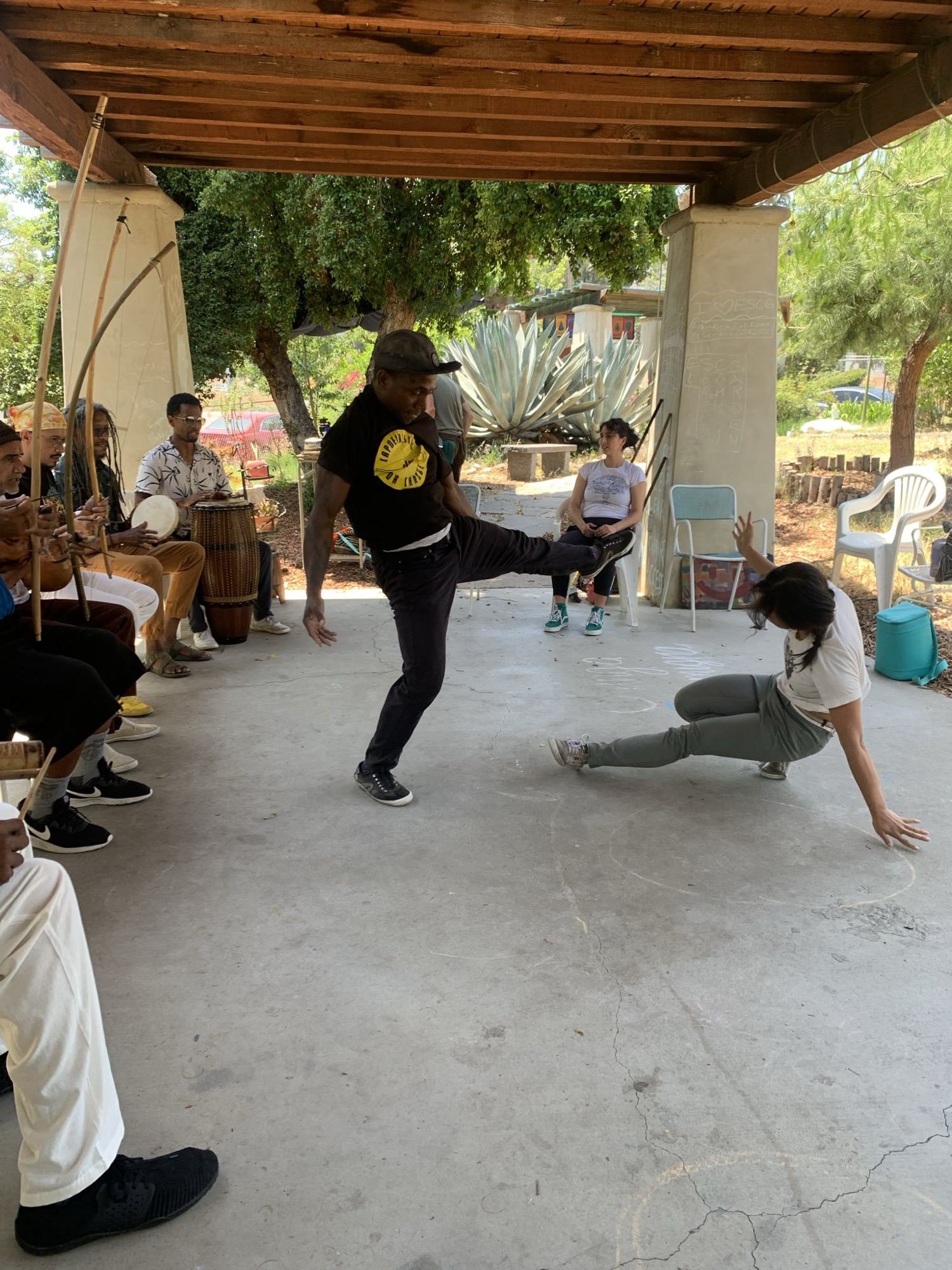
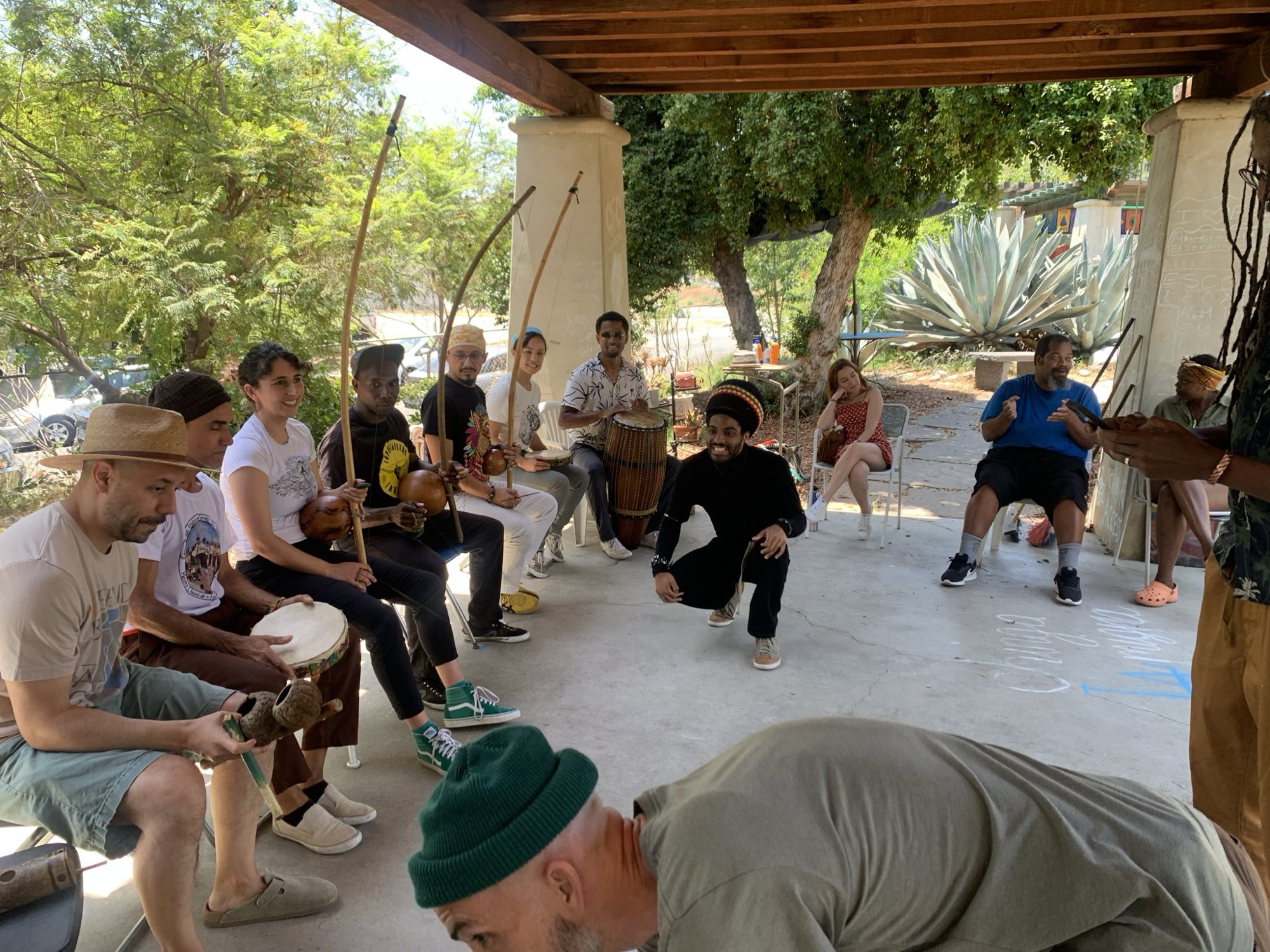
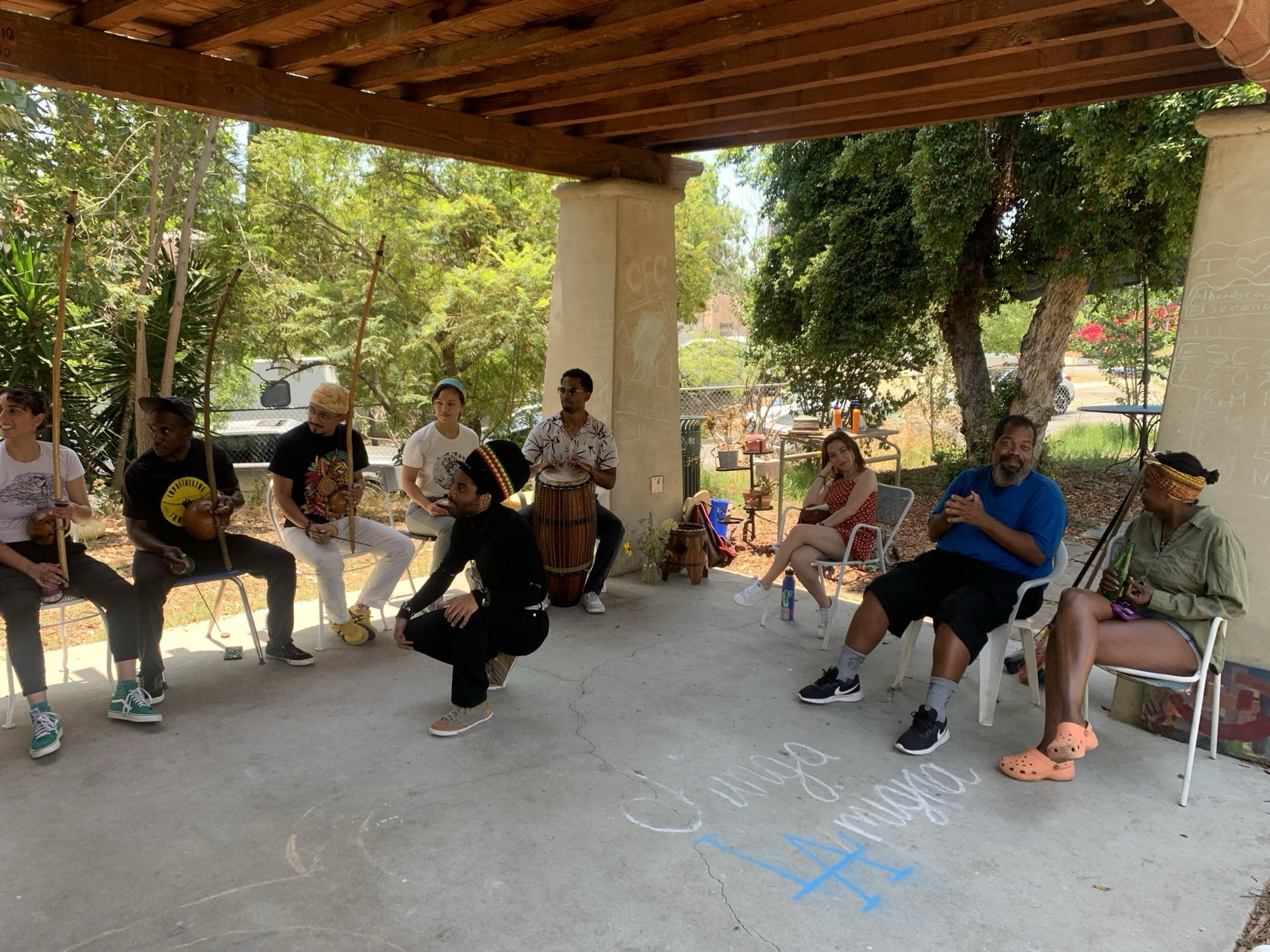
Anyway, I want to tell you about another amazing Capoeira Angola adventure I had last Sunday, June 22nd, a day after the summer solstice. It was an afternoon filled with reuniting with old friends and meeting new friends, creating a vibrant tapestry of connections that warmed the heart. The atmosphere was charged with excitement as practitioners of all levels gathered, each contributing their unique energy to the circle. The rhythm of the Berimbau resonated in the air, and the infectious laughter and lively conversations surrounded us, creating a sense of community. The amazing brotherhood and camaraderie that expresses all that is good about Capoeira reminded me of the essence of this beautiful art form—it’s not just about the physical practice, but also about the relationships we build and the stories we share as we grow together in our journey.
There were quite a few schools of Capoeira there from all over L.A., and a few from Orange County, creating an atmosphere filled with excitement and energy that drew everyone in, igniting a sense of community among practitioners and spectators alike. As the sun set, casting a warm glow over the gathering, we played soft, we played hard, showcasing our skills and passion for the art; the rhythms of the Berimbau resonated in the background, elevating the experience to a transcendental level. We all played beautifully, each move telling a story of dedication and culture, as every kick, spin, and flip blended into a captivating narrative that celebrated our heritage, bridging gaps between generations and uniting us through the vibrant dance of Capoeira.
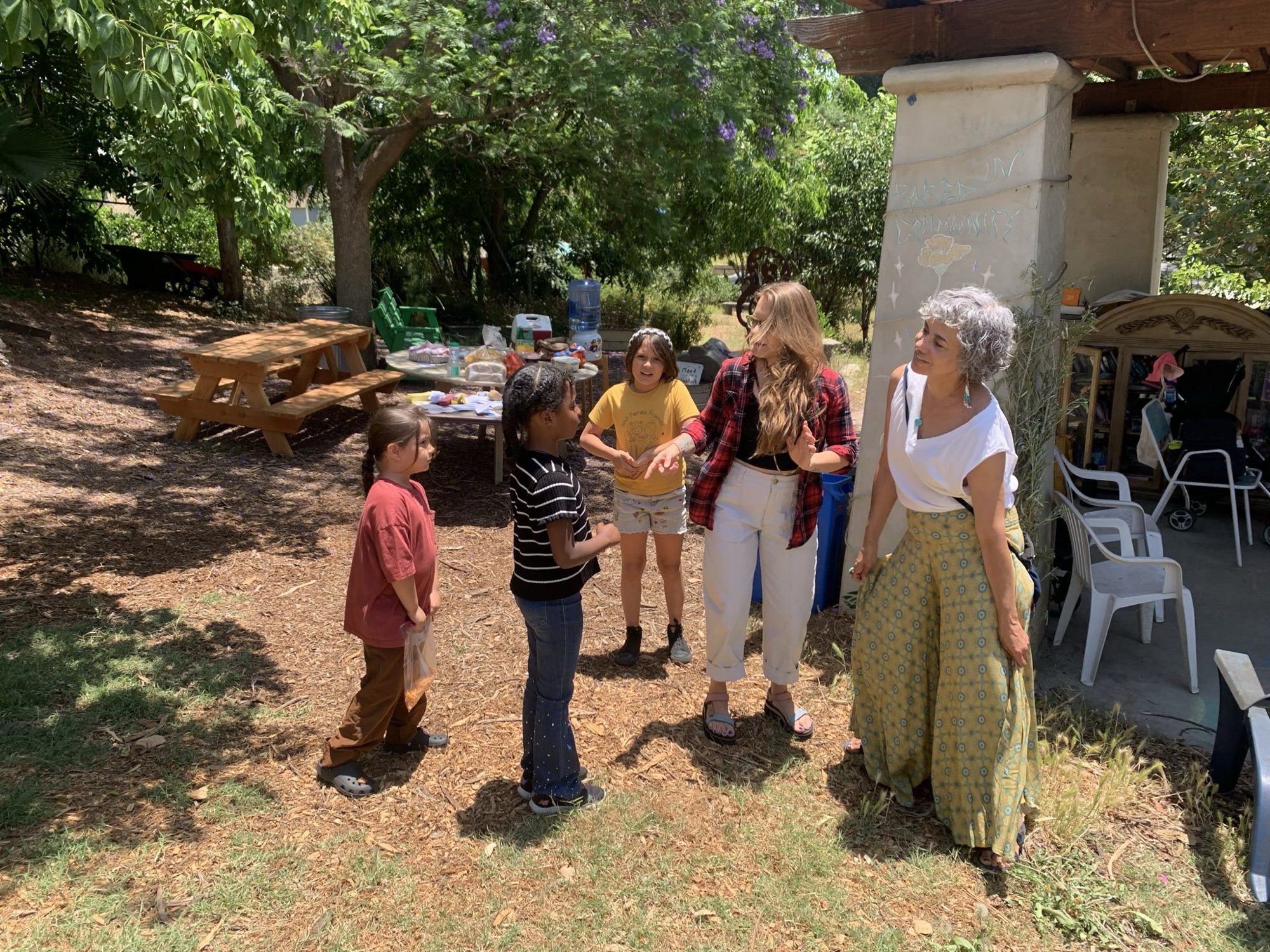
The rhythm pulsed through our veins, and then, after a couple of hours, we ended with an amazing Samba De Roda, where I admit, I danced longer than I should have, completely losing track of time in the joyous celebration. But when the drums call, I have to answer, surrendering to the infectious beat that calls to the very essence of who I am. Then after that was the coolest, most amazing picnic I ever attended, where laughter echoed through the air, delicious fruit was shared, and new friendships were formed under the warm sun, making the entire day an unforgettable experience that I will cherish forever.
This amazing celebration was the start of Capoeira Batuque’s annual batisado, which will be happening all this week, filled with various activities, workshops, and performances that showcase the rich cultural heritage of Capoeira. For more info, please check out their website, brasilbrasil.org. It promises to be an exciting time for participants and spectators alike, as students demonstrate their skills and passion for this unique art form.
I would like to sincerely thank Mestre Amen Santo, as well as Mestres Muito tempo, Minha Velha, Varal, and Contramestres Saracuru for their invaluable contributions to the Capoeira community, which have significantly shaped our culture and practices over the years. A special mention goes out to Arthur Fiu, whose unwavering enthusiasm and vibrant energy truly inspire us all, motivating each member to strive for excellence and to embrace the spirit of Capoeira. Furthermore, I cannot forget to express my appreciation for my uncle in Capoeira, brother Jelani Lateef, whose infectious laughter and warm presence always bring joy and positivity to our gatherings, creating an atmosphere that fosters camaraderie and friendship.
I’m pretty sure I missed some of you, and for that, I sincerely apologize; it was never my intention to exclude anyone, but in the excitement and depth of acknowledgement, I realize that some deserving names may have slipped my mind. Thank you all for your support and passion in keeping the Capoeira tradition alive.
I mentioned that a couple of weeks ago, I went to Oakland for another EVENT. The experience there was truly unforgettable, filled with laughter, connections, and a vibrant sense of community. And as amazing as that was, after coming back here to LA, going to the gathering on JUNETEENTH, and this gathering yesterday, which further highlighted the importance of unity and love, all I can say is,
Today is Juneteenth. It is worth observing and it is more than worth celebrating, as it marks a pivotal moment in our collective history and a powerful reminder of our enduring struggle for freedom and equality.
But we didn’t need the very government that enslaved our people to give us permission to honor our own history; our resilience and triumphs have always been a source of strength and pride within our communities. We have carried the heavy burden of a painful past, yet we have transformed that suffering into a tapestry of culture and heritage that celebrates our identity. From the stories passed down through generations to the vibrant expressions of art, music, and dance that echo our ancestors’ voices, we acknowledge the struggles while embracing the undeniable spirit that has propelled us forward. Each milestone achieved, whether in education, leadership, or social justice, serves as a testament to our unwavering commitment to uplift one another and forge a brighter future.
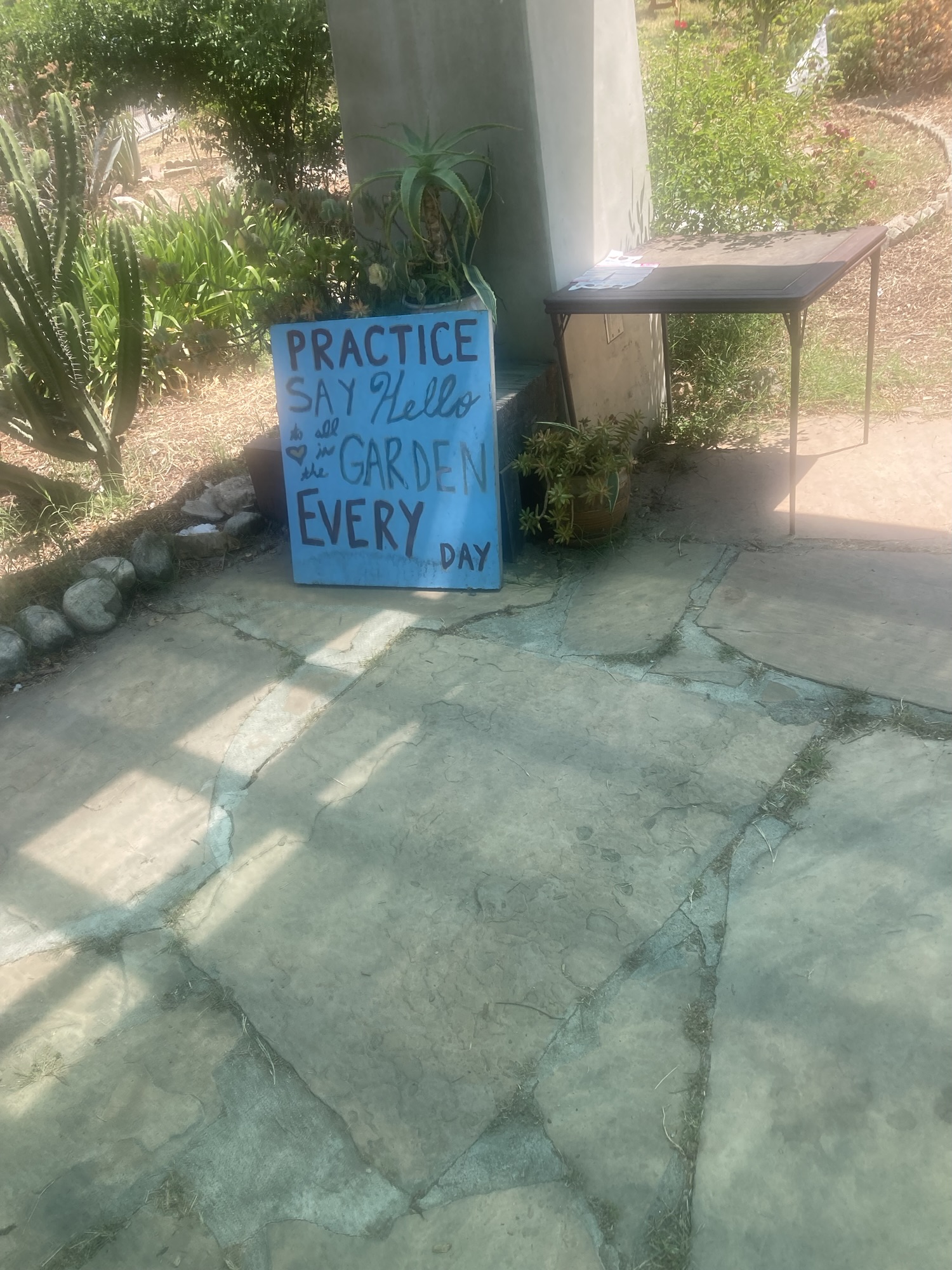
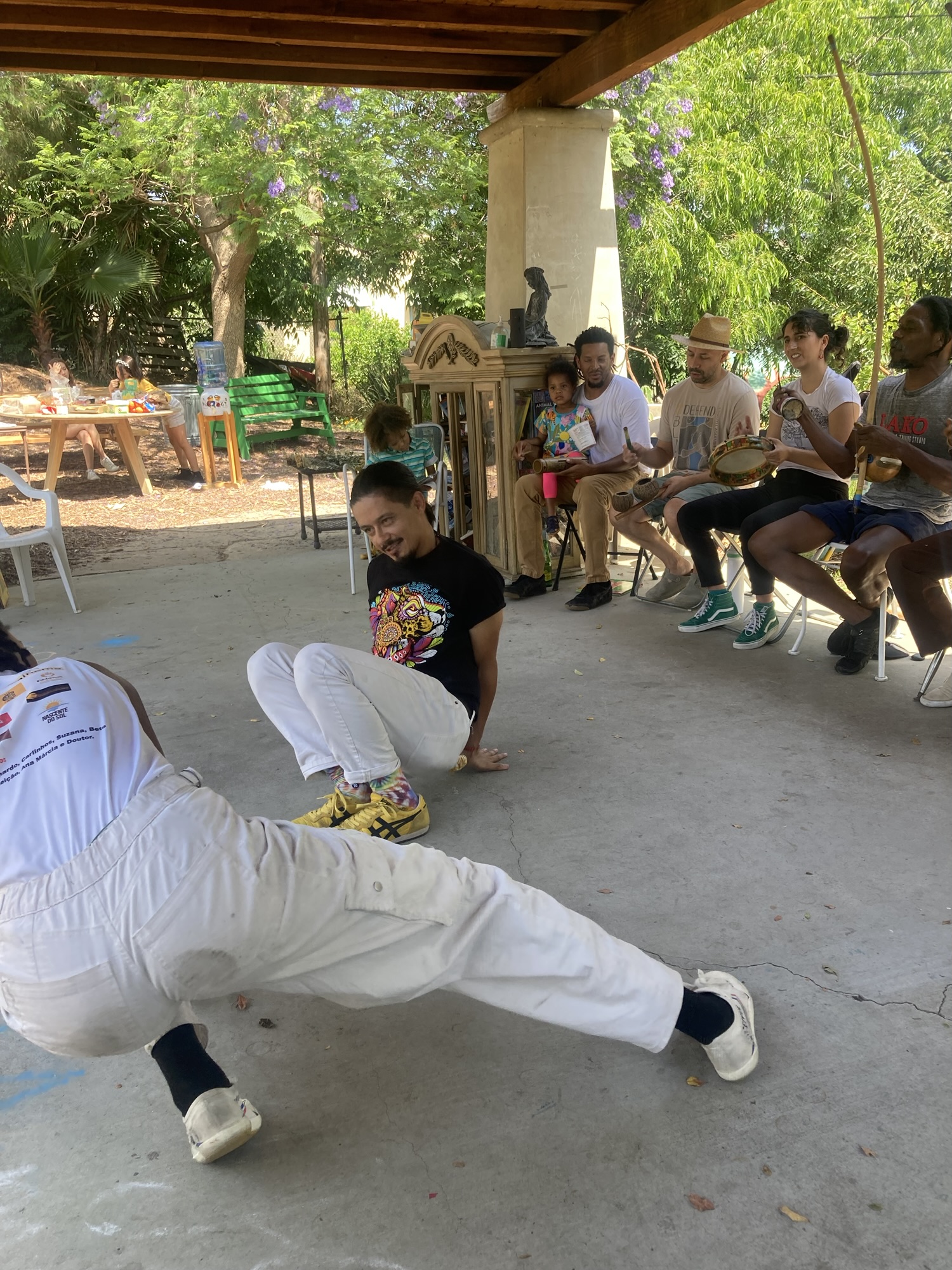
Now, as I said in another POST, we had a Roda and Potluck today. It was a beautiful display of love, brotherhood, and solidarity among all participants, creating an atmosphere rich in cultural heritage and community spirit.
The energy was palpable as we gathered together to share not only food but also stories and laughter, fostering connections that bridge our differences. The rhythm of Capoeira Angola echoed through the space, inviting everyone to join in the movements, transcending barriers and uniting us through the art form that we all cherish. Witnessing such harmony and joy inspired a sense of gratitude for the shared experiences and the vibrant tapestry of our collective journey.
We must all come together in recognition of the sacrifices made by those who came before us, acknowledging their struggles and the legacies they left behind. It is vital to honor the ancestors who bravely faced the adversities of their time, enduring hardships and injustices that many cannot fathom today. Remember the ancestors who fought against oppression and dreamed of a brighter future for us all, envisioning a world where equality and justice reign.
Recall the tireless efforts and the relentless spirit that fueled their fight, paving the way for progress and change. Remember the debt that is owed, not only to those who suffered under slavery but also to those who continue to fight against injustice today, standing up for the marginalized and voicing the concerns of the unheard.
Their courage serves as an inspiration, reminding us of the importance of advocacy and activism. As we reflect on their unwavering spirit, we are called to action, encouraging a collective movement where every voice matters. And remember ALL who owe it, for the responsibility to uplift and empower one another lies within each of us. This duty demands that we not only raise awareness of the challenges faced by marginalized communities but also actively engage in solutions that foster change.
And in that spirit, I’d like to discuss the ICE raids a little bit. At the Roda, our sister soldier Eva recently left some informative flyers from an organization called Union Del Barrio, which is dedicated to empowering ordinary citizens with the knowledge and skills they need to protect themselves and their communities from invasive ICE raids.
These flyers outline critical training sessions and resources designed to raise awareness about immigrants’ rights and ensure that individuals are prepared to respond effectively in challenging situations. I highly encourage everyone to click HERE to check them out and delve deeper into the fantastic initiatives they are actively involved in, as well as to discover various ways you can contribute to their crucial mission and support the fight for justice and dignity for all community members.
Together, as we work towards a more just and equitable world, we must commit to listening, learning, and building bridges across divides. By fostering a community in which everyone, regardless of their background, can thrive and flourish in harmony, we create a shared environment where mutual respect and collaboration flourish, paving the way for future generations to inherit a brighter, more inclusive society.
I saw this video and thought I’d post this here for you to check out, because I think it goes to the root of how we as black people sometimes feel as we navigate through this world. It dives deep into the complexities and nuances of our experiences, illustrating both the struggles and triumphs that define our journey. The content resonates profoundly, showcasing personal stories that highlight the unique challenges we face and the resilience we embody.
Now, what this “racist” woman said didn’t surprise me, but it’s actually sad that this is a reality I as a Black man live with daily. Being black in this society can sometimes be exhausting, as it feels like a constant struggle against a tide of prejudice and misunderstanding. You get hated on just for existing, and those moments chip away at your spirit, reinforcing a narrative that many of us strive to break free from. It’s disheartening to navigate a world where stereotypes are constantly being perpetuated and where our worth is often judged through the lens of outdated beliefs.
We sometimes feel like we’re the most hated people on the planet, yet the most copied by EVERY OTHER CULTURE, as they take elements from our traditions, our music, and our style while ignoring the very humanity that underpins them. Each day presents a new challenge to rise above the misconceptions and to affirm our identity in a landscape that often seems unwelcoming, where biases can overshadow our contributions and achievements. Yet, we continue to push forward, drawing strength from our rich history and vibrant cultures, proud and resilient, knowing that every small victory builds a path to greater understanding.
We cherish our roots while also embracing the complexity of our existence, hoping for a brighter tomorrow where acceptance prevails. It is this hope that fuels our determination to engage in dialogue, educate others about our narratives, and foster genuine connections that transcend superficial replication to celebrate the true essence of who we are.
I will post more about this subject, as I believe it holds significant importance for our community. By sharing this video and posting this blog, I hope it sparks conversations that can lead to greater understanding and solidarity among us. Engaging in thoughtful discussions can illuminate diverse perspectives and experiences, encouraging empathy and awareness. Ultimately, my goal is to create a space where we can all learn from each other, foster meaningful connections, and collectively work towards positive change in our society.
“Be the change you want to see in the world” emphasizes the importance of taking initiative rather than waiting for others or circumstances to change, encouraging action to make a difference. This powerful statement serves as a reminder that each individual holds the potential to impact their environment positively. By embodying the values and qualities we wish to see, we not only inspire those around us but also create a ripple effect that can lead to broader societal transformation. It calls for personal responsibility, urging us to actively engage in our communities and advocate for the changes we desire, thereby fostering a culture of proactive solutions and collective growth. In essence, it is a challenge to reflect on our own actions and strive for improvement, knowing that real change begins within ourselves.
I first saw this video many years ago, and now that I see it through the eyes of a capoeirista, the video makes much more sense.
Historically, oppressed people are taught to go to their church, their priest, their elected official, etc., and wait for someone to rescue them from their oppression. This deeply ingrained mentality can create a sense of helplessness and stagnation, leading individuals to believe that change is beyond their control.
I learned through capoeira that if we want to help ourselves out of the miserable circumstances we find ourselves in, we must first help ourselves. Capoeira has shown me that empowerment comes from within, and through movement, rhythm, and community, we can take the necessary steps to create our own paths.
Each kick, each dance, and each beat of the berimbau serve as reminders that we hold the power to transform our realities. It’s about breaking free from the shackles of expectation and truly believing that change is not just possible, but achievable through our own efforts and bravery. Therefore, let’s embrace the spirit of capoeira, encouraging not only ourselves but also others around us to take action and be the architects of our destiny.
“The world is full of suffering; it is also full of the overcoming of it.” -Helen Keller
Sometimes on this blog, I post about some very ugly things that prevail in society, such as injustice, inequality, and the struggles many individuals face daily. However, amidst these challenges, I thought it would be a good idea to post about some of the love that prevails in society as well. This love manifests in various forms, from the small acts of kindness shared between strangers to the unwavering support among friends and family. It’s important to recognize how love can bring people together, fostering a sense of community and understanding that counters the negativity we often encounter. By highlighting these moments of compassion, I hope to inspire others to embrace love in their own lives, creating a ripple effect that can help to alleviate some of the darker aspects of our world.
In today’s installment…
Good neighbors make all the difference – they can support you, brighten your day, and sometimes even save your life! They are the people you can rely on during tough times, sharing both laughter and tears, helping you celebrate milestones and providing comfort during losses. The sense of community fostered by good neighbors enhances your living experience, creating a network of friendship and trust that can help you navigate life’s challenges.
In a world that can often feel isolating, these connections remind us of the importance of human interaction and the simple joys of knowing you have someone nearby who cares. These bonds, whether forged through shared experiences, common interests, or a simple act of kindness, serve as vital lifelines that enrich our lives. They offer comfort during challenging times and amplify our happiness during moments of joy. Recognizing the value of having friends, family, and community around us fosters a deep sense of belonging and security, making our burdens feel lighter and our successes even sweeter. Ultimately, it is these meaningful relationships that add color and depth to our existence, reminding us that we are never truly alone in this vast world.



















 Jogo Corpo Fechado