
Let’s sing for World Peace!!!

I came across this video, which is titled, THIS SONG SHOULD BE TRANSLATED TO ALL THE LANGUAGES IN THE WORLD. #WORLDPEACE, and I wholeheartedly agree with its central message about universal understanding and the power of music to connect people across cultures. The song is called Rien ne m’étonne (nothing surprised me), and it’s beautifully performed by the talented Ivorien Revolutionary singer Tiken Fah Koli. His lyrics resonate with themes of resilience and hope, touching on the struggles faced by communities while also inspiring listeners to embrace peace and unity. This song truly deserves to be shared worldwide, allowing its uplifting spirit to reach every corner of the globe and remind us of our shared humanity.

Here are the lyrics in English:

They’ve divided up the world

Nothing surprises me anymore

Nothing surprises me anymore

Nothing surprises me anymore

They’ve divided up the world

Nothing surprises me anymore

Nothing surprises me anymore

Nothing surprises me anymore

If you let me have Chechnya,

Me, I’ll let you have Armenia

If you let me have Afghanistan,

Me, I’ll let you have Pakistan

If you don’t leave Haiti,

Mе, I’ll send you to Bangui

If you help me bomb Iraq,

Mе, I’ll sort out Kurdistan for you

They’ve divided up the world

Nothing surprises me anymore

Nothing surprises me anymore

Nothing surprises me anymore

They’ve divided up the world

Nothing surprises me anymore

Nothing surprises me anymore

Nothing surprises me anymore

If you let me have Uranium,

Me, I’ll let you have Aluminum

If you let me have your mineral deposits,

Me, I’ll help you chase out the Taliban

If you give me a lot of wheat,

Me, I’ll go to war at your side

If you let me extract your gold,

Me, I’ll help you kick the General out

They’ve divided up the world

Nothing surprises me anymore

Nothing surprises me anymore

Nothing surprises me anymore

They’ve divided up the world

Nothing surprises me anymore

Nothing surprises me anymore

Nothing surprises me anymore

They divided Africa without consulting us

And they wonder why we are disunited

Part of the Mandinka Empire ended up with the Wolof

Part of the Mossi Empire ended up in Ghana

Part of the Soussou Empire ended up in the Mandinka Empire

Part of the Mandinka Empire ended up with the Mossis

They shared Africa without consulting us!

Without asking us!

Without informing us!

They’ve divided up the world

Nothing surprises me anymore

Nothing surprises me anymore

Nothing surprises me anymore

They’ve divided up the world

Nothing surprises me anymore

Nothing surprises me anymore

Nothing surprises me anymore

Let’s bring Peace for all of humanity! This aspiration goes beyond mere words; it embodies the collective hope for a world where understanding, compassion, and goodwill prevail among all individuals, transcending borders and differences. By fostering open dialogue, embracing diversity, and nurturing empathy, we can create an environment where everyone feels valued and respected.

Together, we can work towards a future where peace is not just a dream, but a reality that enriches the lives of generations to come. This vision requires collaboration and commitment from individuals, communities, and nations alike, fostering an environment where understanding and empathy prevail over conflict. By investing in education and open dialogue, we can cultivate a culture that embraces diversity and promotes harmony, allowing future generations to thrive in a world free from discord. As we unite our efforts, we pave the way for sustainable solutions that address the root causes of strife, ensuring that the dream of a peaceful coexistence becomes an integral part of our shared journey forward.
Self-Defense Series (10/14/25)

Welcome to the Self-Defense series, designed to equip you with vital physical, mental, spiritual, and legal skills for protection in today’s world. This program enhances your readiness, resilience, and confidence while promoting personal safety through practical techniques and psychological components. It also focuses on spiritual practices for inner strength and discusses legal frameworks to ensure your rights and community responsibility. Ultimately, this series fosters personal growth and empowerment for challenges on and off the mat.

In today’s installment…

This video from Fight SCIENCE delves into the critical aspects of true preparedness for a confrontation, revealing three hidden signs that distinguish genuinely capable individuals. The analysis focuses on three core pillars: emotional control, mental resilience, and physical readiness under pressure.

Emotional Control: The video highlights how an individual’s ability to manage their emotions in high-stress situations is a primary indicator of their true readiness. This goes beyond simply suppressing fear or anger; it involves maintaining a clear and rational mindset when adrenaline surges. Fight SCIENCE showcases real-life scenarios where individuals who could regulate their emotional responses were more effective in de-escalating conflicts or executing precise defensive maneuvers. Conversely, those who succumbed to panic or uncontrolled aggression often made critical errors, demonstrating that emotional stability is a cornerstone of effective self-defense. The video provides actionable insights into identifying personal triggers that can compromise emotional control and offers techniques for developing a more composed demeanor under duress.

Mental Resilience: Beyond raw emotional responses, the video emphasizes the importance of mental toughness and the ability to adapt to unforeseen circumstances. Confrontations rarely unfold as anticipated, and mental resilience allows individuals to think on their feet, adjust strategies, and persevere through adversity. Fight SCIENCE presents compelling examples of individuals who, despite facing unexpected challenges, maintained their focus and problem-solving abilities. This section explores how mental resilience is cultivated through consistent training that incorporates unpredictable elements, fostering a mindset that embraces challenges rather than being overwhelmed by them.

Physical Readiness Under Pressure: While physical conditioning is often the most visible aspect of preparedness, Fight SCIENCE differentiates between general fitness and physical readiness specifically under pressure. This means not just possessing strength or speed, but being able to execute techniques flawlessly when adrenaline is high, vision is narrowed, and the body is under stress. The video dissects various physical responses to pressure, such as tunnel vision and fine motor skill degradation, and demonstrates how effective training mitigates these effects. It draws parallels with martial arts training regimens where consistent repetition of basic drills, footwork, and choreographed sequences (Katas, sequencias) builds muscle memory and reflexive responses. The integration of weapons training, such as with a stick or machete, further refines physical readiness by demanding precision and control in dynamic situations.

By analyzing these three hidden signs, Fight SCIENCE empowers viewers to not only assess their own preparedness but also to identify areas for improvement. The video serves as a comprehensive guide for enhancing self-defense capabilities by fostering a holistic approach that integrates emotional intelligence, mental fortitude, and precise physical execution. Understanding these interconnected elements is crucial for anyone seeking to be genuinely prepared for a real-life confrontation.

THE WARRIOR CLASS (9/23/25)

Welcome to the WARRIOR CLASS podcast, the dopest, most unique self-protection, self-defense, martial arts, and prepping podcast in the universe! Here, the hosts delve into the essential skills and knowledge you need to empower yourself and navigate the world safely. With each episode comes engaging discussions, expert interviews, and practical tips designed to enhance your personal safety and self-defense prowess. Self-protection with Black Power!

Tune in every Saturday at 1pm EST and be empowered to become the strongest version of yourself, physically and mentally, while exploring the rich cultural heritage of martial arts and the importance of community resilience in everyday life. Don’t miss out on the journey to becoming a warrior!

This week, The Warrior Class Instructors give you some essential skills to learn how to disengage from grabs, break free from holds, and effectively use your voice to create space or call for help. In this engaging session, you will not only practice these techniques in a safe environment, but also gain a deeper understanding of the psychology behind self-defense. The Warrior Class instructors will guide you through various scenarios, ensuring that you feel confident and prepared to handle unexpected situations. If you properly learn this lession, you will have developed practical skills that empower you to advocate for your own safety and well-being when faced with potential threats.

This lesson was actually screened 3 days ago, and I have been reflecting on the valuable insights and information shared during the session. I will try to post these videos on the blog as soon as they become available on YouTube, because I believe that from this podcast, you’ll learn life-saving skills everyone should learn. These skills not only enhance personal safety but also empower individuals to assist others in critical situations, fostering a sense of community and preparedness. The knowledge gained can truly make a difference in emergency scenarios, transforming everyday people into capable responders who can navigate challenging situations with confidence and composure. I encourage everyone to stay tuned for the release, as the lessons within promise to be both enlightening and essential.

MALICIA AS A GAME OF POWER (9/07/25)

Welcome to MALICIA AS A GAME OF POWER, a blog series that explores the strategies of human interactions, including communication, conflict resolution, negotiation, and manipulation. It discusses leadership, personal branding, and online reputation management, providing practical strategies for influence and relationship-building. Through analysis and examples, the series aims to help readers navigate interpersonal relationships successfully.

In this installment, we will explore the 34th law of power in the book, the 48 laws of power by Robert Greene. You can buy a copy by clicking HERE.

LAW 34: BE ROYAL IN YOUR OWN FASHION. ACT LIKE A KING TO BE TREATED LIKE ONE.

This philosophy encourages individuals to embrace their unique identities and strengths with confidence, reminding us that true royalty comes from within. By cultivating a mindset of self-worth and dignity, you not only elevate yourself but also inspire those around you to recognize their own innate value. In a world often filled with comparisons and societal pressures, it’s vital to celebrate our individual journeys and the distinct qualities that make us who we are.

When we honor ourselves authentically, we create a ripple effect, encouraging others to shed their insecurities and fully express their true selves as well. This shared journey of empowerment fosters a stronger, more connected community where everyone feels valued and appreciated for their contributions. As we uplift each other, we collectively build a space that honors diversity and individuality, illustrating that self-acceptance is a powerful catalyst for positive change in our lives and the lives of those we touch.

Surround yourself with positivity, make decisions that reflect your principles, and carry yourself with grace. Remember, the way you present yourself to the world will often dictate how the world responds to you, so wear your crown proudly and let your actions set the standard for how others should treat you. By embodying kindness and confidence, you not only uplift yourself but also inspire those around you to rise to the same level of respect and dignity.

Each interaction is an opportunity to reinforce your values; therefore, choose your words and actions carefully, ensuring they align with the legacy you wish to leave behind. In moments of challenge, stand firm in your beliefs, knowing that your authenticity shines through even in the face of adversity. Embrace the journey of self-improvement, as every step forward brings you closer to becoming the best version of yourself.

How to Navigate the 34th Law of Power with an Ethical Compass

The 34th Law of Power, often summarized as “Be Royal in Your Own Fashion: Act Like a King to Be Treated Like One,” is a principle rooted in presenting an image of self-assurance, confidence, and inherent value. This law suggests that by embodying the outward characteristics of royalty—dignity, generosity, and an unshakeable belief in one’s own worth—others will naturally respond by granting you respect, deference, and the resources associated with high status. It is a psychological tool for influencing perception and, consequently, reality.

However, the pursuit of power and influence must be tempered by a strong ethical framework. Applying the 34th Law ethically means leveraging its psychological mechanisms without resorting to deceit, exploitation, or arrogance. It transforms the law from a tool of manipulation into a principle of genuine, value-driven leadership.Ethical Pillars for Implementing the 34th Law

To ensure an ethical application, one must focus on the substance behind the royal facade:

1. Authentic Self-Possession, Not Arrogance:

  • The Ethical Approach: The “royal” demeanor should stem from deep, authentic self-respect and competence, not from a manufactured superiority complex. Ethically, this means putting in the work to earn the confidence you project. True self-possession is quiet, grounded, and secure, recognizing the value in oneself while respecting the value in others.
  • The Unethical Pitfall: Using a show of arrogance, entitlement, or contempt for others to mask insecurity or a lack of substance. This damages relationships and is ultimately unsustainable.

2. Generosity and Reciprocity (The Royal Patron):

  • The Ethical Approach: Historical royalty often maintained their status through calculated acts of generosity—patronage, providing protection, and bestowing honors. Ethically, this translates to being a leader who genuinely supports their team, shares credit, mentors subordinates, and contributes value far beyond what is strictly required. The power you accrue is used to lift others up.
  • The Unethical Pitfall: Being a “tyrant” who hoards resources, demands service without offering commensurate value, or acts purely out of self-interest. This may grant short-term obedience but breeds resentment and instability.

3. Maintaining Dignity Through Integrity:

  • The Ethical Approach: The royal image is preserved through consistency, transparency (where appropriate), and a commitment to one’s stated values. Ethical application of the 34th Law means avoiding petty disputes, refraining from gossip, and always honoring one’s word. A king’s word is his bond; an ethical leader’s word is their reputation.
  • The Unethical Pitfall: Engaging in duplicitous behavior, making false promises, or allowing your actions to be inconsistent with your projected image. This quickly erodes trust, and without trust, the projected image of “royalty” collapses into farce.

4. Focusing on Service and Purpose:

  • The Ethical Approach: The most ethical expression of the 34th Law is when the projected image of competence and authority serves a higher, positive purpose—leading a successful initiative, advocating for a just cause, or creating genuine value for a community or organization. The power is not an end in itself but a means to achieve constructive goals.
  • The Unethical Pitfall: Adopting the “royal” persona solely for personal gain, luxury, or to dominate others, leading to a focus on superficial status rather than meaningful contribution.

Practical Ethical Application Steps

  1. Define Your True Value: Identify the unique skills, expertise, and positive influence you bring to a situation. This is the foundation of your legitimate claim to a “royal” status.
  2. Project Confidence, Not Conceit: Use body language, clear communication, and decisive action to project competence. Ensure your confidence is always paired with humility—a willingness to listen, learn, and admit mistakes.
  3. Invest in Your Appearance and Environment: Presenting a professional, thoughtful image is an ethical signal that you respect your role, your time, and the people you are engaging with. This is not about extravagance but about care and quality.
  4. Practice Strategic Generosity: Be liberal with praise, mentorship, and opportunities for others. Make deposits into your relational capital by being a reliable source of support and fair treatment.

By focusing on these ethical underpinnings, the 34th Law of Power becomes a framework for powerful, yet principled, leadership, ensuring that the influence you gain is both lasting and morally sound.

 The 34th law of power, through the eyes of an Angoleiro:

For those who walk the path of Capoeira Angola, the 34th Law of Power—Be Royal in Your Own Fashion: Act Like a King to Be Treated Like One—takes on a profound, almost spiritual significance. It is not about ostentatious wealth or inherited titles, but about the postura (posture), the inherent dignity, and the self-respect that define a true master, or Mestre.

In the roda (the circle where Capoeira is played), the Angoleiro learns to carry themselves with an internal regality, a quiet confidence that commands respect without demanding it. This “royalty” is earned through:

  1. Mastery of the Jogo (Game): A Mestre’s authority is rooted in their deep, fluid knowledge of the movements, the songs (quadras and corridos), the rhythms of the berimbau, and the history of the art. Their every move—slow, deliberate, and efficient—is the expression of a cultivated mind and body. They don’t have to boast; their jogo speaks for them.
  2. The Axé (Life Force/Energy): Royalty in Angola is synonymous with a strong axé. It’s the powerful, positive energy and presence they bring into the roda. When they enter, the energy shifts. They are the anchor, the one who sustains the fire and depth of the game. They hold the wisdom and the spirit of the lineage.
  3. Self-Control and Patience: Acting like a king means never showing desperation, fear, or petty anger. A true Angoleiro maintains a calm, almost impenetrable demeanor. They are deliberate, observing the flow, waiting for the perfect moment to execute a dangerous rasteira (takedown) or a clever malandragem (trickery). Their patience is their power; they rule the space by not rushing the interaction.
  4. Humildade (Humility) as a Crown: Paradoxically, the highest form of Capoeira “royalty” is not arrogance, but profound humility. A Mestre understands that the art is bigger than any single person. They serve the roda and the tradition. This genuine humility—the willingness to always be a student—is what makes their authority magnetic and legitimate, rather than tyrannical.

To be “royal in your own fashion” as an Angoleiro is to embody the legacy of the enslaved Africans who created this art as a form of cultural and physical resistance. It means carrying the weight of that history with dignity, showing that even without physical chains, one possesses an unbreakable spirit—the spirit of a sovereign within their own skin. Their postura is a statement: “I am worthy of respect because I respect the art, my ancestors, and myself.” They are treated like a king because they act like the living embodiment of the Rei da Capoeira (King of Capoeira).

NAMED AND SHAMED!!! (9/3/25)

Welcome to NAMED AND SHAMED, a platform exposing abuse in martial arts through personal accounts and expert interviews. We aim to raise awareness about the need for safe environments for affected individuals, empowering victims with a voice and community. Inspired by McDojo Life, our mission promotes transparency and accountability in the martial arts community, fostering discussions that prioritize safety and respect, allowing individuals to train without fear and grow in their martial arts journey.

Today, we cover the Zuma Martial Arts Scandal, delving into the details surrounding the events that shook the martial arts community.

The Zuma Martial Arts scandal involves multiple allegations of sexual harassment and misconduct against the owner and head coach of Zuma Martial Arts, Adam Zugec, in Victoria, British Columbia. Multiple women have come forward with accusations detailing inappropriate behavior, including unwanted advances and coercive tactics that created a hostile training environment. These revelations have sparked outrage within the local community and beyond, leading to calls for accountability and justice for the victims. In response to these serious claims, the Victoria Police Department is conducting a thorough investigation into the matter, examining the evidence and testimonies presented by the accusers. The outcome of this inquiry could have significant implications not only for Zugec but also for the broader culture within martial arts organizations.

The martial arts community should prioritize empowerment and confidence by addressing negative behaviors and providing education on misbehavior in a comprehensive manner. This includes not only recognizing and correcting such behaviors but also instilling a culture of respect and accountability among members. Open discussions and mentorship foster trust, unity, and collaboration, creating a supportive environment where members inspire each other and build strong relationships to face challenges and celebrate successes together. By encouraging personal growth and development, we enhance the collective strength of our community, allowing every individual to flourish while learning valuable lessons in discipline, perseverance, and compassion. This holistic approach not only cultivates skilled martial artists but also responsible citizens who uplift one another in and out of the dojo.

NAMED AND SHAMED!!!(8/14/25)

Welcome to NAMED AND SHAMED, a vital platform addressing abuse in martial arts by revealing stories of practitioners misusing their authority in profound and alarming ways. We share personal accounts and expert interviews to highlight the urgent need for awareness, safe spaces, and supportive environments for those affected by these troubling experiences. Our mission is to expose injustices that often go unnoticed, while also aiming to empower victims by providing them with a voice and community. Inspired by the impactful work of the YouTube channel McDojo Life, we strive to promote transparency and accountability within the martial arts community, encouraging open discussions and fostering a culture that prioritizes safety and respect for all practitioners. Through our efforts, we hope to create an environment where individuals can train without fear and trust their instructors completely, facilitating personal growth and well-being in their martial arts journey.

Today, we check out a martial artist, Martin Amba, who has been accused of some pretty horrific things, including serious allegations of misconduct and unethical behavior, which have sparked a significant backlash within the martial arts community and beyond.

The ripple effect created by these accusations has led to intense discussions among fans, practitioners, and industry professionals, raising important questions about accountability and integrity in the sport. As more details come to light, many are left grappling with the implications of these claims, reflecting on how such controversies can impact not only the individuals involved but also the broader perception of martial arts as a whole. The diverse opinions being shared highlight the complexity of the situation, urging a reevaluation of how standards and ethics are upheld within the community. Furthermore, this discourse has sparked a deeper examination of the mechanisms in place that govern conduct and whistleblowing, shedding light on the potential need for reform to ensure a safe and respectful environment for all participants. As the conversations unfold, they not only serve to illuminate the darker corners of the sport but also advocate for a culture of transparency and respect, which is vital for the future of martial arts.

GOOD NEWS!!!

Well, something good has come from this. Martin Amba, was sentenced to 25 years in prison for sexual assault.

The martial arts community should focus on empowerment and confidence, addressing negative behaviors to foster trust and respect. Education on misbehavior and support among members enhance personal growth and shared values. Open discussions and mentorship promote unity, making members feel valued and fostering collaboration. This sense of belonging creates a resilient community where individuals share experiences and inspire each other towards excellence, while strong relationships and communication build collective strength to face challenges and celebrate successes.

BASIC ELEMENTS OF CAPOEIRA: VINGATIVA

“There are not more than five musical notes, yet the combinations of these five give rise to more melodies than can ever be heard. There are not more than five primary colours, yet in combination, they produce more hues than can ever been seen. There are not more than five cardinal tastes, yet combinations of
them yield more flavours than can ever be tasted.”
― Sun Tzu, The Art of War

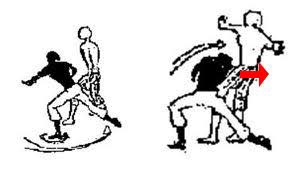
Today, I want to go into a fundamental takedown that I posted about before in another PAGE, but I want to expand on it and delve into a bit more detail for clarity and depth. This technique is called THE VINGATIVA, and it plays a crucial role in understanding the intricacies of Capoeira.

The Vingativa is a low takedown that involves stepping forward and trapping the back legs of an opponent who is in a side stance. This movement is characterized by the capoeirista also protecting their face with their elbow, demonstrating the importance of defense while executing an offensive maneuver.

Once the lead leg of the capoeirista has successfully trapped the leg of the opponent, they skillfully shift their weight in a fluid motion, pushing their hips forward and up, utilizing balance and leverage to maximize effectiveness. If the contact is maintained with the legs of the other player, they should be thrown up and away, thus executing the takedown with precision.

It’s fascinating to note that although this move originally came from batuque, it shares similarities in appearance with certain throws and sweeps found in traditional martial arts such as Baguazhang and Bajiquan, as well as the effective tai otoshi executed in various styles of karate. Other schools of thought in martial arts teach a variation of the Vingativa that resembles the sukui nage or obi otoshi techniques that are foundational in judo. You can even see this technique in Filipino Martial Arts, highlighting the interconnectedness of different martial arts traditions and the rich tapestry of techniques that practitioners can draw upon.

Understanding the nuances of the Vingativa allows martial artists not just to enhance their skillset, but also to appreciate the cultural heritage and evolution of capoeira as a dynamic and impactful form of combat art. By delving deeper into its techniques and philosophy, practitioners can cultivate not only physical prowess but also a profound respect for the history and traditions that have shaped this unique art form.

The Vingativa offers a gateway into the fusion of rhythm, movement, and strategy that defines capoeira, inviting artists to explore its rich narrative and the diverse influences that contribute to its ongoing evolution. Engaging with this practice enables martial artists to connect with a broader community, fostering a spirit of camaraderie and mutual growth as they share in the celebration of capoeira’s roots and its relevance in contemporary society.

BASIC ELEMENTS OF CAPOEIRA: QUEDA DE RINS

“There are not more than five musical notes, yet the combinations of these five give rise to more melodies than can ever be heard. There are not more than five primary colours, yet in combination, they produce more hues than can ever been seen. There are not more than five cardinal tastes, yet combinations of
them yield more flavours than can ever be tasted.”
― Sun Tzu, The Art of War

Capoeira Angola is a defensive martial art known for its intricate trap-like defenses designed to catch opponents off guard. It encompasses 8 basic defenses, each with unique unexpected attacks and counter attacks based on the opponent’s positioning. Mastery of these movements enables capoeiristas to defend against individuals carrying various weapons, including sticks, clubs, knives, and potentially even firearms with the appropriate skills.

Today, we’re going to examine a fundamental movement in Capoeira Angola, the QUEDA DE RINS.

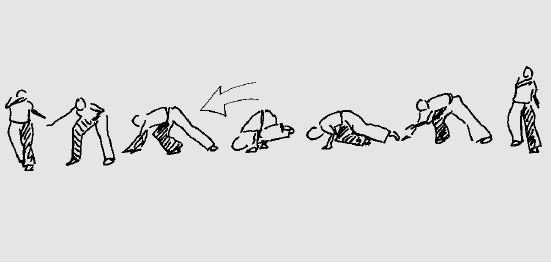
Capoeira Angola’s “Queda de Rins,” or “fall on the kidneys,” is an essential ground movement that serves multiple functions in the game, reflecting the intricate blend of martial arts, dance, and music that defines Capoeira. It involves supporting the torso with an elbow and head, forming a 45° angle with the legs, which requires a combination of strength, coordination, and control.

Yes, this tutorial is in Portuguese… If you want to know what she’s saying, you can always LEARN THE LANGUAGE.

To execute it properly, one must begin with their hands and head firmly on the floor, aligning the body to create a strong foundation, then twist their hips to rest on an elbow while ensuring that the legs remain elevated and engaged throughout the entire movement. It is essential to maintain a steady breathing pattern, as this will help in controlling the balance and flow of the exercise. Eventually, with practice and dedication, one can lift the legs entirely into the air, mastering the art of fluidity that Capoeira demands. Mastery of this movement not only contributes to strength, flexibility, and balance but also provides a solid foundation for exploring the myriad of movements inherent in Capoeira, enabling the practitioner to experience the beauty and rhythm of this dynamic martial art, all while building upper body stability and core strength.

Beginners should practice in stages, starting with proper hand and head placement and gradually increasing their skill level as they gain confidence, while advanced practitioners find the challenge in lifting their feet entirely, continuously refining their technique, adding variations, and enhancing their overall performance in the art of Capoeira, thus deepening their connection to the cultural roots and expressive nature of the discipline.

This technique can act as an esquiva, allowing the practitioner to evade an opponent’s attack gracefully while simultaneously maintaining balance and composure. Additionally, it serves as a crucial starting point for executing various techniques, making it a versatile move that can transition seamlessly into more complex maneuvers, such as flips or spins. This adaptability not only enhances the fluidity of movement but also establishes a connection between defensive and offensive actions. Alternatively, it can be transformed into an artistic flourish that showcases the practitioner’s style and creativity within the roda, creating an engaging spectacle that captivates both audiences and fellow practitioners alike. Ultimately, mastering this technique opens up a world of possibilities, enabling the individual to express their unique approach to the art while effectively navigating the dynamics of a live encounter.

Variations:

Queda de Rins has numerous variations that challenge balance and coordination further, each one designed to enhance physical stability and improve overall body awareness. These variations not only test the limits of one’s strength but also require a keen sense of timing and precision. As practitioners delve deeper into these complex movements, they discover how the interplay between gravity and motion can lead to a greater understanding of their own body’s capabilities. This exploration encourages a more mindful approach to physical activity, as individuals learn to navigate through various positions while maintaining control. Over time, mastering these variations can significantly boost confidence, providing a solid foundation for tackling more advanced challenges in the realm of physical fitness.

Queda de Rins is a versatile and essential movement in Capoeira Angola, adding both defensive and expressive elements to the game. This unique maneuver not only serves as an effective way to evade attacks from opponents but also showcases the fluidity and creativity inherent in Capoeira practice. As practitioners execute the Queda de Rins, they seamlessly transition between defense and counterattacks, demonstrating agility and strength.

Additionally, the movement embodies the rich cultural heritage of Capoeira, allowing players to express their individuality while remaining grounded in tradition. Through strong body control and rhythmic flow, the Queda de Rins encapsulates the spirit of Capoeira Angola, making it a vital component in a player’s repertoire.

THE MOMENT OF TRUTH FRIDAY CRIME REPORT (6/27/25)

Every Friday morning, PROFESSOR BLACK TRUTH hosts “The Friday Crime Report,” a thought-provoking program that delves deeply into critical issues such as systemic racism, economic inequality, and police brutality that profoundly affect the black community. This engaging platform not only informs viewers about the harsh realities faced by marginalized groups but also serves to raise awareness and encourage constructive dialogue among diverse audiences. By equipping individuals with necessary tools and insights for effective advocacy, the program inspires a collective movement towards meaningful policy changes. In addition, it promotes community engagement initiatives that aim to uplift voices often unheard, emphasizing the importance of social justice and equality for all. Each episode invites community members and experts to share their perspectives, fostering a rich exchange of ideas that empowers the audience to take actionable steps toward creating a fairer and more just society.

Today, we follow Aidan Hoffman, who pleaded guilty to possessing child porn, a crime that has shocked the community and raised serious moral questions. But the judge, over the prosecutors’ objections, decided to give this reprobate probation and no fine, a decision that many are calling unjust and indicative of a legal system that sometimes seems to favor offenders over victims.

The public found out about this lenient sentence, and now there’s hell to pay as outrage spreads among communities and social media platforms alike. This case has ignited a larger conversation about the treatment of sexual offenses in our legal system, the role of public opinion, and the balance between justice and rehabilitation. As individuals voice their concerns, questions arise regarding the effectiveness of current laws and the potential need for reform.

Advocates are pushing for stricter penalties and more impactful support systems for survivors, emphasizing that leniency in cases like these can undermine the severity of the crime and the experiences of those affected. It has become clear that society is demanding a deeper examination of how such cases are handled, with a focus on ensuring that justice is appropriately served while also considering the possibilities of genuine rehabilitation. The implications of this case extend far beyond its immediate effects, signaling a critical moment for change and reflection in our legal approach to sexual offenses.

Shout out to the professor for creating and posting this insightful video.

The Professor creates engaging videos on black empowerment that address historical and contemporary issues, fostering critical thinking and reflection among viewers. His YouTube channel HERE builds a community focused on significant black topics and diverse viewpoints, encouraging active dialogue. By including guest speakers and multimedia, he enhances learning and empowers individuals to share important narratives, cultivating belonging and driving positive change.

THE SURVIVOR SERIES (5/24/25)

Welcome to the Survivor Series, where we focus on Urban and Wilderness Survival by exploring essential skills, practical tips, and strategies to prepare for unexpected challenges that life may throw your way. This comprehensive series covers a multitude of crucial topics such as adaptable shelter-building techniques that can be applied in both rural and urban settings, effective food sourcing through foraging and innovative urban solutions that ensure you can find nourishment no matter where you are, and self-defense methods tailored for various scenarios, empowering you to protect yourself and your loved ones. Additionally, the significance of mental resilience and situational awareness will be emphasized, as these traits are fundamental in overcoming adversity and making sound decisions under pressure.

Join us as we dive deeper into these subjects, providing you with the knowledge and skills needed to navigate both familiar and unfamiliar environments, ultimately enhancing your survival skills and empowering yourself to face any situation with confidence.

In this captivating video, a determined man builds a waterproof Viking-style bushcraft shelter using only natural materials found within the lush confines of a rainforest, all while grappling with the challenges posed by heavy rain and the rumble of a thunderstorm overhead.

The immersive experience exceptionally showcases not just the intensity of the elements but also the intricate art of primitive shelter building, offering viewers an unfiltered glimpse into the raw power of nature. Without any distracting voiceovers or music, the focus remains solely on essential survival skills and the intricate process of outdoor crafting, inviting the audience to fully engage with each step of the construction.

This video is meticulously tailored for those who share a passion for jungle bushcraft or have an interest in Viking-inspired shelters, providing both education and inspiration for adventurers and survival enthusiasts alike. Embrace the challenge, learn valuable techniques, and appreciate the beauty of creating shelter under such extreme conditions.