Online videos constitute an invaluable digital archive for Capoeira Angola, an Afro-Brazilian art form that stands as a complete system of self-defense, a vibrant expression of culture, and a rigorous holistic discipline. These dynamic digital documents are crucial for showcasing the art’s complex, multilayered nature, its deep historical roots, and its ongoing, continuous evolution, masterfully intertwining movement, music, rhythm, strategy, and philosophy.
The visual evidence provided by these recordings offers a detailed view of the practitioners’ breathtaking technical mastery. They reveal the fluent, almost liquid execution of foundational movements characteristic of the Angola style, such as esquivas (evasions), meia-lua (half-moon kicks), rasteiras (sweeps), and aús (cartwheels). Crucially, all these movements are performed with the Angola style’s distinctively low-to-the-ground, grounded posture, emphasizing connection to the earth and readiness for defense.
It is critical to understand that these physical movements are entirely inseparable from the comprehensive musical and strategic framework of the roda (the circle in which Capoeira is played). The berimbau, a single-string percussion instrument, is the absolute conductor and spiritual anchor of the roda. It dictates the precise pace, intensity, and nature of the game through its specific toque (rhythm or melody). This musical direction is complemented by the accompanying call-and-response songs, known as corridos, which are far more than mere entertainment. They function as repositories of philosophical wisdom, oral history, proverbs, and essential cultural memory, often commenting on the actions within the roda or recalling figures of the past. The interaction within the roda itself is not a simple physical exchange but a sophisticated, strategic, often non-contact dialogue—a complex dance of anticipation, misdirection, and feints, where the mind is engaged in strategic calculation as profoundly as the body is engaged in fluid movement.
Beyond the technical and strategic elements, the video recordings powerfully convey the art’s profound emotional and social heart: a deep and palpable sense of community, shared identity, and unyielding cultural pride. Capoeira Angola is fundamentally a collective ritual, illustrating strong, hierarchical, yet often familial, bonds (irmandade) and a clear, indispensable mentorship system. This structure flows from the mestres (masters), who embody the tradition’s highest wisdom and skill, down to the professores (teachers), and the alunos (students). As essential educational and preservation tools, these videos serve to meticulously safeguard the rich African-Brazilian heritage. They detail Capoeira’s origins as a veiled means of physical resistance and cultural autonomy created by enslaved Africans in Brazil, and its ultimate transformation from a clandestine practice into a globally recognized, living tradition. Through this continuous documentation, the art form ensures that its history of survival, defiance, and cultural genius is never forgotten and continues to inspire future generations.
Today, events like the following highlight this living tradition:
Capoeira Angola: A Cultural Immersion at Midway Mall in Natal, RN
A truly vibrant and authentic expression of Capoeira Angola recently captivated the public at the Midway Mall Shopping Center in Natal, the bustling capital of Rio Grande do Norte (RN). This significant cultural event transformed a high-traffic commercial space into a traditional Afro-Brazilian roda (circle), providing an unforgettable immersion into the heart of this ancestral art form.The Leadership of Contramestre Rodrigo
The entire event was meticulously conducted and led by Contramestre Rodrigo, a figure of profound respect, dedication, and authority within the Capoeira Angola community. His presence was pivotal, serving as a guarantee of the event’s authenticity. Contramestre Rodrigo ensured that the fundamental tradition, profound philosophy, and characteristic rituals of this martial art were strictly maintained. His leadership not only guided the rhythms and movements but also reinforced the ethical and historical underpinnings of Capoeira Angola for both participants and onlookers. The roda under his direction was a living classroom, demonstrating the slow, strategic, and deeply spiritual nature of this cultural practice.A Public Stage for Ancestral Art
The strategic choice of the Midway Mall as the venue was a deliberate and brilliant move to bridge cultural tradition with contemporary public life. By placing the roda in a high-visibility, accessible location, the event successfully brought the richness of Capoeira Angola directly to the public. Shoppers and visitors were momentarily transported, given a direct experience of the art’s powerful yet nuanced aesthetic. The air was filled with the unmistakable, slow, and rhythmic pulses of the berimbau—the soul of the roda—accompanied by the communal energy of the call-and-response choral chants. The visual spectacle was completed by the expressive and strategic movements of the capoeiristas, whose low, grounded, and often deceptive movements showcased a unique blend of dance, fight, and ritual. The energy generated within the circle was infectious, drawing curious crowds who watched in respectful fascination as the cultural exchange unfolded.Promoting and Preserving Brazilian Popular Culture
This initiative transcends a mere performance; it serves as a powerful instrument for the promotion and vital dissemination of Capoeira Angola. By strengthening the visibility and practice of this art form, the event plays a crucial role in bolstering Brazilian popular culture as a whole. Furthermore, it actively encourages the practice, rigorous study, and deeper understanding of this ancestral art within the Natal/RN region. Such public demonstrations are essential for connecting new generations to their cultural heritage, ensuring that the history, philosophy, and physical practice of Capoeira Angola continue to thrive, safeguarding its legacy for years to come.
When first considering the art forms of Capoeira and Vogue, it is understandable that one might struggle to find common ground. On the surface, they appear to exist in completely different cultural, historical, and geographical spheres. Capoeira, the Afro-Brazilian martial art that blends fighting, acrobatics, music, and dance, evokes images of sun-drenched rodas and centuries of resistance. Vogue, the highly stylized, modern house dance originating from the Harlem ballroom scene, suggests the vibrant, assertive self-expression of marginalized communities in urban America.
I must admit, my initial reaction was one of skepticism; I simply couldn’t quite see how a historical, ritualized martial art and a contemporary, high-fashion dance form could have anything meaningful in common.
However, the deeper I delved into the philosophy, movement vocabulary, and cultural significance of both practices, a powerful and undeniable connection began to emerge—a kinship rooted in resilience, improvisation, theatricality, and a profound commitment to self-assertion. This exploration has been a journey of discovery, forcing me to challenge preconceived notions about movement and cultural dialogue.
I am more than happy to be proven wrong in my initial assessment. The intersections of Capoeira and Vogue offer a compelling case study in how seemingly disparate forms of embodied expression can share a common DNA of survival and spectacular creativity. The following article details the unexpected and beautiful resonances between these two dynamic, powerful, and deeply significant cultural practices. Enjoy the exploration of this fascinating dialogue.eped in a rich and sometimes painful history, yet they share a surprising and profound number of parallels. Both are sophisticated languages of the body, particularly in their emphasis on complex movement, dramatic self-expression, the channeling of competitive energy, and the creation of a defined, protected community space for performance. Exploring the connection between these two forms offers a fascinating and critical lens through which to examine global artistic currents, the power of marginalized communities to create and preserve culture, and the universal human desire for radical self-definition.
Capoeira: A Dance-Fight of Resistance, Flow, and Cunning
Capoeira originated in Brazil, ingeniously developed by enslaved Africans primarily from West and Central Africa. To evade detection and the severe punishment of their oppressors, they creatively disguised a sophisticated and deadly martial art as an innocent-looking, rhythmic dance. This duality—the art of masking aggression with grace—is the very soul of Capoeira. It is characterized by fluid, acrobatic movements, high-velocity kicks, powerful sweeps, and the continuous, swaying motion known as the ginga.
The practice is inseparable from its musical foundation. Every jogo (game) is always accompanied by the potent, driving rhythm from the berimbau (a single-string percussion instrument that dictates the pace and intensity), the atabaque (a hand drum), and traditional songs, which often tell stories of history, struggle, and resistance.
Key Characteristics and Cultural Function:
Ginga (The Flow and Deception): The foundational, rhythmic, swaying movement. The ginga is not merely a warm-up; it serves as both a posture of perpetual readiness and a mesmerizing rhythmic dance. It embodies the constant state of motion, misdirection, and deception crucial to the art, protecting the player while creating openings for attack. It is the heart of Capoeira’s flow state.
The Roda (The Sacred Circle): The circle formed by participants where capoeiristas “play.” The roda is a multi-functional space: a performance stage, a dynamic battleground, a communal gathering, and a ceremonial arena. It is rigorously governed by rituals, respect for the music, and deference to the Mestre (Master) or senior players, ensuring the integrity and lineage of the art form are maintained.
Acrobatics and Expressiveness: While fundamentally a fighting technique, Capoeira is intensely aesthetic and theatrical. It incorporates impressive, often gravity-defying acrobatics (aú – cartwheel, macaco – monkey jump) and a theatrical element where players communicate, challenge, and spar with each other non-verbally, often with a sense of playful cunning or malícia.
Vogue: Striking a Pose, Finding the Spotlight, and Self-Definition
Vogue, or Voguing, emerged as a brilliant cultural explosion from the African American and Latino LGBTQ+ Ballroom scene in Harlem, New York, starting in the 1960s and dramatically evolving through the 80s. Born out of necessity, it was an art form and a competitive culture centered on self-definition, fierce competition, and the radical celebration of marginalized identities that were aggressively rejected by mainstream American society. It evolved into a highly stylized, modern house dance characterized by striking angular and linear poses that mimic the dramatic artistry of fashion models in Vogue magazine, interwoven with complex hand movements, dramatic dips, spins, and drops.
Essential Elements and Historical Context:
Posing and Hand Performance: The core element involves sharp, angular, and often gravity-defying poses (the “snap”), connected by intricate, graceful, and articulate hand movements (“Hand Performance”) that can tell a complex, non-verbal story or convey an attitude. The three major styles—”Old Way,” “New Way,” and “Vogue Femme”—each emphasize different aspects of line, precision, and femininity.
Walks and Battles (The Ballroom Culture): Participants “walk” in hyper-competitive events known as Balls. These categories are judged not just on technical execution and complexity, but also on costume, attitude, and the elusive concept of “realness” (the ability to convincingly portray a particular identity, especially one denied to them). The “battle” structure is the central, electric engine of the Ballroom scene’s energy and innovation.
Attitude and Radical Self-Affirmation: Vogue is a potent tool for confidence, catharsis, and radical self-expression. In the Ballroom, performers can temporarily become the aspirational, powerful, and aspirational figures often denied to them in the external world. It is an art of claiming space, demanding respect, and affirming existence.
—–The Overlapping Aesthetics: Flow, Drama, and the Circle of Life
The conceptual and physical overlap between Capoeira and Vogue, despite their geographic and historical distance, is strikingly cohesive. Both are manifestations of genius created under duress.
The Element of Flow and Deception (The Ginga/The Illusion):
Capoeira: The ginga is a rhythmic, constant flow designed specifically to confuse an opponent, masking a sudden, powerful offensive move as a mere step or sway. The goal is to move so fluidly that the attack is obscured until the last possible moment.
Vogue: Similarly, Vogue, particularly “New Way” with its intricate locks, “clicks,” and illusions, utilizes a constant, controlled flow of transition to create mesmerizing visual effects that fool the eye. Both practices prioritize continuous, deceptive motion over static, exposed form, leveraging the element of surprise.
Performance, Theatricality, and Emotional Intensity:
Both forms are inherently dramatic, theatrical, and performative. Capoeira is a ritualized “game” played to the pulsing sound of music, where flair, humor, malícia (cunning), and misdirection are valued as highly as power.
Vogue is performance perfected—a dramatic art form built on fierce attitude, the communication of confidence, and the ability to command and hold the entire room’s attention. Both create an atmosphere of intense, almost electric energy and non-verbal dialogue between participants and the audience.
The Community Circle (The Roda/The Ball):
The Roda in Capoeira and the Ball in Vogue serve as sacred, delimited, and intensely focused spaces where the art is performed, judged, and celebrated by a close-knit, self-selected community.
These circles are more than just venues; they are safe havens that allow for maximum, uninhibited self-expression and cultural perpetuation. Functioning as cultural centers of resistance, they offer a powerful counter-narrative and protection against external societal pressures, judgment, and historical marginalization.
Improvisation, Dialogue, and Call-and-Response:
A capoeira game is a continuous, improvised, and highly responsive dialogue between two players. Each player’s move is a comment on, a challenge to, or a deflection of their opponent’s previous action.
Vogue battles also rely heavily on improvisation, with performers dynamically responding to the driving music, the commentator (MC), and directly challenging their opponent’s moves. The entire process creates a kinetic, competitive conversation that pushes the boundaries of innovation in real-time.
By recognizing the shared vocabulary of fluid movement, dramatic expression, communal ritual, and the defiant spirit ingrained in their structure, a comparative study of Capoeira and Vogue reveals a universal human necessity: the desire for creative freedom, self-definition, the preservation of culture, and the power of resistance articulated through the spectacular art of the body.
Now, I would like to introduce you to someone who embodies a profound dialogue between two powerful forms of movement and cultural resistance. Her name is Puma Camillê.
Puma Camillê is a prominent Brazilian multidisciplinary artist, capoeirista, and performer who has pioneered a captivating hybrid performance style that has garnered attention both nationally and internationally. Her work is a fluid and powerful convergence of the traditional Afro-Brazilian martial art of capoeira, known for its intricate movements and rhythmic footwork, with the fierce, expressive dance style of voguing, which celebrates individuality and self-expression. This unique synthesis of movement forms is not merely an artistic experiment but a profound statement on cultural continuity, self-expression, and resilience, as it bridges the gap between historical traditions and contemporary manifestations of identity. Through her performances, Puma invites audiences to reflect on the rich tapestries of their heritage while simultaneously challenging societal norms, making her artistry a vital force in the ongoing dialogue about culture, race, and empowerment in the modern world.
About Puma Camillê: A Profile in Art and Activism
Identity and Roots: Born in São Paulo, Puma Camillê is a black trans woman and a leading figure in the Brazilian ballroom community. Her personal journey and identity are inseparable from her artistic practice, grounding her work in the lived experience of marginalized communities.
The Hybrid Artistry of Resistance: Puma’s artistic signature is the seamless blending of capoeira and voguing. She identified deep parallels between these two seemingly disparate movement traditions, recognizing a shared philosophical foundation built on resistance and rebellion. Capoeira, born from the enslaved African people in Brazil, served as a disguised form of martial arts and cultural preservation. Voguing, originating in the LGBTQIA+ ballroom scene of 1980s Harlem, emerged as a celebration of queer identities, a defiant, creative response to a hostile social landscape. For Puma, both art forms are born from a foundational search for freedom and a refusal to be suppressed.
Artivism and Community Building: Beyond the stage, Puma Camillê uses her art as a form of “artivism”—a conscious integration of artistic practice with social and political activism. This commitment is exemplified by her founding of the collective Capoeira Para Todes (Capoeira For Everyone). This initiative actively promotes and ensures a visible, affirmed presence for queer and transfeminine individuals within these historically significant art forms, challenging heteronormative and patriarchal structures.
Global Impact and Pedagogy: Puma Camillê is an internationally recognized figure, traveling extensively to host workshops and deliver breathtaking performances. Her pedagogy focuses on much more than technique; it is centered on promoting body diversity, fostering ancestral connection, and empowering participants through the transformative experience of movement. She connects the spiritual lineage of capoeira’s roda (the circle in which capoeira is played) with the community and defiance of the ballroom kiki (social gathering/mini-ball).
Critical Recognition: Her singular practice has garnered significant attention, including being the subject of the short film PUMA by director JDiscovering (J. Molinari). This evocative film casts a dreamlike, intimate lens on the vibrant creative landscape that birthed her unique fusion style, following the seamless synergy between the two performance styles as they elegantly intertwine and are interpreted as one cohesive whole. By delving into the intricacies of her artistic process, the film showcases not only the transformative nature of her performances but also the emotional depth and authenticity that captivates audiences. It provides a rare glimpse into her inspirations, the challenges she has faced, and her unwavering commitment to pushing artistic boundaries, making her work not just a performance but a profound exploration of identity and expression that resonates on multiple levels.
PUMA explores the spiritual connection and sense of identity that Puma finds through these distinct yet connected forms of movement—both created by, and for, marginalized communities. The film successfully documents her singular practice through the connectedness it brings, highlighting the influential forces behind her pursuit of unexplored ground and establishing her art form as one for which the personal is the driving, revolutionary principle. Her work consistently finds fluidity and new meaning in experimental movements that honor tradition while blazing a trail for future generations. By intertwining personal narratives with collective histories, she crafts a tapestry of experiences that resonate deeply within the heart of her audience, inviting them to engage with the transformative power of dance as a means of expression. The vibrant choreography not only serves as a reflection of her own journey but also embodies the struggles and triumphs of the communities she represents, making each performance a powerful statement about resilience and hope. Through this lens, Puma not only challenges the conventional boundaries of art but also paves the way for dialogue about cultural identity and the importance of preserving heritage in an ever-evolving world.
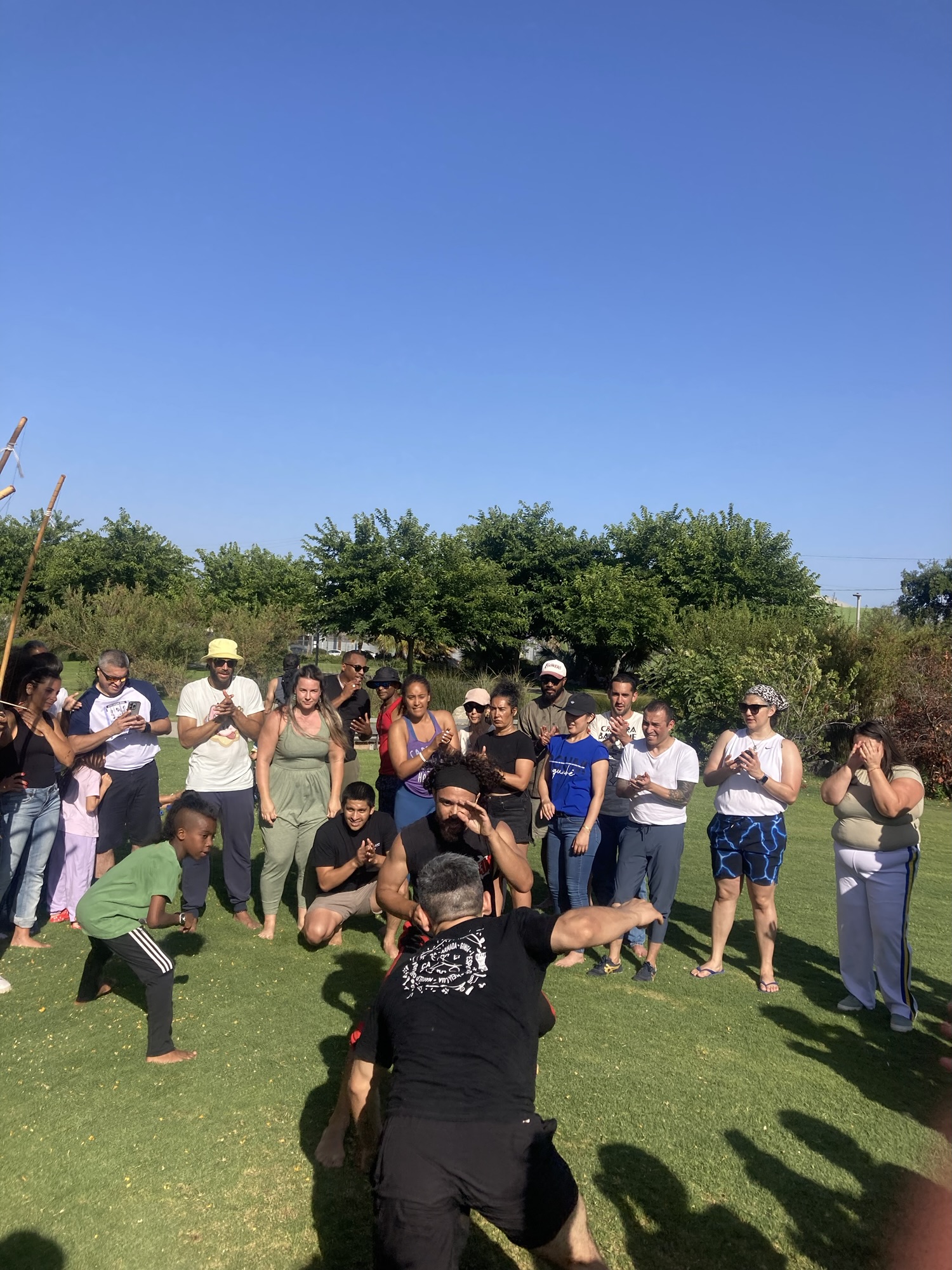
Anyway, I want to tell you about another amazing Capoeira Angola adventure I had last Sunday, June 22nd, a day after the summer solstice. It was an afternoon filled with reuniting with old friends and meeting new friends, creating a vibrant tapestry of connections that warmed the heart. The atmosphere was charged with excitement as practitioners of all levels gathered, each contributing their unique energy to the circle. The rhythm of the Berimbau resonated in the air, and the infectious laughter and lively conversations surrounded us, creating a sense of community. The amazing brotherhood and camaraderie that expresses all that is good about Capoeira reminded me of the essence of this beautiful art form—it’s not just about the physical practice, but also about the relationships we build and the stories we share as we grow together in our journey.
There were quite a few schools of Capoeira there from all over L.A., and a few from Orange County, creating an atmosphere filled with excitement and energy that drew everyone in, igniting a sense of community among practitioners and spectators alike. As the sun set, casting a warm glow over the gathering, we played soft, we played hard, showcasing our skills and passion for the art; the rhythms of the Berimbau resonated in the background, elevating the experience to a transcendental level. We all played beautifully, each move telling a story of dedication and culture, as every kick, spin, and flip blended into a captivating narrative that celebrated our heritage, bridging gaps between generations and uniting us through the vibrant dance of Capoeira.
The rhythm pulsed through our veins, and then, after a couple of hours, we ended with an amazing Samba De Roda, where I admit, I danced longer than I should have, completely losing track of time in the joyous celebration. But when the drums call, I have to answer, surrendering to the infectious beat that calls to the very essence of who I am. Then after that was the coolest, most amazing picnic I ever attended, where laughter echoed through the air, delicious fruit was shared, and new friendships were formed under the warm sun, making the entire day an unforgettable experience that I will cherish forever.
This amazing celebration was the start of Capoeira Batuque’s annual batisado, which will be happening all this week, filled with various activities, workshops, and performances that showcase the rich cultural heritage of Capoeira. For more info, please check out their website, brasilbrasil.org. It promises to be an exciting time for participants and spectators alike, as students demonstrate their skills and passion for this unique art form.
I would like to sincerely thank Mestre Amen Santo, as well as Mestres Muito tempo, Minha Velha, Varal, and Contramestres Saracuru for their invaluable contributions to the Capoeira community, which have significantly shaped our culture and practices over the years. A special mention goes out to Arthur Fiu, whose unwavering enthusiasm and vibrant energy truly inspire us all, motivating each member to strive for excellence and to embrace the spirit of Capoeira. Furthermore, I cannot forget to express my appreciation for my uncle in Capoeira, brother Jelani Lateef, whose infectious laughter and warm presence always bring joy and positivity to our gatherings, creating an atmosphere that fosters camaraderie and friendship.
I’m pretty sure I missed some of you, and for that, I sincerely apologize; it was never my intention to exclude anyone, but in the excitement and depth of acknowledgement, I realize that some deserving names may have slipped my mind. Thank you all for your support and passion in keeping the Capoeira tradition alive.
I mentioned that a couple of weeks ago, I went to Oakland for another EVENT. The experience there was truly unforgettable, filled with laughter, connections, and a vibrant sense of community. And as amazing as that was, after coming back here to LA, going to the gathering on JUNETEENTH, and this gathering yesterday, which further highlighted the importance of unity and love, all I can say is,
before I go further, I think I should describe what a roda is in the world of capoeira.
The Roda de capoeira serves as a theatrical space that showcases the art of Capoeira and the vibrant communities involved, where participants learn skills and life lessons that extend beyond the physical practice itself. In this dynamic setting, individuals not only refine their martial techniques but also engage in the rich cultural traditions and musical expressions that accompany Capoeira. Through the rhythmic beats of the berimbau and the spirited singing of the participants, the Roda transforms into a living embodiment of history, solidarity, and creativity, inviting both players and spectators to immerse themselves in a shared experience that honors ancestral legacies. Each movement in the Roda is a dialogue, a blend of acrobatics, dance, and storytelling that fosters connections among diverse groups, encouraging a sense of belonging and mutual respect across generations. As practitioners embrace the challenges of each encounter, they cultivate resilience, adaptability, and the understanding that Capoeira is not merely a sport but a lifelong journey of cultural exploration and personal growth.
The energy of the Roda varies significantly by environment, with formal energy in academies promoting disciplined learning and structured progress…
While street Rodas, or “Roda de rua,” offer a different, more vibrant energy that pulsates through the air, making every moment feel alive with possibility. This is my favorite place to play Capoeira, where there’s more spontaneity and community involvement, as the atmosphere is infused with the sounds of laughter, music, and the rhythmic clapping of the audience. Here, onlookers naturally feel compelled to join in the rhythm, creating an inclusive atmosphere that celebrates cultural heritage and fosters deep connections among participants.
Each session becomes a tapestry of shared experiences, with novice and seasoned practitioners exchanging skills and stories, nurturing a sense of belonging that transcends the act of play and delves into the essence of community life. This rich interaction fosters not only personal growth but also the cultivation of trust and mutual respect among participants, empowering them to learn from one another. The vibrant energy of the street Roda, filled with laughter, rhythm, and movement, not only enhances the practice but also reinforces the bonds of friendship and camaraderie, creating an environment where everyone feels valued and included. It is a collective journey where each participant contributes their unique perspective, enriching the overall experience, and making it a truly unforgettable and transformative moment for everyone involved.
“There are not more than five musical notes, yet the combinations of these five give rise to more melodies than can ever be heard. There are not more than five primary colours, yet in combination, they produce more hues than can ever been seen. There are not more than five cardinal tastes, yet combinations of them yield more flavours than can ever be tasted.” ― Sun Tzu, The Art of War“
Capoeira Angola is a defensive martial art known for its intricate trap-like defenses designed to catch opponents off guard and provide fluidity in movement. It encompasses 8 basic defenses, each with unique unexpected attacks and counter-attacks based on the opponent’s positioning, which are essential for creating opportunities during a confrontation. Mastery of these movements enables capoeiristas to defend against individuals carrying various weapons, including sticks, clubs, knives, and potentially even firearms with the appropriate skills; by understanding the principles of anatomy, timing, and rhythm, practitioners can enhance their ability to react swiftly and effectively. Furthermore, the art form emphasizes not only physical technique but also the mental aspects of strategy and awareness, allowing capoeiristas to anticipate an opponent’s actions and respond accordingly, making it a holistic approach to self-defense that integrates body and mind.
Today, I’m gonna “type” about one of the most fundamental techniques, one of the “trademarks” if you will, of Capoeira Angola, the RASTEIRA.
“When you understand the rasteira you are very close to understanding the philosophy behind the art form known as capoeira. […] The rasteira represents the victory of knowledge over brute force, of shrewdness over strength. It is the weapon of the weak against the strong, of the oppressed against the oppressor.”
Rasteira is a foot sweep technique in capoeira that typically counters high kicks and disrupts the opponent’s balance by using their own force against them. It is fundamental in traditional capoeira and is a hallmark of an exceptional capoeirista, alongside the meia lua de compasso. Developed from the Angolan martial art engolo, rasteira can be executed from various positions.
The rasteira takedown is a defensive move performed by capoeiristas to counter an opponent’s attack, typically targeting their support leg during kicks. It involves instinctively evading the strike while sweeping the leg, often causing the attacker to fall on their back, which can be dangerous if they’re untrained. Mastering the rasteira enables one to effectively deal with aggressive opponents, and it is said, “The harder they come, the harder they fall.”
In friendly contexts, one can feign the move without actual contact, but targeting hands during handstands or cartwheels can result in serious injuries and should be avoided. Engaging in such playful interactions might seem harmless, yet the risk of causing an accident remains significant, especially if the individual performing the maneuver is not fully aware of their surroundings. It is crucial to emphasize safety and proper technique, as even a slight miscalculation during these activities can lead to falls or strains. Therefore, participants should exercise caution and communicate effectively about their intentions to ensure a safe and enjoyable experience for everyone involved.
The rasteira can be performed with one, two, or no hands on the ground. The variations of rasteira include:
crouching sweep (rasteira do chão)
back crouching sweep (rasteira de costas)
standing sweep (banda or rasteira em pé)
back standing sweep (banda de costas)
Crouching sweep (rasteira)
The Crouching sweep, known as rasteira or rasteira do chão, is a fundamental move in capoeira. To execute it, the capoeirista drops to one leg, balancing with their arms, and bends their trunk close to their thigh. They then extend the opposite leg and make a circular motion to sweep the opponent’s foot, aiming to hook their ankle or leg and topple them if they do not react quickly enough.
Back crouching sweep (rasteira de costas)
Rasteira de costas (back sweep) is a quick crouching sweep executed from a backward rotation, aiming at the back of the opponent’s ankle in less than a second. This maneuver resembles a low Rabo de arraia and is referred to as encruzilhada (crossroads) by some authors, found in the game of batuque, while others recognize it in ngolo.
Standing sweep (rasteira em pé)
The standing sweep is primarily used against direct kicks like martelo (roundhouse kick), and is effective when the opponent’s weight is on one leg, though it’s rarely successful. To execute it, position your foot behind their supporting leg and twist to sweep their foot off the ground. This technique is also referred to as banda or banda de frente, with the latter sometimes indicating a different method that involves using the knee of the attacking leg to push the opponent’s legs forward.
Back standing sweep (banda de costas)
Banda de costas (back band) is a takedown technique where the player thrusts forward to land on one foot and performs a back sweep using their heel to trip the opponent, leading to a loss of balance and a fall. It is most effective when sweeping both legs but is challenging against experienced opponents. This technique often serves as a counter against kicks like queixada and armada or during unexpected moments in a game.
Grass cutter (corta-capim)
Corta-capim (grass cutter) is a specific foot sweep technique often used in uneven fights, where one person confronts multiple opponents. The capoeirista lowers their body to one leg and violently extends the other leg to sweep the opponent. From queda de quatro, the fighter sweeps one leg in a semi-circle to target the opponent’s planted foot, similar to a rasteira, also aiming to lock onto the opponent’s foot for effective takedowns.
As a child, Mestre João Grande saw some guys doing corta capim in the street, and heard: “Do that movement to a person and the person will fall.” That sparked his lifelong interest in capoeira.
This very special takedown of old capoeira is used mostly as a floreo today.
Rasteiras de Mao
Rasteira is a simple yet effective capoeira move that involves placing your hands firmly on the ground while using your legs to create momentum. As you rotate your leg at a 180º angle, the objective is to strategically knock down the opponent, creating an opening for follow-up maneuvers. This move not only showcases agility but also requires precise timing and body control, making it a fundamental technique in the capoeira practitioner’s repertoire. Mastering the rasteira can greatly enhance one’s ability to fluidly transition between offensive and defensive postures during a match.
This paragraph discusses the “ROOTS OF CAPOEIRA” blog series, highlighting the significance of Afro-Brazilian culture as the foundation of Capoeira. It emphasizes the deep connection between Capoeira and the rich heritage of the Afro-Brazilian people, who express their struggles, creativity, and resilience through various forms of art, including dance, music, and storytelling. Additionally, it notes the importance of these art forms in celebrating identity and preserving history, showcasing the community’s innovation and resilience in the face of adversity. The series delves into various elements of Capoeira, such as the rhythm of the berimbau, the role of the roda, and the significance of traditional songs, all of which contribute to a collective narrative that honors ancestors and fosters a sense of belonging. By understanding these cultural roots, readers gain a deeper appreciation for how Capoeira not only serves as a form of self-defense and physical expression but also as a vital cultural practice that unites individuals in celebration of their shared heritage.
In today’s installment..
Join us on a culinary journey through Afro-Brazilian cuisine, highlighting its unique blend of African, Portuguese, and indigenous influences that have shaped the rich tapestry of Brazil’s food culture.
Discover iconic dishes like Feijoada, a hearty stew that combines black beans and various types of meat, and Moqueca, a flavorful fish stew made with coconut milk and spices that varies regionally in Brazil, showcasing the diversity of local ingredients and culinary techniques. Learn about key ingredients such as dendê oil, which imparts a distinctive flavor that is essential in many traditional recipes, and okra, often used to enhance the texture of many dishes, providing a unique twist to the overall experience.
Celebrate the vital role of women in preserving these traditions, as they pass down invaluable recipes and cooking techniques from generation to generation, ensuring that the heritage remains vibrant and alive, and fostering a deep connection to their roots. Share this video to spread appreciation for Afro-Brazilian cuisine, inviting others to explore and savor the diverse tastes and cultural stories embedded within each dish, while also recognizing the significance of these culinary practices in shaping community bonds and local identities.
Hello, I would like to introduce to you one of my teachers, and inspirations, Jelani Lateef.
Jelani Lateef is a dedicated teaching artist and capoeirista who actively engages in capoeira Angola and storytelling. He has recently lost his home in the Eaton Fire, which he was renovating for an art studio. His teachings emphasize not only the physical practice but also the cultural significance of the art form, exploring its rich history and the stories woven into each movement.
By integrating elements of personal narrative and cultural exchange, he has encouraged myself, as well as others, to appreciate capoeira Angola not just as a martial art but as a living, breathing tradition that connects people across generations.
Your support will help him continue his journey, enabling him to reach more individuals and cultivate a deeper appreciation for this vibrant cultural practice.
HAPPY BIRTHDAY, MESTRE JOAO GRANDE!!! May this special day be filled with joy, love, and laughter as we celebrate the incredible person you are. Your wisdom and guidance have touched the lives of many, and today we honor not only your birth but also the remarkable legacy you continue to build.
Here’s to many more years of health and happiness, surrounded by those who care deeply for you!
FELIZ ANIVERSÁRIO, MESTRE JOÃO GRANDE!!! Que este dia especial seja repleto de alegria, amor e risadas enquanto celebramos a pessoa incrível que você é. Sua sabedoria e orientação tocaram a vida de muitos, e hoje honramos não apenas seu nascimento, mas também o legado notável que você continua a construir.
Aqui está a muitos mais anos de saúde e felicidade, cercado por aqueles que se importam profundamente com você!
Okay, this blog title is clickbait, so… If you’re looking for some kind of showdown, you will be SORELY MISTAKEN.
But anyway, I found this cool video clip on YouTube, and I thought I’d share it with you.
What you’re actually looking at is a friendly sparring match between two dedicated Martial Artists from each of the two styles mentioned in the title of this blog. Of course, I always say that videos like these, where one style is pitted against another, are for the most part pointless.
Why?
Because although some styles are better than others for fighting, it really depends on the training and skill of the FIGHTERS, as well as the unique experiences that each brings to the mat.
Each practitioner carries with them a wealth of knowledge and personal techniques, honed over countless hours of training and real-world application, which not only shape their physical abilities but also inform their mindset and approach to challenges. What truly matters is how effectively they can leverage their respective skill sets, whether the scenario involves a friendly contest, a simulation of deadly combat, or everything in-between, as each situation presents unique variables that require quick thinking and adaptability. In essence, the outcome is not solely determined by the style itself but rather by the adaptability, strategy, and mental fortitude of the individuals involved, showcasing that the art of fighting transcends mere techniques and delves deep into the heart of each fighter’s spirit and determination.
This interplay of skills and psychological resilience is what elevates a simple competition into a profound expression of personal growth and mastery, ultimately highlighting that the journey of a martial artist is as significant as their victories in the ring.
Now having said or rather, “Typed” about that, there’s another important thing that I would like to type about.
In that video, the narrator mentioned that many of our young sisters have been coming up missing in the USA, in particular the state of Virginia, where the numbers have been rising alarmingly over the past few years. This heartbreaking issue affects families and communities deeply, leaving unanswered questions and a sense of fear in the hearts of many. I for one, URGE you to check out missingkids.org, a vital resource dedicated to finding missing children and raising awareness about this pressing crisis.
Together, we can take proactive steps to help locate these vulnerable children and work towards ensuring their safety and well-being. By leveraging community resources, collaborating with local organizations, and raising awareness through various platforms, we can significantly increase our reach and effectiveness in this critical mission. Let’s unite our efforts and spread the word far and wide so that we can find these missing children and bring them back home, safe and sound, to their loved ones who are desperately waiting for their return. Every shared story, every posted photo, and every conversation can contribute to a greater chance of recovery, reminding us that together, our collective impact can bring hope and healing to families who are suffering in silence.
I will be posting more about this particular subject n the near future.
Hi, I guess this is where I talk about my New Year’s resolutions, or at least where this website is concerned.
This blog is dedicated to the arts and culture of Africa and its diaspora, focusing on Capoeira Angola as both a physical art form and a deep cultural expression with a rich history. Within this vibrant realm, there are many issues and genres surrounding it, and I aim to explore every facet in detail. That means delving deep into the intricate dance movements, the powerful self-defense techniques, the soulful music, and the meaningful rituals that bring communities together, creating an environment of unity and shared identity. Each element not only serves a purpose but also tells a story, revealing the importance of oral traditions and the historical context that shapes these practices.
As I examine the evolution of Capoeira Angola, I will highlight its roots in African cultures and how they have intermingled with various influences throughout history. Each aspect reflects the diverse culture and historical significance of this extraordinary practice, showcasing how it allows individuals to connect with their roots and each other across generations, fostering a sense of belonging while celebrating the vibrancy of their heritage. Furthermore, I plan to look into contemporary adaptations and how younger generations are keeping this tradition alive, ensuring that the essence of Capoeira Angola continues to thrive and inspire future artists and cultural advocates around the world.
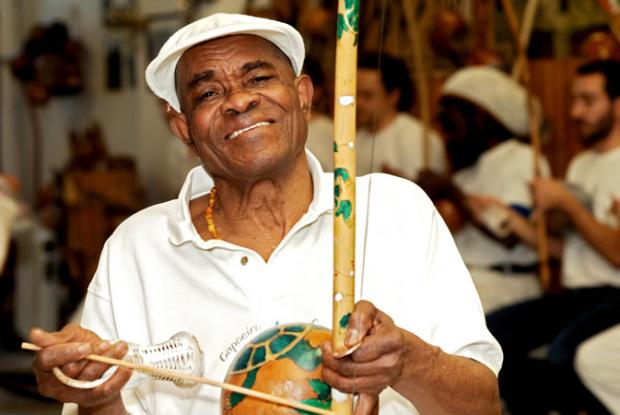
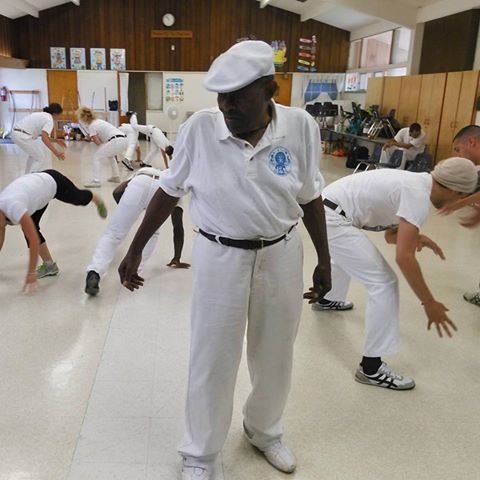
Right now, let’s start 2025 with Mestre Pastinha, the father of Capoeira Angola, whose legacy continues to inspire and shape the practice of this art form. His teachings not only emphasize the importance of physical prowess but also highlight the cultural roots of Capoeira, encompassing music, dance, and the historical struggles of the Afro-Brazilian community.
By revisiting his philosophy and techniques, we can deepen our understanding of Capoeira as a powerful tool for self-expression and social connection, fostering a sense of unity in our communities as we embrace the new year ahead.




 Jogo Corpo Fechado