Today, April 1st, marks the beginning of Black Media Appreciation Month! We at Jogo Fechado are excited to invite you to join us in celebrating the vital role that independent, Black-led media plays in our community and in the broader world. This month is dedicated to recognizing the pioneers, the platforms, and the content creators who provide authentic, unfiltered perspectives for the Black grassroots.
To kick off this important month, we have a special message from The Professor to all of us gathered here in cyberspace.
Why New Black Media Appreciation Matters: A Foundation for Empowerment and Self-Determination
The establishment and sustained appreciation of independent Black media is far more than a cultural preference; it represents a foundational necessity driven by the unwavering principle of Black grassroots self-determination.
As the Black grassroots, we think and act for ourselves. This core, inalienable right to self-governance in thought and action is the very reason why we have diligently established, supported, and continue to evolve our own robust media ecosystems. For generations, the landscape of traditional and mainstream media has proven insufficient—and often actively detrimental—to the well-being of the Black community. These dominant narratives frequently fail to represent the full spectrum of our nuanced experiences, complex priorities, and diverse voices. Worse still, they often engage in misrepresentation, stereotyping, or the outright erasure of issues vital to our survival and prosperity.
New Black Media steps into this critical void, serving a dual, essential function: it acts as a truthful mirror for our community to see itself reflected with dignity and accuracy, and it operates as a powerful megaphone to project our lived truths, demands, and achievements into the wider public discourse.
This media infrastructure provides a platform for essential dialogue, allowing for internal community conversations that prioritize Black liberation and development. It moves beyond simply reporting on events to providing deep analysis rooted in a historical and cultural context that the mainstream either ignores or cannot comprehend. By controlling the narrative, New Black Media empowers the community to define its own agenda, celebrate its own heroes, critique its own challenges, and mobilize for collective action without external filters, ultimately strengthening the foundation for social, political, and economic empowerment.
This appreciation month is our opportunity to honor and celebrate:
The People: The independent journalists, content creators, podcasters, writers, producers, and community activists who dedicate their time, resources, and passion to building these platforms. They are the intellectual architects and the truth-tellers of our generation.
The Events: The critical discussions, organizing efforts, and community-building initiatives that are amplified and facilitated through this media. Black media is the essential infrastructure for grassroots thought and action.
The Empowerment: The direct impact this media has on our collective consciousness, providing education, fostering critical thinking, promoting economic self-sufficiency, and driving political engagement. By having our own narratives, we are better equipped to challenge systemic injustice and build a stronger future.
Supporting these platforms is an act of communal investment. It ensures the longevity and independence of the voices that truly speak for us.
Support The Professor’s Work
The work of The Professor and the community he serves relies on the direct support of those who value independent Black thought and analysis. If you appreciate the commitment to truth, the critical insight, and the educational content provided, please consider supporting the mission through the following platforms:
The Enduring Legacy of Capoeira Angola: More Than Just a Game
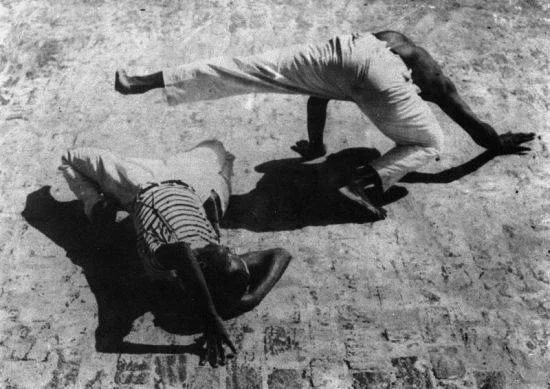
Online videos of Capoeira Angola offer a captivating and vital window into this rich cultural tradition, serving as both indispensable archives and dynamic educational resources. These visual records are crucial for preserving and transmitting the intricate blend of music, movement, self-defense, and profound history that defines the art. They capture the astounding agility, technical prowess, and strategic depth found within every choreographed movement and spontaneous interaction.
Crucially, these documented moments explore Capoeira’s deep historical roots and immense cultural significance, emphasizing its role not just as a physical discipline, but as a unifying social force. Within the roda (the circle where the game is played), Capoeira strengthens community connections, fosters mutual respect, and serves as a powerful expression of collective identity. Beyond the sheer performance of the jogo (game), the preserved footage inspires and educates future generations by embodying core Capoeira values: resilience in the face of adversity, boundless creativity, and unwavering cultural pride.
A significant element of the video archive is the inclusion of interviews and testimonials from esteemed mestres (masters) and high-ranking students. These personal narratives provide essential context, offering deep insights into the transformative impact and discipline that Capoeira instills in its practitioners. They bridge the gap between the historical origins of the art and its contemporary, living practice.
Ultimately, the visual record of Capoeira Angola—in every filmed jogo and roda—stands as a comprehensive and invaluable resource. It is foundational for anyone seeking a deep appreciation for the art, essential for understanding its historical roots, and key to recognizing its sociological complexity. Capoeira Angola is a powerful, living form of cultural expression, a profound act of historical preservation, and a testament to the enduring power of human unity and resistance.
A Tribute to the Axé: Celebrating Contra Mestra Rita Angoleira
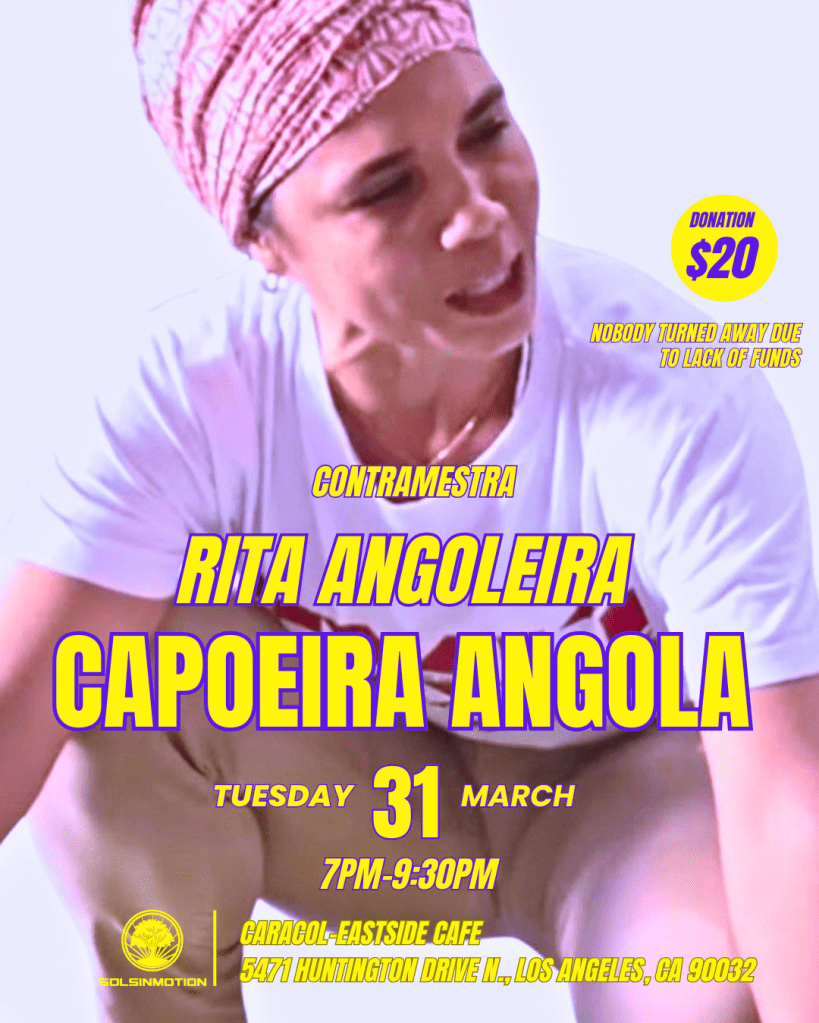
Today, my focus shifts from the general body of work to a specific, luminous individual who embodies the axé (life force, energy) of Capoeira Angola: Contra Mestra Rita Angoleira.
She is more than just a highly skilled angoleira (a female practitioner of Capoeira Angola); she is a lovely soul, a dedicated mother, and a vital sister within the wider Capoeira community. Her presence brings not only technical skill but also warmth and spirit—the dendê (a term referencing the powerful, fiery energy derived from the Afro-Brazilian palm oil, often used to signify vigor and spirit in the game).
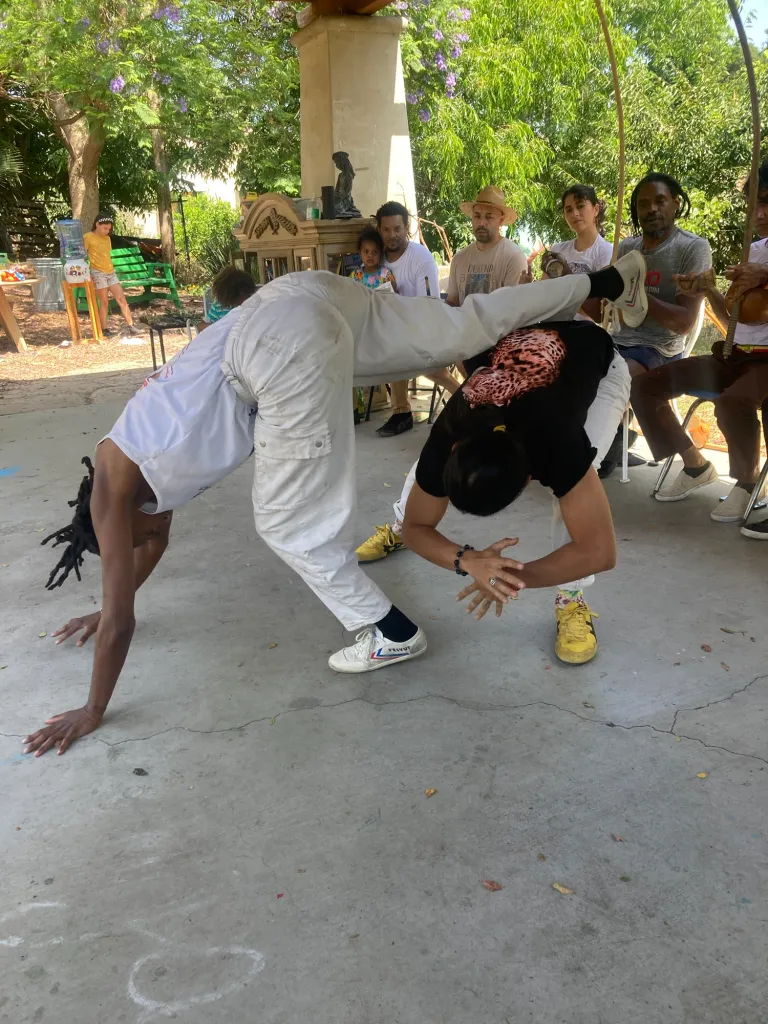
I first had the distinct pleasure of meeting Contra Mestra Rita and watching her play at an unforgettable open Roda in Los Angeles State Historic Park. It was on the evening of December 27th, 2025—fittingly dubbed the “Last Roda” of the year. I had brought a friend of mine, who had only started her journey with Capoeira Angola a few months prior. My intention was for her to witness the vibrant, diverse spirit of the Los Angeles Capoeira scene and see how practitioners of all styles “get down” in this community.
Contra Mestra Rita played one of the very first games that evening, and her performance was nothing short of incredible. Her movement was fluid, powerful, and deeply rooted in the tradition. I was instantly amazed, and profoundly happy that her game was the introduction my friend saw in Capoeira Angola from an accomplished leader outside of her immediate school. It was a moment of pure inspiration, showcasing the art at its highest level.
This video wasn’t from that day, but it does show what an amazing player Contra Mestre Rita is.
Building on that inspiration, I am incredibly proud and excited to announce a fantastic opportunity for our local community. This coming Tuesday night, March 31st, Contra Mestra Rita Angoleira will be sharing her knowledge and spirit by teaching a special class and workshop at my teacher’s school.
The event is scheduled to run from 7:00 PM until approximately 9:30 PM. This is a chance to learn directly from a master, to absorb her unique perspective on the jogo, music, and philosophy of Capoeira Angola.
Therefore, this entire post serves as a dedicated tribute to Contra Mestra Rita Angoleira, and by extension, to every Angoleira who sustains this powerful tradition. These remarkable individuals embody the essence of the culture, dedicating their lives to the art form and ensuring its vitality for future generations. To those who step into the roda, holding it up with their skill and spirit, they create a vibrant tapestry of movement and sound that resonates with the history and struggles of their ancestors. They connect deeply with the roots of their art, managing to blend the past and present while fostering a sense of community and belonging among practitioners and admirers alike. In every beat of the berimbau, they bring dendê and axé into every song and every movement, infusing their performance with energy that captivates the audience and honors the legacy of those who came before them in this beautiful, transformative journey.
Capoeira Angola, standing far beyond the simplified labels of a mere martial art or a traditional folk dance, is a profound, dynamic, and multifaceted cultural practice. Its genesis is inextricably linked to the brutal socio-historical crucible of transatlantic slavery in Brazil. It emerged as a clandestine, holistic technology for liberation, serving simultaneously as a covert training regimen for physical combat, a vital means of spiritual and cultural preservation, and a highly sophisticated medium for political communication and communal solidarity. Within the ruthlessly oppressive structures of colonial and later, post-colonial Brazil, Capoeira Angola functioned as a critical infrastructure for survival, community formation, and coordinated, decentralized mobilization against a state apparatus systemically and violently dedicated to the subjugation, repression, and erasure of African and Afro-Brazilian populations.
Historically forged in the relentless heat of chattel slavery, colonial violence, and persistent resistance across Brazil’s vast plantations and burgeoning urban centers, Capoeira Angola embodies a system that is at once covert yet intensely potent. It is simultaneously a system of highly effective, holistic self-defense, a sophisticated form of non-verbal and coded communication, a vital mechanism for meticulously preserving ancestral knowledge systems, and a powerful, centrifugal engine for profound community solidarity and collective self-determination. This singular, complex synthesis allowed enslaved and deeply marginalized populations to effectively resist the brutal, omnipresent structures of colonial and state control, whose explicit objective was to strip them utterly of their culture, dignity, and fundamental human autonomy. The fluid, often deceptive movements, seamlessly integrated with complex musical rhythms and song, acted as an ingenious cultural camouflage. This disguise masked combative, strategic training as a seemingly harmless celebratory dance or game, thereby enabling its continuous practice to persist and flourish even under the constant, immediate threat of severe torture, death, and state prohibition. In this crucial way, Capoeira Angola transcended a simple set of techniques; it became a living, embodied, and transmitted archive of resistance, passing down critical tactical knowledge, historical memory, and an unyielding spirit of defiance across successive generations.
The enduring historical trajectory of Capoeira Angola vividly illuminates its consistent function as a continuous, adaptable site of resistance. The seemingly playful and ceremonial nature of the roda—the circle where Capoeira is played, a sacred space of practice—is, in fact, a masterful, multi-layered act of political camouflage. It conceals highly sophisticated fighting techniques, intricate strategic planning, and coded messages embedded within the music, the narrative songs (Ladainhas and corridos), and the physical movements themselves. This living tradition not only persists but actively thrives today, providing a practical, embodied, and analytical framework for critical engagement with contemporary, modernized forms of state violence, pervasive systemic racism, and crippling social inequality. By actively reclaiming, preserving, and practicing this art, participants engage in a profound and active process to confront, negotiate with, and ultimately dismantle the deep-seated psychic and physical legacies of historical trauma and ongoing, contemporary repression.
The practice itself offers a unique, replicable, and culturally resonant framework for effective, community-based mobilization:
Community Building and Essential Cohesion: The roda (the circle in which Capoeira is played) is intentionally structured as a micro-society built upon explicit principles of mutual respect, active cooperation, and collective responsibility for all participants’ well-being. This inherently collaborative structure directly and powerfully counters the state’s historical and ongoing attempts to atomize, isolate, and divide oppressed communities. By cultivating deep and visceral interdependence, the roda fosters the essential cohesion, trust, and shared language needed for effective political and social action.
Strategic Subtlety and Political Cunning (Malícia): The characteristically deceptive and elusive movements of Capoeira Angola—which often deliberately appear as dance, music, or playful interaction—viscerally instruct practitioners in the critical value of strategic subtlety, known as malícia. This historical necessity of masking resistance—of making a powerful action look like a simple game—translates directly into methodologies for covert organizing, navigating pervasive state surveillance and infiltration, and developing adaptable resistance strategies that effectively evade overt detection by oppressive state apparatuses and intelligence gathering.
Embodiment of Historical Resistance and Blueprint for Uprising: The narrative songs (Ladainhas, corridos, and others) and the oral traditions preserved within Capoeira Angola serve as powerful cultural vehicles. They transmit the concrete historical memory of successful uprisings, the autonomous sovereignty of maroon communities (quilombos), and the inspiring narratives of figures who bravely and successfully challenged the violent status quo. This continuous cultural transmission keeps the spirit and, crucially, the practical historical blueprints of resistance alive, providing both moral inspiration and a practical historical template for contemporary struggles against injustice.
Physical and Mental Discipline for Sustained Conflict: Beyond its symbolic power, Capoeira Angola holistically trains the body and mind for sustained engagement with profound adversity and conflict. The rigorous physical demands of the practice systematically build physical and psychological resilience, while the emphasis on improvisation, quick and decentralized decision-making, and maintaining composure and emotional balance under intense pressure (the “game” within the roda) prepares individuals for the often high-stakes demands of non-violent direct action, community defense, and the inherent risks associated with protesting and challenging entrenched state authority.
Capoeira Angola and Transformative Justice: A Methodology for Resistance
Pod mapping and skill sharing are foundational practices within the frameworks of transformative justice and mutual aid, designed specifically to cultivate resilient, self-reliant communities. These methodologies, which emerged significantly from the work of organizations like the Bay Area TransformativeJustice Collective (BATJC) and activists such as Mia Mingus, empower individuals to identify, utilize, and strengthen their internal support networks. The core objective is to create systems capable of addressing harm, crisis, and chronic needs autonomously, deliberately bypassing reliance on punitive and often harmful state institutions, notably the police and prison systems.
Pod Mapping: Visualizing Interdependence and Care
Pod mapping is a rigorous, often visual, exercise used to articulate and solidify the network of individuals one can reliably call upon for both long-term (chronic) and immediate (acute) needs. This identified group constitutes one’s “pod”—a localized, intensely trusted support ecosystem.
The Structure: The exercise typically places the individual’s name at the center of a diagram. Surrounding circles categorize the degree of trust and commitment within the network:
Immediate Pod (Solid Circles): This is the core, deeply vetted group of people with whom a deep sense of trust is shared, and who can be relied upon unconditionally in a crisis. This includes partners, immediate family, chosen family, and profoundly trusted friends or neighbors.
Movable People (Dotted Circles): These individuals represent potential pod members. While trusted, their inclusion requires further intentional relationship-building, clear conversations about boundaries, expectations, and commitment to specific support roles.
Community Resources (Large Circles): These are the broader networks, organizations, spiritual centers, or mutual aid societies that offer specialized or general support, such as food banks, tenant organizing groups, or trauma-informed therapy collectives.
The Purpose: The process is diagnostic and preventative. It explicitly reveals gaps or imbalances in one’s care network, offers a deeper understanding of how care and resources flow across larger communal networks, and ensures a proactive “emergency contact list” and corresponding plan are in place well before a crisis manifests.
Skill Sharing: Enhancing Collective Capacity and Self-Reliance
Skill sharing, in conjunction with pod mapping, ensures that a diverse array of practical, emotional, and technical needs can be met through deeply embedded mutual support, minimizing the need to look externally for critical assistance.
Identifying Assets: A crucial step during the pod mapping process is the meticulous inventory of the specific skills each member possesses and is willing to share. These assets are expansive, ranging from practical abilities like active listening, conflict resolution, first aid, childcare, and basic legal observation to technical skills like administrative help, grant writing, or digital security.
Mutual Benefit and Reciprocity: A foundational philosophical principle of mutual aid is the recognition that the act of being a “support giver” is just as powerful and generative as being a receiver. This reciprocal exchange fosters deeper, more equitable connections, builds collective self-worth, and strengthens the foundation for long-term political collaboration.
Building Competency: Resilient communities actively commit to holding intentional “skill shares” or workshops. These sessions are designed to teach one another essential transformative justice tools, practical safety planning methodologies, de-escalation techniques, and advanced communication skills, ensuring that the pod’s capacity to sustain itself and respond to harm is continuously expanding and evolving.
The Capoeira Angola Paradigm: A Historical Methodology for Resilience
The historical, philosophical, and operational principles embedded within Capoeira Angola—its emphasis on cooperative learning, deep mutual support, intuitive adaptation, and immediate collective response—offer a potent, living methodology directly applicable to contemporary organizing focused on community resilience, sustainable mutual aid, and holistic safety.
Radical Skill Sharing and the Roda
The traditional structure and pedagogy of the roda are inherently a radical, de-hierarchized skill-sharing model.
Decentralized Knowledge Transfer: Highly experienced practitioners (mestres and contramestres) transmit critical knowledge not through formal, prescriptive, or hierarchical classroom lessons, but through direct, embodied interaction, intuitive correction, communal storytelling, and the immersive experience of “playing” together. This decentralized, organic knowledge transfer ensures that essential survival, cultural, and combative skills are spread rapidly, deeply, and organically throughout the community.
Contemporary Relevance: This process mirrors the vital necessity of widely distributed expertise in contemporary social movements. In a protest setting or crisis, skills such as de-escalation, rapid legal observation, psychological first aid, and critical media communication must be widely and reliably distributed across the entire network, much like the decentralized mastery required to maintain the integrity of a roda.
Historical Precedent for Pod Mapping: The Roda and the Quilombo
Capoeira Angola offers a profound historical and theoretical precedent for “pod mapping”—the contemporary practice of creating proactive, reliable support networks within small, intensely trusted groups (“pods”) for autonomously handling crises and security concerns.
The Roda as a High-Stakes Pod: The roda itself functions as a temporary, high-stakes, intensely focused pod. All surrounding participants are collectively responsible for the immediate physical safety and strategic support of those playing within the circle. The collective maintenance of the rhythm (batuque), the watchful, supportive eyes of the surrounding community, and the strategic, guiding interventions of the berimbau player all powerfully reflect the principle of deep, localized, and dynamic interdependence required in a successful pod.
The Quilombo as the Ultimate Historical Pod Map: The historical organization of enslaved Africans and the formation of autonomous runaway communities (quilombos) around shared defense, resource pooling, and collective security represents the ultimate historical “pod map.” In this context, Capoeira Angola acted as the central, shared, and secret technology—the critical, non-state asset—for group defense, strategic communication, and self-determination against the oppressive state. The quilombo demonstrates that collective liberation is achievable only when an intensely mapped, highly skilled, and mutually committed community organizes its resources outside of state control.
The Quilombo: A Paradigm of Black Autonomy, Collective Defense, and Non-State Sovereignty
The concept of the QUILOMBO—the autonomous communities forged by runaway enslaved Africans, primarily in Brazil—transcends simple historical footnote to become the ultimate, real-world blueprint for radical collective mobilization and resistance. These settlements were not merely temporary shelters; they were sophisticated, sovereign micro-nations built entirely outside the genocidal control of the colonial state. In their foundational structure, the quilombos represent the highest historical realization of a “pod map”—a tightly integrated, self-sustaining network organized around shared principles of defense, resource equity, and mutual commitment to collective survival.
The historical significance of the Quilombo in Brazil is profound. Far more than mere settlements, they were powerful, self-governing communities established by enslaved and marginalized people, primarily of African descent, who had successfully escaped the brutal system of Portuguese chattel slavery. These hidden, often fortified, societies flourished across Brazil from the 16th century onward, serving as beacons of resistance, maroonage, and alternative social organization. They were, in essence, independent republics within the colonial territory, actively rejecting the socio-political and economic structures of the state. The most famous and long-lasting was Palmares, which endured for nearly a century and at its peak housed over 30,000 people, demonstrating a profound capacity for complex statecraft and self-defense against relentless colonial assault.
Life within a quilombo was an active attempt to reconstruct African social and political traditions, mixing them with Indigenous practices and new creolized forms born of shared struggle. The internal structure was often highly organized, emphasizing communal ownership of land and resources, democratic decision-making, and collective security. They cultivated land, engaging in diverse and sustainable agricultural practices to ensure self-sufficiency, and established sophisticated trade networks, often exchanging goods and intelligence with sympathetic settlers, marginalized laborers, and other quilombos. This economic and political self-determination fundamentally separated them from the colonial system.
Capoeira Angola: The Non-State Technology of Survival
Within this revolutionary framework, Capoeira Angola emerged as far more than a cultural practice or simple physical exercise. It functioned as the essential, shared, and deeply secret technology—the critical, non-state asset—that ensured the quilombo‘s survival. This complex art form, disguised as a dance or game, was in reality a comprehensive system for group defense, strategic communication (using movement and rhythm), psychological warfare, and the physical enactment of self-determination. It was the central pillar of military and political education, meticulously developed to counter the oppressive tactics and superior weaponry of the Portuguese and later, Brazilian, state forces.
Crucially for the quilombo‘s defense, they developed sophisticated methods of defense, including this martial art, intricate signaling systems, and expert use of the challenging local terrain. The very existence of the quilombo represented a profound rejection of colonial authority and the fundamental illegitimacy of slavery, marking them as the primary organizational structure for mobilization and resistance against the repressive state apparatus of the time. They were living proof that freedom was not a gift to be granted but a condition to be seized and defended.
The Enduring Legacy and Contemporary Application of Quilombo Methodology
The enduring legacy of the quilombo, particularly the most famous and enduring, Palmares, conclusively demonstrates that true collective liberation is not an abstract ideal but an achievable state. This achievement, however, hinges on several non-negotiable conditions: the formation of an intensely mapped community (one with a profound knowledge of its members, its environment, and its adversaries), the cultivation of highly skilled and non-transferable abilities (like those encoded in Capoeira Angola), and the complete and mutually committed organization of all critical resources and defense capabilities outside the control of the state apparatus. The quilombo, therefore, stands as a powerful and enduring historical testament to the necessity of autonomous Black self-organization and the profound efficacy of non-state, community-based resistance against legacies of state repression and enslavement.
The spirit and methodology of quilombo resistance provide a vital, actionable framework for contemporary mobilization. Integrating the core principles of Capoeira Angola into contemporary organizing—specifically through structured, continuous skill-sharing and the development of robust, trust-based pod maps—allows activists, community organizers, and community members to forge connections rooted in profound trust, shared historical consciousness, and deep physical and cultural resilience.
Capoeira Angola, a cultural and physical practice forged in the fires of the quilombos, embodies this resistance. Its circular formation (the roda) inherently promotes decentralized leadership, collective awareness, and mutual support—a perfect microcosm of the quilombo‘s social structure. Its movements, which mask martial efficacy within dance and ritual, teach practitioners to navigate conflict with strategic subtlety and adaptability. This structured physical and philosophical training prepares individuals not just for isolated acts of protest, but for sustained, collective action that prioritizes mutual aid and survival. By embedding this practice, and by building “pod maps”—small, highly trusted affinity groups that function as modern quilombo cells—we actively and powerfully counter the isolating, atomizing, and destructive effects of systemic state repression and historical marginalization. This methodology directly translates the historical defense mechanism of the quilombo into a contemporary strategy for community safety, political mobilization, and cultural persistence.
By profoundly grounding themselves in the philosophical depth, the complex physical and verbal vocabulary, and the enduring historical narrative of Capoeira Angola, marginalized communities are equipped to forge robust, culturally resonant, adaptable, and enduring methodologies for actively confronting and ultimately dismantling the interwoven tapestry of historical inequities and the contemporary, evolving mechanisms of systemic violence. This violence manifests today through aggressive state policing, political disenfranchisement, economic exploitation, and structural marginalization.
Capoeira Angola, at its core, is far more than a simple, codified physical fighting system; it is a profound, holistic, and comprehensive cultural technology. It operates as an intricately woven strategy that fundamentally champions the realization of collective liberation and uncompromising socio-political self-determination for marginalized communities.
Its profound, enduring utility is located not in the superficial mastery of its acrobatic and combative movements, but in its unparalleled capacity to cultivate a suite of essential, interconnected tools for survival and freedom. These tools include the development of an unwavering, almost monastic discipline; a deep, organic mechanism for collaborative community building and mutual aid; an advanced, anticipatory strategic thinking that mirrors both martial and social maneuvering; and the cultivation of a powerful, embodied, and living sense of historical consciousness that connects practitioners directly to their ancestors’ struggles and triumphs.
Theroda—the circle of participants that is the central performance space—is the ultimate functional and transformative microcosm for political and social organizing. It is a sacred, consecrated site where the practice of active resistance is not a theoretical exercise but a continuous, physical reality. Within this circle, cultural memory, often suppressed and distorted by the state, is meticulously preserved, rehearsed, and celebrated through music, movement, and narrative. The essential, practical, and intuitive tools necessary for navigating, subverting, and ultimately overcoming the omnipresent mechanisms of oppressive state control and surveillance are intensely honed, physically embodied, and faithfully passed down, generation to generation, in a way that written history cannot capture.
This total practice, encompassing music, philosophy, strategy, and physical confrontation, serves as a living, breathing, and embodied archive of resistance against historical trauma and contemporary subjugation. More than just a repository of memory, Capoeira Angola functions as a dynamic, practical blueprint—an executable methodology—for achieving genuine, self-determined, and ultimately sustainable freedom from the pervasive structures of state repression and cultural erasure. It is a pedagogy of the oppressed, transforming practitioners into agents of change through movement and shared experience.
The insidious, pervasive narrative often whispered, sometimes shouted, within and about Black communities—the “Ghetto Lie”—is not merely a social construct; it is a complex, multi-generational affliction actively undermining progress and leading to catastrophic outcomes. This “lie” is the toxic amalgamation of historical trauma, systemic disenfranchisement, and a dangerous cycle of self-fulfilling prophecy, tragically masquerading as an unavoidable, innate cultural reality. It is the sophisticated mechanism by which external oppression is converted into internal surrender.
This destructive ideology posits that the pathology associated with deeply impoverished, inner-city neighborhoods—characterized by high rates of single-parent households, poor educational outcomes, joblessness, and violence—is an inherent part of Black identity, rather than the symptom of socio-economic and structural oppression. By internalizing this lie, the focus shifts disastrously from demanding systemic change and equitable resources to merely managing the “symptoms” or, worse, accepting them as the natural order. The structural architects of disadvantage are thus absolved, and the victims are made to blame themselves for the conditions imposed upon them.
Before I go on with this post, we at Jogo de Corpo Fechado would like to to take a moment to give a huge, well-deserved shoutout to Black Stories Untold. They are the incredible creators and dedicated historians responsible for the powerful and insightful video that we’ve featured or linked to within this post. Their commitment to uncovering, documenting, and sharing marginalized narratives is truly invaluable.
Their work, and the specific video you’ve just engaged with, provides essential context and a critical perspective that often goes overlooked. We strongly encourage you to explore their channel further.
If you found the video as compelling and necessary as we did, we know that your support would mean a great deal to the team at Black Stories Untold. Producing high-quality, deeply researched content takes a considerable amount of time, effort, and resources.
There are many ways to show your appreciation and help them continue this vital work:
Contribute Directly:If you are in a position to do so, a direct financial contribution to their efforts is the most impactful way to support their production and research costs.
Engage with Their Content:If contributing financially isn’t possible right now, your engagement is still incredibly valuable. A simple “Like” on their videos and hitting the “Subscribe” button on their channel are crucial ways to support them. It helps increase their visibility, ensures their content reaches a wider audience, and provides them with the motivation to keep producing excellent material.
Thank you for watching and thank you for considering supporting Black Stories Untold!
Now, let’s continue.
The Core Components of the Ghetto Lie: An Anatomy of Deception
The Ghetto Lie is not a monolithic myth; it is composed of several reinforcing pillars, each designed to chip away at Black agency and potential:
1. The Myth of Innate Pathology: The Denial of Historical Context
This component falsely asserts that issues like academic disengagement, casual violence, and disdain for authority are cultural norms passed down through generations, rather than coping mechanisms developed in hostile, resource-starved environments. This fatalistic view systematically ignores the robust history of Black intellectualism, family structure, and community resilience that existed prior to and outside of concentrated poverty created by redlining, discriminatory housing covenants, and the brutal economic shock of deindustrialization.
The truth is that concentrated urban poverty—the geographical space the “ghetto” describes—was engineered through policy and prejudice. By framing the resulting behaviors as inherent “pathology,” the Lie distracts from the poverty and lack of opportunity that are the true root causes. This intellectual sleight of hand transforms a political and economic problem into a cultural and moral failing.
2. The Attack on the Black Family: Normalizing Instability
The most damaging facet is the normalization of fractured family units. While acknowledging the historical impact of slavery and Jim Crow on family separation, the Ghetto Lie elevates the single-parent, often matriarchal, structure from a necessity born of economic struggle and male incarceration to the accepted standard. This minimizes the critical, measurable role of present fathers and stable nuclear or extended families in providing economic stability, emotional security, and effective socialization for children. The consequence is a vicious cycle of poverty replication, where the very structure needed to escape generational poverty is systematically undermined and pathologized. The message becomes: your family is broken by design, not by external pressure.
3. The Culture of Anti-Intellectualism and Anti-Achievement: The Internal Censor
This lie creates a crushing societal pressure that often labels educational excellence, articulate speech, and professional ambition as “acting white.” This phenomenon, deeply rooted in the historical reality that Black success was often met with white violence, economic exclusion, or institutional sabotage, now functions as an internal mechanism of suppression. The fear of social ostracization or the desire to maintain community credibility limits educational attainment and upward mobility, creating a self-imposed ceiling on ambition. It is a defense mechanism turned destructive, leading to the tragic waste of millions of bright minds whose potential is sacrificed on the altar of manufactured authenticity.
4. The Normalization of Interpersonal Violence: Absolving External Responsibility
By accepting the high murder and crime rates within concentrated Black communities as simply “how things are,” the Ghetto Lie drains the collective will to fight for safer streets, better policing, and adequate mental health resources. It frames the violence exclusively as Black-on-Black crime—a self-inflicted wound—thereby absolving external institutions (government, education, law enforcement, healthcare) of their foundational responsibility to protect and serve these citizens equitably. This narrative weaponizes tragedy, using the symptoms of systemic neglect as justification for further neglect and punitive control (e.g., mass incarceration), rather than investment and restoration.
The Killing Mechanism: The Slow, Systemic Loss of Potential
The consequence of this internalized narrative is nothing less than the slow, systemic killing of potential. The Ghetto Lie kills:
Educational Opportunity: By lowering expectations in schools, fostering environments where academic rigor is mocked, and pushing students out of the classroom and into the school-to-prison pipeline.
Economic Mobility: By discouraging the disciplined effort, networking, and cultural code-switching often required to navigate professional, largely white-dominated, corporate spaces.
Physical Safety and Well-being: By allowing endemic violence and unchecked mental health crises to persist without the unified community and political action needed to stop them.
The Black Soul: By convincing individuals that their highest aspiration should be to merely survive their hostile environment, rather than to master it, transform their world, and realize their full, inherent brilliance.
The Economy of Dysfunction: Profit and Perception
Today, we are ripping the mask off the lie that has been insidiously poisoning our community’s soul for decades—the systemic fiction that has defined our struggle and obscured our brilliance. This is the harrowing story of how power structures meticulously convinced the world, and disturbingly, segments of our own people, that the term “ghetto” is synonymous with “Black.” This dangerous conflation is a masterful piece of social engineering, designed to erase the rich, complex tapestry of our culture and replace it with a single, devastating stereotype of deprivation and despair.
This narrative of pathology is not organic; it is meticulously cultivated because it is profitable. We must confront the uncomfortable truth: billion-dollar corporations and entrenched institutions are not merely observing our dysfunction—they are actively feeding off it. From predatory lending practices, exploitative housing markets, and the booming private prison and surveillance industries to the targeted marketing of harmful, addictive products (alcohol, tobacco, high-fat foods), a vast, complex economy thrives on keeping our communities marginalized, fragmented, and in a state of perpetual crisis. Our perceived dysfunction is their quarterly dividend; our instability is their investment opportunity.
The ultimate tragedy is the internal toll this constant assault has taken. We have, consciously or unconsciously, allowed the relentless, sensationalized media focus on our worst moments—the crime, the poverty, the division—to drown out the soaring symphony of our greatest achievements. The brilliance of our scientists, the passion of our artists, the resilience of our families, the political victories won through generations of struggle—these foundational truths are constantly obscured by a spotlight fixed only on our failures. We are allowing their narrative, the one that defines us by our deficits rather than our potential, to become the loudest voice in the room, threatening to silence the historical chorus of Black excellence and achievement forever.
The Path Forward: Refuting the Lie with Truth and Action
To save Black America and truly unlock its potential, the Ghetto Lie must be confronted and refuted with a forceful and uncompromising embrace of high standards, educational rigor, family stability, and an insistence on equitable societal investment in these communities.
The path forward requires replacing the lie of innate pathology with the truth of unfulfilled potential. This demands a dual approach: demanding external structural reform while simultaneously fostering internal cultural strength. We must aggressively dismantle the systems of inequity (housing, education, justice) while nurturing the values of excellence, scholarship, entrepreneurship, and stable family formation within our own communities, not as an appeal to external validation, but as the inherent, historical standard of Black life. The lie has been told long enough. The time for truth, potential, and collective action is now.
“Never interrupt your enemy when they are making a mistake” is a profound and enduring piece of strategic wisdom, most famously attributed to Napoleon Bonaparte. This maxim underscores the immense value of patience and observation in any competitive environment, whether military, political, or business-related.
The Core Principle: Capitalizing on Self-Inflicted Error
The fundamental idea is simple: an opponent’s error is often the most potent weapon one can possess, and interrupting that process risks alerting them to their blunder, thereby giving them a chance to correct it. When an adversary is acting based on flawed information, poor judgment, or an incorrect assessment of the situation, their actions are inherently self-destructive. By allowing the mistake to fully unfold and compound, the observing party ensures the maximum possible negative impact on the enemy’s position.
Strategic Implications:
Magnification of Damage: Every step taken based on the initial error deepens the trap. An interruption might merely negate the first mistake, but silent observation allows the opponent to commit successive, reinforcing mistakes (the “snowball effect”). The goal is not just to see an error, but to see it leveraged into a significant strategic or tactical disadvantage.
Information Advantage: The act of observing an ongoing mistake yields critical intelligence. It reveals the opponent’s underlying assumptions, their current mental model, and their operational weaknesses. This knowledge is far more valuable than the temporary tactical gain of an immediate counter-move, as it can be used to plan future, more decisive attacks.
Preserving Resources: Reacting prematurely to an error may force the observer to commit resources unnecessarily. By waiting, the observer can conserve their strength until the optimal moment to strike, which is typically after the opponent has fully committed to their flawed course of action and is too deeply entangled to easily withdraw.
Maintaining Concealment: A well-timed interruption may expose the observer’s own intentions or tactical position. Silence and patience maintain the element of surprise, ensuring the eventual counter-move is both unexpected and devastating.
Application Across Domains:
Military Strategy: Allowing a poorly executed flanking maneuver to continue, or permitting an enemy to commit forces to a terrain they have misjudged, only to cut them off once they are fully engaged.
Negotiations and Politics: Remaining quiet while a rival makes an unreasonable or overconfident demand, thereby exposing their true bargaining floor or alienating their potential allies.
Business and Competition: Watching a competitor sink massive capital into a product or market based on faulty research, and only then launching a superior, well-timed alternative, knowing the competitor is now financially and operationally overextended.
In essence, this maxim is a call for disciplined restraint. It is a caution against the impulsive satisfaction of immediate engagement, arguing instead for the strategic patience required to secure a decisive, long-term victory by letting the enemy orchestrate their own downfall.
Capoeira Angola videos available online offer a captivating window into a rich and vibrant cultural tradition. These digital showcases go beyond simple instruction, acting as vital archives of Capoeira’s evolution as a complex, multifaceted art form. They meticulously document the intricate interplay of music, movement, self-defense, and historical expression. Viewers are treated to demonstrations of astounding agility and technical prowess, witnessing practitioners execute intricate movements that seamlessly integrate elements of acrobatics, rhythm, and strategy.
Crucially, these videos are invaluable resources for exploring the deep, often-untold history of Capoeira, placing it within the context of its origins and cultural significance. They consistently emphasize the art’s powerful role in fostering and strengthening community connections. Capoeira is presented as a unifying force, an art capable of transcending societal barriers and bringing together diverse individuals from various backgrounds and social groups within the unifying space of the roda (the circle where Capoeira is played).
Beyond mere performance, the footage serves an essential educational purpose, portraying Capoeira as a dynamic, living tradition that actively inspires and nurtures future generations. The demonstrations embody core values such as resilience, a deep-seated creativity necessary for improvisation within the game, and a profound sense of cultural pride. By witnessing the passion and commitment of the players, viewers are not merely entertained; they are issued an invitation to participate in this unique blend of dance, self-defense, and martial philosophy.
A significant element of these online features includes interviews with seasoned practitioners, often referred to as mestres (masters) or high-ranking students. These personal accounts provide depth and context, revealing intimate details about their individual journeys, the transformative impact Capoeira has had on their lives, and the profound sense of belonging and discipline it has instilled.
The Enduring Legacy of Capoeira Angola: A Resource for Understanding and Appreciation
The visual record of Capoeira Angola, captured in every filmed jogo (game) or roda (the circle in which the game takes place), is far more than mere documentation. These videos fulfill a profound dual role: they not only entertain with the sheer physical beauty, intricate strategy, and fluid performance of the art, but they also serve as a vital, accessible, and comprehensive resource. By offering an unedited glimpse into the practice, they are essential for truly understanding the deep historical roots, the sociological complexity, and the cultural significance of Capoeira Angola. Ultimately, through this visual medium, a deeper appreciation is fostered for this dynamic art form—recognizing it not just as a martial art or a dance, but as a powerful, living means of cultural expression, historical preservation, and a testament to human unity and resilience.
A Glimpse into the Living Tradition: Angoleiros do Sertão London Open Roda Anniversary
The enduring vitality and communal spirit of the Capoeira Angola tradition are perfectly exemplified by consistent community events, such as the one celebrated by Angoleiros do Sertão London. A particularly significant date was Saturday, April 6th, 2024. This day did not just mark another monthly gathering; it celebrated the second-year anniversary of the Angoleiros do Sertão London community open rodas.
These open rodas are a commitment to consistency, a practice that takes place faithfully on the first Saturday of every month. By maintaining this reliable schedule, the London community creates essential gathering points. These events transcend individual group affiliations, allowing practitioners (capoeiristas) from various schools, lineages, and backgrounds to meet, train together, exchange knowledge, and collectively celebrate the art. The open roda fosters a cross-pollination of styles and a reinforcement of the overarching global Capoeira family.
The Featured Jogo: A Dialogue in Movement
The emotional and technical centerpiece of the anniversary celebration was a high-level game played in the center of the roda, showcasing the collaborative and respectful spirit of the wider Capoeira community. This particular pairing featured:
Contra Mestre James Berimbau (representing Angoleiros do Sertão London)
Treinel Lazaroni (representing UR Capoeira)
This game was a masterclass in the slow, strategic, and deceptive movements characteristic of Capoeira Angola. The pairing of a Contra Mestre and a Treinel from different schools highlighted the collaborative spirit of the community, where rank and affiliation are set aside to engage in a profound and respectful dialogue of movement. The resulting jogo was not a conflict but a sophisticated exchange, marked by deep knowledge, mutual respect, and skillful improvisation.
The Bateria (Musical Orchestra): The Soul of the Roda
The rhythm, energy, and overall temper of the jogo are not controlled by the players but are entirely dictated by the bateria, the musical orchestra that provides the soul and heartbeat of the roda. For the anniversary event, the musicians present comprised a dedicated and highly skilled lineup of instrumentalists, each fulfilling a specific, crucial role in weaving the complex musical tapestry that guides the game.
Instrument
Musician
School/Community
Role in the Roda
Viola (Smallest Berimbau)
Treinel Ian
Filhos de Angola
Responsible for the counter-rhythm. It is the most melodic berimbau, weaving complex variations and maintaining the melodic line against the Gunga.
Gunga (Largest Berimbau)
CM Boneco
[School name not specified]
The lead berimbau and conductor of the orchestra. It plays the main toque (rhythm), sets the speed and type of game, and dictates when the jogo begins and ends.
Berra-boi (Medium Berimbau)
Joel
Angoleiros do Sertão London
Plays a rhythm that strategically bridges the Gunga and the Viola. Its role is to add rhythmic complexity and depth, complementing both the lead and the counter-rhythm.
Atabaque (Tall Drum)
Peppa
Angoleiros de Kanaga
The primary drum, establishing the fundamental, unwavering pulse and heartbeat of the roda. It is the rhythmic anchor for all other instruments.
Pandeiro 1 (Tambourine)
Lupo
FICA
Provides a driving, consistent rhythm, adding texture and a bright, metallic jingling quality to the music.
Pandeiro 2 (Tambourine)
Ben
UR Capoeira
Complements the first pandeiro, often adding syncopation or a slightly different rhythmic pattern to create a richer, more layered percussive sound.
Agogô (Double Bell)
Alex
UR Capoeira
Provides a vital, high-pitched, clear rhythmic pattern that cuts through the bass-heavy tones of the atabaque and the drone of the berimbaus.
Reco-reco (Scraper)
Treinel Joana
Menino quem foi seu Mestre – Mestre Roberval
A distinctive percussive instrument that adds a grating, high-pitched scratching sound, filling out the high-end frequency of the orchestra.
The heartbeat of the Capoeira roda lies within the collective effort of the bateria, the musical ensemble whose rhythm and energy are utterly indispensable. This intricate group, typically featuring the berimbau (often three, each playing a different melodic/rhythmic role), atabaque, pandeiro, agogo, and reco-reco, serves as the conductor of the entire experience. Their intricate interplay of traditional Brazilian and African rhythms ensures that the Capoeira roda remains a dynamic, cohesive, and fully integrated experience.
Within this circle, music, the acrobatic movement of the players, the traditional songs (quadras and corridos), and the deep historical and philosophical context are not merely related elements but are, in fact, inseparable, creating a living, breathing expression of this martial art and cultural heritage. The tempo and style set by the lead berimbau and the bateria dictate the pace, intensity, and nature of the game being played, seamlessly connecting the sound to the kinetic energy and narrative unfolding in the center of the roda.
The Modern Malandro: An Urban Study in Resilience and Identity
This comprehensive series offers an in-depth examination of the modern malandro within the context of contemporary urban society. Far from a simplistic stereotype, the malandro is presented as a complex figure defined by their compelling charm, remarkable resourcefulness, and unwavering resilience. The narrative is situated against the backdrop of significant economic disparity and pervasive social justice challenges, issues that form the very crucible of their existence.
Through a nuanced and comprehensive lens, the series meticulously explores the multifaceted identities of these individuals. It showcases their extraordinary ability to navigate complex social dynamics—a skill honed in environments where survival often depends on wit and adaptability. Crucially, the malandro manages to do this while fiercely maintaining a distinct sense of individuality and self-possession.
Often emerging from challenging and disadvantaged environments, the malandro transforms necessity into a unique form of genius. They learn not merely to cope, but to adapt and thrive, seeing obstacles not as barriers, but as raw material to be converted into opportunities. This journey of transformation is central to understanding their influential position.
The series illuminates their often-overlooked yet influential role in discussions of equity and social change. By presenting their stories, it challenges conventional wisdom, inviting viewers to fundamentally reconsider traditional notions of success and morality. Ultimately, it serves as a powerful celebration of their contributions to urban culture, recognizing their indelible mark on the social and artistic landscape.
By skillfully weaving together intimate personal stories with broader societal themes, the series aims to foster a deeper understanding of the malandro’s societal impact. It serves as a compelling call to action, urging audiences to reflect on the common threads of humanity that connect us all, regardless of differing backgrounds, circumstances, or social labels.
Furthermore, the exploration delves into the rich and diverse cultural expressions and artistic contributions of the malandro. It illustrates precisely how their narratives enrich the vibrant tapestry of urban life, acting as powerful catalysts that provoke thought and inspire action. In doing so, the series actively encourages a more empathetic and constructive approach to social issues—issues that ultimately affect every member of society
Today’s Focus: The Scrutiny of Online Authenticity
The shift toward digital commerce has brought new forms of sales tactics, demanding a heightened level of consumer scrutiny.
A Word of Caution for the Digital Consumer:
Don’t be swayed by spurious sales pitches. Specifically, don’t buy stuff from “cry babies” on TikTok. The use of highly emotional and often manipulative appeals has become a significant marketing trend. We encourage reflection: What other pervasive marketing tactics are you running into?
Investigating Emotional Appeals in E-Commerce:
The pervasive advice remains: Don’t fall for the emotional appeals of online sellers. Independent investigators are shedding light on the practices of digital vendors who rely on sob stories to drive sales.
Pleasant Green, a prominent digital investigator, has been spearheading the research into this specific TikTok trend of sob stories.
The investigation has uncovered surprising details about the origin and sales channels of certain products, exposing a disparity between the compelling narrative and the actual business operation.
The methodology involves deep dives into social media posts, scrutinizing associated websites, and utilizing powerful reverse image searches to authenticate or debunk the emotional claims made by sellers.
Credit and Further Exploration:
We extend our most sincere and heartfelt gratitude to Pleasant Green for their dedication in creating, meticulously researching, and generously sharing this truly essential video and accompanying content. Their work sheds critical light on a complex and often opaque subject, providing invaluable insight for all viewers.
To delve deeper into this compelling topic, continue your exploration, and actively support the vital work of investigative journalism focused on digital commerce ethics, consumer rights, and online transparency, we strongly encourage you to click \[HERE\].
By visiting their channel, you contribute directly to the sustainability of independent, in-depth reporting that holds digital marketplaces accountable and empowers consumers with crucial knowledge. We highly recommend subscribing and checking out their full library of content.
The return of successful rappers to the very environments they strove so hard to escape—specifically, their former, high-crime neighborhoods—represents a deeply perplexing and often self-destructive trend within contemporary hip-hop culture. Despite having amassed significant wealth, global fame, and a clear pathway to a safer existence, a substantial number of these artists appear to be under an intense internal and external pressure to re-engage with the perilous realities of “street life” or “the hood.” This compulsion frequently leads them into unnecessarily dangerous and confrontational situations, a pattern that is visible across diverse major musical hubs, from the influential trap heartlands of Atlanta and the raw, drill-music-fueled energy of Chicago, to the historically significant and complex streets of Los Angeles.
The highly regarded documentary-style project, Trap University, takes on the ambitious task of a critical and penetrating examination of this complex and often tragic behavior. Its central objective is to move past superficial explanations and truly understand the deep-seated psychological, cultural, and sociological drivers compelling these highly visible, multimillionaire artists to continuously revisit their old neighborhoods.
The documentary’s video content is structured around a compelling series of high-profile, real-world examples and case studies, meticulously showcasing various rappers as they navigate their impromptu, and sometimes highly calculated and staged, visits to different cities and communities. These raw, unscripted encounters serve to starkly illuminate the massive, often irreconcilable contrast between the glamorous, meticulously controlled environment of a modern celebrity’s life—complete with security, entourages, and private jets—and the unpredictable, volatile, and often harsh reality of the streets they left behind. This collision of worlds frequently culminates in unexpected, tense, and sometimes outright confrontational situations, challenging the very notion of a safe return.
This insightful commentary provided by Trap University delves far beyond the simple, surface-level explanation of “keeping it real,” which is often offered as a facile justification. Instead, the analysis explores the intricate and often manipulative interplay between the pressures of mega-fame, the meticulously crafted and commercially viable public image of a rapper (often predicated on a struggle-to-success narrative), and the deeply held cultural value of perceived authenticity tied directly to their street roots.
Trap University posits several complex theories, suggesting that this dangerous return may be fundamentally driven by a deeply ingrained perceived need to validate their initial narrative for their core audience, to explicitly prove their unwavering loyalty to their origins and the community that birthed them, or perhaps, most potently, to counteract the “softening” or “selling out” effect of mainstream, commercial success and acceptance. The fear of being viewed as disconnected or inauthentic appears to be a powerful psychological anchor, dragging them back into the fray.
Ultimately, the work is a profound effort to dissect the dangerous, contradictory, and often self-destructive complexities inherent in attempting to maintain a genuine, boots-on-the-ground connection to street life long after fame and fortune should have provided a clear, safe, and definitive exit. It serves as a powerful and sobering revelation of the high personal and professional cost of this perceived and required connection to “the struggle,” highlighting the severe risks taken for the sake of an image.
(Shoutout to TRAP University for creating and posting this important and critical video project.)
The Dual Mandate of Policing: Community Trust and the Corrosion of Corruption
The bedrock of effective law enforcement is fundamentally rooted in a dual mandate: community protection and trust-building. The vast majority of police officers diligently fulfill this mission, recognizing that positive community relations are not an optional extra but the essential foundation upon which safety is built. These dedicated professionals regularly engage in proactive outreach programs, including organizing local community events, conducting educational workshops, and participating in neighborhood watch initiatives. These efforts are crucial, serving to demystify police work, foster open dialogue, and educate citizens on vital topics like safety protocols and effective crime prevention strategies. The result is a mutual enhancement: police gain crucial intelligence and community cooperation, while citizens develop a greater understanding of and respect for the law enforcement role, strengthening the overall fabric of community ties.
The Shadow of Misconduct:
However, this vital foundation is perpetually at risk from the corrosive actions of a very small number of officers. When those sworn to uphold the law choose instead to misuse their power, engage in misconduct, or succumb to corruption, the damage is immediate and devastating. Such acts not only constitute a profound betrayal of public trust but also sow deep seeds of skepticism, fear, and hostility toward the entire institution. A single act of police criminality can undo years of positive community engagement, creating a hostile environment where citizens are hesitant to cooperate with law enforcement, ultimately hindering the ability of good officers to protect the public.
When the Badge Betrays: Stories of Police Corruption
The following is an unflinching look into the lives and crimes of individuals who crossed the line, becoming the very criminals they were sworn to combat. These are not isolated incidents but real-world cases that expose the vulnerability of the law enforcement system to exploitation and the devastating consequences that follow when power is abused for greed, violence, and personal gain.
This investigative focus seeks to pull back the curtain on how corruption can take root and thrive inside ostensibly disciplined law enforcement agencies.Featured Cases of Infamy and Betrayal:
Sgt. Wayne Jenkins – The Apex of Corruption
Wayne Jenkins served as the leader of the Baltimore Police Department’s infamous Gun Trace Task Force (GTTF). This specialized unit, intended to get illegal guns off the streets, morphed into a sophisticated criminal enterprise. Jenkins and his subordinates operated with impunity, routinely engaging in home invasions, robbing citizens and drug dealers, reselling confiscated drugs, filing fraudulent overtime, and even planting evidence. His leadership demonstrated a systematic betrayal of public trust, turning an elite police unit into a crew of organized criminals who used their badges as licenses for felony
.Daniel Hersl – Abuse of Authority and Criminal Misconduct
As a member of the GTTF under Jenkins, Daniel Hersl’s case epitomizes the abuse of power for personal enrichment. His actions involved the systematic theft of money and property from citizens, often targeting individuals they suspected of criminal activity, knowing their victims were less likely to report the crimes. His conviction, alongside his fellow GTTF members, sent a clear message about the federal commitment to prosecuting police criminality
.Marcus Taylor – The Betrayal of the Oath
Another key figure in the GTTF scandal, Marcus Taylor’s story is a profound example of the betrayal of the public’s implicit trust. The very oath taken to protect and serve was systematically violated through repeated acts of robbery and conspiracy. His participation solidified the public perception of the GTTF as a criminal organization disguised in uniform.
David Mack – From LAPD Officer to Convicted Criminal
David Mack’s career took a dark turn that shocked the nation. As an officer in the Los Angeles Police Department (LAPD), Mack used his position to facilitate a major bank robbery. His case was a central element in exposing broader issues of corruption and misconduct within the LAPD in the 1990s, particularly in the Rampart Division, highlighting how a respected officer could transition into a high-level criminal.
Jose Tejada – Corruption That Shocked the System
Jose Tejada represents cases where an officer’s corruption is so profound it reverberates across the entire system. While specific details vary by jurisdiction, cases like Tejada’s typically involve schemes like drug trafficking, accepting bribes to look the other way, or running protection rackets. Such deep-seated corruption damages the integrity of the courts and the investigative process, demanding systemic reform and external oversight.The Documentary-Style Breakdown
This in-depth, documentary-style exploration moves beyond simple reporting to dissect the anatomy of these crimes. It investigates the modus operandi of these corrupt officers—how they exploited loopholes, leveraged their authority to intimidate victims, and evaded internal affairs for as long as they did. Crucially, it details how they were ultimately caught, often through the painstaking work of federal investigators, internal whistleblowers, or the accumulation of evidence from marginalized communities. Finally, the analysis confronts the lasting impact of these betrayals on their communities, exploring the resulting civil litigation, policy changes, and the long, difficult road toward rebuilding a damaged trust. Viewer discretion is strongly advised due to the nature of the criminal activities and the emotional impact of the victims’ stories.—–For those seeking more true crime cases, detailed breakdowns of historical police corruption stories, and in-depth true crime documentaries, please subscribe to the channelhuman and crime.
Godfrey DROPS BOMBS On His Nigerian Co Host About Black American History: A Response to Persistent Misconceptions and Ignorance
Once again, this conversation is necessitated for those of you out there who perpetuate and actually believe the damaging, utterly false, and historically illiterate stereotypes that black people are inherently lazy, lack initiative, or have no discernible culture beyond shallow, modern trends.
The recent exchange between Godfrey and his Nigerian co-host was a critical, unfiltered moment that shone a harsh light on a pervasive issue: the misunderstanding and often outright dismissal of the unique, complex, and profound history of Black Americans, not just by people of other races, but often, jarringly, by individuals from the African diaspora themselves.
Godfrey’s passionate “bombs” were directed at correcting the record, specifically challenging the notion that the struggles and achievements of Black Americans can be glossed over or equated simplistically with the experiences of recent African immigrants or those still on the continent. He meticulously laid out the foundational trauma of chattel slavery, the systematic dismantling of family structures, the enforced illiteracy, and the centuries of post-slavery oppression—Jim Crow, segregation, systemic redlining, and disenfranchisement—that fundamentally shaped the Black American experience.
To suggest that a community subjected to such profound, government-sanctioned oppression has “no culture” or is “lazy” is not only deeply insulting but ignores the monumental feats of resilience and creativity born out of that struggle. Black American culture—which birthed Rock and Roll, Jazz, Blues, Gospel, Hip-Hop, profoundly influenced global cuisine, shaped American English, and drove the most significant civil rights movements in the nation’s history—is one of the most dominant and influential cultural forces in the world.
This wasn’t just a simple disagreement; it was a necessary confrontation designed to educate and remind listeners that the legacy of Black America is not one of failure, but one of triumph over insurmountable odds, creating a civilization of unique richness and contribution under the most hostile conditions imaginable.






 Jogo Corpo Fechado